
India Spa Market Size, Share, Trends and Forecast by Type, End User, and Region, 2026-2034
India Spa Market Summary:
The India spa market grew from USD 2.22 Billion in 2025 to USD 2.42 Billion in 2026 and is projected to reach USD 4.93 Billion by 2034, growing at a compound annual growth rate of 9.28% from 2026-2034.
The market is boosted by rising income levels, greater wellness awareness, and the growing need for ayurvedic and wellness solutions among the urban community. Urbanization and the development of elite spa resorts are further fueling the adoption trend for the market in major cities. Technology adoption, personalized wellness, and corporate wellness are further leading the growth trend for the industry, making India one of the leading participants in the international wellness industry, propelling the India spa market share.
Key Takeaways and Insights:
- By Type: Salon spa dominates the market with a share of 32% in 2025, driven by widespread accessibility, affordability of salon-based wellness services, and rapid expansion of organized salon chains across urban centers.
- By End User: Female leads the market with a share of 60% in 2025, owing to traditional inclination toward beauty treatments, higher engagement with personal care services, and growing self-care emphasis among women.
- By Region: North India represents the market with a share of 30% in 2025, driven by concentration of metropolitan cities including Delhi, higher urban spending capacity, and established luxury hotel spa infrastructure.
- Key Players: The India spa market exhibits a moderately fragmented competitive landscape, with international hospitality chains competing alongside domestic wellness providers and regional spa establishments across various price segments and service categories.
The India spa market is experiencing robust expansion fueled by a convergence of socioeconomic and lifestyle factors reshaping consumer wellness preferences across the country. Rising urbanization and the burgeoning middle-class population have catalyzed demand for relaxation and rejuvenation services as essential components of modern urban lifestyles. Increasing awareness regarding holistic health and preventive wellness practices has positioned spa services as integral to personal care routines among health-conscious consumers. According to sources, in November 2025, Indian Hotels Company (IHCL) acquired a 51% stake in luxury wellness centre Atmantan for ₹240 Crore, highlighting hospitality-led investments aimed at scaling integrated spa and wellness offerings nationwide. Moreover, the integration of traditional ayurvedic therapies with contemporary wellness techniques appeals to both domestic consumers seeking authentic experiences and international tourists pursuing wellness tourism destinations. Corporate wellness initiatives are expanding spa service adoption as organizations recognize the importance of employee well-being in productivity enhancement and workforce retention. The hospitality sector's sustained growth continues to strengthen spa infrastructure development across tier-one and tier-two cities nationwide, enhancing service accessibility.
India Spa Market Trends:
Growing Integration of Technology in Spa Services
The India spa market is witnessing accelerated adoption of technological innovations to enhance customer experiences and operational efficiency. Spas are increasingly implementing digital booking platforms, mobile applications, and automated appointment management systems to streamline service delivery. In October 2025, over 30,000 salons and spas in India adopted Zenoti’s digital platform, enabling seamless online bookings, operational automation, and personalized wellness services, reflecting the sector’s rapid shift toward tech-enabled customer engagement. Moreover, virtual consultations and personalized treatment recommendations powered by customer data analytics are becoming prevalent across premium wellness establishments. Smart devices and wearable technology integration enable real-time monitoring of treatment efficacy and client health metrics.
Rising Demand for Ayurvedic and Traditional Wellness Therapies
Indian consumers and international visitors are demonstrating heightened interest in authentic ayurvedic treatments and traditional healing practices. Spa establishments are increasingly incorporating ancient therapeutic modalities including Panchakarma, Abhyanga, and Shirodhara into their service portfolios. According to reports, in July 2025, Kairali Ayurvedic Group opened its 11th wellness centre in Jaipur, expanding access to authentic Kerala Ayurveda therapies for both domestic clients and wellness travelers, highlighting growing adoption of traditional healing practices. Furthermore, the growing global recognition of Indian traditional medicine systems has positioned wellness centers offering these therapies as preferred destinations for holistic healing seekers. Regional spa operators are differentiating their offerings through specialized treatment protocols rooted in indigenous healing traditions.
Expansion of Wellness Tourism Infrastructure
India is emerging as a premier wellness tourism destination, driving substantial investment in spa infrastructure development across key tourist destinations. Luxury resorts and boutique hotels are integrating comprehensive spa facilities as essential amenities to attract discerning domestic and international travelers. According to reports, in December 2025, Marriott International opened The Westin Jaipur Kant Kalwar Resort & Spa which marked the company's 200th property in India that comprises comprehensive luxury spa and wellness offerings. Moreover, emerging wellness destinations in Kerala, Goa, Rajasthan, and the Himalayan regions are witnessing significant infrastructure expansion to accommodate growing tourist footfall. Specialized wellness retreats offering immersive multi-day programs combining spa treatments, yoga, meditation, and nutritional guidance are gaining popularity.
Market Outlook 2026-2034:
The India spa market revenue is projected to witness sustained expansion during the forecast period, driven by increasing consumer prioritization of holistic wellness and self-care practices. Rising disposable incomes among the urban middle-class population and growing awareness regarding preventive health management are expected to accelerate market adoption. The proliferation of luxury hospitality establishments and standalone wellness centers across metropolitan and tier-two cities will expand service accessibility. Technological advancements and personalized treatment offerings will continue reshaping consumer expectations, positioning the market for robust revenue growth through the forecast period. The market generated a revenue of USD 2.22 Billion in 2025, which is expected to reach USD 2.42 Billion in 2026 and further grow to USD 4.93 Billion by 2034, at a compound annual growth rate of 9.28% from 2026-2034.
India Spa Market Report Segmentation:
|
Segment Category |
Leading Segment |
Market Share |
|
Type |
Salon Spa |
32% |
|
End User |
Female |
60% |
|
Region |
North India |
30% |
Type Insights:
.webp)
To get detailed segment analysis of this market, Request Sample
- Salon Spa
- Hotel and Resort Spa
- Medical Spa
- Destination Spa
- Thermal Spring Spa
- Others
Salon spa dominates with a market share of 32% of the total India spa market in 2025.
The salon spa commands the largest market share, representing the predominant service type within the India spa market landscape. These establishments benefit from their widespread presence across urban and semi-urban locations, offering accessible and affordable wellness services to a broad consumer base. According to reports, in November 2025, Naturals Salon & Spa piloted home beauty services in Bengaluru, leveraging its network of over 800 salons to meet rising consumer demand for convenient, tech‑enabled personal care and spa treatments. Salon spas provide comprehensive service portfolios combining traditional beauty treatments with relaxation therapies, creating convenient one-stop destinations for personal care needs. Their strategic positioning in high-footfall commercial areas enhances customer accessibility and market penetration.
The dominance of this segment is due to low barriers of entry, making it easy for rapid expansion by organized salons as well as individual establishments across the country. Customer preference for maintenance treatments like facials, massages, and grooming ensures that such establishments have a steady stream of clients flowing into the business. Incorporating spa amenities into existing salons ensures that each customer visit earns the business maximum revenue, thereby catering to changing demands for wellness.
End User Insights:
- Male
- Female
Female leads with a share of 60% of the total India spa market in 2025.
The female dominates the India spa market, reflecting traditional patterns of personal care service consumption and evolving wellness priorities among women. Female consumers demonstrate higher engagement with beauty, skincare, and relaxation treatments, driving sustained demand across all spa service categories. The rising financial independence among urban women further accelerates discretionary spending on premium wellness experiences. According to sources, 56% of spa-goers in India are female, while the male demographic has grown to 44%, reflecting continued dominance of women in spa service consumption.
This segment benefits from the expanding range of specialized treatments addressing feminine wellness concerns and aesthetic enhancement needs. Marketing strategies across the spa industry have traditionally targeted female demographics, establishing strong brand awareness and service familiarity. However, changing social attitudes and growing male interest in personal grooming are gradually reshaping the end-user composition, though female consumers continue commanding the majority market share. Bridal spa packages and prenatal wellness services represent additional growth avenues within this segment.
Regional Insights:
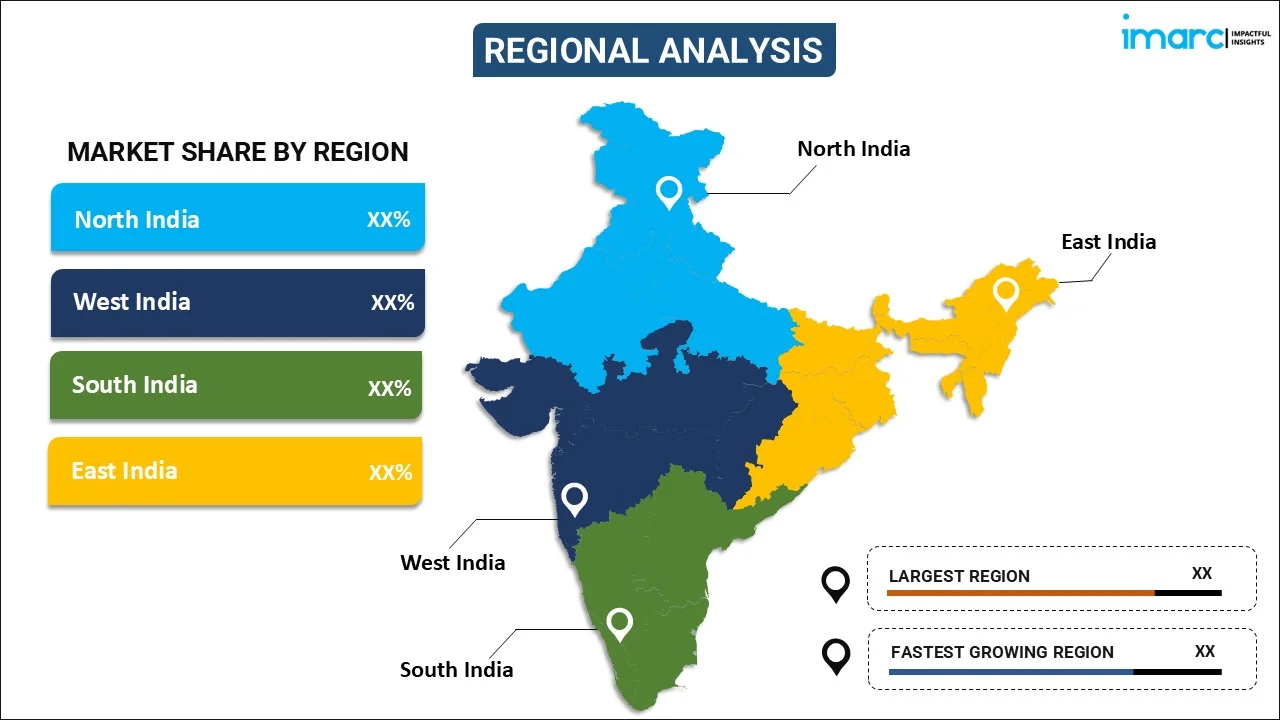
To get detailed regional analysis of this market, Request Sample
- North India
- South India
- East India
- West India
North India dominates with a market share of 30% of the total India spa market in 2025.
North India leads regional market distribution, driven by the concentration of economic activity and premium hospitality infrastructure in metropolitan centers. The national capital region (NCR), comprising Delhi and surrounding satellite cities, represents a significant consumption hub with substantial purchasing power and wellness-conscious consumer demographics. Established luxury hotel chains operating in this region feature world-class spa facilities attracting both domestic patrons and international business travelers. The presence of affluent residential communities further strengthens demand for premium wellness services.
The region benefits from higher urbanization rates and greater exposure to global wellness trends influencing consumer preferences. Corporate headquarters concentrated in northern cities drive demand for executive wellness services and stress management treatments. Additionally, the wedding and event industry prevalent in this region contributes to bridal spa services and pre-event wellness packages, supplementing regular spa service consumption throughout the year. Seasonal tourism influx to heritage destinations across North India creates additional demand for hospitality-based spa experiences.
Market Dynamics:
Growth Drivers:
Why is the India Spa Market Growing?
Rising Disposable Income and Urban Middle-Class Expansion
The sustained economic growth trajectory in India has significantly elevated disposable income levels across urban populations, fundamentally transforming spending patterns toward discretionary wellness services. The expanding middle-class demographic demonstrates increasing willingness to invest in personal care and relaxation experiences previously considered luxury indulgences. In 2025, India’s wellness tourism generated USD 27.92 Billion, with many affluent consumers prioritizing spa retreats and curated wellness travel as key lifestyle expenditures. Moreover, growing financial capacity among dual-income households enables regular spa visitation as integral lifestyle components. Aspirational consumption patterns among younger demographics further accelerate spa service adoption as contemporary lifestyle markers.
Growing Wellness Awareness and Preventive Health Consciousness
Indian consumers are experiencing a fundamental shift toward preventive health management and holistic wellness approaches, driving substantial demand for spa services. Increasing awareness regarding the interconnection between physical relaxation, mental health, and overall well-being positions spa treatments as essential rather than indulgent. Media coverage and wellness advocacy educate consumers about therapeutic benefits of regular treatments in managing stress. Healthcare professionals increasingly recommend complementary therapies, legitimizing spa services as comprehensive health maintenance components.
Expansion of Wellness Tourism and Hospitality Infrastructure
India's emergence as a global wellness tourism destination is catalyzing substantial investment in spa infrastructure development across the country. International and domestic hospitality brands recognize spa facilities as essential amenities for attracting discerning travelers, driving widespread integration of wellness services within hotel operations. According to sources, in December 2025, the Meghalaya government handed over 66 acres of land at Umiam for the upcoming Taj Umiam Resort & Spa, a Rs 300 Crore+ project by IHCL, marking one of the largest hospitality investments in the North-Eastern region. Furthermore, government promotion of medical and wellness tourism positions spa services as strategic national assets. Growing international recognition of Indian traditional healing modalities attracts wellness tourists seeking authentic ayurvedic experiences.

Market Restraints:
What Challenges the India Spa Market is Facing?
High Operational Costs and Skilled Workforce Shortage
The spa industry faces significant challenges related to elevated operational expenditures and persistent difficulties in acquiring adequately trained wellness professionals. Establishment and maintenance of premium spa facilities require substantial capital investment in equipment, ambiance, and infrastructure. Competitive compensation requirements for skilled therapists impact operational margins. The shortage of certified professionals with specialized expertise constrains service expansion and quality consistency across the industry.
Limited Penetration in Tier-Two and Rural Markets
Market expansion beyond metropolitan centers encounters substantial barriers related to consumer awareness and purchasing power limitations in smaller cities and rural areas. The concentration of spa infrastructure in tier-one cities creates geographic accessibility constraints for broader population segments. Lower disposable income levels and traditional spending priorities limit demand for wellness services perceived as premium indulgences in underserved markets.
Fragmented Regulatory Framework and Standardization Challenges
The absence of comprehensive regulatory oversight and standardized certification requirements creates quality consistency challenges across the spa industry. Varying service standards and treatment protocols among establishments impact consumer confidence and industry credibility. The lack of mandatory training certifications for wellness practitioners raises concerns regarding treatment safety and efficacy, affecting market professionalization and consumer trust development.
Competitive Landscape:
The India spa market is moderately fragmented, consisting of international hospitality companies, domestic wellness chains, and many independent operators within each market segment. Different positioning strategies are witnessed in the competitive landscape-from luxury destination spas that target premium consumers to more accessible salon spa formats targeted at mass-market demographics. Competing on service quality, innovations in treatments, ambiance, and pricing are the different ways in which market players contend for different consumer segments. Strategic partnerships between hospitality brands and wellness service providers are being formed toward integrated offerings that bolster competitive positioning.
Recent Developments:
- In August 2024, Tattva Wellness Spa inaugurated its Wellness Pavilion at Manohar International Airport, Mopa, Goa, offering travelers quick, culturally inspired relaxation treatments. The initiative enhances passenger comfort, supports wellness tourism, and strengthens the airport’s position as a world-class, traveler-focused destination.
India Spa Market Report Coverage:
| Report Features | Details |
|---|---|
| Base Year of the Analysis | 2025 |
| Historical Period | 2020-2025 |
| Forecast Period | 2026-2034 |
| Units | Billion USD |
| Scope of the Report |
Exploration of Historical Trends and Market Outlook, Industry Catalysts and Challenges, Segment-Wise Historical and Future Market Assessment:
|
| Types Covered | Salon Spa, Hotel and Resort Spa, Medical Spa, Destination Spa, Thermal Spring Spa, Others |
| End Users Covered | Male, Female |
| Regions Covered | North India, South India, East India, West India |
| Customization Scope | 10% Free Customization |
| Post-Sale Analyst Support | 10-12 Weeks |
| Delivery Format | PDF and Excel through Email (We can also provide the editable version of the report in PPT/Word format on special request) |
Frequently Asked Questions About the India Spa Market Report
The India spa market size increased from USD 2.22 Billion in 2025 to USD 2.42 Billion in 2026.
The India spa market is expected to grow at a compound annual growth rate of 9.28% from 2026-2034 to reach USD 4.93 Billion by 2034.
Salon spa held the largest India spa market share, driven by widespread accessibility, affordability of wellness services, rapid expansion of organized salon chains, and increasing consumer preference for convenient beauty and relaxation treatments across urban centers.
Key factors driving the India spa market include rising disposable incomes among the urban population, growing wellness awareness, increasing demand for ayurvedic treatments, expansion of wellness tourism, and corporate wellness program adoption.
Major challenges include high operational costs, shortage of skilled wellness professionals, limited market penetration in tier-two cities, fragmented regulatory frameworks, quality standardization difficulties, and infrastructure constraints in the emerging markets.
Need more help?
- Speak to our experienced analysts for insights on the current market scenarios.
- Include additional segments and countries to customize the report as per your requirement.
- Gain an unparalleled competitive advantage in your domain by understanding how to utilize the report and positively impacting your operations and revenue.
- For further assistance, please connect with our analysts.
 Request Customization
 Speak to an Analyst
 Request Brochure
 Inquire Before Buying
Benefits of Customization
- Personalize this research
- Triangulate with your data
- Get data as per your format and definition
- Gain a deeper dive into a specific application, geography, customer, or competitor
- Any level of personalization
Get in Touch With Us
UNITED STATES
Phone: +1-201-971-6302
INDIA
Phone: +91-120-433-0800
UNITED KINGDOM
Phone: +44-753-714-6104
Email: [email protected]
Client Testimonials




.webp)




.webp)













Related Reports

Choose your plan
*Please note that the prices mentioned below are starting prices for each bundle type. Kindly contact our team for further details.*
Single User License
- 1 User License, Access on 2 Devices
- PDF Report + Excel Dataset (Password Protected)
- Lifetime Access
- No Printing Rights
- 10% Free Report Customization
- 10–12 Weeks of Analyst Support
Five User License
- Access for 5 Users, 2 Devices per User
- PDF Report + Excel Dataset (Password Protected)
- Lifetime Access
- Dedicated Account Manager
- 12–14 Weeks of Analyst Support
- No Printing Rights
- 15% Free Report Customization
- 25% Discount on Your Next Purchase
Corporate User License
- Unlimited User Access (Within Your Organization)
- PDF Report + Excel Dataset
- Lifetime Access
- Dedicated Account Manager
- 14–20 Weeks of Analyst Support
- No Printing Rights
- 20% Free Report Customization
- 30% Discount on Your Next Purchase
Essential Insights
What's included:
3 reports
- Lifetime Access
- PDF Reports
- Excel Datasets
- 2 Weeks of Free Analyst Support
- 2 User Licenses
- Access on 2 Devices
- Printing Rights
- Complimentary PowerPoint (PPT) Version
- Complimentary License Upgrade
Professional Access
What's included:
5 reports
- Lifetime Access
- PDF Reports
- Excel Datasets
- 8 Weeks of Free Analyst Support
- 2 User Licenses
- Access on 2 Devices
- Printing Rights
- Complimentary PowerPoint (PPT) Version
- Complimentary License Upgrade
Business Advantage
What's included:
8 reports
- Lifetime Access
- PDF Reports
- Excel Datasets
- 14 Weeks of Free Analyst Support
- 2 User Licenses
- Access on 2 Devices
- Printing Rights
- Complimentary PowerPoint (PPT) Version
- Complimentary License Upgrade
Enterprise Intelligence
What's included:
10 reports
- Lifetime Access
- PDF Reports
- Excel Datasets
- 20 Weeks of Free Analyst Support
- 2 User Licenses
- Access on 2 Devices
- Printing Rights
- Complimentary PowerPoint (PPT) Version
- Complimentary License Upgrade