
India Sports Apparel Market Size, Share, Trends and Forecast by Product, Demography, Distribution Channel, and Region, 2026-2034
India Sports Apparel Market Summary:
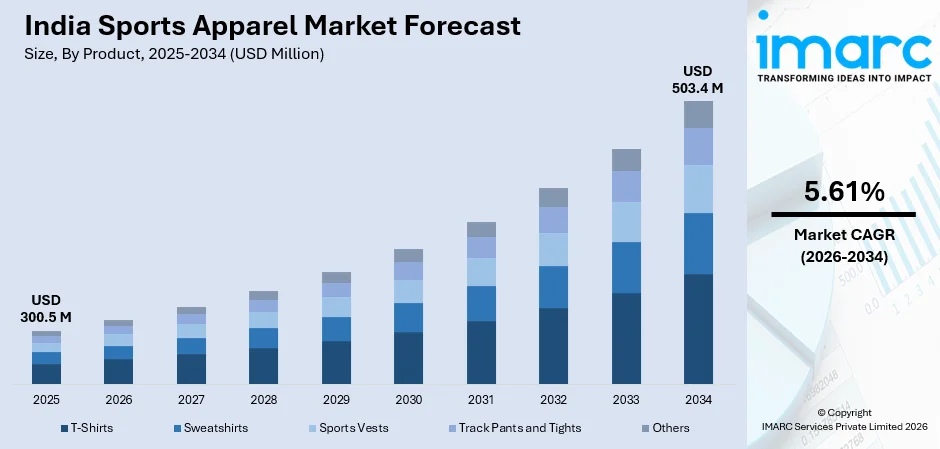
The India sports apparel market size was valued at USD 300.5 Million in 2025 and is projected to reach USD 503.4 Million by 2034, growing at a compound annual growth rate of 5.61% from 2026-2034.
The sports apparel market in India is growing rapidly, fueled by a shift toward healthier lifestyles and more active living in urban and semi-urban areas. Rising fitness awareness, the mainstream adoption of athleisure, higher disposable incomes, and government initiatives to promote sports are all contributing to the market demand. Innovations in performance fabrics, the rise of online shopping, and increased brand promotion by celebrities are further influencing individual choices and contributing to the expansion of the Indian sports apparel market share.
Key Takeaways and Insights:
- By Product: T-shirts dominate the market with a share of 38.6% in 2025, driven by their versatility across fitness activities and casual athleisure settings, affordability compared to full sportswear ensembles, and widespread user preference for lightweight, breathable apparel suited to India’s warm climate.
- By Demography: Men lead the market with a share of 52.4% in 2025, reflecting higher participation rates in organized sports and gym memberships, stronger brand loyalty patterns, and sustained marketing investments by sportswear companies targeting male users through cricket sponsorships and athlete endorsements.
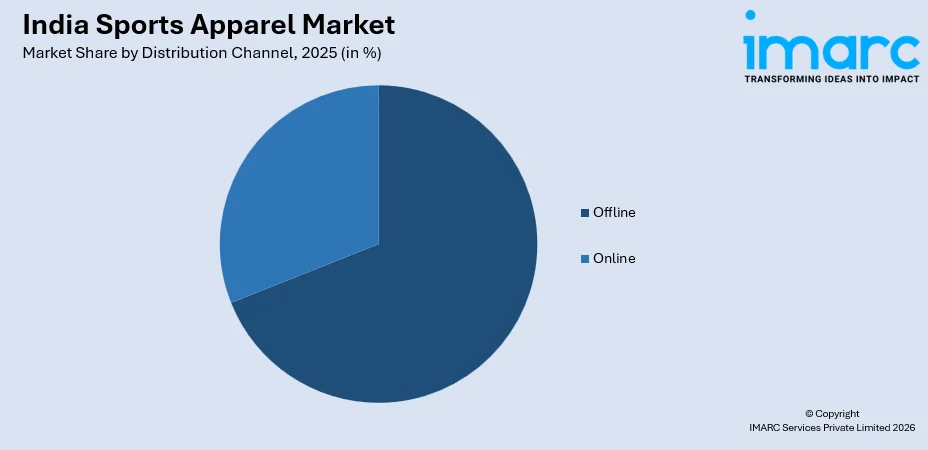
- By Distribution Channel: Offline represents the largest segment with a market share of 68.9% in 2025, supported by the established network of branded retail stores, multi-brand outlets, and experiential shopping environments that enable buyers to assess product quality, fabric feel, and sizing before purchase.
- By Region: North India dominates the market with a share of 34.7% in 2025, owing to concentrated population centers in Delhi NCR, Punjab, and Haryana, higher per capita disposable incomes, robust sports infrastructure, and strong retail presence of both international and domestic sportswear brands.
- Key Players: The India sports apparel market exhibits intense competitive dynamics, with multinational corporations competing alongside emerging domestic brands across multiple price segments, each leveraging distinct strategies spanning premium positioning, value-conscious affordability, and celebrity-endorsed collections.
To get more information on this market Request Sample
The sports apparel market in India is fueled by heightened health and fitness consciousness, a rise in organized sports participation, and the increasing trend of athleisure as everyday attire. Individuals are looking for comfortable, adaptable clothing that accommodates active lifestyles and casual fashion tastes. Fast urban growth and increasing disposable incomes are promoting more expenditure on branded and performance-focused sportswear, especially in major urban areas and tier two cities. Additionally, ongoing advancements in textile technology, such as moisture control and resilient fabrics, are increasing product attractiveness and facilitating premium offerings. Government programs that advocate for sports facilities and encourage youth involvement are bolstering institutional demand. The growth of online retail channels and integrated strategies is enhancing availability and diversity of products across various areas. In 2025, Agilitas Sports introduced the Italian sportswear brand Lotto to India, targeting INR 1,000 Crore in revenue over five years. The brand aimed to grow via a multi-channel strategy, incorporating e-commerce and dedicated mono-brand outlets.
India Sports Apparel Market Trends:
Growth of E-Commerce Platforms
The rapid expansion of online retail platforms is significantly improving accessibility to sports apparel across India. E-commerce marketplaces provide wide product variety, competitive pricing, and convenient delivery, attracting buyers across the country. Digital marketing, influencer engagement, and targeted promotions are shaping purchase decisions, particularly among younger demographics. Online channels also enable easy comparison of sizes, features, and prices, increasing buyer confidence. Supporting this trend, India’s e commerce industry was valued at INR 10,82,875 crore in 2024 and is projected to reach INR 29,88,735 crore by 2030, growing at a CAGR of 15% according to the IBEF.
Rise of Athleisure and Casual Wear Trends
The convergence of sportswear and casual fashion is increasing the appeal of athletic apparel beyond traditional fitness settings. People are seeking versatile garments that transition smoothly between workouts, travel, and everyday activities, catalyzing the demand for t-shirts, joggers, and lightweight outerwear. Working professionals and students are embracing athleisure as functional yet stylish attire, supported by relaxed dress norms in workplaces and educational institutions. Reflecting this trend, in 2024 Bata India launched exclusive Power Brand Outlets focused on the growing athleisure segment, featuring high performance sportswear and footwear. Retailers are broadening collections to align with evolving lifestyle preferences.
Product Innovation and Performance Fabric Development
Continuous innovation in textile technology is enhancing the functionality and appeal of sports apparel in India. Manufacturers are developing moisture wicking fabrics, lightweight materials, and stretchable designs that improve comfort and athletic performance. Advanced features, such as anti-microbial finishes, temperature regulation, and enhanced durability are adding measurable value for individuals seeking long lasting products. In line with this trend, in 2025, TechnoSport launched the Cotflex collection, a sustainable and high-performance activewear line. The collection featured innovative fabric technology, blending cotton’s comfort with advanced features like 4-way stretch, anti-microbial protection, and UV-blocking properties. It aimed to offer durable, eco-friendly apparel for sports, yoga, and daily activities.
Market Outlook 2026-2034:
The India sports apparel market demonstrates strong revenue growth potential throughout the forecast period, underpinned by favorable demographic trends and evolving user preferences toward active lifestyles. The market generated a revenue of USD 300.5 Million in 2025 and is projected to reach a revenue of USD 503.4 Million by 2034, growing at a compound annual growth rate of 5.61% from 2026-2034. Growth is expected to be driven by expanding fitness infrastructure, increasing athleisure adoption, digital commerce penetration across smaller cities, and sustained government investment in sports development programs. Rising disposable incomes and premiumization trends are expected to further strengthen revenue expansion.
India Sports Apparel Market Report Segmentation:
|
Segment Category |
Leading Segment |
Market Share |
|
Product |
T-Shirts |
38.6% |
|
Demography |
Men |
52.4% |
|
Distribution Channel |
Offline |
68.9% |
|
Region |
North India |
34.7% |
Product Insights:
- T-Shirts
- Sweatshirts
- Sports Vests
- Track Pants and Tights
- Others
T-shirts lead with a market share of 38.6% of the total India sports apparel market in 2025.
T-shirts hold the biggest market share due to their everyday versatility, affordability, and strong alignment with fitness trends. Urban dwellers increasingly prefer comfortable clothing that transitions from workouts to casual outings, making these items a practical choice. The rise in gym memberships, running clubs, and home workout routines is further driving the demand for breathable, sweat wicking fabrics. Easy availability across online platforms and offline retail chains ensures consistent visibility and repeat purchases across age groups in both metro and tier two cities nationwide. As per the data provided by the IBEF, the e-retail market will exceed USD 160 Billion by 2028, highlighting the growing shift towards online shopping.
Tops and t-shirts also benefit from strong price segmentation, catering to mass, mid premium, and premium buyers without significant product modification. Entry level cotton variants attract price sensitive individuals, while performance driven polyester blends appeal to serious athletes. Seasonal sports events, school tournaments, and corporate wellness programs generate bulk demand, reinforcing steady sales volumes throughout the year. Influencer marketing and cricket sponsorships further amplify visibility, encouraging brand switching and impulse purchases. Compared to specialized gear like compression wear or sport specific jackets, t-shirts require lower inventory risk and simpler sizing, enabling retailers to stock wider assortments and maintain healthy margins.
Demography Insights:
- Men
- Women
- Kids
Men dominate with a market share of 52.4% of the total India sports apparel market in 2025.
Men represent the largest segment owing to higher participation in organized sports, gym activities, and outdoor fitness routines across urban and semi urban regions. Cricket, football, badminton, and running events continue to draw strong male engagement, directly driving the demand for jerseys, shorts, track pants, and performance wear. Corporate wellness initiatives and marathon culture in cities like Mumbai, Delhi, and Bengaluru are further expanding regular sportswear purchases among working professionals. Male users also display stronger brand loyalty and repeat buying behavior, especially toward global labels endorsed by athletes.
Rising disposable incomes among male professionals and increasing awareness about health and physique maintenance also contribute to higher spending on sports apparel. Many men invest in specialized workout clothing designed for training, cycling, or running, leading to higher average transaction values compared to other segments. Seasonal cricket tournaments, local leagues, and college competitions create recurring demand for team jerseys and customized kits. Marketing campaigns frequently target male audiences through sports icons and tournament sponsorships, strengthening emotional brand connections. Retailers often prioritize men’s collections during new launches, ensuring better product visibility and deeper inventory levels.
Distribution Channel Insights:
Access the comprehensive market breakdown Request Sample
- Online
- Offline
Offline exhibits a clear dominance with a 68.9% share of the total India sports apparel market in 2025.
Offline leads the market because of strong user preference for trial, fit assurance, and immediate purchase gratification. Sportswear buyers often evaluate fabric quality, stretch, comfort, and sizing before making a decision, which physical stores readily enable. Multi brand outlets, exclusive brand stores, and large format retailers across malls and high streets provide wider product displays and personalized assistance. For instance, in 2025, Nike expanded its retail presence in Mumbai with the launch of a new store at Oberoi Sky City Mall in Borivali East. The store was positioned as a flagship destination for sports and style enthusiasts. Seasonal discounts, in store promotions, and festival sales further drive footfall, supporting consistent revenue generation for retailers across regions.
Brick and mortar channels also benefit from established brand presence and trust built through years of physical retail expansion. Many individuals associate store visits with authenticity, especially when purchasing premium sportswear or team jerseys. Retail staff recommendations and the ability to compare multiple brands in one location encourage higher conversion rates. Schools, local clubs, and corporate buyers frequently place bulk orders directly through offline outlets, strengthening volume sales. Additionally, impulse purchases during mall visits or sports equipment shopping often include apparel add-ons. Strong supply chain networks and distributor relationships across states continue to reinforce offline dominance within the market.
Regional Insights:
- North India
- South India
- East India
- West India
North India leads with a market share of 34.7% of the total India sports apparel market in 2025.
North India dominates the market driven by its large population base, higher concentration of urban centers, and strong participation in organized sports. States, such as Delhi, Haryana, Punjab, and Uttar Pradesh, have a deep-rooted sports culture, particularly in cricket, wrestling, athletics, and kabaddi. The presence of reputed sports academies and training institutes drives consistent demand for performance apparel. Rising disposable incomes in metropolitan areas like Delhi NCR further support premium sportswear purchases. Expanding mall infrastructure and brand outlets across major cities ensure greater product visibility, contributing to steady regional revenue growth for domestic and international players alike.
The region also benefits from favorable climate variations that encourage year-round demand for diverse sports apparel categories. Winters create strong sales for track suits, hoodies, and thermal activewear, while summers sustain demand for lightweight t-shirts and shorts. Government support for sports initiatives and grassroots tournaments across northern states strengthens participation levels among youth. Large university populations and school sports programs further generate recurring purchases of team jerseys and training kits. Retail expansion by leading brands has been particularly aggressive in cities reinforcing supply reach. For instance, ASICS launched its largest flagship store in India at Connaught Place, New Delhi, in 2025. The 2,800 sq ft store featured performance running shoes, sports apparel, SportStyle collections, and athleisure wear.

Market Dynamics:
Growth Drivers:
Why is the India Sports Apparel Market Growing?
Youth Demographic Advantage
India’s large and youthful population forms a strong foundation for the sustained demand for sports apparel. Younger individuals are increasingly drawn to fitness trends, competitive sports, and athleisure influenced by global fashion. Educational institutions actively promote sports participation, creating ongoing demand for uniforms and practice kits. In 2025, PUMA India announced a multi-year partnership with badminton champion PV Sindhu, marking the brand’s entry into badminton apparel. This collaboration aimed to inspire India’s youth, especially Gen Z, as the sport’s popularity grows. The partnership also included the launch of a specialized badminton apparel collection later in the year, further appealing to the youth segment.
Government Support for Sports Development
Policy-level focus on enhancing sports infrastructure and participation is driving higher demand for sports apparel across India. Investments in stadiums, training centers, and community sports complexes are broadening access to organized physical activities. National and state programs promoting youth engagement in sports are increasing the number of active participants, leading to a rise in the need for sportswear. In line with this, the government allocated ₹3,794 crore to the Ministry of Youth Affairs and Sports for FY 2025-26, including INR 1,000 Crore to the Khelo India Programme. This allocation marks a 130.9% increase from INR 1,643 Crore in FY 2014-15, further strengthening institutional demand for sports apparel.
Rising Disposable Income
Economic growth and the expanding middle class are driving increased discretionary spending on lifestyle products, including sports apparel. Rapid urbanization is heightening exposure to global fashion trends, encouraging people in metropolitan and tier two cities to invest in high-quality, durable performance wear. The Ministry of Statistics (MoSPI) reported that per capita Net National Income increased to ₹2,05,324 in FY2024-25, up from ₹1,88,892 in FY2023-24, reflecting stronger earnings and improved consumption capacity. In response, premium and international brands are strengthening their distribution networks, while shopping malls, exclusive outlets, and digital platforms offer convenient access to a diverse range of products. This growing purchasing power continues to positively influence the market.
Market Restraints:
What Challenges the India Sports Apparel Market is Facing?
Counterfeit Products Undermining Brand Value and User Trust
The widespread availability of counterfeit sports apparel across local markets and online resellers poses a significant challenge to the industry, diluting brand value and reducing sales for authentic manufacturers. Fake branded jerseys, low-quality gym wear, and imitation athleisure products are widely accessible at substantially lower prices, creating unfair competition and eroding user confidence in product quality and performance attributes.
Price Sensitivity Limiting Premium Segment Penetration
A significant portion of individuals in India, particularly in tier-two and tier-three cities, exhibit high price sensitivity and view sports apparel as discretionary rather than essential purchases. This price-conscious behavior constrains the growth potential of premium sportswear brands attempting to expand beyond metropolitan markets and limits overall market penetration among lower and middle-income user segments.
Raw Material Price Volatility Affecting Manufacturing Margins
Fluctuations in the prices of key raw materials, particularly synthetic fibers, such as polyester and nylon, used extensively in sportswear manufacturing, create cost pressures for manufacturers. This pricing unpredictability makes it challenging for brands to maintain stable retail pricing and profitability, particularly affecting smaller domestic manufacturers with limited capacity to absorb input cost increases.
Competitive Landscape:
The India sports apparel market exhibits intense competitive dynamics characterized by the presence of multinational sportswear corporations alongside a growing roster of domestic brands competing across price segments and distribution channels. Market participants are pursuing diverse strategies, ranging from premium performance-driven positioning and sustainability-focused product lines to value-oriented collections targeting cost-conscious buyers. Competition is increasingly shaped by digital marketing effectiveness, celebrity and influencer partnerships, omnichannel retail expansion, and localization of product offerings to suit Indian body types, climate conditions, and regional fashion preferences.
Recent Developments:
- December 2025: Superdry launched its new performance-wear category, Superdry Sport, in India to cater to the growing demand for activewear. The range will be sold through its partnership with Reliance Brands Ltd, which operates over 200 stores across 50 cities.
- December 2025: Kragbuzz Sports was appointed as the official clothing partner for Delhi University and Jamia Millia Islamia. The partnership provided premium sports apparel for student-athletes across various sports. This move strengthened Kragbuzz’s position in India's collegiate sports sector and its commitment to nurturing young talent.
India Sports Apparel Market Report Coverage:
|
Report Features |
Details |
|
Base Year of the Analysis |
2025 |
|
Historical Period |
2020-2025 |
|
Forecast Period |
2026-2034 |
|
Units |
USD Million |
|
Scope of the Report |
Exploration of Historical Trends and Market Outlook, Industry Catalysts and Challenges, Segment-Wise Historical and Future Market Assessment:
|
|
Products Covered |
T-Shirts, Sweatshirts, Sports Vests, Track Pants and Tights, Others |
|
Demography Covered |
Men, Women, Kids |
|
Distribution Channels Covered |
Online, Offline |
|
Regions Covered |
North India, South India, East India, West India |
|
Customization Scope |
10% Free Customization |
|
Post-Sale Analyst Support |
10-12 Weeks |
|
Delivery Format |
PDF and Excel through Email (We can also provide the editable version of the report in PPT/Word format on special request) |
Frequently Asked Questions About the India Sports Apparel Market Report
The India sports apparel market size was valued at USD 300.5 Million in 2025.
The India sports apparel market is expected to grow at a compound annual growth rate of 5.61% from 2026-2034 to reach USD 503.4 Million by 2034.
T-shirts dominate the market with the largest revenue share of 38.6% in 2025, driven by versatility across fitness and casual settings, affordability, and suitability for India’s warm climate.
Key factors driving the India sports apparel market include the growing number of online retail channels, which is boosting sports apparel demand by offering wider product choice, competitive pricing, and convenient delivery across India. Digital promotions influence younger buyers, while easy size and feature comparisons increase confidence. This is exemplified by the India’s e commerce market that was valued at INR 10,82,875 crore in 2024.
Major challenges include the widespread availability of counterfeit sports apparel undermining brand value, price sensitivity among cost-conscious buyers limiting premium segment penetration, raw material price volatility affecting manufacturing margins, and intense competition from both multinational and domestic brands across price segments.
Need more help?
- Speak to our experienced analysts for insights on the current market scenarios.
- Include additional segments and countries to customize the report as per your requirement.
- Gain an unparalleled competitive advantage in your domain by understanding how to utilize the report and positively impacting your operations and revenue.
- For further assistance, please connect with our analysts.
 Request Customization
 Speak to an Analyst
 Request Brochure
 Inquire Before Buying
Benefits of Customization
- Personalize this research
- Triangulate with your data
- Get data as per your format and definition
- Gain a deeper dive into a specific application, geography, customer, or competitor
- Any level of personalization
Get in Touch With Us
UNITED STATES
Phone: +1-201-971-6302
INDIA
Phone: +91-120-433-0800
UNITED KINGDOM
Phone: +44-753-714-6104
Email: [email protected]
Client Testimonials




.webp)




.webp)













Related Reports

Choose your plan
*Please note that the prices mentioned below are starting prices for each bundle type. Kindly contact our team for further details.*
Single User License
- 1 User License, Access on 2 Devices
- PDF Report + Excel Dataset (Password Protected)
- Lifetime Access
- No Printing Rights
- 10% Free Report Customization
- 10–12 Weeks of Analyst Support
Five User License
- Access for 5 Users, 2 Devices per User
- PDF Report + Excel Dataset (Password Protected)
- Lifetime Access
- Dedicated Account Manager
- 12–14 Weeks of Analyst Support
- No Printing Rights
- 15% Free Report Customization
- 25% Discount on Your Next Purchase
Corporate User License
- Unlimited User Access (Within Your Organization)
- PDF Report + Excel Dataset
- Lifetime Access
- Dedicated Account Manager
- 14–20 Weeks of Analyst Support
- No Printing Rights
- 20% Free Report Customization
- 30% Discount on Your Next Purchase
Essential Insights
What's included:
3 reports
- Lifetime Access
- PDF Reports
- Excel Datasets
- 2 Weeks of Free Analyst Support
- 2 User Licenses
- Access on 2 Devices
- Printing Rights
- Complimentary PowerPoint (PPT) Version
- Complimentary License Upgrade
Professional Access
What's included:
5 reports
- Lifetime Access
- PDF Reports
- Excel Datasets
- 8 Weeks of Free Analyst Support
- 2 User Licenses
- Access on 2 Devices
- Printing Rights
- Complimentary PowerPoint (PPT) Version
- Complimentary License Upgrade
Business Advantage
What's included:
8 reports
- Lifetime Access
- PDF Reports
- Excel Datasets
- 14 Weeks of Free Analyst Support
- 2 User Licenses
- Access on 2 Devices
- Printing Rights
- Complimentary PowerPoint (PPT) Version
- Complimentary License Upgrade
Enterprise Intelligence
What's included:
10 reports
- Lifetime Access
- PDF Reports
- Excel Datasets
- 20 Weeks of Free Analyst Support
- 2 User Licenses
- Access on 2 Devices
- Printing Rights
- Complimentary PowerPoint (PPT) Version
- Complimentary License Upgrade