
India Women Apparel Market Size, Share, Trends and Forecast by Product Type, Season, Distribution Channel, and Region, 2026-2034
India Women Apparel Market Summary:
The India women apparel market grew from USD 95.83 Billion in 2025 to USD 98.40 Billion in 2026 and is projected to reach USD 121.87 Billion by 2034, growing at a compound annual growth rate of 2.71% from 2026-2034.
The growth in disposable incomes, increasing propensity for a wider range of fashion, and raising the influence of digital retail channels are some strong reasons for the robust expansion of the India women apparel market. Increasing urbanization and more working women entering the workforce spur the demand for versatile and stylish clothing options. The combination of traditional Indian aesthetics with modern silhouettes is changing consumer preferences, while burgeoning awareness regarding sustainable and ethically produced fashion is catalyzing India women apparel market share.
Key Takeaways and Insights:
-
By Product Type: Tops and dresses dominate the market with a share of 26% in 2025, driven by their versatility across both casual and formal occasions, along with strong demand from urban working women.
- By Season: Summer wear leads the market with a share of 40% in 2025, reflecting the country's predominantly warm tropical climate and strong consumer preference for lightweight, breathable fabrics.
- By Distribution Channel: Online stores hold the largest share of 31% in 2025, fueled by expanding e-commerce penetration, convenient returns, and personalized shopping experiences.
- By Region: North India dominate the market with a share of 29% in 2025, supported by high population density, strong purchasing power, and concentration of metropolitan centers.
- Key Players: The India women apparel market exhibits moderate competitive intensity, with domestic brands competing alongside international fashion retailers across price segments. Companies are focusing on expanding omnichannel presence, launching sustainable collections, and leveraging digital marketing strategies to capture market share.
.webp)
To get more information on this market Request Sample
The India women apparel market is undergoing significant transformation as consumers increasingly seek fashion that blends tradition with modernity. For example, Myntra recently launched a zero‑commission initiative under its ‘Myntra Rising Stars’ banner in early 2026 to help emerging D2C fashion labels scale faster on its platform, giving these brands broader digital reach and reducing barriers to market entry. The growing influence of social media and celebrity endorsements is accelerating trend adoption across tier-one and tier-two cities. Industry players are investing heavily in manufacturing capabilities, retail expansion, and strategic partnerships to meet rising demand and strengthen market positioning. The market is also witnessing increased focus on size inclusivity, regional customization, and technology-driven personalization to enhance customer experience and drive growth. Fusion wear combining ethnic aesthetics with Western silhouettes continues to gain popularity among younger demographics. Additionally, sustainable fashion practices, omnichannel retail strategies, and digital-first brand approaches are reshaping competitive dynamics as companies seek to capture evolving consumer preferences across urban and semi-urban markets.
India Women Apparel Market Trends:
Rise of Indo-Western Fusion Wear
The blending of traditional Indian elements with contemporary Western silhouettes is gaining significant traction among young consumers. For instance, fashion brands across India have reported a notable increase in fusion wear demand, with e‑commerce platforms like Myntra, Ajio, and Nykaa Fashion listing fusion wear as a top‑searched category in recent seasons and Tata’s Taneira experiencing a marked surge in online sales of ready‑to‑wear fusion pieces. Designers are reimagining ethnic motifs, draping styles, and embroidery techniques with modern cuts such as crop tops paired with lehengas, pre-draped sarees, and palazzo suits. This fusion approach appeals to fashion-forward women seeking versatile outfits that honor cultural heritage while embracing global aesthetics.
Expansion of Digital and Omnichannel Retail
E-commerce platforms are revolutionizing how Indian women shop for apparel, offering convenience, variety, and personalized recommendations. For example, in January 2026, JioHotstar recently integrated “shop the look” fashion commerce directly into its streaming platform, enabling viewers to purchase outfits seen in real time while watching content, a move that blends entertainment with seamless shopping experiences online and drives deeper consumer engagement. Brands are integrating physical stores with digital channels to create seamless shopping experiences. Virtual try-ons, AI-driven styling suggestions, and easy returns are enhancing customer engagement and driving repeat purchases. This digital transformation is expanding market reach across metropolitan and smaller cities alike.
Growing Focus on Sustainable and Ethical Fashion
Environmental consciousness is reshaping purchasing decisions as consumers increasingly favor brands prioritizing eco-friendly materials and ethical production practices. For example, in August 2025, Indian fashion label SYKA Clothing, founded by sisters Sidra and Kayaanat Sohail Haider, has been gaining traction for its semi‑modest and sustainable apparel that blends timeless style with responsible production, highlighting how purpose‑driven brands are carving out niche demand in the market. Sustainable materials such as organic cotton, recycled fabrics, and natural dyes are increasingly gaining prominence across product categories. Slow fashion movements, upcycled clothing, and transparent supply chains are attracting environmentally aware shoppers who value quality over quantity and seek alignment with responsible production values.
Market Outlook 2026-2034:
The Indian women’s apparel market is set to register steady growth over the coming years due to the growing levels of urbanization, leading to increasing consumer expenditure on clothing. The rising penetration of the internet in tier 2 and tier 3 cities is also set to increase the consumer base for organized retail and e-commerce. The increasing female participation in the workforce, awareness of brands, and requirements of occasion-specific clothing are adding to the lucrative prospects of the market. Invention in fabrics, omnichannel retail, and the shift towards more sustainable clothing are emerging as prominent catalysts in the wake of the pandemic. The market generated a revenue of USD 95.83 Billion in 2025 which is expected to reach USD 98.40 Billion in 2026 and further grow to USD 121.87 Billion by 2034, at a compound annual growth rate of 2.71% during 2026-2034.
India Women Apparel Market Report Segmentation:
|
Segment Category |
Leading Segment |
Market Share |
|
Product Type |
Tops and Dresses |
26% |
|
Season |
Summer Wear |
40% |
|
Distribution Channel |
Online Stores |
31% |
|
Region |
North India |
29% |
Product Type Insights:
- Tops and Dresses
- Bottom Wear
- Innerwear and Sleepwear
- Coats, Jackets and Suits
- Ethnic Wear
- Others
The tops and dresses dominates with a market share of 26% of the total India women apparel market in 2025.
Tops and dresses represent the most versatile category within women's apparel, catering to diverse occasions from casual outings to formal work settings. According to reports, in October 2025, luxury label Hermès showcased innovative leather brassiere tops and quilted silk dresses in its Spring/Summer 2026 runway show at Paris Fashion Week, highlighting how high-end brands continue to push design boundaries in this staple category. The segment benefits from continuous innovation in designs, fabrics, and embellishments that appeal to fashion-conscious consumers across age groups. Contemporary designs incorporating Western cuts, ethnic prints, and fusion elements are particularly popular among urban millennials and working professionals seeking wardrobe staples that transition seamlessly from day to evening wear.
The growing workforce participation by women is increasing the demand for comfortable yet professional apparel in this segment. Organized retail and e-commerce growth has increased access to more varieties, price points, and international fashion trends. Businesses introduce seasonal collections, limited editions in collaboration with other brands, and customizable products to capture the diversified consumer preference, strengthen market positioning, and build long-term customer loyalty across demography.
Season Insights:
- Summer Wear
- Winter Wear
- All Season Wear
The summer wear leads with a share of 40% of the total India women apparel market in 2025.
Summer wear holds the largest segment share, reflecting the country's predominantly warm and tropical climate where lightweight, breathable clothing remains essential throughout much of the year. Cotton, linen, chiffon, and other natural fabrics dominate this category, offering comfort and style during extended summer months. In March 2025, Reliance Trends launched its Summer Occasion collection in 2025 featuring casual and western wear designed for warm weather and travel, spotlighting lightweight frocks, breezy tops, and versatile dresses in its campaign with actor Mahesh Babu and his daughter Sitara. The preference for pastel shades, floral prints, and relaxed silhouettes continues to drive consumer purchasing across both urban and semi-urban markets.
Clothing manufacturers are now more involved in quick dry fabric lines, UV-protection fabric lines, as well as moisture-wicking fabric lines. Additionally, the sector derives its demand from the wedding season, during which lighter-wear ethnic lines as well as fusion lines are most sought after. Online shopping services have increased accessibility to summer clothing lines by providing a wide spectrum of sizes across different styles as per different preferences across the country.
Distribution Channel Insights:
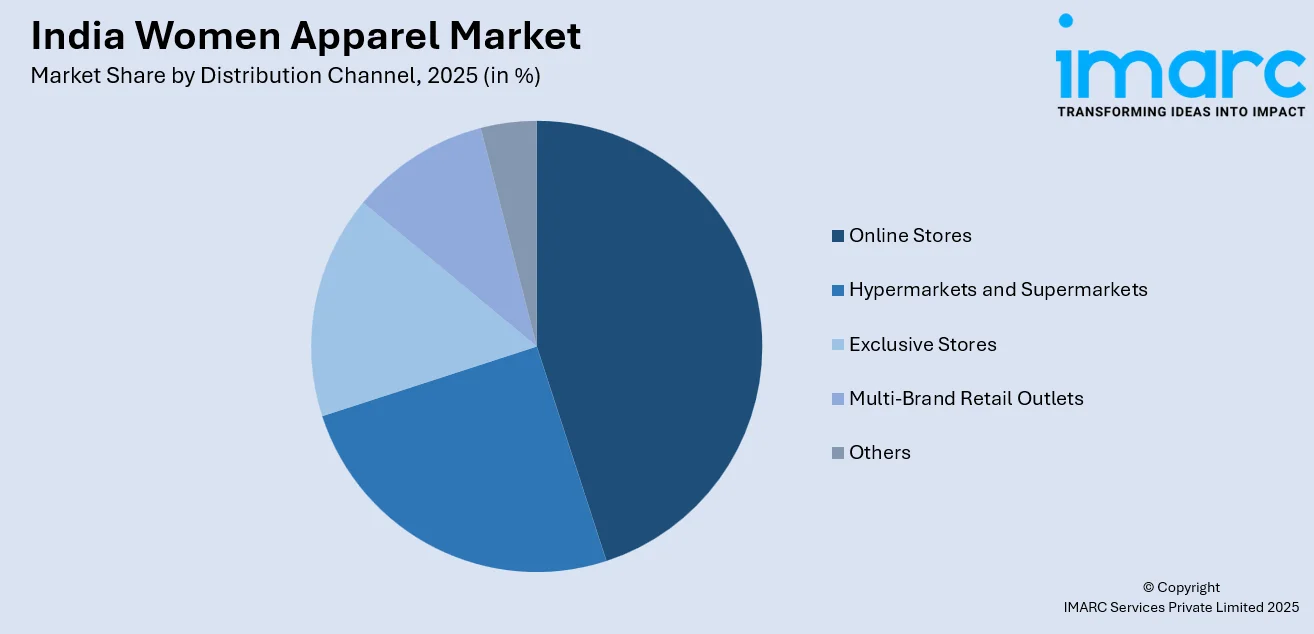
Access the comprehensive market breakdown Request Sample
- Hypermarkets and Supermarkets
- Exclusive Stores
- Multi-Brand Retail Outlets
- Online Stores
- Others
The online stores dominates with a market share of 31% of the total India women apparel market in 2025.
The online retail channel has emerged as the dominant distribution platform, revolutionizing how Indian women discover, evaluate, and purchase apparel. E-commerce platforms offer unparalleled convenience through features such as virtual try-ons, personalized recommendations, flexible payment options, and hassle-free returns. The rapid expansion of smartphone penetration and affordable mobile internet has enabled leading e-commerce platforms and brand-owned websites to reach consumers across metropolitan centers and smaller towns alike.
Brands are investing significantly in omnichannel strategies that integrate online browsing with offline experiences, allowing customers to check product availability, schedule store visits, and access exclusive online discounts. Social commerce through popular social media platforms is further augmenting online sales by enabling direct brand-consumer engagement. The channel continues to benefit from influencer marketing, flash sales, and festival promotions that drive traffic and conversions throughout the year.
Regional Insights:
- North India
- South India
- East India
- West India
North India exhibits a clear dominance with a 29% share of the total India women apparel market in 2025.
North India commands the largest regional market share, driven by high population density, strong purchasing power, and the concentration of major metropolitan areas. The region exhibits strong demand for both traditional ethnic wear and contemporary Western styles, reflecting diverse cultural preferences and progressive fashion adoption. Wedding and festive seasons contribute significantly to seasonal demand spikes, with consumers seeking premium bridal wear, designer collections, and celebration outfits.
The presence of established retail infrastructure, shopping malls, and expanding e-commerce logistics networks has enhanced accessibility to diverse apparel options across the region. International brands and domestic fashion houses maintain strong presence in North Indian markets, introducing exclusive collections and regional customizations. Growing urbanization in tier-two cities is creating new growth opportunities for organized retail expansion and digital commerce penetration.

Market Dynamics:
Growth Drivers:
Why is the India Women Apparel Market Growing?
Rising Disposable Incomes and Growing Middle Class
The expansion of India's middle-class population and increasing disposable incomes are fundamentally reshaping consumption patterns in the women apparel sector. Reflecting this trend, AM Libas Fashion Pvt Ltd announced in January 2026 that it is expanding into e-commerce and offline retail after achieving a ₹50 crore turnover in 2025, underscoring rising demand from a broader base of aspirational consumers across the country. As household earnings rise, women are allocating greater portions of their budgets toward fashion and personal style. This demographic shift is driving demand across price segments, from affordable fast fashion to premium designer collections. Brands are responding by offering diverse product ranges, flexible pricing tiers, and accessible financing options to capture this expanding market opportunity effectively.
Digital Transformation and E-commerce Expansion
The rapid proliferation of digital technologies and expanding internet connectivity are transforming how Indian women discover and purchase apparel. The India e-commerce market size was valued at USD 129.72 billion in 2025 and is projected to reach USD 651.10 billion by 2034, growing at a compound annual growth rate of 19.63% from 2026–2034, underscoring the scale and momentum of digital retail adoption nationwide. E-commerce platforms have democratized access to fashion, enabling consumers in smaller towns to explore trends previously available only in metropolitan centers. Platforms are leveraging artificial intelligence for personalized recommendations, virtual try-ons, and size prediction tools that reduce return rates. Mobile commerce now accounts for a significant portion of online apparel sales, supported by vernacular interfaces and convenient payment options.
Influence of Social Media and Celebrity Culture
Social media platforms have become powerful drivers of fashion consumption, with influencers and celebrities shaping trend adoption at unprecedented speed. In 2025, nearly 62% of Instagram users reported becoming interested in a brand after seeing it featured in a creator’s story, highlighting how creator‑led content directly fuels brand discovery on major platforms. Popular social media channels are creating new pathways for brand discovery and purchase consideration. Viral styling content, celebrity outfit recreations, and influencer collaborations generate significant consumer interest and drive traffic to both online and offline retail channels. Brands are allocating increasing budgets to influencer partnerships and social commerce initiatives, recognizing the power of authentic endorsements among younger demographics.
Market Restraints:
What Challenges the India Women Apparel Market is Facing?
Intense Competition from Unorganized Sector
The unorganized retail sector continues to dominate a substantial portion of India's apparel market, posing challenges for organized players. Local tailors, small boutiques, and unbranded merchandise offer price advantages that appeal to cost-conscious consumers. This fragmentation creates difficulties in standardization, quality consistency, and scalability for branded retailers seeking to expand their market presence.
Fluctuating Raw Material Costs
Volatility in cotton prices, synthetic fiber costs, and textile inputs creates margin pressures for apparel manufacturers and retailers. Currency fluctuations and global supply chain disruptions further compound pricing uncertainties. These cost variations can impact product pricing, inventory management, and profitability across the value chain, requiring agile procurement strategies and careful financial planning.
Counterfeit Products and Brand Imitation
The proliferation of counterfeit and imitation products undermines brand equity and consumer trust in the organized apparel market. Replica merchandise sold through unauthorized channels dilutes premium brand positioning and erodes consumer willingness to pay for authentic products. Combating counterfeiting requires ongoing investment in authentication technologies, legal enforcement, and consumer awareness initiatives.
Competitive Landscape:
The competitive intensity in the India women's apparel market is moderate, with domestic brands competing against global fashion retailers and new direct-to-consumer brands. Differentiation is driven by innovation, sustainable approaches, celebrity endorsements, and omnichannel retail. Global fashion brands in league with Indian manufacturers are increasing trend-to-market cycles and the ability to manufacture domestically. Market players are also working toward increasing their footprint in tier-II and tier-III cities. Size inclusivity, regional customization, and affordable luxury are emerging as the new battlegrounds for the India women's apparel market.
Recent Developments:
- In January 2026, Indian actress and style icon Samantha Ruth Prabhu has launched her own fashion brand, combining her personal style with commercial appeal. The move highlights the rising influence of celebrity‑led brands in India’s women’s apparel market, targeting fashion‑conscious consumers seeking trendy and curated clothing options.
India Women Apparel Market Report Coverage:
| Report Features | Details |
|---|---|
| Base Year of the Analysis | 2025 |
| Historical Period | 2020-2025 |
| Forecast Period | 2026-2034 |
| Units | Billion USD |
| Scope of the Report |
Exploration of Historical Trends and Market Outlook, Industry Catalysts and Challenges, Segment-Wise Historical and Future Market Assessment:
|
| Product Types Covered | Tops And Dresses, Bottom Wear, Innerwear And Sleepwear, Coats, Jackets And Suits, Ethnic Wear, Others |
| Seasons Covered | Summer Wear, Winter Wear, All Season Wear |
| Distribution Channels Covered | Hypermarkets and Supermarkets, Exclusive Stores, Multi-Brand Retail Outlets, Online Stores, Others |
| Regions Covered | North India, South India, East India, West India |
| Customization Scope | 10% Free Customization |
| Post-Sale Analyst Support | 10-12 Weeks |
| Delivery Format | PDF and Excel through Email (We can also provide the editable version of the report in PPT/Word format on special request) |
Frequently Asked Questions About the India Women Apparel Market Report
The India women apparel market size increased from USD 95.83 Billion in 2025 to USD 98.40 Billion in 2026.
The India women apparel market is expected to grow at a compound annual growth rate of 2.71% from 2026-2034 to reach USD 121.87 Billion by 2034.
Tops and dresses, holding the largest share of 26%, remain essential in India's women apparel market due to their versatility across casual, formal, and festive occasions, strong demand from working professionals, and widespread appeal among diverse consumer segments.
Key factors driving the India women apparel market include rising disposable incomes, expanding middle-class population, growing e-commerce adoption, social media influence, fusion fashion trends, and increasing demand for sustainable and ethically produced clothing.
Major challenges include intense competition from the unorganized sector, fluctuating raw material costs, counterfeit products, infrastructure gaps in logistics, and evolving consumer preferences requiring continuous product innovation.
Need more help?
- Speak to our experienced analysts for insights on the current market scenarios.
- Include additional segments and countries to customize the report as per your requirement.
- Gain an unparalleled competitive advantage in your domain by understanding how to utilize the report and positively impacting your operations and revenue.
- For further assistance, please connect with our analysts.
 Request Customization
 Speak to an Analyst
 Request Brochure
 Inquire Before Buying
Benefits of Customization
- Personalize this research
- Triangulate with your data
- Get data as per your format and definition
- Gain a deeper dive into a specific application, geography, customer, or competitor
- Any level of personalization
Get in Touch With Us
UNITED STATES
Phone: +1-201-971-6302
INDIA
Phone: +91-120-433-0800
UNITED KINGDOM
Phone: +44-753-714-6104
Email: [email protected]
Client Testimonials




.webp)




.webp)













Related Reports

Choose your plan
*Please note that the prices mentioned below are starting prices for each bundle type. Kindly contact our team for further details.*
Single User License
- 1 User License, Access on 2 Devices
- PDF Report + Excel Dataset (Password Protected)
- Lifetime Access
- No Printing Rights
- 10% Free Report Customization
- 10–12 Weeks of Analyst Support
Five User License
- Access for 5 Users, 2 Devices per User
- PDF Report + Excel Dataset (Password Protected)
- Lifetime Access
- Dedicated Account Manager
- 12–14 Weeks of Analyst Support
- No Printing Rights
- 15% Free Report Customization
- 25% Discount on Your Next Purchase
Corporate User License
- Unlimited User Access (Within Your Organization)
- PDF Report + Excel Dataset
- Lifetime Access
- Dedicated Account Manager
- 14–20 Weeks of Analyst Support
- No Printing Rights
- 20% Free Report Customization
- 30% Discount on Your Next Purchase
Essential Insights
What's included:
3 reports
- Lifetime Access
- PDF Reports
- Excel Datasets
- 2 Weeks of Free Analyst Support
- 2 User Licenses
- Access on 2 Devices
- Printing Rights
- Complimentary PowerPoint (PPT) Version
- Complimentary License Upgrade
Professional Access
What's included:
5 reports
- Lifetime Access
- PDF Reports
- Excel Datasets
- 8 Weeks of Free Analyst Support
- 2 User Licenses
- Access on 2 Devices
- Printing Rights
- Complimentary PowerPoint (PPT) Version
- Complimentary License Upgrade
Business Advantage
What's included:
8 reports
- Lifetime Access
- PDF Reports
- Excel Datasets
- 14 Weeks of Free Analyst Support
- 2 User Licenses
- Access on 2 Devices
- Printing Rights
- Complimentary PowerPoint (PPT) Version
- Complimentary License Upgrade
Enterprise Intelligence
What's included:
10 reports
- Lifetime Access
- PDF Reports
- Excel Datasets
- 20 Weeks of Free Analyst Support
- 2 User Licenses
- Access on 2 Devices
- Printing Rights
- Complimentary PowerPoint (PPT) Version
- Complimentary License Upgrade