
Indium Prices, Trend, Chart, Demand, Market Analysis, News, Historical and Forecast Data Report 2026 Edition
Indium Price Trend, Index and Forecast
Track the latest insights on indium price trend and forecast with detailed analysis of regional fluctuations and market dynamics across North America, Latin America, Central Europe, Western Europe, Eastern Europe, Middle East, North Africa, West Africa, Central and Southern Africa, Central Asia, Southeast Asia, South Asia, East Asia, and Oceania.
Indium Prices Outlook Q2 2026
- USA: USD 486/MT
- China: USD 484/MT
- Netherlands: USD 514/MT
- India: USD 446/MT
- United Kingdom: USD 624/MT
Indium Price Chart
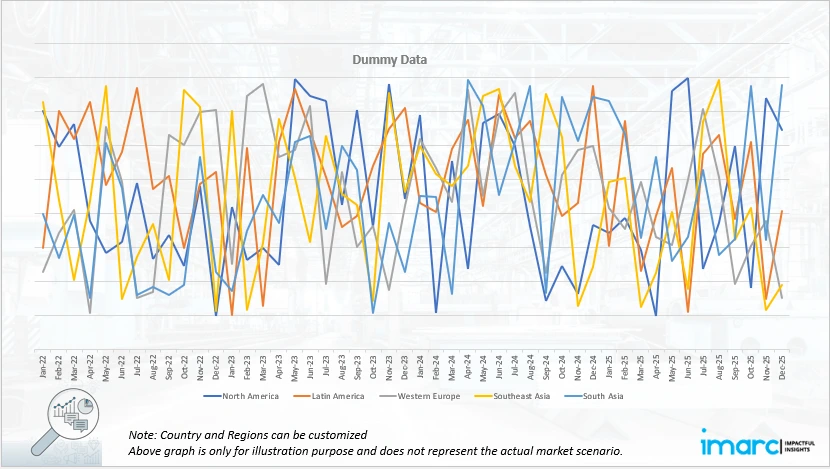
Get real-time access to monthly/quarterly/yearly prices Request Sample
During the second quarter of 2026, the indium prices in the USA reached 486 USD/MT in June. Prices moved upward as availability from major Asian supply centers remained constrained and buyers faced greater uncertainty around export licensing and shipment timing. Domestic consumers in electronics, semiconductor, display, and specialty alloy applications maintained procurement activity, supporting firmer import replacement costs.
During the second quarter of 2026, the indium prices in China reached 484 USD/MT in June. The market strengthened as producer inventories tightened and suppliers became more disciplined in offering material into the spot market. Export licensing requirements continued to influence trading behavior, encouraging domestic participants to monitor overseas shipment approvals and available export volumes closely.
During the second quarter of 2026, the indium prices in Netherlands reached 514 USD/MT in June. Prices increased as European buyers faced tighter access to imported refined indium and higher replacement costs for material sourced from Asia. Export controls and administrative checks on shipments from China contributed to uncertainty over delivery schedules, encouraging distributors and industrial consumers to secure available cargoes more cautiously.
During the second quarter of 2026, the indium prices in India reached 446 USD/MT in June. The market advanced as import dependent buyers encountered firmer international offers and tighter availability from major producing countries. Procurement costs were supported by uncertainty surrounding Chinese export procedures, which affected regional shipment planning and encouraged buyers to secure material earlier.
During the second quarter of 2026, the indium prices in the United Kingdom reached 624 USD/MT in June. Prices rose as importers faced tighter international availability and higher replacement costs for refined material. Restrictions and administrative requirements affecting Chinese exports continued to create uncertainty around shipment timing, encouraging distributors to protect inventories and quote more firmly.
Indium Prices Outlook Q4 2025
- USA: USD 417/MT
- China: USD 409/MT
- Netherlands: USD 430/MT
- India: USD 379/MT
- United Kingdom: USD 536/MT
During the fourth quarter of 2025, the indium prices in the USA reached 417 USD/MT in December. Prices increased supported by firm demand from semiconductor fabrication, photovoltaic applications, and electronics manufacturing. Additionally, constrained secondary supply availability and steady consumption in indium tin oxide production influenced procurement behavior, with buyers aligning sourcing to high-purity application requirements.
During the fourth quarter of 2025, the indium prices in China reached 409 USD/MT in December. Prices rose amid strong demand from display panel manufacturing and photovoltaic cell production. Moreover, controlled primary output and export management measures shaped supply positioning, encouraging structured procurement from downstream electronics and alloy producers.
During the fourth quarter of 2025, the indium prices in the Netherlands reached 430 USD/MT in December. Prices advanced driven by steady demand from European semiconductor assembly and renewable energy component manufacturing sectors. In addition to this, reliance on imported refined material and distributor-level stock management influenced sourcing strategies across industrial buyers.
During the fourth quarter of 2025, the indium prices in India reached 379 USD/MT in December. Prices edged higher supported by growing demand from electronics assembly, solder manufacturing, and specialty alloy production. Furthermore, structured import procurement and expanding downstream manufacturing activity shaped market dynamics during the period.
During the fourth quarter of 2025, the indium prices in the United Kingdom reached 536 USD/MT in December. Prices increased influenced by consistent demand from aerospace components, high-performance coatings, and research-grade material applications. Apart from this, import reliance and controlled inventory allocation influenced procurement strategies aligned with advanced manufacturing requirements.
Indium Prices Outlook Q3 2025
- USA: USD 392/MT
- China: USD 371/MT
- Netherlands: USD 387/MT
- India: USD 337/MT
- United Kingdom: USD 495/MT
During the third quarter of 2025, the indium prices in the USA reached 392 USD/MT in September. Price movement in this quarter was shaped mainly by softer procurement from display and consumer electronics manufacturers, which reduced spot inquiries, and by adequate availability from established import channels. Smelter-linked supply from Asia remained consistent, limiting any upside. Freight and port-handling expenses stayed manageable, so landed costs did not exert excessive pressure on distributors.
During the third quarter of 2025, the indium prices in China reached 371 USD/MT in September. Market sentiment was influenced by steady refinery operations and by sufficient recovery of indium from zinc smelting activities, which prevented tightness. Demand from downstream semiconductor, solder, and flat-panel segments was moderate, as several buyers prioritized inventory optimization over restocking. Export-oriented sellers faced competitive overseas bids, prompting more flexible pricing.
During the third quarter of 2025, the indium prices in the Netherlands reached 387 USD/MT in September. Dutch traders operated in close alignment with European electronics and specialty-materials buyers, who showed selective intake due to balanced inventories. Availability from Asian origins remained reliable, and Rotterdam-based warehousing and handling costs stayed within typical thresholds, preventing upside pressure on CFR/DDP offers.
During the third quarter of 2025, the indium prices in India reached 337 USD/MT in September. Purchases from electronics assembly, alloy makers, and R&D-driven specialty users were steady but not aggressive, as many processors relied on earlier procurements. Imports from East Asian suppliers arrived without notable delays, so distributors maintained sufficient stock. Exchange-rate considerations affected landed pricing, but import duties, customs handling, and inland freight were broadly manageable, enabling competitive quotations in key industrial clusters.
During the third quarter of 2025, the indium prices in the United Kingdom reached 495 USD/MT in September. UK buyers faced slightly higher costs than mainland European counterparts due to localized logistics, warehousing, and compliance-related expenses. Demand from high-spec electronics, photonics, and coating applications remained stable, supporting a premium over more commodity-like transactions.
Indium Prices Outlook Q2 2025
- USA: USD 374/MT
- China: USD 352/MT
- Netherlands: USD 367/MT
- South Korea: USD 315/MT
- United Kingdom: USD 470/MT
During the second quarter of 2025, the indium prices in the USA reached 374 USD/MT in June. Pricing in this quarter was influenced by strong early-year demand replenishment by electronics manufacturers after inventory draw-down, accompanied by higher production costs in refining by-product indium from zinc smelting. Logistics costs, especially ocean freight and port handling from Asia, increased, raising the delivered cost into the US markets.
During the second quarter of 2025, the indium prices in China reached 352 USD/MT in June. In China, indium pricing in Q2 was shaped by moderate demand from displays and thin-film solar cell production restarting after a seasonal slow-down. Domestic production increased slightly, reducing raw material scarcity, but port congestion and inland logistics remained cost drivers. Export restrictions and strategic metal controls contributed to a tightening outlook, supporting the price.
During the second quarter of 2025, the indium prices in the Netherlands reached 367 USD/MT in June. The demand picked up somewhat in Q2 owing to an uptick in electronics manufacturing and solar installations, which increased procurement of indium-based materials. Imported indium incurred higher customs duties and transport cost from non-EU sources, elevating the overall cost of supply. Together, these factors placed pressure on European indium pricing in the quarter.
During the second quarter of 2025, the indium prices in South Korea reached 315 USD/MT in June. In South Korea, pricing was influenced by demand from semiconductor and display manufacturers, which step-up component sourcing in anticipation of new product launches. Domestic refining by-product supply remained constrained, pushing reliance on imports, which incurred shipping and handling surcharges.
During the second quarter of 2025, the indium prices in the United Kingdom reached 470 USD/MT in June. The UK market saw pricing impacted by demand from aerospace and electronics sectors planning for mid-year launches, raising procurement of strategic metals. Supply chain cost pressures such as freight costs, customs post-Brexit, and higher energy costs for regional refining.
Regional Coverage
The report provides a detailed analysis of the market across different regions, each with unique pricing dynamics influenced by localized market conditions, supply chain intricacies, and geopolitical factors. This includes price trends, price forecast and supply and demand trends for each region, along with spot prices by major ports. The report also provides coverage of FOB and CIF prices, as well as the key factors influencing indium prices.
Europe Indium Price Trend
Q2 2026:
The indium price index in Europe moved upward as buyers encountered tighter imported availability and firmer replacement costs. The region remained heavily dependent on overseas refined material, making local pricing sensitive to export procedures, shipment approvals, and delivery conditions in major Asian supply centers. Distributors responded to uncertain replenishment by maintaining cautious stock positions and firmer offers. Demand from electronics, display coatings, semiconductor components, specialty solders, and alloy applications provided steady support during the quarter. Supply flexibility remained limited because indium is primarily recovered as a byproduct of zinc refining, restricting the ability of producers to raise output quickly when market conditions tighten.
Q4 2025:
As per the indium price index, European prices moved upward supported by firm demand from semiconductor packaging, photovoltaic module production, and advanced electronics manufacturing. Additionally, dependence on imported refined indium and distributor stock positioning influenced regional supply dynamics. Buyers emphasized quality certification and purity standards, aligning procurement with high-specification industrial applications across renewable energy and precision electronics sectors.
Q3 2025:
During the third quarter of 2025, the indium price index in Europe reflected a decline as demand across electronics manufacturing and solar installations softened. Supply-chain costs remained elevated, especially freight from Asia, customs duties, and inland logistics, but these did not fully translate into price increases because end-market demand slackened. Regulatory burdens, including product-content and recycling mandates for critical metals, added cost pressure but the competitive market limited pass-through. The euro’s relative strength versus the dollar increased import cost, yet supply relaxations kept pricing under control.
Q2 2025:
During the second quarter of 2025, the indium price index in Europe was supported by heightened procurement from downstream electronics, photovoltaic, and semiconductor manufacturers. The region experienced a surge in demand for indium tin oxide (ITO) used in flat-panel displays and solar modules, following increased renewable energy installations and technology upgrades across Germany, France, and the Netherlands. Supply remained relatively tight as local production capacities were limited, prompting a rise in refined indium imports from Asian suppliers.
Detailed price information for indium can also be provided for an extensive list of European countries.
| Region | Countries Covered |
|---|---|
| Europe | Germany, France, United Kingdom, Italy, Spain, Russia, Turkey, Netherlands, Poland, Sweden, Belgium, Austria, Ireland, Switzerland, Norway, Denmark, Romania, Finland, Czech Republic, Portugal, and Greece, among other European countries. |
North America Indium Price Trend
Q2 2026:
The indium price index in North America strengthened as import availability tightened and replacement costs increased. Buyers remained exposed to supply conditions in Asia because regional consumption depends substantially on imported refined indium and high purity material. Export licensing requirements and shipment uncertainty from major producing countries encouraged distributors to hold firmer offers and manage inventories conservatively. Demand from semiconductor manufacturing, electronics, transparent conductive coatings, specialty alloys, and solder applications supported purchasing activity across the quarter. Limited supply responsiveness also contributed to price strength, as indium is generally recovered during zinc processing and cannot be expanded rapidly through dedicated mining.
Q4 2025:
As per the indium price index, prices in North America increased driven by stable demand from semiconductor fabrication, aerospace electronics, and photovoltaic cell production. Furthermore, constrained secondary recovery volumes and controlled distribution channels influenced supply availability. Procurement strategies focused on securing high-purity grades for critical technology applications, ensuring continuity across advanced manufacturing operations.
Q3 2025:
During the third quarter of 2025, the indium price index in North America dropped as consumer electronics refresh cycles delayed procurement and inventory levels normalized. On the supply side, by-product availability from zinc and lead refining improved slightly, reducing scarcity premiums. Freight, port handling, and domestic logistics costs increased, and exchange-rate effects made imports more expensive, but these cost pressures were offset by weaker demand, resulting in a net price decline. Strategic metal regulations and corporate sourcing optimization also weighed on pricing.
Q2 2025:
During the second quarter of 2025, indium pricing in North America remained under upward pressure due to constrained supply and steady industrial demand. The limited availability of indium as a by-product of zinc and lead refining curtailed domestic production volumes, necessitating increased imports from Asian and European suppliers. The US semiconductor and consumer electronics industries exhibited robust procurement activity, especially in the lead-up to new product launches, reinforcing demand momentum.
Specific indium historical data within the United States and Canada can also be provided.
| Region | Countries Covered |
|---|---|
| North America | United States and Canada |
Middle East and Africa Indium Price Trend
Q2 2026:
The study includes indium price trends across the Middle East and Africa, considering variables such as regional industrial expansion, natural resource availability, and geopolitical conflicts.
Q4 2025:
As per indium price chart, the prices in the Middle East and Africa fluctuated due to a complex interplay of factors, primarily driven by supply chain disruptions, seasonal demand shifts, and geopolitical influences.
Q3 2025:
The report explores the indium pricing trends and indium price chart in the Middle East and Africa, considering factors like regional industrial growth, the availability of natural resources, and geopolitical tensions that uniquely influence market prices.
Region-wise data and information on specific countries within these regions can also be provided.
| Region | Countries Covered |
|---|---|
| Middle East & Africa | Saudi Arabia, UAE, Israel, Iran, South Africa, Nigeria, Oman, Kuwait, Qatar, Iraq, Egypt, Algeria, and Morocco, among other Middle Eastern and African countries. |
Asia Pacific Indium Price Trend
Q2 2026:
The indium prices in Asia Pacific increased as supply tightened and downstream purchasing improved across major electronics and advanced materials markets. China remained central to regional availability, and export procedures influenced trade flows, supplier behavior, and inventory decisions throughout the quarter. Producers and traders maintained firmer offers as accessible stocks tightened and replacement material became more costly. Demand from indium tin oxide, display panels, semiconductors, electronic components, specialty solders, and related high technology applications supported consumption. Japan, South Korea, India, and other manufacturing centers remained exposed to changes in Chinese supply because of the concentrated nature of global indium production.
Q4 2025:
Across Asia Pacific, indium prices increased, supported by strong demand from display panel manufacturing, semiconductor assembly, and solar cell production. Moreover, structured production controls and export policies influenced supply positioning across key producing markets. Buyers coordinated procurement with electronics manufacturing output and renewable energy installation cycles.
Q3 2025:
During the third quarter of 2025, indium pricing in the Asia Pacific experienced downward pressure as major consumer markets, including China and India, reduced procurement in response to slower growth in electronics and display sectors. Domestic refining output increased modestly, alleviating some supply constraints, and shipping-cost increases and port handling surcharges added cost but not enough to offset weak demand. Currency fluctuations, especially in regional currencies against the USD, affected import costs.
Q2 2025:
During the second quarter of 2025, indium pricing in the Asia Pacific region was buoyed by strong manufacturing activity across China, South Korea, and Japan, where display and solar-cell production intensified. Robust output from these downstream sectors drove higher consumption of indium for use in thin-film coatings, semiconductor wafers, and photovoltaic applications. Although regional refining capacities expanded, particularly in China, the cost of production climbed due to increased electricity tariffs, labor expenses, and environmental compliance measures.
This indium price analysis can be expanded to include a comprehensive list of countries within the region.
| Region | Countries Covered |
|---|---|
| Asia Pacific | China, India, Indonesia, Pakistan, Bangladesh, Japan, Philippines, Vietnam, Thailand, South Korea, Malaysia, Nepal, Taiwan, Sri Lanka, Hongkong, Singapore, Australia, and New Zealand, among other Asian countries. |
Latin America Indium Price Trend
Q2 2026:
Latin America's indium industry is heavily influenced by its abundant natural reserves, particularly in Chile and Brazil. However, political instability and varied regulatory regimes can cause enormous volatility in indium pricing.
Q4 2025:
Latin America's indium market is predominantly influenced by its rich natural reserves, particularly in countries like Chile and Brazil. However, political instability and inconsistent regulatory frameworks can lead to significant volatility in indium prices.
Q3 2025:
Infrastructure challenges and logistical inefficiencies often impact the supply chain, affecting Latin America’s ability to meet international demand consistently. Moreover, the indium price index, economic fluctuations, and currency devaluation are critical factors that need to be considered when analyzing indium pricing trends in this region.
This comprehensive review can be extended to include specific countries within Latin America.
| Region | Countries Covered |
|---|---|
| Latin America | Brazil, Mexico, Argentina, Columbia, Chile, Ecuador, and Peru, among other Latin American countries. |
Indium Pricing Report, Market Analysis, and News
IMARC's latest publication, “Indium Prices, Trend, Chart, Demand, Market Analysis, News, Historical and Forecast Data Report 2026 Edition,” presents a detailed examination of the indium market, providing insights into both global and regional trends that are shaping prices. This report delves into the spot price of indium at major ports and analyzes the composition of prices, including FOB and CIF terms. It also presents detailed indium prices trend analysis by region, covering North America, Europe, Asia Pacific, Latin America, and Middle East and Africa. The factors affecting indium pricing, such as the dynamics of supply and demand, geopolitical influences, and sector-specific developments, are thoroughly explored. This comprehensive report helps stakeholders stay informed with the latest market news, regulatory updates, and technological progress, facilitating informed strategic decision-making and forecasting.
Indium Industry Analysis
The global indium market size reached 1,036.87 Tons in 2025. By 2034, IMARC Group expects the market to reach 1,257.4 Tons, at a projected CAGR of 2.17% during 2026-2034. The market is primarily driven by the rising adoption of touchscreens and flat-panel displays, increasing use in thin-film solar cells and 5G/IoT devices, and supply-side constraints given indium’s by-product production route and geopolitical metal-export controls.
Latest News and Developments:
- October 2025: Iltani Resources Limited revealed a maiden JORC Mineral Resource Estimate at its Orient East discovery. Combined with the previously disclosed Orient West resource, the total Orient Project now totals 62.5 Mt @ 81.5 g/t Ag Eq, one of Australia’s largest silver-indium systems. The deposit also contains approximately 725 tons of indium, a strategic metal used in touchscreens, solar panels and advanced electronics.
- July 2024: Silver Elephant Mining Corp. discovered significant deposits of gallium, indium, silver, zinc, and lead at its Pulacayo site in Bolivia. They found high-quality minerals in drill hole PUD 28, which contained notable levels of gallium and indium in addition to silver, zinc, and lead.
Product Description
Indium is a soft, silvery metallic element with the chemical symbol In and belongs to the post transition metal group. It is characterized by high ductility, malleability, strong electrical conductivity, good thermal conductivity, and a relatively low melting point. Indium also adheres effectively to glass and other surfaces, making it particularly useful in specialized coating applications. One of its most important derivatives is indium tin oxide, a transparent and electrically conductive material widely used in display panels, touchscreens, photovoltaic cells, and other electronic devices. Indium is also used in semiconductor materials, specialty solders, low melting alloys, thermal interface materials, seals, and selected aerospace applications. Commercial indium is generally recovered as a secondary product during the processing of zinc ores rather than through dedicated indium mining, making its supply closely connected to zinc production and refining activity.
Report Coverage
| Key Attributes | Details |
|---|---|
| Product Name | Indium |
| Report Features | Exploration of Historical Trends and Market Outlook, Industry Demand, Industry Supply, Gap Analysis, Challenges, Indium Price Analysis, and Segment-Wise Assessment. |
| Currency/Units | US$ (Data can also be provided in local currency) or Metric Tons |
| Region/Countries Covered | The current coverage includes analysis at the global and regional levels only. Based on your requirements, we can also customize the report and provide specific information for the following countries: Asia Pacific: China, India, Indonesia, Pakistan, Bangladesh, Japan, Philippines, Vietnam, Thailand, South Korea, Malaysia, Nepal, Taiwan, Sri Lanka, Hongkong, Singapore, Australia, and New Zealand Europe: Germany, France, United Kingdom, Italy, Spain, Russia, Turkey, Netherlands, Poland, Sweden, Belgium, Austria, Ireland, Switzerland, Norway, Denmark, Romania, Finland, Czech Republic, Portugal and Greece North America: United States and Canada Latin America: Brazil, Mexico, Argentina, Columbia, Chile, Ecuador, and Peru Middle East & Africa: Saudi Arabia, UAE, Israel, Iran, South Africa, Nigeria, Oman, Kuwait, Qatar, Iraq, Egypt, Algeria, and Morocco The list of countries presented is not exhaustive. Information on additional countries can be provided if required by the client. |
| Information Covered for Key Suppliers |
|
| Customization Scope | The report can be customized as per the requirements of the customer |
| Report Price and Purchase Option |
Plan A: Monthly Updates - Annual Subscription
Plan B: Quarterly Updates - Annual Subscription
Plan C: Biannually Updates - Annual Subscription
|
| Post-Sale Analyst Support | 360-degree analyst support after report delivery |
| Delivery Format | PDF and Excel through email (We can also provide the editable version of the report in PPT/Word format on special request) |
Key Benefits for Stakeholders:
- IMARC’s report presents a detailed analysis of indium pricing, covering global and regional trends, spot prices at key ports, and a breakdown of ex-works, FOB, and CIF prices.
- The study examines factors affecting indium price trend, including supply-demand shifts and geopolitical impacts, offering insights for informed decision-making.
- The competitive landscape review equips stakeholders with crucial insights into the latest market news, regulatory changes, and technological advancements, ensuring a well-rounded, strategic overview for forecasting and planning.
- IMARC offers various subscription options, including monthly, quarterly, and biannual updates, allowing clients to stay informed with the latest market trends, ongoing developments, and comprehensive market insights. The indium price charts ensure our clients remain at the forefront of the industry.
Need more help?
- Speak to our experienced analysts for insights on the current market scenarios.
- Include additional segments and countries to customize the report as per your requirement.
- Gain an unparalleled competitive advantage in your domain by understanding how to utilize the report and positively impacting your operations and revenue.
- For further assistance, please connect with our analysts.
 Request Customization
 Inquire Before Buying
 Speak to an Analyst
 Request Brochure
Benefits of Customization
- Personalize this research
- Triangulate with your data
- Get data as per your format and definition
- Gain a deeper dive into a specific application, geography, customer, or competitor
- Any level of personalization
Get in Touch With Us
UNITED STATES
Phone: +1-201-971-6302
INDIA
Phone: +91-120-433-0800
UNITED KINGDOM
Phone: +44-753-714-6104
Email: [email protected]
Client Testimonials


.webp)


.webp)




Related Reports

Why Choose Us
IMARC offers trustworthy, data-centric insights into commodity pricing and evolving market trends, enabling businesses to make well-informed decisions in areas such as procurement, strategic planning, and investments. With in-depth knowledge spanning more than 1000 commodities and a vast global presence in over 150 countries, we provide tailored, actionable intelligence designed to meet the specific needs of diverse industries and markets.
1000
+Commodities
150
+Countries Covered
3000
+Clients
20
+Industry

Robust Methodologies & Extensive Resources
IMARC delivers precise commodity pricing insights using proven methodologies and a wealth of data to support strategic decision-making.

Subscription-Based Databases
Our extensive databases provide detailed commodity pricing, import-export trade statistics, and shipment-level tracking for comprehensive market analysis.

Primary Research-Driven Insights
Through direct supplier surveys and expert interviews, we gather real-time market data to enhance pricing accuracy and trend forecasting.

Extensive Secondary Research
We analyze industry reports, trade publications, and market studies to offer tailored intelligence and actionable commodity market insights.
Trusted by 3000+ industry leaders worldwide to drive data-backed decisions. From global manufacturers to government agencies, our clients rely on us for accurate pricing, deep market intelligence, and forward-looking insights.