
Italy Confectionery Market Size, Share, Trends and Forecast by Product Type, Age Group, Price Point, Distribution Channel, and Region, 2026-2034
Italy Confectionery Market Summary:
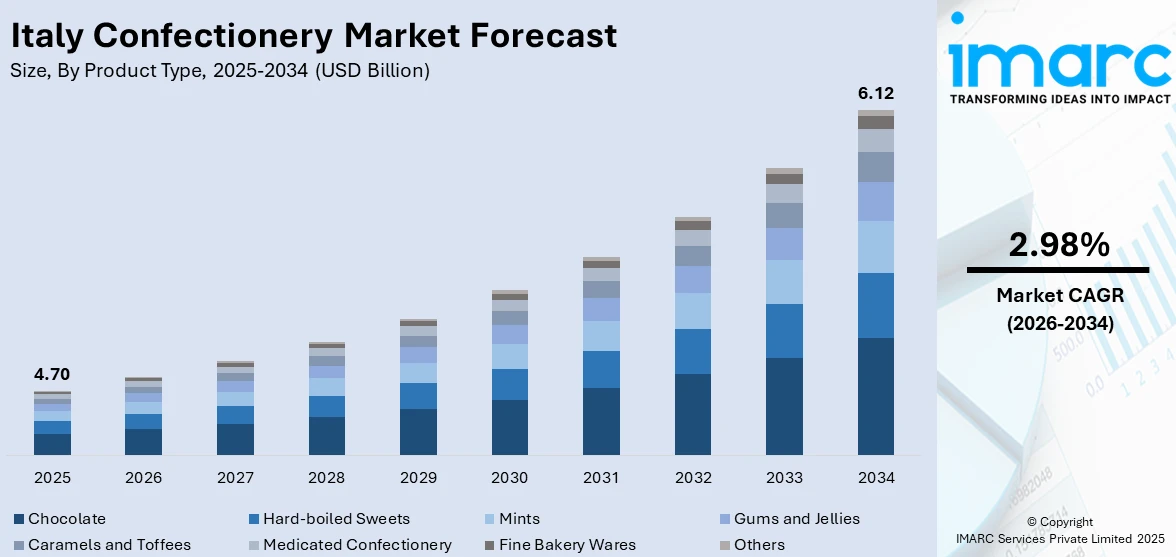
The Italy confectionery market size was valued at USD 4.70 Billion in 2025 and is projected to reach USD 6.12 Billion by 2034, growing at a compound annual growth rate of 2.98% from 2026-2034.
The Italy confectionery market is experiencing sustained growth driven by the country's rich confectionery heritage, evolving consumer preferences toward premium and artisanal products, and a strong gifting culture during festive occasions. Rising demand for innovative flavors, health-conscious formulations including reduced-sugar and functional ingredients, and sustainable sourcing practices are reshaping purchasing behaviors. Manufacturers are leveraging Italy's renowned craftsmanship in chocolate production while expanding into plant-based alternatives to capture diverse consumer segments and strengthen Italy confectionery market share.
Key Takeaways and Insights:
- By Product Type: Chocolate dominates the market with a share of 36.06% in 2025, owing to Italy's longstanding tradition of premium chocolate craftsmanship, strong consumer preference for dark and artisanal varieties, and continuous product innovation by heritage brands. Growing demand for single-origin and ethically sourced chocolates is fueling segment expansion.
- By Age Group: Adult leads the market with a share of 48.09% in 2025. This dominance is driven by higher purchasing power, preference for premium and indulgent products, and growing interest in functional confectionery offering health benefits such as dark chocolate with antioxidants.
- By Price Point: Economy represents the largest segment with a market share of 46.04% in 2025, reflecting price sensitivity among mainstream consumers and the widespread availability of value-oriented confectionery products across discount retailers and traditional grocery channels throughout Italy.
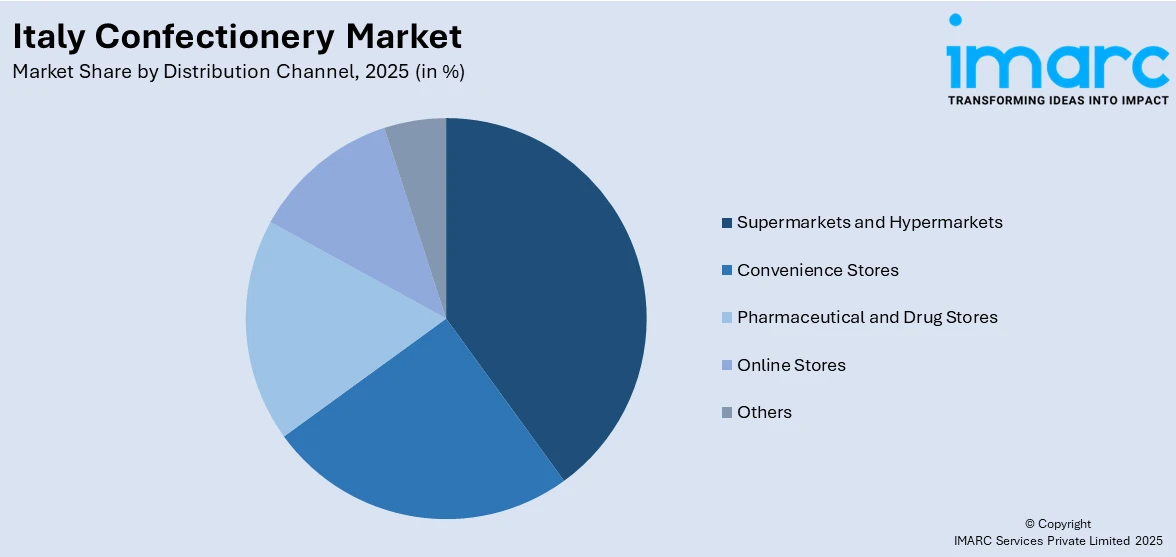
- By Distribution Channel: Supermarkets and hypermarkets exhibit a clear dominance in the market with 40.02% share in 2025, driven by extensive store networks, competitive pricing, convenient one-stop shopping experiences, and strong partnerships with leading confectionery manufacturers ensuring prominent shelf placement.
- Key Players: By broadening their product offerings, enhancing quality through artisanal methods, and bolstering national distribution, major players propel the Italian candy sector. Their efforts in digital commerce platforms, sustainability, and premiumization increase brand recognition, hasten consumer acceptance, and guarantee steady product availability across a range of market niches.
To get more information on this market Request Sample
The Italian confectionery market is still developing as producers strike a balance between innovation and heritage to satisfy shifting customer demands. The industry gains from Italy's standing as a world leader in the manufacturing of high-quality chocolate, with Sicily known for its traditional Modica chocolate and Piedmont for its gianduja chocolates made with hazelnuts. Reformulation efforts are being driven by health and wellness trends, with companies investing in functional ingredients and lower-sugar choices to appeal to health-conscious consumers without sacrificing flavor. Seasonal sales of luxury boxed chocolates and limited-edition collections are particularly robust between Easter and Christmas. According to Italian food retail data, retail food sales reached USD 179.5 Billion in 2024, with supermarkets recording a three percent increase in sales, supporting confectionery distribution growth. E-commerce channels are gaining momentum as digitally savvy consumers increasingly purchase confectionery products online, prompting manufacturers to enhance their direct-to-consumer capabilities and expand delivery networks across the country.
Italy Confectionery Market Trends:
Premiumization and Artisanal Renaissance
Italian consumers are increasingly gravitating toward premium and artisanal confectionery products that emphasize craftsmanship, heritage, and superior ingredient quality. This trend is particularly evident in the chocolate segment, where single-origin varieties and bean-to-bar offerings command growing attention. Luxury chocolatiers are expanding their retail footprints through dedicated boutiques and premium department store partnerships, creating immersive brand experiences. The premiumization movement extends beyond chocolate to encompass traditional Italian sweets, with manufacturers highlighting regional specialties and protected geographical indications to differentiate their offerings and justify premium pricing in an increasingly competitive marketplace.
Health-Conscious Indulgence and Clean Label Demand
Growing health awareness among Italian consumers is reshaping confectionery formulations as manufacturers develop products that balance indulgence with wellness considerations. The demand for reduced-sugar, no-added-sugar, and naturally sweetened confectionery continues to accelerate, driven by concerns about obesity and diabetes. Dark chocolate with higher cocoa content is gaining preference due to perceived health benefits including antioxidant properties. Clean label initiatives emphasizing recognizable ingredients, absence of artificial additives, and transparent sourcing practices resonate strongly with consumers seeking permissible indulgence options that align with their broader dietary goals and lifestyle choices.
Sustainability and Ethical Sourcing Transformation
Environmental consciousness is profoundly influencing purchasing decisions within the Italy confectionery market as consumers demand greater transparency regarding sourcing practices and environmental impact. Manufacturers are responding by securing certifications such as Rainforest Alliance and Fairtrade for their cocoa supplies while implementing sustainable packaging solutions to reduce plastic waste. Leading Italian confectionery companies are investing in traceability technologies to map supply chains and verify ethical production practices. This sustainability transformation extends to production facilities where energy efficiency improvements and waste reduction programs are becoming standard operational practices across the industry.
Market Outlook 2026-2034:
The Italy confectionery market is poised for continued expansion through the forecast period, supported by robust domestic consumption, strong export performance, and ongoing product innovation addressing evolving consumer preferences. Manufacturers are expected to intensify investments in premium product development, health-conscious formulations, and sustainable practices to maintain competitive positioning. The market generated a revenue of USD 4.70 Billion in 2025 and is projected to reach a revenue of USD 6.12 Billion by 2034, growing at a compound annual growth rate of 2.98% from 2026-2034. Digital commerce channels are anticipated to witness accelerated growth as consumer purchasing behaviors continue shifting toward online platforms, prompting manufacturers and retailers to enhance their e-commerce capabilities and last-mile delivery infrastructure across urban and suburban markets throughout Italy.
Italy Confectionery Market Report Segmentation:
|
Segment Category |
Leading Segment |
Market Share |
|
Product Type |
Chocolate |
36.06% |
|
Age Group |
Adult |
48.09% |
|
Price Point |
Economy |
46.04% |
|
Distribution Channel |
Supermarkets and Hypermarkets |
40.02% |
Product Type Insights:
- Hard-boiled Sweets
- Mints
- Gums and Jellies
- Chocolate
- Caramels and Toffees
- Medicated Confectionery
- Fine Bakery Wares
- Others
Chocolate dominates with a market share of 36.06% of the total Italy confectionery market in 2025.
Because of the nation's long history of producing chocolate and its strong customer preference for high-end variants, the chocolate segment continues to hold the top spot in the Italian confectionery market. Italian chocolate producers have gained international acclaim for their own regional specialties, such as Sicily's traditional Modica chocolate made with age-old cold-processing methods and Piedmont's gianduja creations made with locally sourced hazelnuts. With pistachio, salted caramel, and exotic fruit combinations gaining significant traction among discriminating customers seeking out fresh taste sensations, the industry benefits from ongoing innovation across flavor profiles.
Health-oriented chocolate products are experiencing substantial growth as manufacturers reformulate offerings to address wellness-conscious consumer demands without sacrificing indulgence qualities. Dark chocolate varieties with elevated cocoa content continue capturing market share due to perceived health benefits and sophisticated flavor profiles appealing to adult consumers. The industry demonstrates ongoing commitment to premium innovation through new product development initiatives and variant expansions that address evolving consumer preferences. Seasonal gifting occasions, particularly Easter and Christmas, generate significant sales volumes as consumers purchase premium boxed chocolates and limited-edition collections.
Age Group Insights:
- Children
- Adult
- Geriatric
Adult leads with a share of 48.09% of the total Italy confectionery market in 2025.
The adult consumer segment represents the dominant demographic within the Italy confectionery market, driven by substantial purchasing power and sophisticated taste preferences that favor premium and artisanal products. Adult consumers demonstrate strong demand for dark chocolate varieties, single-origin offerings, and confectionery products with functional benefits such as antioxidant properties or stress-relieving ingredients. This demographic shows particular responsiveness to sustainability messaging and ethical sourcing claims, influencing their purchasing decisions toward brands demonstrating environmental and social responsibility throughout their supply chains.
Gifting behavior among adult consumers significantly impacts market dynamics, particularly during festive seasons when premium confectionery serves as socially appropriate presents for personal and professional relationships. The Italian cafe culture supports regular confectionery consumption among adults, with chocolate accompaniments to coffee representing deeply ingrained consumption patterns across urban and rural areas. Product innovation targeting adult health concerns, including reduced-sugar formulations and portion-controlled packaging, continues expanding segment appeal while addressing dietary considerations. This demographic increasingly seeks authentic artisanal experiences that connect them with traditional Italian confectionery craftsmanship and heritage.
Price Point Insights:
- Economy
- Mid-range
- Luxury
Economy exhibits a clear dominance with 46.04% share of the total Italy confectionery market in 2025.
The economy price segment maintains its leading position within the Italy confectionery market, reflecting widespread consumer price sensitivity and the extensive availability of value-oriented products across diverse retail channels. Discount retailers have experienced significant market share gains as inflation-conscious consumers seek affordable indulgence options without compromising on familiar brand quality. The segment benefits from extensive distribution through convenience stores, traditional neighborhood grocers, and supermarket private label offerings that deliver acceptable quality at competitive price points for everyday consumption occasions. Italian consumers demonstrate pragmatic purchasing behavior, with many balancing premium purchases for special occasions against economy options for regular consumption, creating a bifurcated market dynamic that supports both segments simultaneously.
Private label confectionery products have gained considerable traction as retailers invest in quality improvements while maintaining competitive pricing, particularly appealing to cost-conscious households seeking value maximization. Manufacturers serving this segment focus on operational efficiency and supply chain optimization to maintain margins while delivering affordability. Strategic packaging innovations and portion adjustments enable brands to offer accessible price points without compromising perceived product quality or consumer satisfaction expectations.
Distribution Channel Insights:
Access the comprehensive market breakdown Request Sample
- Supermarkets and Hypermarkets
- Convenience Stores
- Pharmaceutical and Drug Stores
- Online Stores
- Others
Supermarkets and hypermarkets represent the leading segment with 40.02% share of the total Italy confectionery market in 2025.
Supermarkets and hypermarkets maintain dominant distribution channel positioning within the Italy confectionery market, leveraging extensive nationwide store networks and strong consumer footfall patterns favoring one-stop shopping convenience. Leading retail chains dedicate substantial shelf space to confectionery categories, ensuring prominent product visibility and impulse purchase opportunities near checkout areas. These channels benefit from established partnerships with major confectionery manufacturers, enabling coordinated promotional activities, seasonal displays, and new product launches that drive consumer awareness and trial purchases.
The channel represents the highest penetration format within the food retail sector, supporting consistent confectionery distribution growth across regional markets. This distribution format facilitates diverse product assortment spanning economy through premium price tiers, enabling consumers to select confectionery products aligned with their budget constraints and quality expectations within a single shopping trip. Seasonal promotional campaigns concentrated around Easter, Christmas, and Valentine's Day generate substantial sales spikes as retailers allocate expanded display space for themed confectionery collections and gift assortments. Retailers continue investing in store renovations and category management improvements to enhance the confectionery shopping experience and maximize consumer engagement.
Regional Insights:
- Northwest
- Northeast
- Central
- South
- Others
The Northwest region represents a significant confectionery consumption hub, driven by high urbanization levels and substantial purchasing power concentrated in major metropolitan areas. The region benefits from its renowned chocolate-making heritage, particularly in Piedmont, where traditional craftsmanship supports premium product demand. Strong retail infrastructure and sophisticated consumer preferences favor artisanal and luxury confectionery offerings throughout this economically prosperous area.
The Northeast region demonstrates robust confectionery consumption patterns supported by strong economic development and thriving tourism industries that boost seasonal demand. The region's prosperous manufacturing base generates considerable disposable income levels, enabling premium confectionery purchases among local consumers. Well-developed retail networks and proximity to Central European markets influence diverse product preferences spanning traditional Italian specialties and international confectionery varieties.
The Central region exhibits dynamic confectionery market characteristics driven by concentrated urban populations and significant tourist footfall in historic cities. The region's cultural significance as a destination hub creates substantial demand for premium gifting confectionery and artisanal products favored by visitors seeking authentic Italian specialties. Local consumption patterns reflect balanced preferences across traditional confectionery categories and contemporary premium offerings.
The South region maintains steady confectionery demand characterized by strong traditional consumption patterns and cultural emphasis on celebratory occasions requiring sweet indulgences. The region demonstrates particular affinity for traditional confectionery varieties rooted in local culinary heritage and festive customs. Economy-priced products maintain strong appeal among price-conscious consumers, while seasonal celebrations drive periodic demand surges for premium gifting options.
Market Dynamics:
Growth Drivers:
Why is the Italy Confectionery Market Growing?
Rising Premiumization and Artisanal Product Demand
The Italy confectionery market is experiencing significant growth driven by escalating consumer demand for premium and artisanal products that deliver superior quality, distinctive flavor profiles, and authentic heritage credentials. Italian consumers increasingly prioritize craftsmanship and ingredient provenance when selecting confectionery products, particularly within the chocolate segment where single-origin varieties and traditional production methods command price premiums. This premiumization trend extends across all confectionery categories as manufacturers invest in product development initiatives that emphasize regional specialties, protected geographical indications, and limited-edition offerings targeting discerning consumers seeking differentiated indulgence experiences. The luxury chocolate segment is expanding as Italian brands leverage their heritage positioning to capture domestic and international market opportunities through premium boutique retail concepts, experiential tasting experiences, and curated gifting collections that justify elevated price points while reinforcing brand equity. Manufacturers continue investing in ingredient sourcing partnerships that ensure consistent access to premium raw materials including Piedmont hazelnuts and Sicilian pistachios that define Italian confectionery excellence.
Expanding Tourism and Chocolate Heritage Experiences
Tourism represents a powerful growth driver for the Italy confectionery market as international and domestic visitors seek authentic Italian food experiences including chocolate tastings, factory tours, and artisanal boutique visits during their travels. The intersection of culinary tourism and confectionery consumption creates sustained demand particularly in cities renowned for chocolate heritage including Turin, Perugia, and Modica, where visitors purchase locally produced sweets as memorable souvenirs and gifts. Major chocolate festivals attract substantial visitor numbers, with Eurochocolate in Perugia drawing over five hundred thousand visitors who engage in tastings, demonstrations, and retail purchases that boost regional economic activity while elevating brand recognition for participating manufacturers. Corporate museums and experiential retail concepts operated by leading confectionery companies provide immersive brand experiences that deepen consumer connections while generating direct sales through on-site retail operations. This tourism-driven consumption pattern extends beyond seasonal peaks as year-round visitors discover Italy's regional confectionery traditions through guided tours, cooking classes, and tasting experiences that convert into ongoing brand loyalty.
Digital Commerce Channel Expansion and Innovation
The accelerating adoption of e-commerce platforms is driving Italy confectionery market growth as manufacturers and retailers invest in digital capabilities that expand consumer reach beyond traditional retail boundaries. Online confectionery sales are experiencing double-digit growth rates as convenience-seeking consumers embrace digital purchasing for everyday consumption products and specialty gifting occasions that benefit from expanded product assortment and home delivery convenience. Manufacturers are developing direct-to-consumer platforms that enable premium pricing, personalized offerings, and subscription services while capturing valuable consumer data that informs product development and marketing strategies. The digital channel particularly supports specialty and artisanal confectionery producers who previously faced distribution limitations in accessing geographically dispersed consumers seeking unique products unavailable in local retail outlets. Investment in fulfillment infrastructure including temperature-controlled logistics networks ensures product quality maintenance during delivery while expanding seasonal gifting opportunities through convenient doorstep delivery. Social media marketing and influencer partnerships amplify digital commerce effectiveness by generating consumer awareness and driving platform traffic.
Market Restraints:
What Challenges the Italy Confectionery Market is Facing?
Volatile Cocoa Prices and Supply Chain Pressures
Unprecedented cocoa price volatility, which reached record highs in early 2025 and significantly increased production costs for chocolate manufacturers, presents serious concerns for the Italian confectionery business. Speculative trading activity coupled with climate-related supply interruptions in West African producing regions has resulted in ongoing raw material pricing pressures that strain manufacturer profits and drive up consumer prices. The premium segment's market diversity and consumer choice may be threatened by these increased input costs, which disproportionately affect smaller artisanal producers with less hedging capacity.
Health Regulations and Sugar Reduction Pressures
The Italian confectionery market continues to face difficulties as consumers examine product ingredients and nutritional profiles more closely due to growing health consciousness and regulatory concerns around sugar use. Consumer demand for conventional high-sugar confectionery items may be dampened by government campaigns encouraging healthier eating habits, possible sugar taxation, and mandatory front-of-pack labeling regulations. Manufacturers must weigh reformulation expenditures against consumer preferences because cutting sugar too much could drive away devoted consumers used to well-known flavor profiles.
Competition from Healthier Snack Alternatives
As merchants increase the amount of shelf space devoted to protein bars, nut mixes, yogurt-based snacks, and other goods thought to be more nutritious than traditional sweets, the Italian confectionery sector faces growing competition from healthier snack options. Impulsive confectionery purchases are decreased by consumer expenditure shifts toward functional snacking options, especially among health-conscious groups looking for guilt-free enjoyment that supports wellness objectives. In order to stay relevant to consumers, confectionery producers must innovate with healthier formulations and fewer portions.
Competitive Landscape:
A thriving ecosystem of artisanal producers and local experts coexists with the dominant presence of large multinational businesses in Italy's confectionery sector, which has a fairly structured competitive structure. Market leaders retain competitive posture while seeking expansion through ongoing product innovation and strategic acquisitions by utilizing strong brand equity, wide distribution networks, and strong research and development skills. When manufacturers focus on marketing expenditures and promotional efforts to gain market share during high-consumption events, competition heats up around seasonal peak periods. As legacy brands and up-and-coming manufacturers vie for discriminating customers looking for genuine Italian confectionery experiences, premium and artisanal segments see an increase in competition. As manufacturers differentiate themselves through ethical sourcing, environmental initiatives, and omnichannel distribution strategies that satisfy changing consumer expectations, the competitive landscape is increasingly shaped by sustainability commitments, digital commerce capabilities, and supply chain resilience.
Recent Developments:
- In October 2025, Ferrero held its first-ever Ferrero Innovation Day Italy in Milan, introducing new Ferrero Rocher variants including seventy percent dark chocolate, salted caramel and hazelnut, and hazelnut and macadamia nuts flavors, demonstrating the company's commitment to premium product innovation and flavor diversification within the Italian market.
Italy Confectionery Market Report Coverage:
| Report Features | Details |
|---|---|
| Base Year of the Analysis | 2025 |
| Historical Period | 2020-2025 |
| Forecast Period | 2026-2034 |
| Units | Billion USD |
| Scope of the Report |
Exploration of Historical Trends and Market Outlook, Industry Catalysts and Challenges, Segment-Wise Historical and Future Market Assessment:
|
| Product Types Covered | Hard-Boiled Sweets, Mints, Gums and Jellies, Chocolate, Caramels and Toffees, Medicated Confectionery, Fine Bakery Wares, Others |
| Age Groups Covered | Children, Adult, Geriatric |
| Price Points Covered | Economy, Mid-Range, Luxury |
| Distribution Channels Covered | Supermarkets And Hypermarkets, Convenience Stores, Pharmaceutical and Drug Stores, Online Stores, Others |
| Regions Covered | Northwest, Northeast, Central, South, Others |
| Customization Scope | 10% Free Customization |
| Post-Sale Analyst Support | 10-12 Weeks |
| Delivery Format | PDF and Excel through Email (We can also provide the editable version of the report in PPT/Word format on special request) |
Frequently Asked Questions About the Italy Confectionery Market Report
The Italy confectionery market size was valued at USD 4.70 Billion in 2025.
The Italy confectionery market is expected to grow at a compound annual growth rate of 2.98% from 2026-2034 to reach USD 6.12 Billion by 2034.
Chocolate dominated the market with a share of 36.06%, driven by Italy's renowned chocolate-making heritage, strong consumer preference for premium varieties, and continuous innovation by established manufacturers.
Key factors driving the Italy confectionery market include rising demand for premium artisanal products, expanding chocolate tourism experiences, growing e-commerce penetration, and continuous product innovation in health-conscious formulations.
Major challenges include volatile cocoa prices and supply chain disruptions, increasing health regulations and sugar reduction pressures, intensifying competition from healthier snack alternatives, and evolving consumer preferences toward reduced-sugar products.
Need more help?
- Speak to our experienced analysts for insights on the current market scenarios.
- Include additional segments and countries to customize the report as per your requirement.
- Gain an unparalleled competitive advantage in your domain by understanding how to utilize the report and positively impacting your operations and revenue.
- For further assistance, please connect with our analysts.
 Request Customization
 Speak to an Analyst
 Request Brochure
 Inquire Before Buying
Benefits of Customization
- Personalize this research
- Triangulate with your data
- Get data as per your format and definition
- Gain a deeper dive into a specific application, geography, customer, or competitor
- Any level of personalization
Get in Touch With Us
UNITED STATES
Phone: +1-201-971-6302
INDIA
Phone: +91-120-433-0800
UNITED KINGDOM
Phone: +44-753-714-6104
Email: [email protected]
Client Testimonials




.webp)




.webp)













Related Reports

Choose your plan
*Please note that the prices mentioned below are starting prices for each bundle type. Kindly contact our team for further details.*
Single User License
- 1 User License, Access on 2 Devices
- PDF Report + Excel Dataset (Password Protected)
- Lifetime Access
- No Printing Rights
- 10% Free Report Customization
- 10–12 Weeks of Analyst Support
Five User License
- Access for 5 Users, 2 Devices per User
- PDF Report + Excel Dataset (Password Protected)
- Lifetime Access
- Dedicated Account Manager
- 12–14 Weeks of Analyst Support
- No Printing Rights
- 15% Free Report Customization
- 25% Discount on Your Next Purchase
Corporate User License
- Unlimited User Access (Within Your Organization)
- PDF Report + Excel Dataset
- Lifetime Access
- Dedicated Account Manager
- 14–20 Weeks of Analyst Support
- No Printing Rights
- 20% Free Report Customization
- 30% Discount on Your Next Purchase
Essential Insights
What's included:
3 reports
- Lifetime Access
- PDF Reports
- Excel Datasets
- 2 Weeks of Free Analyst Support
- 2 User Licenses
- Access on 2 Devices
- Printing Rights
- Complimentary PowerPoint (PPT) Version
- Complimentary License Upgrade
Professional Access
What's included:
5 reports
- Lifetime Access
- PDF Reports
- Excel Datasets
- 8 Weeks of Free Analyst Support
- 2 User Licenses
- Access on 2 Devices
- Printing Rights
- Complimentary PowerPoint (PPT) Version
- Complimentary License Upgrade
Business Advantage
What's included:
8 reports
- Lifetime Access
- PDF Reports
- Excel Datasets
- 14 Weeks of Free Analyst Support
- 2 User Licenses
- Access on 2 Devices
- Printing Rights
- Complimentary PowerPoint (PPT) Version
- Complimentary License Upgrade
Enterprise Intelligence
What's included:
10 reports
- Lifetime Access
- PDF Reports
- Excel Datasets
- 20 Weeks of Free Analyst Support
- 2 User Licenses
- Access on 2 Devices
- Printing Rights
- Complimentary PowerPoint (PPT) Version
- Complimentary License Upgrade