
Japan ATM Market Size, Share, Trends and Forecast by Solution, Screen Size, Application, ATM Type, and Region, 2026-2034
Japan ATM Market Size, Share, Trends & Forecast (2026-2034)
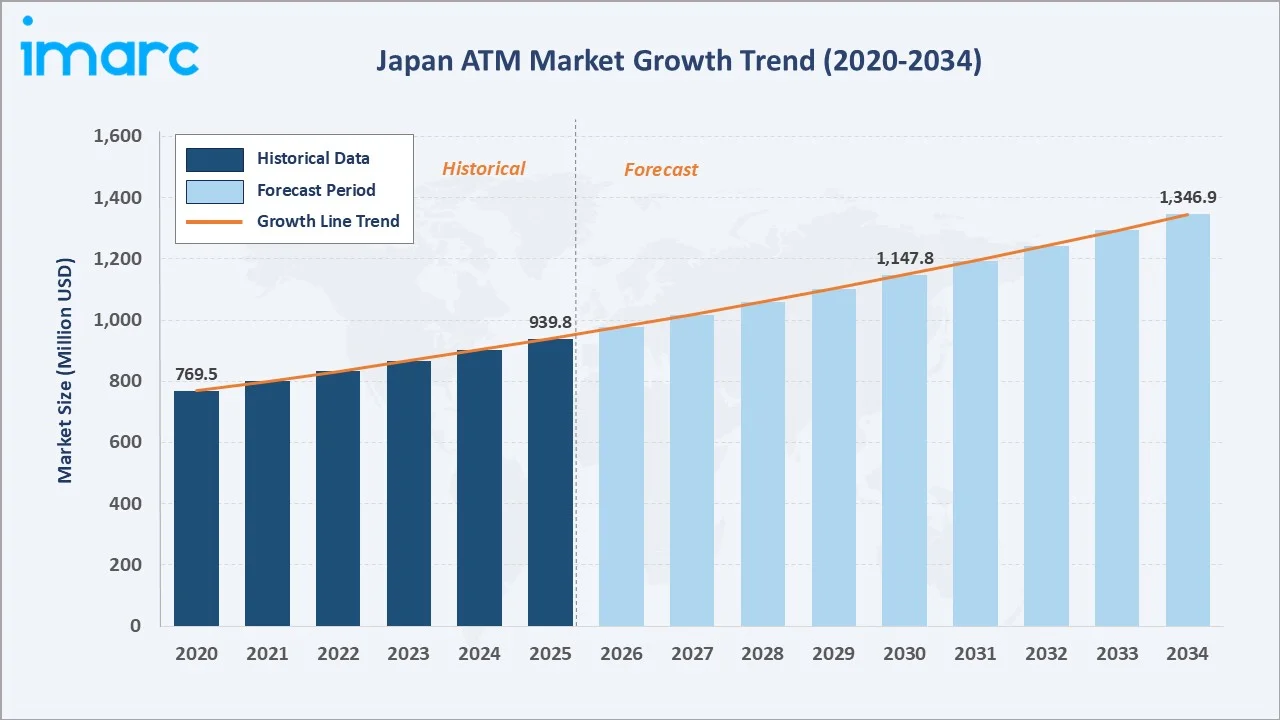
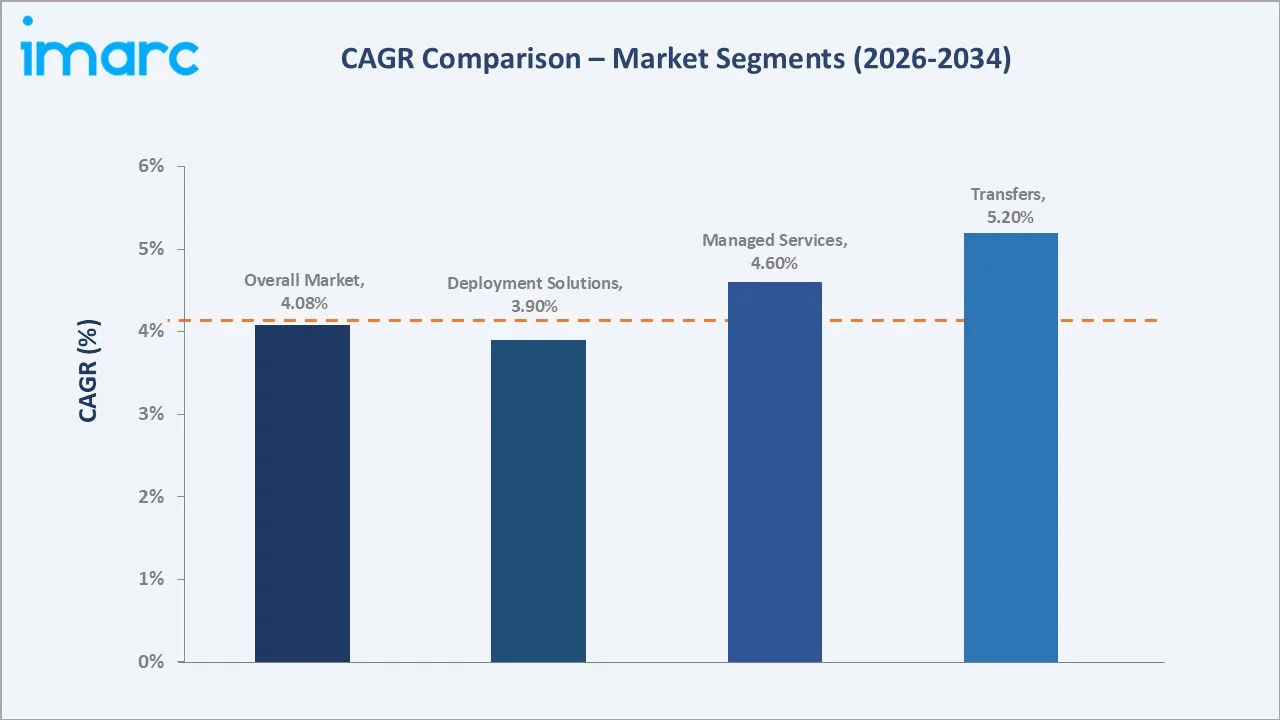
The Japan ATM market reached USD 939.8 Million in 2025 and is projected to reach USD 1,346.9 Million by 2034, growing at a CAGR of 4.08% during 2026-2034. Growth is driven by rising demand for biometric authentication, contactless transactions, and rationalization of ATM networks among major banks.
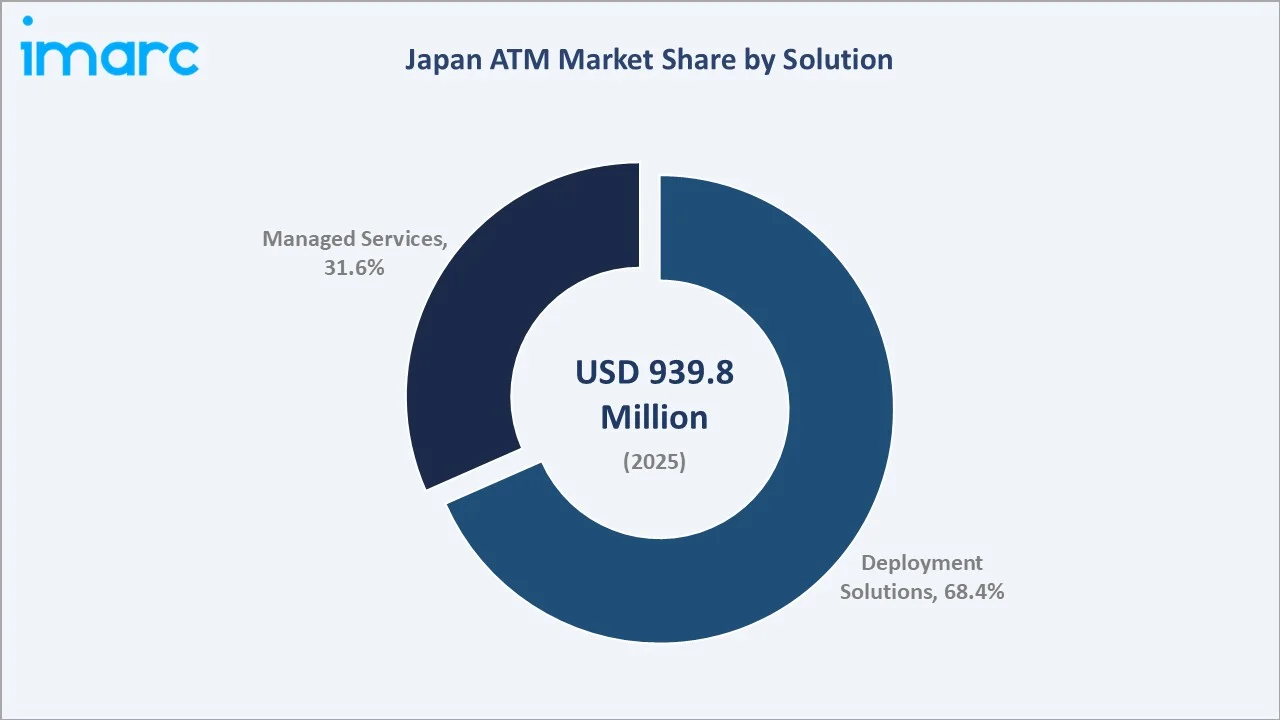
Deployment Solutions leads the solution segment at 68.4%, while Withdrawals dominates application demand at 56.9%. The Kanto Region commands the largest regional share at 34.8%, supported by its dense urban banking infrastructure and high transaction volumes.
Market Snapshot
|
Metric |
Value |
|
Market Size (2025) |
USD 939.8 Million |
|
Forecast Market Size (2034) |
USD 1,346.9 Million |
|
CAGR (2026-2034) |
4.08% |
|
Base Year |
2025 |
|
Historical Period |
2020-2025 |
|
Forecast Period |
2026-2034 |
|
Dominant Solution |
Deployment Solutions (68.4%, 2025) |
|
Dominant Application |
Withdrawals (56.9%, 2025) |
|
Leading Region |
Kanto Region (34.8%, 2025) |
The market expanded from USD 769.5 Million in 2020 to USD 939.8 Million in 2025 and is anchored at USD 1,147.8 Million in 2030 before reaching USD 1,346.9 Million by 2034. Post-pandemic recovery in cash transaction volumes, coupled with ATM network modernization, has sustained steady growth despite Japan's gradual shift toward cashless payments. This consistent trajectory reflects the market's structural resilience even as payment preferences continue to evolve.
To get more information on this market, Request Sample
Managed Services and the Transfers application are set to outpace overall market growth, as banks increasingly outsource ATM operations and multimodal terminals integrate digital fund-transfer capability alongside traditional cash services.
Executive Summary
The Japan ATM market reached USD 939.8 Million in 2025, reflecting the country's continued reliance on cash-based transactions alongside accelerating investment in secure, technologically advanced self-service banking infrastructure. The market is projected to reach USD 1,346.9 Million by 2034.
Deployment Solutions at 68.4% dominates as banks and convenience store operators continue expanding proprietary and shared ATM fleets. Withdrawals at 56.9% leads application demand, reflecting persistent cash usage among Japan's aging population and inbound tourists. Kanto Region at 34.8% leads regionally through Tokyo's dense financial and commercial concentration.
Key Market Insights
|
Insight |
Data |
|
Dominant Solution |
Deployment Solutions - 68.4% share (2025) |
|
Dominant Application |
Withdrawals - 56.9% market share (2025) |
|
Leading Region |
Kanto Region - 34.8% market share (2025) |
|
Market Opportunity |
Biometric authentication; multilingual interfaces; shared bank ATM networks; convenience-store ATM expansion |
Key Analytical Observations Supporting The Above Data:
- Deployment Solutions at 68.4%: This segment leads as banks and convenience store chains such as Seven Bank continue deploying and upgrading proprietary ATM fleets nationwide, prioritizing owned infrastructure over outsourced management for direct customer control.
- Withdrawals at 56.9%: Cash withdrawal remains the primary ATM function in Japan, sustained by strong cultural cash preference, an aging population, and steady demand from domestic users and international visitors alike.
- Kanto Region at 34.8%: Kanto leads through Tokyo's dense population, concentrated banking headquarters, and high commercial transaction volumes, which together generate the country's largest ATM deployment base.
Japan ATM Market Overview
The Japan ATM market encompasses the deployment, management, and servicing of automated teller machines used for cash withdrawals, deposits, and fund transfers across banks, convenience stores, and public locations nationwide. The ecosystem integrates ATM manufacturers, banking institutions, managed service providers, and payment network operators, supported by regulatory bodies overseeing financial security and consumer protection standards.
Japan's market is distinguished by an unusually deep integration between banking and retail infrastructure, exemplified by convenience-store-based ATM networks that now rival traditional bank branches in transaction volume. This structural characteristic differentiates Japan from many other developed ATM markets and continues to shape deployment strategy, service pricing, and technology investment priorities across the industry.
Macroeconomic factors including Japan's aging population, sustained cash-preference culture, rising inbound tourism, and bank cost-rationalization initiatives shape deployment strategies. Concurrently, biometric authentication and multilingual interface adoption are reshaping the technology profile of newly deployed machines.
Market Dynamics
To evaluate market opportunities, Request Sample
Market Drivers
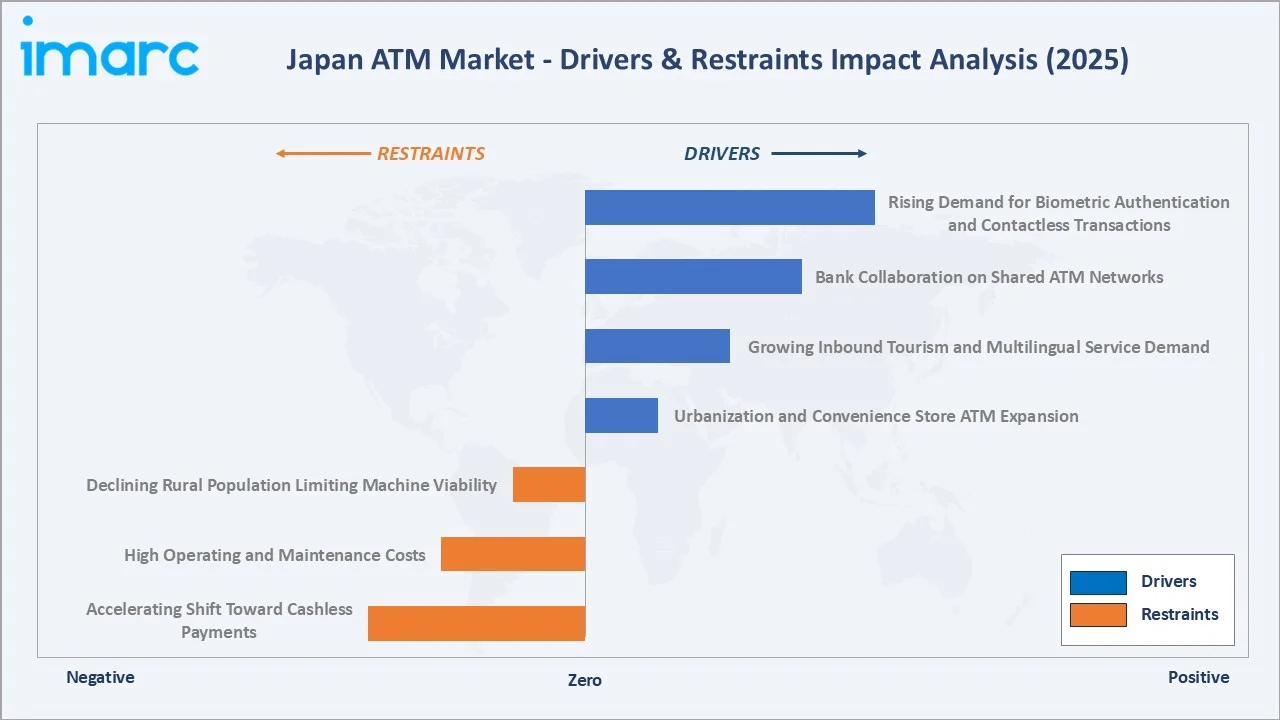
- Rising Demand for Biometric Authentication and Contactless Transactions: Growing security concerns are driving adoption of facial recognition, fingerprint, and contactless card technologies at ATMs, reducing fraud risk and improving user convenience, encouraging banks to accelerate machine upgrades nationwide. Seven Bank's nationwide rollout of facial recognition deposits and withdrawals illustrates how security-driven modernization is becoming a standard feature rather than a premium option. Vendors that integrate these systems efficiently are gaining preferred-supplier status among major banking groups.
- Bank Collaboration on Shared ATM Networks: Major banks are exploring joint ATM management to lower operating costs tied to surveillance, security, and cash logistics, sustaining network modernization investment while improving deployment efficiency across shared infrastructure. Talks among MUFG Bank, Sumitomo Mitsui Banking, and Mizuho Bank on jointly managing ATMs signal a structural shift toward cost-sharing that could reshape deployment economics across the industry. Shared infrastructure reduces redundant capital expenditure while preserving nationwide service coverage.
- Growing Inbound Tourism and Multilingual Service Demand: Japan's expanding inbound tourism is increasing demand for ATMs supporting international cards and multilingual interfaces, prompting operators to upgrade machines at transport hubs, hotels, and retail locations to serve foreign visitors. Record visitor arrivals in recent years have elevated foreign-card ATM acceptance from a niche feature to a baseline requirement at high-traffic tourist locations. This trend is prompting operators to prioritize multilingual upgrades in airports, stations, and hotel districts.
- Urbanization and Convenience Store ATM Expansion: Continued urban population concentration is boosting demand for accessible ATM services in densely populated areas, with convenience store networks such as Seven Bank expanding always-available terminals across residential and commercial zones. Convenience store ATMs have become the primary cash access point for many urban residents, supplementing traditional bank branch networks that continue to consolidate. This shift is reinforcing convenience-store operators' role as core ATM deployment channels.
Market Restraints
- Accelerating Shift Toward Cashless Payments: Growing adoption of digital wallets, QR-code payments, and contactless cards is gradually reducing cash transaction frequency, moderating long-term ATM utilization growth despite Japan's continued cultural preference for cash. Government-backed cashless promotion initiatives and expanding e-money acceptance among younger consumers are gradually narrowing the gap between cash and digital payment usage. This trend is prompting operators to reassess machine density in lower-traffic locations.
- High Operating and Maintenance Costs: Cash replenishment, security surveillance, and machine servicing impose substantial recurring costs on operators, pressuring profitability and prompting network rationalization, particularly in low-traffic rural locations. Rising labor and logistics costs associated with cash-in-transit services are compounding fixed servicing expenses, making underutilized machines increasingly difficult to justify economically. This is accelerating consolidation discussions among smaller regional operators.
- Declining Rural Population Limiting Machine Viability: Population decline in rural prefectures is reducing transaction volumes at existing machines, leading some operators to consolidate or remove underutilized ATMs, constraining unit growth outside major metropolitan regions. Prefectures experiencing the steepest demographic decline are seeing the fastest pace of ATM network thinning, raising concerns about financial access for elderly residents who remain heavily reliant on cash. Operators are piloting mobile ATM units to partially offset coverage gaps.
Market Opportunities
- Biometric-Enabled Terminal Upgrades: Expanding facial recognition and fingerprint authentication across existing ATM fleets offers manufacturers and banks a sustained equipment and software upgrade opportunity through the forecast period. As biometric adoption moves from flagship branches to mass-market deployment, manufacturers offering modular retrofit kits stand to capture recurring upgrade revenue without requiring full machine replacement.
- Shared Managed Services Platforms: Rising bank interest in collaborative ATM management creates opportunities for managed service providers to develop shared cash logistics and maintenance platforms serving multiple institutions. Providers that can offer standardized, multi-bank service platforms are well positioned to capture outsourcing demand as banks prioritize cost efficiency over proprietary infrastructure control.
Market Challenges
- Balancing Cash Infrastructure with Cashless Adoption: Operators must continue investing in ATM infrastructure while digital payment adoption gradually reduces per-machine transaction volumes, complicating long-term network planning and capital allocation. Forecasting the right pace of network investment against an uncertain cashless transition timeline remains a persistent planning challenge for both banks and equipment manufacturers.
- Rural Network Rationalization Pressure: Maintaining adequate ATM access in depopulating rural areas while controlling operating costs presents an ongoing challenge for banks balancing service obligations with profitability. Regulatory and public expectations around minimum service access add further complexity, as outright ATM removal in underserved areas can draw scrutiny even when commercially justified.
Emerging Market Trends
Several structural trends are reshaping ATM deployment and functionality across Japan through the forecast period.
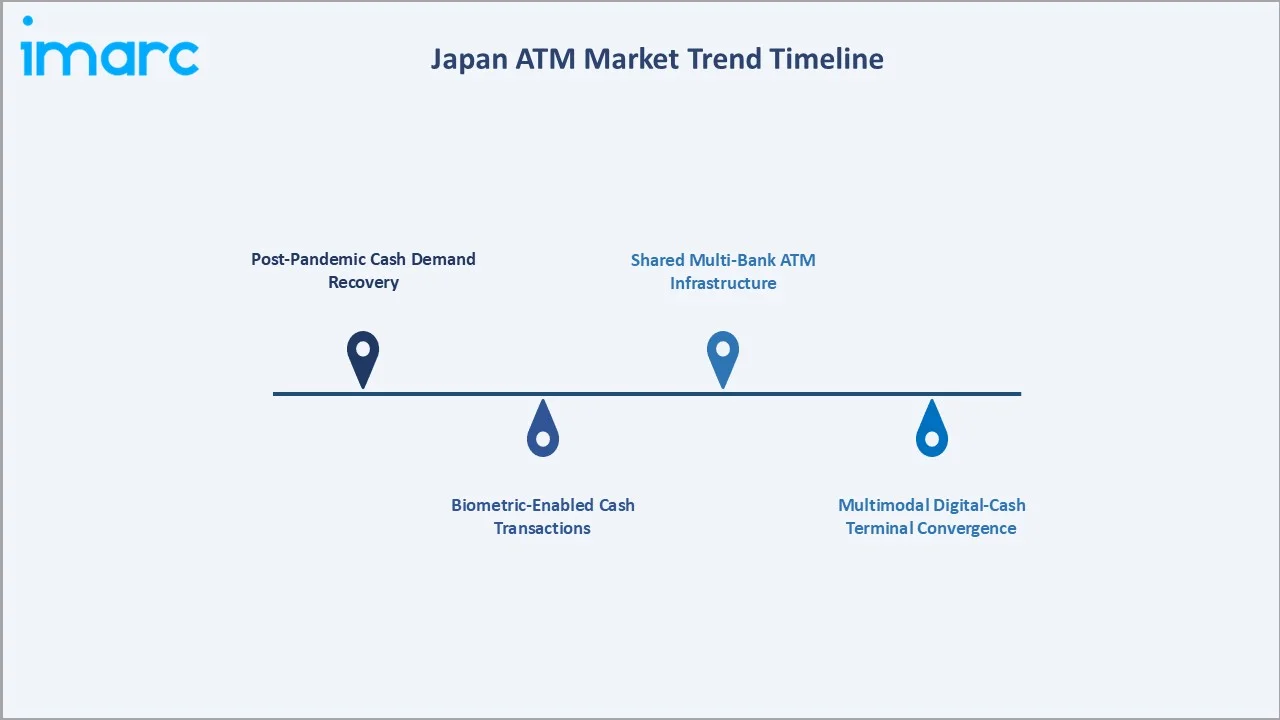
1. Post-Pandemic Cash Demand Recovery: ATM transaction volumes recovered steadily following pandemic-era disruptions as consumer mobility and in-person commerce normalized, restoring cash withdrawal frequency across urban and suburban locations.
2. Biometric-Enabled Cash Transactions: Facial recognition-enabled deposits and withdrawals, pioneered by operators such as Seven Bank in collaboration with technology partners, are expanding across thousands of terminals nationwide, mitigating identity theft and unauthorized access risks.
3. Shared Multi-Bank ATM Infrastructure: Leading banks are evaluating joint ATM operation models to reduce redundant infrastructure and lower per-transaction servicing costs, reflecting an industry-wide shift toward collaborative network rationalization.
4. Multimodal Digital-Cash Terminal Convergence: Next-generation ATMs are increasingly integrating digital banking access alongside traditional cash services, allowing customers to perform a broader range of transactions at a single terminal.
Industry Value Chain Analysis
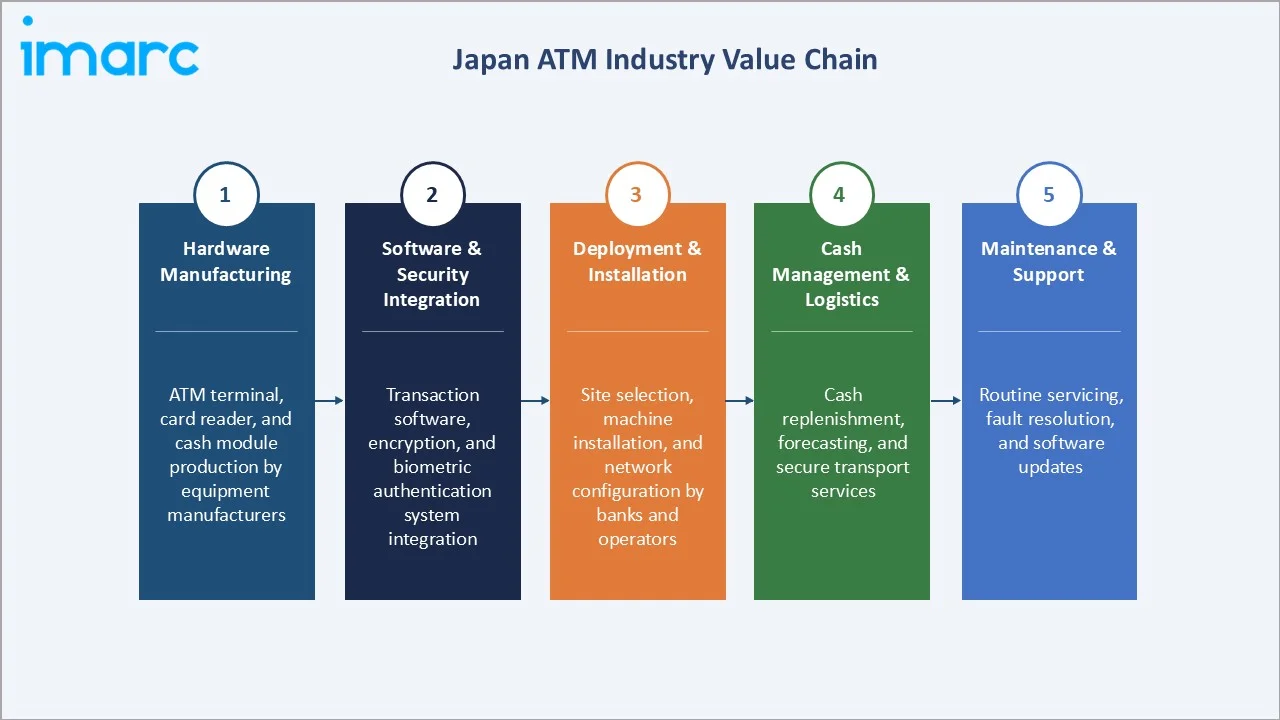
The Japan ATM value chain integrates hardware manufacturing, software and security integration, deployment and installation, cash management logistics, and ongoing maintenance services. This structure links equipment manufacturers with banking institutions and independent ATM deployers to deliver reliable, secure self-service banking access nationwide, with each stage increasingly shaped by security and efficiency-driven technology upgrades.
|
Stage |
Key Participants |
|
Hardware Manufacturing |
ATM terminal, card reader, and cash module production by equipment manufacturers |
|
Software & Security Integration |
Transaction software, encryption, and biometric authentication system integration |
|
Deployment & Installation |
Site selection, machine installation, and network configuration by banks and operators |
|
Cash Management & Logistics |
Cash replenishment, forecasting, and secure transport services |
|
Maintenance & Support |
Routine servicing, fault resolution, and software updates |
The deployment and installation stage remains the value chain's most commercially critical link, directly connecting equipment manufacturers with the banking institutions and convenience store operators that determine nationwide machine placement and utilization.
Technology Landscape in the Japan ATM Industry
Biometric Authentication Systems
Facial recognition and fingerprint-based authentication technologies are increasingly integrated into Japanese ATMs, enhancing transaction security while reducing reliance on physical cards and PINs, particularly for high-value withdrawal and deposit transactions. Early deployments at convenience-store networks are demonstrating measurable reductions in fraud-related losses, accelerating adoption interest among traditional bank branch operators.
Cash Recycling Technology
Cash recycling ATMs, which reuse deposited banknotes for subsequent withdrawals, are gaining adoption among Japanese banks seeking to reduce replenishment frequency and associated logistics costs while improving operational efficiency. Domestic manufacturers' deep expertise in this technology continues to reinforce their competitive advantage over global entrants.
Multilingual and Digital Integration Interfaces
Touchscreen interfaces supporting multiple languages and digital banking integration are expanding to serve inbound tourists and multimodal transaction demand, positioning ATMs as broader self-service financial access points rather than single-function cash terminals.
Market Segmentation Analysis
The report covers the following segments:
|
Segment Category |
Leading Segment |
Market Share |
Year |
|
Solution |
Deployment Solutions |
68.4% |
2025 |
|
Screen Size |
🔒 |
🔒 |
2025 |
|
Application |
Withdrawals |
56.9% |
2025 |
|
ATM Type |
🔒 |
🔒 |
2025 |
|
Region |
Kanto Region |
34.8% |
2025 |

By Solution
Deployment Solutions leads at 68.4% in 2025, encompassing directly owned and operated ATM infrastructure deployed by banks and convenience store networks across onsite, offsite, and mobile formats. This segment's dominance reflects Japanese banks' historical preference for maintaining direct control over customer-facing cash infrastructure.
To access detailed market analysis, Request Sample
Managed Services at 31.6% reflects growing outsourcing of ATM operation, maintenance, and cash management to specialized third-party providers, allowing banks to reduce operating overheads while maintaining service continuity. This segment is expected to expand faster than Deployment Solutions as cost-rationalization pressure intensifies across the banking sector.
By Application
Withdrawals lead at 56.9%, reflecting sustained cash demand among Japan's population and visitors, followed by Deposits at 24.3% and Transfers at 18.8%, which are gaining share as multimodal terminals expand functionality. The relative stability of this application mix distinguishes Japan from markets where digital transfers have already displaced a larger share of ATM activity.
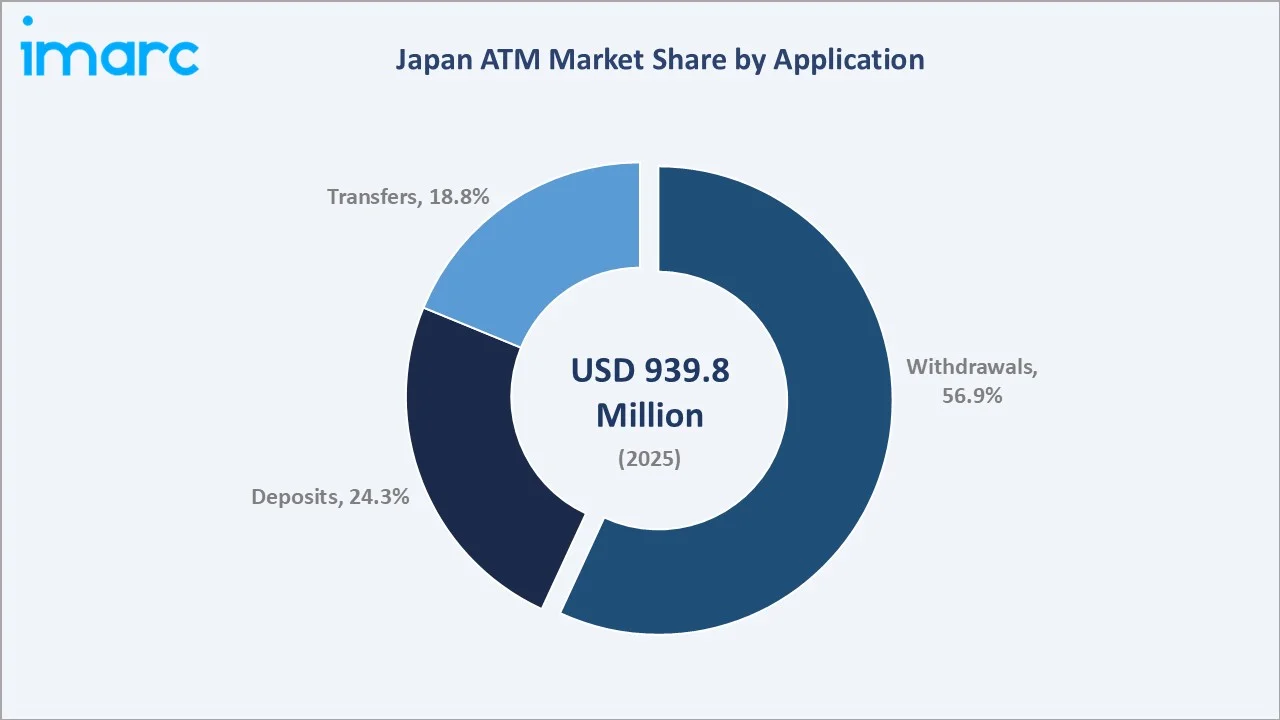
Deposits are growing steadily as recycling-enabled machines simplify cash-in transactions for retail and small business users, while Transfers are expanding through integration with digital banking services at multimodal terminals, particularly among younger, digitally engaged customers.
Regional Market Insights
|
Region |
Share (2025) |
Key ATM Market Characteristics |
|
Kanto Region |
34.8% |
Driven by Tokyo's dense banking headquarters concentration and highest national transaction volumes |
|
Kansai/Kinki Region |
19.6% |
Supported by Osaka and Kyoto's commercial density and strong urban banking infrastructure |
|
Central/Chubu Region |
15.1% |
Anchored by Nagoya's manufacturing economy and expanding retail banking presence |
|
Kyushu-Okinawa Region |
9.8% |
Growing through regional urban centers and rising tourism-linked ATM demand |
|
Tohoku Region |
7.2% |
Reflects steady demand amid gradual rural population decline |
|
Chugoku Region |
5.8% |
Moderate growth supported by regional banking network maintenance |
|
Hokkaido Region |
4.6% |
Seasonal tourism supports demand despite low population density |
|
Shikoku Region |
3.1% |
Smallest regional share, constrained by limited urban concentration |
Kanto and Kansai/Kinki together account for over half of national market share, underscoring the concentration of ATM deployment within Japan's largest metropolitan economic zones.
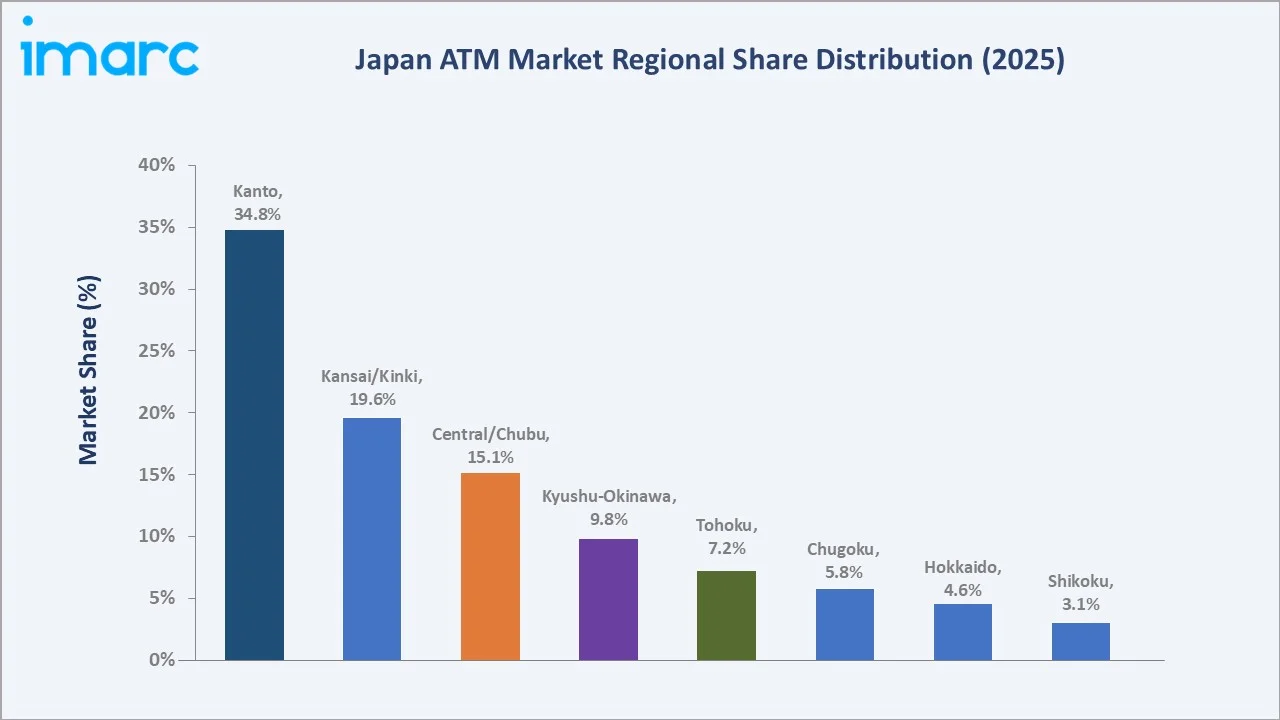
Kanto, at 34.8%, leads through Tokyo's concentrated financial sector and dense commercial footprint. Kansai/Kinki, at 19.6%, reflects Osaka and Kyoto's strong retail and banking presence, while Central/Chubu, at 15.1%, benefits from Nagoya's industrial economy. The remaining five regions collectively account for under a third of national share, underscoring the continued concentration of ATM deployment within Japan's largest urban corridors even as operators explore targeted expansion in underserved secondary cities.
Competitive Landscape
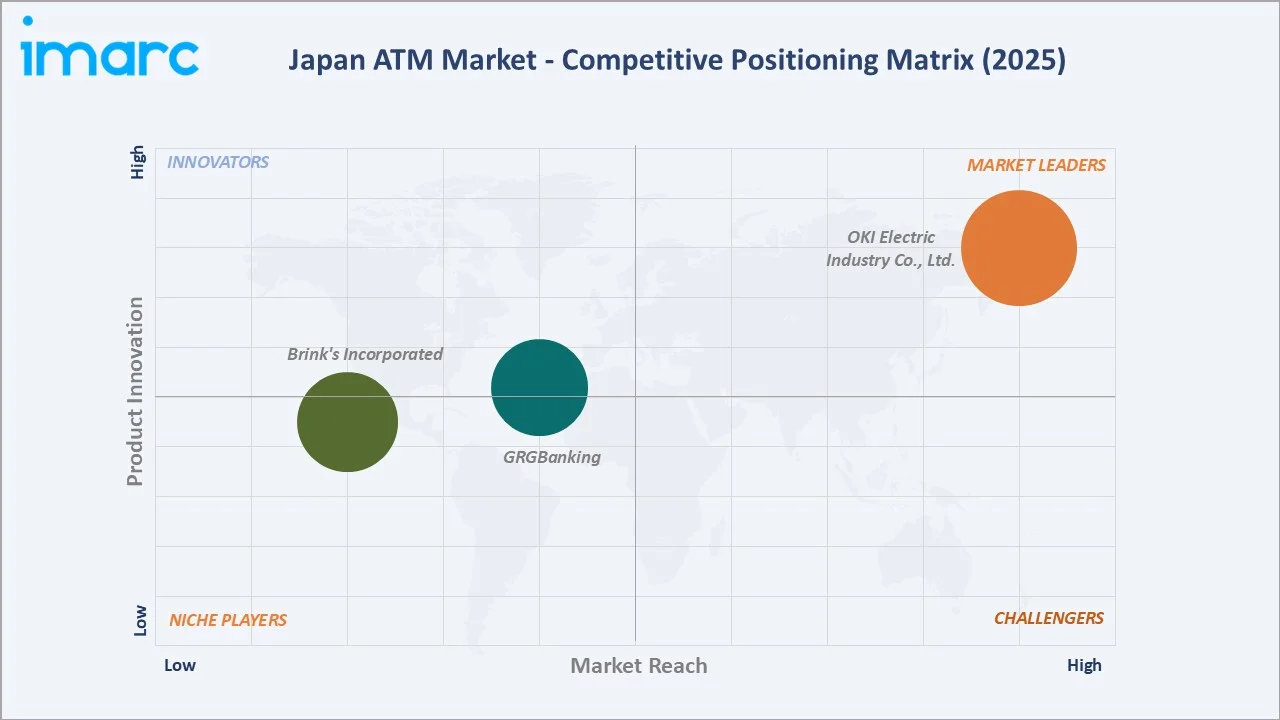
The Japan ATM market competitive landscape features established domestic technology manufacturers alongside global self-service banking equipment providers, competing on machine reliability, biometric security integration, and after-sales service quality. Domestic players benefit from decades-long banking relationships, while global providers compete primarily on pricing and international service scale.
|
Company Name |
Key Products |
Market Position |
Core Strength |
|
OKI Electric Industry Co., Ltd. |
ATM-Recycler G8, BRM-RG8 |
Market Leader |
Long-established ATM manufacturer with advanced cash handling and recycling systems |
|
Brink's Incorporated |
Cash recycling ATMs, Multi-functional ATMs and ITMs, Cash dispense ATMs, ATM Management Platform (AMP) |
Established Player |
Global self-service banking technology provider with extensive service networks |
|
GRGBanking |
H22N Series, H22V Series, H34N Series, H34V Series, H48ND Series, H48VD Series |
Emerging Player |
Expanding self-service financial equipment portfolio across Asia-Pacific markets |
Key players include OKI Electric Industry Co., Ltd., Brink's Incorporated, GRGBanking, and others.
Key Company Profiles
GRGBanking
GRG Banking is a leading global manufacturer of self-service banking equipment, with a broad international footprint spanning Asia, the Middle East, Europe, and the Americas. The company continues to expand its cash recycling and self-service terminal portfolio, serving financial institutions across a wide range of international markets.
- Key Products: H22N Series, H22V Series, H34N Series, H34V Series, H48ND Series, H48VD Series
- Strategic Focus: Expanding self-service financial equipment and cash recycling technology across Asia-Pacific markets, with growth currently concentrated outside Japan through international distribution and OEM partnerships rather than direct domestic operations.
OKI Electric Industry Co., Ltd.
OKI Electric Industry Co., Ltd. is a long-established Japanese manufacturer specializing in cash recycling ATMs and financial self-service equipment. The company's decades-long focus on cash handling technology has made it a trusted supplier to domestic and international banking clients.
- Key Products: ATM-Recycler G8, BRM-RG8
- Recent Developments: In March 2026, Hitachi and OKI entered into an agreement to integrate their automated equipment businesses, including automated teller machines (ATMs), through the establishment of a joint venture. The collaboration is intended to strengthen competitiveness and support sustainable growth in Japan and international markets by addressing evolving customer requirements and structural changes in the ATM industry.
- Strategic Focus: Expanding cash recycling and biometric-enabled terminal offerings for domestic and international banking clients.
Market Concentration Analysis
The Japan ATM market is moderately concentrated, with the top three key players collectively holding substantial domestic manufacturing share, supported by long-standing banking relationships.
Global providers maintain smaller but growing footholds through competitive pricing and expanding service capabilities in the Japanese market. Concentration is expected to remain broadly stable through the forecast period, as switching costs and established service networks continue to favor incumbent domestic suppliers over new entrants.
Investment & Growth Opportunities
Highest Growth Segments
Deployment Solutions, biometric-enabled ATMs, and cash recycling technology represent the highest-growth investment vectors, supported by bank modernization initiatives and rising security-driven upgrade cycles through 2034.
Emerging Investment Opportunities
Managed services present a growing opportunity as banks increasingly outsource ATM operation and cash logistics to specialized providers, seeking to reduce fixed operating costs while maintaining nationwide service coverage.
Investment Themes
- Biometric Security Integration: Investment in facial recognition and fingerprint authentication technology offers a differentiated value proposition for operators seeking to reduce fraud and enhance customer trust. Early movers in biometric integration are establishing reference deployments that strengthen their competitive position when banks issue nationwide upgrade tenders.
- Shared Network Infrastructure: Collaborative multi-bank ATM management presents a structural cost-reduction opportunity, creating investment potential in shared infrastructure platforms and logistics coordination services. As shared-network discussions among major banks mature, providers offering neutral, multi-bank-compatible platforms could capture a disproportionate share of future contracts.
Future Market Outlook (2026-2034)
The Japan ATM market is projected to grow from USD 939.8 Million in 2025 to USD 1,346.9 Million by 2034, delivering a 4.08% CAGR over the forecast period. The market's anchor value of USD 1,147.8 Million in 2030 reflects continued investment in biometric-enabled and cash-recycling terminals, even as digital payment adoption gradually moderates transaction growth.
Two structural forces will define market evolution through 2034: sustained cash-culture demand balanced against accelerating cashless payment adoption, and continued network rationalization as banks pursue shared infrastructure models to control operating costs while maintaining nationwide service accessibility.
By the end of the forecast period, industry participants expect biometric authentication to have transitioned from a differentiating feature to a baseline expectation across the majority of newly deployed machines, while managed services penetration rises as banks increasingly prioritize cost control over direct infrastructure ownership.
Research Methodology
Primary Research
Primary research comprised structured interviews with banking technology executives, ATM operations managers, and financial self-service equipment specialists across Japan, supplemented by consultations with regional banking association representatives to validate deployment and utilization trends.
Secondary Research
Secondary research encompassed company annual reports, banking industry association data, government financial infrastructure statistics, and regional demographic and tourism datasets, cross-referenced against publicly disclosed bank network rationalization announcements.
Forecasting Models
Market forecasts were developed using a bottom-up model incorporating ATM unit deployment trends, transaction volume patterns by application, and regional demographic and banking infrastructure data, adjusted for anticipated cashless payment substitution effects through 2034.
Japan ATM Market Report Coverage:
| Report Features | Details |
|---|---|
| Base Year of the Analysis | 2025 |
| Historical Period | 2020-2025 |
| Forecast Period | 2026-2034 |
| Units | Million USD |
| Scope of the Report |
Exploration of Historical and Forecast Trends, Industry Catalysts and Challenges, Segment-Wise Historical and Predictive Market Assessment:
|
| Solutions Covered |
|
| Screen Sizes Covered | 15" and Below, Above 15" |
| Applications Covered | Withdrawals, Transfers, Deposits |
| ATM Types Covered | Conventional/Bank ATMs, Brown Label ATMs, White Label ATMs, Smart ATMs, Cash Dispensers |
| Regions Covered | Kanto Region, Kansai/Kinki Region, Central/ Chubu Region, Kyushu-Okinawa Region, Tohoku Region, Chugoku Region, Hokkaido Region, Shikoku Region |
| Companies Covered | OKI Electric Industry Co. Ltd., Brink's Incorporated, GRGBanking, etc. |
| Customization Scope | 10% Free Customization |
| Post-Sale Analyst Support | 10-12 Weeks |
| Delivery Format | PDF and Excel through Email (We can also provide the editable version of the report in PPT/Word format on special request) |
Key Benefits for Stakeholders:
- IMARC’s industry report offers a comprehensive quantitative analysis of various market segments, historical and current market trends, market forecasts, and dynamics of the Japan ATM market from 2020-2034.
- The research report provides the latest information on the market drivers, challenges, and opportunities in the Japan ATM market.
- Porter's five forces analysis assist stakeholders in assessing the impact of new entrants, competitive rivalry, supplier power, buyer power, and the threat of substitution. It helps stakeholders to analyze the level of competition within the Japan ATM industry and its attractiveness.
- Competitive landscape allows stakeholders to understand their competitive environment and provides an insight into the current positions of key players in the market.
Frequently Asked Questions About the Japan ATM Market Report
The Japan ATM market reached USD 939.8 Million in 2025, driven by Deployment Solutions dominant at 68.4%, Withdrawals leading application demand at 56.9%, and the Kanto Region commanding 34.8% regional share. Growth continues to be supported by steady cash usage alongside rising security-driven technology upgrades.
The Japan ATM market grows at a 4.08% CAGR during 2026-2034, reaching USD 1,346.9 Million by 2034, supported by biometric authentication adoption, shared ATM network initiatives, and continued convenience-store network expansion.
Deployment Solutions leads at 68.4%, reflecting banks' and convenience store operators' continued investment in directly owned and operated ATM infrastructure nationwide, while Managed Services is expanding as outsourcing gains traction.
Withdrawals lead at 56.9%, reflecting Japan's sustained cash-preference culture among domestic users and international visitors, followed by Deposits at 24.3% and Transfers at 18.8%, both gaining share through multimodal terminal adoption.
The Kanto Region leads at 34.8%, driven by Tokyo's concentrated banking headquarters and highest national transaction volumes, followed by Kansai/Kinki at 19.6% and Central/Chubu at 15.1%.
Leading companies include OKI Electric Industry Co., Ltd., Brink's Incorporated, GRGBanking, and others.
The Japan ATM market is projected to reach approximately USD 1,147.8 Million by 2030, supported by continued biometric-enabled terminal deployment, cash recycling technology adoption, and expanding shared-network arrangements among major banks.
Priority investment opportunities include biometric security integration, cash recycling technology, managed services expansion, and shared multi-bank ATM network infrastructure, each offering distinct pathways to capture growth through 2034.
Need more help?
- Speak to our experienced analysts for insights on the current market scenarios.
- Include additional segments and countries to customize the report as per your requirement.
- Gain an unparalleled competitive advantage in your domain by understanding how to utilize the report and positively impacting your operations and revenue.
- For further assistance, please connect with our analysts.
 Request Customization
 Speak to an Analyst
 Request Brochure
 Inquire Before Buying
Benefits of Customization
- Personalize this research
- Triangulate with your data
- Get data as per your format and definition
- Gain a deeper dive into a specific application, geography, customer, or competitor
- Any level of personalization
Get in Touch With Us
UNITED STATES
Phone: +1-201-971-6302
INDIA
Phone: +91-120-433-0800
UNITED KINGDOM
Phone: +44-753-714-6104
Email: [email protected]
Client Testimonials




.webp)




.webp)













Related Reports

Choose your plan
*Please note that the prices mentioned below are starting prices for each bundle type. Kindly contact our team for further details.*
Single User License
- 1 User License, Access on 2 Devices
- PDF Report + Excel Dataset (Password Protected)
- Lifetime Access
- No Printing Rights
- 10% Free Report Customization
- 10–12 Weeks of Analyst Support
Five User License
- Access for 5 Users, 2 Devices per User
- PDF Report + Excel Dataset (Password Protected)
- Lifetime Access
- Dedicated Account Manager
- 12–14 Weeks of Analyst Support
- No Printing Rights
- 15% Free Report Customization
- 25% Discount on Your Next Purchase
Corporate User License
- Unlimited User Access (Within Your Organization)
- PDF Report + Excel Dataset
- Lifetime Access
- Dedicated Account Manager
- 14–20 Weeks of Analyst Support
- No Printing Rights
- 20% Free Report Customization
- 30% Discount on Your Next Purchase
Essential Insights
What's included:
3 reports
- Lifetime Access
- PDF Reports
- Excel Datasets
- 2 Weeks of Free Analyst Support
- 2 User Licenses
- Access on 2 Devices
- Printing Rights
- Complimentary PowerPoint (PPT) Version
- Complimentary License Upgrade
Professional Access
What's included:
5 reports
- Lifetime Access
- PDF Reports
- Excel Datasets
- 8 Weeks of Free Analyst Support
- 2 User Licenses
- Access on 2 Devices
- Printing Rights
- Complimentary PowerPoint (PPT) Version
- Complimentary License Upgrade
Business Advantage
What's included:
8 reports
- Lifetime Access
- PDF Reports
- Excel Datasets
- 14 Weeks of Free Analyst Support
- 2 User Licenses
- Access on 2 Devices
- Printing Rights
- Complimentary PowerPoint (PPT) Version
- Complimentary License Upgrade
Enterprise Intelligence
What's included:
10 reports
- Lifetime Access
- PDF Reports
- Excel Datasets
- 20 Weeks of Free Analyst Support
- 2 User Licenses
- Access on 2 Devices
- Printing Rights
- Complimentary PowerPoint (PPT) Version
- Complimentary License Upgrade