
Japan Health Insurance Market Size, Share, Trends and Forecast by Provider, Type, Plan Type, Demographic, Provider Type, and Region, 2026-2034
Japan Health Insurance Market Size, Share, Trends & Forecast (2026-2034)
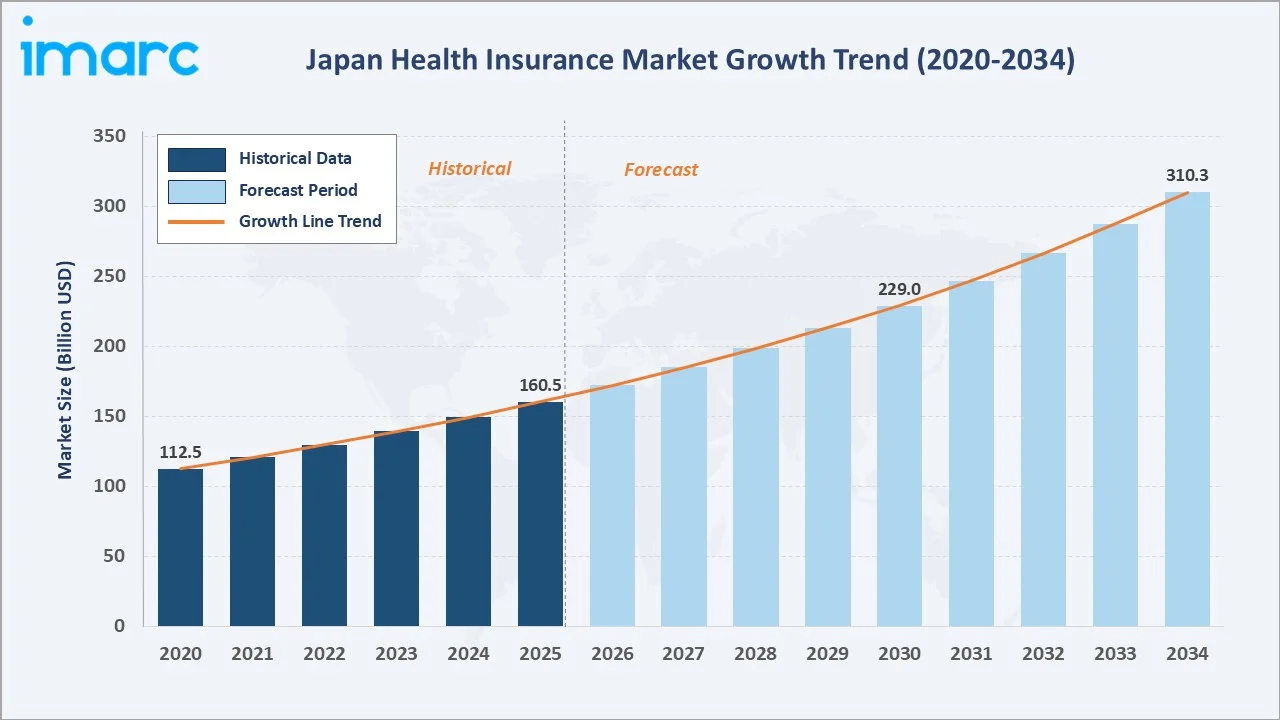
The Japan health insurance market grew from USD 160.5 Billion in 2025 to USD 175.6 Billion in 2026 and is projected to reach USD 310.3 Billion by 2034, exhibiting a CAGR of 7.37% during 2026-2034. Rapid population aging, with 29.4% of residents aged 65 and above as of 2025, alongside rising healthcare spending, expanding private medical riders, and accelerating digital insurance adoption, is the primary force shaping the market growth.
Public providers lead the provider segment at 61.8%, life-time coverage dominates the type segment at 68.4%, and Kanto Region commands 35.6% regional share.
Market Snapshot
|
Metric |
Value |
|
Base Year Market Size (2025) |
USD 160.5 Billion |
| Market Size (2026) | USD 175.6 Billion |
|
Forecast Market Size (2034) |
USD 310.3 Billion |
|
CAGR (2026-2034) |
7.37% |
|
Base Year |
2025 |
|
Historical Period |
2020-2025 |
|
Forecast Period |
2026-2034 |
|
Largest Region |
Kanto Region (35.6%, 2025) |
|
Second Largest Region |
Kansai/Kinki Region (18.5%, 2025) |
|
Leading Provider |
Public Providers (61.8%, 2025) |
|
Leading Type |
Life-Time Coverage (68.4%, 2025) |
The Japan health insurance market expanded from USD 112.5 Billion in 2020 to USD 160.5 Billion in 2025 and an estimated USD 175.6 Billion in 2026, supported by a mature universal coverage system, growing demand for supplementary medical protection, and steady premium growth. Anchored at USD 229.0 Billion in 2030, the forecast to USD 310.3 Billion by 2034 is driven by an aging society, higher out-of-pocket exposure, and rising uptake of private cancer and nursing-care products.
To get more information on this market, Request Sample
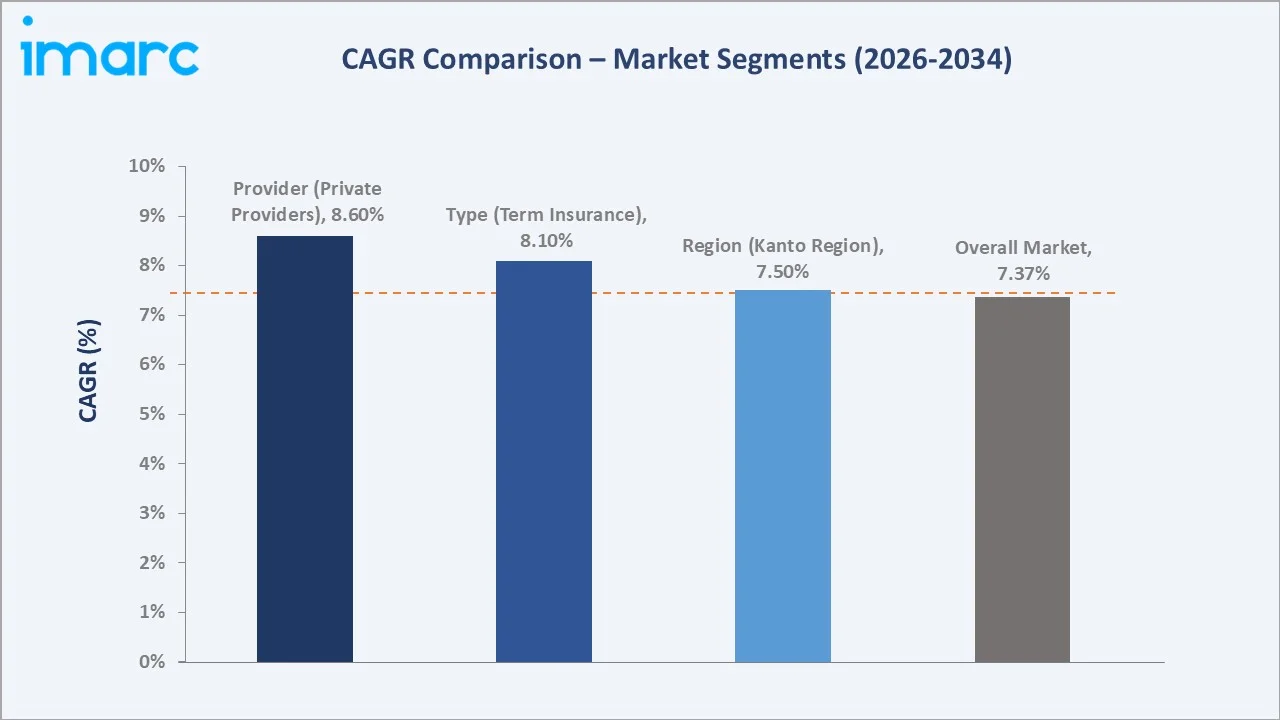
CAGR trajectories across provider and type sub-segments show private and term insurance expanding faster than the overall 7.37% market CAGR, reflecting stronger demand for flexible, self-funded medical protection among younger and working-age policyholders.
Executive Summary
The Japan health insurance market is on a steady growth path, moving from USD 112.5 Billion in 2020 to USD 175.6 Billion in 2026, and is projected to reach USD 310.3 Billion by 2034. The market rests on one of the world's most comprehensive universal health systems, complemented by a large and growing private layer of medical, cancer, and nursing-care coverage. Demographic pressure, rising treatment costs, and evolving consumer preferences are pushing households toward supplementary protection.
Public providers dominate the provider segment at 61.8% in 2025, reflecting the central role of statutory insurance across employees and residents. Life-time coverage leads the type segment at 68.4%, favored for lifelong security in an aging society. Kanto Region commands 35.6% of the market, anchored by Tokyo's dense population and high concentration of insurers.
Key Market Insights
|
Insight |
Data |
|
Leading Provider |
Public Providers - 61.8% share (2025) |
|
Second Largest Provider |
Private Providers - 38.2% share (2025) |
|
Leading Type |
Life-Time Coverage - 68.4% share (2025) |
|
Second Largest Type |
Term Insurance - 31.6% share (2025) |
|
Leading Region |
Kanto Region - 35.6% share (2025) |
|
Second Largest Region |
Kansai/Kinki Region - 18.5% share (2025) |
|
Top Companies |
Nippon Life Insurance Company, Daiichi Life Group, Inc., Aflac Incorporated, Tokio Marine Holdings, Inc., Sompo Holdings, Inc. |
Key Analytical Observations Expanding On The Data Above:
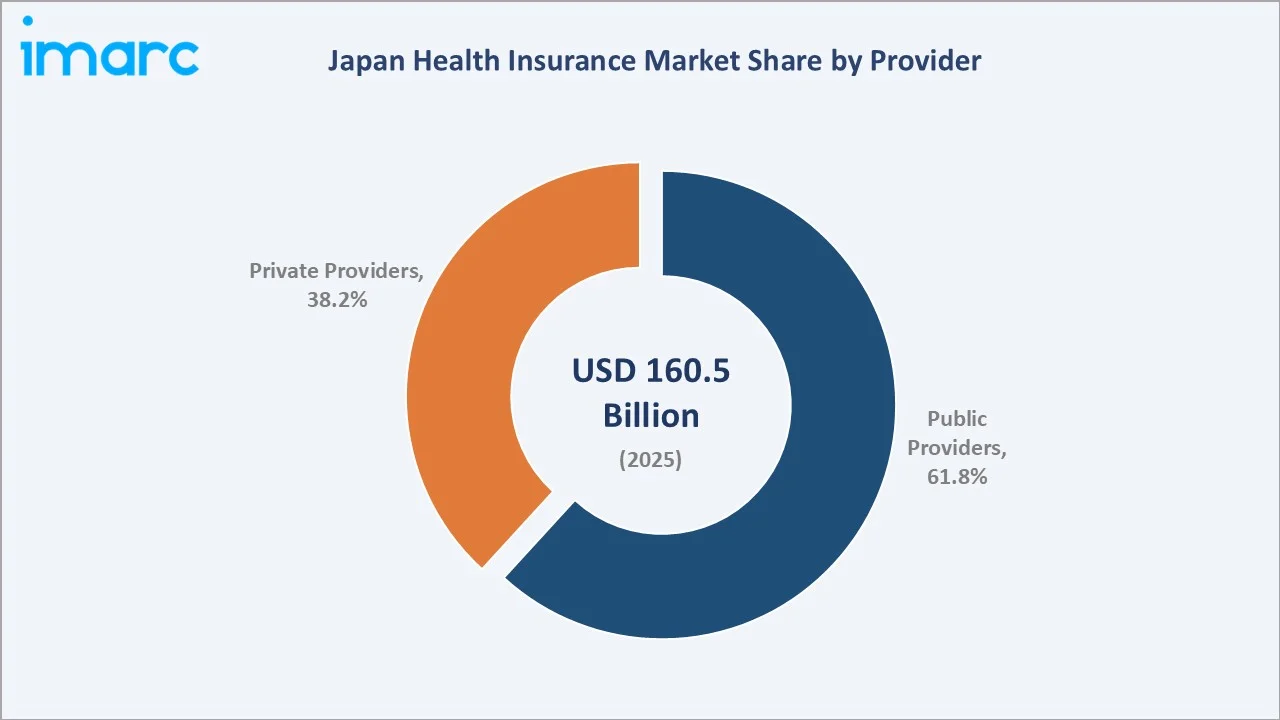
- Public providers at 61.8% reflect Japan's mandatory statutory system, which covers the entire population through employee and residents' health insurance and forms the backbone of healthcare financing.
- Private providers at 38.2% are expanding as households add supplementary medical, cancer, and nursing-care policies to cover gaps left by public reimbursement and rising out-of-pocket costs.
- Life-time coverage leadership at 68.4% indicates a strong preference for lifelong security, with policyholders valuing guaranteed benefits and stable premiums across their later years.
- Term insurance at 31.6% appeals to younger and cost-conscious buyers seeking affordable, fixed-period protection, often bundled with employer-linked or online-first plans.
- Kanto Region at 35.6% leads regional demand, anchored by Greater Tokyo, high household density, elevated incomes, and a large concentration of insurers and distribution networks in the country.
Japan Health Insurance Market Overview
Health insurance in Japan refers to arrangements that finance medical, hospitalization, surgical, cancer, and nursing-care costs, delivered through statutory public schemes and supplementary private policies. The public system provides universal coverage, while private insurers offer products that reduce out-of-pocket exposure and add income-protection and lump-sum benefits.
The ecosystem integrates public and private insurance providers, healthcare facilities, regulators such as the Ministry of Health, distribution partners, reinsurers, and technology vendors. Together they support a mature market where demographic change and cost inflation continue to lift demand for protection.
Market Dynamics
To evaluate market opportunities, Request Sample
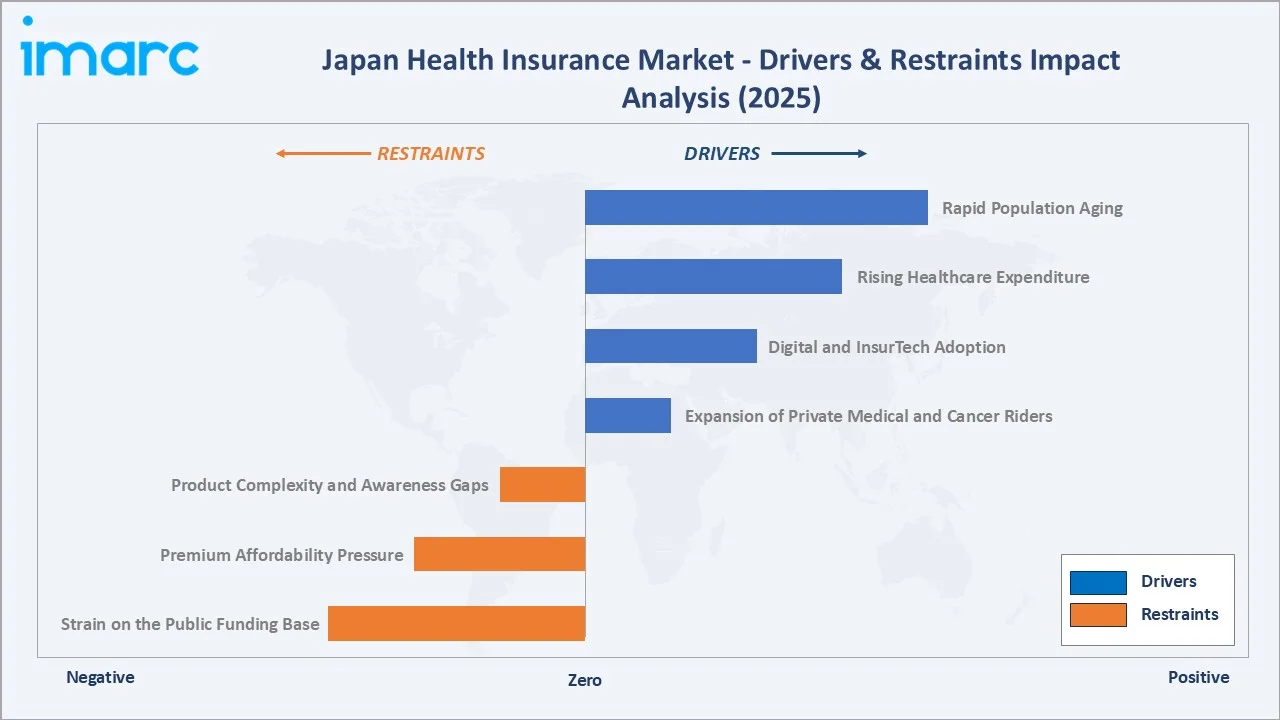
Market Drivers
- Rapid Population Aging: A large and growing elderly population is increasing demand for medical and nursing-care coverage. Rising life expectancy and a higher prevalence of age-related illnesses are encouraging greater enrollment in comprehensive health insurance products.
- Rising Healthcare Expenditure: Steady growth in national medical spending and higher out-of-pocket exposure are encouraging households to buy supplementary policies that cushion treatment, hospitalization, and advanced-care costs.
- Expansion of Private Medical and Cancer Riders: Insurers are broadening rider portfolios covering cancer, lifestyle diseases, and advanced medical treatment, giving policyholders flexible ways to top up statutory coverage.
- Digital and InsurTech Adoption: Online distribution, simplified underwriting, and app-based servicing are lowering acquisition friction and expanding reach among younger, digitally engaged buyers across the country. As per IMARC Group, the Japan Insurtech market size reached USD 573.2 Million in 2025.
Market Restraints
- Strain on the Public Funding Base: A shrinking working-age population is pressuring the contribution base that funds statutory insurance. This is increasing financial pressure on insurers and encouraging closer scrutiny of long-term benefit sustainability and reimbursement models.
- Premium Affordability Pressure: Rising medical costs and stagnant real wages constrain discretionary spending, making some households cautious about adding or upgrading supplementary private coverage.
- Product Complexity and Awareness Gaps: Overlapping public and private benefits can make product selection difficult, slowing uptake among consumers who find coverage structures hard to compare.
Market Opportunities
- Nursing-Care and Dementia Products: An aging society creates strong demand for long-term care, dementia, and home-care insurance, opening new revenue pools for insurers able to design targeted, needs-based products.
- Wellness-Linked and Preventive Coverage: Policies that reward healthy behavior and integrate prevention offer differentiation, better risk pools, and deeper engagement with policyholders across all age groups.
Market Challenges
- Regulatory and Solvency Requirements: Evolving capital, disclosure, and consumer-protection rules require continued investment in compliance and risk management, particularly for products with long-tail liabilities.
- Low-Interest-Rate Legacy: Long periods of low yields have pressured the investment returns that back long-duration policies, challenging pricing and profitability for savings-linked health products.
Emerging Market Trends
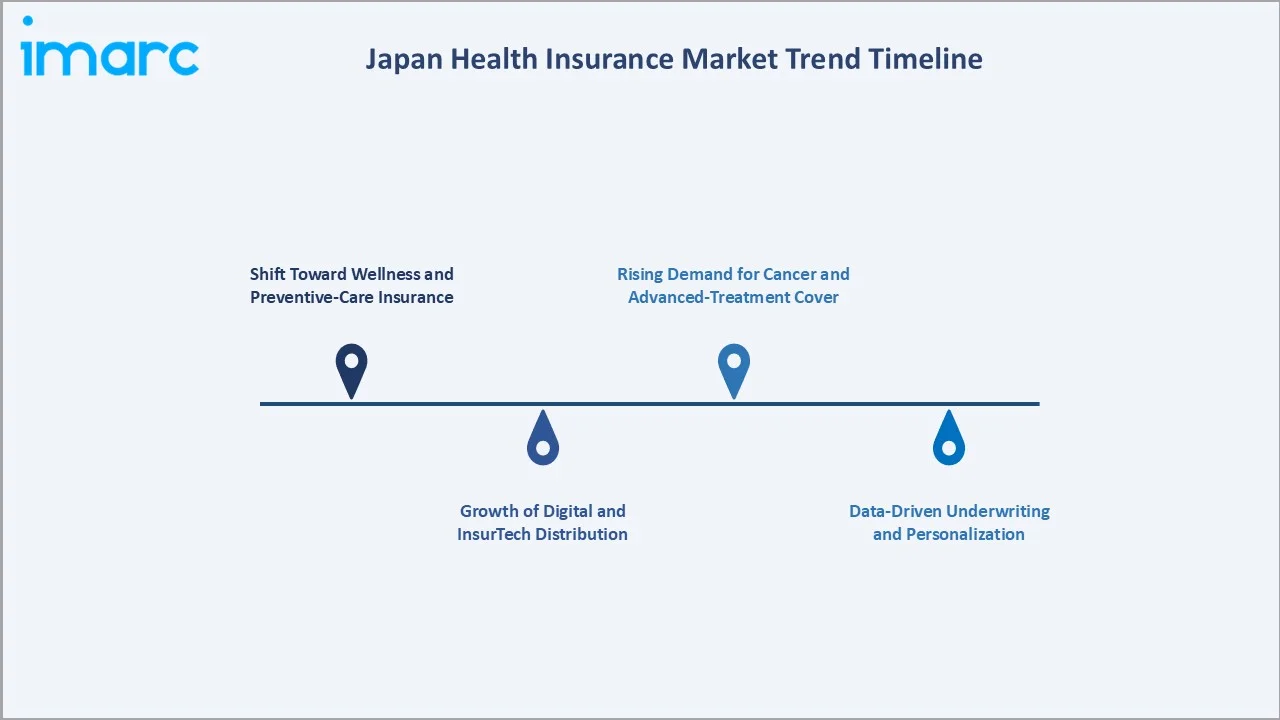
1. Shift Toward Wellness and Preventive-Care Insurance
Insurers are moving beyond pure indemnity toward health promotion models that reward exercise, screenings, and healthy habits. Preventive features help manage claims while keeping older policyholders engaged. These programs also strengthen retention and support healthier, more balanced risk pools.
2. Growth of Digital and InsurTech Distribution
Online platforms, mobile apps, and paperless underwriting are reshaping how policies are sold and serviced. Digital-first insurers and comparison portals are expanding access, particularly among younger buyers who prefer self-directed, transparent purchasing journeys.
3. Rising Demand for Cancer and Advanced-Treatment Cover
Cancer, critical-illness, and advanced-medical products continue to gain traction as treatment costs rise and new therapies emerge. Lump-sum and treatment-linked benefits give policyholders financial flexibility beyond standard public reimbursement.
4. Data-Driven Underwriting and Personalization
Insurers are applying analytics and health data to refine pricing, tailor coverage, and detect fraud. Personalized products and dynamic pricing are enabling more precise segmentation across a diverse and aging customer base.
Industry Value Chain Analysis
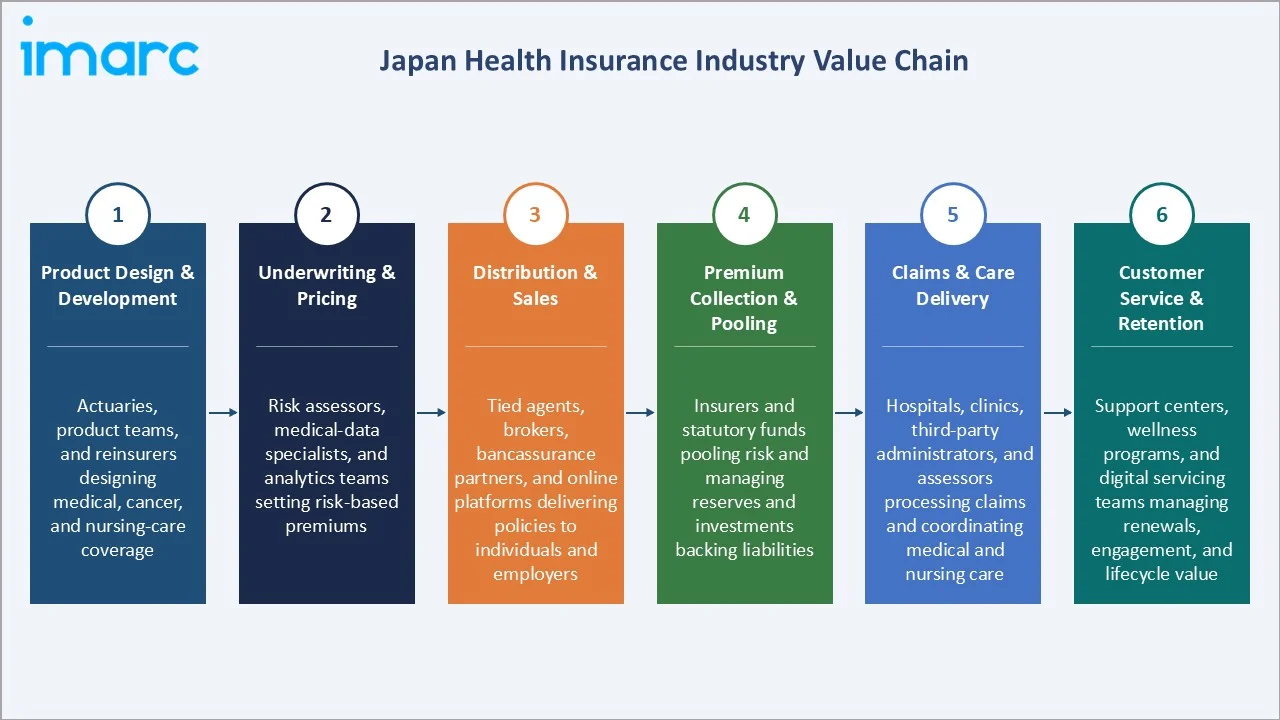
The Japan health insurance value chain spans product design through customer retention. Underwriting expertise, distribution reach, and claims-and-care capabilities capture the highest value, while data and technology increasingly determine competitive strength across the cycle.
|
Stage |
Key Players / Examples |
|
Product Design & Development |
Actuaries, product teams, and reinsurers designing medical, cancer, and nursing-care coverage and benefit structures |
|
Underwriting & Pricing |
Risk assessors, medical-data specialists, and analytics teams evaluating applicants and setting risk-based premiums |
|
Distribution & Sales |
Tied agents, brokers, bancassurance partners, and online platforms delivering policies to individuals and employers |
|
Premium Collection & Pooling |
Insurers and statutory funds collecting contributions, pooling risk, and managing reserves and investments backing liabilities |
|
Claims & Care Delivery |
Hospitals, clinics, third-party administrators, and assessors processing claims and coordinating medical and nursing care |
|
Customer Service & Retention |
Support centers, wellness programs, and digital servicing teams managing renewals, engagement, and lifecycle value |
Vertically integrated groups that combine underwriting scale, proprietary distribution, and strong data capabilities are positioned to capture more value than players reliant on third-party channels.
Technology Landscape in the Japan Health Insurance Industry
Data Analytics and AI Underwriting
Insurers are deploying analytics and machine learning to assess risk, streamline underwriting, and personalize products. Health and lifestyle data enable more precise pricing and faster policy issuance, supporting efficiency across a large, diverse customer base.
Digital Distribution and Self-Service Platforms
Mobile apps, online portals, and comparison sites are becoming primary purchase and servicing channels. Paperless onboarding, e-KYC, and digital claims are reducing friction and improving the experience for policyholders and agents alike.
Wellness Technology and Wearables
Wearables, health apps, and connected devices are being integrated into wellness-linked policies. These tools track activity and health metrics, enabling reward-based products that encourage prevention and healthier lifestyles.
Automation in Claims and Servicing
Robotic process automation and AI-assisted claims handling are accelerating settlement, cutting costs, and improving accuracy. Automated fraud detection and back-office workflows are strengthening operational resilience for insurers.
Market Segmentation Analysis
The report covers the following segments:
|
Segment Category |
Leading Segment |
Market Share |
Year |
|
Provider |
Public Providers |
61.8% |
2025 |
|
Type |
Life-Time Coverage |
68.4% |
2025 |
|
Plan Type |
🔒 |
🔒 |
2025 |
|
Demographics |
🔒 |
🔒 |
2025 |
|
Provider Type |
🔒 |
🔒 |
2025 |
|
Region |
Kanto Region |
35.6% |
2025 |

By Provider
Public providers command a 61.8% majority share in 2025, driven by Japan's mandatory universal system covering employees and residents. The segment underpins healthcare financing, offering broad access and standardized benefits across the population.
To access detailed market analysis, Request Sample
Private providers at 38.2% in 2025 supply supplementary medical, cancer, and nursing-care products. The segment is expanding as households seek to offset out-of-pocket costs and add flexible, benefit-rich coverage that complements statutory protection.
By Type
Life-time coverage dominates with 68.4% share in 2025, reflecting a strong preference for lifelong protection and guaranteed benefits. The format suits an aging society where policyholders value long-term security and predictable premiums.
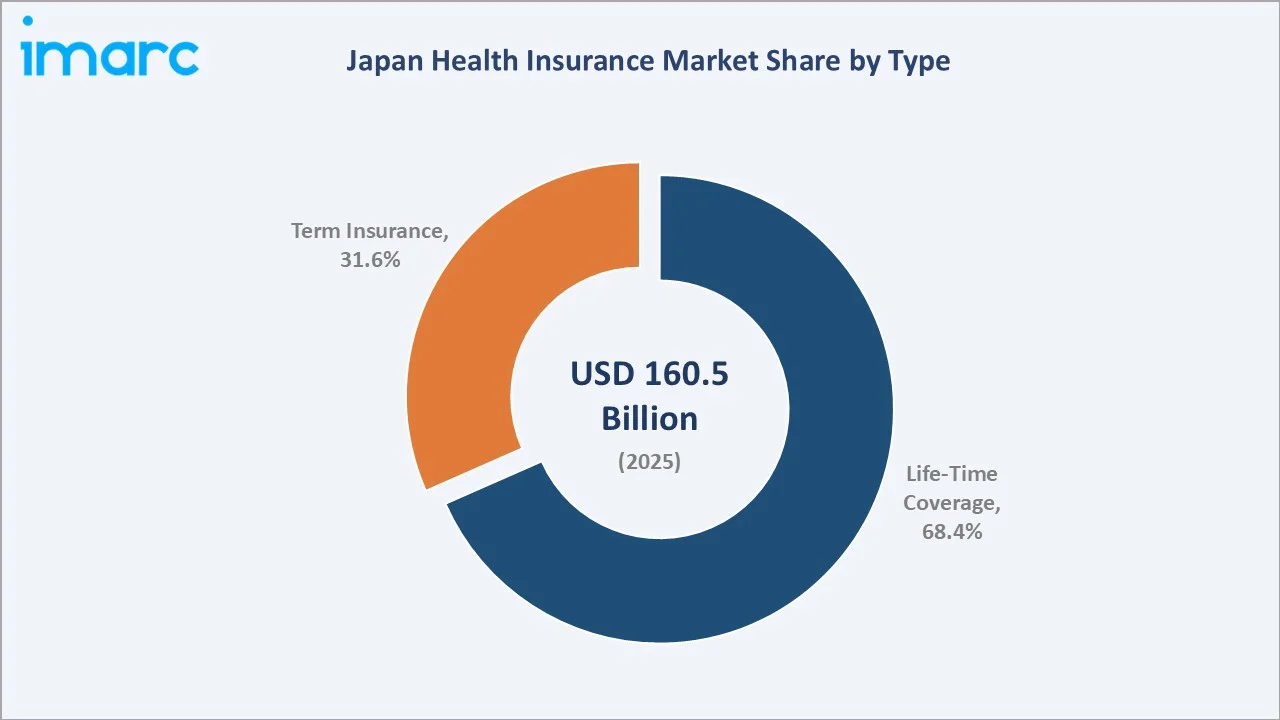
Term insurance at 31.6% appeals to younger and cost-conscious buyers seeking affordable, fixed-period cover. Its growth is supported by online-first plans, employer-linked schemes, and simple, transparent product structures.
Regional Market Insights
|
Region |
Share (2025) |
Key Growth Drivers |
|
Kanto Region |
35.6% |
Dense population, high incomes, strong insurer presence, and elevated healthcare demand |
|
Kansai/Kinki Region |
18.5% |
Large urban base around Osaka, established distribution networks, and rising senior population |
|
Central/Chubu Region |
15.1% |
Industrial economy, stable employment, and steady corporate and individual coverage uptake |
|
Kyushu-Okinawa Region |
8.9% |
Growing awareness, aging rural communities, and expanding regional insurer activity |
|
Tohoku Region |
7.0% |
Older demographics, resilient demand for medical protection, and public-scheme reliance |
|
Chugoku Region |
5.4% |
Moderate urbanization, aging population, and gradual private-coverage growth |
|
Hokkaido Region |
5.0% |
Dispersed population, seasonal healthcare needs, and rising supplementary demand |
|
Shikoku Region |
4.5% |
Smaller population, aging communities, and steady baseline insurance participation |
Kanto Region at 35.6% in 2025 leads the regional landscape, anchored by Greater Tokyo. High population density, elevated household incomes, and a large concentration of insurers and hospitals support sustained leadership across public and private coverage.
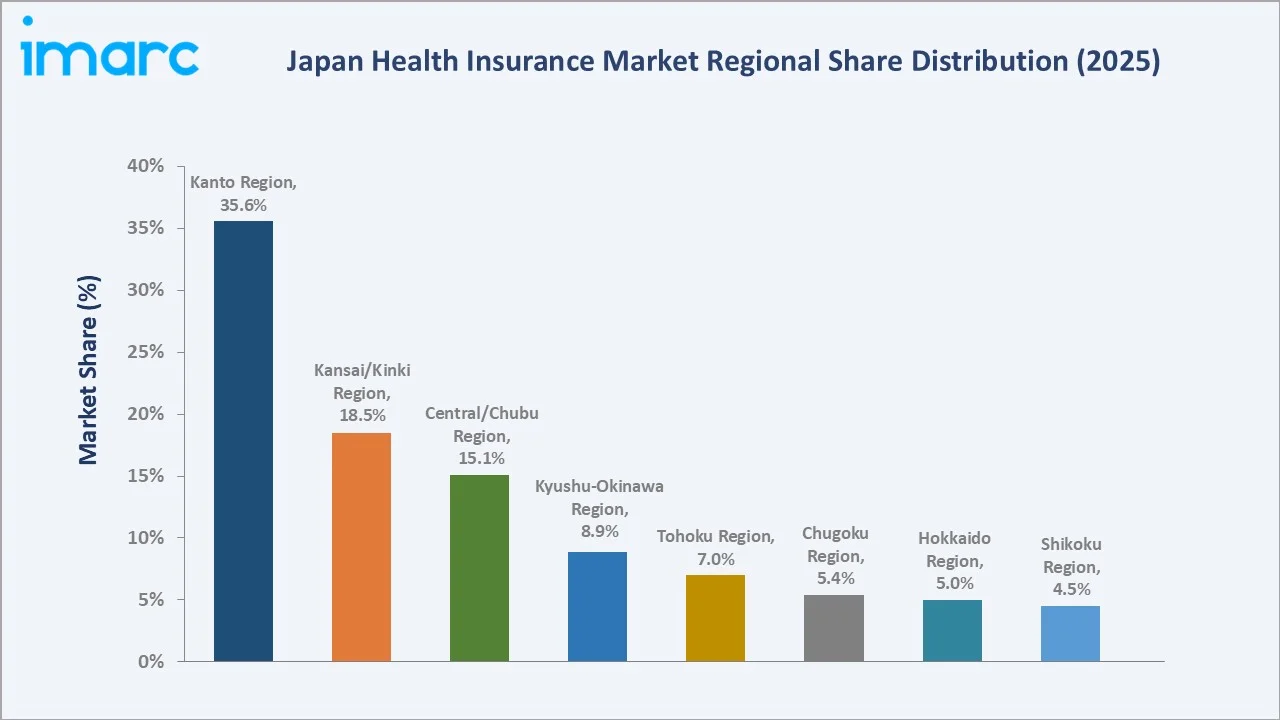
Kansai/Kinki Region at 18.5% is the fastest growing area. Expanding urban demand around Osaka, an aging population, and strengthening distribution networks are accelerating regional expansion through 2034.
Competitive Landscape
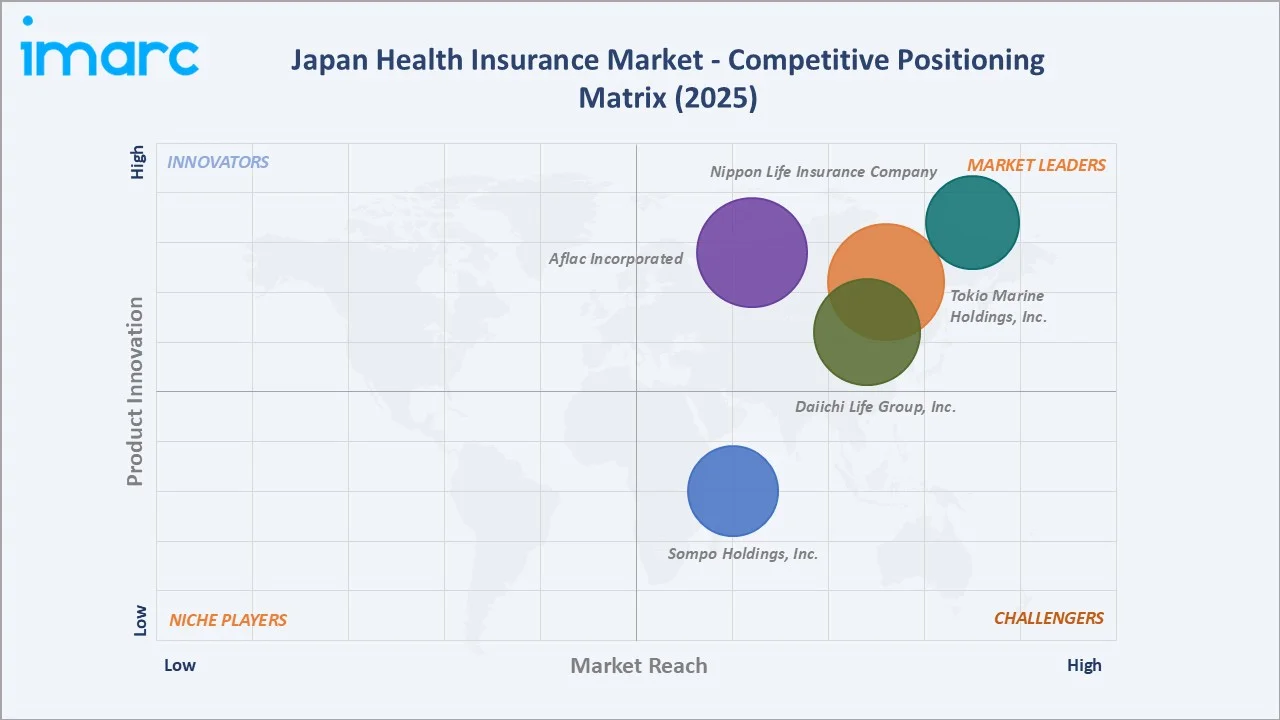
The Japan health insurance market is moderately concentrated, with large domestic life insurers and a strong foreign specialist leading private supplementary coverage. Brand trust, distribution scale, product breadth, and digital capability form the key competitive moats in a mature, aging market.
|
Company Name |
Brand / Key Product |
Position |
Strategic Focus |
|
Nippon Life Insurance Company |
Nissay |
Leader |
Broadening medical and health rider portfolio |
|
Daiichi Life Group, Inc. |
Daiichi Life |
Leader |
Growing health-focused and digital products |
|
Aflac Incorporated |
Miraito |
Leader |
Expanding cancer and medical protection |
|
Tokio Marine Holdings, Inc. |
Tokio Marine & Nichido Life |
Leader |
Scaling life and medical coverage |
|
Sompo Holdings, Inc. |
Sompo Himawari Life (Insurhealth®) |
Challenger |
Advancing health-support and nursing care |
Key players include Nippon Life Insurance Company, Daiichi Life Group, Inc., Aflac Incorporated, Tokio Marine Holdings, Inc., and Sompo Holdings, Inc., among others.
Key Company Profiles
Nippon Life Insurance Company
Nippon Life Insurance Company is a leading Japanese insurer and a major participant in the country's health insurance market. It offers a broad range of medical, cancer, and health-related coverage to individuals and businesses through an extensive distribution network.
- Product Portfolio: Medical, cancer, and health-related insurance, complemented by supplementary riders and savings-linked coverage offered under its Nissay brand.
- Recent Developments: The company has continued to strengthen its insurance portfolio through product enhancements, digital service expansion, and initiatives focused on improving customer engagement and healthcare support.
- Strategic Focus: Broadening health and medical protection, enhancing digital capabilities, and diversifying earnings across domestic and international markets.
Daiichi Life Group, Inc.
Daiichi Life Group, Inc. is a leading Japanese insurance group and an active participant in the health insurance market. It provides medical, cancer, and health-related coverage to a broad customer base through multiple distribution channels.
- Product Portfolio: Medical, cancer, and health-related insurance and riders offered under its Daiichi Life brand, complemented by preventive and health promotion features.
- Recent Developments: The group continues to strengthen its health-focused and digital insurance offerings and to enhance its capabilities across the health insurance market.
- Strategic Focus: Growing health-focused and digital products, expanding distribution, and deepening customer engagement across life stages.
Aflac Incorporated
Aflac Incorporated is a leading supplemental insurer and a major participant in the Japan health insurance market. It focuses on cancer and medical protection, serving a large policyholder base.
- Product Portfolio: Cancer and medical insurance and supplemental cash-benefit products, including its Miraito offering, distributed through agencies and partner channels.
- Recent Developments: The company continues to enhance its cancer and medical insurance offerings and to broaden its distribution across the health insurance market.
- Strategic Focus: Expanding cancer and medical protection, broadening distribution, and modernizing products for changing health needs.
Market Concentration Analysis
The Japan health insurance market is moderately concentrated, with a small group of large domestic life insurers and a leading foreign specialist accounting for a significant share of private supplementary coverage, while the public system underpins overall healthcare financing.
Barriers to entry include the scale required for underwriting and distribution, strong incumbent brand trust, regulatory and solvency requirements, and the long-tail nature of health and nursing-care liabilities. These factors favor established, well-capitalized players.
Consolidation and partnership activity continue as insurers pursue scale, technology, and health-service capabilities. Alliances with healthcare providers, technology firms, and distribution partners are reinforcing competitive positioning across the private segment.
Investment & Growth Opportunities
Fastest-Growing Segments
Private providers are expanding the fastest among the provider segment, driven by demand for supplementary medical, cancer, and nursing-care protection. Term insurance is the next-fastest format, supported by affordable, online-first, and employer-linked plans.
Emerging Regions
Kansai/Kinki Region is the fastest growing area, anchored by urban demand around Osaka and an aging population. The area offers meaningful opportunity for insurers able to deliver localized, senior-focused products and distribution.
Venture & Investment Trends
Investment is flowing into InsurTech, wellness platforms, and data-driven underwriting. Capital is also supporting preventive-health solutions and digital distribution models aligned with Japan's demographic outlook.
Future Market Outlook (2026-2034)
The Japan health insurance market is forecast to expand from USD 160.5 Billion in 2025 to USD 175.6 Billion in 2026, and is projected to reach USD 310.3 Billion by 2034 at a CAGR of 7.37%, adding roughly USD 149.8 Billion in incremental market value over the forecast period.
Four forces will shape the market through 2034: sustained population aging, rising demand for supplementary and nursing-care coverage, deeper digital and data integration, and evolving regulation of a mature insurance system.
By 2034, the market is expected to be defined by wellness-linked, digitally distributed, and senior-focused products, with private providers steadily increasing their contribution. Preventive care, personalization, and health-service integration are set to accelerate the evolution of coverage.
Research Methodology
Primary Research
Primary research included structured interviews with insurance executives, actuaries, distribution partners, healthcare specialists, and regulatory experts, validating market sizing, segment mix, regional demand, and product evolution.
Secondary Research
Secondary sources included publications from the Ministry of Health, Labour and Welfare, the Financial Services Agency, national statistics agencies, industry associations, and annual reports, disclosures, and investor materials from listed insurers.
Forecasting Models
Market forecasts used top-down and bottom-up models combining demographic trends, premium data, healthcare spending, and product mix evolution. Scenario analysis addressed aging pace, regulatory change, and macroeconomic variables.
Japan Health Insurance Market Report Scope:
| Report Features | Details |
|---|---|
| Base Year of the Analysis | 2025 |
| Historical Period | 2020-2025 |
| Forecast Period | 2026-2034 |
| Units | Billion USD |
| Scope of the Report | Exploration of Historical Trends and Market Outlook, Industry Catalysts and Challenges, Segment-Wise Historical and Future Market Assessment:
|
| Providers Covered | Private Providers, Public Providers |
| Types Covered | Life-Time Coverage, Term Insurance |
| Plan Types Covered | Medical Insurance, Critical Illness Insurance, Family Floater Health Insurance, Others |
| Demographics Covered | Minor, Adults, Senior Citizen |
| Provider Types Covered | Preferred Provider Organizations (PPOs), Point of Service (POS), Health Maintenance Organizations (HMOs), and Exclusive Provider Organizations (EPOs) |
| Regions Covered | Kanto Region, Kinki Region, Central/ Chubu Region, Kyushu-Okinawa Region, Tohoku Region, Chugoku Region, Hokkaido Region, Shikoku Region |
| Companies Covered | Nippon Life Insurance Company, Daiichi Life Group Inc., Aflac Incorporated, Tokio Marine Holdings Inc., Sompo Holdings Inc., etc. |
| Customization Scope | 10% Free Customization |
| Post-Sale Analyst Support | 10-12 Weeks |
| Delivery Format | PDF and Excel through Email (We can also provide the editable version of the report in PPT/Word format on special request) |
Key Benefits for Stakeholders:
- IMARC’s industry report offers a comprehensive quantitative analysis of various market segments, historical and current market trends, market forecasts, and dynamics of the Japan health insurance market from 2020-2034.
- The research report provides the latest information on the market drivers, challenges, and opportunities in the Japan health insurance market.
- The study maps the leading, as well as the fastest-growing, regional markets.
- Porter's five forces analysis assists stakeholders in assessing the impact of new entrants, competitive rivalry, supplier power, buyer power, and the threat of substitution. It helps stakeholders to analyze the level of competition within the Japan health insurance industry and its attractiveness.
- The competitive landscape allows stakeholders to understand their competitive environment and provides insight into the current positions of key players in the market.
Frequently Asked Questions About the Japan Health Insurance Market Report
The Japan health insurance market size is estimated at USD 175.6 Billion in 2026, supported by universal public coverage, an aging population, and rising demand for supplementary private protection.
The market is projected to grow at a CAGR of 7.37% from 2026 to 2034, reaching USD 310.3 Billion, driven by aging demographics, higher healthcare costs, and expanding private coverage.
Public providers lead at 61.8% in 2025, reflecting Japan's mandatory universal system. Their broad coverage and standardized benefits support consistent enrollment across the population.
Life-time coverage dominates at 68.4% in 2025, favored for lifelong security. The segment also benefits from sustained demand for long-term financial protection against rising healthcare costs.
Kanto Region commands 35.6% in 2025, led by Greater Tokyo's dense population, high incomes, and a large concentration of insurers and healthcare facilities in the country.
Leading players include Nippon Life Insurance Company, Daiichi Life Group, Inc., Aflac Incorporated, Tokio Marine Holdings, Inc., and Sompo Holdings, Inc., among others.
Growth is driven by rapid population aging, rising healthcare expenditure, expanding private medical and cancer riders, and accelerating digital and InsurTech adoption across distribution and servicing.
Data analytics, AI underwriting, digital distribution, and wearable-linked wellness products are improving pricing, access, and engagement, while automation accelerates claims and enhances operational efficiency across insurers.
Key challenges include a shrinking working-age funding base, premium affordability pressure, product complexity, evolving regulation, and the legacy impact of prolonged low interest rates on long-duration policies.
Need more help?
- Speak to our experienced analysts for insights on the current market scenarios.
- Include additional segments and countries to customize the report as per your requirement.
- Gain an unparalleled competitive advantage in your domain by understanding how to utilize the report and positively impacting your operations and revenue.
- For further assistance, please connect with our analysts.
 Request Customization
 Speak to an Analyst
 Request Brochure
 Inquire Before Buying
Benefits of Customization
- Personalize this research
- Triangulate with your data
- Get data as per your format and definition
- Gain a deeper dive into a specific application, geography, customer, or competitor
- Any level of personalization
Get in Touch With Us
UNITED STATES
Phone: +1-201-971-6302
INDIA
Phone: +91-120-433-0800
UNITED KINGDOM
Phone: +44-753-714-6104
Email: [email protected]
Client Testimonials




.webp)




.webp)













Related Reports

Choose your plan
*Please note that the prices mentioned below are starting prices for each bundle type. Kindly contact our team for further details.*
Single User License
- 1 User License, Access on 2 Devices
- PDF Report + Excel Dataset (Password Protected)
- Lifetime Access
- No Printing Rights
- 10% Free Report Customization
- 10–12 Weeks of Analyst Support
Five User License
- Access for 5 Users, 2 Devices per User
- PDF Report + Excel Dataset (Password Protected)
- Lifetime Access
- Dedicated Account Manager
- 12–14 Weeks of Analyst Support
- No Printing Rights
- 15% Free Report Customization
- 25% Discount on Your Next Purchase
Corporate User License
- Unlimited User Access (Within Your Organization)
- PDF Report + Excel Dataset
- Lifetime Access
- Dedicated Account Manager
- 14–20 Weeks of Analyst Support
- No Printing Rights
- 20% Free Report Customization
- 30% Discount on Your Next Purchase
Essential Insights
What's included:
3 reports
- Lifetime Access
- PDF Reports
- Excel Datasets
- 2 Weeks of Free Analyst Support
- 2 User Licenses
- Access on 2 Devices
- Printing Rights
- Complimentary PowerPoint (PPT) Version
- Complimentary License Upgrade
Professional Access
What's included:
5 reports
- Lifetime Access
- PDF Reports
- Excel Datasets
- 8 Weeks of Free Analyst Support
- 2 User Licenses
- Access on 2 Devices
- Printing Rights
- Complimentary PowerPoint (PPT) Version
- Complimentary License Upgrade
Business Advantage
What's included:
8 reports
- Lifetime Access
- PDF Reports
- Excel Datasets
- 14 Weeks of Free Analyst Support
- 2 User Licenses
- Access on 2 Devices
- Printing Rights
- Complimentary PowerPoint (PPT) Version
- Complimentary License Upgrade
Enterprise Intelligence
What's included:
10 reports
- Lifetime Access
- PDF Reports
- Excel Datasets
- 20 Weeks of Free Analyst Support
- 2 User Licenses
- Access on 2 Devices
- Printing Rights
- Complimentary PowerPoint (PPT) Version
- Complimentary License Upgrade