
Japan Idiopathic Pulmonary Fibrosis Treatment Market Size, Share, Trends and Forecast by Drug Class, End User, and Region, 2026-2034
Japan Idiopathic Pulmonary Fibrosis Treatment Market Summary:
The Japan idiopathic pulmonary fibrosis treatment market size increased from USD 194.39 Million in 2025 to USD 208.27 Million in 2026 and is projected to reach USD 360.52 Million by 2034, growing at a compound annual growth rate of 7.10% from 2026-2034.
The Japan idiopathic pulmonary fibrosis treatment market is advancing steadily, driven by the country’s rapidly aging population, rising disease prevalence, and strong pharmaceutical innovation. Expanding access to antifibrotic therapies, improved diagnostic capabilities, and ongoing clinical research are reinforcing treatment uptake. Government support through medical subsidy programs and healthcare infrastructure modernization is further accelerating adoption, positioning Japan as a leading hub for next-generation pulmonary fibrosis therapeutics and strengthening the market share.
Key Takeaways and Insights:
- By Drug Class: Tyrosine inhibitors dominate the market with a share of 53% in 2025, owing to the established clinical efficacy of nintedanib as a multi-target tyrosine kinase inhibitor in slowing lung function decline, strong physician adoption across Japanese hospitals, and favorable reimbursement frameworks.
- By End User: Hospitals lead the market with a share of 64% in 2025, reflecting the centralized nature of idiopathic pulmonary fibrosis (IPF) diagnosis and treatment within specialized respiratory departments, comprehensive multidisciplinary care teams, and advanced diagnostic imaging infrastructure available at major medical institutions across Japan.
- Key Players: Key players drive the Japan idiopathic pulmonary fibrosis treatment market by advancing novel antifibrotic therapies, expanding clinical trial programs, strengthening distribution networks, and investing in diagnostic innovations. Their focus on improving tolerability profiles, combination strategies, and partnerships with academic institutions accelerates treatment adoption and broadens patient access across the country.
The Japan idiopathic pulmonary fibrosis treatment market is experiencing sustained growth, driven by the rising elderly population and the corresponding increase in disease incidence, alongside expanding therapeutic options. As of September 2024, Japan's senior population reached a historic high of 36.25 Million individuals, with nearly one-third of Japanese citizens aged 65 or older. Japan’s healthcare system, recognized for its universal coverage and advanced respiratory care infrastructure, ensures strong treatment penetration. The approval and widespread use of antifibrotic agents have transformed patient management, while ongoing pipeline developments promise additional treatment modalities. Continued investments in pulmonary rehabilitation programs, palliative care frameworks, and biomarker-driven diagnostics are strengthening the comprehensive care ecosystem. Government designation of IPF as an intractable disease eligible for medical subsidies further supports patient access and treatment continuity. Collaborative efforts between healthcare providers, patient advocacy groups, and pharmaceutical companies are also enhancing disease awareness, early diagnosis, and adherence to recommended treatment protocols.
Japan Idiopathic Pulmonary Fibrosis Treatment Market Trends:
Emergence of Next-Generation PDE4B Inhibitors
The Japan idiopathic pulmonary fibrosis treatment market growth is being shaped by the advancement of phosphodiesterase 4B inhibitors as a novel therapeutic class. These agents offer antifibrotic and immunomodulatory effects through mechanisms distinct from existing treatments. Regulatory submissions by Boehringer Ingelheim for nerandomilast in IPF and PPF were under review in 2025 in the European Union, the UK, Japan and other countries, with further approvals anticipated in 2026. Ongoing clinical research and positive trial outcomes are expected to drive broader adoption of this emerging class, potentially expanding treatment options and improving patient outcomes in Japan.
Integration of Artificial Intelligence (AI) in Early IPF Diagnosis
AI-powered imaging analysis is transforming IPF detection in Japan, enabling earlier identification of fibrotic lung patterns through high-resolution computed tomography interpretation. AI algorithms assist radiologists in detecting honeycombing patterns and usual interstitial pneumonia indicators that may be missed during conventional evaluation. Earlier and more accurate diagnosis translates into longer treatment durations and improved patient outcomes. Japanese academic medical centers and respiratory research institutions are at the forefront of integrating these digital diagnostic tools into clinical workflows.
Expansion of Combination Antifibrotic Therapy Approaches
Combination therapy strategies involving dual antifibrotic agents are gaining momentum in Japanese clinical practice, as clinicians seek to maximize treatment efficacy beyond single-agent approaches. Research into layering different mechanistic pathways is intensifying, supported by real-world evidence from Japanese multicenter observational studies. A prospective study conducted across Kyushu and Okinawa in 2025 evaluated nintedanib efficacy in early-stage IPF patients, providing insights that support earlier treatment initiation and combination protocols tailored to Japanese patient populations.
Market Outlook 2026-2034:
The Japan idiopathic pulmonary fibrosis treatment market is poised for robust expansion over the forecast period, supported by demographic trends, therapeutic innovation, and healthcare policy frameworks. Rising disease prevalence among Japan’s aging population, coupled with improved early detection capabilities and growing physician awareness, is expected to widen the treated patient pool substantially. The market generated a revenue of USD 194.39 Million in 2025, which is expected to reach USD 208.27 Million in 2026 and further grow USD 360.52 Million by 2034, at a compound annual growth rate of 7.10% from 2026-2034. The anticipated approval of next-generation antifibrotic therapies, expansion of combination treatment protocols, and integration of biomarker-driven precision medicine approaches are expected to redefine clinical management standards and accelerate market growth across the country.
Japan Idiopathic Pulmonary Fibrosis Treatment Market Report Segmentation:
|
Segment Category |
Leading Segment |
Market Share |
|
Drug Class |
Tyrosine Inhibitors |
53% |
|
End User |
Hospitals |
64% |
Drug Class Insights:
To get detailed segment analysis of this market, Request Sample
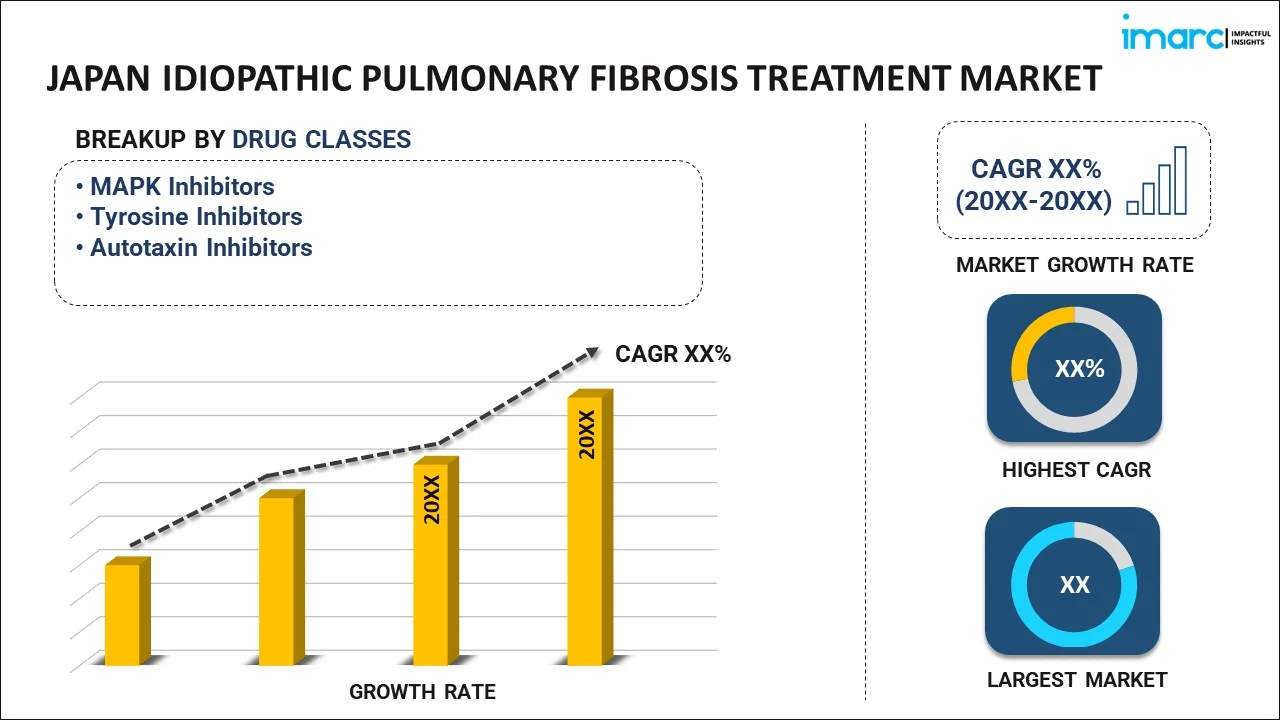
- MAPK Inhibitors
- Tyrosine Inhibitors
- Autotaxin Inhibitors
Tyrosine inhibitors dominate the market with a share of 53% of the total Japan idiopathic pulmonary fibrosis treatment market in 2025.
Tyrosine inhibitors have established themselves as foundational therapies in the market in Japan. They reduce fibroblast proliferation and extracellular matrix deposition by inhibiting several receptor tyrosine kinases, including those for fibroblast growth factor, vascular endothelial growth factor, and platelet-derived growth factor. The goal of ongoing research into next-generation tyrosine kinase inhibitors in Japan is to provide therapy alternatives for patients with IPF while also improving safety profiles and efficacy.
Tyrosine inhibitor use is expanding in Japan, due to improvements in diagnostic capabilities that allow earlier detection and intervention, as well as greater patient and healthcare provider awareness about IPF. While specialized institutions offer monitoring and assistance for long-term care, doctors are incorporating these medicines into routine treatment procedures to slow the progression of the disease and preserve lung function. Tyrosine inhibitors are predicted to gain more acceptance and influence future treatment approaches in the market, as a result of ongoing clinical research and empirical data from patient outcomes.
.webp)
End User Insights:
- Hospitals
- Long-term Care Facilities
- Others
Hospitals lead with a share of 64% of the total Japan idiopathic pulmonary fibrosis treatment market in 2025.
Hospitals constitute the primary care setting for IPF treatment in Japan, due to the complex diagnostic requirements and specialized monitoring needed for antifibrotic therapy management. In university hospitals and designated respiratory illness centers, pulmonologists, radiologists, and pathologists work in multidisciplinary teams to diagnose patients using high-resolution computed tomography and, if required, lung biopsies. Standardized IPF care paths that facilitate both initial diagnosis and continuing therapy surveillance are offered by Japan's network of national hospitals and academic institutions.
Japan's healthcare reimbursement system, which aids in distributing expensive antifibrotic drugs through hospital-based pharmacies, contributes to the segment's continued reinforcement. Additionally, hospitals are the main locations for clinical studies assessing next-generation therapeutics, paving the way for the early uptake of cutting-edge therapies. IPF's classification as an intractable disease by the Japanese government guarantees financial assistance to qualified patients, promoting hospital-based treatment continuity and frequent follow-up visits with specialists.
Regional Insights:
To get detailed regional anakysis of this market, Request Sample
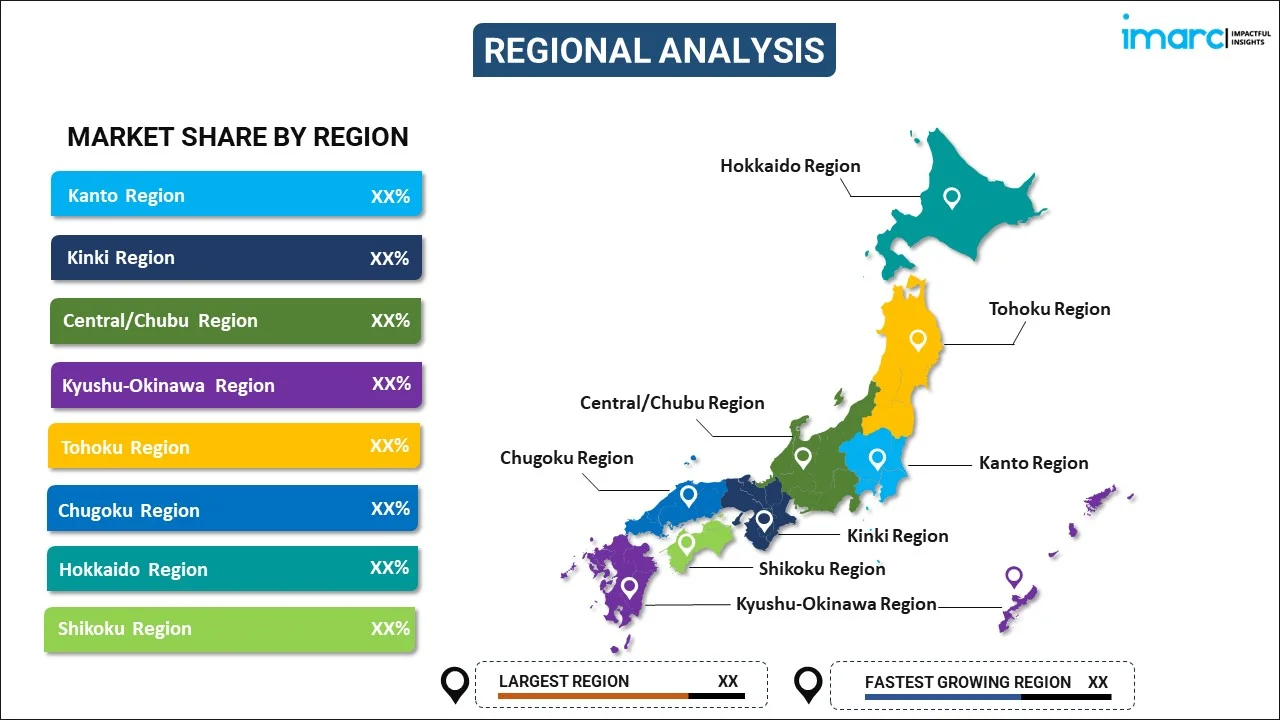
- Kanto Region
- Kinki Region
- Central/ Chubu Region
- Kyushu-Okinawa Region
- Tohoku Region
- Chugoku Region
- Hokkaido Region
- Shikoku Region
Kanto Region represents one of the largest markets for IPF treatment in Japan, anchored by Tokyo’s concentration of leading university hospitals, specialized respiratory disease centers, and pharmaceutical company headquarters. Strong antifibrotic medication uptake and high diagnosis rates are guaranteed by the region's large geriatric population and excellent healthcare accessibility. For the management of pulmonary fibrosis, major institutes in Tokyo and Yokohama promote clinical research and the early adoption of novel treatment methods.
Kinki Region, centered around Osaka and Kyoto, contributes significantly to the market through its prestigious medical universities and respiratory research institutions. The region’s well-developed healthcare infrastructure supports advanced diagnostic imaging and multidisciplinary pulmonary care. Strong treatment penetration is made possible by a sizable senior population and a high physician density. Moreover, Osaka's university hospitals are important locations for antifibrotic clinical trials and the creation of empirical evidence.
Central/Chubu Region supports steady market growth through its network of regional hospitals and respiratory care facilities located across Aichi, Shizuoka, and Niigata prefectures. Tosei General Hospital in Seto, Aichi, is recognized as a leading center for interstitial lung disease research and IPF clinical management. The region’s industrial base and moderate elderly population density support consistent antifibrotic prescription volumes and ongoing patient monitoring programs.
Kyushu-Okinawa Region demonstrates notable market activity, driven by active clinical research programs and expanding respiratory care networks. Access to cutting-edge treatments and clinical trials is made easier by the area's reputable hospitals and specialized pulmonary facilities, which improves patient enrollment and treatment uptake. The provision of comprehensive care for people with IPF is being strengthened by cooperative efforts among pharmaceutical companies, research organizations, and healthcare facilities.
Tohoku Region contributes to the market through its network of regional medical centers serving a dispersed elderly population across northeastern Japan. Ongoing improvements in telemedicine infrastructure are helping bridge geographic barriers, enabling remote patient monitoring and facilitating timely antifibrotic therapy initiation for diagnosed patients.
Chugoku Region has a moderate market presence, with hospitals offering specialized respiratory care services in Okayama and Hiroshima prefectures. Antifibrotic medications are consistently in demand due to the region's aging population. Proper patient care is ensured by well-established referral networks that link smaller community hospitals to tertiary respiratory clinics. Treatment uptake is steadily increasing throughout the region because of improved diagnostic capabilities and rising physician knowledge of interstitial lung disorders.
Hokkaido Region contributes to the market through institutions, such as Sapporo Medical University, which has been instrumental in conducting IPF epidemiological surveys and establishing baseline prevalence data for Japan. The region’s geographically dispersed population presents challenges for specialized respiratory care access, prompting investments in telehealth solutions. Despite lower population density, Hokkaido’s aging demographic profile sustains demand for antifibrotic treatments and supportive pulmonary care services.
Shikoku Region represents a smaller but growing segment of the IPF treatment market, with respiratory care concentrated in prefectural medical centers across Ehime, Kagawa, Tokushima, and Kochi. The region's high elderly population ratio contributes to the ongoing requirement for therapy of chronic respiratory diseases. While regional healthcare modernization projects are enhancing local diagnostic and therapeutic capacities, collaborative referral systems with bigger metropolitan hospitals guarantee that patients receive specialized IPF diagnosis and treatment.
Market Dynamics:
Growth Drivers:
Why is the Japan Idiopathic Pulmonary Fibrosis Treatment Market Growing?
Rapidly Aging Population and Rising IPF Prevalence
Japan has one of the world’s most rapidly aging populations, with individuals aged 65 and above constituting a growing share of the national demographic profile. Since IPF predominantly affects individuals over the age of 65, this demographic shift is directly expanding the patient population requiring antifibrotic treatment. The progressive nature of IPF, combined with extended life expectancies, means patients require longer treatment durations, thereby increasing overall therapeutic demand. The demand for early diagnosis, routine monitoring, and all-encompassing disease treatment techniques is being further catalyzed by this demographic trend. In order to detect IPF early and enable prompt antifibrotic therapy intervention, healthcare providers are increasingly emphasizing routine pulmonary exams and high-resolution imaging. Furthermore, the growing number of elderly people is placing more strain on outpatient services and specialized respiratory care facilities, which emphasizes the necessity of integrated treatment strategies.
Strengthened Healthcare Infrastructure and Government Support
Japan’s healthcare system provides robust infrastructure for the diagnosis and treatment of complex respiratory diseases, supported by universal health insurance coverage and specialized government subsidy programs for intractable diseases, including IPF. The medical subsidy system for designated intractable diseases reduces patient financial burden and encourages sustained treatment adherence. This supportive framework ensures that antifibrotic medications, despite their high costs, remain accessible to diagnosed patients throughout the country. The provision of care for IPF patients in Japan is further strengthened by the existence of pulmonary specialty clinics, well-equipped hospitals, and skilled respiratory doctors. Timely therapy modifications and optimal disease management are made possible by routine follow-ups, pulmonary function tests, and access to cutting-edge imaging tools. Adherence to long-term antifibrotic therapy is also greatly aided by patient education programs and support services offered by medical facilities and pharmaceutical businesses.
Rising Focus on Biomarker-Guided Diagnosis and Personalized Treatment
In Japan, developments in biomarker identification and molecular diagnostics are influencing the individualized treatment of IPF patients. Physicians can customize antifibrotic regimens to each patient's unique profile, owing to the use of advanced biomarkers, which can facilitate earlier detection, precise disease staging, and more informed therapy options. Accurate tracking of the course of the disease and the effectiveness of treatment is being made possible by the utilization of high-resolution imaging, combined with genetic and blood biomarkers. Pharmaceutical firms and medical facilities are making significant investments in patient stratification techniques, diagnostic platforms, and biomarker research. By boosting the use of specific antifibrotic treatments among various patient subgroups in Japan, this emphasis on precision medicine not only improves clinical results but also propels market expansion.
Market Restraints:
What Challenges the Japan Idiopathic Pulmonary Fibrosis Treatment Market is Facing?
Significant Adverse Effects and Treatment Discontinuation
A few newly approved antifibrotic therapies are associated with considerable gastrointestinal side effects, including persistent diarrhea, nausea, and appetite loss, which substantially impact patient quality of life. These tolerability challenges lead to dose reductions and treatment discontinuation, diminishing real-world therapeutic effectiveness. The high discontinuation rates undermine the long-term clinical benefits that sustained antifibrotic therapy could otherwise deliver to IPF patients in Japan.
Diagnostic Delays and Underdiagnosis
Despite advanced healthcare infrastructure, IPF diagnosis in Japan often occurs at later disease stages due to symptom overlap with other respiratory conditions, including chronic obstructive pulmonary disease and heart failure. The requirement for specialist evaluation, high-resolution imaging, and sometimes invasive biopsy creates diagnostic bottlenecks. Late-stage diagnosis limits treatment effectiveness and reduces the potential for antifibrotic therapies to meaningfully slow disease progression in affected patients.
Limited Treatment Efficacy and Absence of Curative Options
Available antifibrotic agents slow but do not halt or reverse IPF progression, leaving a fundamental gap in treatment effectiveness. Patients continue to experience irreversible lung function decline despite pharmacological intervention, creating unmet clinical needs. The absence of curative therapies constrains market enthusiasm among patients and physicians alike, while the progressive nature of the disease ultimately necessitates consideration of lung transplantation for eligible individuals.
Competitive Landscape:
The Japan idiopathic pulmonary fibrosis treatment market features a concentrated competitive environment, characterized by a limited number of established pharmaceutical companies with deep expertise in respiratory and fibrotic disease therapeutics. Competition is intensifying as next-generation antifibrotic agents approach regulatory approval, challenging the existing treatment paradigm. Market participants are differentiating through improved tolerability profiles, novel mechanisms of action, and combination therapy strategies. Strategic investments in Japanese manufacturing capabilities, clinical trial infrastructure, and partnerships with domestic academic institutions are strengthening competitive positioning and ensuring rapid adoption of innovative therapies upon regulatory clearance.
Recent Developments:
- In September 2025, Vicore Pharma Holding AB, exploring the possibilities of a new category of medications, angiotensin II type 2 receptor agonists (ATRAGs), revealed that Japan’s Ministry of Health, Labor and Welfare (MHLW) awarded Orphan Drug status to buloxibutid for treating IPF. The designation aims to encourage the creation of promising treatments for rare diseases that have significant unmet needs, offering incentives like lower consultation and review fees.
Japan Idiopathic Pulmonary Fibrosis Treatment Market Report Coverage:
| Report Features | Details |
|---|---|
| Base Year of the Analysis | 2025 |
| Historical Period | 2020-2025 |
| Forecast Period | 2026-2034 |
| Units | Million USD |
| Scope of the Report |
Exploration of Historical Trends and Market Outlook, Industry Catalysts and Challenges, Segment-Wise Historical and Future Market Assessment:
|
| Drug Classes Covered | MAPK Inhibitors, Tyrosine Inhibitors, Autotaxin Inhibitors |
| End Users Covered | Hospitals, Long-term Care Facilities, Others |
| Region Covered | Kanto Region, Kinki Region, Central/ Chubu Region, Kyushu-Okinawa Region, Tohoku Region, Chugoku Region, Hokkaido Region, Shikoku Region |
| Customization Scope | 10% Free Customization |
| Post-Sale Analyst Support | 10-12 Weeks |
| Delivery Format | PDF and Excel through Email (We can also provide the editable version of the report in PPT/Word format on special request) |
Frequently Asked Questions About the Japan Idiopathic Pulmonary Fibrosis Treatment Market Report
The Japan idiopathic pulmonary fibrosis treatment market size increased from USD 194.39 Million in 2025 to USD 208.27 Million in 2026.
The Japan idiopathic pulmonary fibrosis treatment market is expected to grow at a compound annual growth rate of 7.10% from 2026-2034 to reach USD 360.52 Million by 2034.
Tyrosine inhibitors dominated the market with a share of 53%, driven by the established clinical efficacy of nintedanib as a multi-target kinase inhibitor, strong physician familiarity, and favorable reimbursement under Japan’s national health insurance system.
Key factors driving the Japan idiopathic pulmonary fibrosis treatment market include the rapidly aging population, rising IPF prevalence, advancement of novel antifibrotic therapies, strengthened healthcare infrastructure, government medical subsidies, and expanding clinical research programs.
Major challenges include significant gastrointestinal adverse effects leading to treatment discontinuation, diagnostic delays due to symptom overlap with other respiratory conditions, limited treatment efficacy of current therapies, and the absence of curative options for IPF patients.
Need more help?
- Speak to our experienced analysts for insights on the current market scenarios.
- Include additional segments and countries to customize the report as per your requirement.
- Gain an unparalleled competitive advantage in your domain by understanding how to utilize the report and positively impacting your operations and revenue.
- For further assistance, please connect with our analysts.
 Request Customization
 Speak to an Analyst
 Request Brochure
 Inquire Before Buying
Benefits of Customization
- Personalize this research
- Triangulate with your data
- Get data as per your format and definition
- Gain a deeper dive into a specific application, geography, customer, or competitor
- Any level of personalization
Get in Touch With Us
UNITED STATES
Phone: +1-201-971-6302
INDIA
Phone: +91-120-433-0800
UNITED KINGDOM
Phone: +44-753-714-6104
Email: [email protected]
Client Testimonials




.webp)




.webp)













Related Reports

Choose your plan
*Please note that the prices mentioned below are starting prices for each bundle type. Kindly contact our team for further details.*
Single User License
- 1 User License, Access on 2 Devices
- PDF Report + Excel Dataset (Password Protected)
- Lifetime Access
- No Printing Rights
- 10% Free Report Customization
- 10–12 Weeks of Analyst Support
Five User License
- Access for 5 Users, 2 Devices per User
- PDF Report + Excel Dataset (Password Protected)
- Lifetime Access
- Dedicated Account Manager
- 12–14 Weeks of Analyst Support
- No Printing Rights
- 15% Free Report Customization
- 25% Discount on Your Next Purchase
Corporate User License
- Unlimited User Access (Within Your Organization)
- PDF Report + Excel Dataset
- Lifetime Access
- Dedicated Account Manager
- 14–20 Weeks of Analyst Support
- No Printing Rights
- 20% Free Report Customization
- 30% Discount on Your Next Purchase
Essential Insights
What's included:
3 reports
- Lifetime Access
- PDF Reports
- Excel Datasets
- 2 Weeks of Free Analyst Support
- 2 User Licenses
- Access on 2 Devices
- Printing Rights
- Complimentary PowerPoint (PPT) Version
- Complimentary License Upgrade
Professional Access
What's included:
5 reports
- Lifetime Access
- PDF Reports
- Excel Datasets
- 8 Weeks of Free Analyst Support
- 2 User Licenses
- Access on 2 Devices
- Printing Rights
- Complimentary PowerPoint (PPT) Version
- Complimentary License Upgrade
Business Advantage
What's included:
8 reports
- Lifetime Access
- PDF Reports
- Excel Datasets
- 14 Weeks of Free Analyst Support
- 2 User Licenses
- Access on 2 Devices
- Printing Rights
- Complimentary PowerPoint (PPT) Version
- Complimentary License Upgrade
Enterprise Intelligence
What's included:
10 reports
- Lifetime Access
- PDF Reports
- Excel Datasets
- 20 Weeks of Free Analyst Support
- 2 User Licenses
- Access on 2 Devices
- Printing Rights
- Complimentary PowerPoint (PPT) Version
- Complimentary License Upgrade