
Japan Luxury Travel Market Size, Share, Trends and Forecast by Type of Tour, Age Group, Type of Traveller, and Region, 2026-2034
Japan Luxury Travel Market Summary:
The Japan luxury travel market size increased from USD 40.31 Million in 2025 to USD 48.26 Million in 2026 and is projected to reach USD 91.67 Million by 2034, growing at a compound annual growth rate of 8.35% from 2026-2034.
Japan's luxury travel market is growing as affluent travelers increasingly seek exclusive, personalized, and culturally immersive experiences across the country. Rising discretionary incomes among high-net-worth individuals, the enduring allure of Japan's cultural heritage, and superior standards of hospitality continue to drive the market demand. Advanced infrastructure, favorable inbound travel policies, and a growing emphasis on wellness and sustainable tourism further contribute to the Japan luxury travel market share.
Key Takeaways and Insights:
- By Type of Tour: Customized and private vacation dominates the market with a share of 38.7% in 2025, driven by increasing demand for bespoke itineraries, exclusive private access to cultural sites, and tailored experiential journeys among discerning international and domestic travelers.
- By Age Group: Baby boomers (41–60) leads the market with a share of 36.9% in 2025, reflecting this segment's strong discretionary spending capacity, preference for comfort and exclusivity, and growing appetite for leisurely, high-value cultural and wellness travel experiences.
- By Type of Traveller: Aspiring Luxury represents the largest segment with a market share of 44.5% in 2025, owing to the growing middle-affluent user base seeking premium experiences that balance quality, personalization, and value across Japan's diverse hospitality ecosystem.
- By Region: Kanto Region dominates the market with a share of 35.8% in 2025, due to Tokyo's unmatched concentration of luxury hotels, fine-dining establishments, high-end retail, and world-class cultural attractions, positioning it as the premier entry point for luxury tourists.
- Key Players: The Japan luxury travel market features intense competition among premium hotel chains, boutique hospitality groups, bespoke tour operators, and international luxury brands, all vying to deliver exclusive, culturally immersive experiences to high-net-worth domestic and international travelers.
The luxury travel market in Japan is driven by rising international tourist arrivals, increasing demand for premium travel experiences, and the expansion of high-end hospitality infrastructure across major destinations. Affluent travelers are seeking personalized services, exclusive cultural experiences, and premium accommodation that combine traditional Japanese aesthetics with modern luxury standards. Luxury hotels, private tours, wellness retreats, and fine dining experiences are gaining strong demand among high-spending international visitors. Major hospitality companies are responding by expanding luxury hotel portfolios and introducing globally recognized brands into the Japanese market. Reflecting this trend, in 2025, Accor expanded its presence in Japan’s luxury hospitality market with the launch of Fairmont Tokyo. The property represented the first Fairmont-branded hotel in the country and targets international travelers seeking high-end accommodation and exclusive urban experiences, while also responding to the growing demand for premium hotel rooms and increasing room rates in Japan’s luxury hospitality segment.
Japan Luxury Travel Market Trends:
Entry of Global Luxury Hospitality Brands into Japan
Japan’s luxury travel market is witnessing increased interest from international hospitality brands seeking to expand their presence in the country’s high-end tourism sector. International hotel groups are introducing flagship luxury properties in major cities to serve affluent international travelers and strengthen premium hospitality offerings. These developments enhance accommodation choices while raising service standards in the market. Reflecting this trend, in 2025, Fairmont Hotels & Resorts opened Fairmont Tokyo, marking the brand’s first hotel in Japan and its official entry into the country’s luxury hospitality market. Located in the BLUE FRONT SHIBAURA Tower, the property featured 217 rooms, multiple dining venues, and wellness facilities. The entry of global brands highlights the growing international confidence in Japan’s luxury tourism potential.
Introduction of Private Jet Luxury Travel Experiences
Private jet travel is emerging as a premium segment within Japan’s luxury tourism industry as affluent travelers increasingly demand personalized and time-efficient travel experiences. Private aviation services enable high-net-worth individuals to visit multiple destinations across the country while enjoying exclusive onboard services and customized travel itineraries. These offerings combine luxury transportation with curated accommodation and dining experiences. Reflecting this trend, in 2024, ANA and JTB partnered to launch a new luxury travel business that introduced a private jet tour from Okinawa to Hokkaido. The journey chartered a Falcon 2000 LXS aircraft and provides first-class amenities, gourmet cuisine, and specialized in-flight programs. Such initiatives highlight the expanding role of private aviation in Japan’s luxury tourism market.
Growth of Culinary-Centered Luxury Travel Experiences
Culinary-focused tourism is emerging as an important factor shaping the Japan luxury travel market, as affluent travelers seek immersive food experiences that combine gastronomy with cultural exploration. High-end tour operators are designing curated journeys that highlight regional cuisine, local markets, and interactions with renowned chefs. These experiences allow travelers to explore Japan’s culinary heritage while enjoying exclusive dining opportunities and guided cultural activities. Reflecting this trend, in 2026, Luxury Escapes launched a Signature Series Japan food tour hosted by chef and television personality Khanh Ong. The seven-day journey across Osaka, Kyoto, and Tokyo includes sushi masterclasses, street food tours, and market visits. The introduction of personality-led culinary travel experiences demonstrates the rising demand for luxury trips centered on authentic Japanese cuisine and cultural engagement.
Market Outlook 2026-2034:
The Japan luxury travel market is positioned for sustained revenue expansion throughout the forecast horizon, underpinned by irreversible demographic trends, continued growth in high-net-worth international arrivals, and expanding luxury hospitality infrastructure. The market generated a revenue of USD 40.31 Million in 2025, which is expected to reach USD 48.26 Million in 2026 and further grow to USD 91.67 Million by 2034, at a compound annual growth rate of 8.35% from 2026-2034. Continued investment in premium accommodations, enhanced digital personalization, and government-driven tourism promotion are expected to reinforce Japan's position as a vital luxury travel destination in Asia-Pacific.
Japan Luxury Travel Market Report Segmentation:
| Segment Category | Leading Segment | Market Share |
|---|---|---|
|
Type of Tour |
Customized and Private Vacation |
38.7% |
|
Age Group |
Baby Boomers (41–60) |
36.9% |
|
Type of Traveller |
Aspiring Luxury |
44.5% |
|
Region |
Kanto Region |
35.8% |
Type of Tour Insights:
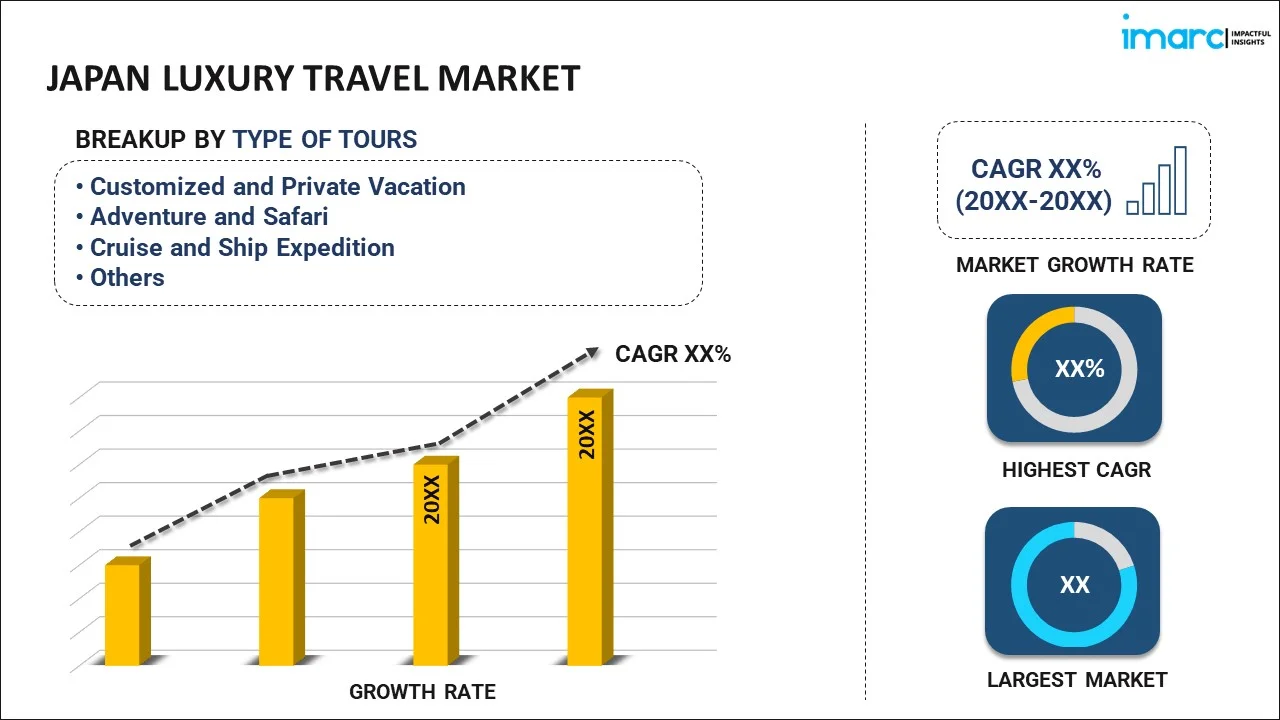
To get detailed segment analysis of this market Request Sample
- Customized and Private Vacation
- Adventure and Safari
- Cruise and Ship Expedition
- Small Group Journey
- Celebration and Special Event
- Culinary Travel and Shopping
Customized and private vacation dominates with a market share of 38.7% of the total Japan luxury travel market in 2025.
Customized and private vacation represent the largest segment because of the increasing preference among high-net-worth travelers for exclusive and personalized travel experiences. Luxury tourists are seeking itineraries tailored to their specific interests, including cultural immersion, private guided tours, wellness retreats, and curated culinary experiences. These travelers value flexibility, privacy, and the ability to explore destinations at their own pace rather than following standardized group itineraries. As a result, travel companies are designing bespoke packages that incorporate private transportation, exclusive accommodations, and personalized concierge services. The growing demand for unique and individualized experiences continues to position customized and private vacations as the most preferred tour format among luxury travelers visiting Japan.
The growing availability of premium travel services and specialized tour operators is strengthening the demand for customized luxury travel experiences across Japan. High-end travelers increasingly prefer curated itineraries that combine private cultural activities, traditional accommodations, and exclusive access to heritage attractions, allowing them to explore the country through personalized and immersive experiences. Reflecting this trend, in 2025, Revigorate, a luxury travel brand operated by APCS Lda, expanded into Japan by introducing bespoke travel itineraries featuring experiences, such as private geisha dinners, temple meditation sessions, bullet-train journeys, and stays at traditional ryokans. These offerings highlighted the rising preference for tailored travel services that emphasize privacy, cultural authenticity, and seamless travel arrangements in Japan’s luxury tourism sector.
.webp)
Age Group Insights:
- Millennial (21–30)
- Generation X (31–40)
- Baby Boomers (41–60)
- Silver Hair (60 and above)
Baby Boomers (41–60) lead with a market share of 36.9% of the total Japan luxury travel market in 2025.
Baby boomers (41–60) dominate the market driven by their significant buying power, established careers, and increasing desire for high-end leisure experiences. Numerous travelers in this demographic emphasize comfort, uniqueness, and thoughtfully crafted itineraries that blend cultural discovery with premium hospitality. They frequently pursue immersive travel opportunities like traditional ryokan stays, guided cultural tours, high-end dining experiences, and wellness retreats. With better financial stability and disposable income than younger travelers, this demographic is more inclined to invest in luxury lodgings, personal transportation, and tailored travel services. Their inclination towards well-organized and comfortable travel options enhances their position in Japan's luxury travel sector.
Moreover, baby boomers exhibit a keen interest in travel experiences that culturally enrich them by showcasing Japan's history, traditions, and natural beauty. Numerous travelers in this group favor extended vacation lengths, enabling them to visit various places while keeping a leisurely travel pace. Luxury travel companies are progressively crafting high-end offerings that feature private cultural workshops, temple tours, picturesque train rides, and unique culinary experiences tailored to the preferences of older travelers. Quality service, safety, and smooth travel planning are key factors for this group. These elements motivate travel suppliers to create tailored luxury packages, strengthening the dominant position of baby boomers in Japan's luxury tourism sector.
Type of Traveller Insights:
- Absolute Luxury
- Aspiring Luxury
- Accessible Luxury
Aspiring luxury exhibits a clear dominance with a 44.5% share of the total Japan luxury travel market in 2025.
Aspiring luxury captures the largest market share owing to the increasing population of wealthy middle-class travelers looking for high-end experiences at comparatively affordable prices. These travelers seek to enjoy premium services, luxurious lodgings, and tailored travel experiences without having to choose ultra-exclusive packages. Japan provides an extensive array of high-end travel experiences that merge cultural authenticity with exceptional hospitality, appealing to those seeking luxury travel. Numerous individuals opt for boutique hotels, upscale guided tours, and exceptional dining experiences that offer a feeling of luxury while still being financially feasible. The equilibrium between uniqueness and worth motivates additional travelers to engage in Japan's luxury tourism sector.
The significant impact of social media, exposure to global travel, and lifestyle goals is also boosting the involvement of aspiring luxury travelers in Japan's tourism sector. Numerous tourists pursue aesthetically pleasing and culturally unique experiences that can be shared on digital platforms, while also offering unforgettable personal adventures. Luxury train trips, tailored city excursions, upscale shopping areas, and exquisite dining experiences are drawing this demographic more and more. Travel providers are reacting by creating packages that blend comfort, high-quality service, and cultural discovery at attractive prices. This method enables travelers to experience luxury travel features without the expense of ultra-high-end experiences, enhancing the status of aspiring luxury travelers in Japan's luxury travel sector.
Regional Insights:
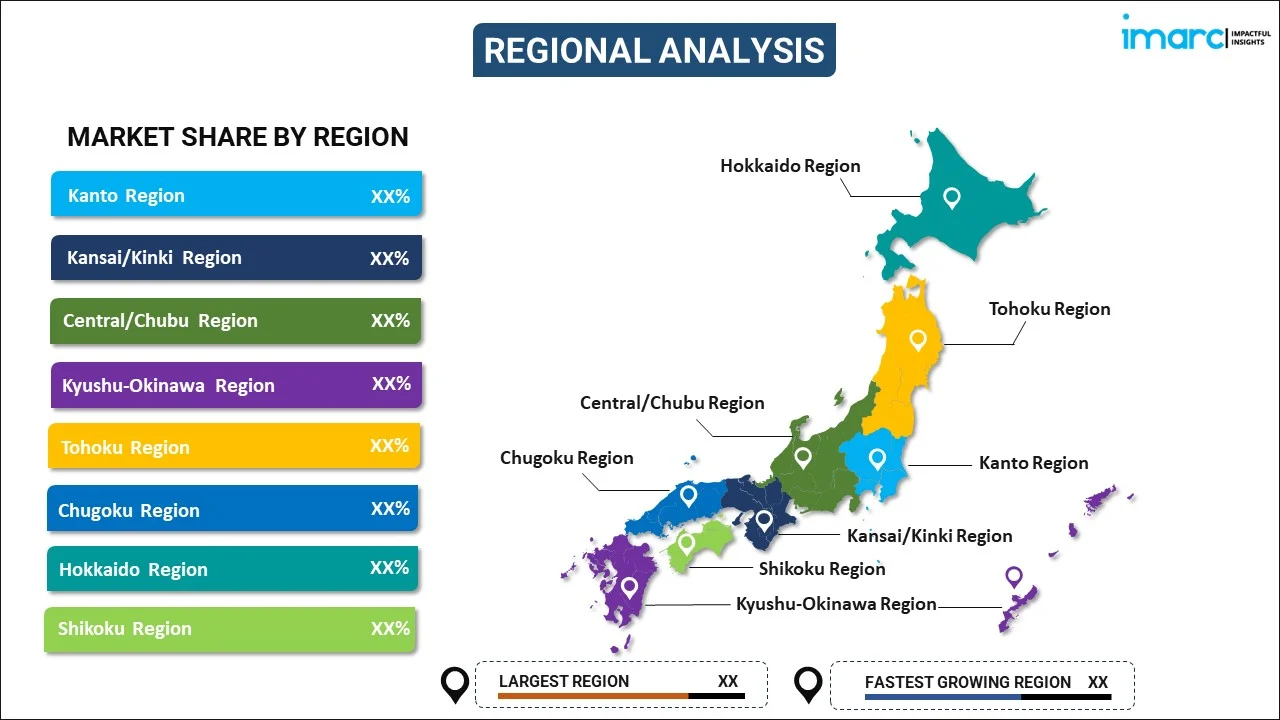
To get detailed regional analysis of this market Request Sample
- Kanto Region
- Kansai/Kinki Region
- Central/Chubu Region
- Kyushu-Okinawa Region
- Tohoku Region
- Chugoku Region
- Hokkaido Region
- Shikoku Region
Kanto Region dominates with a market share of 35.8% of the total Japan luxury travel market in 2025.
Kanto Region leads the market due to its high concentration of luxury tourism facilities, exceptional hospitality services, and globally renowned attractions. The area encompasses Tokyo, Japan’s capital and a leading destination for luxury tourism, featuring upscale hotels, Michelin-starred dining, designer shopping areas, and unique cultural activities. Affluent travelers are attracted to the area for its combination of contemporary city features and historical cultural sites. Famous spots like Ginza, Shibuya, and Asakusa offer chances for luxury shopping, exclusive city tours, and specialized dining experiences. The availability of world-famous luxury hotel brands enhances the area's allure for affluent travelers from around the world.
In addition, the Kanto region benefits from its advanced transportation infrastructure, global connectivity, and concentration of premium hospitality establishments. Tokyo serves as a major gateway for international luxury travelers, offering seamless access to high-end hotels, fine dining, cultural attractions, and exclusive travel experiences. Reflecting continued investment in premium hospitality, in 2026, Four Seasons Hotel Tokyo at Marunouchi completed a major redesign, refreshing all 57 rooms and public spaces while maintaining its prime location near Tokyo Station. Such developments strengthen Tokyo’s appeal among affluent international visitors and reinforce Kanto’s role as a leading hub for luxury travel experiences in Japan.
Market Dynamics:
Growth Drivers:
Why is the Japan Luxury Travel Market Growing?
Expansion of Scenic Luxury Rail Tourism
Luxury rail travel is becoming a notable trend in Japan’s luxury tourism sector as travelers increasingly seek slow, immersive journeys that combine scenic landscapes with premium onboard services. High-end rail experiences allow visitors to explore historic regions while enjoying comfort, curated dining, and panoramic views throughout the journey. Rail operators are developing luxury tourist trains that connect major cities with culturally significant destinations. Reflecting this development, in 2026, Nankai Electric Railway introduced the GRAN Tenku luxury tourist train linking Osaka’s Namba Station with Gokurakubashi near the UNESCO-listed Mount Kōya. The service offers onboard dining experiences including seasonal breakfast, lunch, and afternoon tea. Such luxury rail initiatives enhance travel experiences by integrating transportation, gastronomy, and cultural exploration into a single premium journey.
Emergence of Ultra-Luxury Boutique Hospitality
The development of ultra-luxury boutique hotels is gaining prominence in the Japan luxury travel market as affluent travelers seek exclusive accommodation with distinctive cultural design and personalized services. Boutique luxury properties typically feature limited room inventories, highly customized guest experiences, and architecture that reflects traditional Japanese aesthetics. These hotels appeal to travelers who prioritize privacy, unique design, and proximity to major cultural landmarks. Reflecting this trend, the Espacio Nagoya Castle luxury hotel opened in 2025, opposite the historic Nagoya Castle. The property offered 100 spacious rooms featuring traditional design elements, themed suites, and private hot spring baths. Such developments illustrate the growing demand for boutique luxury hospitality that blends modern comfort with authentic cultural experiences.
Promotion of Regional Luxury Tourism Destinations
Regional tourism development is becoming an important trend in the Japan luxury travel market as authorities aim to distribute tourism demand beyond major cities and encourage visitors to explore lesser-known destinations. Local governments are investing in high-end accommodations, cultural heritage restoration, and premium tourism services to attract affluent travelers. These initiatives also support local economies by increasing visitor spending and promoting regional experiences. Reflecting this strategy, in 2025, Fukui Prefecture strengthened its luxury tourism promotion efforts following the extension of the Hokuriku Shinkansen. The program included luxury accommodation development, renovated historic townhouses, and subsidies of up to ¥250 million to support premium lodging and dining projects, encouraging affluent travelers to explore emerging destinations across Japan.
Market Restraints:
What Challenges the Japan Luxury Travel Market is Facing?
Overtourism Pressures Affecting the Premium Travel Experience
The rapid surge in international visitor numbers to Japan has created overtourism pressures at iconic destinations, including Kyoto's historic districts and Mount Fuji, which can detract from the exclusivity and serenity that luxury travelers seek. Popular cultural landmarks are increasingly crowded, diminishing the premium experience that high-net-worth visitors expect and prompting significant concerns about sustainable tourism management across Japan's most visited sites.
High Accommodation Costs Limiting Broader Market Accessibility
The significant rise in luxury accommodation pricing across Japan's major urban centers, particularly Tokyo and Kyoto, has elevated the cost threshold for accessing premium stays. Rising operational expenses and limited supply of new luxury inventory in prime locations have sustained high nightly rates, constraining accessible adoption within certain aspirational traveler segments and potentially reducing overall booking volumes from price-sensitive affluent consumers.
Limited Luxury Tourism Infrastructure in Rural and Regional Areas
While major metropolitan areas and renowned cultural destinations offer world-class luxury travel experiences, Japan's rural and lesser-known regional areas continue to face infrastructure gaps in premium accommodation, international transport connectivity, and multilingual hospitality services. This imbalance constrains the ability of luxury operators to develop compelling high-end itineraries that venture beyond established tourism corridors, limiting market expansion across the country's diverse geographic landscape.
Competitive Landscape:
The Japan luxury travel market is characterized by dynamic competition among a diverse array of global luxury hotel chains, boutique ryokan operators, bespoke private tour companies, and international hospitality groups aggressively expanding their Japanese footprints. Major global hotel brands are accelerating their presence in Japan, leveraging the country's tourism boom to introduce flagship properties combining international luxury standards with authentic cultural programming. Bespoke travel operators continue to differentiate through hyper-personalized itinerary design, exclusive access arrangements, and curated wellness experiences that appeal to discerning high-net-worth travelers. Competitive dynamics are increasingly shaped by technological capabilities, including digital concierge platforms, AI-driven personalization, and seamless booking infrastructure, as well as strategic partnerships with airlines and regional hospitality groups.
Recent Developments:
- March 2026: Unforgettable Travel launched a new Japan Collection featuring 11 customizable luxury itineraries designed in response to strong traveler demand for Japan. The private tours include experiences such as visiting sake breweries, hot spring bathing, cultural workshops, and guided city tours across destinations like Tokyo, Kyoto, Osaka, and the Japanese Alps. The collection aims to offer deeper cultural exploration and seasonal travel experiences while expanding the company’s bespoke Asia travel offerings.
- March 2026: Sky Vacations launched SV Privé, a new collection of private car tours designed for luxury travelers seeking personalized and exclusive travel experiences. The offering includes curated journeys across destinations, including Japan, supported by the company’s global tourism and hospitality partnerships.
Japan Luxury Travel Market Report Coverage:
| Report Features | Details |
|---|---|
| Base Year of the Analysis | 2025 |
| Historical Period | 2020-2025 |
| Forecast Period | 2026-2034 |
| Units | Million USD |
| Scope of the Report | Exploration of Historical and Forecast Trends, Industry Catalysts and Challenges, Segment-Wise Historical and Predictive Market Assessment:
|
| Type of Tours Covered | Customized and Private Vacation, Adventure and Safari, Cruise and Ship Expedition, Small Group Journey, Celebration and Special Event, Culinary Travel and Shopping |
| Age Groups Covered | Millennial (21-30), Generation X (31-40), Baby Boomers (41-60), Silver Hair (60 and above) |
| Type of Travellers Covered | Absolute Luxury, Aspiring Luxury, Accessible Luxury |
| Regions Covered | Kanto Region, Kansai/Kinki Region, Central/ Chubu Region, Kyushu-Okinawa Region, Tohoku Region, Chugoku Region, Hokkaido Region, Shikoku Region |
| Customization Scope | 10% Free Customization |
| Post-Sale Analyst Support | 10-12 Weeks |
| Delivery Format | PDF and Excel through Email (We can also provide the editable version of the report in PPT/Word format on special request) |
Frequently Asked Questions About the Japan Luxury Travel Market Report
The Japan luxury travel market size is estimated at USD 48.26 Million in 2026.
The market is projected to grow at a CAGR of 8.65% during 2026-2034, reaching USD 85.0 Million by 2034.
Key growth drivers include rising high-net-worth individuals, growing demand for unique cultural experiences, and strong inbound international tourism.
The report covers segmentation by type of tour, age group, and type of traveller, and region. Each segment includes detailed market size and forecast analysis.
Key trends include experiential and wellness-focused travel, sustainable luxury offerings, and hyper-personalized itinerary services gaining traveler preference.
Need more help?
- Speak to our experienced analysts for insights on the current market scenarios.
- Include additional segments and countries to customize the report as per your requirement.
- Gain an unparalleled competitive advantage in your domain by understanding how to utilize the report and positively impacting your operations and revenue.
- For further assistance, please connect with our analysts.
 Request Customization
 Speak to an Analyst
 Request Brochure
 Inquire Before Buying
Benefits of Customization
- Personalize this research
- Triangulate with your data
- Get data as per your format and definition
- Gain a deeper dive into a specific application, geography, customer, or competitor
- Any level of personalization
Get in Touch With Us
UNITED STATES
Phone: +1-201-971-6302
INDIA
Phone: +91-120-433-0800
UNITED KINGDOM
Phone: +44-753-714-6104
Email: [email protected]
Client Testimonials




.webp)




.webp)













Related Reports

Choose your plan
*Please note that the prices mentioned below are starting prices for each bundle type. Kindly contact our team for further details.*
Single User License
- 1 User License, Access on 2 Devices
- PDF Report + Excel Dataset (Password Protected)
- Lifetime Access
- No Printing Rights
- 10% Free Report Customization
- 10–12 Weeks of Analyst Support
Five User License
- Access for 5 Users, 2 Devices per User
- PDF Report + Excel Dataset (Password Protected)
- Lifetime Access
- Dedicated Account Manager
- 12–14 Weeks of Analyst Support
- No Printing Rights
- 15% Free Report Customization
- 25% Discount on Your Next Purchase
Corporate User License
- Unlimited User Access (Within Your Organization)
- PDF Report + Excel Dataset
- Lifetime Access
- Dedicated Account Manager
- 14–20 Weeks of Analyst Support
- No Printing Rights
- 20% Free Report Customization
- 30% Discount on Your Next Purchase
Essential Insights
What's included:
3 reports
- Lifetime Access
- PDF Reports
- Excel Datasets
- 2 Weeks of Free Analyst Support
- 2 User Licenses
- Access on 2 Devices
- Printing Rights
- Complimentary PowerPoint (PPT) Version
- Complimentary License Upgrade
Professional Access
What's included:
5 reports
- Lifetime Access
- PDF Reports
- Excel Datasets
- 8 Weeks of Free Analyst Support
- 2 User Licenses
- Access on 2 Devices
- Printing Rights
- Complimentary PowerPoint (PPT) Version
- Complimentary License Upgrade
Business Advantage
What's included:
8 reports
- Lifetime Access
- PDF Reports
- Excel Datasets
- 14 Weeks of Free Analyst Support
- 2 User Licenses
- Access on 2 Devices
- Printing Rights
- Complimentary PowerPoint (PPT) Version
- Complimentary License Upgrade
Enterprise Intelligence
What's included:
10 reports
- Lifetime Access
- PDF Reports
- Excel Datasets
- 20 Weeks of Free Analyst Support
- 2 User Licenses
- Access on 2 Devices
- Printing Rights
- Complimentary PowerPoint (PPT) Version
- Complimentary License Upgrade