
Japan Oligonucleotide Synthesis Market Size, Share, Trends and Forecast by Product, Application, End Use, and Region, 2026-2034
Japan Oligonucleotide Synthesis Market Summary:
The Japan oligonucleotide synthesis market size was valued at USD 228.24 Million in 2025 and is projected to reach USD 603.07 Million by 2034, growing at a compound annual growth rate of 11.40% from 2026-2034.
The Japan oligonucleotide synthesis market is advancing as the country strengthens its position in nucleic acid therapeutics and genomic research. Expanding government funding for life sciences, accelerating regulatory pathways for novel therapies, and deepening academic-industry collaboration are collectively fueling demand for synthesized oligonucleotides. Ongoing investments in precision medicine, next-generation sequencing infrastructure, and RNA-based drug development are further reinforcing adoption across pharmaceutical, diagnostic, and research applications, contributing to rising Japan oligonucleotide synthesis market share.
Key Takeaways and Insights:
- By Product: Synthesized oligonucleotide products dominate the market with a share of 30% in 2025, owing to their essential role in enabling therapeutic development, molecular diagnostics, and genomic research applications across pharmaceutical and academic institutions throughout Japan.
- By Application: PCR primers lead the market with a share of 22% in 2025, driven by widespread adoption in genetic testing, infectious disease screening, and precision oncology workflows that require high-purity, sequence-specific oligonucleotide primers for reliable amplification.
- By End Use: Academic research institutes represent the largest segment with a market share of 40% in 2025, reflecting Japan’s sustained commitment to fundamental genomic research, publicly funded life science initiatives, and university-led drug discovery programs that consume substantial oligonucleotide volumes.
- Key Players: Key players drive the Japan oligonucleotide synthesis market by advancing synthesis technologies, expanding modified oligonucleotide portfolios, investing in GMP-grade manufacturing capacity, and forming strategic partnerships to accelerate therapeutic development and ensure reliable supply across research and clinical applications.
The Japan oligonucleotide synthesis market is experiencing robust expansion as the nation's pharmaceutical and academic sectors intensify their focus on nucleic acid-based therapies and advanced genomic tools. Japan's regulatory environment has become increasingly supportive, with the Pharmaceuticals and Medical Devices Agency streamlining its approval processes to expedite access to novel therapeutics, including a growing number of new active ingredients reaching the domestic market. Government-backed funding programs continue to channel substantial resources into biotechnology, with the Japan Agency for Medical Research and Development administering significant allocations to support biopharmaceutical startups through dedicated grant systems. These initiatives are complemented by growing private venture capital activity and expanding university research infrastructure, positioning Japan as a critical hub for oligonucleotide innovation. Rising demand for antisense oligonucleotides, PCR-based diagnostics, and CRISPR guide RNAs continues to propel procurement of synthesized oligonucleotides, reagents, and advanced synthesis equipment across the country.
Japan Oligonucleotide Synthesis Market Trends:
Expansion of RNA therapeutics and antisense oligonucleotide development
Japan is emerging as a significant contributor to RNA-based therapeutic innovation, with domestic companies advancing antisense oligonucleotide programs targeting rare neuromuscular and genetic disorders. The successful development and regulatory approval of morpholino-based antisense oligonucleotides for conditions such as Duchenne muscular dystrophy has demonstrated Japan's growing capacity to originate novel nucleic acid therapies. The steady expansion of approved oligonucleotide therapeutics across major global regulatory markets continues to validate the commercial potential of this modality, sustaining Japan oligonucleotide synthesis market growth.
Growth in CRISPR and gene-editing applications requiring high-purity guide RNAs
The expanding adoption of CRISPR-Cas9 genome editing across Japanese universities and biotechnology firms is generating consistent demand for precisely synthesized guide RNA oligonucleotides. Japan’s genomic medicine infrastructure continues to advance, with the GEM Japan initiative having released a variant frequency panel based on whole genome sequences from Japanese individuals. These large-scale genomic datasets are enabling researchers to design more targeted gene-editing experiments, driving procurement of custom-synthesized oligonucleotides for functional genomics studies and therapeutic applications.
AI-driven optimization of oligonucleotide synthesis and drug discovery processes
Artificial intelligence is increasingly being integrated into oligonucleotide design and synthesis workflows to improve yield, purity, and sequence accuracy. Leading pharmaceutical enterprises in Japan are forming multiyear collaborations with AI-driven drug discovery platforms, gaining access to advanced computational tools and protein interaction prediction models. These partnerships reflect the broader industry trend of leveraging machine learning and generative chemistry to accelerate nucleic acid therapeutic development, optimize synthesis parameters, and reduce time-to-market for oligonucleotide-based medicines.
Market Outlook 2026-2034:
The Japan oligonucleotide synthesis market is poised for sustained expansion as the convergence of genomic medicine adoption, nucleic acid therapeutic pipelines, and advanced synthesis technologies strengthens demand across pharmaceutical, diagnostic, and research sectors. Accelerated regulatory pathways, which targets a six-month review timeline for first-in-world therapies, are encouraging both domestic and international companies to prioritize Japan for oligonucleotide therapeutic development. Expanding applications in precision oncology, rare disease treatment, and next-generation sequencing are further reinforcing long-term demand for synthesized oligonucleotides, reagents, and synthesis equipment. The market generated a revenue of USD 228.24 Million in 2025 and is projected to reach a revenue of USD 603.07 Million by 2034, growing at a compound annual growth rate of 11.40% from 2026-2034.
Japan Oligonucleotide Synthesis Market Report Segmentation:
|
Segment Category |
Leading Segment |
Market Share |
|
Product |
Synthesized Oligonucleotide Products |
30% |
|
Application |
PCR Primers |
22% |
|
End Use |
Academic Research Institutes |
40% |
Product Insights:
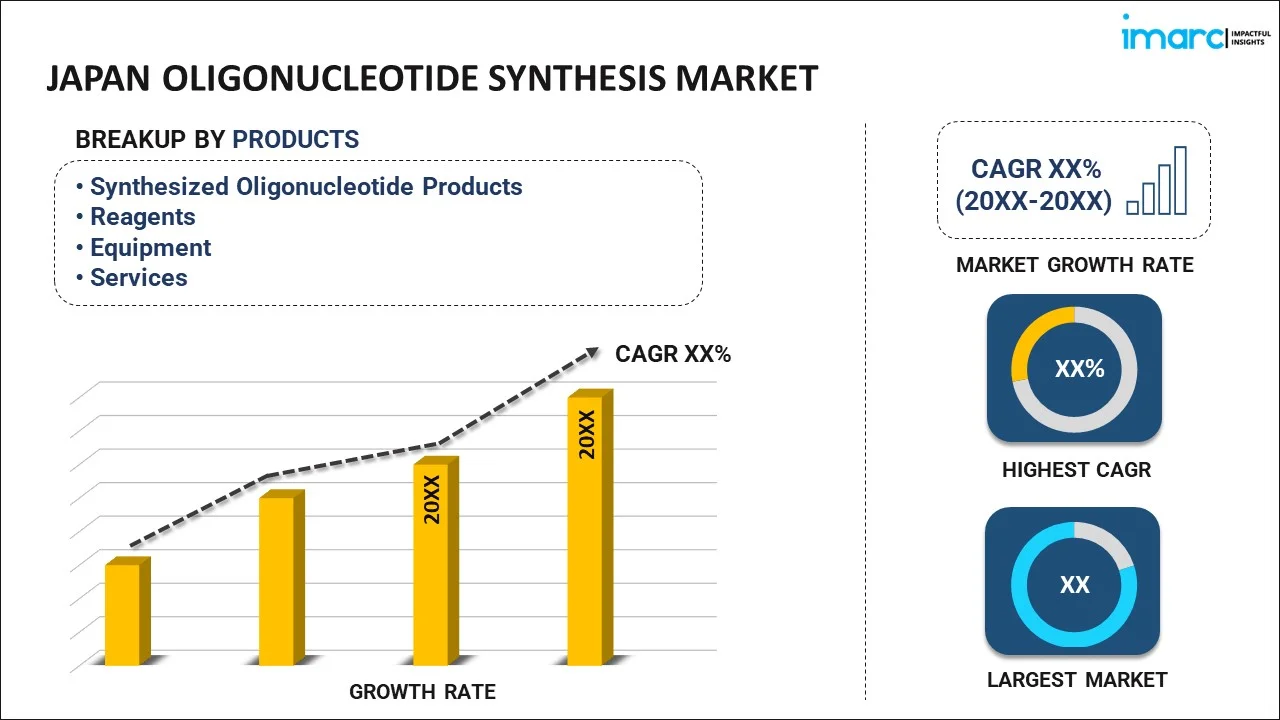
To get detailed segment analysis of this market, Request Sample
- Synthesized Oligonucleotide Products
- Reagents
- Equipment
- Services
Synthesized oligonucleotide products dominate the market with a share of 30% of the total Japan oligonucleotide synthesis market in 2025.
The synthesized oligonucleotide products segment leads the market as these ready-to-use sequences form the backbone of therapeutic development, diagnostic assay design, and academic research across Japan. Demand is sustained by pharmaceutical companies advancing antisense, siRNA, and splice-switching oligonucleotide programs that require custom-synthesized sequences with precise chemical modifications. Growing adoption of nucleic acid-based therapies and expanding molecular diagnostic applications are further reinforcing procurement volumes, as researchers and clinicians increasingly depend on high-purity, application-specific oligonucleotide products for precision medicine workflows.
The growth trajectory of this segment is further supported by expanding applications in molecular diagnostics and personalized medicine, where synthesized oligonucleotides serve as essential components for PCR primers, sequencing adapters, and hybridization probes. Japan's investment in large-scale genomic initiatives is driving procurement volumes as national biobanking programs and population-level sequencing projects generate sustained demand for high-quality synthetic sequences. The deepening integration of oligonucleotide-based tools into clinical workflows, drug screening platforms, and next-generation sequencing pipelines underscores the growing commercial demand for synthesized oligonucleotide products throughout the country.
Application Insights:
- PCR Primers
- PCR Assays and Panels
- Sequencing
- DNA Microarrays
- Fluorescence In-Situ Hybridization (FISH)
- Antisense Oligonucleotides
- Others
PCR primers lead the market with a share of 22% of the total Japan oligonucleotide synthesis market in 2025.
PCR primers constitute the largest application segment owing to their indispensable role in polymerase chain reaction workflows that underpin genetic testing, infectious disease diagnostics, and oncology screening throughout Japan. The sustained expansion of genomic medicine programs has amplified demand for sequence-specific primers designed for quantitative PCR, digital PCR, and multiplex assay panels. Rising adoption of liquid biopsy techniques and pharmacogenomic testing is further strengthening procurement volumes, as clinical and research laboratories increasingly require high-purity, validated primer sets for precision diagnostic applications.
Primer consumption is additionally driven by Japan's national genomic data initiatives that generate continuous demand for standardized amplification reagents across clinical and research laboratories. Population-scale sequencing programs and biobanking projects require extensive PCR-based validation workflows to confirm genetic variants and ensure data accuracy across diverse sample cohorts. This integration of population-level genomic databases with clinical diagnostics ensures that PCR primers remain essential consumables, maintaining the segment's leading position as laboratories scale their molecular testing capabilities to support precision medicine objectives.
End Use Insights:
- Pharmaceutical and Biotechnology Companies
- Hospital and Diagnostic Laboratories
- Academic Research Institutes
Academic research institutes hold the largest share at 40% of the total Japan oligonucleotide synthesis market in 2025.
Academic research institutes command the largest end-use share as Japan's university system and publicly funded research organizations represent the primary consumers of synthesized oligonucleotides for basic and translational research. Government investment through national medical research agencies has been substantial, with competitive grant programs and matching fund initiatives directly supporting university-affiliated laboratories that rely on oligonucleotide synthesis for gene function studies, CRISPR experiments, and therapeutic candidate screening. Expanding public funding for genomic medicine continues to reinforce institutional procurement across the country.
The dominance of academic institutions is reinforced by Japan's expanding venture capital ecosystem that channels resources into university-originated research. Dedicated life science investment funds are increasingly backing seed and early-stage startups emerging from leading universities, strengthening the pipeline between academic discovery and commercial translation. This deepening financial infrastructure connecting academic research to commercialization ensures that university laboratories maintain high procurement volumes of custom oligonucleotides, primers, probes, and modified sequences essential for advancing Japan's genomic medicine and drug discovery programs.
Regional Insights:
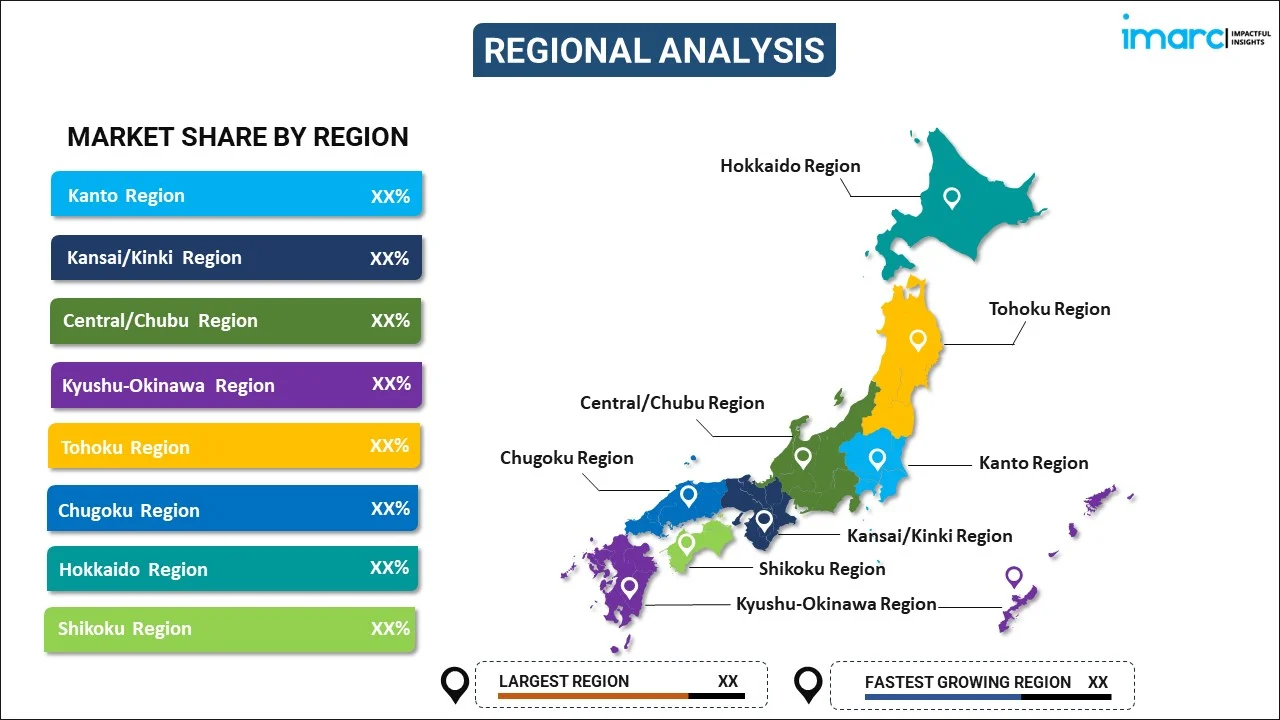
To get detailed regional analysis of this market, Request Sample
- Kanto Region
- Kansai/Kinki Region
- Central/ Chubu Region
- Kyushu-Okinawa Region
- Tohoku Region
- Chugoku Region
- Hokkaido Region
- Shikoku Region
Japan's major oligonucleotide synthesis hub, the Kanto Region, hosts the country's major pharmaceutical company headquarters, academic institutions, and the nation's government regulatory bodies, the PMDA, all of which are located centrally in Tokyo. Proximity to the major biotechnology clusters and venture capital groups within the greater Tokyo metropolitan area provides the foundation for a strong supply of procured oligonucleotides, particularly for drug development, diagnostics, and academic research activities.
The Kansai/Kinki Region is a notable market center due to its pharmaceutical industry heritage in Osaka and academic research excellence in Kyoto. Nippon Shinyaku, a Japanese company based in Kyoto, has played a vital role in moving oligonucleotide therapy development science forward. The Kansai/Kinki Region's established biopharmaceutical production infrastructure and access to key research hospitals provide a strong market pull for synthesized oligonucleotides, reagents, and custom synthesis services to support drug development and clinical diagnostics.
The Central/Chubu Region also serves the oligonucleotide synthesis market with increasing levels of biotechnology-related research facilities, particularly in the field of medical device production in and around Nagoya. The ongoing research efforts in molecular biology and genetic diagnostics at the regional level present an increasing demand for PCR primers, oligonucleotides for DNA sequencing, and hybridization probes. In addition, increasing levels of medical infrastructure and proximity to large industrial centers will boost the use of oligonucleotide-based diagnostic and research tools.
The Kyushu-Okinawa Region is an emerging biotech corridor, with the cities of Fukuoka and Kumamoto becoming the hubs of growing university research initiatives and pharmaceutical development activities. Regional government initiatives to encourage life science innovation and biotech startup growth are slowly boosting the market requirements for oligonucleotide synthesis products. The region is becoming more aggressive in tropical disease research and agricultural genomics, thereby generating additional applications for oligonucleotides delivered by custom synthesis.
Tohoku Region has a significant share in the market for oligonucleotide synthesis, driven by the Tohoku Medical Megabank Project, one of the biggest population genomics projects in Japan. This has led to significant biobanking activities and whole-genome sequencing, resulting in a high demand for PCR primers and oligonucleotides used in the sequencing assays. Universities in the Sendai and surrounding areas are enhancing their research and development activities in the field of molecular biology and genomic medicine.
The contribution of the Chugoku Region in the oligonucleotide synthesis market is generated by its involvement in research programs at academic institutions in Hiroshima and Okayama, which explore projects in cancer genomics and regenerative medicines. There is increasing adoption in regional hospital labs/diagnostic labs across the country for molecular diagnostic tools that require synthesized oligonucleotide probes or primers. The contribution is facilitated by an active network between academic centers and pharmaceutical firms aimed at exploring research translation opportunities.
The Hokkaido Region will enter the market through Hokkaido University’s established research programs in life sciences and the region’s research focus in infectious diseases and environmental genomics. The island has unique biodiversity and public health needs that entail specialized custom oligonucleotides for infectious diseases, genetics, and agricultural biotechnology, which are of strategic interest and align with national genomics research initiatives.
The Shikoku Region signifies the emerging markets for oligonucleotide synthesis, with the Tokushima and Ehime university-affiliated labs conducting ongoing and forward-thinking studies on the fields of pharmacogenomics and molecular diagnostics. The health services in the Shikoku region are gradually incorporating the requirements for genetic testing, and positive partnerships between regional academic institutions and national-level consortia are creating opportunities for enhancing the usage of oligonucleotides.
Market Dynamics:
Growth Drivers:
Why is the Japan Oligonucleotide Synthesis Market Growing?
Substantial government funding for biotechnology and life science research
The Japanese government has laid down all-inclusive funding mechanisms in order to accelerate the rhythm of biotechnology innovation and, thus, directly help the market for oligonucleotide synthesis. National agencies have pledged significant resources to the development of the ecosystem for biopharmaceutical startups, with the Japan Agency for Medical Research and Development administering matching grants that could double venture capital investments for eligible companies. Such competitive funding schemes create a strong financial architecture through which resources are funneled toward the development of drugs dependent on oligonucleotides. Additionally, the Ministry of Education, Culture, Sports, Science and Technology continues to devote substantial budgets to research in science and technology, thereby funding academic research laboratories that form the biggest consumer segment for synthesized oligonucleotides, primers, and related reagents.
Accelerated regulatory pathways encouraging oligonucleotide therapeutic development
Japan’s regulatory framework has become increasingly supportive of novel nucleic acid therapeutics, shortening development timelines and incentivizing investment in oligonucleotide-based drug programs. The Sakigake designation targets a six-month review period for first-in-world therapies submitted initially in Japan, while the Conditional Early Approval System permits provisional authorization for drugs treating serious illnesses when confirmatory trials are impractical. As per industry reports. Japan’s Pharmaceuticals and Medical Devices Agency (PMDA) concluded fiscal year 2024–25 with 148 approval decisions including 66 new active ingredients and 82 lifecycle updates, demonstrating Japan’s capacity to process innovative therapeutic applications efficiently. These expedited pathways reduce the time and financial burden of bringing oligonucleotide therapies to market, encouraging pharmaceutical companies to invest in synthesis capabilities, clinical-grade manufacturing, and expanded research programs within Japan.
Expanding private venture capital investment in biotech and genomic medicine
A growing wave of private capital is flowing into Japan’s biotechnology sector, amplifying the demand for oligonucleotide synthesis across therapeutic and research applications. In July 2025, AN Venture Partners closed its first fund at USD 200 Million, one of the largest Japan-focused biotech funds to date, dedicated to strengthening Japan’s biopharma ecosystem through global investments. Prominent university-affiliated venture capital firms are steadily increasing their commitment to healthcare and life science investments, channeling growing resources into seed-stage startups pursuing nucleic acid-based innovations. These capital flows are enabling early-stage companies to advance oligonucleotide-dependent programs from discovery through clinical development, while established players expand synthesis capacity and invest in next-generation platforms to meet rising demand.
Market Restraints:
What Challenges the Japan Oligonucleotide Synthesis Market is Facing?
High synthesis costs for complex modified oligonucleotides
The production of chemically modified oligonucleotides, including those with phosphorothioate backbones, locked nucleic acid bases, and conjugated delivery moieties, involves specialized reagents and multi-step purification processes that significantly elevate manufacturing costs. These expenses constrain access for smaller research laboratories and emerging biotech firms, limiting the scalability of oligonucleotide-based therapeutic programs and slowing broader adoption in cost-sensitive diagnostic applications.
Technical challenges in producing long, high-quality oligonucleotide sequences
Synthesizing oligonucleotides beyond standard lengths while maintaining sequence accuracy and acceptable yield remains a persistent technical limitation. Coupling efficiency decreases with each additional nucleotide addition, resulting in truncated or error-containing sequences that require extensive purification. These challenges increase waste, extend production timelines, and restrict the availability of full-length sequences needed for increasingly complex gene-editing constructs and therapeutic candidates.
Supply chain dependencies on imported raw materials and reagents
Japan’s oligonucleotide synthesis industry relies substantially on imported phosphoramidite building blocks, controlled-pore glass supports, and specialty chemicals sourced predominantly from North American and European suppliers. This dependency exposes the market to supply disruptions, currency fluctuation risks, and extended lead times that can interrupt research workflows and delay therapeutic manufacturing schedules, particularly during periods of global logistics constraints or geopolitical uncertainty.
Competitive Landscape:
The competitive scenario prevailing in the Japan oligonucleotide synthesis market is greatly influenced by the involvement of established global market players and domestic companies that are increasingly focusing on building oligonucleotide synthesis capabilities. The competitive scenario is mainly driven by initiatives toward increasing GMP-grade oligonucleotide synthesis capacity, developing in-house chemical modification technologies, and building partnerships with pharmaceutical companies for supporting the therapy market. Through strategic investments in automated high throughput synthesis platforms, quality assurance strategies, and customized services, industry players are aiming to address the specific needs of distinct end users ranging from academia, diagnostics, and the pharmaceutical industry. Strategic partnerships between oligonucleotide synthesis service providers and pharmaceutical companies are accelerating technology development, and domestic oligonucleotide synthesis service providers are aiming to capitalize on Japan’s regulatory expertise and research infrastructure for building market position.
Japan Oligonucleotide Synthesis Market Report Coverage:
| Report Features | Details |
|---|---|
| Base Year of the Analysis | 2025 |
| Historical Period | 2020-2025 |
| Forecast Period | 2026-2034 |
| Units | Million USD |
| Scope of the Report | Exploration of Historical and Forecast Trends, Industry Catalysts and Challenges, Segment-Wise Historical and Predictive Market Assessment:
|
| Products Covered | Synthesized Oligonucleotide Products, Reagents, Equipment, Services |
| Applications Covered | PCR Primers, PCR Assays and Panels, Sequencing, DNA Microarrays, Fluorescence In-Situ Hybridization (FISH), Antisense Oligonucleotides, Others |
| End Uses Covered | Pharmaceutical and Biotechnology Companies, Hospital and Diagnostic Laboratories, Academic Research Institutes |
| Regions Covered | Kanto Region, Kansai/Kinki Region, Central/ Chubu Region, Kyushu-Okinawa Region, Tohoku Region, Chugoku Region, Hokkaido Region, Shikoku Region |
| Customization Scope | 10% Free Customization |
| Post-Sale Analyst Support | 10-12 Weeks |
| Delivery Format | PDF and Excel through Email (We can also provide the editable version of the report in PPT/Word format on special request) |
Frequently Asked Questions About the Japan Oligonucleotide Synthesis Market Report
The Japan oligonucleotide synthesis market size was valued at USD 228.24 Million in 2025.
The Japan oligonucleotide synthesis market is expected to grow at a compound annual growth rate of 11.40% from 2026-2034 to reach USD 603.07 Million by 2034.
Synthesized oligonucleotide products dominated the market with a share of 30%, driven by their critical role in therapeutic development, molecular diagnostics, and genomic research applications across Japan’s pharmaceutical and academic institutions.
Key factors driving the Japan oligonucleotide synthesis market include substantial government funding for biotechnology research, accelerated regulatory pathways for novel therapeutics, expanding venture capital investment, growing adoption of precision medicine, and rising demand for RNA-based therapies.
Major challenges include high synthesis costs for chemically modified oligonucleotides, technical limitations in producing long high-quality sequences, supply chain dependencies on imported raw materials, and the need for expanded domestic GMP manufacturing capacity.
Need more help?
- Speak to our experienced analysts for insights on the current market scenarios.
- Include additional segments and countries to customize the report as per your requirement.
- Gain an unparalleled competitive advantage in your domain by understanding how to utilize the report and positively impacting your operations and revenue.
- For further assistance, please connect with our analysts.
 Request Customization
 Speak to an Analyst
 Request Brochure
 Inquire Before Buying
Benefits of Customization
- Personalize this research
- Triangulate with your data
- Get data as per your format and definition
- Gain a deeper dive into a specific application, geography, customer, or competitor
- Any level of personalization
Get in Touch With Us
UNITED STATES
Phone: +1-201-971-6302
INDIA
Phone: +91-120-433-0800
UNITED KINGDOM
Phone: +44-753-714-6104
Email: [email protected]
Client Testimonials




.webp)




.webp)













Related Reports

Choose your plan
*Please note that the prices mentioned below are starting prices for each bundle type. Kindly contact our team for further details.*
Single User License
- 1 User License, Access on 2 Devices
- PDF Report + Excel Dataset (Password Protected)
- Lifetime Access
- No Printing Rights
- 10% Free Report Customization
- 10–12 Weeks of Analyst Support
Five User License
- Access for 5 Users, 2 Devices per User
- PDF Report + Excel Dataset (Password Protected)
- Lifetime Access
- Dedicated Account Manager
- 12–14 Weeks of Analyst Support
- No Printing Rights
- 15% Free Report Customization
- 25% Discount on Your Next Purchase
Corporate User License
- Unlimited User Access (Within Your Organization)
- PDF Report + Excel Dataset
- Lifetime Access
- Dedicated Account Manager
- 14–20 Weeks of Analyst Support
- No Printing Rights
- 20% Free Report Customization
- 30% Discount on Your Next Purchase
Essential Insights
What's included:
3 reports
- Lifetime Access
- PDF Reports
- Excel Datasets
- 2 Weeks of Free Analyst Support
- 2 User Licenses
- Access on 2 Devices
- Printing Rights
- Complimentary PowerPoint (PPT) Version
- Complimentary License Upgrade
Professional Access
What's included:
5 reports
- Lifetime Access
- PDF Reports
- Excel Datasets
- 8 Weeks of Free Analyst Support
- 2 User Licenses
- Access on 2 Devices
- Printing Rights
- Complimentary PowerPoint (PPT) Version
- Complimentary License Upgrade
Business Advantage
What's included:
8 reports
- Lifetime Access
- PDF Reports
- Excel Datasets
- 14 Weeks of Free Analyst Support
- 2 User Licenses
- Access on 2 Devices
- Printing Rights
- Complimentary PowerPoint (PPT) Version
- Complimentary License Upgrade
Enterprise Intelligence
What's included:
10 reports
- Lifetime Access
- PDF Reports
- Excel Datasets
- 20 Weeks of Free Analyst Support
- 2 User Licenses
- Access on 2 Devices
- Printing Rights
- Complimentary PowerPoint (PPT) Version
- Complimentary License Upgrade