
Japan Shrimp Market Size, Share, Trends and Forecast by Species, Shrimp Size, Distribution Channel, and Region, 2026-2034
Japan Shrimp Market Summary:
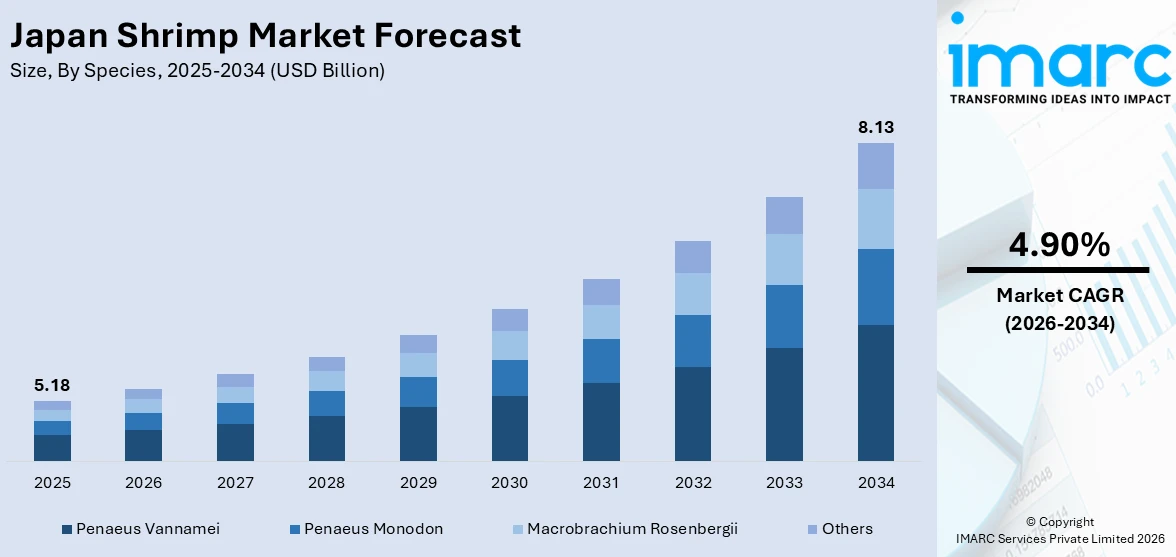
The Japan Shrimp market size increased from USD 5.18 Billion in 2025 to USD 5.55 Billion in 2026 and is projected to reach USD 8.13 Billion by 2034, growing at a compound annual growth rate of 4.90% from 2026-2034.
The Japan shrimp market is driven by the country's deep-rooted seafood culinary culture, growing health consciousness among consumers, and expanding modern retail and foodservice infrastructure. Shifting dietary preferences toward high-protein, low-calorie foods, combined with widespread use of shrimp in traditional Japanese cuisine, have sustained robust market demand. Technological advancements in aquaculture and strengthening import supply chains continue to support steady Japan shrimp market share.
Key Takeaways and Insights:
- By Species: Penaeus Vannamei dominates the market with a share of 48.5% in 2025, owing to its favorable adaptability to intensive aquaculture systems, consistent availability through established import channels, and versatile applications across a broad range of traditional Japanese dishes and modern food service segments.
- By Shrimp Size: 26-30 leads the market with a share of 18.2% in 2025, owing to its ideal balance between meat yield and cooking convenience, making it widely preferred by both household consumers and professional foodservice operators across Japan's diverse culinary segments.
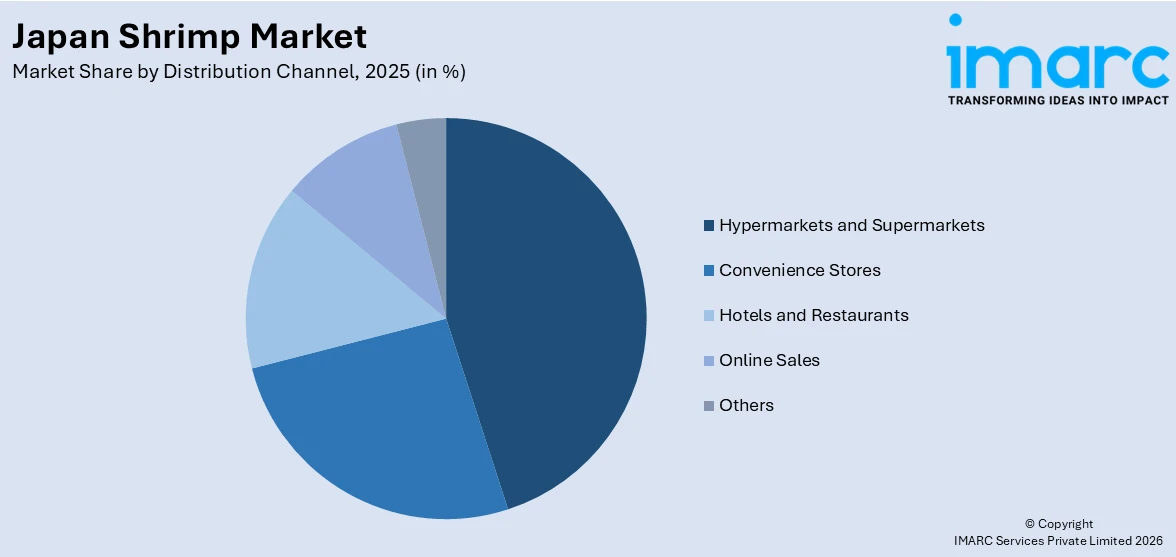
- By Distribution Channel: Hypermarkets and supermarkets hold the largest market share with a 42.3% in 2025, benefiting from extensive product variety, established cold-chain infrastructure, promotional pricing strategies, and high foot traffic that position them as the primary retail outlet for fresh and frozen shrimp purchases nationwide.
- By Region: Kanto Region represents the largest region with a share of 36.4% in 2025, fueled by Tokyo's dense population, the concentration of important food distribution centers, and the city's large foodservice sector, all of which contribute to the city's consistently high demand for shrimp.
- Key Players: Key players drive Japan's shrimp market by diversifying product portfolios, pursuing sustainability certifications, and strengthening cold-chain logistics. Their investments in traceability systems, consumer outreach, and strategic partnerships ensure consistent shrimp quality and availability across Japan's retail and foodservice sectors.
To get more information on this market Request Sample
One of the key countries that exhibit a high demand for shrimp in the world is Japan, which indicates the significance of the product in the national cuisine. The demand for shrimp in Japan is substantial, as it is an integral part of various dishes such as sushi, sashimi, tempura, and bento, which are commonly prepared in various sectors of the Japanese economy, including households, food chains, and convenience stores. The demand for shrimp in the Japanese economy is fueled by various factors, including the health benefits associated with the product, such as a high content of proteins, low calorific value, and a rich content of omega-3 fatty acids and mineral content. Additionally, the rise in disposable income, especially in metropolitan cities, is encouraging the premiumization of shrimp in the national cuisine. At the same time, the improvements in the supply chain infrastructure are enabling the efficient supply of both frozen and chilled shrimp in the national cuisine. The government is encouraging the purchase of ethically sourced products, along with the improvements in aquaculture technology in the national cuisine.
Japan Shrimp Market Trends:
Rising Demand for Sustainable and Certified Shrimp Products
Japan's shrimp market is witnessing a growing shift in consumer preferences toward sustainably sourced and certified seafood products. Increasing environmental awareness and food safety consciousness have prompted Japanese buyers, both retail and foodservice, to actively seek shrimp bearing recognized eco-labels such as the Aquaculture Stewardship Council (ASC) and Marine Stewardship Council (MSC) certifications. Retailers, restaurants, and institutional caterers are incorporating certified products into their procurement standards, while suppliers are investing in traceability infrastructure and responsible farming practices to meet this evolving demand. In 2024, Japan's Sustainable Seafood Week showcased the growing momentum of certified seafood adoption, with the ASC presenting awards recognizing contributions to responsible seafood promotion across the country.
Expansion of High-Tech Land-Based Aquaculture
Japan is emerging as a global leader in land-based shrimp aquaculture, with increasing adoption of advanced production systems such as Recirculating Aquaculture Systems (RAS) and biofloc technology. These closed-loop systems enable precise control over water quality, temperature, and feeding, supporting year-round production with reduced disease risk and minimal environmental impact. The integration of artificial intelligence and IoT-enabled monitoring platforms further enhances production efficiency, improves yield consistency, and reduces reliance on antibiotics. By enabling domestic shrimp farming in previously unsuitable locations, these technologies are gradually strengthening Japan's food security and supporting its broader goal of reducing import dependency.
Growth in Convenience and Ready-to-Cook Shrimp Products
The increasing pace of modern Japanese lifestyles has accelerated demand for convenient, ready-to-cook, and pre-processed shrimp products. Frozen shrimp in peeled, deveined, and pre-marinated formats are gaining widespread traction across both supermarket channels and e-commerce platforms, catering to time-pressed consumers who seek nutritious meal solutions without extensive preparation. Food manufacturers and retailers are responding by expanding their value-added shrimp product lines, including breaded, coated, and seasoned varieties. This trend aligns with the broader premiumization of Japan's seafood retail market, where product quality and preparation convenience increasingly drive purchasing behavior.
Market Outlook 2026-2034:
The shrimp market in Japan is expected to grow during the forecast period, driven by robust domestic consumption patterns, continued investment in infrastructure, and an increasing emphasis on sustainable seafood sourcing. The demand side of the shrimp market remains robust, driven by the continued popularity of shrimp as an ingredient in Japanese cuisine, with the product category featuring prominently in sushi houses, tempura houses, and the overall prepared foods market. The shift towards value-added products is expected to create additional revenue streams in the retail and foodservice sectors of the shrimp market in Japan. Improvements in domestic aquaculture technology, particularly the implementation of Recirculating Aquaculture Systems, are expected to improve the consistency of the shrimp supply in the future. The continued emphasis of the Japanese government on sustainable seafood, along with the expansion of the e-commerce channel, is expected to improve the efficiency of the shrimp distribution channel in the future. The market generated a revenue of USD 5.18 Billion in 2025, which is expected to reach USD 5.55 Billion in 2026 and further grow to USD 8.13 Billion by 2034, at a compound annual growth rate of 4.90% from 2026-2034.
Japan Shrimp Market Report Segmentation:
| Segment Category | Leading Segment | Market Share |
|---|---|---|
|
Species |
Penaeus Vannamei |
48.5% |
|
Shrimp Size |
26-30 |
18.2% |
|
Distribution Channel |
Hypermarkets and Supermarkets |
42.3% |
|
Region |
Kanto Region |
36.4% |
Species Insights:
- Penaeus Vannamei
- Penaeus Monodon
- Macrobrachium Rosenbergii
- Others
Penaeus Vannamei dominates with a market share of 48.5% of the total Japan shrimp market in 2025.
Penaeus Vannamei, commonly known as the Pacific white shrimp, has established itself as the preferred commercial shrimp species across Japan's diverse culinary and foodservice sectors. Its rapid growth rate, adaptability to intensive aquaculture environments, and favorable meat-to-shell ratio make it highly suitable for mass production and consistent supply. The species is extensively used across multiple food preparation formats, from traditional Japanese sushi and tempura to processed and pre-packaged ready-to-cook products sold through modern retail outlets. Its mild flavor profile and firm texture are well-aligned with Japanese consumer preferences, driving sustained demand through both domestic production and substantial import volumes from major Southeast Asian supplier countries.
The appeal of Penaeus Vannamei is further reinforced by advancements in domestic aquaculture systems designed specifically for this species. Recirculating Aquaculture Systems and biofloc-based indoor farming technologies have demonstrated particular compatibility with Penaeus Vannamei, enabling year-round production at controlled quality standards. Growing consumer expectations for food safety and traceability have elevated demand for domestically farmed Penaeus Vannamei, which can be cultivated in drug-free, biosecure environments. Retailers and foodservice operators increasingly source certified or traceable Penaeus Vannamei to meet sustainability commitments and appeal to health-conscious consumers who prioritize product origin and responsible production standards in their purchasing decisions.
Shrimp Size Insights:
- Size <21
- Size 21-25
- Size 26-30
- Size 31-40
- Size 41-50
- Size 51-60
- Size 61-70
- Size >70
26-30 leads with a share of 18.2% of the total Japan shrimp market in 2025.
Shrimp in the 26-30 count has become the popular size category for Japanese consumers and industry experts alike, as it offers the perfect balance of portion size, meat content, and cooking convenience. This size category has become widely used in various important cooking applications, such as tempura, shrimp katsu, and sushi, in which the shape and meat content of the shrimp are crucial factors in the final product quality and presentation. The 26-30 count shrimp has become popular in the hands of caterers and food manufacturers in Japan, as it offers the advantage of size consistency in various cooking and catering operations.
The 26-30 count shrimp has emerged as the preferred choice in terms of size within the Japanese marketplace, as it has been found to represent an optimal balance in terms of appeal, meat content, and ease of preparation. The 26-30 count shrimp is widely used in various significant culinary procedures, namely tempura, katsu, sushi, etc., wherein the size and content of meat are essential determinants of the quality of the prepared dish. The 26-30 count shrimp is especially preferred by caterers as well as food producers that cater to large-scale food processing needs within Japan.
Distribution Channel Insights:
Access the comprehensive market breakdown Request Sample
- Hypermarkets and Supermarkets
- Convenience Stores
- Hotels and Restaurants
- Online Sales
- Others
Hypermarkets and supermarkets dominate with a market share of 42.3% of the total Japan shrimp market in 2025.
Hypermarkets and supermarkets have emerged as the dominant retail channel for shrimp in Japan, serving as the primary point of purchase for both fresh and frozen shrimp products across all consumer segments. These outlets offer consumers unmatched product variety, competitive pricing, and reliable product freshness through advanced cold-chain infrastructure. Major Japanese supermarket chains have dedicated extensive refrigerated and frozen sections to shrimp products, including whole, peeled, deveined, and processed formats. Promotional campaigns, loyalty programs, and private-label shrimp lines further reinforce the retail appeal of this channel, driving consistent footfall and category growth throughout Japan's densely populated urban areas and suburban residential communities.
The strength of hypermarkets and supermarkets in Japan's shrimp distribution ecosystem is further underpinned by their deep integration within national supply chain networks. These retailers maintain direct sourcing relationships with major import partners across Southeast Asia and South Asia, ensuring stable supply volumes and competitive price management. Consumer trust in the quality assurance and food safety standards maintained by these outlets has consistently reinforced purchase frequency. Additionally, the growing adoption of sustainability-labeled and certified shrimp products within major retail chains is aligning with shifting consumer preferences, expanding the range of premium and responsibly sourced shrimp options available to Japanese shoppers.
Regional Insights:
- Kanto Region
- Kinki Region
- Central/Chubu Region
- Kyushu-Okinawa Region
- Tohoku Region
- Chugoku Region
- Hokkaido Region
- Shikoku Region
The Kanto Region represents the leading segment with a 36.4% share of the total Japan shrimp market in 2025.
The Kanto Region includes the Tokyo Metropolitan area and the surrounding prefectures of Kanagawa, Saitama, and Chiba. It is Japan's largest and most commercially significant shrimp-consuming region. It boasts exceptionally high population density and high levels of per capita income, as well as the extraordinary concentration of sushi restaurants, tempura shops, and seafood-themed supermarkets that provide robust, sustained, and diversified shrimp demand from all major consumer and foodservice segments throughout the year.
The importance of the Kanto Region in Japan's shrimp market is further amplified by its position as the country's primary distribution center. Japan's major seafood wholesale markets, including the Toyosu Market located in the heart of Tokyo, are the key distribution center that connects the import supply chain with the regional shrimp-consuming markets. State-of-the-art refrigerated storage infrastructure and modern ports at Yokohama and Tokyo provide high levels of shrimp supply availability and quality.
Market Dynamics:
Growth Drivers:
Why is the Japan Shrimp Market Growing?
Growing Health Consciousness and Rising Consumer Demand for Nutritious Seafood
Shrimp consumption in Japan is increasingly driven by the country's expanding health and wellness culture, which has created strong consumer demand for lean, nutrient-dense protein sources. Japanese consumers are becoming progressively more health-conscious, influenced by government health guidelines and growing awareness of the links between diet and long-term well-being. Shrimp is widely recognized as a low-calorie, high-protein food rich in essential nutrients including omega-3 fatty acids, selenium, iodine, and zinc, making it an attractive choice for consumers managing cardiovascular health and metabolic function. These nutritional credentials are particularly appealing to Japan's rapidly aging population, which increasingly seeks functional and health-promoting food choices that align with both cultural tastes and medical recommendations. Furthermore, shrimp's deep integration into Japan's culinary heritage, from sushi and sashimi to tempura and grilled preparations, ensures that growing health awareness translates directly into increased shrimp demand rather than diverting consumers toward substitute protein sources. The premium and ready-to-cook segments of the market have benefited directly from this trend, and rising per capita income levels in metropolitan regions are enabling broader access to premium shrimp varieties, further reinforcing the market's upward trajectory.
Expansion of Aquaculture Technology and Domestic Production Capacity
Japan's shrimp industry is undergoing a significant technological transformation, with both domestic producers and government agencies investing in advanced aquaculture systems to strengthen supply security and reduce dependence on imports. Recirculating Aquaculture Systems (RAS) represent the most prominent of these innovations, enabling the production of shrimp in fully controlled indoor environments protected from disease outbreaks, environmental contamination, and seasonal climatic variations. These systems optimize water quality, feeding regimes, and stocking density in real time using artificial intelligence and IoT-enabled sensor networks, resulting in higher production yields and superior product quality. Biofloc technology is another key innovation gaining traction among Japan's shrimp farmers, offering a cost-effective and environmentally sustainable production approach that reduces reliance on external feed inputs by converting microbial waste into biofloc-rich nutrition. The adoption of these technologies reflects Japan's commitment to building a technologically advanced aquaculture sector. Government bodies, including the Fisheries Agency of Japan and the Ministry of Agriculture, Forestry and Fisheries, have developed strategic frameworks to promote land-based aquaculture, offering incentives, research funding, and policy support that are progressively encouraging the expansion of domestic shrimp production capacity nationwide.
Strong Import Infrastructure and Government Support for Sustainable Seafood
Japan's strategic geographic location and well-developed maritime trade infrastructure have historically provided the country with robust access to global shrimp supply networks, enabling it to function as one of the world's leading importers of shrimp. The country's established trade relationships with major shrimp-producing nations. including Vietnam, Thailand, Indonesia, and India, ensure a consistent supply of diverse shrimp varieties meeting Japan's stringent food safety and quality standards. These partnerships are reinforced by long-standing bilateral trade agreements and cooperative quality assurance frameworks. Japan has continuously invested in upgrading its port infrastructure, cold storage facilities, and digital logistics systems to improve the efficiency and traceability of shrimp imports, enabling faster turnaround times, reduced product spoilage, and enhanced regulatory compliance. The Japanese government's proactive stance on sustainable seafood procurement, including support for ASC and MSC certification programs, has encouraged domestic and import-side suppliers to adopt responsible sourcing practices. The integration of blockchain-based traceability systems and digital supply chain platforms across Japan's seafood sector is further enhancing transparency, building consumer confidence, and enabling the market to effectively meet evolving regulatory and consumer sustainability expectations.
Market Restraints:
What Challenges the Japan Shrimp Market is Facing?
Heavy Dependence on Imports and Supply Chain Vulnerabilities
Japan's shrimp market is heavily reliant on imported supply, with the vast majority of consumption sourced from Southeast Asian countries. This dependency exposes the market to a range of supply chain risks, including geopolitical disruptions, disease outbreaks in exporting nations, shipping delays, and currency fluctuation pressures that can significantly impact product availability and pricing. Any interruption in the supply pipeline from key exporting nations such as Vietnam, Thailand, Indonesia, or India can result in shortages across retail and foodservice segments, undermining market stability and consumer confidence in the availability of consistent shrimp supply throughout the year.
Aging Workforce and Labor Shortages in Domestic Aquaculture
Japan's domestic shrimp aquaculture and fishing sectors are confronting a severe demographic challenge, with the average age of workers in fishing and aquaculture exceeding sixty years and very limited entry of younger professionals into these physically demanding industries. As older workers retire, production capacity in smaller-scale domestic farms is declining, and the transfer of traditional knowledge and operational expertise is being lost. This labor shortage is slowing the adoption of modernization initiatives and constraining the potential for domestic production expansion, which is critical for reducing long-term import dependency and strengthening the resilience of Japan's shrimp supply infrastructure.
Consumer Price Sensitivity Limiting Premiumization
Despite growing awareness of sustainability and food quality, a significant portion of Japanese consumers remain price-sensitive when making shrimp purchasing decisions, particularly in a context of prolonged inflationary pressure and stagnant wage growth. The higher costs associated with sustainably certified, premium-grade, or domestically produced shrimp products often deter cost-conscious buyers who continue to prioritize affordability over quality attributes. This pricing dynamic creates structural challenges for market participants seeking to expand premium and value-added product segments, limiting the pace at which sustainability-linked and specialty shrimp offerings can achieve mainstream commercial penetration across broader consumer demographics in Japan.
Competitive Landscape:
The shrimp market in Japan can be seen as having a competitive environment with large-scale seafood distribution companies, integrated retail conglomerates, and international trading companies that contribute to the supply of shrimp to the market. The competition in the shrimp market is mainly centered on the efficiency of the supply chain, the traceability of the supply chain, the assurance of the quality of the products, and the certification of the sustainability of the products, as the Japanese market increasingly demands supply chains that are traceable and sustainable. The competitiveness in the shrimp market is also driven by the high-standard Japanese consumer market that highly values brands that can provide consistent supply of high-quality shrimp products in various forms. Companies with established relationships with key exporting countries are at a structural advantage in the shrimp market. New entrants to the competition are also driven by aquaculture technology companies that are increasingly developing the supply of high-quality shrimp products from local farming operations using high technology.
Recent Developments:
- In July 2025, ShrimpTech JIRCAS, Inc. and IMT Engineering Co., Ltd., co-inventors of Japan's Indoor Shrimp Production System (ISPS), announced a strategic collaboration through the signing of a Letter of Intent to advance land-based recirculating aquaculture. The partnership, built on more than two decades of joint research and development, will focus on applied research, feasibility studies, and the commercialization of sustainable shrimp farming technologies in Japan and internationally, with IMT Engineering providing facility design support and ShrimpTech JIRCAS leading technology commercialization efforts.
- In October 2025, Japan's Fisheries Agency Director General addressed the Marine Ingredients Organisation (IFFO) annual conference held in Tokyo, highlighting Japan's strategic shift toward market-oriented aquaculture and the government's commitment to expanding land-based shrimp and finfish production. The agency outlined plans to enhance value chain cooperation, improve domestic feed production efficiency, and accelerate investment in high-tech aquaculture facilities as core components of the country's food security strategy.
Japan Shrimp Market Report Coverage:
| Report Features | Details |
|---|---|
| Base Year of the Analysis | 2025 |
| Historical Period | 2020-2025 |
| Forecast Period | 2026-2034 |
| Units | Billion USD |
| Scope of the Report | Exploration of Historical and Forecast Trends, Industry Catalysts and Challenges, Segment-Wise Historical and Predictive Market Assessment:
|
| Species Covered | Penaeus Vannamei, Penaeus Monodon, Macrobrachium Rosenbergii, Others |
| Shrimp Sizes Covered | <21, 21-25, 26-30, 31-40, 41-50, 51-60, 61-70, >70 |
| Distribution Channels Covered | Hypermarkets and Supermarkets, Convenience Stores, Hotels and Restaurants, Online Sales, Others |
| Regions Covered | Kanto Region, Kinki Region, Central/Chubu Region, Kyushu/Okinawa Region, Tohoku Region, Chugoku Region, Hokkaido Region, Shikoku Region. |
| Customization Scope | 10% Free Customization |
| Post-Sale Analyst Support | 10-12 Weeks |
| Delivery Format | PDF and Excel through Email (We can also provide the editable version of the report in PPT/Word format on special request) |
Frequently Asked Questions About the Japan Shrimp Market Report
The Japan shrimp market size increased from USD 5.18 Billion in 2025 to USD 5.55 Billion in 2026.
The Japan shrimp market is expected to grow at a compound annual growth rate of 4.90% from 2026-2034 to reach USD 8.13 Billion by 2034.
Penaeus Vannamei dominated the market with a share of 48.5%, driven by its widespread availability through established import networks, its adaptability to intensive aquaculture systems, and its versatility across traditional Japanese dishes and modern food processing applications throughout the country.
Key factors driving the Japan shrimp market include growing consumer health consciousness, the deep cultural significance of shrimp in Japanese cuisine, advances in aquaculture technology, strong import infrastructure, and increasing demand for sustainably certified and traceable seafood products.
Major challenges include heavy dependence on imported supply exposing the market to geopolitical and logistical disruption risks, an aging and shrinking domestic aquaculture workforce, persistent consumer price sensitivity limiting premiumization, and the requirement to continuously meet Japan's stringent food safety and quality compliance standards.
Need more help?
- Speak to our experienced analysts for insights on the current market scenarios.
- Include additional segments and countries to customize the report as per your requirement.
- Gain an unparalleled competitive advantage in your domain by understanding how to utilize the report and positively impacting your operations and revenue.
- For further assistance, please connect with our analysts.
 Request Customization
 Speak to an Analyst
 Request Brochure
 Inquire Before Buying
Benefits of Customization
- Personalize this research
- Triangulate with your data
- Get data as per your format and definition
- Gain a deeper dive into a specific application, geography, customer, or competitor
- Any level of personalization
Get in Touch With Us
UNITED STATES
Phone: +1-201-971-6302
INDIA
Phone: +91-120-433-0800
UNITED KINGDOM
Phone: +44-753-714-6104
Email: [email protected]
Client Testimonials




.webp)




.webp)













Related Reports

Choose your plan
*Please note that the prices mentioned below are starting prices for each bundle type. Kindly contact our team for further details.*
Single User License
- 1 User License, Access on 2 Devices
- PDF Report + Excel Dataset (Password Protected)
- Lifetime Access
- No Printing Rights
- 10% Free Report Customization
- 10–12 Weeks of Analyst Support
Five User License
- Access for 5 Users, 2 Devices per User
- PDF Report + Excel Dataset (Password Protected)
- Lifetime Access
- Dedicated Account Manager
- 12–14 Weeks of Analyst Support
- No Printing Rights
- 15% Free Report Customization
- 25% Discount on Your Next Purchase
Corporate User License
- Unlimited User Access (Within Your Organization)
- PDF Report + Excel Dataset
- Lifetime Access
- Dedicated Account Manager
- 14–20 Weeks of Analyst Support
- No Printing Rights
- 20% Free Report Customization
- 30% Discount on Your Next Purchase
Essential Insights
What's included:
3 reports
- Lifetime Access
- PDF Reports
- Excel Datasets
- 2 Weeks of Free Analyst Support
- 2 User Licenses
- Access on 2 Devices
- Printing Rights
- Complimentary PowerPoint (PPT) Version
- Complimentary License Upgrade
Professional Access
What's included:
5 reports
- Lifetime Access
- PDF Reports
- Excel Datasets
- 8 Weeks of Free Analyst Support
- 2 User Licenses
- Access on 2 Devices
- Printing Rights
- Complimentary PowerPoint (PPT) Version
- Complimentary License Upgrade
Business Advantage
What's included:
8 reports
- Lifetime Access
- PDF Reports
- Excel Datasets
- 14 Weeks of Free Analyst Support
- 2 User Licenses
- Access on 2 Devices
- Printing Rights
- Complimentary PowerPoint (PPT) Version
- Complimentary License Upgrade
Enterprise Intelligence
What's included:
10 reports
- Lifetime Access
- PDF Reports
- Excel Datasets
- 20 Weeks of Free Analyst Support
- 2 User Licenses
- Access on 2 Devices
- Printing Rights
- Complimentary PowerPoint (PPT) Version
- Complimentary License Upgrade