
Japan Stout Market Size, Share, Trends and Forecast by Distribution Channel, and Region, 2026-2034
Japan Stout Market Summary:
The Japan stout market size was valued at USD 602.04 Million in 2025 and is projected to reach USD 831.14 Million by 2034, growing at a compound annual growth rate of 3.65% from 2026-2034.
The Japan stout market is experiencing sustained expansion driven by the growing appreciation for craft beers and unique flavor experiences among Japanese consumers. Rising disposable income levels and an increasing affinity for Western beverage culture are encouraging premiumization across the dark beer segment. The rapid proliferation of independent craft breweries, innovative brewing techniques incorporating locally sourced ingredients, and the expanding on-trade hospitality infrastructure are collectively strengthening the Japan stout market share.
Key Takeaways and Insights:
- By Distribution Channel: On-trade dominates the market with a share of 55% in 2025, driven by Japan’s deeply rooted izakaya and bar culture, where on-tap stout is a staple of the premium dining experience.
- Key Players: The Japan stout market features a competitive landscape with established domestic breweries alongside a growing wave of independent craft producers. Major corporations leverage extensive distribution networks and brand heritage, while emerging microbreweries differentiate through artisanal quality, seasonal offerings, and innovative flavor experimentation.
The Japan stout market is being shaped by a convergence of cultural, economic, and regulatory factors that favor premium dark beer consumption. Craft breweries are increasingly experimenting with traditional Japanese ingredients such as yuzu, matcha, and locally grown hops to create distinctive stout variants that resonate with domestic consumers and international visitors alike. Japan’s vibrant on-trade environment, including izakayas, craft beer bars, and premium dining venues, plays a central role in stout consumption. These establishments provide platforms for showcasing darker beer styles and encouraging trial among consumers. Growing emphasis on craftsmanship, flavor depth, and brewing expertise within such venues is strengthening the appeal of stout and supporting its gradual acceptance within Japan’s evolving beer culture. Japan’s record-breaking inbound tourism, with approximately 36.9 million foreign visitors in 2024, is further amplifying exposure to premium beer styles, including stout, across hospitality venues nationwide.
Japan Stout Market Trends:
Integration of Local Japanese Ingredients in Stout Brewing
Japanese craft breweries are increasingly embracing locally inspired brewing by incorporating native ingredients such as citrus, tea, grains, and regionally grown hops into stout recipes. This approach highlights a growing focus on terroir and regional identity, allowing brewers to create products that reflect local culture and taste preferences. By combining traditional stout styles with familiar Japanese flavors, producers are differentiating their offerings in a crowded craft beer environment. This trend appeals to consumers seeking authenticity, originality, and a stronger cultural connection in their beer experiences.
Expansion of Craft Beer Festivals and Experiential Consumption
Japan’s evolving craft beer festival landscape is becoming an important channel for promoting stout and other dark beer styles. These events encourage exploration through tastings, education, and direct interaction with brewers, helping consumers move beyond traditional light beer preferences. Experiential consumption builds curiosity and reduces barriers to trying richer styles such as stout. As festival culture matures, it strengthens brand visibility for craft producers and supports the gradual integration of specialty dark beers into Japan’s broader drinking culture.
Liquor Tax Unification Favoring Traditional Beer Categories
Japan’s ongoing liquor tax reforms are reshaping consumer choice by reducing historical disparities between beer categories. As pricing differences narrow, purchasing decisions are increasingly influenced by flavor, quality, and craftsmanship rather than cost alone. This environment favors traditional beer styles, including stout, which benefit from renewed consumer interest in full-flavored offerings. The shift supports premiumization within the beer market, encouraging consumers to explore craft and specialty beers while strengthening the long-term position of stout within Japan’s evolving alcohol landscape.
Market Outlook 2026-2034:
The Japan stout market is expected to progress steadily, driven by a broader shift toward premium beer consumption and the continued development of the domestic craft brewing landscape. Increasing appreciation for flavor complexity and quality is encouraging consumers to explore darker beer styles beyond traditional options. Cultural influences such as food pairing, experiential dining, and exposure to diverse culinary traditions are further supporting stout acceptance. In parallel, improvements in retail availability and on-trade visibility are expanding access. Together, these factors are creating a supportive environment for the gradual expansion of stout consumption across multiple channels. The market generated a revenue of USD 602.04 Million in 2025 and is projected to reach a revenue of USD 831.14 Million by 2034, growing at a compound annual growth rate of 3.65% from 2026-2034.
Japan Stout Market Report Segmentation:
|
Segment Category |
Leading Segment |
Market Share |
|
Distribution Channel |
On-trade |
55% |
Distribution Channel Insights:
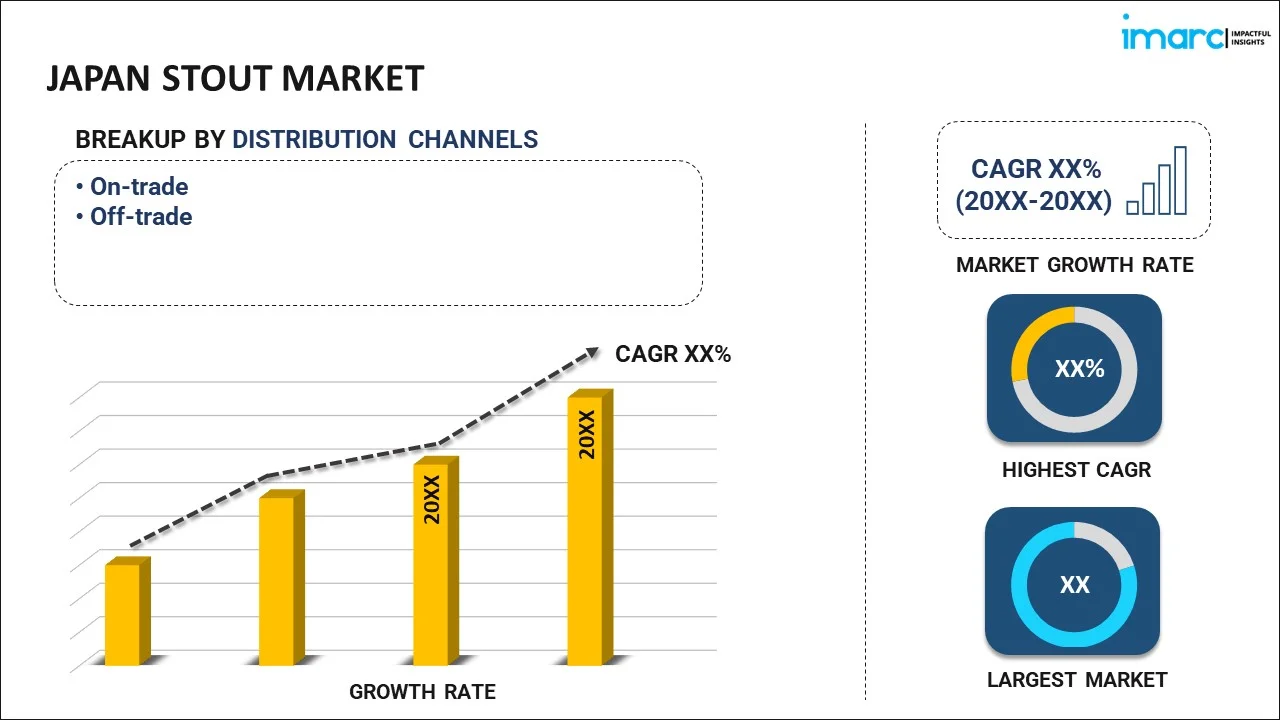
To get detailed segment analysis of this market, Request Sample
- On-trade
- Off-trade
On-trade dominates with a market share of 55% of the total the Japan stout market in 2025.
The on-trade distribution channel plays a central role in stout consumption in Japan, supported by the country’s strong dining-out culture. Izakayas, craft beer bars, and specialty restaurants offer environments where consumers can explore curated beer selections alongside food pairings and knowledgeable service. These settings elevate the experience of drinking stout, positioning it as a premium and experiential choice. The emphasis on atmosphere, guidance, and discovery encourages trial of darker beer styles, reinforcing the importance of on-premise venues in shaping stout preferences.
The expanding presence of craft beer taprooms and brewpubs in urban areas further strengthens the on-trade segment. These venues focus on experiential elements such as rotating tap lists, seasonal releases, and specialized pouring techniques that enhance flavor and texture. Stout offerings benefit from this immersive approach, as on-premise formats allow consumers to experience qualities that are difficult to replicate through retail purchases. As a result, these establishments play a key role in differentiating stout and sustaining consumer interest.
Regional Insights:
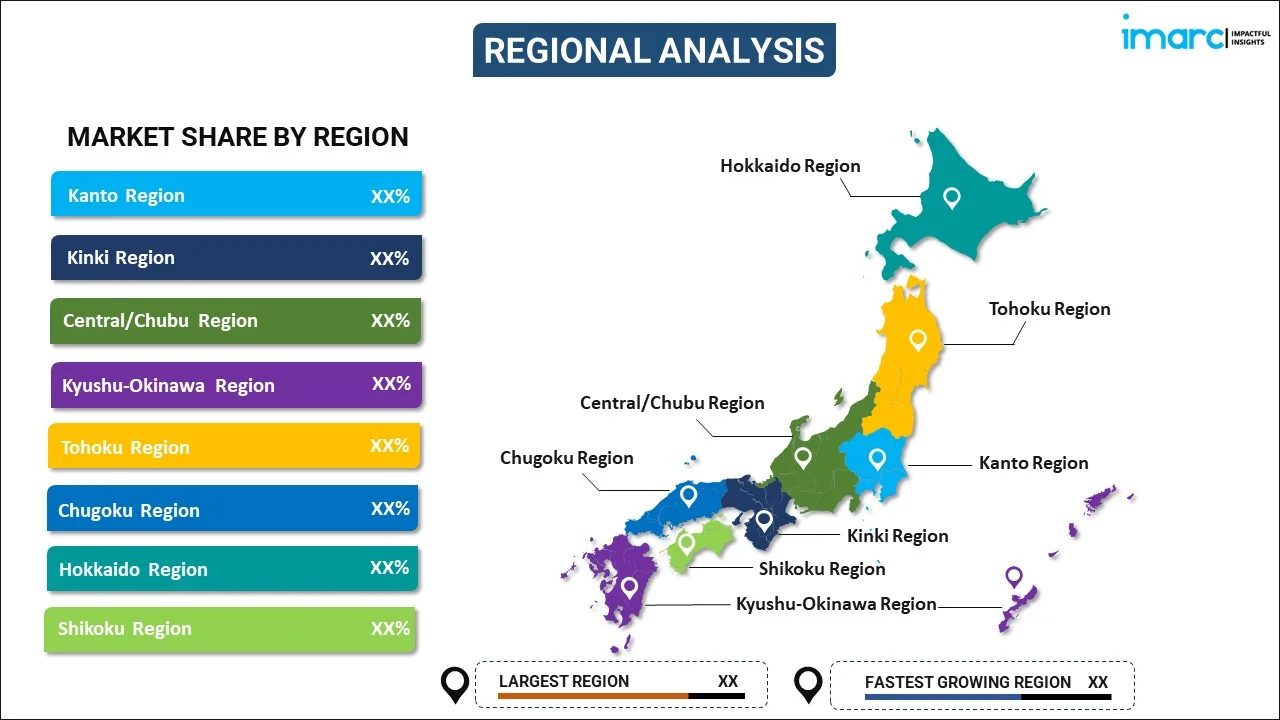
To get detailed regional analysis of this market, Request Sample
- Kanto Region
- Kinki Region
- Central/Chubu Region
- Kyushu-Okinawa Region
- Tohoku Region
- Chugoku Region
- Hokkaido Region
- Shikoku Region
The Kanto Region leads the Japan stout market, supported by Tokyo’s position as the country’s largest urban center and economic hub. The region’s dense concentration of craft beer bars, izakayas, and international dining venues provides an expansive on-trade infrastructure for stout consumption. High disposable incomes and cosmopolitan consumer preferences in the greater Tokyo metropolitan area drive strong demand for premium and imported stout varieties.
The Kinki Region, anchored by Osaka and Kyoto, serves as a significant stout consumption center driven by the area’s vibrant food and beverage culture. Osaka’s craft beer scene features innovative breweries and specialty taprooms that cater to both domestic and international consumers seeking unique dark beer experiences.
The Central/Chubu Region benefits from a rising number of local microbreweries and strong tourism activity, where brewery tours and tastings are becoming part of travel experiences. The combination of urban demand and visitor interest supports growing awareness and consumption of stout-style beers across the region.
The Kyushu–Okinawa Region supports market expansion through its long-standing brewing traditions and developing hospitality sector. Local craft breweries increasingly experiment with regional ingredients, creating distinctive stout varieties that appeal to both residents and visitors seeking authentic, locally inspired beer experiences.
The Tohoku Region is gradually establishing itself as a craft beer destination, driven by the launch of new breweries serving local communities and tourists. Stout offerings benefit from the region’s natural appeal, seasonal travel, and growing interest in small-batch, artisanal beer production.
The Chugoku Region maintains consistent stout demand through bars, pubs, and restaurants, where specialty beers are increasingly featured alongside regional cuisine. The integration of craft beer into dining culture supports steady consumption, with consumers showing interest in darker and more flavorful beer styles.
The Hokkaido Region capitalizes on its cold climate identity and tourism-driven food culture to promote stout consumption. Local breweries produce seasonal dark beers that pair well with regional dishes, reinforcing stout’s appeal among visitors and residents seeking richer, warming beer options.
The Shikoku Region represents a smaller yet steadily developing market, where craft beer culture is gaining traction. Regional brewery initiatives, combined with wider online retail availability, are improving access to stout products and encouraging gradual adoption among local consumers.
Market Dynamics:
Growth Drivers:
Why is the Japan Stout Market Growing?
Rapid Expansion of Craft Breweries and Microbreweries
The expanding presence of independent craft breweries across Japan is a key factor supporting the development of the stout segment. These producers emphasize artisanal craftsmanship, distinctive flavor profiles, and limited-batch brewing, which resonate with consumers seeking premium and character-driven dark beers. A more accommodating regulatory landscape has lowered barriers for small-scale operations, encouraging experimentation and regional diversity in beer offerings. As a result, new breweries are emerging in both urban and regional markets, broadening access to stout styles. This steady expansion of the craft brewing ecosystem is strengthening product variety, nurturing consumer interest, and reinforcing the long-term growth potential of stout in Japan.
Record Inbound Tourism Amplifying On-Trade Stout Consumption
Japan’s surging inbound tourism is creating significant opportunities for stout consumption through the hospitality and on-trade channels. International visitors are exposed to Japanese craft beer culture through brewery tours, beer festivals, and curated dining experiences that feature premium dark beer styles. The Japan National Tourism Organization reported approximately 36.9 million foreign tourists visited Japan in 2024, surpassing the previous record of 31.9 million set in 2019. Inbound tourist spending reached JPY 8.1 trillion (USD 53.3 billion), making tourism Japan’s second-largest export sector. This influx of international visitors is driving demand for diverse beer offerings including stout, particularly in urban hospitality hubs where craft beer bars and specialty restaurants cater to global palates.
Premiumization and Evolving Consumer Palate Preferences
Japanese consumers are increasingly gravitating toward premium, flavor-forward beverages as premiumization reshapes the country’s beverage preferences. Greater openness to international beer styles, combined with a more sophisticated dining culture, is expanding interest in stout beyond its traditional audience. Consumers are showing stronger appreciation for quality, craftsmanship, and distinctive taste experiences, particularly in on-trade settings. At the same time, stout is becoming more integrated into Japanese culinary culture through curated food pairings and creative cooking applications. These influences are helping position stout as a versatile, premium option suited to a wider range of consumers and consumption occasions.
Market Restraints:
What Challenges the Japan Stout Market is Facing?
Aging Population and Declining Overall Alcohol Consumption
The demographic issues facing Japan, such as an ageing population and diminishing birth rates, are putting a pull on the overall volumes of alcohol consumed. The younger age groups are also becoming health-conscious and drinking less, which is decreasing the number of potential consumers of products in the specialty beer category, including stout. This organizational change limits the growth opportunities of volume in the long term in the entire beer category.
Intense Competition from Low-Malt and Non-Alcoholic Alternatives
Japan beer market has very stiff competition through low-malt beer, third category substitutes, and a rapidly growing non-alcoholic market. The choices appeal to price-sensitive and health-conscious customers by providing lower-priced options and targeting moderation and wellness. Consumer spending is slowly but surely diverting towards the types of beer considered to be the traditional premium, and competition is growing on the established types of beer and brands.
Seasonal Demand Fluctuations and Niche Market Positioning
The consumption of stout in Japan is seasonal, with the demand being the highest during the cooler seasons, when darker and heavier types of beer are much preferred. This seasonality narrows down the sales consistency throughout the year and poses problems in the inventory management of brewers and distributors. Further, the fact that stout is a niche specialty product on the larger beer market limits its penetration in the mass-market competition with lager and light beer.
Competitive Landscape:
The Japan stout market operates within a competitive framework characterized by the coexistence of large domestic brewing corporations and a rapidly expanding cohort of independent craft producers. Established players leverage extensive distribution networks, brand recognition, and economies of scale to maintain broad market coverage, while smaller craft breweries compete through product differentiation, artisanal quality, and experiential consumer engagement. The competitive landscape is further intensified by international brewers entering the Japanese market through partnerships, acquisitions, and direct brewery establishment. Innovation in brewing techniques, seasonal product rotations, and localized flavor development serve as critical competitive differentiators.
Japan Stout Market Report Coverage:
| Report Features | Details |
|---|---|
| Base Year of the Analysis | 2025 |
| Historical Period | 2020-2025 |
| Forecast Period | 2026-2034 |
| Units | Million USD |
| Scope of the Report | Exploration of Historical and Forecast Trends, Industry Catalysts and Challenges, Segment-Wise Historical and Predictive Market Assessment:
|
| Distribution Channels Covered | On-trade, Off-trade |
| Regions Covered | Kanto Region, Kinki Region, Central/Chubu Region, Kyushu-Okinawa Region, Tohoku Region, Chugoku Region, Hokkaido Region, Shikoku Region |
| Customization Scope | 10% Free Customization |
| Post-Sale Analyst Support | 10-12 Weeks |
| Delivery Format | PDF and Excel through Email (We can also provide the editable version of the report in PPT/Word format on special request) |
Frequently Asked Questions About the Japan Stout Market Report
The Japan stout market size was valued at USD 602.04 Million in 2025.
The Japan stout market is expected to grow at a compound annual growth rate of 3.65% from 2026-2034 to reach USD 831.14 Million by 2034.
On-trade represent the largest revenue share of 55% in 2025, driven by Japan’s deeply rooted izakaya and bar culture where on-tap stout serves as a premium beverage choice, supported by the expansion of craft beer taprooms and specialty dining establishments.
Key factors driving the Japan stout market include the rapid expansion of craft breweries, record inbound tourism amplifying on-trade consumption, premiumization of consumer preferences, favorable liquor tax reforms, and deepening food-pairing culture.
Major challenges include Japan’s aging population and declining alcohol consumption, intense competition from low-malt and non-alcoholic alternatives, seasonal demand fluctuations, and the niche positioning of stout relative to mainstream lager categories.
Need more help?
- Speak to our experienced analysts for insights on the current market scenarios.
- Include additional segments and countries to customize the report as per your requirement.
- Gain an unparalleled competitive advantage in your domain by understanding how to utilize the report and positively impacting your operations and revenue.
- For further assistance, please connect with our analysts.
 Request Customization
 Speak to an Analyst
 Request Brochure
 Inquire Before Buying
Benefits of Customization
- Personalize this research
- Triangulate with your data
- Get data as per your format and definition
- Gain a deeper dive into a specific application, geography, customer, or competitor
- Any level of personalization
Get in Touch With Us
UNITED STATES
Phone: +1-201-971-6302
INDIA
Phone: +91-120-433-0800
UNITED KINGDOM
Phone: +44-753-714-6104
Email: [email protected]
Client Testimonials




.webp)




.webp)













Related Reports

Choose your plan
*Please note that the prices mentioned below are starting prices for each bundle type. Kindly contact our team for further details.*
Single User License
- 1 User License, Access on 2 Devices
- PDF Report + Excel Dataset (Password Protected)
- Lifetime Access
- No Printing Rights
- 10% Free Report Customization
- 10–12 Weeks of Analyst Support
Five User License
- Access for 5 Users, 2 Devices per User
- PDF Report + Excel Dataset (Password Protected)
- Lifetime Access
- Dedicated Account Manager
- 12–14 Weeks of Analyst Support
- No Printing Rights
- 15% Free Report Customization
- 25% Discount on Your Next Purchase
Corporate User License
- Unlimited User Access (Within Your Organization)
- PDF Report + Excel Dataset
- Lifetime Access
- Dedicated Account Manager
- 14–20 Weeks of Analyst Support
- No Printing Rights
- 20% Free Report Customization
- 30% Discount on Your Next Purchase
Essential Insights
What's included:
3 reports
- Lifetime Access
- PDF Reports
- Excel Datasets
- 2 Weeks of Free Analyst Support
- 2 User Licenses
- Access on 2 Devices
- Printing Rights
- Complimentary PowerPoint (PPT) Version
- Complimentary License Upgrade
Professional Access
What's included:
5 reports
- Lifetime Access
- PDF Reports
- Excel Datasets
- 8 Weeks of Free Analyst Support
- 2 User Licenses
- Access on 2 Devices
- Printing Rights
- Complimentary PowerPoint (PPT) Version
- Complimentary License Upgrade
Business Advantage
What's included:
8 reports
- Lifetime Access
- PDF Reports
- Excel Datasets
- 14 Weeks of Free Analyst Support
- 2 User Licenses
- Access on 2 Devices
- Printing Rights
- Complimentary PowerPoint (PPT) Version
- Complimentary License Upgrade
Enterprise Intelligence
What's included:
10 reports
- Lifetime Access
- PDF Reports
- Excel Datasets
- 20 Weeks of Free Analyst Support
- 2 User Licenses
- Access on 2 Devices
- Printing Rights
- Complimentary PowerPoint (PPT) Version
- Complimentary License Upgrade