
Japan Trout Market Size, Share, Trends and Forecast by Trout Type, Trout Size, Distribution, Form, and Region, 2026-2034
Japan Trout Market Summary:
The Japan trout market size was valued at USD 876.44 Million in 2025 and is projected to reach USD 1,215.01 Million by 2034, growing at a compound annual growth rate of 3.70% from 2026-2034.
The trout market in Japan is growing, fueled by the country's strong seafood culinary heritage, increasing consumer awareness of health benefits from omega-3-rich protein sources, and advancements in aquaculture infrastructure. Key trends, such as the demand for premium products, a shift toward diversified distribution channels, and a growing preference for fresh, sustainably sourced trout, are significantly altering market dynamics and opening up significant opportunities for stakeholders across the entire value chain.
Key Takeaways and Insights:
- By Trout Type: Rainbow trout dominates the market with a share of 35% in 2025, driven by its widespread culinary versatility across sushi, sashimi, and grilled preparations, well-established aquaculture infrastructure enabling year-round domestic production, and strong consumer familiarity as Japan's most commercially cultivated freshwater salmonid species.
- By Trout Size: Large represents the largest segment with a market share of 60% in 2025, owing to the growing foodservice demand for premium-sized portions suitable for sashimi plating, whole-fish presentations in traditional Japanese cuisine, and higher per-unit value that aligns with the premiumization trend across upscale dining establishments.
- By Distribution: Foodservice leads the market with a share of 47% in 2025, supported by Japan's vibrant restaurant culture encompassing sushi bars, izakaya dining establishments, ryokan accommodations, and hotel banquet services that collectively sustain robust institutional procurement volumes for premium trout varieties.
- By Form: Fresh dominates the market with a share of 50% in 2025, due to the consumers deep-rooted preference for raw and minimally processed seafood consumption, the cultural emphasis on freshness as a quality indicator, and expansion of cold-chain logistics infrastructure enabling rapid distribution.
- Key Players: The Japan trout market exhibits moderate-to-highly competitive intensity, with established domestic aquaculture operations competing alongside international importers across premium and value segments, supported by diversified distribution networks spanning foodservice procurement and retail channels.
The Japan trout market is shaped by demographic shifts, innovation in aquaculture, sustainability priorities, and expanding retail infrastructure. An aging population and rising health awareness are encouraging higher consumption of protein-rich seafood, with trout valued for its heart and brain health benefits. Advances, such as recirculating aquaculture systems, automated water quality monitoring, and improved biosecurity, are strengthening domestic production and ensuring consistent supply throughout the year. Wider availability through supermarkets, convenience stores, and online grocery platforms is making fresh, frozen, and ready-to-cook (RTC) trout more accessible across regions. Environmental considerations are also influencing purchasing decisions, prompting producers to adopt low-impact farming methods and resource-efficient systems. Government-backed policies promoting sustainable aquaculture, traceability standards, and domestic seafood resilience are reinforcing industry growth. In 2025, Tokyo-based sushi chain Genki Global launched a land-based aquaculture project targeting 1,000 tons of trout and 40–60 tons of trout roe annually, highlighting efforts to secure stable local supply.
Japan Trout Market Trends:
Rising Demand for Sustainable and Eco-Friendly Trout
The growing environmental awareness among Japanese consumers is driving the demand for sustainably farmed trout. Shoppers and foodservice operators are prioritizing responsibly sourced products, emphasizing certifications that verify reduced ecological impact and traceable supply chains. Producers implementing eco-conscious practices, such as minimizing feed waste, optimizing energy use, and preventing water pollution, enhance market credibility. For instance, in 2025, Kawasaki Heavy Industries announced a nearshore aquaculture system using its “Minatomae” technology to farm rainbow trout near the Port of Kobe, combining advanced water treatment, oxygen control, and semi-closed tank design to reduce environmental impact while ensuring year-round, high-quality production close to consumers, reinforcing the market’s sustainable growth trajectory.
Rise of Aquaculture and Farming Technologies
Advancements in aquaculture infrastructure and trout farming practices are significantly enhancing production efficiency and output in Japan. Innovations in hatchery management, optimized feeding, and disease control improve growth rates, reduce mortality, and maintain fish quality. Sustainable techniques, such as recirculating aquaculture systems, enable year-round production, stabilize supply, and lower environmental impact. For instance, in 2024, Ace Aquatec announced the installation of its A-HSU® humane trout stunning system with FRD Japan, capable of processing 30 tons per hour while recycling water into the RAS facility, improving biosecurity and operational efficiency. These technological improvements ensure consistent availability, support scalability, and strengthen competitiveness, meeting growing domestic and processed product demand while maintaining freshness, flavor, and nutritional standards.
Expansion of Land-Based Trout Production
The Japan trout market is being driven by the large-scale expansion of land-based aquaculture operations that utilize advanced technologies to enhance productivity and efficiency. In 2024, Fish Farm Mirai LLC announced plans to increase its rainbow trout production from 300 tons to 3,000 tons by 2027, employing recirculating aquaculture system (RAS) technology with automated monitoring. Such approach allows precise control over water quality, feeding schedules, and environmental conditions, minimizing mortality and optimizing growth rates. By scaling production in a controlled, land-based setting, producers can meet the growing domestic demand, maintain consistent product quality, and strengthen Japan’s position as a leading trout supplier in both local and regional markets.
Market Outlook 2026-2034:
The Japan trout market shows strong potential for revenue growth during the forecast period, supported by the country's lasting seafood consumption habits and the modernization of aquaculture practices. The market generated a revenue of USD 876.44 Million in 2025 and is projected to reach a revenue of USD 1,215.01 Million by 2034, growing at a compound annual growth rate of 3.70% from 2026-2034. Revenue growth indicates consistent market development as local land-based production capabilities rise, consumer knowledge of trout's health advantages grows, and the variety of distribution channels enhances product availability in both urban and rural markets.
Japan Trout Market Report Segmentation:
|
Segment Category |
Leading Segment |
Market Share |
|
Trout Type |
Rainbow Trout |
35% |
|
Trout Size |
Large |
60% |
|
Distribution |
Foodservice |
47% |
|
Form |
Fresh |
50% |
Trout Type Insights:
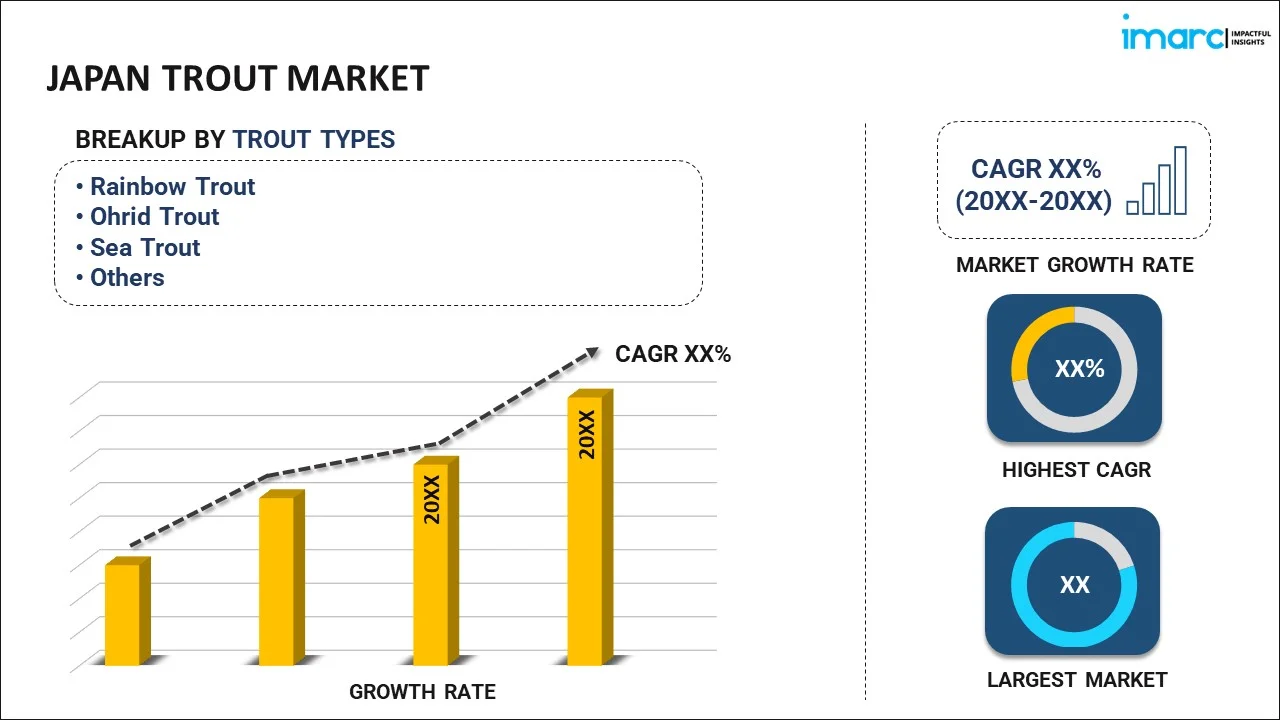
To get detailed segment analysis of this market, Request Sample
- Rainbow Trout
- Ohrid Trout
- Sea Trout
- Golden Trout
- Brook Trout
- Others
Rainbow trout dominates with a market share of 35% of the total Japan trout market in 2025.
Rainbow trout holds the biggest market share due to its widespread cultivation, adaptability to diverse freshwater conditions, and strong consumer acceptance. Japanese aquaculture operators prefer rainbow trout because of its fast growth cycle, efficient feed conversion, and consistent yield across seasons. The species thrives in controlled farming environments, allowing producers to maintain stable supply for retail and foodservice channels. Its mild flavor, firm texture, and versatility in traditional and modern Japanese cuisine further strengthen demand. Rainbow trout fits well into varied culinary applications, ranging from sushi and sashimi preparations to grilled and smoked products, supporting its dominant position nationwide.
In addition, rainbow trout benefits from well-established breeding programs and advanced aquaculture technology across Japan, ensuring high survival rates and improved quality standards. For instance, in 2025, Nissui announced a rainbow trout pilot project in Ofunato, Iwate, in partnership with the Okirai Fishery Cooperative to advance commercial-scale aquaculture. The trial was part of Nissui’s Sanriku coast cluster, complementing previous sites in Otsuchi and Rikuzentakata, and aimed to standardize production while mitigating environmental risks. Furthermore, the species is suitable for value-added processing, including fillets, RTC portions, and packaged seafood products, which appeal to urban consumers seeking convenience.
Trout Size Insights:
- Large
- Small
Large leads with a market share of 60% of the total Japan trout market in 2025.
Large represents the largest segment driven by higher consumer preference for premium cuts and better yield per fish. Larger trout provide thicker fillets, uniform portions, and improved presentation quality, making them ideal for sushi, sashimi, grilling, and hotel dining. Foodservice operators value large-sized trout for consistency in portion control and reduced processing waste. The growing demand from upscale restaurants and specialty seafood outlets is further encouraging producers to focus on cultivating bigger fish. Controlled aquaculture systems in Japan enable farmers to extend growth cycles efficiently, ensuring supply of large trout that meet commercial standards.
Moreover, large trout supports value-added processing and export potential, contributing to its leading position in the market. Bigger fish allow processors to produce smoked slices, frozen fillets, and RTC packs with attractive margins. Retail consumers also associate larger trout with freshness and superior quality, especially for festive meals and family gatherings. Technological improvements in feed management and water quality monitoring are assisting farmers raise trout to larger sizes without compromising texture or taste. As income levels and dining expectations continue to rise, preference for premium seafood portions sustains demand for large trout across domestic and institutional channels in Japan.
.webp)
Distribution Insights:
- Foodservice
- Retail
- Supermarkets and Hypermarkets
- Convenience Stores
- Specialty Outlets
- Online Channels
- Others
Foodservice exhibits a clear dominance with a 47% share of the total Japan trout market in 2025.
Foodservice dominates the market due to the growing demand from restaurants, sushi chains, hotels, and catering services across the country. Trout is widely used in sashimi, grilled dishes, smoked preparations, and fusion cuisine, making it a preferred menu item in both casual and fine dining establishments. The consistent quality and year-round availability of farmed trout support stable procurement for foodservice operators. Chefs value trout for its mild flavor, firm texture, and versatility in preparation styles. Increasing tourism, rising dining-out culture, and expansion of premium seafood restaurants further strengthen foodservice dominance in trout distribution across major urban centers.
Additionally, long-term supply contracts between aquaculture producers and restaurant groups ensure steady volumes through the foodservice channel. Bulk purchasing by hotels and restaurant chains allows cost efficiency while maintaining freshness standards. Institutional buyers often prefer customized cuts and larger-sized trout, which are better suited for commercial kitchens. Foodservice outlets also influence consumer preferences, encouraging repeat retail purchases through exposure to trout-based dishes. With increasing demand for healthy protein options and premium seafood experiences, restaurants continue to drive consumption. This sustained demand from organized and independent foodservice establishments reinforces the segment’s leading share in the distribution landscape.
Form Insights:
- Fresh
- Frozen
- Canned
- Others
Fresh dominates with a market share of 50% of the total Japan trout market in 2025.
Fresh leads the market owing to strong consumer preference for high-quality, minimally processed seafood. Japanese cuisine places significant emphasis on freshness, especially for dishes, such as sashimi, sushi, and lightly grilled preparations where natural flavor and texture are essential. Retailers and fish markets prioritize same-day or short-cycle supply from domestic aquaculture farms to maintain premium standards. Consumers often associate fresh trout with superior taste, higher nutritional value, and better safety assurance. Efficient cold chain logistics and proximity of aquaculture facilities to urban consumption centers further support the dominance of fresh trout across supermarkets, specialty seafood stores, and foodservice establishments nationwide.
Moreover, Japan’s advanced distribution infrastructure enables rapid transportation from farms to markets, preserving quality and appearance. Fresh trout offers versatility for home cooking as well as professional kitchens, making it highly adaptable to traditional and contemporary recipes. Buyers prefer whole fresh fish or freshly cut fillets to customize portion sizes according to meal requirements. The growing focus on healthy eating also supports demand for fresh seafood over heavily processed alternatives. This sustained preference ensures fresh trout remains the leading form within the market.
Regional Insights:
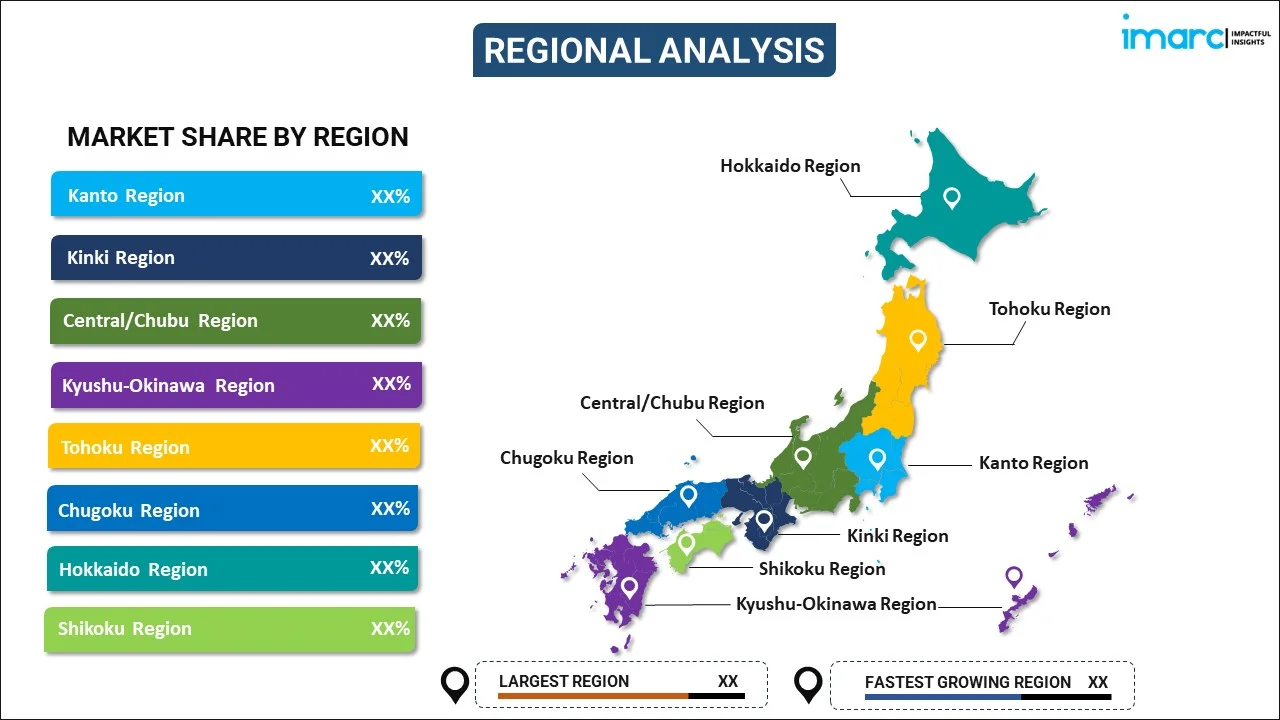
To get detailed regional analysis of this market, Request Sample
- Kanto Region
- Kinki Region
- Central/ Chubu Region
- Kyushu-Okinawa Region
- Tohoku Region
- Chugoku Region
- Hokkaido Region
- Shikoku Region
Kanto Region is a crucial segment in the market due to Tokyo’s dense population, premium retail networks, and high restaurant concentration. Strong demand from sushi chains and upscale dining outlets supports steady procurement of fresh trout. Efficient logistics and proximity to major wholesale seafood markets further strengthen regional dominance in sales and distribution.
Kinki Region, anchored by Osaka and Kyoto, maintains strong trout demand driven by a vibrant culinary culture and large foodservice sector. Local retailers emphasize freshness and quality, while hotels and restaurants incorporate trout into traditional and fusion cuisine, sustaining consistent regional market performance.
Central/Chubu Region benefits from inland aquaculture activity and proximity to mountainous freshwater sources suitable for trout farming. Nagano and surrounding prefectures support regional production, reducing transport time and ensuring freshness. Balanced household consumption and tourism-driven dining contribute to steady trout demand across the region.
Kyushu-Okinawa Region shows growth supported by expanding retail infrastructure and rising seafood consumption. The region’s tourism sector and resort-based hospitality industry drive foodservice demand. Improved cold-chain connectivity enables reliable supply from mainland producers, supporting wider availability of fresh and processed trout products.
Tohoku Region’s clean water resources and cooler climate favor trout aquaculture, strengthening regional supply. Local consumption remains steady, supported by traditional seafood-based diets. Reconstruction of supply chains and modernization of fisheries infrastructure are improving distribution efficiency and enhanced access to broader domestic markets.
Chugoku Region maintains trout demand through a mix of retail and foodservice channels. Urban centers like Hiroshima support consistent consumption, while local seafood culture encourages product acceptance. Regional distribution networks ensure availability of fresh trout sourced from nearby aquaculture hubs.
Hokkaido Region benefits from pristine freshwater environments and established aquaculture operations, contributing to strong local production. The region’s seafood-oriented cuisine and tourism industry support trout consumption. High-quality standards and strong domestic reputation position Hokkaido as both a supply base and consumption market.
Shikoku Region’s trout market is supported by small-scale aquaculture and regional seafood traditions. The steady household consumption and hospitality demand sustain sales. Improved distribution links with major mainland markets enhance product flow and maintain consistent availability across retail outlets.
Market Dynamics:
Growth Drivers:
Why is the Japan Trout Market Growing?
Demographic Shifts
Changing demographic patterns in Japan, including smaller household sizes and an aging population, influence trout consumption. Urban dwellers seek nutritious, protein-rich, and easy-to-prepare foods, increasing demand for trout in both fresh and value-added forms. Elderly consumers, who require health-conscious diets, often incorporate fish like trout for cardiovascular and cognitive benefits. The National Institute of Population and Social Security Research forecasts that by 2040, elderly individuals will comprise 34.8% of Japan's population, underscoring the rising importance of health-focused dietary choices. Moreover, younger professionals favor convenient, high-quality seafood options that fit busy lifestyles. The combination of urbanization and demographic changes ensures steady growth in household and foodservice demand, making trout a key component of the evolving dietary patterns across Japan’s population.
Innovation in Packaging and Cold Chain Infrastructure
Advances in packaging technologies, such as vacuum-sealed, modified atmosphere packaging (MAP), and temperature-controlled logistics, are improving trout shelf life and quality during transport and retail display. Reliable cold chain systems ensure freshness from farm to table, reducing spoilage and food safety concerns. Enhanced packaging also enables extended distribution to remote locations, broadening market reach. Consumers increasingly value visual appeal, convenience, and safety in seafood products. These innovations strengthen brand trust, encourage repeat purchases, and support the growth in both retail and e-commerce channels, particularly in urban areas with the increasing demand for RTC and fresh fish products.
Growth of Retail and Distribution Networks
The proliferation of modern retail formats, including supermarkets, convenience stores, and online grocery platforms, is improving accessibility to trout across Japan. Packaged, pre-portioned, and frozen trout products make it easier for consumers to purchase and store fish while preserving freshness and quality. Retailers employ attractive promotions, loyalty programs, and product visibility strategies to drive repeat purchases. E-commerce and home delivery services expand reach into suburban and rural areas, providing convenience and widening the consumer base. The Japan e-commerce market reached USD 286.5 billion in 2025, as per the IMARC Group, reflecting strong digital adoption. Improved logistics and cold chain infrastructure ensure consistent supply and maintain quality standards, further encouraging consumer adoption and supporting the market growth.
Market Restraints:
What Challenges is the Japan Trout Market Facing?
Rising Production Costs and Feed Price Volatility Constraining Aquaculture Margins
Escalating feed costs driven by global fishmeal price increases, energy expenses associated with maintaining optimal water temperatures in recirculating systems, and labor shortages in rural aquaculture regions are collectively squeezing production margins for domestic trout farming operations. These cost pressures create challenges for maintaining price competitiveness against imported trout products while sustaining investment in technological upgrades and capacity expansion.
Declining Per Capita Seafood Consumption Amid Shifting Protein Preferences
Japan's long-term decline in per capita seafood consumption, driven by younger demographics' increasing preference for meat-based proteins and the convenience advantages of alternative protein sources, presents a structural headwind for the trout market. The substitution of traditional fish-centered meals with Western-influenced dining patterns continues to erode the frequency of seafood consumption occasions, requiring sustained marketing efforts to maintain trout's relevance across generational cohorts.
Import Dependency and Currency Fluctuation Exposure Affecting Supply Stability
Japan's continued reliance on imported trout and salmon products to supplement domestic production exposes the market to currency depreciation risks, international supply chain disruptions, and trade policy uncertainties that can create pricing volatility and supply instability. Yen weakness against major exporting nations' currencies increases landed costs for imported trout, potentially compressing distributor margins or translating into consumer price increases that dampen demand growth.
Competitive Landscape:
The Japan trout market exhibits moderate-to-highly competitive intensity characterized by a complex interplay between domestic aquaculture producers, international importers, and vertically integrated seafood trading companies competing across premium and value-oriented market segments. The competitive landscape is shaped by the coexistence of traditional fishery cooperatives managing freshwater pond-based operations alongside technologically advanced land-based recirculating aquaculture ventures backed by major conglomerates and cross-industry investment partnerships. Market differentiation strategies increasingly center on provenance-based branding, sustainability certifications, production technology sophistication, and direct-to-consumer (DTC) distribution capabilities.
Recent Developments:
- February 2026: FRD Japan secured funding from The Norinchukin Bank to advance its land-based trout farming projects. The investment will support feasibility studies, engineering design, and the development of Phase 3, while Phase 2 in Futtsu, Chiba Prefecture, is nearing completion. Trial sales have already started, with full-scale trout shipments scheduled to begin in 2027.
- November 2025: NTT Green & Food announced plans to build a land-based coho salmon and trout RAS facility in Kesennuma City, Miyagi Prefecture, Japan. The project, in collaboration with AquaBioTech Group, aimed to produce 310 MT of trout and 260 MT of coho salmon, supporting local offshore aquaculture. The initiative focused on regional revitalization, job creation, and sustainable seafood production using digital technologies.
Japan Trout Market Report Coverage:
| Report Features | Details |
|---|---|
| Base Year of the Analysis | 2025 |
| Historical Period | 2020-2025 |
| Forecast Period | 2026-2034 |
| Units | Million USD |
| Scope of the Report | Exploration of Historical and Forecast Trends, Industry Catalysts and Challenges, Segment-Wise Historical and Predictive Market Assessment:
|
| Trout Types Covered | Rainbow Trout, Ohrid Trout, Sea Trout, Golden Trout, Brook Trout, Others |
| Trout Sizes Covered | Large, Small |
| Distributions Covered |
|
| Forms Covered | Fresh, Frozen, Canned, Others |
| Regions Covered | Kanto Region, Kinki Region, Central/Chubu Region, Kyushu-Okinawa Region, Tohoku Region, Chugoku Region, Hokkaido Region, Shikoku Region |
| Customization Scope | 10% Free Customization |
| Post-Sale Analyst Support | 10-12 Weeks |
| Delivery Format | PDF and Excel through Email (We can also provide the editable version of the report in PPT/Word format on special request) |
Frequently Asked Questions About the Japan Trout Market Report Report
The Japan trout market size was valued at USD 876.44 Million in 2025.
The Japan trout market is expected to grow at a compound annual growth rate of 3.70% from 2026-2034 to reach USD 1,215.01 Million by 2034.
Rainbow trout dominates the Japan trout market with a share of 35% in 2025, driven by its widespread culinary versatility across sushi, sashimi, and grilled preparations, and well-established domestic aquaculture infrastructure.
Key factors driving the Japan trout market include advancements in aquaculture, which are boosting Japan’s trout production efficiency and output. For instance, in 2024, Ace Aquatec installed its A-HSU® humane trout stunning system with FRD Japan, processing 30 tons per hour, recycling water, and enhancing biosecurity, ensuring consistent supply and high-quality fish.
Major challenges include rising production costs and feed price volatility constraining aquaculture margins, declining per capita seafood consumption amid shifting protein preferences among younger demographics, import dependency exposing the market to currency fluctuation risks, and supply chain disruptions affecting pricing stability.
Need more help?
- Speak to our experienced analysts for insights on the current market scenarios.
- Include additional segments and countries to customize the report as per your requirement.
- Gain an unparalleled competitive advantage in your domain by understanding how to utilize the report and positively impacting your operations and revenue.
- For further assistance, please connect with our analysts.
 Request Customization
 Speak to an Analyst
 Request Brochure
 Inquire Before Buying
Benefits of Customization
- Personalize this research
- Triangulate with your data
- Get data as per your format and definition
- Gain a deeper dive into a specific application, geography, customer, or competitor
- Any level of personalization
Get in Touch With Us
UNITED STATES
Phone: +1-201-971-6302
INDIA
Phone: +91-120-433-0800
UNITED KINGDOM
Phone: +44-753-714-6104
Email: [email protected]
Client Testimonials




.webp)




.webp)













Related Reports

Choose your plan
*Please note that the prices mentioned below are starting prices for each bundle type. Kindly contact our team for further details.*
Single User License
- 1 User License, Access on 2 Devices
- PDF Report + Excel Dataset (Password Protected)
- Lifetime Access
- No Printing Rights
- 10% Free Report Customization
- 10–12 Weeks of Analyst Support
Five User License
- Access for 5 Users, 2 Devices per User
- PDF Report + Excel Dataset (Password Protected)
- Lifetime Access
- Dedicated Account Manager
- 12–14 Weeks of Analyst Support
- No Printing Rights
- 15% Free Report Customization
- 25% Discount on Your Next Purchase
Corporate User License
- Unlimited User Access (Within Your Organization)
- PDF Report + Excel Dataset
- Lifetime Access
- Dedicated Account Manager
- 14–20 Weeks of Analyst Support
- No Printing Rights
- 20% Free Report Customization
- 30% Discount on Your Next Purchase
Essential Insights
What's included:
3 reports
- Lifetime Access
- PDF Reports
- Excel Datasets
- 2 Weeks of Free Analyst Support
- 2 User Licenses
- Access on 2 Devices
- Printing Rights
- Complimentary PowerPoint (PPT) Version
- Complimentary License Upgrade
Professional Access
What's included:
5 reports
- Lifetime Access
- PDF Reports
- Excel Datasets
- 8 Weeks of Free Analyst Support
- 2 User Licenses
- Access on 2 Devices
- Printing Rights
- Complimentary PowerPoint (PPT) Version
- Complimentary License Upgrade
Business Advantage
What's included:
8 reports
- Lifetime Access
- PDF Reports
- Excel Datasets
- 14 Weeks of Free Analyst Support
- 2 User Licenses
- Access on 2 Devices
- Printing Rights
- Complimentary PowerPoint (PPT) Version
- Complimentary License Upgrade
Enterprise Intelligence
What's included:
10 reports
- Lifetime Access
- PDF Reports
- Excel Datasets
- 20 Weeks of Free Analyst Support
- 2 User Licenses
- Access on 2 Devices
- Printing Rights
- Complimentary PowerPoint (PPT) Version
- Complimentary License Upgrade