
Kiwi Prices, Trend, Chart, Market Analysis, News, Demand, Historical and Forecast Data Report 2026 Edition
Kiwi Price Trend, Index and Forecast
Track the latest insights on kiwi price trend and forecast with detailed analysis of regional fluctuations and market dynamics across North America, Latin America, Central Europe, Western Europe, Eastern Europe, Middle East, North Africa, West Africa, Central and Southern Africa, Central Asia, Southeast Asia, South Asia, East Asia, and Oceania.
Kiwi Prices Outlook Q2 2026
- USA: USD 4264/MT
- Chile: USD 3151/MT
- Greece: USD 2438/MT
- Italy: USD 2503/MT
- New Zealand: USD 4291/MT
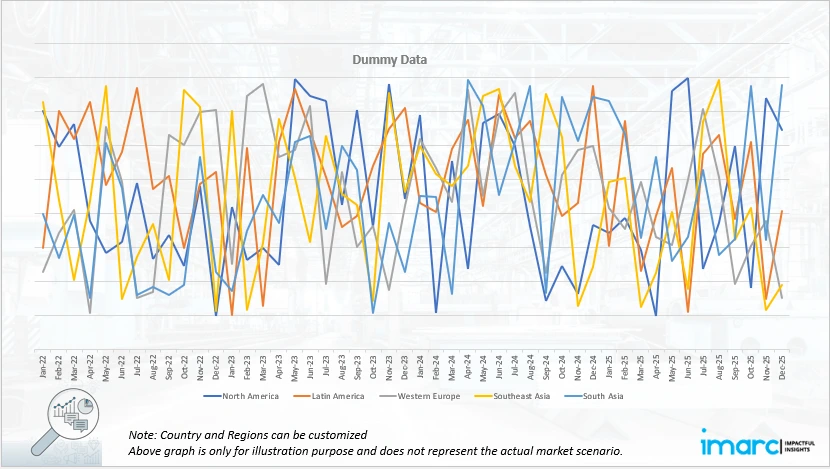
Kiwi Price Chart
Get real-time access to monthly/quarterly/yearly prices Request Sample
During the second quarter of 2026, the kiwi prices in the USA reached 4264 USD/MT in June. Prices moved upward as the market shifted from stored Northern Hemisphere fruit toward fresh Southern Hemisphere arrivals. Strong retail demand for premium green, gold, and red varieties supported importer purchasing, particularly as shipments entered the market. Freight, refrigerated transport, packing, and handling expenses also kept delivered costs firm.
During the second quarter of 2026, the kiwi prices in Chile reached 3151 USD/MT in June. Prices increased as the new harvest moved into commercial channels under stronger maturity and quality requirements. Exporters placed greater emphasis on fruit condition, dry matter, storage performance, and consistent eating quality, which supported premiums for suitable export lots. Strong overseas demand, particularly from major destination markets, encouraged packers to prioritize export programs and reduced the amount of high grade fruit available for lower priced domestic channels.
During the second quarter of 2026, the kiwi prices in Greece reached 2438 USD/MT in June. Prices moved upward as the domestic marketing season approached its later stages and remaining high quality stored fruit became less abundant. Export demand continued to support movement of Greek kiwi into European and overseas markets, reducing available inventories held by packers. Greater attention to fruit quality, storage condition, firmness, and maturity supported firmer quotations for lots suitable for longer distance trade.
During the second quarter of 2026, the kiwi prices in Italy reached 2503 USD/MT in June. Prices increased as domestic season stocks tightened and the market moved toward imported Southern Hemisphere fruit. Italian kiwi consumption remained supportive, while export activity and demand for premium yellow and red varieties helped maintain firm supplier expectations. Remaining locally stored fruit commanded stronger offers when quality and condition met retail specifications.
During the second quarter of 2026, the kiwi prices in New Zealand reached 4291 USD/MT in June. Prices moved upward as the new season harvest entered export programs and strong overseas demand absorbed substantial volumes. Sales activity remained particularly firm in Europe and North America, while Japan also showed supportive market performance. Growers and packers focused on fruit quality, packing efficiency, and timely shipment execution to protect returns during the peak dispatch period.
Kiwi Prices Outlook Q3 2025
- USA: USD 3650/MT
- Chile: USD 2950/MT
- Greece: USD 2370/MT
- Italy: USD 2300/MT
- New Zealand: USD 3800/MT
During the third quarter of 2025, the kiwi prices in the USA reached 3650 USD/MT in September. The upward price movement was mainly supported by firm domestic demand from organized retail and food service channels. Supply availability remained moderately tight due to the controlled release of stored inventories, which limited short-term market saturation. Import volumes were steady, but higher logistics and compliance-related costs influenced overall pricing sentiment.
During the third quarter of 2025, the kiwi prices in Chile reached 2950 USD/MT in September. Prices strengthened as export-oriented demand remained consistent across key destination markets. Harvest volumes were aligned with expectations, but shipment scheduling constraints affected spot availability. Growers prioritized contractual exports, reducing supply in the open market. Currency-related cost pressures and higher post-harvest handling expenses further influenced seller pricing strategies.
During the third quarter of 2025, the kiwi prices in Greece reached 2370 USD/MT in September. Prices softened due to relatively higher market availability compared to demand. Harvest progress was smooth, leading to steady inflows into domestic and export channels. Competition from other European origins intensified, placing pressure on supplier margins. Buyers adopted a cautious procurement approach, favoring short-term contracts.
During the third quarter of 2025, the kiwi prices in Italy reached 2300 USD/MT in September. Prices showed improvement, supported by controlled supply releases and steady export demand. Quality differentiation played a key role, with premium lots achieving better realizations. Domestic consumption remained balanced, while export interest from neighboring European countries improved. Production costs related to labor and storage influenced minimum acceptable price levels.
During the third quarter of 2025, the kiwi prices in New Zealand reached 3800 USD/MT in September. Prices remained elevated due to strong brand-driven demand in international markets. Export programs were well structured, limiting spot market volatility. Supply discipline and consistent quality standards supported higher realizations. Freight and compliance costs influenced exporter pricing decisions, while demand from premium retail segments remained firm.
Kiwi Prices Outlook Q2 2025
- USA: USD 3564/MT
- Chile: USD 2872/MT
- Greece: USD 2433/MT
- Italy: USD 2242/MT
- Netherlands: USD 3668/MT
During the second quarter of 2025, the kiwi prices in the USA reached 3564 USD/MT in June. Market pricing during the quarter was shaped by balanced domestic availability and consistent demand from organized retail chains. Import volumes from key supplying countries aligned closely with consumption requirements, reducing short-term procurement pressure. Inventory rotation was managed efficiently by distributors, allowing predictable sourcing patterns.
During the second quarter of 2025, the kiwi prices in Chile reached 2872 USD/MT in June. Pricing conditions were influenced by structured harvest schedules and export-oriented sales strategies. Exporters focused on fulfilling long-term agreements, which guided price formation. Post-harvest handling, packaging, and logistics costs played a notable role in shaping export quotations.
During the second quarter of 2025, the kiwi prices in Greece reached 2433 USD/MT in June. Price formation reflected early-season availability and active participation from export buyers. Domestic consumption patterns influenced local trade volumes, while European competition affected negotiation dynamics. Buyers emphasized quality specifications and delivery timelines when finalizing contracts.
During the second quarter of 2025, the kiwi prices in Italy reached 2242 USD/MT in June. Pricing was influenced by controlled inventory management and coordinated supply distribution. Domestic demand from retail and processing segments contributed to regular procurement activity. Export interest from regional markets shaped seller expectations. Input costs related to labor, storage, and compliance were incorporated into pricing discussions.
During the second quarter of 2025, the kiwi prices in the Netherlands reached 3668 USD/MT in June. As a key distribution hub, pricing reflected import sourcing costs and re-export demand across Europe. Storage, ripening, and logistics services influenced value addition. Buyers focused on supply reliability and quality consistency. Trade activity remained centered around contractual agreements, shaping the overall pricing framework during the quarter.
Regional Coverage
The report provides a detailed analysis of the market across different regions, each with unique pricing dynamics influenced by localized market conditions, supply chain intricacies, and geopolitical factors. This includes price trends, price forecast and supply and demand trends for each region, along with spot prices by major ports. The report also provides coverage of FOB and CIF prices, as well as the key factors influencing kiwi prices.
Europe Kiwi Price Trend
Q2 2026:
The kiwi price index in Europe moved upward as the market transitioned from late season stocks toward fresh supply. Remaining fruit from Italy and Greece became more selective by quality, firmness, and storage condition, supporting firmer quotations for better lots. Strong consumer demand continued across major retail channels, particularly for premium gold and red varieties. New Zealand fruit began entering the region as the new season progressed, while other shipments added alternative supply. However, refrigerated freight, handling, storage, and import logistics costs kept replacement values firm. Export demand for European fruit also reduced available carryover stocks before the seasonal changeover was complete.
Q3 2025:
The kiwi price index in Europe reflected mixed trends shaped by significant regional supply diversity. Southern European producing countries contributed higher market availability following seasonal harvest progress, while northern European markets continued to rely heavily on imported volumes. This imbalance influenced pricing dynamics across intra-regional trade routes. Competitive pressures among European suppliers and overseas exporters led to differentiated pricing strategies based on origin, fruit size, and quality attributes.
Q2 2025:
The kiwi price index in Europe was influenced by seasonal supply availability from southern producing countries and continued dependence on imported volumes in northern markets. Trade activity across the region was shaped by quality differentiation, with buyers placing emphasis on fruit size, appearance, and compliance with retail specifications. Origin competitiveness played an important role in procurement decisions, particularly in markets with multiple sourcing options. Buyers prioritized logistics efficiency, delivery reliability, and storage availability when negotiating prices.
Detailed price information for kiwi can also be provided for an extensive list of European countries.
| Region | Countries Covered |
|---|---|
| Europe | Germany, France, United Kingdom, Italy, Spain, Russia, Turkey, Netherlands, Poland, Sweden, Belgium, Austria, Ireland, Switzerland, Norway, Denmark, Romania, Finland, Czech Republic, Portugal, and Greece, among other European countries. |
North America Kiwi Price Trend
Q2 2026:
The kiwi price index in North America moved upward as Southern Hemisphere arrivals became increasingly important to market supply. New Zealand shipments expanded and met strong retail demand, while Chilean fruit provided additional regional green kiwi availability. Importers continued to secure fruit for supermarket programs, supporting regular procurement even as overall supply improved. Premium gold and red varieties maintained strong consumer interest and supported higher value market segments. Refrigerated freight, packing, warehousing, inland distribution, and cold chain expenses also contributed to firm delivered costs. Quality differences between origins and varieties limited direct price competition across all categories.
Q3 2025:
The kiwi price index in North America showed bullish movement supported by stable consumer demand across retail and food service sectors. Domestic supply availability was effectively complemented by consistent import flows, helping maintain overall market balance. Import sourcing strategies focused on reliability and quality assurance, which influenced pricing negotiations. Retail demand patterns remained predictable, allowing distributors to manage inventory turnover efficiently. Logistics-related expenses, including transportation and cold storage, continued to shape transaction values across regional markets.
Q2 2025:
The kiwi price index in North America reflected a sourcing structure that balanced domestic availability with imported volumes. Retail demand patterns and food service procurement requirements shaped trade volumes across key markets. Pricing discussions incorporated transportation expenses, cold storage costs, and regulatory compliance requirements. Import scheduling and port handling efficiency influenced landed cost calculations. Market participants relied heavily on long-term contracts to secure supply continuity and manage procurement risks.
Specific kiwi historical data within the United States and Canada can also be provided.
| Region | Countries Covered |
|---|---|
| North America | United States and Canada |
Middle East and Africa Kiwi Price Trend
Q2 2026:
According to the kiwi price chart, supply chain disruptions, seasonal changes in demand, and geopolitical pressures were the primary drivers of price volatility in the Middle East and Africa.
Q3 2025:
As per the kiwi price chart, the prices in the Middle East and Africa fluctuated due to a complex interplay of factors, primarily driven by supply chain disruptions, seasonal demand shifts, and geopolitical influences.
Q2 2025:
The report explores the kiwi pricing trends in the Middle East and Africa, considering factors like regional industrial growth, the availability of natural resources, and geopolitical tensions that uniquely influence market prices.
Region-wise data and information on specific countries within these regions can also be provided.
| Region | Countries Covered |
|---|---|
| Middle East & Africa | Saudi Arabia, UAE, Israel, Iran, South Africa, Nigeria, Oman, Kuwait, Qatar, Iraq, Egypt, Algeria, and Morocco, among other Middle Eastern and African countries. |
Asia Pacific Kiwi Price Trend
Q2 2026:
The kiwi prices in Asia Pacific moved upward as the New Zealand harvest entered peak export activity and demand remained strong across consuming markets. Japan showed firm performance, while other Asian destinations continued to absorb premium green, gold, and red fruit. Besides, exporters managed a large crop through market allocation, helping balance higher availability against strong sales programs. Quality management, packhouse operations, refrigerated shipping, and fruit conditioning remained important cost influences during the quarter. Premium varieties attracted stronger retail interest and supported higher value positioning, where consumers favored sweeter gold and red fruit. Chilean supply also reached Asian destinations, adding competition in green kiwi categories, but origin and quality differences limited direct substitution.
Q3 2025:
Asia Pacific prices were driven by strong consumer demand and structured import programs. Demand from high-income urban populations supported sustained purchasing activity, particularly for premium and branded fruit. Import programs were carefully planned, limiting exposure to short-term supply disruptions and reducing price volatility. Quality preferences, including fruit size, appearance, and sweetness, influenced price realization across key markets.
Q2 2025:
Asia Pacific regional pricing was influenced by strong consumer preference for fresh fruit and branded kiwi imports. Import programs were structured around long-term supplier relationships to ensure consistent quality and reliable delivery schedules. Cold chain infrastructure, including refrigerated storage and transportation, played a critical role in maintaining product integrity and influencing cost structures. Distribution efficiency across wholesale and retail channels shaped pricing discussions.
This kiwi price analysis can be expanded to include a comprehensive list of countries within the region.
| Region | Countries Covered |
|---|---|
| Asia Pacific | China, India, Indonesia, Pakistan, Bangladesh, Japan, Philippines, Vietnam, Thailand, South Korea, Malaysia, Nepal, Taiwan, Sri Lanka, Hongkong, Singapore, Australia, and New Zealand, among other Asian countries. |
Latin America Kiwi Price Trend
Q2 2026:
Latin America's kiwi market is heavily influenced by its abundant natural reserves, particularly in Chile and Brazil. However, political instability and varied regulatory regimes can cause enormous volatility in kiwi pricing.
Q3 2025:
Latin American kiwi prices were influenced by export-oriented supply flows and regional trade dynamics. Producing countries focused on fulfilling international export commitments, which shaped domestic availability and pricing behavior. Regional demand remained balanced across retail and wholesale segments, supporting consistent trade activity. Competition among exporting origins influenced pricing strategies, particularly in shared destination markets.
Q2 2025:
Latin American kiwi pricing reflected regional trade flows and export-oriented supply strategies adopted by producing countries. Logistics coordination, shipment scheduling, and port operations influenced market transactions. Buyers focused on consistency in quality, packaging, and delivery timelines when finalizing purchases. Regional distribution networks and inland transportation efficiency contributed to overall cost considerations.
This comprehensive review can be extended to include specific countries within Latin America.
| Region | Countries Covered |
|---|---|
| Latin America | Brazil, Mexico, Argentina, Columbia, Chile, Ecuador, and Peru, among other Latin American countries. |
Kiwi Pricing Report, Market Analysis, and News
IMARC's latest publication, “Kiwi Prices, Trend, Chart, Demand, Market Analysis, News, Historical and Forecast Data Report 2026 Edition,” presents a detailed examination of the kiwi market, providing insights into both global and regional trends that are shaping prices. This report delves into the spot price of kiwi at major ports and analyzes the composition of prices, including FOB and CIF terms. It also presents detailed kiwi prices trend analysis by region, covering North America, Europe, Asia Pacific, Latin America, and Middle East and Africa. The factors affecting kiwi pricing, such as the dynamics of supply and demand, geopolitical influences, and sector specific developments, are thoroughly explored. This comprehensive report helps stakeholders stay informed with the latest market news, regulatory updates, and technological progress, facilitating informed strategic decision-making and forecasting.

Kiwi Industry Analysis
The global kiwi market size reached USD 2.0 Billion in 2025. By 2034, IMARC Group expects the market to reach USD 3.0 Billion, at a projected CAGR of 4.54% during 2026-2034. The market is primarily driven by the increasing awareness about nutrition, rising adoption of kiwi-infused beverages, dried kiwi snacks, and kiwi-based dietary supplements, and growing product availability on e-commerce platforms.
Latest News and Developments:
- July 2025: NERGI, the kiwi berry brand recognized for strong market performance, announced its return to European retail berry sections. The sales period focused on product freshness, sustainability-oriented practices, and the rollout of a refreshed visual branding concept.
- February 2024: Echo Falls revealed the limited-edition Watermelon and Kiwi Fruit Fusion exclusively for Booker customers, with availability from March through May. This beverage, with 9% alcohol by volume, targeted younger consumers.
Product Description
Kiwi, commonly called kiwifruit, is an edible berry produced by vines in the Actinidia genus. Commercial fruit is most commonly associated with Actinidia deliciosa and Actinidia chinensis. It has a thin skin surrounding soft green, yellow, or red flesh with numerous small black seeds. Kiwi contains water, natural sugars, organic acids, dietary fiber, vitamin C, potassium, vitamin E, folate, and several plant compounds. Green varieties also contain actinidin, a naturally occurring proteolytic enzyme. The fruit is valued for its sweet and tart flavor, soft texture, and high nutrient density. Kiwi is mainly consumed fresh but is also processed into juice, smoothies, jams, purees, dried fruit, desserts, yogurt preparations, sauces, and bakery products. Commercial quality is influenced by firmness, soluble solids, dry matter, maturity, storage condition, size, and freedom from physical defects.
Report Coverage
| Key Attributes | Details |
|---|---|
| Product Name | Kiwi |
| Report Features | Exploration of Historical Trends and Market Outlook, Industry Demand, Industry Supply, Gap Analysis, Challenges, Kiwi Price Analysis, and Segment-Wise Assessment. |
| Currency/Units | US$ (Data can also be provided in local currency) or Metric Tons |
| Region/Countries Covered | The current coverage includes analysis at the global and regional levels only. Based on your requirements, we can also customize the report and provide specific information for the following countries: Asia Pacific: China, India, Indonesia, Pakistan, Bangladesh, Japan, Philippines, Vietnam, Thailand, South Korea, Malaysia, Nepal, Taiwan, Sri Lanka, Hongkong, Singapore, Australia, and New Zealand Europe: Germany, France, United Kingdom, Italy, Spain, Russia, Turkey, Netherlands, Poland, Sweden, Belgium, Austria, Ireland, Switzerland, Norway, Denmark, Romania, Finland, Czech Republic, Portugal and Greece North America: United States and Canada Latin America: Brazil, Mexico, Argentina, Columbia, Chile, Ecuador, and Peru Middle East & Africa: Saudi Arabia, UAE, Israel, Iran, South Africa, Nigeria, Oman, Kuwait, Qatar, Iraq, Egypt, Algeria, and Morocco The list of countries presented is not exhaustive. Information on additional countries can be provided if required by the client. |
| Information Covered for Key Suppliers |
|
| Customization Scope | The report can be customized as per the requirements of the customer |
| Report Price and Purchase Option |
Plan A: Monthly Updates - Annual Subscription
Plan B: Quarterly Updates - Annual Subscription
Plan C: Biannually Updates - Annual Subscription
|
| Post-Sale Analyst Support | 360-degree analyst support after report delivery |
| Delivery Format | PDF and Excel through email (We can also provide the editable version of the report in PPT/Word format on special request) |
Key Benefits for Stakeholders:
- IMARC’s report presents a detailed analysis of kiwi pricing, covering global and regional trends, spot prices at key ports, and a breakdown of FOB and CIF prices.
- The study examines factors affecting kiwi price trend, including input costs, supply-demand shifts, and geopolitical impacts, offering insights for informed decision-making.
- The competitive landscape review equips stakeholders with crucial insights into the latest market news, regulatory changes, and technological advancements, ensuring a well-rounded, strategic overview for forecasting and planning.
- IMARC offers various subscription options, including monthly, quarterly, and biannual updates, allowing clients to stay informed with the latest market trends, ongoing developments, and comprehensive market insights. The kiwi price charts ensure our clients remain at the forefront of the industry.
Need more help?
- Speak to our experienced analysts for insights on the current market scenarios.
- Include additional segments and countries to customize the report as per your requirement.
- Gain an unparalleled competitive advantage in your domain by understanding how to utilize the report and positively impacting your operations and revenue.
- For further assistance, please connect with our analysts.
 Request Customization
 Inquire Before Buying
 Speak to an Analyst
 Request Brochure
Benefits of Customization
- Personalize this research
- Triangulate with your data
- Get data as per your format and definition
- Gain a deeper dive into a specific application, geography, customer, or competitor
- Any level of personalization
Get in Touch With Us
UNITED STATES
Phone: +1-201-971-6302
INDIA
Phone: +91-120-433-0800
UNITED KINGDOM
Phone: +44-753-714-6104
Email: [email protected]
Client Testimonials




.webp)




.webp)













Related Reports

Why Choose Us
IMARC offers trustworthy, data-centric insights into commodity pricing and evolving market trends, enabling businesses to make well-informed decisions in areas such as procurement, strategic planning, and investments. With in-depth knowledge spanning more than 1000 commodities and a vast global presence in over 150 countries, we provide tailored, actionable intelligence designed to meet the specific needs of diverse industries and markets.
1000
+Commodities
150
+Countries Covered
3000
+Clients
20
+Industry

Robust Methodologies & Extensive Resources
IMARC delivers precise commodity pricing insights using proven methodologies and a wealth of data to support strategic decision-making.

Subscription-Based Databases
Our extensive databases provide detailed commodity pricing, import-export trade statistics, and shipment-level tracking for comprehensive market analysis.

Primary Research-Driven Insights
Through direct supplier surveys and expert interviews, we gather real-time market data to enhance pricing accuracy and trend forecasting.

Extensive Secondary Research
We analyze industry reports, trade publications, and market studies to offer tailored intelligence and actionable commodity market insights.
Trusted by 3000+ industry leaders worldwide to drive data-backed decisions. From global manufacturers to government agencies, our clients rely on us for accurate pricing, deep market intelligence, and forward-looking insights.