
Latin America Water Treatment Market Size, Share, Trends and Forecast by Equipment, Process, Application, and Region, 2026-2034
Latin America Water Treatment Market Size, Share, Trends & Forecast (2026-2034)
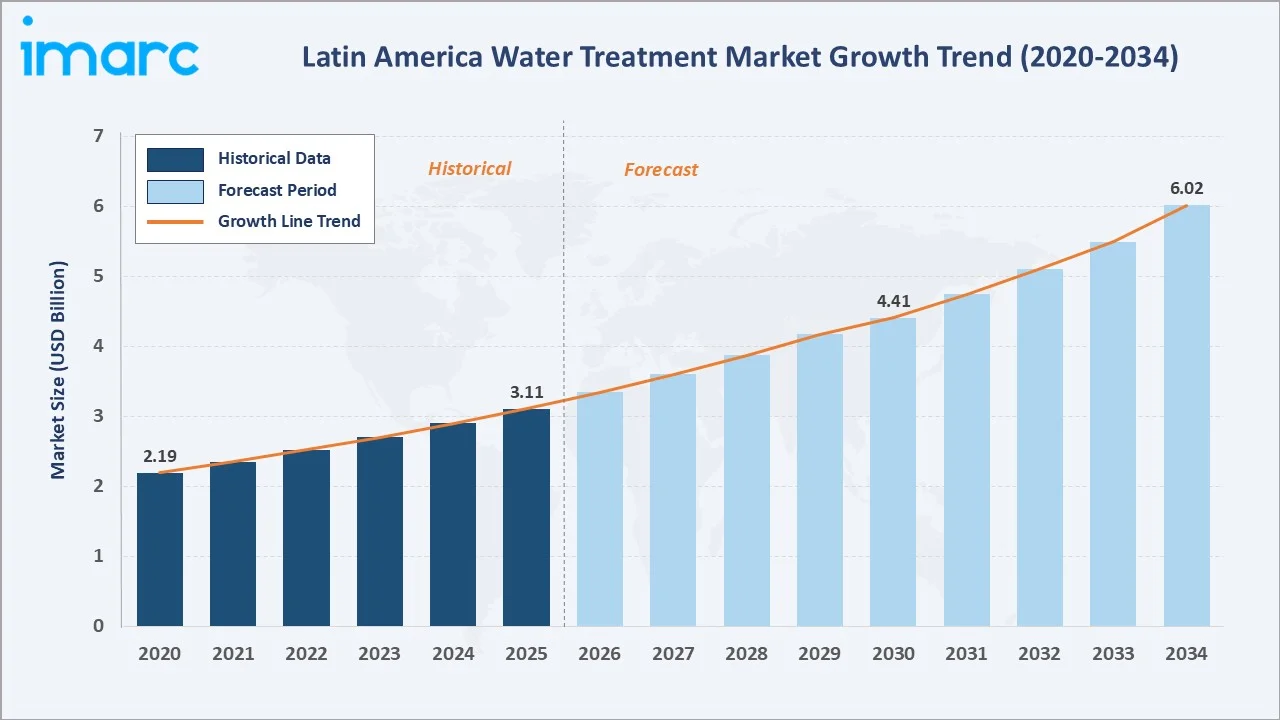
The Latin America water treatment market reached USD 3.11 Billion in 2025 and is projected to reach USD 6.02 Billion by 2034, growing at a CAGR of 7.23% during 2026-2034. Rapid urbanization, escalating industrial wastewater loads, freshwater scarcity, and government-backed infrastructure programs are the primary growth catalysts. Latin America's water treatment capacity is expanding at one of the fastest rates in the emerging-markets landscape, directly driving demand across all equipment and process segments.
Market Snapshot
|
Metric |
Value |
|
Market Size (2025) |
USD 3.11 Billion |
|
Forecast Market Size (2034) |
USD 6.02 Billion |
|
CAGR (2026-2034) |
7.23% |
|
Base Year |
2025 |
|
Historical Period |
2020-2025 |
|
Forecast Period |
2026-2034 |
Brazil leads regionally with a 35.7% share in 2025, anchored by its large municipal and industrial water treatment infrastructure. Secondary treatment commands the largest process segment at 41.8%, while membrane separation leads the equipment breakdown at 32.6%.
To get more information on this market, Request Sample
Latin America's water treatment market is underpinned by three structural forces: the region's accelerating urbanization trajectory, rising industrial wastewater from mining and agri-processing, and sovereign investment in water security infrastructure. Each force independently increases the technical complexity and scale of treatment requirements, collectively sustaining a 7.23% CAGR through 2034.
Executive Summary
The Latin America water treatment market is experiencing accelerated expansion, driven by the convergence of urban population growth, industrial wastewater intensification, and government-mandated water quality standards. The market was valued at USD 3.11 Billion in 2025 and is forecast to reach USD 6.02 Billion by 2034, growing at a CAGR of 7.23%. This growth is anchored by an estimated 90% urbanization rate projected for Latin America by 2050, which directly increases demand for advanced municipal and industrial water treatment capacity across all countries.
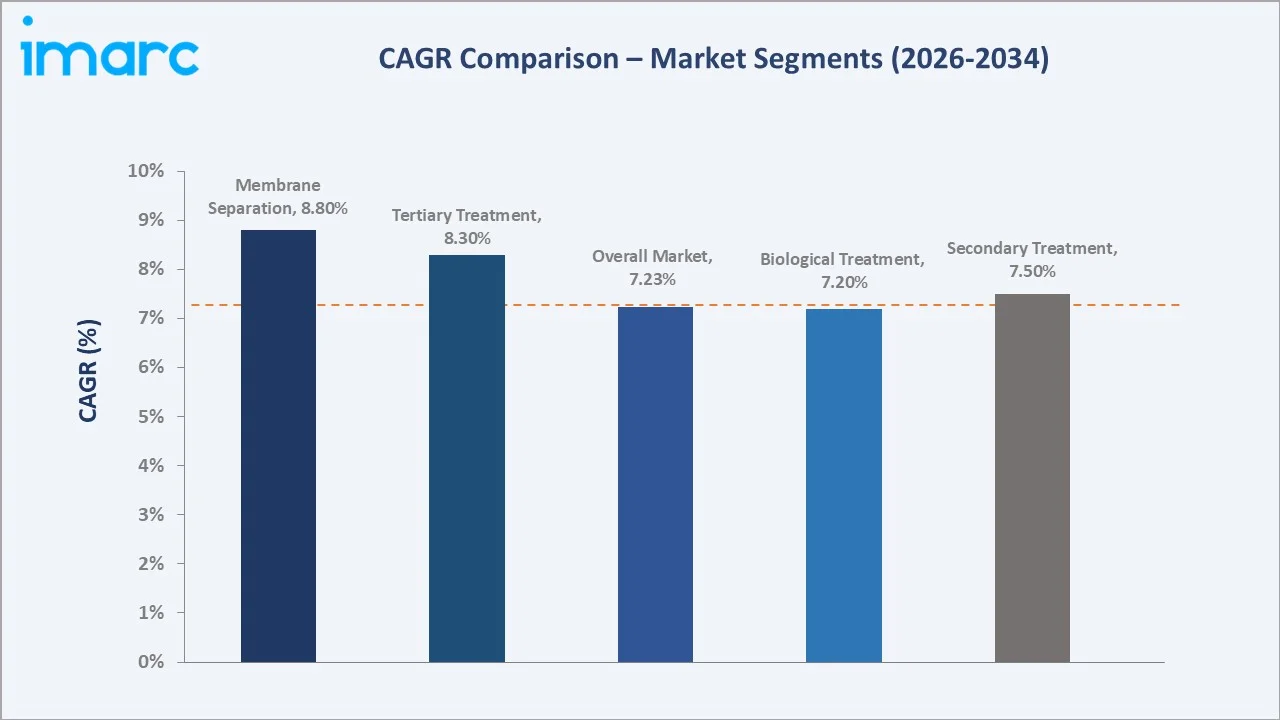
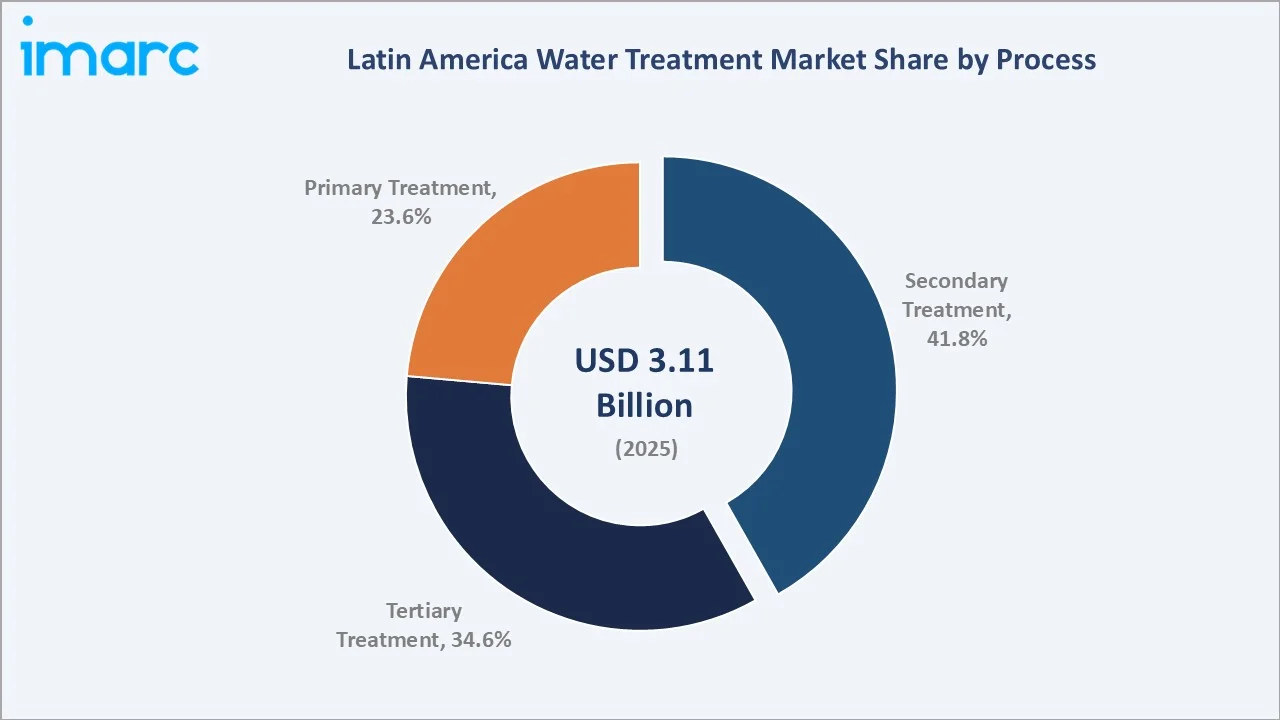
Secondary treatment leads the process segment with a 41.8% share in 2025, driven by biological treatment adoption in municipal wastewater facilities across Brazil, Mexico, and Colombia. Tertiary treatment follows at 34.6% and represents the fastest-growing process segment, driven by stricter discharge regulations and water reuse mandates. Membrane separation equipment leads with a 32.6% share, underpinned by rapid adoption of reverse osmosis and ultrafiltration across the mining, food & beverage, and municipal sectors.
Brazil dominates regionally at 35.7%, anchored by SABESP and other state water utilities running large-scale treatment programs. Mexico follows at 22.4%, driven by industrial wastewater treatment mandates under CONAGUA regulations. Leading global vendors, including Veolia, Xylem, Ecolab Inc., and Pentair, hold the strongest market positions through integrated technology portfolios and long-term municipal service contracts.
Key Market Insights
|
Insight |
Data |
|
Largest Process Segment |
Secondary Treatment – 41.8% share (2025) |
|
Fastest Growing Process |
Tertiary Treatment – ~8.3% CAGR (2026-2034) |
|
Largest Equipment Segment |
Membrane Separation – 32.6% share (2025) |
|
Fastest Growing Equipment |
Membrane Separation – ~8.8% CAGR (2026-2034) |
|
Leading Region |
Brazil – 35.7% share (2025) |
|
Top Companies |
Veolia, Xylem, Ecolab Inc., Pentair |
Key Analytical Observations Supporting the Above Data:
- Secondary treatment at 41.8% (2025) reflects the prevalence of biological treatment in municipal wastewater facilities. Activated sludge processes, moving bed biofilm reactors (MBBR), and sequencing batch reactors (SBR) account for the majority of secondary treatment infrastructure across Brazil, Mexico, Argentina, and Colombia.
- Tertiary treatment at 34.6% (2025) is growing fastest as regulators in Brazil (CONAMA Resolution 430/2011), Mexico (NOM-001-SEMARNAT), and Chile tighten nutrient removal and micropollutant discharge standards. Membrane bioreactors (MBR) and advanced oxidation processes (AOP) are the primary technology enablers.
- Membrane separation at 32.6% (2025) leads equipment due to the rapid scale-up of reverse osmosis in water-stressed regions including Chile's Norte Grande and Peru's Pacific coast, where desalination and ultra-pure industrial water production are priority applications.
- Brazil's 35.7% share (2025) reflects SABESP's USD 1.5 billion financing package from IDB Invest to expand sewage collection and treatment in São Paulo, aiming to raise coverage from 85% to 99% by 2029, complemented by federal government PAC Saneamento funding channeled through BNDES into secondary and tertiary treatment upgrades.
Latin America Water Treatment Market Overview
Water treatment encompasses the physical, chemical, and biological processes used to purify raw water for municipal consumption, industrial use, and safe wastewater discharge. Latin America's water treatment market spans primary screening and settling, secondary biological treatment, tertiary nutrient and micropollutant removal, disinfection, sludge processing, and membrane-based advanced treatment. End-use sectors include municipal utilities, mining, oil & gas, agri-food processing, power generation, and pharmaceuticals.
Macroeconomic drivers include the CAF’s USD 4 billion financing plan for water infrastructure projects across Latin America and the Caribbean through 2026, Inter-American Development Bank (IDB) co-financing for urban sewerage expansion, and national sanitation plans in Brazil, Colombia, and Mexico. Stricter effluent quality standards and the integration of digital monitoring through SCADA and smart sensor networks are compelling operators to upgrade legacy treatment systems to energy-efficient, IoT-enabled platforms.
Market Dynamics
To evaluate market opportunities, Request Sample
Market Drivers
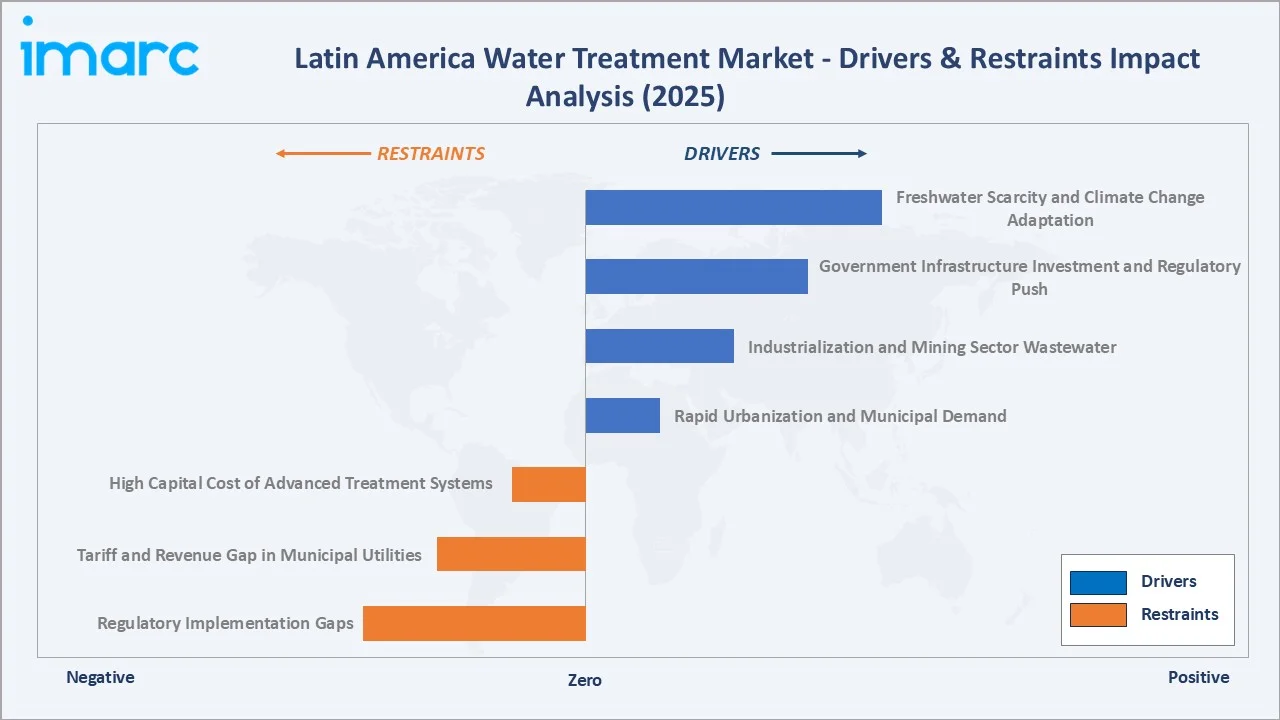
- Rapid Urbanization and Municipal Demand: Out of a population of 211 million, around 24 million people, or 11%, lack access to safe water, while 95 million people, or 45%, do not have access to a safe toilet. This significant infrastructure gap is driving strong municipal demand for investments in water supply, sanitation networks, wastewater treatment, and public health infrastructure.
- Industrialization and Mining Sector Wastewater: Chile’s desalination market remains strongly linked to mining, but the project pipeline is becoming more diversified across green hydrogen, drinking water, and industrial uses. Of the 22 approved or pending projects, five target mining, five support green hydrogen, three focus on drinking water, and two serve industrial demand.
- Government Infrastructure Investment and Regulatory Push: Brazil's Novo Marco do Saneamento (Law 14,026/2020) mandates 99% treated water access and 90% sewage collection and treatment by 2033, with an estimated USD 140 Billion in public and private investment required. Similar mandates across Colombia, Mexico, and Peru create legally binding procurement pipelines.
- Freshwater Scarcity and Climate Change Adaptation: Water stress is affecting 20%+ of Latin America's population. Climate-driven droughts are accelerating investments in water reuse, desalination, and advanced tertiary treatment to close the freshwater gap across Chile, Mexico, and Brazil's semi-arid Northeast.
.webp)
Market Restraints
- High Capital Cost of Advanced Treatment Systems: Membrane bioreactors and advanced oxidation process systems command 40–60% capital cost premiums over conventional biological treatment. Municipal utilities in smaller Latin American cities with constrained tariff revenues face significant financing barriers to technology upgrades.
- Tariff and Revenue Gap in Municipal Utilities: Many Latin American water utilities remain financially stressed due to politically constrained tariffs that do not recover fully operational and capital costs, inhibiting timely infrastructure reinvestment.
- Regulatory Implementation Gaps: While regulatory frameworks exist in most major markets, enforcement capacity and laboratory monitoring infrastructure remain limited in secondary cities, creating uneven investment signals for private treatment operators and technology vendors.
Market Opportunities
- Smart Water Management and Digital Monitoring: The adoption of IoT-based water quality sensors, AI-driven treatment optimization, and SCADA integration is projected to present a USD 450+ Million software and services opportunity by 2034 as utilities seek to reduce energy consumption and non-revenue water losses.
- Mining and Industrial Water Recycling: Amended water codes across Chile and Peru mandate zero liquid discharge and closed-loop water recycling for new mining projects, creating addressable markets for advanced membrane and ion exchange systems estimated at USD 800+ Million through 2030.
Market Challenges
- Skilled Workforce Shortage: Advanced membrane and biological treatment systems require certified engineers and plant operators. Latin America faces a structural skills deficit at the mid-technical level, with attrition to higher-paying sectors constraining talent availability for the water treatment industry.
- Currency Risk and Import Dependency: Major treatment equipment, including RO membranes, UV reactors, and automated dosing systems, is predominantly imported. Currency devaluation episodes create procurement cost volatility and delay capital expenditure cycles for utilities and industrial operators.
Emerging Market Trends
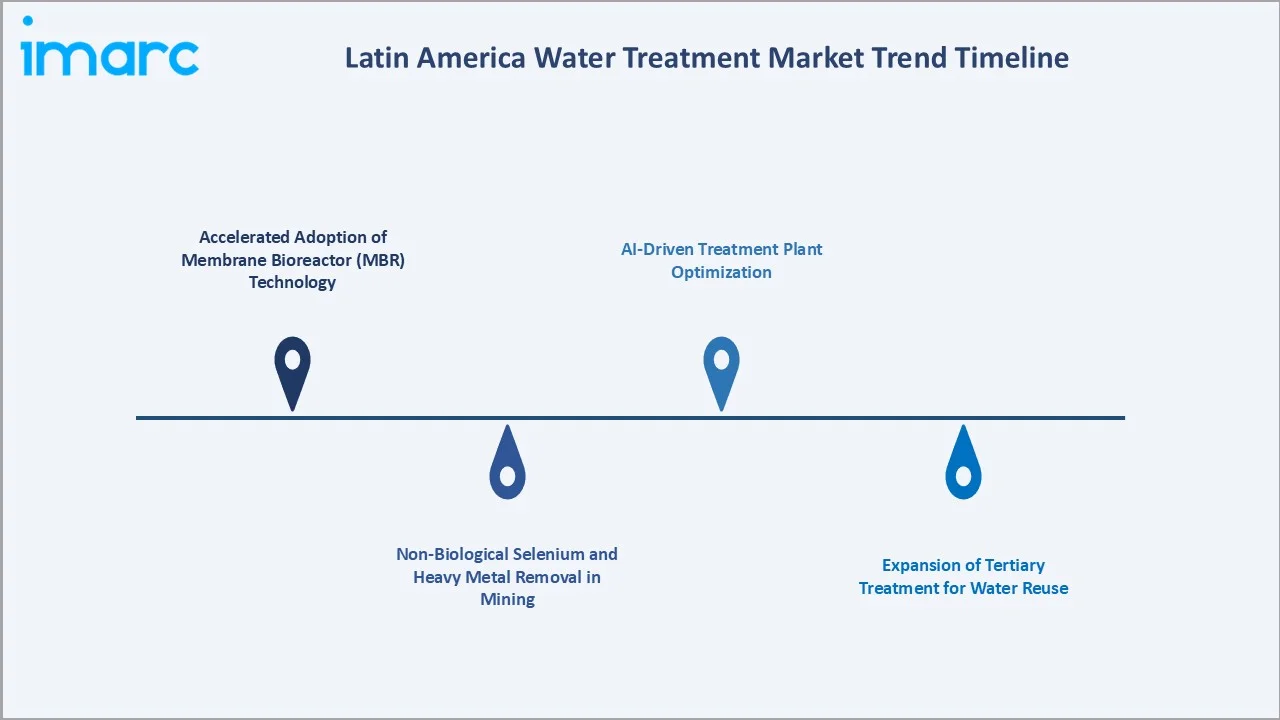
1. Accelerated Adoption of Membrane Bioreactor (MBR) Technology
In September 2024, Veolia announced its contribution to Suzano's new pulp plant in Mato Grosso do Sul, Brazil, providing advanced industrial demineralized water and effluent treatment systems. This installation underscores the growing industrial adoption of integrated membrane treatment, with MBR units enabling 30–40% smaller footprints versus conventional activated sludge systems while meeting tertiary discharge standards.
2. Non-Biological Selenium and Heavy Metal Removal in Mining
In July 2024, BQE Water Inc. secured a contract for laboratory testing and conceptual engineering of a non-biological selenium removal plant at a Latin American mine, using its patented Selen-IX ion exchange technology. This trend reflects the shift toward precision contaminant removal in mining-adjacent water treatment, driven by stricter aquatic toxicity limits imposed by environmental agencies across the region.
3. Expansion of Tertiary Treatment for Water Reuse
Tertiary treatment installations for industrial water recycling are expanding at approximately 8.3% CAGR as operators respond to water tariff escalations and scarcity-driven regulation. Reverse osmosis combined with UV disinfection and advanced oxidation is becoming the default tertiary treatment configuration for greenfield industrial facilities above 2,000 m³/day capacity.
4. AI-Driven Treatment Plant Optimization
Digital water management platforms incorporating AI-based dosing control, predictive maintenance, and energy optimization are being piloted across major municipal treatment networks. These platforms reduce chemical dosing costs by 15–25% and cut energy consumption by 10–20%, creating compelling ROI for operators managing large-scale treatment infrastructure.
Industry Value Chain Analysis
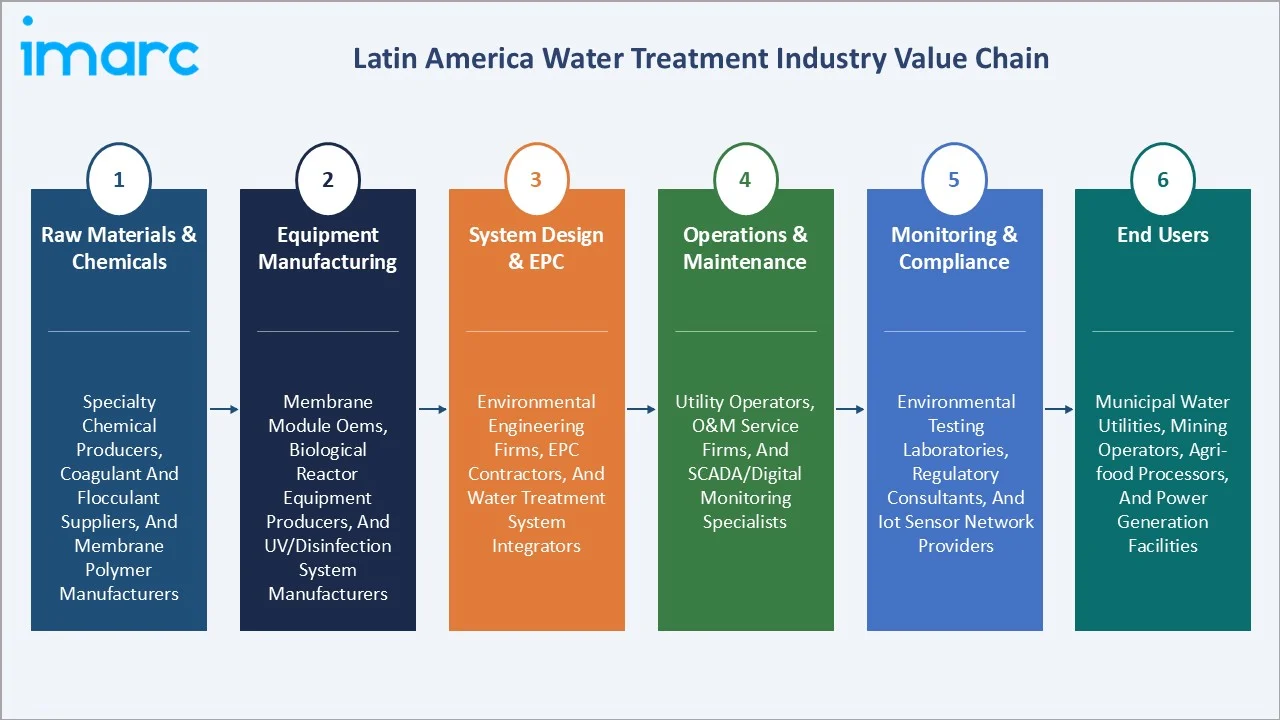
Latin America's water treatment value chain spans chemical and equipment supply through end-user water management, with each stage occupied by specialized manufacturers, integrators, and service providers.
|
Stage |
Key Players / Examples |
|
Raw Materials & Chemicals |
Specialty chemical producers, coagulant and flocculant suppliers, and membrane polymer manufacturers |
|
Equipment Manufacturing |
Membrane module OEMs, biological reactor equipment producers, and UV/disinfection system manufacturers |
|
System Design & EPC |
Environmental engineering firms, EPC contractors, and water treatment system integrators |
|
Operations & Maintenance |
Utility operators, O&M service firms, and SCADA/digital monitoring specialists |
|
Monitoring & Compliance |
Environmental testing laboratories, regulatory consultants, and IoT sensor network providers |
|
End Users |
Municipal water utilities, mining operators, agri-food processors, and power generation facilities |
Technology Landscape in the Latin America Water Treatment Industry
Primary Treatment – High-Rate Ballasted Clarification Technology
Primary treatment represents 23.6% of the market and encompasses bar screens, grit chambers, and primary clarifiers that remove suspended solids, oils, and large debris from raw wastewater. Leading vendors include Veolia’s Actiflo, a compact, high-rate water clarification technology used for drinking water, process water, wastewater reuse, and stormwater treatment. It uses ballasted flocculation with microsand and polymer, enabling clarification speeds 40–100 times faster than conventional systems and up to 99% TSS/turbidity removal.
Secondary Treatment – Biological Processing
Secondary treatment's 41.8% market share reflects its status as the regulatory baseline across major Latin American markets. Activated sludge, MBBR, and SBR systems from Veolia and Xylem dominate new municipal installations. In September 2024, Veolia's contribution to Suzano's Brazil facility demonstrated the growing industrial application of biological treatment in the pulp and paper sector.
Tertiary Treatment – Advanced Filtration and Disinfection
Tertiary treatment at 34.6% market share is the fastest-growing process segment as MBR, RO, UV, and advanced oxidation process installations scale up across Chile, Brazil, and Colombia. Pentair's X-Flow membrane modules and Xylem's WEDECO UV systems are widely deployed in potable reuse and industrial water recycling applications across water-stressed regions.
Sludge Treatment and Resource Recovery
Sludge treatment represents 19.3% of equipment demand and encompasses thickening, digestion, dewatering, and biosolids disposal. Anaerobic digestion with biogas recovery is gaining adoption at large municipal treatment plants, where energy recovery from sludge can offset 30–50% of plant operating energy costs.
Market Segmentation Analysis
The report covers the following segments:
|
Segment Category |
Leading Segment |
Market Share |
Year |
|
Process |
Secondary Treatment |
41.8% |
2025 |
|
Equipment |
Membrane Separation |
32.6% |
2025 |
|
Application |
🔒 |
🔒 |
2025 |
|
Region |
Brazil |
35.7% |
2025 |

By Process
The Secondary treatment segment dominates with a 41.8% share in 2025. This reflects the regulatory baseline across all major Latin American markets, where biological treatment of municipal and industrial wastewater has been mandated for over a decade. Secondary treatment encompasses activated sludge, trickling filters, MBBRs, and SBR systems deployed at municipal treatment facilities across the region.
To access detailed market analysis, Request Sample
Tertiary treatment at 34.6% represents the fastest-growing process segment, driven by stricter nutrient removal, micropollutant, and pathogen standards. Primary treatment retains a 23.6% share as the necessary first stage in all treatment trains, with limited standalone market growth given its commodity equipment nature.
By Equipment
Membrane separation leads equipment with a 32.6% share in 2025, encompassing reverse osmosis, ultrafiltration, nanofiltration, and microfiltration units deployed across mining, food & beverage, pharmaceutical, and advanced municipal treatment. This equipment category's 8.8% CAGR is the fastest among all equipment segments.
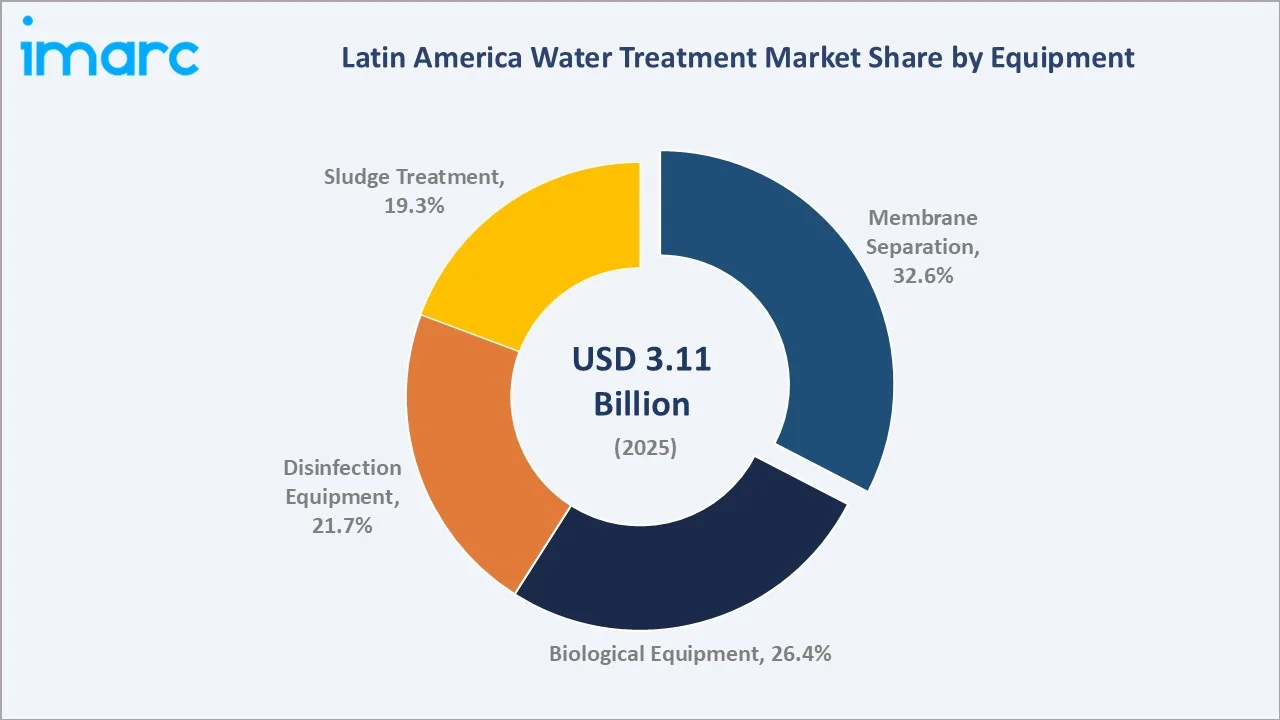
Biological equipment at 26.4% encompasses reactor vessels, aeration systems, biofilm carriers, and sludge management equipment for secondary treatment. Disinfection equipment at 21.7% includes chlorination systems, UV reactors, and ozone generators. Sludge treatment at 19.3% covers thickeners, digesters, centrifuges, and belt presses for biosolids processing.
Regional Market Insights
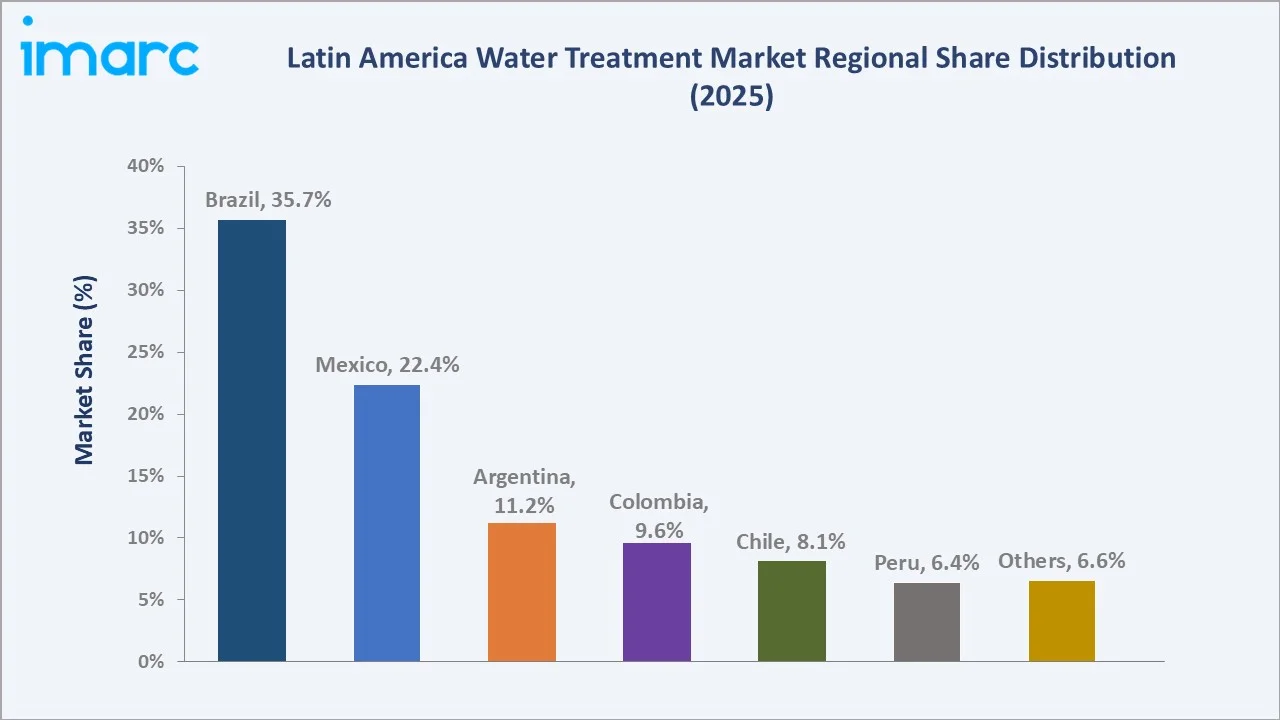
Brazil's market leadership (35.7%, 2025) reflects its scale as Latin America's largest economy and most populous nation, combined with the Novo Marco do Saneamento framework that obligates private concessionaires and state utilities to meet universal water and sewage coverage targets by 2033.
|
Region |
Share (2025) |
Key Growth Drivers |
|
Brazil |
35.7% |
Large municipal infrastructure base, strong industrial wastewater demand, and favorable investment frameworks |
|
Mexico |
22.4% |
Growing manufacturing sector water treatment requirements, urban utility expansion, and industrial effluent compliance mandates |
|
Argentina |
11.2% |
Municipal utility modernization, agro-industrial wastewater treatment demand, and multilateral-funded infrastructure upgrades |
|
Colombia |
9.6% |
National sanitation plan implementation, mining sector effluent management, and urban utility concession expansions |
|
Chile |
8.1% |
Mining process water recycling requirements, water scarcity-driven reuse technology adoption, and advanced treatment investments |
|
Peru |
6.4% |
Regulated utility upgrades, multilateral-funded municipal treatment projects, and mining wastewater management investments |
|
Others |
6.6% |
Emerging markets across Ecuador, Bolivia, Uruguay, and Central America driven by international financing and sanitation compliance programs. |
Mexico at 22.4% represents Latin America's second-largest water treatment market. Industrial effluent discharge standards are compelling industrial operators in the automotive, chemical, and food processing sectors to invest in advanced secondary and tertiary treatment infrastructure.
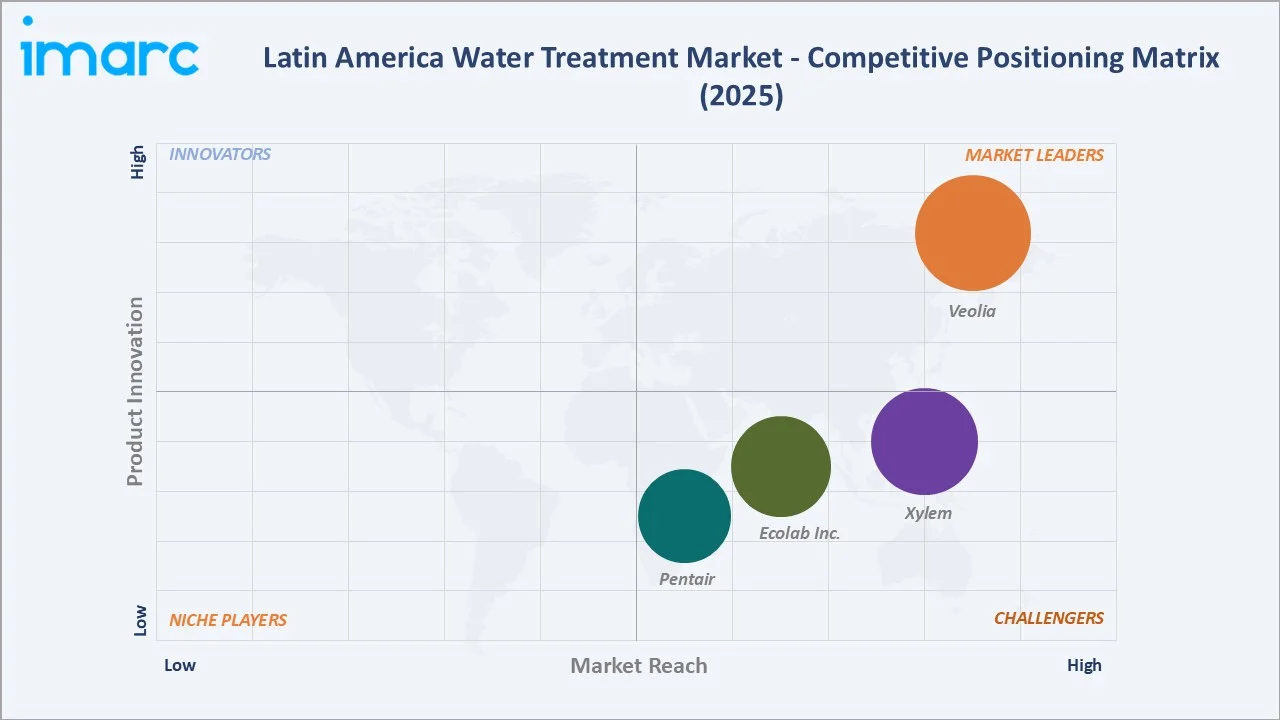
Competitive Landscape
Latin America's water treatment market exhibits moderate concentration. The top four vendors (Veolia, Xylem, Ecolab Inc., Pentair) collectively hold approximately 40–45% of market revenue in 2025. The balance is served by regional EPC contractors, national equipment distributors, and local specialty chemical suppliers.
|
Company Name |
Key Brands/Services |
Market Position |
Core Strength |
|
Veolia |
ANOXKALDNES MBBR, EVALED, HYDROTECH, and others |
Market Leader |
Integrated municipal and industrial water treatment; long-term utility concessions; digital water management |
|
Xylem |
Flygt, Leopold, Sanitaire, Wedeco, Wallace & Tiernan |
Strong Challenger |
Pumping and treatment equipment; UV disinfection; digital monitoring platforms |
|
Ecolab Inc. |
Ecolab, Nalco |
Strong Challenger |
Industrial water treatment chemicals; membrane cleaning chemistry; food & beverage water programs; raw water treatment |
|
Pentair |
Codeline, Everpure, Fairbanks Nijhuis, Fleck, Autotrol, Structural, and Pentek, X-Flow |
Challenger |
Membrane separation modules (X-Flow); residential and industrial filtration; dewatering solutions |
Key Company Profiles
Veolia
Veolia, headquartered in Aubervilliers, France, is the global leader in water management services, providing treatment technology, operations, and digital water solutions to municipal and industrial clients. In Latin America, Veolia manages water and wastewater concessions across Brazil, Chile, and Colombia.
- Product Portfolio: Municipal treatment plant design and O&M, industrial water treatment systems, MBR and RO membrane installations, sludge treatment and biogas recovery, and digital AQUADVANCED water management platform.
- Recent Developments: In April 2025, Veolia opened a new Mobile Water Service Center in Cajamar, São Paulo. The units cover demineralized water production, water clarification, wastewater treatment, and water reuse, while Veolia’s Sorocaba plant now focuses on advanced membrane-based water treatment equipment.
- Strategic Focus: Universal water access partnerships; digital water platform deployment; energy recovery from biogas at large municipal treatment facilities across Latin America.
Xylem
Xylem, headquartered in Washington, D.C., US, is a global water technology company providing advanced pumping, treatment, and monitoring solutions. In Latin America, Xylem's WEDECO UV disinfection systems and YSI water quality monitoring instruments are widely deployed across municipal and industrial treatment facilities.
- Product Portfolio: WEDECO UV and ozone disinfection systems, Flygt submersible pumps, Godwin dewatering systems, LEOPOLD, SANITAIRE, and Wallace & Tiernan.
- Recent Developments: In September 2025, Xylem and Amazon partnered with utilities in Mexico City and Monterrey to deploy Xylem Vue, a smart water platform using data analytics to detect leaks, manage pressure, and reduce water losses. The upgrades are expected to save over 1.3 billion liters of water annually, including 800 million liters in Mexico City and 560 million liters in Monterrey.
- Strategic Focus: UV disinfection market leadership for tertiary treatment; digital water monitoring platform commercialization; after-market service expansion in Andean markets.
Market Concentration Analysis
Latin America's water treatment market exhibits moderate concentration, with the top four global OEMs holding approximately 40–45% of total market revenue in 2025. Below the top tier, a competitive mid-market of 20–25 regional EPC contractors, local chemical distributors, and national equipment agents serves municipal, industrial, and mining clients with differentiated local knowledge and pricing.
Consolidation is occurring primarily through OEM acquisition of regional service and technology firms. Xylem's integration of Idrica (smart water management) and continued M&A activity by Veolia in concession management reflect the strategic convergence of technology, services, and digital platforms as key competitive differentiators.
Investment & Growth Opportunities
Fastest Growing Segments
Tertiary treatment (~8.3% CAGR), Membrane separation equipment (~8.8% CAGR), smart water management software (15%+ CAGR), and zero-liquid discharge systems for mining (12%+ CAGR) represent the highest-growth investment vectors through 2034, addressing a combined addressable market of approximately USD 1.8 Billion by 2030.
Emerging Market Expansion
Colombia, Peru, and Chile collectively represent an incremental USD 600+ Million water treatment opportunity by 2034 as geographic expansion of industrial infrastructure and stricter enforcement of water quality standards accelerates procurement outside traditional mega-city markets.
Venture and Institutional Investment Trends
- In April 2024, finance ministers from Latin America and the Caribbean discussed mobilizing USD 372 billion over five years to address the region’s water and sanitation crisis.
- In December 2025, Pernambuco awarded concessions across two microregions, generating nearly USD 800 million in upfront payments and securing around USD 3.5 billion in committed investments.
- Water-as-a-Service models are emerging, where vendors retain treatment asset ownership and charge utilities on a volumetric treated-water basis, reducing municipal CAPEX barriers and enabling OEMs to capture lifecycle service revenue.
Future Market Outlook (2026-2034)
Latin America's water treatment market is positioned for sustained above-average growth through 2034. From a base of USD 3.11 Billion in 2025, the market is projected to reach USD 6.02 Billion by 2034, representing total incremental value creation of USD 2.91 Billion at a CAGR of 7.23%. This growth is structurally assured by the binding legislative mandates across Brazil, Mexico, and Colombia, multilateral development bank financing pipelines, and the irreversible industrialization trajectory across mining, agri-food, and energy sectors.
The technology transition from conventional primary and secondary treatment to advanced tertiary and membrane-based systems will define the market's composition by 2034. Secondary treatment's share is projected to moderate from 41.8% in 2025 to approximately 39% by 2034, while tertiary treatment is expected to grow from 34.6% to 37%+. This technology shift creates upgrade demand for incumbent vendors and market entry opportunities for digital water management specialists.
Research Methodology
Primary Research
Primary research comprised structured interviews with over 90 industry participants in 2024–2025, including municipal utility operators, water treatment technology vendors, EPC contractors, environmental engineers, and institutional investors across Brazil, Mexico, Chile, Colombia, and Peru.
Secondary Research
Secondary research encompassed vendor annual reports, WHO and PAHO water quality publications, national water agency statistics (ANA, CONAGUA, DGA, SUNASS), IDB and World Bank project databases, and industry publications (Global Water Intelligence, Water & Wastewater International).
Forecasting Models
Market size estimations were derived using top-down and bottom-up forecasting, incorporating treatment plant capacity additions, per-capita water treatment expenditure, technology mix transitions, and vendor revenue disclosures. A base-case CAGR of 7.23% reflects consensus estimates validated against announced infrastructure pipelines.
Latin America Water Treatment Market Report Coverage:
| Report Features | Details |
|---|---|
| Base Year of the Analysis | 2025 |
| Historical Period | 2020-2025 |
| Forecast Period | 2026-2034 |
| Units | Billion USD |
| Scope of the Report |
Exploration of Historical Trends and Market Outlook, Industry Catalysts and Challenges, Segment-Wise Historical and Future Market Assessment:
|
| Equipments Covered | Membrane Separation, Biological, Disinfection, Sludge Treatment |
| Processes Covered | Primary Treatment, Secondary Treatment, Tertiary Treatment |
| Applications Covered | Municipal, Industrial |
| Regions Covered | Brazil, Mexico, Argentina, Colombia, Chile, Peru, Others |
| Companies Covered | Veolia, Xylem, Ecolab Inc., Pentair, etc. |
| Customization Scope | 10% Free Customization |
| Post-Sale Analyst Support | 10-12 Weeks |
| Delivery Format | PDF and Excel through Email (We can also provide the editable version of the report in PPT/Word format on special request) |
Key Benefits for Stakeholders:
- IMARC’s industry report offers a comprehensive quantitative analysis of various market segments, historical and current market trends, market forecasts, and dynamics of the Latin America water treatment market from 2020-2034.
- The research report provides the latest information on the market drivers, challenges, and opportunities in the Latin America water treatment market.
- Porter's five forces analysis assist stakeholders in assessing the impact of new entrants, competitive rivalry, supplier power, buyer power, and the threat of substitution. It helps stakeholders to analyze the level of competition within the Latin America water treatment industry and its attractiveness.
- Competitive landscape allows stakeholders to understand their competitive environment and provides an insight into the current positions of key players in the market.
Frequently Asked Questions About the Latin America Water Treatment Market Report
The Latin America water treatment market reached USD 3.11 Billion in 2025 and is projected to reach USD 6.02 Billion by 2034.
The market is expected to grow at a CAGR of 7.23% during the forecast period of 2026-2034.
Brazil leads the regional market with a 35.7% share in 2025, supported by the Novo Marco do Saneamento investment mandate and large-scale utility infrastructure spending.
Secondary treatment leads the process segmentation with a 41.8% market share in 2025, driven by mandatory biological treatment requirements across municipal wastewater facilities.
Membrane separation equipment leads with a 32.6% market share in 2025, driven by the adoption of reverse osmosis in mining, industrial, and advanced municipal treatment applications.
The leading companies are Veolia, Xylem, Ecolab Inc., and Pentair, collectively holding approximately 40–45% of total market revenue in 2025.
Primary growth drivers include rapid urbanization, government-mandated sanitation investment, industrial wastewater regulation, mining sector water treatment mandates, and freshwater scarcity driving adoption of advanced treatment and reuse technologies.
The market reached USD 2.19 Billion in 2020, grew to USD 3.11 Billion in 2025, and is projected to reach USD 4.41 Billion by 2030 and USD 6.02 Billion by 2034.
Need more help?
- Speak to our experienced analysts for insights on the current market scenarios.
- Include additional segments and countries to customize the report as per your requirement.
- Gain an unparalleled competitive advantage in your domain by understanding how to utilize the report and positively impacting your operations and revenue.
- For further assistance, please connect with our analysts.
 Request Customization
 Speak to an Analyst
 Request Brochure
 Inquire Before Buying
Benefits of Customization
- Personalize this research
- Triangulate with your data
- Get data as per your format and definition
- Gain a deeper dive into a specific application, geography, customer, or competitor
- Any level of personalization
Get in Touch With Us
UNITED STATES
Phone: +1-201-971-6302
INDIA
Phone: +91-120-433-0800
UNITED KINGDOM
Phone: +44-753-714-6104
Email: [email protected]
Client Testimonials




.webp)




.webp)













Related Reports

Choose your plan
*Please note that the prices mentioned below are starting prices for each bundle type. Kindly contact our team for further details.*
Single User License
- 1 User License, Access on 2 Devices
- PDF Report + Excel Dataset (Password Protected)
- Lifetime Access
- No Printing Rights
- 10% Free Report Customization
- 10–12 Weeks of Analyst Support
Five User License
- Access for 5 Users, 2 Devices per User
- PDF Report + Excel Dataset (Password Protected)
- Lifetime Access
- Dedicated Account Manager
- 12–14 Weeks of Analyst Support
- No Printing Rights
- 15% Free Report Customization
- 25% Discount on Your Next Purchase
Corporate User License
- Unlimited User Access (Within Your Organization)
- PDF Report + Excel Dataset
- Lifetime Access
- Dedicated Account Manager
- 14–20 Weeks of Analyst Support
- No Printing Rights
- 20% Free Report Customization
- 30% Discount on Your Next Purchase
Essential Insights
What's included:
3 reports
- Lifetime Access
- PDF Reports
- Excel Datasets
- 2 Weeks of Free Analyst Support
- 2 User Licenses
- Access on 2 Devices
- Printing Rights
- Complimentary PowerPoint (PPT) Version
- Complimentary License Upgrade
Professional Access
What's included:
5 reports
- Lifetime Access
- PDF Reports
- Excel Datasets
- 8 Weeks of Free Analyst Support
- 2 User Licenses
- Access on 2 Devices
- Printing Rights
- Complimentary PowerPoint (PPT) Version
- Complimentary License Upgrade
Business Advantage
What's included:
8 reports
- Lifetime Access
- PDF Reports
- Excel Datasets
- 14 Weeks of Free Analyst Support
- 2 User Licenses
- Access on 2 Devices
- Printing Rights
- Complimentary PowerPoint (PPT) Version
- Complimentary License Upgrade
Enterprise Intelligence
What's included:
10 reports
- Lifetime Access
- PDF Reports
- Excel Datasets
- 20 Weeks of Free Analyst Support
- 2 User Licenses
- Access on 2 Devices
- Printing Rights
- Complimentary PowerPoint (PPT) Version
- Complimentary License Upgrade