
Lithium Iron Phosphate Prices, Trend, Chart, Demand, Market Analysis, News, Historical and Forecast Data Report 2026 Edition
Lithium Iron Phosphate Price Trend, Index and Forecast
Track the latest insights on lithium iron phosphate price trend and forecast with detailed analysis of regional fluctuations and market dynamics across North America, Latin America, Central Europe, Western Europe, Eastern Europe, Middle East, North Africa, West Africa, Central and Southern Africa, Central Asia, Southeast Asia, South Asia, East Asia, and Oceania.
Lithium Iron Phosphate Prices Outlook Q2 2026
- USA: USD 13,078/MT
- China: USD 10,111/MT
- Germany: USD 14,930/MT
- Brazil: USD 16,055/MT
- South Africa: USD 17,967/MT
Lithium Iron Phosphate Price Chart
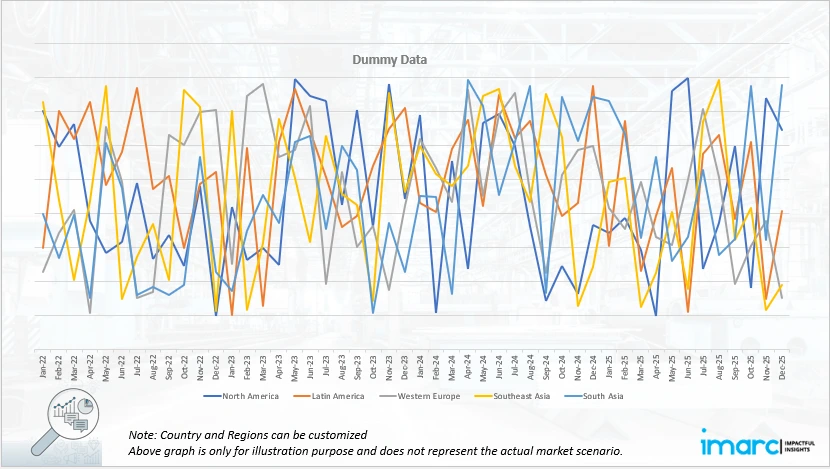
Get real-time access to monthly/quarterly/yearly prices Request Sample
During the second quarter of 2026, the lithium iron phosphate prices in the USA reached 13,078 USD/MT in June. Prices moved higher as domestic cathode active material producers faced elevated lithium carbonate and iron phosphate feedstock costs throughout the quarter. Battery manufacturers supplying electric vehicle and stationary energy storage projects maintained steady offtake, which absorbed available material and limited spot flexibility.
During the second quarter of 2026, the lithium iron phosphate prices in China reached 10,111 USD/MT in June. Prices increased as cathode plants raised operating rates to meet strong orders from electric vehicle and energy storage battery cell makers. Lithium carbonate feedstock costs stayed elevated, which lifted production economics across integrated precursor and cathode facilities.
During the second quarter of 2026, the lithium iron phosphate prices in Germany reached 14,930 USD/MT in June. Prices rose as European battery cell manufacturers increased procurement of imported cathode active material to support growing electric vehicle production lines. Germany's reliance on imported lithium iron phosphate kept replacement costs elevated as freight and logistics expenses stayed firm through the quarter.
During the second quarter of 2026, the lithium iron phosphate prices in Brazil reached 16,055 USD/MT in June. Prices advanced as import dependent battery assemblers faced higher landed costs linked to firmer freight rates and currency movements against major exporting nations. Growing interest in electric mobility and renewable energy storage projects supported steady procurement of cathode active material across the country.
During the second quarter of 2026, the lithium iron phosphate prices in South Africa reached 17,967 USD/MT in June. Prices climbed as regional buyers faced elevated freight and insurance costs tied to extended shipping routes from major production hubs. Demand from telecom backup power, mining equipment electrification and renewable energy storage applications supported consistent procurement throughout the quarter.
Lithium Iron Phosphate Prices Outlook Q3 2025
- USA: USD 12,799/MT
- China: USD 9,975/MT
- Germany: USD 14,391/MT
- Brazil: USD 15,829/MT
- South Africa: USD 17,411/MT
During the third quarter of 2025, the lithium iron phosphate prices in the USA reached 12,799 USD/MT in September. Prices softened as cell producers prioritized inventory drawdowns and deferred new cathode procurement. Domestic output remained adequate, while upstream lithium salt quotations eased amid balanced spot availability. Iron phosphate and phosphoric acid inputs tracked lower feedstock costs, helping compress conversion margins. Freight rates on transpacific lanes moderated, and inland trucking availability improved, trimming logistics surcharges.
During the third quarter of 2025, the lithium iron phosphate prices in China reached 9,975 USD/MT in September. Prices drifted lower as cathode capacity utilization adjusted to measured downstream cell orders from passenger EV and two-wheeler applications. An abundant supply of refined lithium salts and steady iron phosphate availability kept raw material costs contained. Competitive bidding among mid-tier producers intensified, encouraging discounts for prompt deliveries.
During the third quarter of 2025, the lithium iron phosphate prices in Germany reached 14,391 USD/MT in September. Prices eased as downstream cell producers managed inventories carefully and synchronized call-offs with moderated EV production schedules. Imported cathode and precursor flows from Asia were steady, benefiting from predictable lead times and normal port handling. Euro exchange movements modestly influenced landed costs, while inland warehousing and drayage charges remained manageable.
During the third quarter of 2025, the lithium iron phosphate prices in Brazil reached 15,829 USD/MT in September. Prices decreased as importers benefited from softer international reference quotes and improved vessel availability. Currency dynamics influenced landed costs for Asian-origin cathode and precursors, while port charges and inland haulage remained key determinants of delivered pricing. Battery assemblers adjusted run-rates to align with moderated order books in mobility and stationary storage.
During the third quarter of 2025, the lithium iron phosphate prices in South Africa reached 17,411 USD/MT in September. Prices moved lower amid adequate import availability and cautious downstream call-offs from storage and mobility integrators. Exchange-rate movements affected landed costs, while port handling and long-haul trucking remained significant contributors to final pricing. Suppliers leveraged diversified sourcing from Asia to ensure continuity, reducing the need for risk premiums.
Lithium Iron Phosphate Prices Outlook Q2 2025
- USA: USD 13,090/MT
- China: USD 10,320/MT
- Germany: USD 14,820/MT
- Brazil: USD 16,470/MT
- South Africa: USD 18,180/MT
During the second quarter of 2025, the lithium iron phosphate prices in the USA reached 13,090 USD/MT in June. Prices declined as upstream lithium salt offers softened and cell producers paced purchases to match moderated EV and storage installs. International freight and container availability improved, trimming delivery surcharges. The stronger USD reduced import costs for certain intermediates, while domestic logistics stabilized. Producers focused on line utilization discipline and inventory rotation, avoiding stock build-ups. Compliance, quality assurance, and safety testing sustained base costs.
During the second quarter of 2025, the lithium iron phosphate prices in China reached 10,320 USD/MT in June. Prices trended down as supply remained ample and procurement shifted toward spot windows. Lithium carbonate and hydroxide benchmarks eased, filtering through to cathode conversion costs. Operating rates adjusted to measured cell orders in mainstream mobility segments. Export transactions favored flexible scheduling and firm quality specifications.
During the second quarter of 2025, the lithium iron phosphate prices in Germany reached 14,820 USD/MT in June. Prices eased as imported feedstocks reflected weaker global references and steady supply chains. EUR exchange dynamics influenced landed costs, but port handling and inland transport were orderly. Downstream manufacturers synchronized procurement with stabilized production plans, limiting surplus stocks. Energy inputs moderated, reducing processing expenses for finishing and packaging.
During the second quarter of 2025, the lithium iron phosphate prices in Brazil reached 16,470 USD/MT in June. Prices moved lower as import pipelines normalized and freight conditions improved. Currency shifts affected CIF values, while port fees and domestic haulage remained central to delivered costs. Battery assemblers managed inventories conservatively, aligning procurement with confirmed demand across mobility and storage projects. Suppliers offered shipment flexibility and financing options, supporting smoother cash cycles.
During the second quarter of 2025, the lithium iron phosphate prices in South Africa reached 18,180 USD/MT in June. Prices declined as consistent import availability and selective downstream purchasing shaped negotiations. Exchange-rate volatility influenced landed costs, while port operations and overland logistics remained pivotal in final pricing. Integrators prioritized inventory optimization and quality consistency. Suppliers diversified origins to ensure continuity, limiting risk premiums.
Lithium Iron Phosphate Prices Outlook Q1 2025
- USA: USD 13440/MT
- China: USD 11050/MT
- United Kingdom: USD 15360/MT
- Brazil: USD 17280/MT
- South Korea: USD 19200/MT
During the first quarter of 2025, the lithium iron phosphate prices in the USA reached 13440 USD/MT in March. As per the lithium iron phosphate price chart, prices in the US were influenced by a complex interplay of factors, including the rising demand for electric vehicles (EVs) and energy storage systems, the increasing investment in domestic LFP battery production, and potential challenges related to supply chain bottlenecks.
During the first quarter of 2025, lithium iron phosphate prices in China reached 11050 USD/MT in March. Prices in China were affected by a combination of factors, including a rebound in production, a slowdown in demand, and adjustments on the supply side. LFP production saw a rebound in March, driven by the peak season for new energy vehicles (NEVs).
During the first quarter of 2025, the lithium iron phosphate prices in the United Kingdom reached 15360 USD/MT in March. Production cuts and geopolitical tensions in some lithium-producing areas, combined with disruptions in the supply chain, contributed to a volatile supply of lithium.
During the first quarter of 2025, the lithium iron phosphate prices in Brazil reached 17280 USD/MT in March. The development of a large lithium plant in Brazil for fast-tracking production was impacting the market. Moreover, the growing demand for EVs and energy storage was a major driver of higher lithium prices.
During the first quarter of 2025, the lithium iron phosphate prices in South Korea reached 19200 USD/MT in March. Geopolitical tensions and disruptions in global supply chains affected the availability and cost of raw materials used in LFP battery production, impacting prices. Moreover, South Korean companies were actively investing in LFP battery technology, leading to increased production and lower costs..
Regional Coverage
The report provides a detailed analysis of the market across different regions, each with unique pricing dynamics influenced by localized market conditions, supply chain intricacies, and geopolitical factors. This includes price trends, price forecast and supply and demand trends for each region, along with spot prices by major ports. The report also provides coverage of FOB and CIF prices, as well as the key factors influencing lithium iron phosphate prices.
Europe Lithium Iron Phosphate Price Trend
Q2 2026:
The lithium iron phosphate price index in Europe moved upward through the quarter, supported by strong demand from electric vehicle and stationary storage battery producers. Germany, the region's leading processing and assembly hub, recorded steady offtake from automotive pack manufacturers and grid scale storage integrators. European buyers remain heavily reliant on imported cathode active material, so firmer freight rates and logistics costs pushed landed values higher across the region. Elevated power tariffs at coating and finishing facilities added further pressure to production economics for domestic processors. Battery cell manufacturers maintained disciplined procurement schedules to secure material against expanding gigafactory output. Port congestion and periodic logistics disruptions restricted the timely movement of imported cargo, encouraging forward purchasing among buyers.
Q3 2025:
As per the lithium iron phosphate price index, regional prices softened as imported cathode and precursor offers reflected weaker upstream lithium salt references. Stable vessel schedules supported predictable lead times, while port handling and inland freight remained manageable cost components. Buyers synchronized call-offs with moderated EV production plans, emphasizing shorter contracts and batch consistency. Energy input costs for finishing gradually eased, assisting conversion margins without reversing overall declines. Compliance, quality documentation, and traceability standards sustained baseline expenses. Multi-source strategies from Asia improved supply optionality, enhancing buyer leverage and limiting premiums. With disciplined procurement and steady availability, negotiated values trended lower across key hubs.
Q2 2025:
During the second quarter of 2025, European prices declined as regional producers contended with subdued downstream offtake from cell manufacturers and integrators. Import flows from Asia remained regular, but buyers negotiated shorter-term contracts to hedge against further weakening. Energy inputs for cathode finishing fell as natural-gas and electricity tariffs moderated, easing processing expenses. Domestic logistics networks ran efficiently, helping lower distribution surcharges. Currency stability limited volatility in landed costs, while environmental compliance and quality-verification obligations continued to add structural overhead.
Q1 2025:
As per the lithium iron phosphate price index, prices were stabilizing after a period of volatility, primarily due to a combination of increased EV sales and adjustments in major lithium producers' strategies. The market was facing an oversupply and price declines earlier in the year. While LFP cathode material prices were generally falling due to overcapacity, particularly in China, the European market for lithium carbonate, which is a key ingredient in LFP, showed signs of stabilization.
This analysis can be extended to include detailed lithium iron phosphate price information for a comprehensive list of countries.
| Region | Countries Covered |
|---|---|
| Europe | Germany, France, United Kingdom, Italy, Spain, Russia, Turkey, Netherlands, Poland, Sweden, Belgium, Austria, Ireland, Switzerland, Norway, Denmark, Romania, Finland, Czech Republic, Portugal, and Greece, among other European countries. |
North America Lithium Iron Phosphate Price Trend
Q2 2026:
The lithium iron phosphate price index in North America rose during the quarter, driven by firm demand from domestic battery cell and pack manufacturers. The United States, the region's principal producing and consuming market, saw steady procurement from electric vehicle assemblers and utility scale energy storage developers. Import dependence on Asian precursor and cathode material kept replacement costs elevated as freight and compliance expenses stayed firm. Expansion of domestic gigafactory capacity encouraged manufacturers to secure long term supply commitments, which reduced spot market flexibility. Feedstock costs for lithium carbonate and iron phosphate remained firm, supporting higher producer offers across the supply chain. Distributors maintained conservative inventories, limiting the volume of material available to non contract buyers.
Q3 2025:
As per the lithium iron phosphate price index, the region experienced easing prices as inventory drawdowns and selective purchasing characterized cell and pack manufacturers. Upstream lithium salts and iron phosphate inputs tracked softer international references, compressing production costs. Container availability and inland trucking improved, trimming logistics adders. A firm regional currency reduced import costs for certain intermediates, while compliance and testing remained a fixed expense. Shorter tenor contracts and competitive offers from Asian suppliers increased buyer negotiating power. Broadly adequate supply, measured downstream demand, and normalized freight collectively weighed on pricing.
Q2 2025:
Regional prices fell as cell producers balanced procurement with measured EV and storage installations. Softer upstream references reduced conversion costs, while container availability improved transit reliability. A supportive currency environment tempered import costs for intermediates. Testing, safety, and compliance maintained baseline expenses. Buyers favored spot opportunities and competitive bids from Asia, increasing bargaining power. The overall alignment of stable supply and cautious offtake sustained a downward trend.
Q1 2025:
The prices of critical minerals such as lithium, iron, and phosphate, essential components of LFP batteries, have been volatile. Fluctuations in the availability and cost of these raw materials directly impacted production expenses and, consequently, battery prices. Moreover, U.S. policies, such as the Inflation Reduction Act, have provided subsidies and incentives for electric vehicle (EV) adoption and renewable energy projects. These measures have stimulated demand for LFP batteries.
Specific lithium iron phosphate historical data within the United States and Canada can also be provided.
| Region | Countries Covered |
|---|---|
| North America | United States and Canada |
Middle East and Africa Lithium Iron Phosphate Price Trend
Q2 2026:
The lithium iron phosphate price index across the Middle East and Africa moved upward, supported by rising import costs and steady demand for battery grade material. South Africa recorded consistent procurement from telecom backup power, mining equipment electrification and renewable energy storage projects throughout the quarter. Regional buyers remain heavily dependent on imported cathode active material from major Asian producers, which kept landed costs sensitive to freight and shipping conditions. Extended transit routes and periodic port congestion added to replacement costs for importers across the region. Currency movements against major exporting nations further influenced procurement expenses for battery assemblers and distributors. Limited local processing and cell manufacturing capacity reinforced reliance on imported supply, restricting pricing flexibility.
Q3 2025:
Prices receded amid reliable import flows and disciplined downstream offtake in storage and mobility deployments. Currency movements influenced landed costs, while port handling and extended inland haulage shaped delivered pricing. Suppliers diversified origins to sustain continuity and reduce risk premiums. Compliance, safety verification, and performance testing continued as fixed cost elements. Project developers prioritized cost control and phased procurement schedules, limiting spot spikes. With adequate availability and pragmatic purchasing, negotiated values softened across primary distribution nodes.
Q2 2025:
Exchange-rate fluctuations marginally affected landed costs, though port operations remained orderly. Logistical distances to inland consumption points kept transport a key cost element, but improved trucking availability limited surcharges. Procurement decisions emphasized reliability and certification compliance, maintaining predictable baseline costs. A combination of adequate inventories and measured end-user demand resulted in a softening market tone during Q2 2025.
Q1 2025:
The report explores the lithium iron phosphate trends and lithium iron phosphate price chart in the Middle East and Africa, considering factors like regional industrial growth, the availability of natural resources, and geopolitical tensions that uniquely influence market prices.
In addition to region-wise data, information on lithium iron phosphate prices for countries can also be provided.
| Region | Countries Covered |
|---|---|
| Middle East & Africa | Saudi Arabia, UAE, Israel, Iran, South Africa, Nigeria, Oman, Kuwait, Qatar, Iraq, Egypt, Algeria, and Morocco, among other Middle Eastern and African countries. |
Asia Pacific Lithium Iron Phosphate Price Trend
Q2 2026:
The lithium iron phosphate price index in Asia Pacific moved upward, supported by firm domestic demand and rising feedstock costs across the region. China, the largest producer and exporter, saw cathode plants raise operating rates to meet strong orders from electric vehicle and energy storage battery cell makers. Lithium carbonate and iron phosphate feedstock costs stayed elevated, lifting production economics across integrated precursor and cathode facilities. Export enquiries from overseas battery manufacturers absorbed a larger share of domestic output, tightening prompt availability for regional buyers. Producers maintained firm offers as downstream demand from grid scale storage projects and electric mobility programs continued to expand. Logistics constraints and container availability at major coastal ports periodically affected shipment schedules and delivery timelines.
Q3 2025:
Prices eased as the hub of cathode manufacturing operated with balanced capacity utilization and competitive supplier dynamics. Upstream lithium salts and phosphates reflected softer benchmarks, translating into lower conversion costs. Export programs favored flexible shipment windows and firm quality guarantees. Regional logistics performed smoothly, moderating transit-related premiums. Buyers emphasized spot transactions and qualification continuity, pressuring offers. Compliance and waste treatment standards maintained baseline costs but did not offset broader declines.
Q2 2025:
Prices in Asia Pacific trended lower throughout Q2 2025 as competitive production capacity and steady raw-material accessibility supported abundant supply. Downstream cell manufacturers moderated purchasing in anticipation of mid-year contract resets. Benchmark lithium carbonate and iron phosphate values continued to decline, feeding through to cathode conversion costs. Regional logistics networks functioned efficiently, and export activity to Europe and North America proceeded without major delays. Producers introduced promotional pricing to maintain throughput, while buyers favored short-term engagements. Overall, excess capacity and stable operations anchored a progressive price reduction across key manufacturing centers.
Q1 2025:
Congestion at major Chinese ports, particularly in late March, led to delays in shipments of raw materials and finished products, increasing costs and creating uncertainty. Moreover, innovation in LFP chemistry and manufacturing processes also led to cost reductions and increased efficiency, potentially affecting prices.
This lithium iron phosphate price analysis can be expanded to include a comprehensive list of countries within the region.
| Region | Countries Covered |
|---|---|
| Asia Pacific | China, India, Indonesia, Pakistan, Bangladesh, Japan, Philippines, Vietnam, Thailand, South Korea, Malaysia, Nepal, Taiwan, Sri Lanka, Hongkong, Singapore, Australia, and New Zealand, among other Asian countries. |
Latin America Lithium Iron Phosphate Price Trend
Q2 2026:
The lithium iron phosphate price index in Latin America moved upward, supported by growing interest in electric mobility and renewable energy storage projects across the region. Brazil recorded steady procurement from battery pack assemblers and energy storage integrators despite limited domestic processing capacity. Import dependent buyers faced higher landed costs linked to firmer freight rates and currency movements against major exporting nations. Distributors maintained cautious inventories, which encouraged forward purchasing among manufacturers seeking to secure material ahead of anticipated demand growth. Regional interest in grid scale storage and electric bus fleets provided a steady consumption base throughout the quarter.
Q3 2025:
Prices declined as importers capitalized on softer international references and improved ocean freight conditions. Currency dynamics affected CIF values, while port charges and inland transport remained key determinants of delivered cost. Assemblers moderated procurement to align with confirmed orders in mobility and stationary storage. Suppliers provided flexible incoterms and staggered deliveries, reinforcing buyer leverage.
Q2 2025:
Prices decreased as distributors benefited from favorable import conditions and normalized vessel schedules. Currency strength against major trading partners reduced the cost of Asian-sourced materials, while port-handling and inland-freight rates stabilized after earlier volatility. Demand from mobility and grid-storage integrators softened slightly, prompting buyers to defer large-volume bookings. Suppliers responded with flexible delivery windows and discounted contract extensions to preserve relationships.
Q1 2025:
As per the lithium iron phosphate price index, prices in Latin America were affected by a combination of factors, including increasing demand from the electric vehicle (EV) and energy storage sectors, supply chain disruptions, and the region's own political and economic instability.
This comprehensive review can be extended to include specific countries within the region.
| Region | Countries Covered |
|---|---|
| Latin America | Brazil, Mexico, Argentina, Columbia, Chile, Ecuador, and Peru, among other Latin American countries. |
Lithium Iron Phosphate Pricing Report, Market Analysis, and News
IMARC's latest publication, “Lithium Iron Phosphate Prices, Trend, Chart, Demand, Market Analysis, News, Historical and Forecast Data Report 2026 Edition,” presents a detailed examination of the lithium iron phosphate market, providing insights into both global and regional trends that are shaping prices. This report delves into the spot price of lithium iron phosphate at major ports and analyzes the composition of prices, including FOB and CIF terms. It also presents detailed lithium iron phosphate prices trend analysis by region, covering North America, Europe, Asia Pacific, Latin America, and Middle East and Africa. The factors affecting lithium iron phosphate pricing, such as the dynamics of supply and demand, geopolitical influences, and sector specific developments, are thoroughly explored. This comprehensive report helps stakeholders stay informed with the latest market news, regulatory updates, and technological progress, facilitating informed strategic decision-making and forecasting.
Lithium Iron Phosphate Industry Analysis
The global lithium iron phosphate market size reached USD 6.51 Million in 2025. By 2034, IMARC Group expects the market to reach USD 10.2 Million, at a projected CAGR of 5.15% during 2026-2034. Market growth is being driven by rising adoption of lithium iron phosphate batteries in electric vehicles, expanding grid scale and residential energy storage installations, and increasing cathode active material capacity investments worldwide.
Latest News and Developments:
- January 2025: ICL announced a joint venture with Shenzhen Dynanonic Co., Ltd. to establish a new lithium iron phosphate cathode active material production facility in Europe, backed by an initial investment of around €285 million, strengthening regional battery material supply chains.
- April 2024: CATL introduced the Shenxing Plus lithium iron phosphate battery for EVs. The 4C ultra-fast charging is backed by a 1,000 km CLTC range that drives down the EV cost.
Product Description
Lithium iron phosphate, commonly known as LFP, is a lithium-ion battery cathode active material with the chemical formula LiFePO₄ and an olivine crystal structure. It is typically supplied as a fine, grey to dark grey or black powder, particularly in carbon-coated grades, and is combined with conductive additives and binders during electrode manufacturing. LFP is valued for its favorable thermal stability, long cycle life, and safety characteristics compared with several nickel-rich and cobalt-containing cathode chemistries. It also exhibits a relatively flat discharge voltage profile and can deliver good capacity retention over repeated charge discharge cycles when operated within appropriate temperature, voltage, and current limits. Commercial LFP production generally involves combining a lithium source with iron- and phosphate-containing precursors, followed by synthesis through solid-state, hydrothermal, sol-gel, precipitation, or other processing routes.
Report Coverage
| Key Attributes | Details |
|---|---|
| Product Name | Lithium Iron Phosphate |
| Report Features | Exploration of Historical Trends and Market Outlook, Industry Demand, Industry Supply, Gap Analysis, Challenges, Lithium Iron Phosphate Price Analysis, and Segment-Wise Assessment. |
| Currency/Units | US$ (Data can also be provided in local currency) or Metric Tons |
| Region/Countries Covered | The current coverage includes analysis at the global and regional levels only. Based on your requirements, we can also customize the report and provide specific information for the following countries: Asia Pacific: China, India, Indonesia, Pakistan, Bangladesh, Japan, Philippines, Vietnam, Thailand, South Korea, Malaysia, Nepal, Taiwan, Sri Lanka, Hongkong, Singapore, Australia, and New Zealand Europe: Germany, France, United Kingdom, Italy, Spain, Russia, Turkey, Netherlands, Poland, Sweden, Belgium, Austria, Ireland, Switzerland, Norway, Denmark, Romania, Finland, Czech Republic, Portugal and Greece North America: United States and Canada Latin America: Brazil, Mexico, Argentina, Columbia, Chile, Ecuador, and Peru Middle East & Africa: Saudi Arabia, UAE, Israel, Iran, South Africa, Nigeria, Oman, Kuwait, Qatar, Iraq, Egypt, Algeria, and Morocco The list of countries presented is not exhaustive. Information on additional countries can be provided if required by the client. |
| Information Covered for Key Suppliers |
|
| Customization Scope | The report can be customized as per the requirements of the customer |
| Report Price and Purchase Option |
Plan A: Monthly Updates - Annual Subscription
Plan B: Quarterly Updates - Annual Subscription
Plan C: Biannually Updates - Annual Subscription
|
| Post-Sale Analyst Support | 360-degree analyst support after report delivery |
| Delivery Format | PDF and Excel through email (We can also provide the editable version of the report in PPT/Word format on special request) |
Key Benefits for Stakeholders:
- IMARC’s report presents a detailed analysis of lithium iron phosphate pricing, covering global and regional trends, spot prices at key ports, and a breakdown of Ex Works, FOB, and CIF prices.
- The study examines factors affecting lithium iron phosphate price trend, including raw material costs, supply-demand shifts, geopolitical impacts, and industry developments, offering insights for informed decision-making.
- The competitive landscape review equips stakeholders with crucial insights into the latest market news, regulatory changes, and technological advancements, ensuring a well-rounded, strategic overview for forecasting and planning.
- IMARC offers various subscription options, including monthly, quarterly, and biannual updates, allowing clients to stay informed with the latest market trends, ongoing developments, and comprehensive market insights. The lithium iron phosphate price charts ensure our clients remain at the forefront of the industry.
Need more help?
- Speak to our experienced analysts for insights on the current market scenarios.
- Include additional segments and countries to customize the report as per your requirement.
- Gain an unparalleled competitive advantage in your domain by understanding how to utilize the report and positively impacting your operations and revenue.
- For further assistance, please connect with our analysts.
 Request Customization
 Inquire Before Buying
 Speak to an Analyst
 Request Brochure
Benefits of Customization
- Personalize this research
- Triangulate with your data
- Get data as per your format and definition
- Gain a deeper dive into a specific application, geography, customer, or competitor
- Any level of personalization
Get in Touch With Us
UNITED STATES
Phone: +1-201-971-6302
INDIA
Phone: +91-120-433-0800
UNITED KINGDOM
Phone: +44-753-714-6104
Email: [email protected]
Client Testimonials




.webp)




.webp)













Related Reports

Why Choose Us
IMARC offers trustworthy, data-centric insights into commodity pricing and evolving market trends, enabling businesses to make well-informed decisions in areas such as procurement, strategic planning, and investments. With in-depth knowledge spanning more than 1000 commodities and a vast global presence in over 150 countries, we provide tailored, actionable intelligence designed to meet the specific needs of diverse industries and markets.
1000
+Commodities
150
+Countries Covered
3000
+Clients
20
+Industry

Robust Methodologies & Extensive Resources
IMARC delivers precise commodity pricing insights using proven methodologies and a wealth of data to support strategic decision-making.

Subscription-Based Databases
Our extensive databases provide detailed commodity pricing, import-export trade statistics, and shipment-level tracking for comprehensive market analysis.

Primary Research-Driven Insights
Through direct supplier surveys and expert interviews, we gather real-time market data to enhance pricing accuracy and trend forecasting.

Extensive Secondary Research
We analyze industry reports, trade publications, and market studies to offer tailored intelligence and actionable commodity market insights.
Trusted by 3000+ industry leaders worldwide to drive data-backed decisions. From global manufacturers to government agencies, our clients rely on us for accurate pricing, deep market intelligence, and forward-looking insights.