
Long Steel Prices, Trend, Chart, Demand, Market Analysis, News, Historical and Forecast Data Report 2026 Edition
Long Steel Price Trend, Index and Forecast
Track the latest insights on long steel price trend and forecast with detailed analysis of regional fluctuations and market dynamics across North America, Latin America, Central Europe, Western Europe, Eastern Europe, Middle East, North Africa, West Africa, Central and Southern Africa, Central Asia, Southeast Asia, South Asia, East Asia, and Oceania.
Long Steel Prices Outlook Q3 2026
- USA: USD 997/MT
- India: USD 727/MT
- Germany: USD 919/MT
- Turkey: USD 796/MT
- Malaysia: USD 662/MT
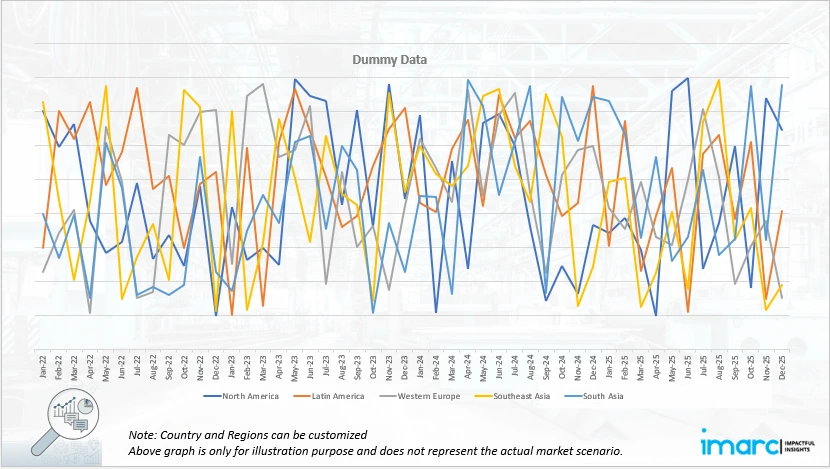
Long Steel Price Chart
Get real-time access to monthly/quarterly/yearly prices Request Sample
During the third quarter of 2026, the long steel prices in the USA reached 997 USD/MT in September. Prices moved upward as domestic mills kept operating rates firm and held output closely matched to committed orders. Steady procurement from construction contractors, fabricators and infrastructure projects absorbed the available spot material. Distributors rebuilt a portion of their holdings to secure supply for scheduled site work.
During the third quarter of 2026, the long steel prices in India reached 727 USD/MT in September. Prices advanced as infrastructure contractors, builders and engineering fabricators maintained active procurement through the quarter. Domestic mills kept operating rates firm and directed output toward committed contracts rather than the spot market. Availability of prompt material outside established agreements stayed limited relative to the pace of enquiries.
During the third quarter of 2026, the long steel prices in Germany reached 919 USD/MT in September. Prices moved upward as buyers absorbed firmer offers from domestic mills and importers with limited room for negotiation. Construction contractors and civil engineering firms kept intake steady to cover ongoing projects across the main consuming regions. Steelmakers across the region kept output closely matched to committed contracts rather than releasing surplus tonnage.
During the third quarter of 2026, the long steel prices in Turkey reached 796 USD/MT in September. Prices increased as export demand absorbed a larger share of mill output and trimmed the material offered into the domestic market. Construction contractors and fabricators maintained steady procurement to cover building and infrastructure work through the quarter.
During the third quarter of 2026, the long steel prices in Malaysia reached 662 USD/MT in September. Prices moved upward as construction activity and infrastructure work kept procurement steady through the quarter. Domestic mills kept output closely matched to committed orders rather than releasing surplus tonnage into the spot market. Firmer replacement costs on imported billets and finished bar were carried into local quotations.
Long Steel Prices Outlook Q1 2026
- USA: USD 1032/MT
- China: USD 388/MT
- Germany: USD 932/MT
- South Korea: USD 570/MT
- Malaysia: USD 653/MT
During the first quarter of 2026, the long steel prices in the USA reached 1032 USD/MT in March. Prices moved upward as construction activity improved and restocking from service centers supported demand. Mills maintained firmer offers due to higher scrap costs, stronger energy related expenses, and improved order books from infrastructure projects. Supply remained controlled as producers avoided aggressive discounting, which helped sustain market confidence.
During the first quarter of 2026, the long steel prices in China reached 388 USD/MT in March. Prices declined as construction demand remained soft and property sector activity failed to deliver strong buying momentum. Mills faced pressure from cautious downstream procurement and high finished steel inventories in key trading hubs. Weak sentiment among distributors encouraged competitive offers, especially for rebar and structural grades.
During the first quarter of 2026, the long steel prices in Germany reached 932 USD/MT in March. Prices increased as mills pushed offers higher on the back of firmer energy costs, tighter production schedules, and improved demand from infrastructure and engineering sectors. Buyers returned gradually to the market after earlier inventory reductions, giving producers more pricing power. Supply remained balanced as several mills focused on margin protection rather than volume expansion.
During the first quarter of 2026, the long steel prices in South Korea reached 570 USD/MT in March. Prices softened as downstream demand from construction and fabrication remained cautious. Buyers limited purchases to short term needs, expecting further negotiation opportunities amid weaker regional sentiment. Domestic mills faced pressure from lower import offers and slower project execution. Inventory levels at distributors stayed adequate, reducing urgency for fresh procurement.
During the first quarter of 2026, the long steel prices in Malaysia reached 653 USD/MT in March. Prices declined as construction activity remained uneven and buyers showed limited interest in bulk procurement. Imported offers from regional suppliers placed pressure on domestic pricing, especially for standard long steel products. Mills adjusted offers to maintain sales volumes amid slower order intake from contractors and distributors.
Long Steel Prices Outlook Q3 2025
- USA: USD 980/MT
- China: USD 422/MT
- Germany: USD 855/MT
- South Korea: USD 610/MT
- Malaysia: USD 711/MT
During the third quarter of 2025, the long steel prices in the USA reached 980 USD/MT in September. Prices moved upward, supported by firmer procurement sentiment across construction and manufacturing segments. Mills experienced steadier ordering patterns, prompting firmer quotations. Higher logistical and handling costs contributed to an upward push. Buyers maintained active restocking cycles as project schedules intensified, sustaining demand.
During the third quarter of 2025, the long steel prices in China reached 422 USD/MT in September. The slight upward movement was driven by steady procurement from construction clusters and controlled production at mills. Demand stabilization encouraged buyers to maintain recurring orders. Raw material availability remained balanced, helping mills sustain mildly firmer offers. Export interest continued at stable levels, preventing excess domestic supply.
During the third quarter of 2025, the long steel prices in Germany reached 855 USD/MT in September. Prices moved downward, driven by soft demand from the construction and fabrication sectors. Buyers adopted conservative procurement strategies, limiting upward support. Competition from imported materials reinforced downward pressure on domestic mill offers. Operating costs remained firm, but mills were unable to reflect these in quotations due to weaker consumption sentiment.
During the third quarter of 2025, the long steel prices in South Korea reached 610 USD/MT in September. Prices increased, supported by steady downstream activity in construction and fabrication. Mills continued measured production to keep supply aligned with demand. Consistent raw material inflows helped maintain stable cost structures. Import volumes remained moderate, supporting domestic sentiment.
During the third quarter of 2025, the long steel prices in Malaysia reached 711 USD/MT in September. Prices rose modestly due to steady progress in infrastructure projects. Mills operated with balanced production schedules, preventing the accumulation of surplus stocks. Stable input cost conditions enabled producers to maintain slightly firmer quotations. Distributors practiced disciplined purchasing strategies, ensuring orderly market flow. These combined factors contributed to the observed upward movement in prices.
Long Steel Prices Outlook Q2 2025
- USA: USD 928/MT
- China: USD 416/MT
- Germany: USD 887/MT
- South Korea: USD 602/MT
- Malaysia: USD 698/MT
During the second quarter of 2025, the long steel prices in the USA reached 928 USD/MT in June. Long steel prices in the USA this quarter were influenced by elevated raw material costs, particularly for scrap and iron ore, driven by tight domestic availability. Demand from the construction and automotive sectors remained steady, sustaining consumption levels. Transportation bottlenecks, including rail and trucking constraints, disrupted inland supply chains. Additionally, labor shortages in steel mills and higher energy prices increased operational expenses, while fluctuations in steel import volumes affected overall market balance.
During the second quarter of 2025, long steel prices in China reached 416 USD/MT in June. In China, long steel pricing was affected by fluctuating demand from the construction and infrastructure sectors, which faced mixed recovery trends due to regional policy shifts. Output levels from electric arc furnaces varied in response to changing scrap availability and government environmental regulations. Export volumes were constrained by maritime freight rate fluctuations and geopolitical tensions. Moreover, the volatility in coking coal and ferroalloy prices contributed to unstable production costs.
During the second quarter of 2025, the long steel prices in Germany reached 887 USD/MT in June. Long steel prices in Germany were driven by high energy costs, particularly electricity and gas, impacting electric arc furnace operations. Import dependency on raw materials such as scrap and alloys increased exposure to global supply chain disruptions. The construction sector’s demand remained firm, although labor shortages delayed some projects. Additionally, compliance with stricter European Union emissions regulations raised processing costs, and extended delivery lead times from neighboring markets disrupted downstream planning.
During the second quarter of 2025, the long steel prices in South Korea reached 602 USD/MT in June. In South Korea, long steel pricing dynamics were shaped by rising scrap input costs and constrained domestic collection rates. Infrastructure and shipbuilding sector demand supported consumption, although delays in some public projects moderated buying cycles. Rising costs for imported ferroalloys and electricity added to mill operating expenses. Furthermore, competition from low-cost imports and fluctuations in export orders, particularly from Southeast Asia, influenced inventory strategies and procurement behaviors.
During the second quarter of 2025, the long steel prices in Malaysia reached 698 USD/MT in June. Malaysia’s long steel prices were impacted by inconsistent construction sector activity, influenced by project delays and limited financing for new developments. Import costs for scrap and billets rose due to currency depreciation and tighter regional supply. Higher fuel and electricity prices affected production margins. Moreover, port congestion and vessel scheduling issues disrupted the timing of inbound shipments. Local mills also faced increased maintenance-related downtime, tightening available domestic supply.
Long Steel Prices Outlook Q1 2025
- USA: USD 908/MT
- China: USD 437/MT
- Germany: USD 852/MT
- South Korea: USD 615/MT
- Malaysia: USD 717/MT
During the first quarter of 2025, the long steel prices in the USA reached 908 USD/MT in March. As per the long steel price chart, the rising cost of raw materials like chrome ore and ferrous scrap, coupled with disruptions in supply chains, pushed up steel prices. Besides, increased trade protection and tariffs, especially on imports, created uncertainty.
During the first quarter of 2025, long steel prices in China reached 437 USD/MT in March. Construction activity, a major driver of steel demand, slowed due to a prolonged downturn in the property market. Moreover, China's steel industry faced challenges due to overcapacity, particularly in blast furnaces, causing fluctuations in long steel prices.
During the first quarter of 2025, the long steel prices in Germany reached 852 USD/MT in March. Long steel prices in Germany experienced mixed trends, influenced by factors like EU trade policies, rising car sales, and fluctuating nickel prices.
During the first quarter of 2025, the long steel prices in South Korea reached 615 USD/MT in March. Economic conditions, including a slowdown in construction activity and weaker demand, impacted the South Korean long steel market. Besides, trade policies, such as tariffs on steel imports, affected South Korea's steel exports and the overall market dynamics.
During the first quarter of 2025, the long steel prices in Malaysia reached 717 USD/MT in March. Prices were experiencing fluctuations due to a combination of global economic uncertainty, oversupply, and rising input costs. Specifically, weakened demand stemming from global economic concerns and a slowdown in construction activity, coupled with increased supply levels, put downward pressure on prices.
Regional Coverage
The report provides a detailed analysis of the market across different regions, each with unique pricing dynamics influenced by localized market conditions, supply chain intricacies, and geopolitical factors. This includes price trends, price forecast and supply and demand trends for each region, along with spot prices by major ports. The report also provides coverage of FOB and CIF prices, as well as the key factors influencing long steel prices.
Europe Long Steel Price Trend
Q3 2026:
The long steel price index in Europe moved upward through the quarter, supported by firmer mill offers and steady demand from construction and civil engineering customers. Germany recorded higher values as buyers absorbed offers from domestic mills and importers with little room for negotiation. Turkey followed the same direction, with export bookings absorbing a larger share of mill output and trimming local availability. Steelmakers across the region kept output closely matched to committed contracts rather than releasing surplus tonnage into the spot market. Construction contractors and fabricators maintained steady intake to cover ongoing residential, commercial and infrastructure projects. Availability of prompt material outside established agreements stayed limited relative to the pace of enquiries. Firmer scrap costs supported mill offers through the period.
Q1 2026:
The long steel price index in Europe moved upward as mills increased offers amid firmer production costs and more disciplined supply. Construction activity improved gradually, supported by infrastructure spending and selective commercial projects. Buyers returned to the market after earlier destocking, which improved transaction volumes. Energy costs continued to influence mill margins, encouraging producers to defend higher prices. Import competition remained present, but freight costs and delivery uncertainty reduced its impact in several markets.
Q3 2025:
The long steel price index for Europe in Q3 reflected downward movement as regional markets responded to varied demand. Countries experiencing slight increases benefited from steady construction activity, whereas markets with softer demand observed moderated pricing. Mills adjusted production rhythm to match consumption levels, preventing supply pressure. Competitive imports affected pricing in several hubs, contributing to restrained upward potential.
Q2 2025:
As per the long steel price index, prices in Europe this quarter were influenced by persistently high energy costs, particularly electricity and natural gas, which increased production expenses for electric arc furnace operations. Demand from the residential and infrastructure construction sectors remained steady, although procurement cycles were extended due to labor shortages and delayed project timelines. Raw material imports, including scrap and ferroalloys, faced longer lead times due to congestion at key European ports and inland transportation bottlenecks. Additionally, regulatory compliance with decarbonization targets raised costs for steelmakers.
Q1 2025:
As per the long steel price index, a general downturn in European steel consumption, particularly in construction and consumer goods, led to limited demand for long steel products. Besides, some European steel mills reduced production capacity to manage costs driven by previously high raw material prices and weak demand.
Detailed price information for long steel can also be provided for an extensive list of European countries.
| Region | Countries Covered |
|---|---|
| Europe | Germany, France, United Kingdom, Italy, Spain, Russia, Turkey, Netherlands, Poland, Sweden, Belgium, Austria, Ireland, Switzerland, Norway, Denmark, Romania, Finland, Czech Republic, Portugal, and Greece, among other European countries. |
North America Long Steel Price Trend
Q3 2026:
The long steel price index in North America moved upward during the quarter, shaped by firm mill operating rates and steady downstream demand. The USA recorded higher values as construction contractors, fabricators and infrastructure projects absorbed available spot material. Domestic mills kept output closely matched to committed orders rather than releasing surplus tonnage into the open market. Distributors rebuilt a portion of their holdings to secure supply for scheduled site work. Firmer replacement costs on imported long products were carried into local offers through the period. Demand from residential, commercial and transport projects stayed steady and kept procurement active. Availability of prompt material outside established agreements remained limited relative to the pace of enquiries. Freight and handling charges on consignments moved between mills, service centers and depots added to delivered values.
Q1 2026:
The long steel price index in North America strengthened as domestic mills benefited from better order flow and limited import pressure. Demand from infrastructure, industrial construction, and fabrication improved, giving producers stronger negotiating power. Scrap based production costs remained firm, supporting upward price revisions across long steel categories. Buyers increased procurement as they anticipated continued firmness in mill offers. Service centers showed stronger interest in rebuilding inventories after earlier cautious purchasing.
Q3 2025:
The long steel price index for North America in Q3 indicated an upward trend consistent with bullish movements in key markets. The region benefited from ongoing infrastructure activity, which supported procurement cycles. Mills operated with stable production, aligning with the healthier demand outlook. Import flows remained predictable, providing a supply balance without offsetting upward movement. Distributors continued disciplined inventory management, reinforcing steady price gains throughout the quarter.
Q2 2025:
As per the long steel price index, in North America, long steel prices were impacted by tight scrap availability and increased domestic demand from the non-residential construction and manufacturing sectors. Upstream supply chains faced challenges from fluctuating fuel prices and higher trucking costs, while maintenance shutdowns at several steel mills constrained production. Import volumes remained volatile due to shifting trade flows and global shipping delays. Additionally, currency movements against the US dollar influenced pricing strategies for both domestic and imported long steel products.
Specific long steel historical data within the United States and Canada can also be provided.
| Region | Countries Covered |
|---|---|
| North America | United States and Canada |
Middle East and Africa Long Steel Price Trend
Q3 2026:
The long steel price index in the Middle East and Africa moved upward through the quarter, supported by steady demand from construction and infrastructure programs. Regional industrial expansion kept procurement of reinforcement bar and structural sections active across the main consuming markets. Project developers maintained steady intake to cover residential, commercial and transport work. Availability of prompt material outside established agreements stayed limited relative to the pace of enquiries. Producers in the region kept output closely matched to committed volumes rather than releasing surplus tonnage into the spot market. Firmer replacement costs on imported long products were carried into local quotations during the period. Freight and port handling charges on incoming cargoes added to delivered costs for distributors serving inland customers.
Q1 2026:
The study examines the long steel trends and long steel price chart in the Middle East and Africa, taking into account variables that specifically affect market prices, such as regional industrial expansion, natural resource availability, and geopolitical tensions.
Q3 2025:
The report explores the long steel trends and long steel price chart in the Middle East and Africa, considering factors like regional industrial growth, the availability of natural resources, and geopolitical tensions that uniquely influence market prices.
Q2 2025:
As per the long steel price chart, the prices in the Middle East and Africa fluctuated due to a complex interplay of factors, primarily driven by supply chain disruptions, seasonal demand shifts, and geopolitical influences.
Region-wise data and information on specific countries within these regions can also be provided.
| Region | Countries Covered |
|---|---|
| Middle East & Africa | Saudi Arabia, UAE, Israel, Iran, South Africa, Nigeria, Oman, Kuwait, Qatar, Iraq, Egypt, Algeria, and Morocco, among other Middle Eastern and African countries. |
Asia Pacific Long Steel Price Trend
Q3 2026:
The long steel price index in Asia Pacific moved upward through the quarter, supported by firm producer offers and steady demand from construction and infrastructure work. India recorded higher values as contractors, builders and engineering fabricators maintained active procurement. Malaysia followed the same direction, with construction activity and infrastructure projects keeping intake steady. Steelmakers across the region kept operating rates firm and directed output toward committed contracts rather than the spot market. Availability of prompt material outside established agreements stayed limited relative to the pace of enquiries. Firmer input costs at regional mills were carried into offers during the period. Freight and container availability at key ports shaped delivered costs and the timing of cargo arrivals.
Q1 2026:
Asia Pacific long steel prices showed bearish movement, with weakness in several markets due to slow construction demand and ample supply. China faced pressure from weak property activity and cautious domestic buying, which influenced regional sentiment. South Korea and Malaysia also recorded softer trends as buyers resisted bulk purchases and relied on available inventories. Export competition remained intense, especially among regional suppliers seeking outlets for excess production. Some infrastructure demand provided support, but it was not enough to offset weak private construction activity.
Q3 2025:
Asia Pacific long steel prices exhibited an upward movement overall during Q3, supported by steady activity in construction and industrial fabrication. Regional mills maintained disciplined production levels to align with prevailing demand. Consistent raw material availability supported stable operations. Import and export flows remained orderly, preventing disruptive supply shifts. Market sentiment stayed balanced, helping maintain gentle upward movement across several markets.
Q2 2025:
Long steel pricing in the Asia Pacific region was driven by uneven demand trends across countries, with infrastructure-led consumption remaining strong in India and Indonesia, while construction activity slowed in parts of China and Australia. Input costs were affected by rising scrap and ferroalloy prices, alongside increased electricity tariffs in several markets. Supply-side constraints emerged from reduced output in mills undergoing upgrades or environmental audits. Furthermore, port congestion and regional freight rate volatility disrupted inventory replenishment cycles.
Q1 2025:
In many regions, particularly China, weak demand from sectors, like construction and automotive, led to volatile prices. Besides, increased steel exports, particularly from China, contributed to pressure on prices. Moreover, the price of iron ore and coking coal, major raw materials, continued to fluctuate, impacting prices for long steel.
This long steel price analysis can be expanded to include a comprehensive list of countries within the region.
| Region | Countries Covered |
|---|---|
| Asia Pacific | China, India, Indonesia, Pakistan, Bangladesh, Japan, Philippines, Vietnam, Thailand, South Korea, Malaysia, Nepal, Taiwan, Sri Lanka, Hongkong, Singapore, Australia, and New Zealand, among other Asian countries. |
Latin America Long Steel Price Trend
Q3 2026:
The long steel market in Latin America is primarily shaped by regional import dependency and downstream industrial demand across construction, infrastructure, and railway applications. However, due to logistics constraints and varying regulatory regimes, long steel prices might fluctuate dynamically across the region.
Q1 2026:
A thorough overview is given by the analysis of long steel pricing in Latin America, which reflects the distinct market dynamics in the area impacted by trade frameworks, industrial growth, and economic policies.
Q3 2025:
Latin America's long steel market is predominantly influenced by its rich natural reserves, particularly in countries like Chile and Brazil. However, political instability and inconsistent regulatory frameworks can lead to significant volatility in long steel prices.
Q2 2025:
Infrastructure challenges and logistical inefficiencies often impact the supply chain, affecting the region's ability to meet international demand consistently. Moreover, economic fluctuations and currency devaluation are critical factors that need to be considered when analyzing long steel pricing trends in this region.
Q1 2025:
Latin America's long steel market is predominantly influenced by its rich natural reserves, particularly in countries like Chile and Brazil. However, political instability and inconsistent regulatory frameworks can lead to significant volatility in long steel prices. Infrastructure challenges and logistical inefficiencies often impact the supply chain, affecting the region's ability to meet international demand consistently. Moreover, the long steel price index, economic fluctuations, and currency devaluation are critical factors that need to be considered when analyzing long steel pricing trends in this region.
This comprehensive review can be extended to include specific countries within Latin America.
| Region | Countries Covered |
|---|---|
| Latin America | Brazil, Mexico, Argentina, Columbia, Chile, Ecuador, and Peru, among other Latin American countries. |
Long Steel Pricing Report, Market Analysis, and News
IMARC's latest publication, “Long Steel Prices, Trend, Chart, Demand, Market Analysis, News, Historical and Forecast Data Report 2026 Edition,” presents a detailed examination of the long steel market, providing insights into both global and regional trends that are shaping prices. This report delves into the spot price of long steel at major ports and analyzes the composition of prices, including FOB and CIF terms. It also presents detailed long steel prices trend analysis by region, covering North America, Europe, Asia Pacific, Latin America, and Middle East and Africa. The factors affecting long steel pricing, such as the dynamics of supply and demand, geopolitical influences, and sector specific developments, are thoroughly explored. This comprehensive report helps stakeholders stay informed with the latest market news, regulatory updates, and technological progress, facilitating informed strategic decision-making and forecasting.
Long Steel Industry Analysis
The global long steel market size reached USD 468.95 Billion in 2025. By 2034, IMARC Group expects the market to reach USD 714.09 Billion, at a projected CAGR of 4.78% during 2026-2034. Market growth is being driven by rising construction and infrastructure spending, expanding demand for reinforcement bar in residential and commercial buildings, steady investment in transport and rail projects, and the regular replacement of stock held across distribution channels worldwide.
Latest News and Developments:
- November 2025: Baogang Steel successfully completed trial rolling of 1Cr13, 2Cr13 and 3Cr13 stainless steel wire rods on its No. 1 long products line, widening its wire rod range and strengthening its position in the specialty steel segment.
Product Description
Long steel is the collective term for steel supplied in long shapes rather than flat or coiled form, covering reinforcing bar, wire rod, merchant bar, structural sections and rails. It is an alloy rather than a single compound, so it has no molecular formula. Its base is iron with a small carbon content, together with manganese and silicon, and some grades carry microalloying additions such as vanadium, niobium or chromium. Material is typically supplied hot rolled in straight lengths or coils. Long steel offers high tensile strength, ductility, toughness and weldability, and is magnetic in ferritic grades. Industrially it serves construction, civil engineering, infrastructure, railway, automotive and general engineering. In end use it reinforces concrete foundations, columns, beams and slabs, forms wire products and mesh, frames structural steelwork and shapes rails for track. It is commonly produced by melting ferrous scrap and direct reduced iron in an electric arc furnace, followed by continuous casting into billets and blooms and hot rolling through a long product mill.
Report Coverage
| Key Attributes | Details |
|---|---|
| Product Name | Long Steel |
| Report Features | Exploration of Historical Trends and Market Outlook, Industry Demand, Industry Supply, Gap Analysis, Challenges, Long Steel Price Analysis, and Segment-Wise Assessment. |
| Currency/Units | US$ (Data can also be provided in local currency) or Metric Tons |
| Region/Countries Covered | The current coverage includes analysis at the global and regional levels only. Based on your requirements, we can also customize the report and provide specific information for the following countries: Asia Pacific: China, India, Indonesia, Pakistan, Bangladesh, Japan, Philippines, Vietnam, Thailand, South Korea, Malaysia, Nepal, Taiwan, Sri Lanka, Hongkong, Singapore, Australia, and New Zealand Europe: Germany, France, United Kingdom, Italy, Spain, Russia, Turkey, Netherlands, Poland, Sweden, Belgium, Austria, Ireland, Switzerland, Norway, Denmark, Romania, Finland, Czech Republic, Portugal and Greece North America: United States and Canada Latin America: Brazil, Mexico, Argentina, Columbia, Chile, Ecuador, and Peru Middle East & Africa: Saudi Arabia, UAE, Israel, Iran, South Africa, Nigeria, Oman, Kuwait, Qatar, Iraq, Egypt, Algeria, and Morocco The list of countries presented is not exhaustive. Information on additional countries can be provided if required by the client. |
| Information Covered for Key Suppliers |
Recent Trends and Developments |
| Customization Scope | The report can be customized as per the requirements of the customer |
| Report Price and Purchase Option |
Plan A: Monthly Updates - Annual Subscription
Plan B: Quarterly Updates - Annual Subscription
Plan C: Biannually Updates - Annual Subscription
Includes: One PDF and Excel datasheet per Half, Post Purchase Analyst Support throughout the year |
| Post-Sale Analyst Support | 360-degree analyst support after report delivery |
| Delivery Format | PDF and Excel through email (We can also provide the editable version of the report in PPT/Word format on special request) |
Key Benefits for Stakeholders:
- IMARC’s report presents a detailed analysis of long steel pricing, covering global and regional trends, spot prices at key ports, and a breakdown of FOB and CIF prices.
- The study examines factors affecting long steel price trend, including input costs, supply-demand shifts, and geopolitical impacts, offering insights for informed decision-making.
- The competitive landscape review equips stakeholders with crucial insights into the latest market news, regulatory changes, and technological advancements, ensuring a well-rounded, strategic overview for forecasting and planning.
- IMARC offers various subscription options, including monthly, quarterly, and biannual updates, allowing clients to stay informed with the latest market trends, ongoing developments, and comprehensive market insights. The long steel price charts ensure our clients remain at the forefront of the industry.
Need more help?
- Speak to our experienced analysts for insights on the current market scenarios.
- Include additional segments and countries to customize the report as per your requirement.
- Gain an unparalleled competitive advantage in your domain by understanding how to utilize the report and positively impacting your operations and revenue.
- For further assistance, please connect with our analysts.
 Request Customization
 Inquire Before Buying
 Speak to an Analyst
 Request Brochure
Benefits of Customization
- Personalize this research
- Triangulate with your data
- Get data as per your format and definition
- Gain a deeper dive into a specific application, geography, customer, or competitor
- Any level of personalization
Get in Touch With Us
UNITED STATES
Phone: +1-201-971-6302
INDIA
Phone: +91-120-433-0800
UNITED KINGDOM
Phone: +44-753-714-6104
Email: [email protected]
Client Testimonials





















Related Reports

Why Choose Us
IMARC offers trustworthy, data-centric insights into commodity pricing and evolving market trends, enabling businesses to make well-informed decisions in areas such as procurement, strategic planning, and investments. With in-depth knowledge spanning more than 1000 commodities and a vast global presence in over 150 countries, we provide tailored, actionable intelligence designed to meet the specific needs of diverse industries and markets.
1000
+Commodities
150
+Countries Covered
3000
+Clients
20
+Industry

Robust Methodologies & Extensive Resources
IMARC delivers precise commodity pricing insights using proven methodologies and a wealth of data to support strategic decision-making.

Subscription-Based Databases
Our extensive databases provide detailed commodity pricing, import-export trade statistics, and shipment-level tracking for comprehensive market analysis.

Primary Research-Driven Insights
Through direct supplier surveys and expert interviews, we gather real-time market data to enhance pricing accuracy and trend forecasting.

Extensive Secondary Research
We analyze industry reports, trade publications, and market studies to offer tailored intelligence and actionable commodity market insights.
Trusted by 3000+ industry leaders worldwide to drive data-backed decisions. From global manufacturers to government agencies, our clients rely on us for accurate pricing, deep market intelligence, and forward-looking insights.