
M-Xylene Prices, Trend, Chart, Demand, Market Analysis, News, Historical and Forecast Data Report 2026 Edition
M-Xylene Price Trend, Index and Forecast
Track the latest insights on m-xylene price trend and forecast with detailed analysis of regional fluctuations and market dynamics across North America, Latin America, Central Europe, Western Europe, Eastern Europe, Middle East, North Africa, West Africa, Central and Southern Africa, Central Asia, Southeast Asia, South Asia, East Asia, and Oceania.
M-Xylene Prices Outlook Q2 2026
- USA: USD 902/Ton
- China: USD 676/Ton
- Germany: USD 824/Ton
- South Korea: USD 681/Ton
- South Africa: USD 830/Ton
M-Xylene Price Chart
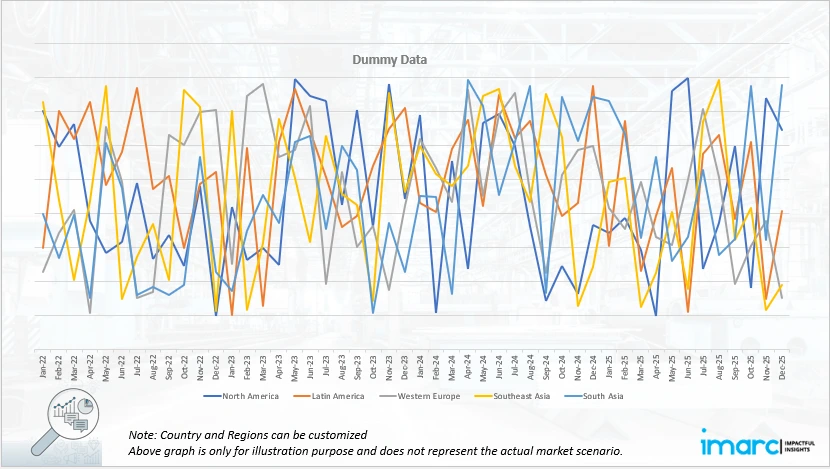
Get real-time access to monthly/quarterly/yearly prices Request Sample
During the second quarter of 2026, the m-xylene prices in the USA reached 902 USD/Ton in June. Prices moved higher as firmer aromatic feedstock economics during parts of the period raised replacement costs for producers and distributors. Scheduled refinery maintenance also limited flexibility in aromatics output, supporting supplier offers when spot availability tightened. Demand from isophthalic acid, resins, coatings, solvents, and other chemical applications provided a stable consumption base, encouraging regular procurement rather than aggressive destocking.
During the second quarter of 2026, the m-xylene prices in China reached 676 USD/Ton in June. The market strengthened as buyers maintained procurement for isophthalic acid and other aromatic derivative production, supporting consumption across the domestic chemical chain. Periodic firmness in upstream crude oil, naphtha, and mixed xylene economics increased replacement costs and encouraged producers to defend offers. Refinery operating adjustments also affected the availability of aromatic streams, tightening prompt supply during parts of the quarter.
During the second quarter of 2026, the m-xylene prices in Germany reached 824 USD/Ton in June. Prices increased as production economics remained sensitive to naphtha, energy, and broader aromatic feedstock costs, particularly during the earlier part of the quarter. Firm operating expenses encouraged producers and traders to maintain higher replacement values for available material. Supply conditions were also influenced by refinery maintenance and variable aromatics output across Europe, which reduced flexibility for prompt procurement at certain points.
During the second quarter of 2026, the m-xylene prices in South Korea reached 681 USD/Ton in June. Prices advanced as regional aromatics supply remained sensitive to refinery operating rates, maintenance schedules, and changing economics for naphtha based production. Producers maintained disciplined offers when feedstock costs strengthened, while export oriented supply decisions affected the volume available for domestic buyers. Demand from isophthalic acid and other chemical derivatives supported regular purchasing, with downstream manufacturers seeking to maintain operating inventories.
During the second quarter of 2026, the m-xylene prices in South Africa reached 830 USD/Ton in June. Prices moved upward as the market remained sensitive to imported aromatic costs, international feedstock movements, and freight conditions. Changes in refinery and supplier availability affected replacement values for distributors, particularly when prompt cargo options became less flexible. Demand from paints, coatings, resins, solvents, and other industrial chemical applications provided a steady consumption base and supported routine purchasing.
M-Xylene Prices Outlook Q4 2025
- USA: USD 853/Ton
- China: USD 618/Ton
- Germany: USD 790/Ton
- South Korea: USD 645/Ton
- South Africa: USD 794/Ton
During the fourth quarter of 2025, the m-xylene prices in the USA reached 853 USD/Ton in December. Prices rose, supported by steady demand from petrochemical intermediates and solvent manufacturing sectors. Additionally, procurement from coatings, resins, and specialty chemical producers remained stable. Refiners maintained balanced output levels while distributors increased contract-based sourcing to support downstream industrial consumption.
During the fourth quarter of 2025, the m-xylene prices in China reached 618 USD/Ton in December. Prices declined, influenced by moderated demand from petrochemical derivative manufacturing and solvent formulation industries. Moreover, stable domestic refinery production ensured comfortable supply availability across chemical distribution networks. Buyers maintained cautious procurement strategies while monitoring downstream industrial demand.
During the fourth quarter of 2025, the m-xylene prices in Germany reached 790 USD/Ton in December. Prices fell, driven by tempered demand from coatings, chemical intermediates, and industrial solvent applications. Furthermore, consistent import availability and balanced regional inventories supported reliable supply conditions. Buyers focused on aligning procurement with confirmed manufacturing requirements.
During the fourth quarter of 2025, the m-xylene prices in South Korea reached 645 USD/Ton in December. Prices moved lower, amid moderated demand from petrochemical processing and solvent blending industries. In addition to this, stable refinery output and structured export channels maintained sufficient supply across distribution hubs. Buyers maintained disciplined inventory management across manufacturing sectors.
During the fourth quarter of 2025, the m-xylene prices in South Africa reached 794 USD/Ton in December. Prices edged downward, influenced by tempered demand from coatings manufacturing and petrochemical intermediate production. Additionally, balanced supply conditions and organized import distribution networks ensured consistent product availability. Buyers maintained cautious purchasing patterns across industrial markets.
M-Xylene Prices Outlook Q3 2025
- USA: USD 834/Ton
- China: USD 633/Ton
- Germany: USD 816/Ton
- South Korea: USD 671/Ton
- South Africa: USD 814/Ton
During the third quarter of 2025, the m-xylene prices in the USA reached 834 USD/Ton in September. Prices moved upward as downstream demand from resin and specialty chemical applications strengthened. Supply availability tightened due to turnarounds at selected aromatic complexes, and freight scheduling constraints along key domestic routes added further cost pressure. Buyers maintained consistent procurement to support uninterrupted production cycles.
During the third quarter of 2025, the m-xylene prices in China reached 633 USD/Ton in September. Prices moved downward as domestic producers operated steadily with comfortable inventories. Softer uptake from derivatives influenced purchasing behavior, while competitive offers from regional suppliers encouraged cautious procurement. Logistical networks functioned smoothly, supporting efficient distribution across major consuming clusters.
During the third quarter of 2025, the m-xylene prices in Germany reached 816 USD/Ton in September. Prices increased compared to the prior quarter as European chemical plants raised consumption, supported by improving activity in resin manufacturing. Importers faced longer vessel turnaround times due to congestion at select ports, prompting a greater reliance on regional sourcing. Cost-side pressure from energy markets shaped supplier strategies across the quarter.
During the third quarter of 2025, the m-xylene prices in South Korea reached 671 USD/Ton in September. Prices moved downward as derivative units adjusted operating rates amid moderated demand for downstream products. Stable aromatics production ensured adequate domestic supply, and buyers adopted measured procurement patterns. Shipping availability across regional trade routes improved, providing flexibility in purchasing decisions.
During the third quarter of 2025, the m-xylene prices in South Africa reached 814 USD/Ton in September. Prices moved downward as distributors managed inventories conservatively in response to varied demand from chemical processors. Import activity proceeded without major disruption, and exchange rate fluctuations influenced procurement timing. Supply chains across major urban hubs remained functional, supporting consistent distribution.
M-Xylene Prices Outlook Q2 2025
- USA: USD 815/Ton
- China: USD 648/Ton
- Germany: USD 775/Ton
- South Korea: USD 695/Ton
- South Africa: USD 830/Ton
During the second quarter of 2025, the m-xylene prices in the USA reached 815 USD/Ton in June. Prices moved downward as downstream sectors moderated consumption. Domestic producers maintained stable operating rates, and improved freight conditions helped smooth distribution. Buyers aligned procurement with scheduled production runs, maintaining predictable purchasing behavior.
During the second quarter of 2025, the m-xylene prices in China reached 648 USD/Ton in June. Prices moved downward from the previous quarter as inventories remained sufficient and derivative demand softened. Producers managed output levels efficiently, while well-coordinated port operations ensured timely dispatches. Market participants maintained cautious procurement as upstream volatility eased.
During the second quarter of 2025, the m-xylene prices in Germany reached 775 USD/Ton in June. Prices moved downward as consistent imports from global suppliers ensured healthy availability. Chemical manufacturers moderated intake due to lower-than-expected activity in downstream applications. Inland logistics ran smoothly, enabling controlled replenishment cycles among distributors.
During the second quarter of 2025, the m-xylene prices in South Korea reached 695 USD/Ton in June. Prices moved downward as derivative markets experienced reduced consumption. Aromatics units operated without major disruptions, keeping supply adequate. Buyers balanced inventory commitments with sectoral demand, resulting in structured procurement through the period.
During the second quarter of 2025, the m-xylene prices in South Africa reached 830 USD/Ton in June. Prices moved upward as local distributors faced rising import-related expenses. Feedstock-linked fluctuations influenced supplier costs, prompting measured adjustments in offers. Port activity supported steady inflows, allowing buyers to maintain continuity in supply.
Regional Coverage
The report provides a detailed analysis of the market across different regions, each with unique pricing dynamics influenced by localized market conditions, supply chain intricacies, and geopolitical factors. This includes price trends, price forecast and supply and demand trends for each region, along with spot prices by major ports. The report also provides coverage of FOB and CIF prices, as well as the key factors influencing m-xylene prices.
Europe M-Xylene Price Trend
Q2 2026:
The m-xylene price index in Europe moved upward as production costs remained exposed to naphtha, energy, and refinery economics. Early quarter firmness in feedstock values encouraged producers to protect margins and maintain stronger offers. Maintenance activity across refining and aromatics facilities reduced flexibility and occasionally tightened prompt availability. Import replacement costs also supported the market when overseas cargo economics became less attractive for European buyers. Demand from isophthalic acid, coatings, resins, solvents, and specialty chemical manufacturing provided a stable consumption base, though wider industrial activity remained cautious. Buyers generally maintained practical inventory coverage instead of building excessive stocks, which kept spot demand controlled throughout quarter.
Q4 2025:
As per the m-xylene price index, Europe recorded a downward pricing trend. Demand from coatings manufacturers, chemical intermediate producers, and industrial solvent formulators remained stable but lacked strong momentum across key manufacturing hubs. Moreover, consistent import availability and balanced storage inventories supported comfortable supply conditions. Buyers maintained cautious procurement strategies aligned with confirmed industrial production schedules.
Q3 2025:
Europe experienced an upward regional trend. Improving operating rates in the resin and specialty chemicals sectors led to stronger procurement across Western and Central Europe. Importers faced extended berth queues at several North Sea ports, prompting diversification toward alternative European terminals. Energy-linked cost pressures persisted for local aromatics producers, influencing pricing strategies. Cross-border truck movements remained reliable, allowing distributors to maintain timely delivery schedules as consumption strengthened within key manufacturing clusters.
Q2 2025:
Europe recorded a downward regional trend as derivative units moderated intake due to weaker early-quarter performance in coatings and intermediates. Consistent import arrivals through Mediterranean and Northern ports ensured accessible supply for distributors. Domestic aromatics output continued steadily amid fluctuating operating costs, prompting careful scheduling among producers. Transport networks supported regular distribution, allowing buyers to balance stock levels with stable but subdued downstream requirements.
This analysis can be extended to include detailed m-xylene price information for a comprehensive list of countries.
| Region | Countries Covered |
|---|---|
| Europe | Germany, France, United Kingdom, Italy, Spain, Russia, Turkey, Netherlands, Poland, Sweden, Belgium, Austria, Ireland, Switzerland, Norway, Denmark, Romania, Finland, Czech Republic, Portugal, and Greece, among other European countries. |
North America M-Xylene Price Trend
Q2 2026:
The m-xylene price index in North America moved higher as refinery operations, feedstock economics, and downstream procurement supported the market. Aromatics production remained sensitive to crude oil and naphtha movements, raising replacement costs during firmer portions of the quarter. Scheduled refinery maintenance reduced flexibility in the supply of reformate and related aromatic streams, helping sellers maintain offers when spot material tightened. Demand from isophthalic acid, coatings, resins, solvents, and specialty chemical production remained steady enough to sustain regular purchasing. Buyers also focused on maintaining working inventories as uncertainty around plant operations and logistics discouraged aggressive destocking.
Q4 2025:
As per the m-xylene price index, North America witnessed an upward pricing trend. Consumption from petrochemical derivative production, solvent blending, and coatings manufacturing sectors remained stable across major industrial corridors. Furthermore, integrated refinery infrastructure and established distribution networks supported reliable supply planning. Buyers maintained structured procurement aligned with steady downstream manufacturing activity.
Q3 2025:
North America registered an upward regional trend. Demand from the adhesive, coatings, and resin sectors gained momentum, prompting more assertive purchasing behavior among industrial consumers. Intermittent maintenance at aromatic complexes tightened availability in certain markets, contributing to firmer sentiment. Inland freight networks faced capacity variations, encouraging distributors to secure supply earlier. These conditions fostered active contracting practices and synchronized procurement activity throughout the region.
Q2 2025:
North America posted a downward regional trend due to softened consumption from derivative segments resulted in cautious procurement, and refiners maintained steady aromatics throughput despite moderated demand. Rail and trucking performance improved, enabling distributors to manage inventory without disruption. Importers coordinated shipments based on sectoral requirements, maintaining a functional balance between supply flow and regional consumption patterns.
Specific m-xylene historical data within the United States and Canada can also be provided.
| Region | Countries Covered |
|---|---|
| North America | United States and Canada |
Middle East and Africa M-Xylene Price Trend
Q2 2026:
During Q2 2026, m-xylene prices across the Middle East and Africa were supported by feedstock movements, refinery economics, import dependence in several consuming markets, and changing freight conditions. Producers in the Middle East remained influenced by the economics of crude derived aromatic streams, with shifts in naphtha and reformate values affecting offer levels. In African markets, buyers were more exposed to imported material, making shipping costs, port availability, and cargo timing important pricing factors. Supply remained manageable, but limited prompt availability at certain points encouraged distributors to protect replacement margins. Demand from paints, coatings, resins, solvents, and chemical processing supported routine procurement without creating excessive inventory accumulation.
Q4 2025:
In the Middle East and Africa, m-xylene prices declined, influenced by moderated demand from petrochemical processing and solvent formulation industries. Import-oriented supply chains required coordinated shipment planning and distribution management across regional markets. Additionally, buyers maintained conservative inventory strategies while aligning procurement with industrial consumption requirements.
Q3 2025:
The Middle East and Africa recorded a downward regional trend, reflecting South Africa’s decline. Industrial users engaged in measured intake due to uneven downstream activity across local chemical subsectors. South African distributors coordinated imports from multiple origins to manage price competitiveness while navigating variable exchange-rate conditions. Port operations in Durban and other coastal gateways supported predictable arrivals, enabling flexible inventory planning. Regional procurement practices remained closely aligned with short-term industrial needs rather than forward commitments.
Q2 2025:
The Middle East and Africa saw an upward regional trend driven by South Africa’s increase. Importers adjusted purchase volumes to accommodate higher landed costs tied to currency movement and freight dynamics. Chemical processors in major industrial hubs maintained routine requirements, prompting steady procurement despite cost fluctuations. Port handling performance remained stable, facilitating continuous inflow of material. Market engagement centered on preserving consistent supply access while addressing variable input expenses.
In addition to region-wise data, information on m-xylene prices for countries can also be provided.
| Region | Countries Covered |
|---|---|
| Middle East & Africa | Saudi Arabia, UAE, Israel, Iran, South Africa, Nigeria, Oman, Kuwait, Qatar, Iraq, Egypt, Algeria, and Morocco, among other Middle Eastern and African countries. |
Asia Pacific M-Xylene Price Trend
Q2 2026:
The m-xylene prices in Asia Pacific strengthened as regional refinery operations, naphtha economics, derivative demand, and cargo availability shaped trading conditions. China and South Korea remained influential markets because their aromatics chains link refinery output with large downstream chemical industries. Periodic firmness in crude oil and naphtha raised production replacement costs, encouraging sellers to maintain offers. Maintenance and operating adjustments at refineries and aromatics units also affected prompt supply, particularly when producers prioritized other aromatic streams or export commitments. Demand from isophthalic acid, polyester related materials, coatings, resins, and specialty chemicals supported consistent procurement. Buyers replenished inventories when local availability tightened, adding temporary strength to spot negotiations. Regional freight and vessel scheduling also influenced import parity and cargo placement.
Q4 2025:
In the Asia Pacific region, prices moved lower, reflecting tempered demand from petrochemical intermediate production and solvent manufacturing sectors. Stable refinery operations and structured export channels ensured sufficient supply availability across major chemical processing hubs. Buyers adopted cautious purchasing strategies while monitoring downstream manufacturing demand.
Q3 2025:
The Asia Pacific region exhibited a downward regional trend with declines in China and South Korea encouraging buyers across Southeast Asia and Oceania to moderate scheduling, aligning intake with lower derivative production levels. Aromatics complexes across the region maintained steady operating rates, ensuring ample supply. Manufacturers in textile and chemical hubs monitored upstream costs closely, pacing feedstock purchases accordingly. Shipping networks across Northeast and Southeast Asia functioned smoothly, enabling responsive allocation of material across regional markets.
Q2 2025:
The region showed a downward regional trend due to softened derivative performance and steady aromatics supply. Producers in major clusters maintained continuous throughput, contributing to consistent product availability. Downstream processors in countries such as Vietnam, Thailand, and Indonesia scheduled procurement according to domestic consumption patterns. Regional logistics corridors operated efficiently, supporting timely cargo movement. This allowed buyers to maintain disciplined stock management strategies aligned with sectoral activity.
This m-xylene price analysis can be expanded to include a comprehensive list of countries within the region.
| Region | Countries Covered |
|---|---|
| Asia Pacific | China, India, Indonesia, Pakistan, Bangladesh, Japan, Philippines, Vietnam, Thailand, South Korea, Malaysia, Nepal, Taiwan, Sri Lanka, Hongkong, Singapore, Australia, and New Zealand, among other Asian countries. |
Latin America M-Xylene Price Trend
Q2 2026:
The market for m-xylene in Latin America is primarily driven by the region's vast natural resources, particularly in Chile and Brazil. However, pricing for m-xylene may change dramatically due to political uncertainty and varying regulatory frameworks.
Q4 2025:
Latin America's m-xylene market is predominantly influenced by its rich natural reserves, particularly in countries like Chile and Brazil. However, political instability and inconsistent regulatory frameworks can lead to significant volatility in m-xylene prices.
Q3 2025:
Infrastructure challenges and logistical inefficiencies often impact the supply chain, affecting Latin America’s ability to meet international demand consistently. Moreover, the m-xylene price index, economic fluctuations, and currency devaluation are critical factors that need to be considered when analyzing m-xylene pricing trends in this region.
This comprehensive review can be extended to include specific countries within the region..
| Region | Countries Covered |
|---|---|
| Latin America | Brazil, Mexico, Argentina, Columbia, Chile, Ecuador, and Peru, among other Latin American countries. |
M-Xylene Pricing Report, Market Analysis, and News
IMARC's latest publication, “M-Xylene Prices, Trend, Chart, Demand, Market Analysis, News, Historical and Forecast Data Report 2026 Edition,” presents a detailed examination of the m-xylene market, providing insights into both global and regional trends that are shaping prices. This report delves into the spot price of m-xylene at major ports and analyzes the composition of prices, including FOB and CIF terms. It also presents detailed m-xylene prices trend analysis by region, covering North America, Europe, Asia Pacific, Latin America, and Middle East and Africa. The factors affecting m-xylene pricing, such as the dynamics of supply and demand, geopolitical influences, and sector specific developments, are thoroughly explored. This comprehensive report helps stakeholders stay informed with the latest market news, regulatory updates, and technological progress, facilitating informed strategic decision-making and forecasting.
M-Xylene Industry Analysis
The global m-xylene industry size reached 1.25 Million Tons in 2025. By 2034, IMARC Group expects the market to reach 1.80 Million Tons, at a projected CAGR of 3.85% during 2026-2034. Demand is supported by expanding resin and adhesive production, greater use of m-xylene in chemical intermediates, ongoing development of downstream specialty applications, and capacity enhancements across emerging industrial regions, which collectively strengthen long-term consumption patterns.
Latest News and Developments:
- September 2025: A study on gas–particle partitioning of m-xylene and naphthalene in atmospheric oxidation experiments found that temperature and the VOC/NOₓ ratio significantly affect the formation of secondary organic aerosol (SOA) from m-xylene. The work used a high-resolution mass spectrometer in an oxidation flow reactor to identify reaction products. The study was carried out by researchers at Aix‑Marseille University (in collaboration with CNRS), at their LCE laboratory in Marseille, France.
Product Description
M-xylene, also called meta xylene or 1,3 dimethylbenzene, is an aromatic hydrocarbon with the molecular formula C8H10. It consists of a benzene ring containing two methyl groups positioned at the meta locations. The product is a clear, colorless, flammable liquid with a characteristic aromatic odor and low water solubility. Industrial m-xylene is commonly obtained from petroleum derived mixed xylene streams through separation and purification processes. Its principal chemical application is the production of isophthalic acid, an intermediate used in polyester resins, modified PET materials, coatings, and related polymer systems. M xylene can also serve as a solvent and as a raw material for pigments, agricultural chemicals, specialty intermediates, and other aromatic derivatives where controlled purity and consistent chemical performance are required.
Report Coverage
| Key Attributes | Details |
|---|---|
| Product Name | M-Xylene |
| Report Features | Exploration of Historical Trends and Market Outlook, Industry Demand, Industry Supply, Gap Analysis, Challenges, M-xylene Price Analysis, and Segment-Wise Assessment. |
| Currency/Units | US$ (Data can also be provided in local currency) or Metric Tons |
| Region/Countries Covered | The current coverage includes analysis at the global and regional levels only. Based on your requirements, we can also customize the report and provide specific information for the following countries: Asia Pacific: China, India, Indonesia, Pakistan, Bangladesh, Japan, Philippines, Vietnam, Thailand, South Korea, Malaysia, Nepal, Taiwan, Sri Lanka, Hongkong, Singapore, Australia, and New Zealand Europe: Germany, France, United Kingdom, Italy, Spain, Russia, Turkey, Netherlands, Poland, Sweden, Belgium, Austria, Ireland, Switzerland, Norway, Denmark, Romania, Finland, Czech Republic, Portugal and Greece North America: United States and Canada Latin America: Brazil, Mexico, Argentina, Columbia, Chile, Ecuador, and Peru Middle East & Africa: Saudi Arabia, UAE, Israel, Iran, South Africa, Nigeria, Oman, Kuwait, Qatar, Iraq, Egypt, Algeria, and Morocco The list of countries presented is not exhaustive. Information on additional countries can be provided if required by the client. |
| Information Covered for Key Suppliers |
|
| Customization Scope | The report can be customized as per the requirements of the customer |
| Report Price and Purchase Option |
Plan A: Monthly Updates - Annual Subscription
Plan B: Quarterly Updates - Annual Subscription
Plan C: Biannually Updates - Annual Subscription
|
| Post-Sale Analyst Support | 360-degree analyst support after report delivery |
| Delivery Format | PDF and Excel through email (We can also provide the editable version of the report in PPT/Word format on special request) |
Key Benefits for Stakeholders:
- IMARC’s report presents a detailed analysis of m-xylene pricing, covering global and regional trends, spot prices at key ports, and a breakdown of Ex Works, FOB, and CIF prices.
- The study examines factors affecting m-xylene price trend, including raw material costs, supply-demand shifts, geopolitical impacts, and industry developments, offering insights for informed decision-making.
- The competitive landscape review equips stakeholders with crucial insights into the latest market news, regulatory changes, and technological advancements, ensuring a well-rounded, strategic overview for forecasting and planning.
- IMARC offers various subscription options, including monthly, quarterly, and biannual updates, allowing clients to stay informed with the latest market trends, ongoing developments, and comprehensive market insights. The m-xylene price charts ensure our clients remain at the forefront of the industry.
Need more help?
- Speak to our experienced analysts for insights on the current market scenarios.
- Include additional segments and countries to customize the report as per your requirement.
- Gain an unparalleled competitive advantage in your domain by understanding how to utilize the report and positively impacting your operations and revenue.
- For further assistance, please connect with our analysts.
 Request Customization
 Inquire Before Buying
 Speak to an Analyst
 Request Brochure
Benefits of Customization
- Personalize this research
- Triangulate with your data
- Get data as per your format and definition
- Gain a deeper dive into a specific application, geography, customer, or competitor
- Any level of personalization
Get in Touch With Us
UNITED STATES
Phone: +1-201-971-6302
INDIA
Phone: +91-120-433-0800
UNITED KINGDOM
Phone: +44-753-714-6104
Email: [email protected]
Client Testimonials




.webp)




.webp)













Related Reports

Why Choose Us
IMARC offers trustworthy, data-centric insights into commodity pricing and evolving market trends, enabling businesses to make well-informed decisions in areas such as procurement, strategic planning, and investments. With in-depth knowledge spanning more than 1000 commodities and a vast global presence in over 150 countries, we provide tailored, actionable intelligence designed to meet the specific needs of diverse industries and markets.
1000
+Commodities
150
+Countries Covered
3000
+Clients
20
+Industry

Robust Methodologies & Extensive Resources
IMARC delivers precise commodity pricing insights using proven methodologies and a wealth of data to support strategic decision-making.

Subscription-Based Databases
Our extensive databases provide detailed commodity pricing, import-export trade statistics, and shipment-level tracking for comprehensive market analysis.

Primary Research-Driven Insights
Through direct supplier surveys and expert interviews, we gather real-time market data to enhance pricing accuracy and trend forecasting.

Extensive Secondary Research
We analyze industry reports, trade publications, and market studies to offer tailored intelligence and actionable commodity market insights.
Trusted by 3000+ industry leaders worldwide to drive data-backed decisions. From global manufacturers to government agencies, our clients rely on us for accurate pricing, deep market intelligence, and forward-looking insights.