
Malaysia Plywood Market Size, Share, Trends and Forecast by Application, Sector, and States, 2026-2034
Malaysia Plywood Market Summary:
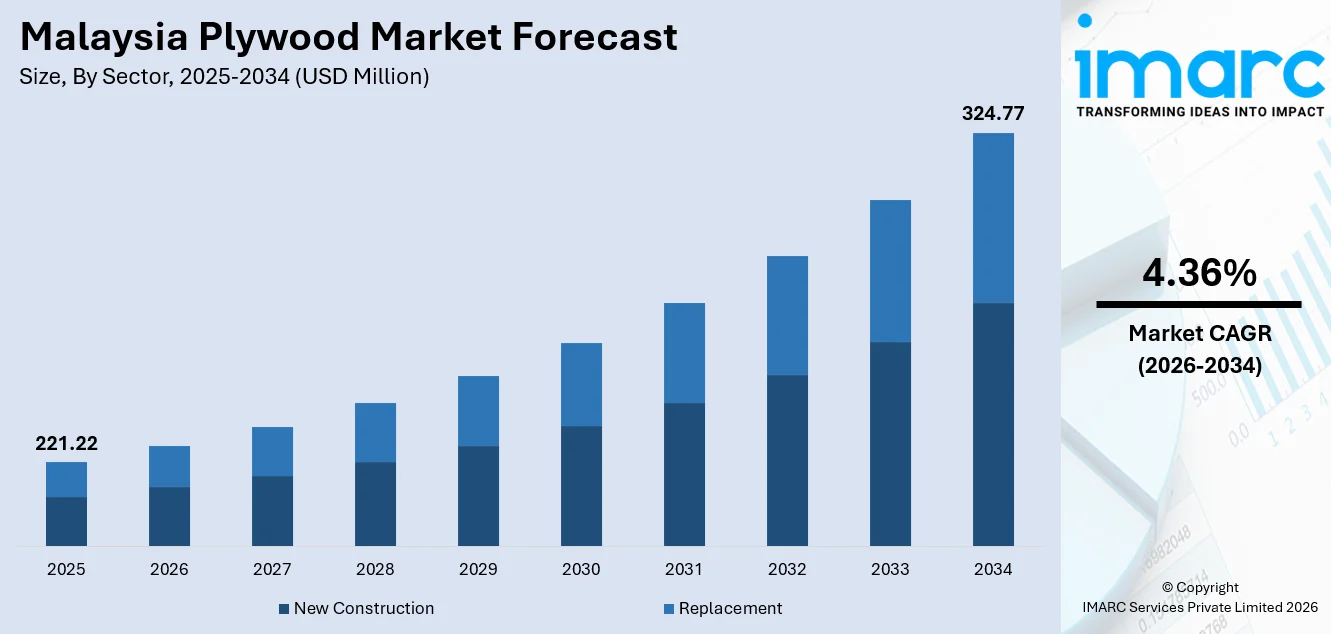
The Malaysia plywood market size was valued at USD 221.22 Million in 2025 and is projected to reach USD 324.77 Million by 2034, growing at a compound annual growth rate of 4.36% from 2026-2034.
The Malaysia plywood market is experiencing steady expansion, driven by the country’s thriving construction industry, rapid urbanization, and growing residential housing demand across key states. Increasing investments in infrastructure development, government-backed affordable housing programs, and the modernization of commercial buildings are fueling consumption. Additionally, the growing preferences for sustainable and certified timber products, advancements in plywood manufacturing technology, and Malaysia’s strategic position as a leading tropical hardwood plywood exporter are collectively strengthening the market share.
Key Takeaways and Insights:
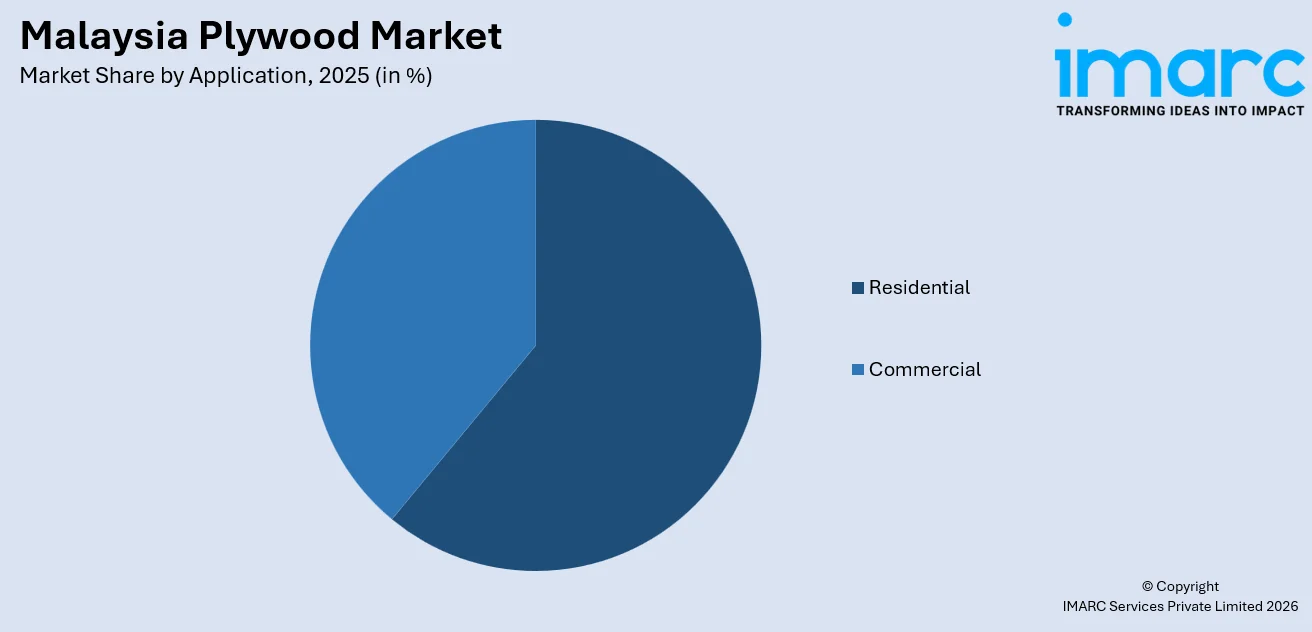
- By Application: Residential dominates the market with a share of 61% in 2025, owing to the sustained demand for affordable and mid-range housing driven by urbanization, government incentive schemes, and rising disposable incomes, fueling residential construction activity across Malaysia.
- By Sector: New construction leads the market with a share of 70% in 2025. This dominance is driven by large-scale infrastructure projects, expanding urban townships, and government-supported housing initiatives stimulating new building activity nationwide.
- By States: Selangor prevails the market with 32% share in 2025, driven by the concentration of economic activity, industrial infrastructure, proximity to Kuala Lumpur, and high residential and commercial construction demand across the Klang Valley corridor.
- Key Players: Key players drive the Malaysia plywood market by expanding production capacities, investing in sustainable forestry certifications, enhancing product quality through advanced manufacturing technologies, and strengthening export networks to maintain competitive positioning across domestic and international markets.
To get more information on this market Request Sample
The Malaysia plywood market is advancing, as the construction sector registers robust year-on-year growth, supported by government megaprojects, private-sector residential developments, and increasing commercial infrastructure investments. Malaysia’s strategic position as a major tropical hardwood plywood exporter, continues to reinforce domestic manufacturing capabilities and supply chain resilience. Sustainable forestry certifications under the Malaysian Timber Certification Scheme are enhancing market access and consumer confidence. The adoption of green building standards, including the Green Building Index, is creating additional demand for certified plywood in environmentally compliant construction projects. Rising residential construction starts, expanding urban townships in Selangor and Johor, and modernization of aging building stock are reinforcing plywood consumption across application segments. The Ministry of Agriculture and Commodities (KPK) aims for timber industry exports to hit RM28 Billion by 2030, providing strong institutional support for sustained market expansion.
Malaysia Plywood Market Trends:
Rising Adoption of Green Building Standards and Certified Wood Products
The growing emphasis on environmentally responsible construction practices is reshaping demand patterns in the Malaysia plywood market. Green building certification systems are gaining prominence, requiring the use of sustainably sourced and certified wood materials in qualifying projects. As a result, manufacturers are increasingly adopting responsible forestry practices, chain-of-custody certifications, and low-emission adhesives to meet compliance standards. This shift is encouraging higher-value plywood production and strengthening export competitiveness in environmentally conscious markets. Malaysia’s hardwood plywood shipments to the United States surged by 41% in 2024, reaching 91,392 cubic meters, reflecting strong export demand for premium-grade tropical plywood.
Integration of Modern Construction Methods Driving Plywood Demand
The adoption of industrialized building systems and modern construction methods across Malaysia is creating sustained demand for engineered wood products, including plywood. Housing starts climbed 32.5% to 28,344 units in the first quarter of 2025, generating consistent plywood consumption for formwork, structural sheathing, and interior finishing applications across the country. Prefabrication and modular construction techniques favor plywood due to its strength, dimensional stability, and ease of handling. Additionally, faster project timelines under these methods are increasing bulk procurement by contractors, supporting steady, large-volume demand.
Increasing Demand from Packaging and Industrial Applications
Plywood demand is benefiting from its growing use in industrial packaging, pallets, crates, and heavy-duty boxes. Expanding manufacturing and export activities require robust packaging solutions to protect machinery, electronics, and industrial goods during transportation. Plywood’s strength, reusability, and compliance with international packaging standards make it a preferred choice, supporting diversified and resilient demand growth in the market. Rising emphasis on sustainable and recyclable packaging materials is further enhancing plywood’s attractiveness compared to plastic and metal alternatives.
Market Outlook 2026-2034:
The Malaysia plywood market is well positioned for continued expansion throughout the forecast period, supported by strong construction sector momentum and favorable government policy frameworks. The market generated a revenue of USD 221.22 Million in 2025 and is projected to reach a revenue of USD 324.77 Million by 2034, growing at a compound annual growth rate of 4.36% from 2026-2034. Sustained public infrastructure investment is generating substantial demand for construction-grade plywood. The residential housing segment continues to benefit from government affordable housing initiatives and rising urbanization rates. Advancements in sustainable forestry practices, manufacturing technology upgrades, and expanding green building adoption are expected to further strengthen market fundamentals across both domestic consumption and international trade channels.
Malaysia Plywood Market Report Segmentation:
|
Segment Category |
Leading Segment |
Market Share |
|
Application |
Residential |
61% |
|
Sector |
New Construction |
70% |
|
States |
Selangor |
32% |
Application Insights:
Access the comprehensive market breakdown Request Sample
- Residential
- Commercial
Residential dominates with a market share of 61% of the total Malaysia plywood market in 2025.
The residential segment’s commanding position in the market reflects the sustained housing construction activity across Malaysia, driven by rapid urbanization, population growth, and government affordable housing programs. The urban population in Malaysia was recorded at 79.2% of the total population in 2024, according to the World Bank collection of development indicators. Plywood is extensively used in residential applications, including structural formwork, flooring substrates, wall paneling, cabinetry, and furniture manufacturing.
Consumer preferences for contemporary interior designs and affordable building materials that provide durability and aesthetic flexibility are also driving demand for residential real estate. Plywood-based modular kitchens, closets, and bespoke furniture are becoming more popular among homebuyers, because of their versatility in design and ease of installation. Additionally, as homeowners make investments in interior enhancements and space optimization, renovation and remodeling activity in existing urban housing stock is rising.
Sector Insights:
- New Construction
- Replacement
New construction leads with a share of 70% of the total Malaysia plywood market in 2025.
New construction’s dominance in the market is driven by Malaysia’s comprehensive infrastructure development agenda and expanding urban real estate activity. Major government projects, including transportation networks, flood defense systems, and social infrastructure, are generating substantial demand for plywood used in concrete formwork, temporary structures, and finishing applications. Budget 2025 allocated MYR 86 Billion to developmental projects, reinforcing the pipeline of new construction projects. The scale and continuity of these initiatives provide long-term demand visibility for plywood manufacturers and suppliers.
Private-sector new construction is equally robust, driven by high-rise residential and mixed-use developments concentrated in Greater Kuala Lumpur, Johor Bahru, and Penang. Construction-grade plywood products are high in demand in specialized industrial building applications due to the surge in data center construction and the establishment of facilities in Malaysia by multinational technology corporations. High-performance plywood with improved load-bearing and fire-resistant qualities is frequently needed for these applications.
States Insights:
- Selangor
- W.P. Kuala Lumpur
- Johor
- Sarawak
- Others
Selangor exhibits a clear dominance with a 32% share of the total Malaysia plywood market in 2025.
Selangor’s market leadership is underpinned by its position as the most economically active state in Malaysia, contributing the largest share of nationwide construction output. The Selangor state government has set a target to deliver 200,000 affordable homes by 2028, aiming for approximately 40,000 homes per year. The state benefits from its proximity to Kuala Lumpur, mature industrial infrastructure, and dense population concentration across the Klang Valley corridor.
The concentration of significant commercial, industrial, and logistics expansions in the state of Selangor further boosts the need for plywood. Plywood is consistently needed for formwork, interior fit-outs, and packaging applications in a large number of industrial parks, warehouses, and manufacturing facilities. Furthermore, the existence of significant ports, roads, and transportation hubs facilitates ongoing development and growth. Continued urban growth in satellite townships and significant private sector investment guarantee steady plywood demand and uphold Selangor's dominant position in the market.
Market Dynamics:
Growth Drivers:
Why is the Malaysia Plywood Market Growing?
Robust Real Estate Sector Expansion and Infrastructure Investment
Strong real sector growth and increasing infrastructure investments are fueling the expansion of the Malaysia plywood market. As per IMARC Group, the Malaysia real estate market size reached USD 22.15 Billion in 2024. Plywood is frequently used for formwork, flooring, interior design, and furniture in the ongoing residential and commercial development, which is driven by rapid urbanization, population increase, and rising housing demand. The need for construction-grade plywood is consistently increased by large-scale public infrastructure projects, such as social infrastructure, flood mitigation systems, and transportation networks. Concurrently, plywood consumption is growing in non-residential categories due to private sector investments in data centers, logistical facilities, industrial parks, and high-rise buildings. The adoption of industrialized building systems further supports demand, as plywood is favored for its strength, versatility, and ease of installation. Additionally, demand for replacements is maintained by continuous rehabilitation and refurbishing of existing buildings.
Growing International Demand and Strategic Export Positioning
Malaysia’s position as a leading global supplier of tropical hardwood plywood is playing a critical role in strengthening domestic manufacturing activity and overall market growth. Strong international demand for certified tropical plywood continues to support high capacity utilization across local mills and encourages ongoing investments in production efficiency. Export-oriented growth is reinforcing economies of scale, enabling manufacturers to upgrade technology, improve product quality, and comply with stringent sustainability and certification requirements. Key overseas markets in Asia-Pacific and North America remain important demand centers, providing stable outlets for Malaysian plywood products. This export momentum incentivizes industry players to expand manufacturing capabilities, diversify product offerings, and move towards higher-value plywood grades. Malaysia’s established reputation as a reliable plywood exporter enhances its global competitiveness and attracts long-term trade relationships.
Rising Adoption of Green Building Practices and Sustainable Materials
One of the main factors propelling the market's expansion is the growing focus on sustainability in Malaysia's manufacturing and building industries. Green building standards, which promote the use of verified and ethically sourced wood materials, are gradually being included in projects by developers and contractors. Because plywood is renewable, uses materials efficiently, and has a lower carbon footprint than steel or concrete, it fits in nicely with this framework. In order to comply with national and international environmental norms, manufacturers are responding by implementing low-emission adhesives, chain-of-custody certificates, and sustainable forestry methods. This transition is also helping to encourage the move towards higher-value plywood products, such as engineered and specialty panels used in interiors and modular construction. As sustainability increasingly influences procurement decisions, certified plywood is gaining stronger preference across both public and private sector projects.

Market Restraints:
What Challenges the Malaysia Plywood Market is Facing?
Declining Availability of Large-Diameter Peeler Logs
The progressive depletion of large-diameter tropical hardwood logs suitable for veneer peeling is constraining plywood production capacity in Malaysia. Stricter sustainable forest management regulations and harvesting quotas limit the availability of premium raw materials, particularly from Peninsular Malaysia and parts of Sarawak. This supply constraint is increasing production costs and compelling manufacturers to source alternative timber species or import raw materials, affecting profitability and competitive positioning.
Rising Production Costs and Energy Price Volatility
Plywood manufacturers in Malaysia face mounting cost pressures from rising energy prices, higher adhesive raw material costs, and increasing logistics expenses. Changes in the tax environment have added to the overall financial burden on producers, raising operating and compliance costs. In addition, volatility in global energy markets, driven by geopolitical uncertainties, is directly impacting the cost of drying, pressing, and transporting plywood products, leading to margin compression across the industry.
Intensifying Competition from Alternative Panel Products and Regional Producers
The Malaysia plywood market faces growing competition from substitute engineered wood products, such as oriented strand board, medium-density fiberboard, and laminated veneer lumber, which offer comparable performance at competitive prices. Additionally, regional producers in China, Vietnam, and Indonesia are expanding their manufacturing capacities and gaining market share through lower production costs and aggressive pricing strategies, putting pressure on Malaysian exporters.
Competitive Landscape:
The Malaysia plywood market features a moderately consolidated competitive landscape with established domestic manufacturers maintaining significant production capacities alongside smaller regional operators. Key industry participants are focusing on expanding product portfolios to include value-added plywood variants, such as phenolic film-faced panels, fire-resistant grades, and moisture-resistant products, for specialized construction applications. Companies are investing in sustainable forestry certifications to strengthen export competitiveness. Strategic investments in automated manufacturing equipment, biomass energy generation, and quality control systems are enhancing operational efficiency and product consistency. Manufacturers are also strengthening distribution networks and forging partnerships with construction companies and export agents to broaden market reach across domestic and international channels.
Malaysia Plywood Market Report Coverage:
| Report Features | Details |
|---|---|
| Base Year of the Analysis | 2025 |
| Historical Period | 2020-2025 |
| Forecast Period | 2026-2034 |
| Units | Million USD |
| Scope of the Report |
Exploration of Historical Trends and Market Outlook, Industry Catalysts and Challenges, Segment-Wise Historical and Future Market Assessment:
|
| Applications Covered | Residential, Commercial |
| Sectors Covered | New Construction, Replacement |
| States Covered | Selangor, W.P. Kuala Lumpur, Johor, Sarawak, Others |
| Customization Scope | 10% Free Customization |
| Post-Sale Analyst Support | 10-12 Weeks |
| Delivery Format | PDF and Excel through Email (We can also provide the editable version of the report in PPT/Word format on special request) |
Frequently Asked Questions About the Malaysia Plywood Market Report
The Malaysia plywood market size was valued at USD 221.22 Million in 2025.
The Malaysia plywood market is expected to grow at a compound annual growth rate of 4.36% from 2026-2034 to reach USD 324.77 Million by 2034.
Residential dominated the market with a share of 61%, driven by sustained housing demand from urbanization, government affordable housing programs, and rising disposable incomes across Malaysia. Plywood’s widespread use in interior fittings, flooring substrates, and furniture further reinforced the segment’s leadership.
Key factors driving the Malaysia plywood market include robust construction sector expansion, accelerating residential housing development, growing international export demand, sustainable forestry certifications, and government infrastructure investment programs.
Major challenges include declining availability of large-diameter peeler logs, rising production and energy costs, intensifying competition from alternative panel products, supply chain constraints, and pricing pressures from regional producers.
Need more help?
- Speak to our experienced analysts for insights on the current market scenarios.
- Include additional segments and countries to customize the report as per your requirement.
- Gain an unparalleled competitive advantage in your domain by understanding how to utilize the report and positively impacting your operations and revenue.
- For further assistance, please connect with our analysts.
 Request Customization
 Speak to an Analyst
 Request Brochure
 Inquire Before Buying
Benefits of Customization
- Personalize this research
- Triangulate with your data
- Get data as per your format and definition
- Gain a deeper dive into a specific application, geography, customer, or competitor
- Any level of personalization
Get in Touch With Us
UNITED STATES
Phone: +1-201-971-6302
INDIA
Phone: +91-120-433-0800
UNITED KINGDOM
Phone: +44-753-714-6104
Email: [email protected]
Client Testimonials




.webp)




.webp)













