
Malaysia Sportswear Market Size, Share, Trends and Forecast by Product, Distribution Channel, End User, and States, 2026-2034
Malaysia Sportswear Market Summary:
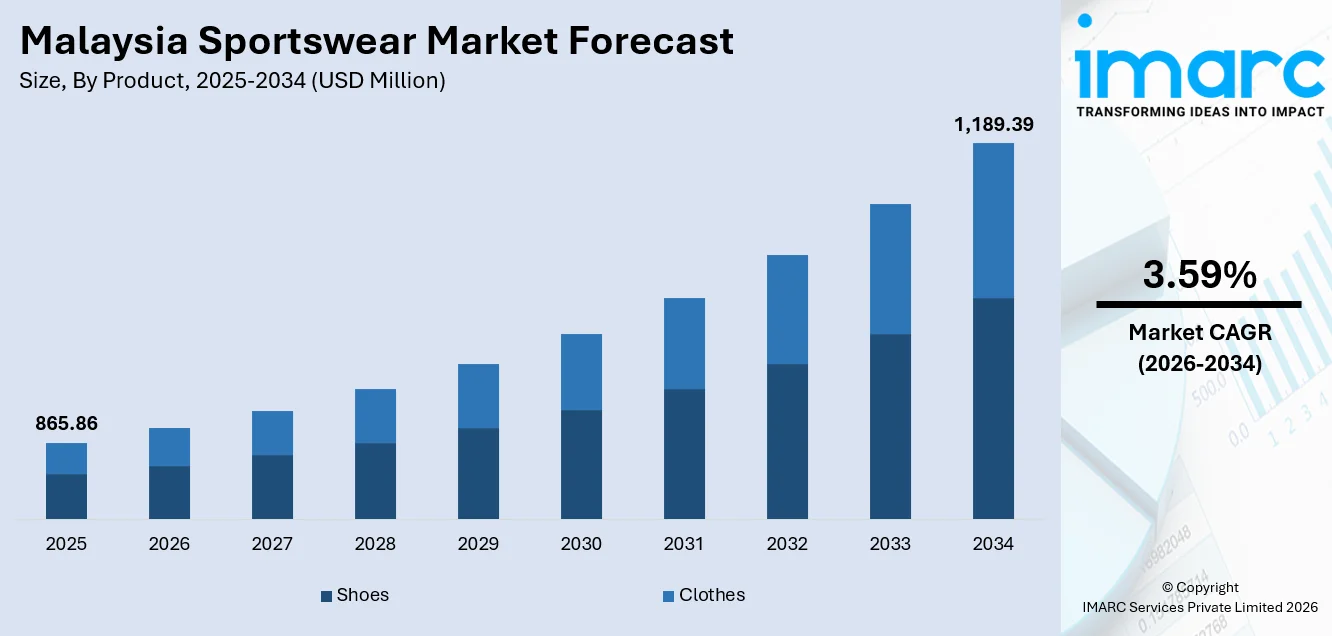
The Malaysia sportswear market size was valued at USD 865.86 Million in 2025 and is projected to reach USD 1,189.39 Million by 2034, growing at a compound annual growth rate of 3.59% from 2026-2034.
The Malaysia sportswear market is experiencing steady expansion fueled by rising health consciousness, growing fitness culture, and increasing preference for athleisure among urban consumers. Demand for performance-oriented footwear and apparel continues to strengthen as active lifestyles become mainstream. The expanding retail infrastructure, evolving fashion sensibilities, and shifting consumer preferences toward functional yet stylish sportswear are collectively propelling market momentum across the country.
Key Takeaways and Insights:
- By Product: Shoes dominates the market with a share of 59% in 2025, owing to the rising participation in running, gym workouts, and outdoor sports activities. Growing consumer preference for technologically advanced footwear featuring cushioning, breathability, and ergonomic designs is accelerating demand across demographics.
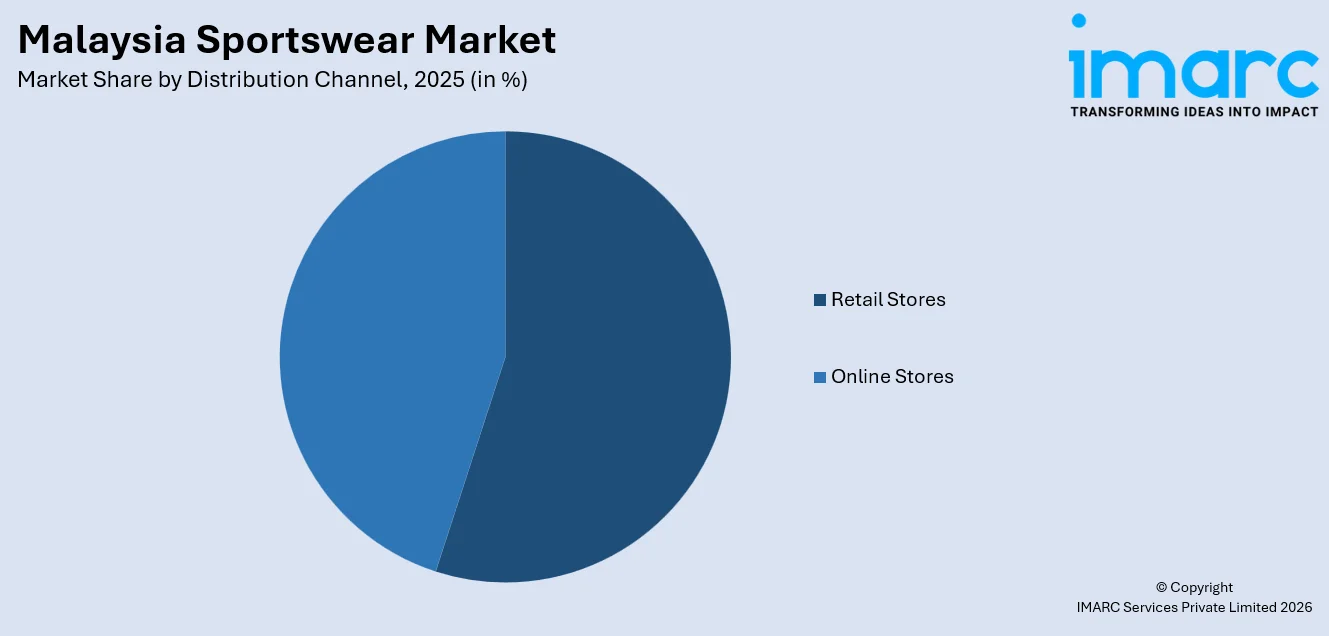
- By Distribution Channel: Retail stores lead the market with a share of 55% in 2025. This dominance is driven by consumer preference for in-store product trials, personalized shopping experiences, and the expansion of branded flagship outlets across major urban centers in Malaysia.
- By End User: Men exhibit a clear dominance in the market with 50% share in 2025, reflecting strong male participation in fitness activities, recreational sports, and the growing appeal of athleisure fashion among younger male consumers seeking performance and style.
- Key Players: Key players drive the Malaysia sportswear market by expanding retail footprints, investing in product innovation, and strengthening digital engagement. Their focus on performance-driven designs, sustainability initiatives, and strategic partnerships with fitness communities enhances brand visibility, accelerates adoption, and ensures consistent product availability across diverse consumer segments.
To get more information on this market Request Sample
The Malaysia sportswear market is witnessing sustained growth driven by the convergence of health consciousness, urbanization, and evolving consumer lifestyles. The increasing popularity of fitness activities such as running, badminton, gym workouts, and yoga has significantly elevated demand for high-performance sportswear across the country. Government-led initiatives promoting active lifestyles and sports participation continue to create a supportive ecosystem for market expansion. The athleisure trend, which blends athletic wear with everyday casual fashion, has further broadened the consumer base beyond traditional athletes to include fashion-conscious individuals seeking comfort and functionality. The national sports culture index has demonstrated consistent year-on-year improvement, indicating a positive shift toward greater sports engagement among the population. Additionally, the rapid expansion of organized retail, the proliferation of branded sportswear outlets in shopping malls, and the growing influence of social media and fitness influencers are collectively reinforcing consumer interest and driving consistent purchasing behavior across urban and semi-urban markets throughout Malaysia.
Malaysia Sportswear Market Trends:
Rising Athleisure Culture Reshaping Consumer Wardrobes
The blending of athletic apparel with everyday casual fashion is significantly transforming consumer purchasing patterns in Malaysia. Consumers increasingly seek versatile sportswear that transitions seamlessly from gym sessions to social settings, coffee outings, and work-from-home environments. This cultural shift toward comfort-oriented dressing has expanded the target demographic well beyond fitness enthusiasts to include office professionals and younger generations. Retailers are responding by curating collections that emphasize aesthetic appeal alongside functional performance, featuring breathable fabrics, modern silhouettes, and trendy colorways that appeal to style-conscious Malaysian consumers.
Growing Adoption of Performance-Enhancing Fabric Technologies
The integration of advanced textile innovations into sportswear is gaining considerable momentum in Malaysia. Consumers are gravitating toward products featuring moisture-wicking, anti-odor, compression, and ultraviolet-protection technologies that enhance athletic performance and everyday comfort. Brands are investing in research and development to introduce lightweight, breathable, and sustainable materials that cater to the tropical climate. The demand for technologically enhanced sportswear is being driven by educated fitness communities who prioritize functional benefits and long-term durability over conventional fashion considerations, resulting in a premium product segment that continues to gain traction.
Expansion of Fitness Communities and Running Culture
The proliferation of organized fitness communities, running clubs, and recreational sports groups is fostering deeper engagement with sportswear across Malaysia. Urban centers are witnessing a surge in participation across marathons, cycling events, and group training sessions that create consistent demand for specialized athletic apparel and footwear. Social media platforms are amplifying this trend by enabling fitness enthusiasts to share experiences, recommend products, and build communities around active lifestyles. The growing visibility of fitness-related content is encouraging broader societal acceptance of sportswear as essential daily wear, thereby sustaining long-term market expansion.
Market Outlook 2026-2034:
The Malaysia sportswear market outlook remains favorable, supported by rising disposable incomes, expanding urbanization, and increasing government investment in sports infrastructure and public wellness programs. The growing penetration of international brands and the steady rise of local sportswear manufacturers are intensifying competition while broadening product accessibility for consumers across all income segments. The market generated a revenue of USD 865.86 Million in 2025 and is projected to reach a revenue of USD 1,189.39 Million by 2034, growing at a compound annual growth rate of 3.59% from 2026-2034. The accelerating digital transformation in retail is further reinforcing market prospects as consumers increasingly embrace omnichannel purchasing experiences. Continued emphasis on sustainability, coupled with the expansion of e-commerce platforms offering sportswear collections with convenient delivery and flexible return policies, is expected to broaden the market reach and attract new consumer demographics throughout the forecast period.
Malaysia Sportswear Market Report Segmentation:
|
Segment Category |
Leading Segment |
Market Share |
|
Product |
Shoes |
59% |
|
Distribution Channel |
Retail Stores |
55% |
|
End User |
Men |
50% |
Product Insights:
- Shoes
- Clothes
Shoes dominates with a market share of 59% of the total Malaysia sportswear market in 2025.
The dominance of shoes in the Malaysia sportswear market reflects the growing consumer focus on footwear that combines athletic performance with lifestyle versatility. Running shoes, training sneakers, and sport-specific footwear account for the bulk of demand as Malaysians increasingly participate in fitness activities and outdoor recreation. The tropical climate necessitates lightweight, breathable, and moisture-managing shoe designs that provide comfort during extended physical exertion. The expanding running culture across urban centers, supported by growing marathon participation and community jogging groups, is sustaining strong footwear demand among health-conscious consumers seeking reliable and stylish athletic shoes.
The premiumization trend within the footwear segment is further strengthening market dynamics as consumers increasingly gravitate toward technologically advanced shoes featuring cushioning systems, arch support, and responsive sole units. The integration of sustainability into footwear manufacturing, including the use of recycled materials and eco-friendly production processes, is attracting environmentally conscious buyers. The entry of new international sportswear brands establishing dedicated retail presences in Malaysia signals robust investment confidence in the sports footwear category, while domestic retailers continue expanding their athletic shoe assortments to meet evolving consumer expectations.
Distribution Channel Insights:
Access the comprehensive market breakdown Request Sample
- Online Stores
- Retail Stores
Retail stores lead with a share of 55% of the total Malaysia sportswear market in 2025.
Retail stores maintain their leading position in the Malaysia sportswear market owing to the strong consumer preference for tactile product evaluation, sizing trials, and immediate purchase gratification. Physical retail environments offer immersive brand experiences through interactive displays, personalized service, and exclusive in-store events that build customer loyalty and engagement. Major shopping complexes across Kuala Lumpur, Selangor, and Johor serve as critical sportswear retail hubs, hosting multiple international and domestic brand outlets. In September 2024, PUMA launched its largest flagship store in Southeast Asia at Sunway Pyramid, spanning 12,000 square feet with interactive features including an AI Feet Scanner, reflecting the strong brick-and-mortar investment.
The continued expansion of branded concept stores and multi-brand sports retailers across urban and suburban Malaysia underscores the enduring significance of physical retail in sportswear distribution. Retail outlets provide consumers with the opportunity to experience the latest product innovations firsthand, compare across brands, and benefit from personalized fitting assistance. The integration of digital technologies within physical stores, including virtual try-on tools and digital payment solutions, is enhancing the in-store shopping experience. Despite the steady rise of online shopping channels, the tactile nature of sportswear purchasing continues to sustain strong foot traffic in retail environments across the country, reinforcing the relevance of brick-and-mortar outlets in driving consumer engagement and brand loyalty.
End User Insights:
- Men
- Women
- Kids
Men exhibit a clear dominance with a 50% share of the total Malaysia sportswear market in 2025.
Due to strong male participation in both competitive and recreational sports, such as football, badminton, running, and gym-based fitness activities, the men's segment continues to dominate the Malaysian sportswear industry. Strong brand awareness and a readiness to spend money on high-end performance equipment that improves athletic ability and personal style are characteristics of Malaysian males. The convergence of men's fashion and athleisure trends has broadened the scope of shopping occasions beyond sports contexts to encompass informal social settings and professional settings. Performance-oriented sportswear products continue to be in high demand due to the broad appeal of team sports and individual fitness activities among younger male populations.
The growth of men's sportswear purchasing patterns is indicative of a larger cultural trend among Malaysian men toward personal grooming and health-conscious lives. The availability of men's product lines and more exposure to global fitness trends via social media platforms are driving up average transaction spending and frequency of purchases. In response, brands are releasing collections with performance fabrics, modern fits, and adaptable designs to meet the varied lifestyle needs of contemporary Malaysian men. Male consumers are also being encouraged to purchase high-quality sportswear by government programs that encourage sports participation through tax breaks for fitness-related expenses.
States Insights:
- Selangor
- W.P. Kuala Lumpur
- Johor
- Sarawak
- Others
Because of its huge population, rapid rate of urbanization, and concentration of contemporary retail infrastructure, Selangor contributes significantly to the Malaysian sportswear market. The state is home to a large number of retail centers and branded sports stores that serve health-conscious customers who work out. Its closeness to Kuala Lumpur improves its business connectivity, and the demand for sportswear across a range of product categories is steadily increasing due to a growing middle class and rising disposable incomes.
With flagship locations for well-known international brands and upscale multi-brand sports merchants, W.P. Kuala Lumpur acts as the commercial hub of the Malaysian sportswear industry. Performance apparel is in high demand due to the capital city's thriving fitness culture, which is bolstered by vast gym networks, running competitions, and organized sports clubs. The multicultural customer base exposed to international fashion trends and the high foot traffic in famous retail districts support Kuala Lumpur's crucial role in boosting sales of sportswear.
Johor's closeness to Singapore, developing metropolitan areas, and expanding retail development all contribute significantly to the Malaysian sportswear market. Favorable market conditions are produced by the state's youthful demographic composition and rising levels of engagement in both recreational and competitive sports. Cross-border shopping dynamics further boost regional purchasing activity, and Johor Bahru's rise as a retail destination with branded outlets and contemporary shopping facilities draws customers looking for high-quality sportswear.
Due to its population's increasing awareness of fitness and active lifestyles, expanding retail infrastructure, and slow urbanization, Sarawak offers a new opportunity in the Malaysian sportswear market. Even while the market is still smaller than in the states of Peninsular Malaysia, rising government spending on sports facilities, growing e-commerce penetration, and rising disposable incomes in Sarawak's cities are all helping to fuel the need for sportswear.
Market Dynamics:
Growth Drivers:
Why is the Malaysia Sportswear Market Growing?
Escalating Health Consciousness and Fitness Participation
Growing health consciousness among Malaysians of all ages and demographics is the primary factor behind the country's sportswear market expansion. A growing number of Malaysians are adopting regular exercise regimens that include running, gym training, swimming, cycling, and traditional sports like football and badminton as a result of the cultural change toward proactive wellness management. Public perceptions of exercise and active recreation have been greatly impacted by government health campaigns and awareness initiatives emphasizing the advantages of physical activity in reducing non-communicable diseases. Sportswear is becoming a need rather than a luxury purchase as a result of the widespread availability of fitness centers, community sports facilities, and public parks with workout stations in both urban and suburban locations. By including more structured physical education programs, educational institutions are fostering fitness habits in younger generations, which will contribute to a continuous need for sportswear as they grow into adults. As people look for new and specialized gear to support their changing athletic endeavors, the increasing popularity of fitness as a social activity, facilitated by organized running clubs, corporate wellness initiatives, and community sports leagues, creates recurrent purchasing cycles.
Rapid Urbanization and Evolving Consumer Lifestyles
Malaysia's fast urbanization is radically changing consumer behavior and propelling the growth of the sportswear industry. People who migrate to metropolitan areas are exposed to a variety of recreational options, branded retail spaces, and global fashion influences, all of which increase demand for sportswear. Large retail ecosystems can be found in metropolitan regions, including department shops, multi-brand merchants, and sportswear-specific outlets that offer easy access to a variety of goods. The attraction of athleisure as appropriate daily apparel has increased due to the confluence of work-from-home trends, flexible dress standards, and casual office cultures. This has greatly expanded the occasions for sportswear consumption outside traditional exercise contexts. Urban customers are more receptive to marketing campaigns from local and foreign athletic businesses, have greater brand recognition, and are more likely to try new items. Urban markets are now the main growth engines for the sportswear sector thanks to the proliferation of shopping mall developments, lifestyle centers, and mixed-use urban projects, which add more retail touchpoints and improve product visibility and customer engagement across the sportswear category.
Strategic Brand Expansion and Retail Innovation
The market is growing significantly as a result of the strategic entry of both local and foreign athletic companies into Malaysia. Well-known international brands keep making investments in concept stores, flagship stores, and immersive retail spaces that increase customer interaction and fortify brand loyalty. These expenditures demonstrate faith in the future of the Malaysian consumer market and the readiness of Malaysian consumers to shell out more for high-end sportswear. With manufacturers launching cutting-edge fabric technologies, customisable options, and limited-edition collections that thrill customers and make them want to buy, the competitive landscape promotes ongoing product innovation. By providing competitive pricing, culturally relevant designs, and focused marketing that appeals to domestic consumer preferences, local athletic businesses are also becoming more popular. By integrating physical stores and e-commerce platforms, omnichannel retail strategies guarantee broad market coverage, reaching customers across demographic and geographic borders and offering seamless shopping experiences that maintain long-term market growth and strengthen brand affinity.
Market Restraints:
What Challenges the Malaysia Sportswear Market is Facing?
Intense Competition from Counterfeit and Unbranded Products
In Malaysia, the widespread availability of unbranded and fake sportswear presents a serious obstacle to both brand integrity and market expansion. Consumer trust in product quality and performance promises is undermined by the availability of inexpensive copycat goods through unofficial channels and uncontrolled internet platforms. The overall value perception of genuine sportswear in price-sensitive consumer sectors is undermined by this rivalry, which reduces margins for respectable producers and retailers that make large investments in R&D and quality control.
Price Sensitivity Among Middle-Income Consumers
The adoption of high-end sporting products is hampered by Malaysia's middle-class consumers' strong price sensitivity. Increasing living expenses, inflationary pressures on necessary household expenses, and shifting economic conditions force many consumers to place a higher value on affordability than on high-end product features and brand reputation. High-end sportswear companies' penetration is restricted by this cost-conscious behavior, which also lowers average transaction values, especially in semi-urban and rural sectors where disposable incomes are still lower than in large cities.
Seasonal Demand Fluctuations and Inventory Management Challenges
Seasonal advertising cycles, holiday seasons, and fluctuating levels of fitness involvement throughout the year all have an impact on the Malaysian sportswear market's demand. For manufacturers and retailers, who have to balance stock levels against erratic consumption patterns, these swings complicate inventory management. While stockouts during peak times result in missed sales opportunities and decreased customer satisfaction across distribution channels, excess inventory brought on by demand misalignment causes markdown pressures and decreased profitability.
Competitive Landscape:
There are well-known international brands as well as up-and-coming regional and local competitors in the fiercely competitive Malaysian sportswear sector. In order to attract and retain customers, market players compete on the basis of product innovation, brand positioning, retail network expansion, and digital engagement. As companies make investments in technology-enabled shopping experiences, sustainability-driven product lines, and experiential retail formats, the competitive landscape is becoming more intense. Brands can establish genuine connections with their target audiences through strategic partnerships with athletes, fitness influencers, and sports organizations. For ensuring wide market coverage and varied consumer engagement, the market structure reflects a mix of premium, mid-range, and value segments, each of which is served by unique competitive strategies ranging from mass-market accessibility through multi-brand outlets and e-commerce platforms to flagship retail exclusivity.
Malaysia Sportswear Market Report Coverage:
| Report Features | Details |
|---|---|
| Base Year of the Analysis | 2025 |
| Historical Period | 2020-2025 |
| Forecast Period | 2026-2034 |
| Units | Million USD |
| Scope of the Report |
Exploration of Historical Trends and Market Outlook, Industry Catalysts and Challenges, Segment-Wise Historical and Future Market Assessment:
|
| Products Covered | Shoes, Clothes |
| Distribution Channels Covered | Online Stores, Retail Stores |
| End Users Covered | Men, Women, Kids |
| States Covered | Selangor, W.P. Kuala Lumpur, Johor, Sarawak, Others |
| Customization Scope | 10% Free Customization |
| Post-Sale Analyst Support | 10-12 Weeks |
| Delivery Format | PDF and Excel through Email (We can also provide the editable version of the report in PPT/Word format on special request) |
Key Questions Answered in This Report
The Malaysia sportswear market size was valued at USD 865.86 Million in 2025.
The Malaysia sportswear market is expected to grow at a compound annual growth rate of 3.59% from 2026-2034 to reach USD 1,189.39 Million by 2034.
Shoes dominated the market with a share of 59%, driven by rising fitness participation, growing running culture, and increasing consumer preference for technologically advanced athletic footwear across Malaysia.
Key factors driving the Malaysia sportswear market include rising health consciousness, expanding fitness culture, growing athleisure adoption, strategic brand expansion, government sports promotion initiatives, and increasing urbanization.
Major challenges include intense competition from counterfeit products, price sensitivity among middle-income consumers, seasonal demand fluctuations, rising raw material costs, and inventory management complexities across retail channels.
Need more help?
- Speak to our experienced analysts for insights on the current market scenarios.
- Include additional segments and countries to customize the report as per your requirement.
- Gain an unparalleled competitive advantage in your domain by understanding how to utilize the report and positively impacting your operations and revenue.
- For further assistance, please connect with our analysts.
 Request Customization
 Speak to an Analyst
 Request Brochure
 Inquire Before Buying
Benefits of Customization
- Personalize this research
- Triangulate with your data
- Get data as per your format and definition
- Gain a deeper dive into a specific application, geography, customer, or competitor
- Any level of personalization
Get in Touch With Us
UNITED STATES
Phone: +1-201-971-6302
INDIA
Phone: +91-120-433-0800
UNITED KINGDOM
Phone: +44-753-714-6104
Email: sales@imarcgroup.com
Client Testimonials




.webp)




.webp)












