
Medical Device Cleaning Market Size, Share, Trends and Forecast by Device, EPA Classification, Technique, End User, and Region, 2026-2034
Medical Device Cleaning Market Size and Share:
The global medical device cleaning market size was valued at USD 2.05 Billion in 2025. Looking forward, IMARC Group estimates the market to reach USD 3.62 Billion by 2034, exhibiting a CAGR of 6.48% from 2026-2034. North America currently dominates the market, holding a market share of 30% in 2025. The region benefits from advanced healthcare infrastructure, stringent regulatory requirements for infection control, and widespread adoption of automated cleaning and sterilization technologies across hospitals and clinics, all contributing to the medical device cleaning market share.
The rising prevalence of hospital-acquired infections across healthcare facilities is a major factor propelling the demand for medical device cleaning solutions worldwide. Increasing surgical volumes and the growing utilization of reusable medical instruments necessitate rigorous cleaning and disinfection protocols to ensure patient safety. Additionally, the expanding geriatric population, which requires frequent medical interventions and device usage, is augmenting the need for effective cleaning solutions. Heightened regulatory emphasis on sterilization standards by organizations such as the food and drug administration (FDA) and world health organization (WHO) further supports the medical device cleaning market growth. Furthermore, the ongoing shift toward minimally invasive surgical procedures, which involve complex and delicate instruments requiring specialized cleaning processes, is creating sustained demand.
The United States has emerged as a major region in the medical device cleaning market owing to many factors. The country's well-established healthcare system, characterized by a vast network of hospitals, ambulatory surgery centers, and diagnostic laboratories, generates substantial demand for medical device cleaning products and services. Stringent infection prevention guidelines enforced by regulatory bodies such as the centers for disease control and prevention and the joint commission are compelling healthcare providers to invest in advanced cleaning and disinfection technologies. As per sources, CDC surveillance data showed that on any given day, about one in 31 hospital patients in the U.S. has at least one healthcare‑associated infection, underscoring ongoing infection control challenges that drive adoption of rigorous cleaning protocols. Additionally, the rising adoption of automated washer-disinfectors and ultrasonic cleaning systems in sterile processing departments across United States healthcare facilities is supporting the medical device cleaning market outlook.
To get more information on this market Request Sample
Medical Device Cleaning Market Trends:
Growing Adoption of Automated Cleaning Systems
The healthcare industry is witnessing a significant transition from manual to automated cleaning systems for medical devices. Automated washer-disinfectors, ultrasonic cleaners, and robotic instrument reprocessing systems are gaining widespread acceptance across hospitals and surgical centers owing to their ability to deliver consistent and reproducible cleaning results. In March 2025, the U.S. FDA cleared the first-ever automated endoscope cleaning system by Nanosonics, designed to thoroughly decontaminate complex internal channels of flexible endoscopes, addressing a key source of infection risk that manual methods often miss. These systems minimize the risk of human error during the decontamination process and ensure thorough removal of biological contaminants, including blood, tissue, and biofilms, from complex surgical instruments. Moreover, the development of compact and energy-efficient automated cleaning units is enabling smaller clinics and ambulatory surgery centers to adopt advanced cleaning technologies, thereby broadening the market reach and accelerating adoption rates across diverse healthcare settings globally.
Rising Emphasis on Infection Prevention Protocols
Healthcare organizations worldwide are intensifying their focus on infection prevention and control measures, which is bolstering the demand for advanced medical device cleaning solutions. The increasing incidence of antimicrobial-resistant pathogens, including methicillin-resistant Staphylococcus aureus and carbapenem-resistant Enterobacteriaceae, has underscored the importance of effective instrument reprocessing and environmental decontamination. In May 2026, WHO reported that 150 countries participated in a global survey assessing adherence to minimum infection prevention and control requirements and healthcare‑associated infection measures, highlighting worldwide efforts to strengthen IPC programs. Regulatory bodies and accreditation agencies are mandating comprehensive infection control programs that emphasize proper cleaning, disinfection, and sterilization of reusable medical devices as foundational elements. Additionally, the growing recognition that inadequate device cleaning can lead to patient harm, prolonged hospital stays, and increased healthcare costs is motivating facility administrators to allocate greater resources toward medical device cleaning market forecast and infection control infrastructure improvement initiatives.
Advancements in Eco-Friendly Cleaning Solutions
The medical device cleaning industry is experiencing a notable shift toward environmentally sustainable cleaning agents and processes. Enzymatic detergents, biodegradable disinfectants, and low-temperature sterilization methods are gaining prominence as healthcare facilities seek to reduce their environmental footprint without compromising on cleaning efficacy. These eco-friendly cleaning solutions effectively break down organic residues such as proteins, lipids, and carbohydrates on surgical instruments while maintaining compatibility with sensitive device materials. The development of concentrated cleaning formulations that require lower water and energy consumption is further aligning with global sustainability goals. Healthcare providers are also adopting closed-loop water recycling systems within their cleaning infrastructure to minimize waste generation. This growing commitment to sustainable practices, coupled with favorable medical device cleaning market trends, is driving innovation among manufacturers, who are investing in research and development to introduce greener product formulations that meet stringent performance and regulatory standards.
Medical Device Cleaning Industry Segmentation:
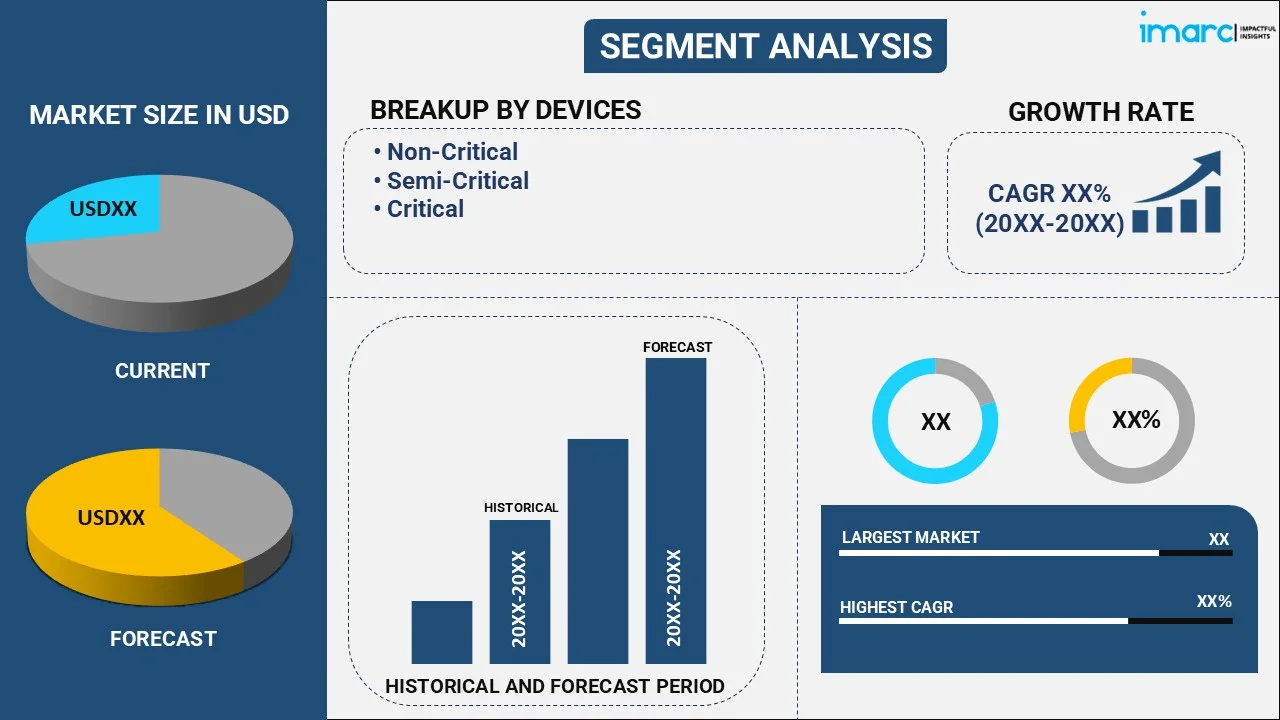
IMARC Group provides an analysis of the key trends in each segment of the global medical device cleaning market, along with forecast at the global, regional, and country levels from 2026-2034. The market has been categorized based on device, EPA classification, technique, and end user.
Analysis by Device:
To get detailed segment analysis of this market Request Sample
- Non-Critical
- Semi-Critical
- Critical
Semi-critical holds 40% of the market share, these devices are those that encounter mucous membranes or non-intact skin during clinical procedures. These devices, which include respiratory therapy equipment, endoscopes, laryngoscope blades, and anesthesia breathing circuits, require high-level disinfection or sterilization between patient uses to prevent cross-contamination. The increasing volume of endoscopic procedures and minimally invasive surgeries worldwide is driving substantial demand for effective cleaning and reprocessing of semi-critical devices. Healthcare facilities are investing in specialized cleaning protocols and automated reprocessing systems to handle the complex geometries and delicate materials of these instruments. The stringent regulatory guidelines governing the disinfection of semi-critical devices, along with heightened awareness of infection risks associated with improperly reprocessed equipment, are reinforcing the dominance of this segment in the overall market.

Analysis by EPA Classification:
- High Level
- Intermediate Level
- Low Level
Intermediate level is the market leader with a share of 45%, which includes the removal of mycobacteria, most viruses, vegetative bacteria, and most fungi from the surface of medical devices, without necessarily eliminating bacterial spores. This classification has a strong application in processing semi-critical medical devices and non-critical instruments that may have been contaminated with blood or body fluids. An increasing number of healthcare facilities are using intermediary level disinfectants as routine instrumentation reprocessing devices because they offer an inexpensive, effective, and wide variety of material compatibility. Intermediate level disinfectants, such as alcohol-based solutions and phenolic compounds, are in demand because of their broad-spectrum antimicrobial effectiveness with relatively shorter contact times than high-level disinfectants. There is also a growing demand for intermediate level disinfectants as outpatient and ambulatory surgery center settings, primarily using semi-critical devices which is expanding in number.
Analysis by Technique:
- Cleaning
- Disinfection
- Sterilization
Disinfection dominates the market, with a share of 42%, encompassing the use of chemical agents and physical methods to eliminate pathogenic microorganisms from medical device surfaces, representing a critical step in the instrument reprocessing workflow. The widespread adoption of disinfection protocols across hospitals, clinics, and diagnostic centers is driven by the fundamental requirement to prevent healthcare-associated infections and ensure patient safety. Various disinfection methods, including chemical immersion, ultraviolet germicidal irradiation, and automated washer-disinfector systems, are utilized depending on the device classification and intended use. The increasing complexity of reusable medical devices, particularly endoscopes and respiratory equipment, demands thorough disinfection procedures that effectively address biofilm formation and microbial contamination. The rising regulatory emphasis on validated disinfection processes and the growing availability of rapid-acting, broad-spectrum disinfectants are key factors sustaining the leading position of this segment.
Analysis by End User:
- Hospitals and Clinics
- Diagnostic Centers
- Others
Hospitals and clinics represent the leading segment, with a market share of 54%, owing to the high volume of surgical procedures, diagnostic examinations, and therapeutic interventions performed daily. These healthcare facilities manage extensive inventories of reusable medical devices, including surgical instruments, endoscopes, and respiratory equipment, which require systematic cleaning, disinfection, and sterilization after each use. The presence of dedicated sterile processing departments within hospitals enables centralized and standardized device reprocessing, ensuring compliance with infection control guidelines. Additionally, the increasing investment in modern healthcare infrastructure, the rising number of inpatient admissions, and the growing emphasis on quality accreditation standards are driving hospitals and clinics to adopt advanced cleaning technologies. The expanding scope of outpatient surgical services within hospital settings is further contributing to the sustained demand for efficient medical device cleaning solutions.
Regional Analysis:
To get more information on the regional analysis of this market Request Sample
- North America
- United States
- Canada
- Asia-Pacific
- China
- Japan
- India
- South Korea
- Australia
- Indonesia
- Others
- Europe
- Germany
- France
- United Kingdom
- Italy
- Spain
- Russia
- Others
- Latin America
- Brazil
- Mexico
- Others
- Middle East and Africa
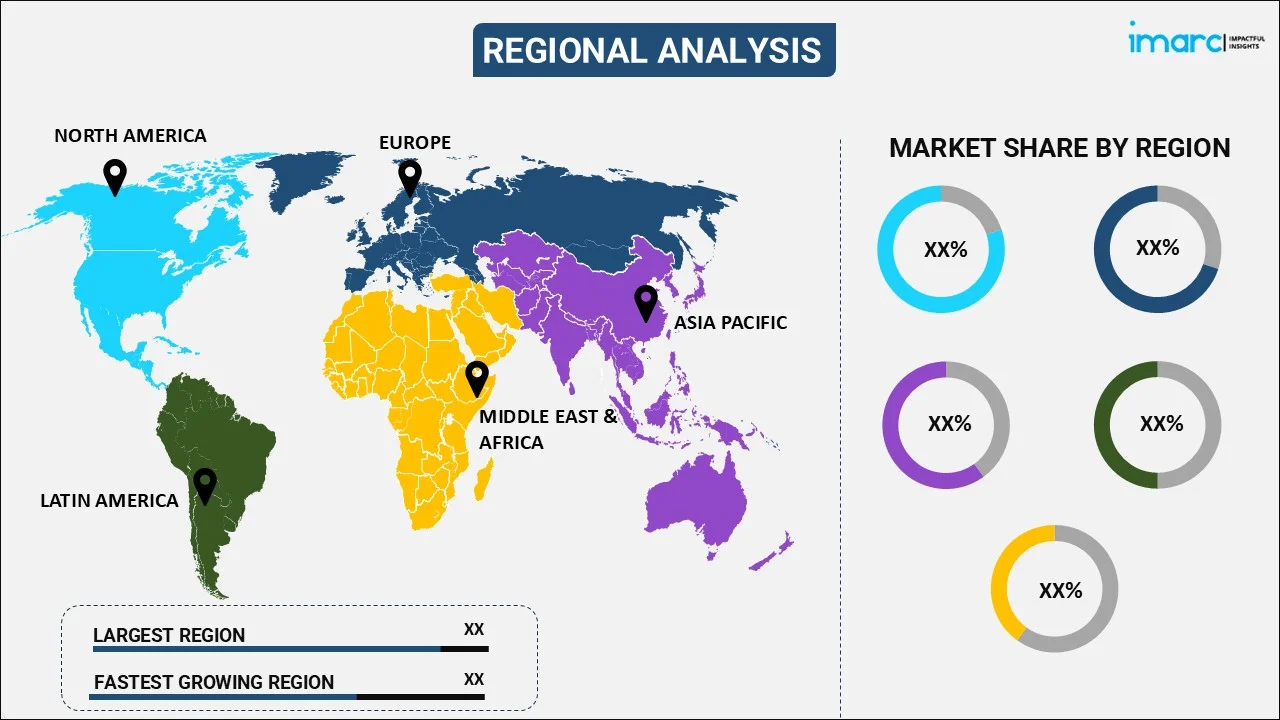
North America, accounting for 30% of the share, maintaining the leading position in the market. The region's dominance is attributed to its highly developed healthcare infrastructure, stringent regulatory framework governing medical device reprocessing, and the widespread presence of major industry participants. Healthcare facilities across North America maintain robust sterile processing departments equipped with advanced automated cleaning and disinfection systems. The strong emphasis on infection prevention by regulatory bodies such as the FDA and the CDC ensures consistent demand for high-quality cleaning products and services. Furthermore, the increasing volume of surgical procedures, the growing adoption of reusable medical instruments, and the rising investment in healthcare facility modernization projects continue to support the region's leading market position, as hospitals and clinics prioritize advanced cleaning technologies to enhance patient safety and operational efficiency.
Key Regional Takeaways:
United States Medical Device Cleaning Market Analysis
The United States holds significant share in the medical device cleaning market. The country represents the single largest national market for medical device cleaning solutions, driven by its extensive hospital network, high surgical volumes, and rigorous infection control standards. The centers for disease control and prevention, the food and drug administration, and the joint commission collectively enforce comprehensive guidelines for the cleaning, disinfection, and sterilization of reusable medical devices, compelling healthcare providers to maintain best-in-class reprocessing capabilities. The growing prevalence of healthcare-associated infections, including surgical site infections and catheter-related bloodstream infections, is intensifying the demand for effective cleaning technologies. Additionally, the increasing adoption of minimally invasive surgical procedures, which utilize complex and delicate instruments, requires specialized cleaning protocols and advanced reprocessing equipment. The expansion of ambulatory surgery centers across the country is creating new demand channels for compact and efficient cleaning systems that meet regulatory compliance requirements while supporting high throughput and ensuring optimal patient safety outcomes.
Europe Medical Device Cleaning Market Analysis
Europe represents a significant market for medical device cleaning solutions, supported by the region's well-established healthcare systems and stringent regulatory environment governing instrument reprocessing. The European union medical device regulation imposes comprehensive requirements for the safe handling, cleaning, and sterilization of reusable medical devices across member states. As per sources, the European Commission implemented new harmonised standards for sterilization and processing of healthcare products, reinforcing safety and compliance requirements for medical devices used in clinical settings across the EU. Countries such as Germany, France, and the United Kingdom maintain advanced sterile processing infrastructure within their hospital networks, driving consistent demand for automated cleaning equipment and validated chemical agents. The rising awareness of antimicrobial resistance and healthcare-associated infections is prompting European healthcare facilities to upgrade their decontamination protocols and invest in modern reprocessing technologies. Additionally, the growing emphasis on sustainability within European healthcare systems is encouraging the adoption of eco-friendly enzymatic detergents and energy-efficient cleaning equipment, supporting continued market development across the region.
Asia-Pacific Medical Device Cleaning Market Analysis
The Asia-Pacific region is experiencing rapid growth in the medical device cleaning market, driven by increasing healthcare expenditure, expanding hospital infrastructure, and rising awareness of infection control practices. Countries such as China, Japan, India, and South Korea are witnessing substantial investments in healthcare modernization, which includes the establishment of advanced sterile processing capabilities within hospitals. The growing burden of infectious diseases and the increasing volume of surgical procedures across the region are creating significant demand for effective cleaning and disinfection solutions. Government initiatives promoting strict hygiene standards and the expanding medical tourism sector are contributing to the market's strong development trajectory, positioning Asia-Pacific as a key growth region.
Latin America Medical Device Cleaning Market Analysis
The Latin American medical device cleaning market is expanding steadily, supported by improving healthcare infrastructure and growing awareness of infection prevention across the region. Brazil and Mexico represent the largest markets, driven by increasing hospital construction, rising surgical volumes, and the adoption of international infection control standards. Government health agencies are implementing programs to reduce healthcare-associated infections, which is encouraging healthcare providers to invest in modern cleaning and disinfection technologies for reusable medical instruments.
Middle East and Africa Medical Device Cleaning Market Analysis
The Middle East and Africa region is witnessing gradual growth in the medical device cleaning market, driven by ongoing healthcare infrastructure development and increasing regulatory attention to infection control. The Gulf Cooperation Council countries, in particular, are investing substantially in modern hospital facilities equipped with advanced sterile processing departments. The rising prevalence of infectious diseases, coupled with the expanding healthcare services sector and growing medical tourism, is creating sustained demand for effective medical device cleaning solutions.
Competitive Landscape:
The global medical device cleaning market is characterized by the presence of several established players and emerging companies that are actively pursuing strategic initiatives to strengthen their competitive positions. Key industry participants are focusing on product innovation, including the development of advanced enzymatic detergents, automated washer-disinfector systems, and low-temperature sterilization technologies, to address the evolving needs of healthcare facilities. Strategic collaborations between cleaning solution manufacturers and medical device companies are facilitating the development of device-specific cleaning protocols and validated reprocessing solutions. Additionally, market players are expanding their geographic footprint through distribution partnerships and acquisitions, particularly in high-growth regions such as Asia-Pacific and Latin America.
The report provides a comprehensive analysis of the competitive landscape in the medical device cleaning market with detailed profiles of all major companies, including:
- 3M Company
- Advanced Sterilization Products Inc.
- Biotrol
- Case Medical
- Certol International LLC
- Getinge AB
- Metrex Research LLC
- Oro Clean Chemie AG
- Ruhof Corporation
- Sklar Surgical Instruments
- Steris
- Stryker Corporation
Latest News and Developments:
- In July 2025, MicroCare Medical launched Spec Clean™ Enzyme Tabs, a three-in-one biodegradable cleaning solution for medical, dental, and veterinary instruments. Designed for ultrasonic cleaning, pre-soak, and evacuation system flushing, the enzyme-powered tablets simplify reprocessing, save space, reduce waste, and enhance hygiene in clinical environments.
Medical Device Cleaning Market Report Scope:
| Report Features | Details |
|---|---|
| Base Year of the Analysis | 2025 |
| Historical Period | 2020-2025 |
| Forecast Period | 2026-2034 |
| Units | Billion USD |
| Scope of the Report |
Exploration of Historical Trends and Market Outlook, Industry Catalysts and Challenges, Segment-Wise Historical and Future Market Assessment:
|
| Devices Covered | Non-Critical, Semi-Critical, Critical |
| EPA Classifications Covered | High Level, Intermediate Level, Low Level |
| Techniques Covered | Cleaning, Disinfection, Sterilization |
| End Users Covered | Hospitals and Clinics, Diagnostic Centers, Others |
| Region Covered | North America, Asia-Pacific, Europe, Latin America, Middle East and Africa |
| Countries Covered | United States, Canada, China, Japan, India, South Korea, Australia, Indonesia, Germany, France, United Kingdom, Italy, Spain, Russia, Brazil, Mexico |
| Companies Covered | 3M Company, Advanced Sterilization Products Inc., Biotrol, Case Medical, Certol International LLC, Getinge AB, Metrex Research LLC, Oro Clean Chemie AG, Ruhof Corporation, Sklar Surgical Instruments, Steris, Stryker Corporation, etc. |
| Customization Scope | 10% Free Customization |
| Post-Sale Analyst Support | 10-12 Weeks |
| Delivery Format | PDF and Excel through Email (We can also provide the editable version of the report in PPT/Word format on special request) |
Key Benefits for Stakeholders:
- IMARC’s report offers a comprehensive quantitative analysis of various market segments, historical and current market trends, market forecasts, and dynamics of the medical device cleaning market from 2020-2034.
- The research study provides the latest information on the market drivers, challenges, and opportunities in the global medical device cleaning market.
- The study maps the leading, as well as the fastest-growing, regional markets. It further enables stakeholders to identify the key country-level markets within each region.
- Porter's Five Forces analysis assists stakeholders in assessing the impact of new entrants, competitive rivalry, supplier power, buyer power, and the threat of substitution. It helps stakeholders to analyze the level of competition within the medical device cleaning industry and its attractiveness.
- Competitive landscape allows stakeholders to understand their competitive environment and provides an insight into the current positions of key players in the market.
Frequently Asked Questions About the Medical Device Cleaning Market Report
The medical device cleaning market was valued at USD 2.05 Billion in 2025.
The medical device cleaning market is projected to exhibit a CAGR of 6.48% during 2026-2034, reaching a value of USD 3.62 Billion by 2034.
The rising prevalence of hospital-acquired infections, increasing surgical volumes, growing regulatory emphasis on sterilization standards, expanding adoption of reusable medical devices, heightened awareness regarding antimicrobial resistance, and the growing need for advanced cleaning solutions are the key factors driving the medical device cleaning market.
North America currently dominates the medical device cleaning market, accounting for a share of 30%. The region benefits from advanced healthcare infrastructure, stringent infection control regulations enforced by the FDA and CDC, high surgical procedure volumes, and widespread adoption of automated cleaning technologies.
Some of the major players in the medical device cleaning market include 3M Company, Advanced Sterilization Products Inc., Biotrol, Case Medical, Certol International LLC, Getinge AB, Metrex Research LLC, Oro Clean Chemie AG, Ruhof Corporation, Sklar Surgical Instruments, Steris, Stryker Corporation, etc.
Need more help?
- Speak to our experienced analysts for insights on the current market scenarios.
- Include additional segments and countries to customize the report as per your requirement.
- Gain an unparalleled competitive advantage in your domain by understanding how to utilize the report and positively impacting your operations and revenue.
- For further assistance, please connect with our analysts.
 Request Customization
 Speak to an Analyst
 Request Brochure
 Inquire Before Buying
Benefits of Customization
- Personalize this research
- Triangulate with your data
- Get data as per your format and definition
- Gain a deeper dive into a specific application, geography, customer, or competitor
- Any level of personalization
Get in Touch With Us
UNITED STATES
Phone: +1-201-971-6302
INDIA
Phone: +91-120-433-0800
UNITED KINGDOM
Phone: +44-753-714-6104
Email: [email protected]
Client Testimonials




.webp)




.webp)













Related Reports

Choose your plan
*Please note that the prices mentioned below are starting prices for each bundle type. Kindly contact our team for further details.*
Single User License
- 1 User License, Access on 2 Devices
- PDF Report + Excel Dataset (Password Protected)
- Lifetime Access
- No Printing Rights
- 10% Free Report Customization
- 10–12 Weeks of Analyst Support
Five User License
- Access for 5 Users, 2 Devices per User
- PDF Report + Excel Dataset (Password Protected)
- Lifetime Access
- Dedicated Account Manager
- 12–14 Weeks of Analyst Support
- No Printing Rights
- 15% Free Report Customization
- 25% Discount on Your Next Purchase
Corporate User License
- Unlimited User Access (Within Your Organization)
- PDF Report + Excel Dataset
- Lifetime Access
- Dedicated Account Manager
- 14–20 Weeks of Analyst Support
- No Printing Rights
- 20% Free Report Customization
- 30% Discount on Your Next Purchase
Essential Insights
What's included:
3 reports
- Lifetime Access
- PDF Reports
- Excel Datasets
- 2 Weeks of Free Analyst Support
- 2 User Licenses
- Access on 2 Devices
- Printing Rights
- Complimentary PowerPoint (PPT) Version
- Complimentary License Upgrade
Professional Access
What's included:
5 reports
- Lifetime Access
- PDF Reports
- Excel Datasets
- 8 Weeks of Free Analyst Support
- 2 User Licenses
- Access on 2 Devices
- Printing Rights
- Complimentary PowerPoint (PPT) Version
- Complimentary License Upgrade
Business Advantage
What's included:
8 reports
- Lifetime Access
- PDF Reports
- Excel Datasets
- 14 Weeks of Free Analyst Support
- 2 User Licenses
- Access on 2 Devices
- Printing Rights
- Complimentary PowerPoint (PPT) Version
- Complimentary License Upgrade
Enterprise Intelligence
What's included:
10 reports
- Lifetime Access
- PDF Reports
- Excel Datasets
- 20 Weeks of Free Analyst Support
- 2 User Licenses
- Access on 2 Devices
- Printing Rights
- Complimentary PowerPoint (PPT) Version
- Complimentary License Upgrade