
Metabolomics Market Size, Share, Trends and Forecast by Product, Indication, Application, and Region, 2026-2034
Global Metabolomics Market Size, Share, Trends & Forecast (2026-2034)
The global metabolomics market was valued at USD 3.25 Billion in 2025 and is projected to reach USD 7.64 Billion by 2034, registering a CAGR of 8.91% during 2026-2034. Growth is driven by expanding cancer research, rising adoption of precision medicine, and surging pharmaceutical R&D investment worldwide.
Market Snapshot
|
Metric |
Value |
|
Market Size (2025) |
USD 3.25 Billion |
|
Forecast Market Size (2034) |
USD 7.64 Billion |
|
CAGR (2026-2034) |
8.91% |
|
Base Year |
2025 |
|
Historical Period |
2020-2025 |
|
Forecast Period |
2026-2034 |
|
Largest Region |
North America (42.3%) |
|
Fastest Growing Region |
Asia Pacific |
|
Leading Product |
Metabolomics Bioinformatics Tools and Services (54.3%, 2025) |
|
Leading Indication |
Cancer (36.4%, 2025) |
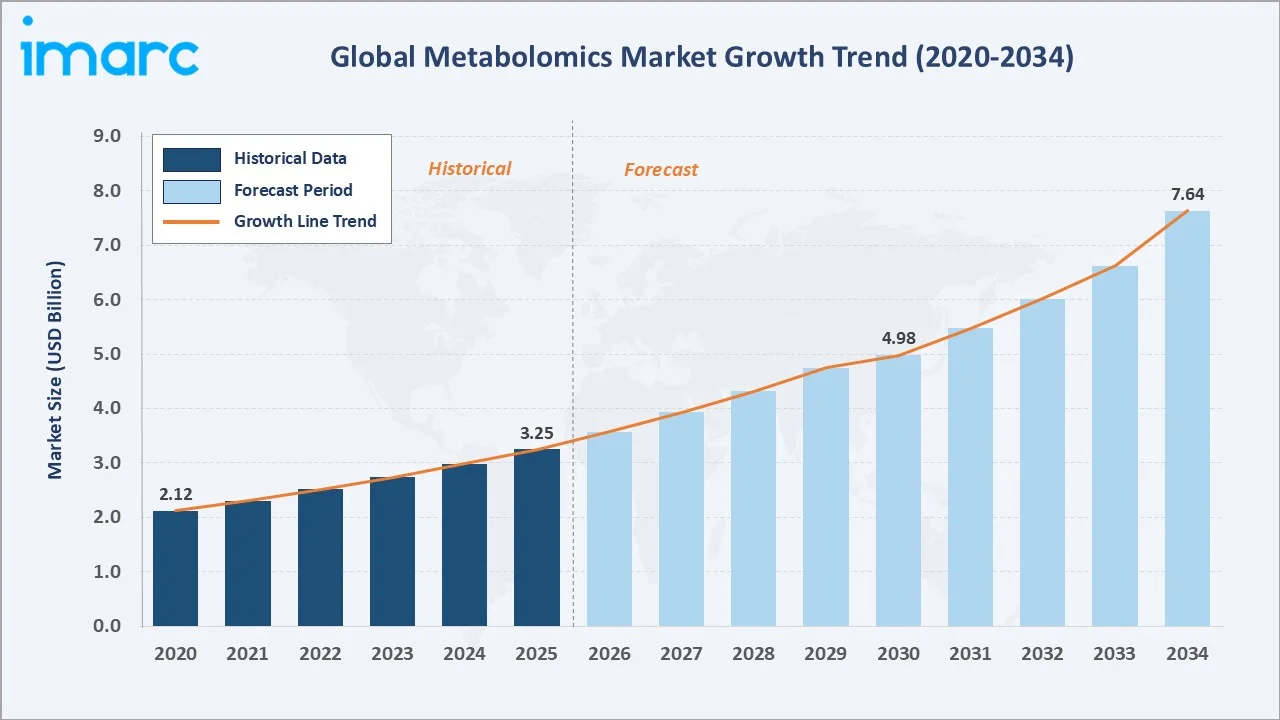
The global metabolomics market growth trajectory from 2020 through 2034 reflects a transition from early-stage research adoption to a sustained expansion phase, driven by increasing integration in precision medicine, biomarker discovery, and drug development.
To get more information on this market, Request Sample
The forecast curve is supported by rising investments in life sciences research, expanding clinical applications, and growing adoption of advanced analytical technologies across pharmaceutical, biotechnology, and academic research segments
Executive Summary
The global metabolomics market reached USD 3.25 Billion in 2025, up from USD 2.12 Billion in 2020, reflecting a historical CAGR of approximately 8.9%. The market is on a strong upward trajectory, underpinned by transformative advances in mass spectrometry, nuclear magnetic resonance (NMR) technology, and bioinformatics platforms.
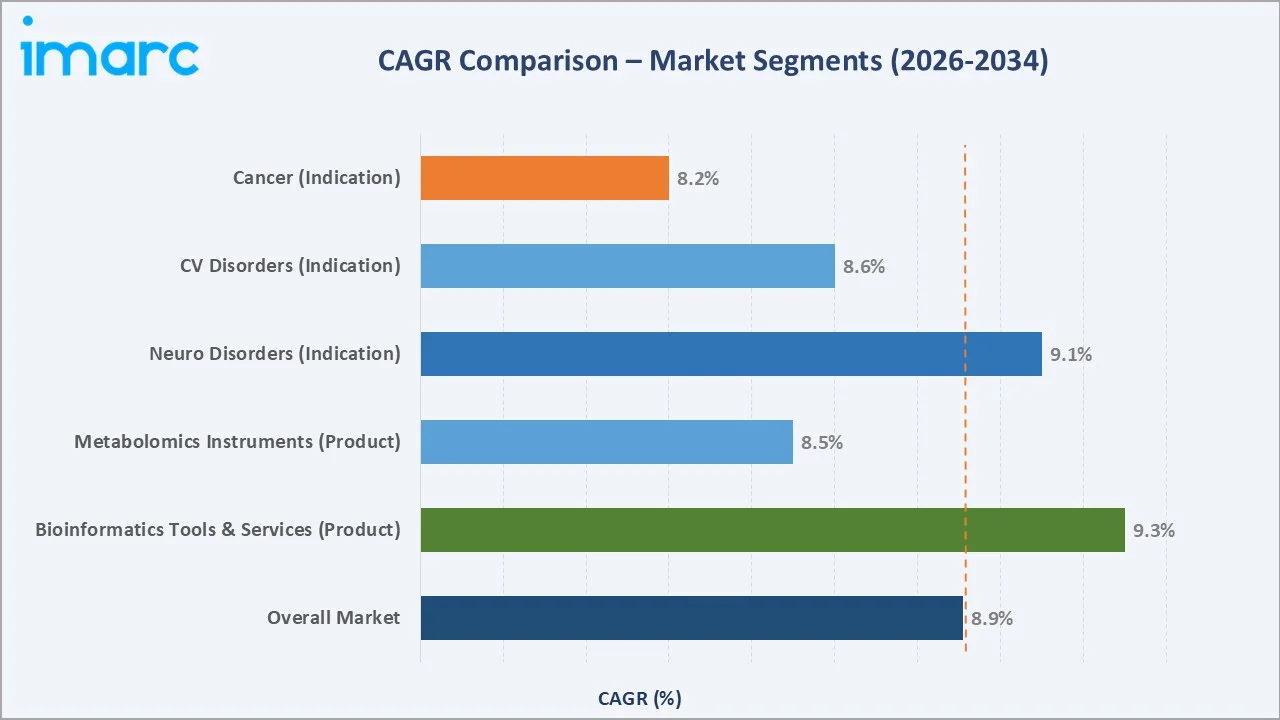
Key growth drivers include the rapid expansion of oncology-focused biomarker discovery programs, increasing government funding for precision and personalized medicine, and the growing integration of metabolomics within multi-omics research frameworks. Cancer remains the dominant indication, capturing 36.4% of market revenue in 2025, while bioinformatics tools lead the product landscape with a 54.3% share.
North America holds the largest regional share at 42.3% in 2025, driven by significant NIH and FDA support. Asia Pacific is the fastest growing region, fueled by expanding pharmaceutical manufacturing in China, Japan, and India. By 2034, the market is expected to reach USD 7.64 Billion, driven by AI-integrated metabolomics workflows, point-of-care diagnostics, and expanding clinical applications across neurology and cardiovascular medicine.
Key Market Insights
|
Insight |
Data |
|
Largest Product |
Metabolomics Bioinformatics Tools & Services (54.3% in 2025) |
|
Largest Indication |
Cancer (36.4% in 2025) |
|
Leading Region |
North America (42.3% in 2025) |
|
Fastest Growing Segment |
Neurological Disorders |
|
Top Companies |
Thermo Fisher Scientific Inc., Agilent Technologies Inc., Waters Corporation, Bruker, Shimadzu Corporation, LECO Corporation, Metabolon, Inc., Human Metabolome Technologies Inc. |
|
Market Opportunity |
AI-driven multiomics integration and clinical metabolomics diagnostics |
Key Analytical Insights From The Market Are Summarized Below:
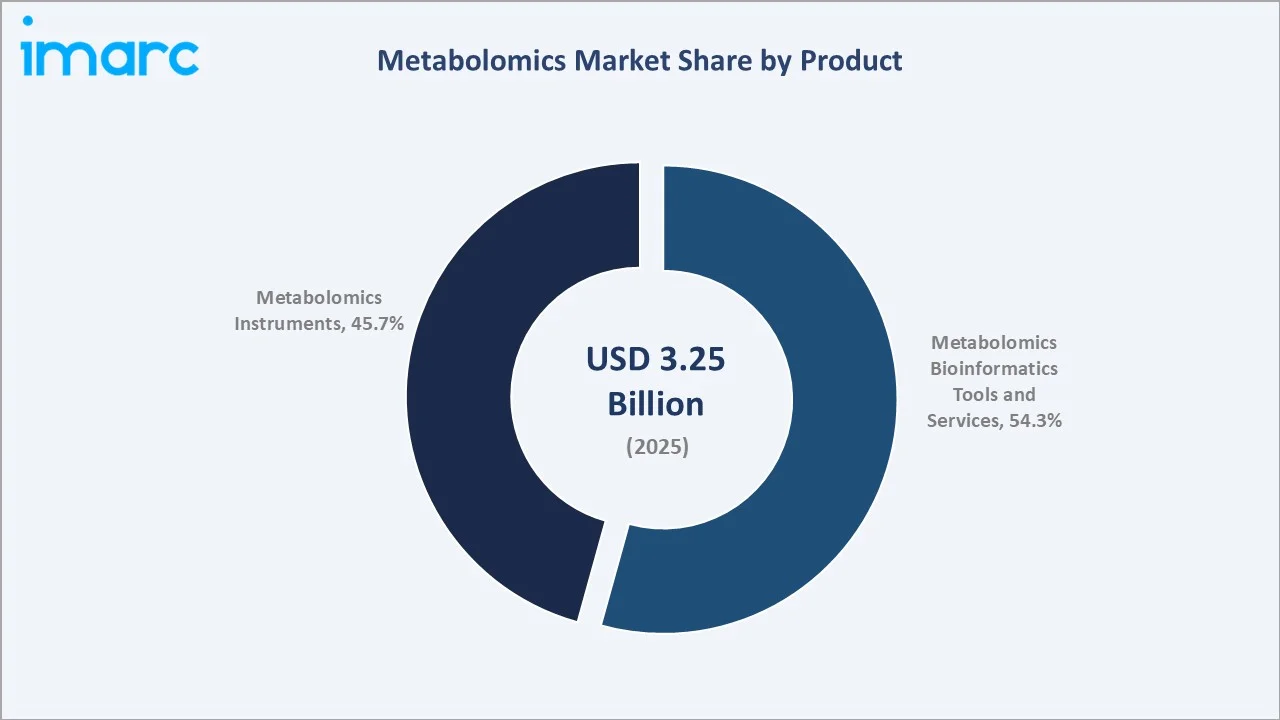
- Metabolomics bioinformatics tools and services held a dominant 54.3% product share in 2025, driven by surging demand for integrated analytical platforms and AI-driven data interpretation in pharmaceutical and clinical research workflows.
- Cancer accounted for 36.4% of the indication segment in 2025, making it the single largest application area, reflecting the critical role of metabolic profiling in oncology biomarker discovery and early-stage cancer detection research.
- North America commanded 42.3% of global revenue in 2025, supported by robust NIH R&D funding, FDA precision medicine initiatives, and a high concentration of leading metabolomics instrument manufacturers and biotech firms.
- Asia Pacific is the fastest growing regional market, with rapid pharmaceutical sector expansion, increasing government investments in genomics and metabolomics research, and rising clinical trial activity in China, Japan, and India.
- The global market is projected to nearly double from USD 3.25 Billion in 2025 to USD 7.64 Billion by 2034, with an 8.91% CAGR driven by clinical translation of metabolomics from research to routine diagnostic use.
- Neurological disorders represent a high-growth indication segment, with metabolomics increasingly applied to identify biomarkers for Alzheimer's disease, Parkinson's disease, and multiple sclerosis, attracting significant R&D capital.
Global Metabolomics Market Overview
Metabolomics is the large-scale study of small-molecule metabolites within biological systems, offering a real-time biochemical snapshot of cellular physiology. The market encompasses instruments such as mass spectrometers and NMR analyzers, as well as bioinformatics software and analytical service platforms.
Applications span drug discovery, toxicology screening, nutritional genomics, clinical diagnostics, and personalized medicine. Key macroeconomic tailwinds include escalating global healthcare R&D expenditure, rising chronic disease burden and expanding multi-omics research programs in both academia and industry. These forces are collectively accelerating the commercialization of metabolomics technologies.
Market Dynamics
To evaluate market opportunities, Request Sample
Market Drivers
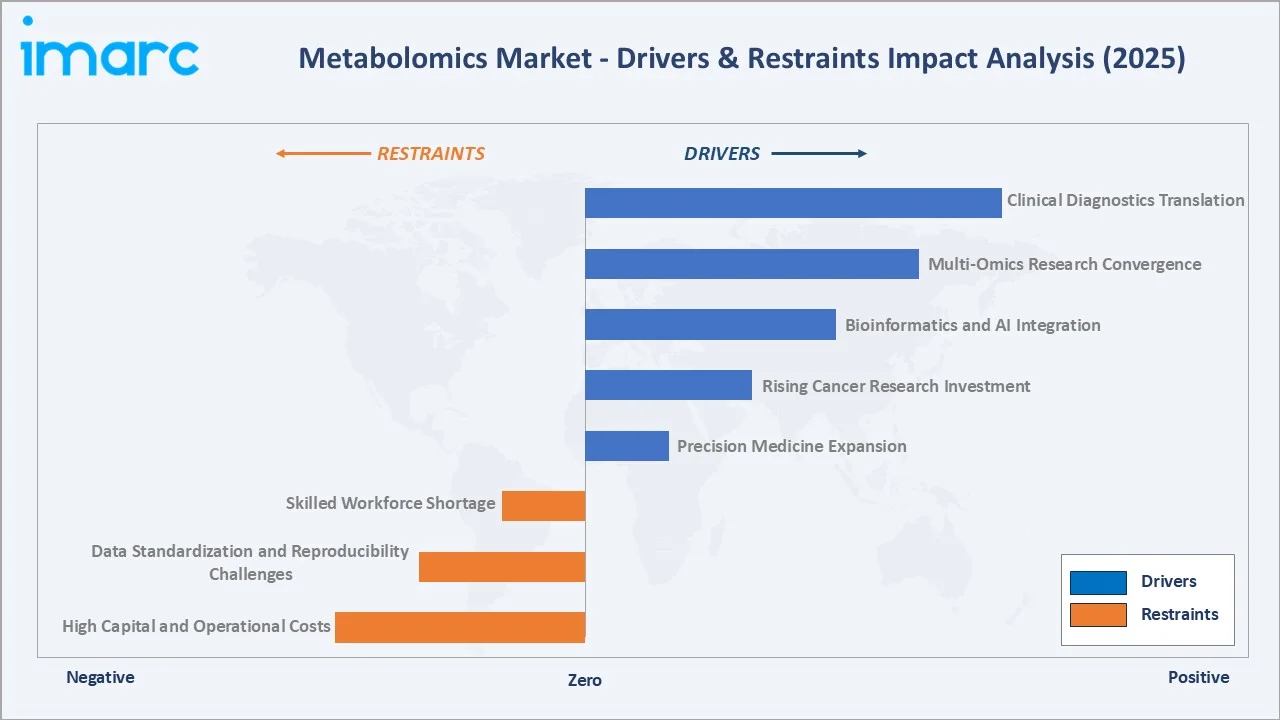
- Precision Medicine Expansion: Governments and health agencies worldwide are investing heavily in personalized healthcare. The U.S. Precision Medicine Initiative has allocated significant funding annually, creating substantial demand for metabolomics-based biomarker profiling platforms.
- Rising Cancer Research Investment: U.S. spending on oncology has risen from $65Bn in 2019 to $99Bn in 2023, representing 45% of global spending, and is expected to grow to nearly $180Bn in 2028.
- Bioinformatics and AI Integration: The adoption of machine learning in metabolomics data analysis is accelerating significantly. AI-powered platforms can process complex datasets faster than traditional methods, reducing analysis time and improving clinical actionability.
- Multi-Omics Research Convergence: The integration of metabolomics with genomics, proteomics, and transcriptomics is creating new research paradigms. A growing share of leading pharmaceutical companies report multi-omics integration in their drug discovery pipelines.
Market Restraints
- High Capital and Operational Costs: Advanced metabolomics instruments such as high-resolution mass spectrometers can cost $100,000 and $300,000 per unit, limiting adoption among small and mid-size research institutions globally.
- Data Standardization and Reproducibility Challenges: Lack of universal protocols for metabolite identification and data sharing constrains inter-laboratory reproducibility, posing significant regulatory and clinical validation hurdles.
- Skilled Workforce Shortage: The specialized expertise required to operate instruments and interpret metabolomics data remains scarce. This talent gap is a key barrier to scaling metabolomics operations in emerging markets.
Market Opportunities
- Clinical Diagnostics Translation: Metabolomics is transitioning from research settings to clinical laboratories. Global In Vitro Diagnostics (IVD) market is valued at approximately USD 80-85 billion in 2024, presents a massive addressable opportunity for metabolomics-based diagnostic panels.
- Nutrigenomics and Functional Food R&D: Rising consumer awareness of the diet-health nexus is fueling demand for metabolomics in nutrition science. The functional food market exceeded USD 300 billion globally in 2025, opening new commercial verticals.
Market Challenges
- Regulatory Approval Pathways: Establishing FDA and EMA regulatory frameworks for metabolomics-based clinical assays remains complex and time-consuming, creating uncertainty for commercial product launches.
- Sample Complexity and Pre-Analytics Variability: Biological sample instability and pre-analytical variations continue to challenge assay reproducibility, requiring standardized biobanking and collection protocols.
Emerging Market Trends
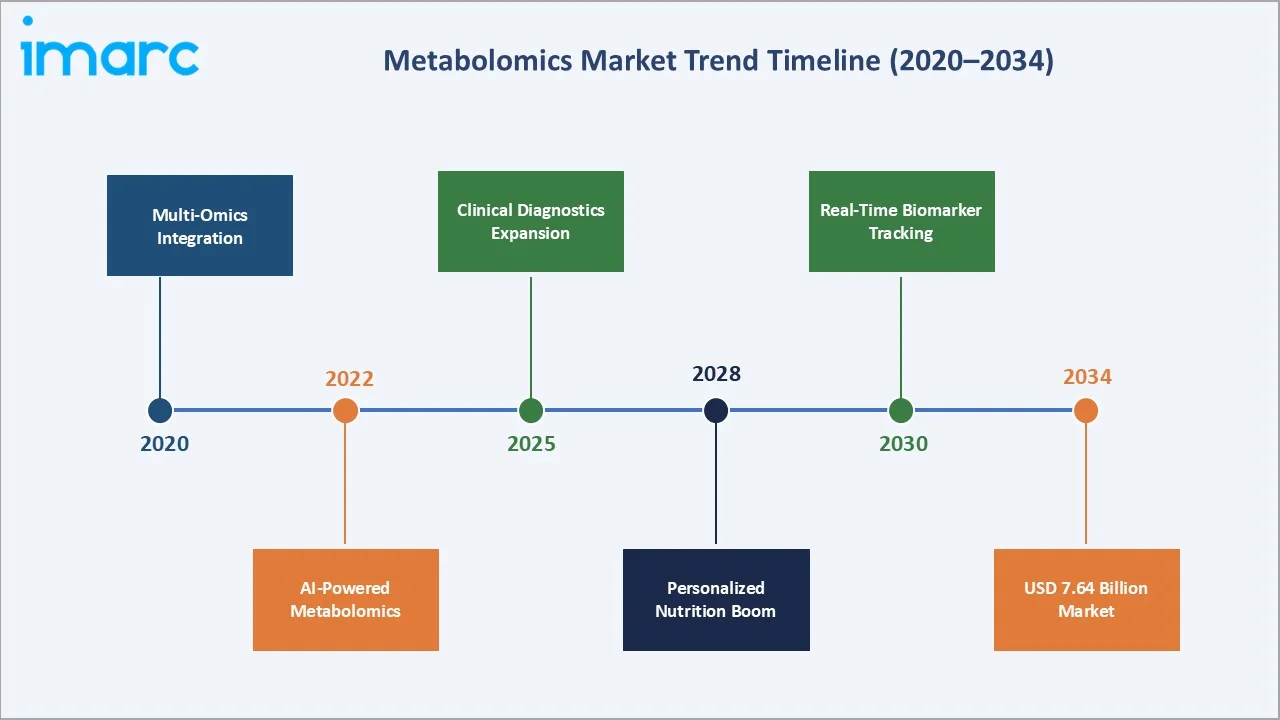
1. Artificial Intelligence and Machine Learning Integration
AI and ML are transforming metabolomics data interpretation, enabling pattern recognition across large datasets that were previously unmanageable. A growing share of metabolomics software vendors have integrated AI capabilities, reducing time-to-insight and enhancing analytical efficiency.
2. Point-of-Care and Wearable Metabolomics
Miniaturized metabolomics platforms are emerging for bedside and wearable applications. Companies are developing portable mass spectrometry devices targeting critical care monitoring, with the global point-of-care diagnostic market is value at USD 50.6 Billion by 2025.
3. Multi-Omics Data Integration Platforms
Converging metabolomics with genomics and proteomics is becoming a mainstream research strategy. Multi-omics integration platforms are experiencing strong growth and are increasingly adopted by pharmaceutical companies to accelerate drug target identification.
4. Metabolomics in Gut Microbiome Research
The gut microbiome–metabolome axis is gaining rapid research momentum. A growing number of metabolomics–microbiome studies are being published, with applications spanning inflammatory bowel disease, mental health, and obesity management.
5. Clinical-Grade Metabolomics Standardization
Regulatory bodies are advancing metabolomics standardization. The Clinical and Laboratory Standards Institute (CLSI) and NIST are actively developing metabolomics reference standards and measurement protocols, paving the way for FDA-cleared metabolomics diagnostics by 2027.
Industry Value Chain Analysis
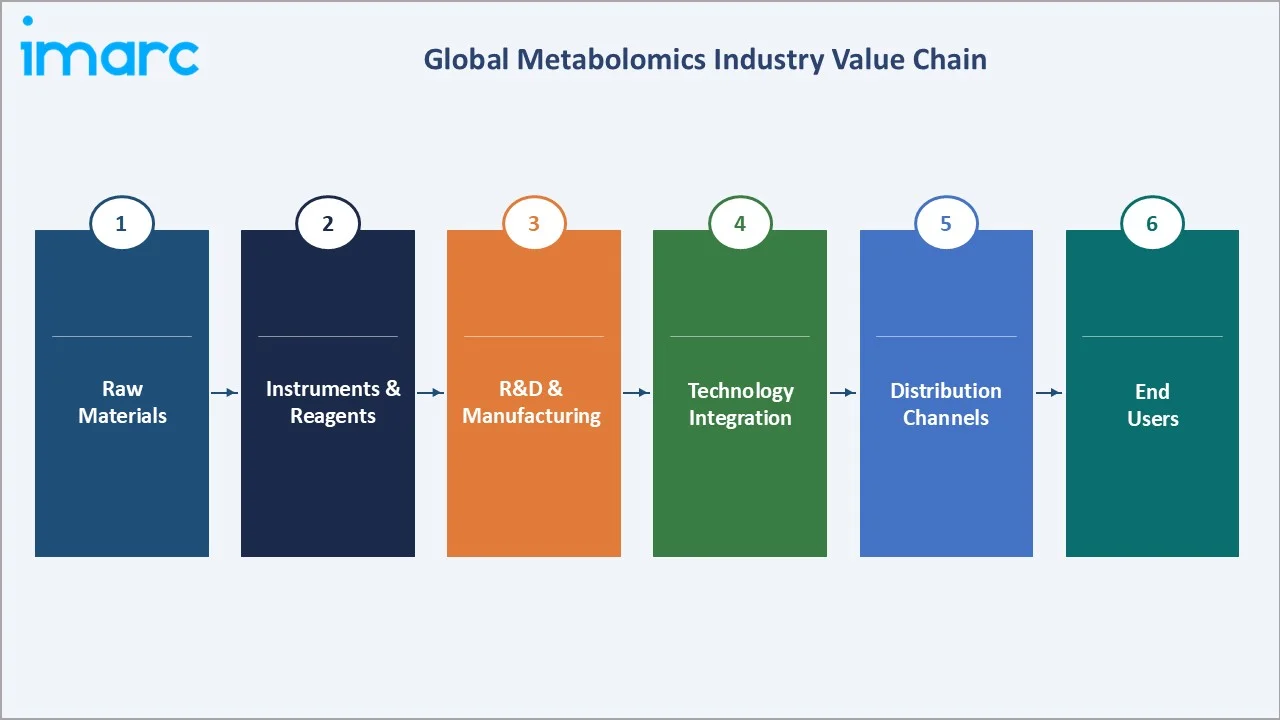
The metabolomics value chain begins with raw material suppliers providing high-purity solvents, isotopically labeled standards, and chemical reagents. These feed into instrument and reagent manufacturers who produce the analytical platforms. OEM manufacturers then deliver finished instruments and software solutions to end-user institutions through distribution networks. Technology integration partners increasingly add bioinformatics layers.
|
Stage |
Description |
|
Raw Materials |
Involves the supply of chemicals, solvents, standards, and isotopically labeled compounds required for metabolite identification and quantification. |
|
Instruments & Reagents |
Covers analytical platforms such as mass spectrometry and chromatography systems, along with kits and reagents used for sample preparation and analysis. |
|
R&D & Manufacturing |
Includes research activities, assay development, biomarker discovery, and production of metabolomics-based solutions for clinical and research applications. |
|
Technology & Software |
Encompasses data analysis platforms, bioinformatics tools, and software used for metabolite identification, pathway analysis, and interpretation of complex datasets. |
|
Distribution |
Involves supply chain networks, distributors, and logistics providers ensuring availability of instruments, reagents, and consumables to end users. |
|
End Users |
Consists of pharmaceutical and biotechnology companies, contract research organizations, academic institutions, and healthcare providers utilizing metabolomics for research and diagnostics. |
Technology Landscape
Mass Spectrometry (MS) Platforms
High-resolution MS technologies — including Orbitrap, time-of-flight (TOF), and tandem MS/MS systems — remain the gold standard for untargeted and targeted metabolomics. The MS segment accounted for a dominant share of instrument revenue, with detection sensitivity improvements enabling identification of metabolites at very low concentration levels.
Nuclear Magnetic Resonance (NMR) Spectroscopy
NMR remains valuable for structural elucidation and quantitative metabolomics. High-field 600–900 MHz NMR instruments are increasingly deployed in pharmaceutical quality control and clinical biomarker research. The NMR metabolomics segment is growing steadily, driven by automation advances.
Bioinformatics and AI-Powered Analytics
Cloud-based bioinformatics platforms such as MetaboAnalyst and Biocrates’ MetIDQ are becoming standard workflow tools. AI-assisted pathway analysis and metabolite database matching are significantly improving annotation accuracy and analytical throughput.
Separation Technologies and Sample Preparation
Ultra-high performance liquid chromatography (UHPLC) and gas chromatography (GC) coupled with MS continue to evolve, with new column chemistries reducing analysis time. Automated sample preparation systems are becoming standard, reducing human error and improving inter-laboratory reproducibility.
Market Segmentation Analysis
The report covers the following segments:
|
Segment Category |
Leading Segment |
Market Share |
Year |
|
Product |
Metabolomics Bioinformatics Tools and Services |
54.3% |
2025 |
|
Indication |
Cancer |
36.4% |
2025 |
|
Application |
Biomarker and Drug Discovery |
🔒 |
2025 |
|
Region |
(North America |
42.3% |
2025 |

By Product (2025)
To access detailed market analysis, Request Sample
Metabolomics bioinformatics tools and services lead the product landscape with a 54.3% market share in 2025. Demand for cloud-based analytical platforms, AI-powered pathway mapping, and contract research services is growing rapidly as pharma companies outsource data interpretation.
By Indication (2025)
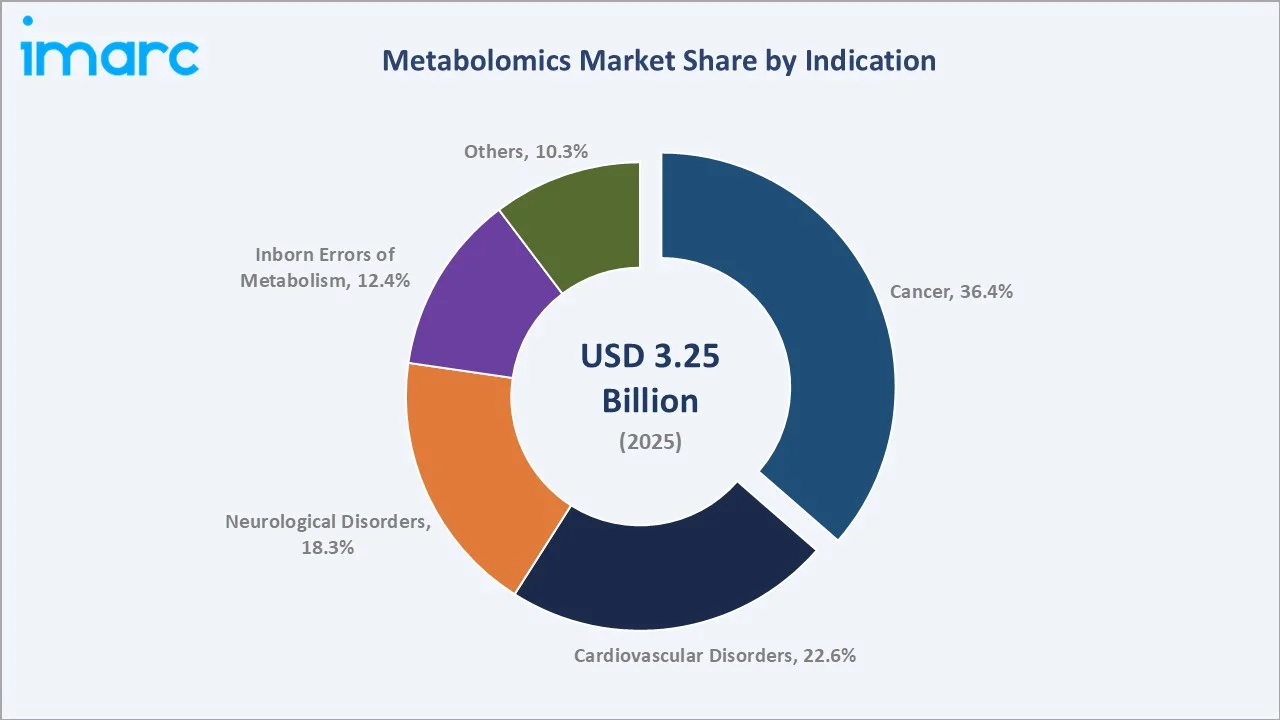
Cancer dominates the indication segment at 36.4% in 2025, driven by metabolomics-based biomarker panels for early cancer detection and treatment monitoring. Over 2,000 clinical trials incorporating metabolomics in oncology were active globally as of 2024. Cardiovascular disorders account for 22.6%, with metabolic profiling increasingly used for risk stratification and drug response monitoring in heart failure and coronary artery disease research.
Regional Market Insights
North America commands 42.3% of the global metabolomics market in 2025, driven by the United States's robust biomedical research ecosystem, NIH funding exceeding USD 47 billion in 2024, and a concentration of leading instrument manufacturers, CROs, and biotech companies. The FDA's Precision Medicine Initiative has created sustained demand for metabolomics tools in clinical drug development.
|
Region |
Share (2025) |
Key Drivers |
|
North America |
42.3% |
FDA support for precision medicine, strong NIH funding, advanced CRO infrastructure |
|
Europe |
24.6% |
EU Horizon R&D grants, biomarker research programs, academic-industry collaboration |
|
Asia Pacific |
20.3% |
Rising pharmaceutical R&D in China/Japan, government genomics initiatives |
|
Latin America |
7.4% |
Growing clinical research investment, rising cancer incidence |
|
Middle East & Africa |
5.4% |
Healthcare modernization, expanding university research labs |
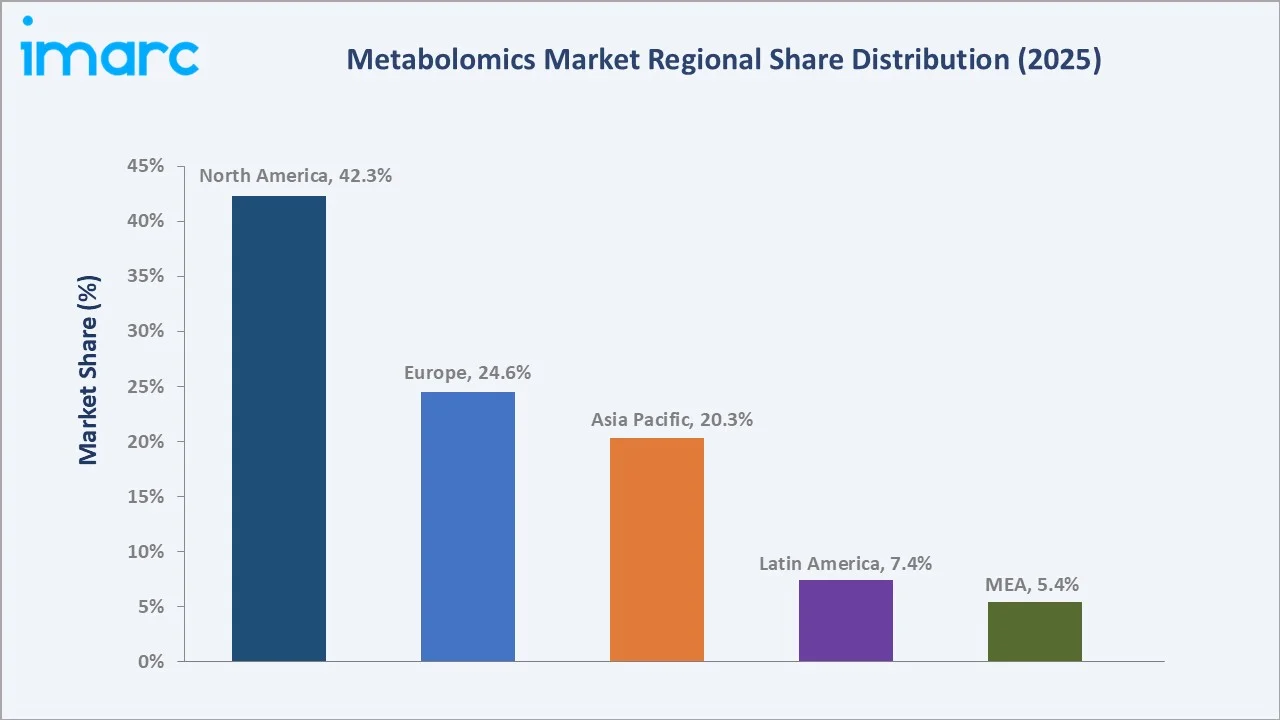
Asia Pacific accounts for 20.3% and is the fastest growing region. China's national genomics and precision medicine programs, Japan's leading analytical instrument manufacturers, and India's expanding pharmaceutical contract research sector are key growth drivers. Government investment in life science R&D infrastructure across the region exceeded USD 35 billion in 2024.
Competitive Landscape
|
Company Name |
Brand / Product |
Market Position |
|
Thermo Fisher Scientific Inc. |
Orbitrap LC-MS, Q Exactive |
Leader |
|
Agilent Technologies Inc. |
Agilent 6546 LC/Q-TOF and MassHunter Metabolomics |
Leader |
|
Waters Corporation |
ACQUITY UPLC |
Leader |
|
Bruker |
Avance NMR Spectrometer, timesTOF |
Leader |
|
Shimadzu Corporation |
LCMS-9030, GCMS-QP |
Challenger |
|
LECO Corporation |
Pegasus BTX, ChromaTOF |
Challenger |
|
Metabolon, Inc. |
Precision Metabolomics |
Challenger |
|
Human Metabolome Technologies Inc. |
HMT CE-TOFMS |
Emerging |
The metabolomics market features a moderately consolidated competitive structure, with the top players including Thermo Fisher Scientific Inc., Agilent Technologies Inc., Waters Corporation, Bruker, Shimadzu Corporation, LECO Corporation, Metabolon, Inc., Human Metabolome Technologies Inc. Competition is intensifying across bioinformatics platforms, where specialized software companies and CROs are gaining significant market share.
Key Company Profiles
Thermo Fisher Scientific Inc.
Thermo Fisher Scientific Inc. is a leading global provider of scientific instrumentation, laboratory products, biotechnology solutions, and clinical research services. Headquartered in Waltham, Massachusetts, the company operates worldwide and serves pharmaceutical, biotechnology, healthcare, academic, and industrial markets.
- Product Portfolio: The Orbitrap Astral and Q Exactive series are industry-leading LC-MS platforms for metabolomics. Thermo Fisher's Compound Discoverer software and Proteome Discoverer suite provide integrated metabolomics and multi-omics data analysis.
- Recent Developments: In 2021, Thermo Fisher Scientific has partnered with University of California, Davis to establish a Center of Excellence in Clinical Metabolomics. The collaboration aims to advance standardized workflows, large-scale metabolic profiling, and precision medicine applications, leveraging advanced mass spectrometry technologies to accelerate clinical research and biomarker discovery.
- Strategic Focus: Thermo Fisher continues to invest in expanding its multi-omics ecosystem, integrating metabolomics, proteomics, and genomics platforms, with a strategic focus on biopharma, clinical research, and population genomics.
Agilent Technologies Inc.
Agilent Technologies, Inc. is a global leader in life sciences, diagnostics, and applied chemical markets, providing analytical instruments, software, services, and consumables to laboratories worldwide. Headquartered in Santa Clara, California, the company supports research, clinical diagnostics, and quality testing across pharmaceuticals, food, environmental, and chemical industries.
- Product Portfolio: Agilent's metabolomics portfolio includes the 6500 Series LC/Q-TOF, MassHunter metabolomics software, and Seahorse XF Analyzers for metabolic flux analysis. Its GC-MS and LC-MS platforms are widely used in pharmaceutical, environmental, and clinical metabolomics research.
- Recent Developments: In 2025, Agilent Technologies is set to showcase its latest end-to-end metabolomics solutions at the Metabolomics Society Conference in Prague. The company will highlight advanced mass spectrometry, real-time cellular metabolic analysis, and integrated software tools, emphasizing next-generation workflows that enhance metabolomics research, drug discovery, and multi-dimensional data insights.
- Strategic Focus: Agilent focuses on expanding its metabolomics software ecosystem and deepening integration with clinical lab information systems, targeting large-scale biobank and population health studies.
Bruker
Bruker is a global manufacturer of high-performance scientific instruments and analytical solutions used in life sciences, pharmaceuticals, materials research, and industrial applications. Headquartered in Billerica, Massachusetts, the company is recognized as a key player in advanced analytical instrumentation.
- Product Portfolio: Bruker offers the AVANCE NMR spectrometer series, timesTOF mass spectrometers, and the SCION GC-MS platform for metabolomics. Its BioSpin division is a recognized leader in NMR-based metabolomics.
- Recent Developments: In 2025, Bruker Corporation has launched the timsMetabo 4D-metabolomics mass spectrometer, offering enhanced sensitivity, separation power, and annotation confidence for small molecule analysis. The system enables creation of a digital metabolome archive for each sample, supporting advanced metabolomics and lipidomics workflows with improved analytical accuracy.
- Strategic Focus: Bruker's strategic focus is on combining NMR and MS platforms for comprehensive metabolomics workflows, targeting pharmaceutical drug metabolism and clinical biomarker discovery.
Market Concentration Analysis
The global metabolomics market exhibits moderate-to-high concentration at the instrument tier, with the top five players including Thermo Fisher Scientific Inc., Agilent Technologies Inc., Waters Corporation, Bruker, Shimadzu Corporation, collectively commanding an estimated 60–65% of global instrument revenue. However, the bioinformatics and services segment is considerably more fragmented.
Fragmentation is highest in the contract research and software sub-segments. This includes both pure-play metabolomics CROs like Metabolon and niche bioinformatics software developers. Consolidation is accelerating over 15 strategic acquisitions and partnerships occurred in the metabolomics sector between 2021 and 2024.
The market is expected to witness further consolidation as large instrument companies acquire bioinformatics platforms and AI analytics firms. Strategic alliances between clinical labs and metabolomics technology providers are also reshaping competitive dynamics, with multi-year data access and service contracts becoming the norm for large pharma clients.
Investment & Growth Opportunities
Fastest Growing Segments
The bioinformatics tools and services segment is the fastest growing within the metabolomics landscape, with AI-powered analytics platforms witnessing strong growth through the forecast period. Neurological disorders is the fastest growing indication, driven by rising investment in Alzheimer’s and Parkinson’s disease biomarker programs.
Emerging Markets
Asia Pacific presents the most compelling emerging market opportunity. India’s pharmaceutical sector — one of the largest globally by volume — is rapidly adopting metabolomics for drug formulation and bioequivalence studies. China’s National Metabolomics Research Center, launched recently, reflects strong government commitment to building domestic metabolomics capability.
Venture Investment Trends
Metabolomics-linked precision medicine startups have attracted significant venture funding in recent years. Notable investments include expansion financing for Metabolon, multi-omics platform companies, and clinical metabolomics diagnostics developers. ESG-aligned investors are increasingly targeting metabolomics companies with applications in food security and environmental monitoring.
Future Market Outlook (2026-2034)
The global metabolomics market is poised for sustained high-single-digit growth through 2034. The market is projected to reach USD 4.98 Billion by 2030 and USD 7.64 Billion by 2034, reflecting an 8.91% CAGR during the forecast period 2026–2034.
Technological disruptions over the forecast period will include: (1) widespread adoption of AI-driven metabolomics analytics reducing assay interpretation times; (2) emergence of portable MS devices enabling point-of-care metabolomics for critical care and remote diagnostics; (3) integration of metabolomics within digital health platforms and real-world data networks serving population health programs globally.
Industry transformation will be shaped by regulatory evolution. CLIA-certified metabolomics laboratory tests are expected to enter routine clinical use in cardiology and oncology. Metabolomics-based companion diagnostics for precision oncology therapeutics are projected to generate significant annual revenues. The convergence of metabolomics with spatial biology and single-cell analysis will open entirely new dimensions of research in the coming years.
Research Methodology
Primary Research
IMARC's primary research methodology involves direct consultations with industry stakeholders including C-suite executives at leading metabolomics companies, research scientists at academic metabolomics centers, procurement heads at pharmaceutical and biotech companies, and clinical laboratory directors. Primary interviews were conducted across North America, Europe, and Asia Pacific to ensure regional representativeness.
Secondary Research
Secondary research involved systematic review of peer-reviewed journals (PLOS ONE, Analytical Chemistry, Metabolomics), government databases (NIH Reporter, FDA Guidance Documents, WHO reports), company annual reports, regulatory filings, and industry publications. Historical market data spanning 2020–2025 was triangulated across multiple independent sources.
Forecasting Models
Market forecasts for 2026–2034 were developed using bottom-up and top-down estimation models. The bottom-up approach builds market estimates from individual segment revenues validated against primary data, while the top-down model derives market shares from total addressable market sizing. A CAGR-based projection model was applied with sensitivity analysis for key driver and restraint scenarios.
Metabolomics Market Report Scope:
| Report Features | Details |
|---|---|
| Base Year of the Analysis | 2025 |
| Historical Period | 2020-2025 |
| Forecast Period | 2026-2034 |
| Units | Billion USD |
| Scope of the Report | Exploration of Historical Trends and Market Outlook, Industry Catalysts and Challenges, Segment-Wise Historical and Predictive Market Assessment:
|
| Products Covered | Metabolomics Instruments, Metabolomics Bioinformatics Tools and Services |
| Indications Covered | Cancer, Cardiovascular Disorders, Neurological Disorders, Inborn Errors of Metabolism, Others |
| Applications Covered | Biomarker and Drug Discovery, Toxicology, Nutrigenomics, Personalized Medicine, Others |
| Regions Covered | Asia Pacific, Europe, North America, Latin America, Middle East and Africa |
| Countries Covered | United States, Canada, Germany, France, United Kingdom, Italy, Spain, Russia, China, Japan, India, South Korea, Australia, Indonesia, Brazil, Mexico |
| Companies Covered | Thermo Fisher Scientific Inc., Agilent Technologies Inc., Waters Corporation, Bruker , Shimadzu Corporation, LECO Corporation, Metabolon, Inc., Human Metabolome Technologies Inc., etc. |
| Customization Scope | 10% Free Customization |
| Post-Sale Analyst Support | 10-12 Weeks |
| Delivery Format | PDF and Excel through Email (We can also provide the editable version of the report in PPT/Word format on special request) |
Key Benefits for Stakeholders:
- IMARC’s industry report offers a comprehensive quantitative analysis of various market segments, historical and current market trends, market forecasts, and dynamics of the metabolomics market from 2020-2034.
- The research report provides the latest information on the market drivers, challenges, and opportunities in the global metabolomics market.
- The study maps the leading, as well as the fastest-growing, regional markets. It further enables stakeholders to identify the key country-level markets within each region.
- Porter's five forces analysis assists stakeholders in assessing the impact of new entrants, competitive rivalry, supplier power, buyer power, and the threat of substitution. It helps stakeholders to analyze the level of competition within the metabolomics industry and its attractiveness.
- Competitive landscape allows stakeholders to understand their competitive environment and provides an insight into the current positions of key players in the market.
Frequently Asked Questions About the Metabolomics Market Report
The global metabolomics market was valued at USD 3.25 Billion in 2025 and is expected to reach USD 7.64 Billion by 2034, growing at a CAGR of 8.91%.
The metabolomics market is projected to grow at a CAGR of 8.91% during 2026-2034, driven by precision medicine adoption and expanding pharma R&D investment.
Metabolomics bioinformatics tools and services dominate with a 54.3% share in 2025, driven by rising demand for AI-powered analytics platforms in pharmaceutical workflows.
Cancer is the largest indication segment at 36.4% in 2025, driven by extensive metabolomics applications in oncology biomarker discovery and clinical drug development.
North America leads with a 42.3% market share in 2025, supported by NIH funding exceeding USD 47 billion annually and a strong base of leading metabolomics companies.
Key drivers include rising precision medicine adoption, growing cancer R&D investment, AI-powered bioinformatics advancements, and expanding multi-omics research frameworks globally.
Leading companies include Thermo Fisher Scientific Inc., Agilent Technologies Inc., Waters Corporation, Bruker, Shimadzu Corporation, LECO Corporation, Metabolon, Inc., and Human Metabolome Technologies Inc.
Mass spectrometry (LC-MS, GC-MS), NMR spectroscopy, and bioinformatics software platforms are the core technologies. AI-powered analytics are increasingly embedded in modern metabolomics workflows.
The global metabolomics market is estimated to reach approximately USD 4.98 Billion by 2030, continuing steady expansion driven by clinical diagnostics translation and bioinformatics growth.
Asia Pacific is the fastest growing region, fueled by pharmaceutical R&D expansion in China and India, government genomics initiatives, and rising clinical research activity.
Metabolomics identifies metabolic biomarkers for drug target validation, toxicity assessment, and patient stratification, reducing drug development timelines by up to 25% in early-phase studies.
The metabolomics market is forecasted to reach USD 7.64 Billion by 2034, supported by clinical adoption of metabolomics diagnostics, AI integration, and expanding multi-omics research platforms.
Need more help?
- Speak to our experienced analysts for insights on the current market scenarios.
- Include additional segments and countries to customize the report as per your requirement.
- Gain an unparalleled competitive advantage in your domain by understanding how to utilize the report and positively impacting your operations and revenue.
- For further assistance, please connect with our analysts.
 Request Customization
 Speak to an Analyst
 Request Brochure
 Inquire Before Buying
Benefits of Customization
- Personalize this research
- Triangulate with your data
- Get data as per your format and definition
- Gain a deeper dive into a specific application, geography, customer, or competitor
- Any level of personalization
Get in Touch With Us
UNITED STATES
Phone: +1-201-971-6302
INDIA
Phone: +91-120-433-0800
UNITED KINGDOM
Phone: +44-753-714-6104
Email: [email protected]
Client Testimonials




.webp)




.webp)













Related Reports

Choose your plan
*Please note that the prices mentioned below are starting prices for each bundle type. Kindly contact our team for further details.*
Single User License
- 1 User License, Access on 2 Devices
- PDF Report + Excel Dataset (Password Protected)
- Lifetime Access
- No Printing Rights
- 10% Free Report Customization
- 10–12 Weeks of Analyst Support
Five User License
- Access for 5 Users, 2 Devices per User
- PDF Report + Excel Dataset (Password Protected)
- Lifetime Access
- Dedicated Account Manager
- 12–14 Weeks of Analyst Support
- No Printing Rights
- 15% Free Report Customization
- 25% Discount on Your Next Purchase
Corporate User License
- Unlimited User Access (Within Your Organization)
- PDF Report + Excel Dataset
- Lifetime Access
- Dedicated Account Manager
- 14–20 Weeks of Analyst Support
- No Printing Rights
- 20% Free Report Customization
- 30% Discount on Your Next Purchase
Essential Insights
What's included:
3 reports
- Lifetime Access
- PDF Reports
- Excel Datasets
- 2 Weeks of Free Analyst Support
- 2 User Licenses
- Access on 2 Devices
- Printing Rights
- Complimentary PowerPoint (PPT) Version
- Complimentary License Upgrade
Professional Access
What's included:
5 reports
- Lifetime Access
- PDF Reports
- Excel Datasets
- 8 Weeks of Free Analyst Support
- 2 User Licenses
- Access on 2 Devices
- Printing Rights
- Complimentary PowerPoint (PPT) Version
- Complimentary License Upgrade
Business Advantage
What's included:
8 reports
- Lifetime Access
- PDF Reports
- Excel Datasets
- 14 Weeks of Free Analyst Support
- 2 User Licenses
- Access on 2 Devices
- Printing Rights
- Complimentary PowerPoint (PPT) Version
- Complimentary License Upgrade
Enterprise Intelligence
What's included:
10 reports
- Lifetime Access
- PDF Reports
- Excel Datasets
- 20 Weeks of Free Analyst Support
- 2 User Licenses
- Access on 2 Devices
- Printing Rights
- Complimentary PowerPoint (PPT) Version
- Complimentary License Upgrade