
Mexico Anti Caking Market Size, Share, Trends and Forecast by Type, Application, and Region, 2026-2034
Mexico Anti Caking Market Size, Share, Trends & Forecast (2026-2034)
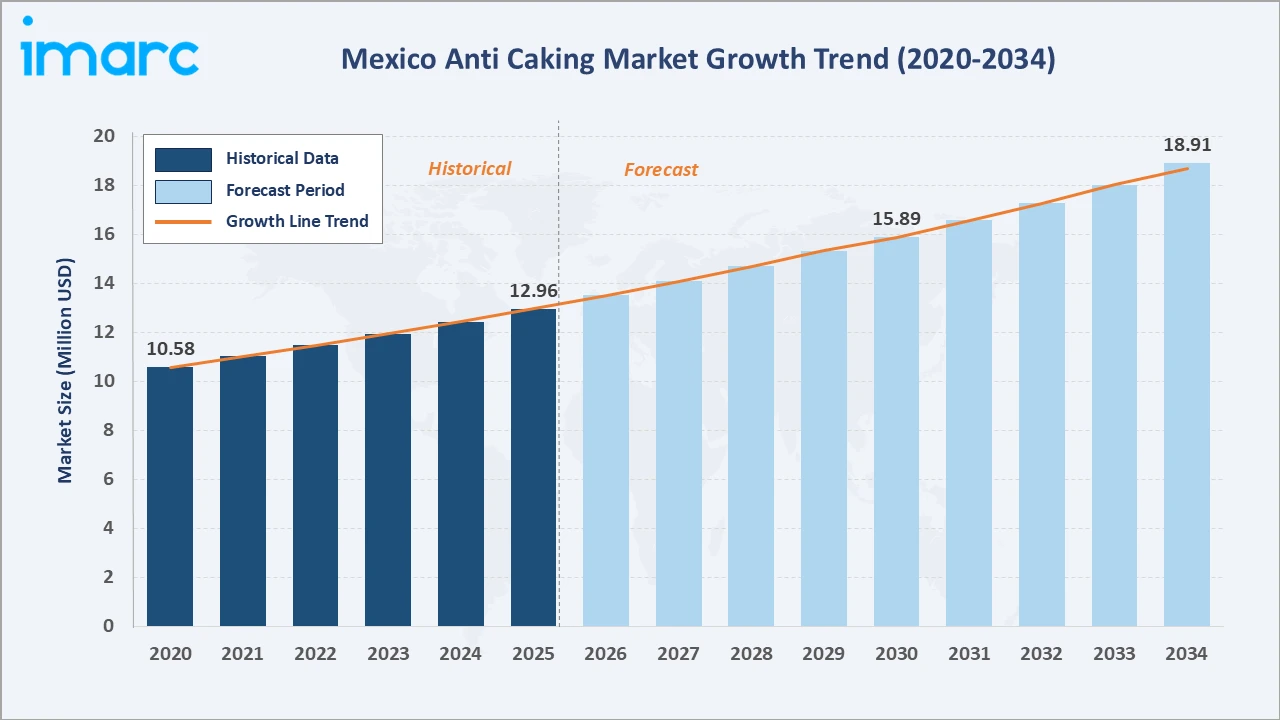
The Mexico anti caking market size increased from USD 12.96 Million in 2025 to USD 13.50 Million in 2026 and is projected to reach USD 18.91 Million by 2034, growing at a CAGR of 4.16% during 2026-2034. The robust expansion of Mexico’s processed food and beverage industry, the nearshoring manufacturing boom driving FMCG production growth, and growing consumer preference for natural and clean-label anti caking alternatives are the primary growth catalysts.
Market Snapshot
|
Metric |
Value |
|
Base Year Market Size (2025) |
USD 12.96 Million |
| Market Size (2026) | USD 13.50 Million |
|
Forecast Market Size (2034) |
USD 18.91 Million |
|
CAGR (2026-2034) |
4.16% |
|
Base Year |
2025 |
|
Historical Period |
2020-2025 |
|
Forecast Period |
2026-2034 |
Central Mexico leads with a 40.9% market share in 2025, anchored by the concentration of food processing manufacturers, dairy producers, seasoning manufacturers, and FMCG companies across Mexico City and surrounding industrial states. Silicon dioxide commands the dominant type share at 39.6%, while food and beverage represents the overwhelmingly largest application at 71.8%, reflecting anti caking agents’ critical role in maintaining the flowability and appearance of powdered and granulated food products across Mexico’s large processed food manufacturing sector.
To get more information on this market, Request Sample
The Mexico anti caking market is underpinned by the following structural forces: Mexico’s food processing industry which generates sustained demand for anti caking agents across salt, sugar, spice, coffee, dairy powder, bakery mix, and instant soup product categories; and Mexico’s rapidly growing animal feed sector driven by expanding poultry and livestock production to meet domestic protein demand, generating increasing demand for calcium-based and silica-based flow agents in compound feed manufacturing.
Executive Summary
The Mexico anti caking market is a niche but strategically important specialty ingredient segment within Mexico's broader food ingredient and feed additive market, serving the critical function of maintaining powder flowability, preventing moisture-induced caking, and preserving the texture and appearance of granulated and powdered products across food processing, animal feed production, and industrial applications. The market is expanding from USD 12.96 Million in 2025 to USD 13.50 Million in 2026 and is forecast to reach USD 18.91 Million by 2034 at a CAGR of 4.16%.
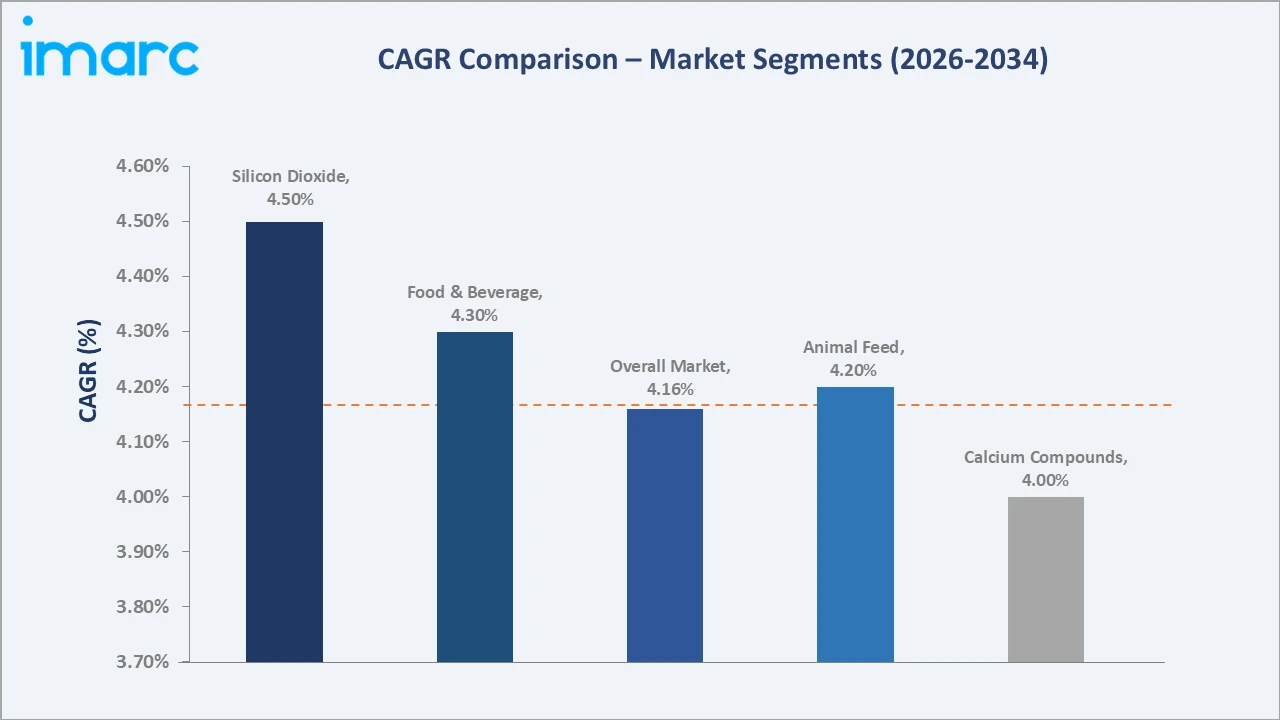
Silicon dioxide dominates the type segment at 39.6% in 2025, encompassing fumed silica, precipitated silica, and diatomaceous earth grades that serve as highly effective anti caking agents in powdered food products, spice blends, seasoning mixes, and powdered dairy applications. Food and beverage represents 71.8% of application demand, reflecting anti caking agents’ near-universal requirement across Mexico’s processed food categories including table salt, powdered seasonings, instant coffee, milk powder, baking mixes, shredded cheese, confectionery sugar, and dried soup bases.
Key Market Insights
|
Insight |
Data |
| Largest Type |
Silicon Dioxide – 39.6% share (2025) |
| Fastest Growing Type |
Silicon Dioxide – ~4.5% CAGR (2026-2034) |
| Largest Application |
Food and Beverage – 71.8% share (2025) |
| Fastest Growing Application |
Food and Beverage – ~4.3% CAGR (2026-2034) |
| Leading Region |
Central Mexico – 40.9% share (2025) |
| Top Companies |
Evonik Industries AG, Cabot Corporation, Solvay SA |
Key Analytical Observations Supporting The Above Data:
- Silicon dioxide's 39.6% (2025) type dominance reflects its superior technical performance as an anti caking agent. Fumed and precipitated silica grades can achieve effective anti caking function at use levels of 0.5–2.0% in food formulations, making them among the most efficient anti caking ingredients by weight and enabling their use in the premium food categories.
- Food and beverage’s 71.8% (2025) application dominance reflects the near-universal need for anti caking functionality across Mexico’s extensive processed food manufacturing sector: virtually every powdered, granulated, or grated food product requires an anti caking agent to maintain free-flowing texture, prevent agglomeration during storage, and ensure consistent performance during food manufacturing filling and dispensing operations.
- Central Mexico’s 40.9% (2025) regional dominance reflects the concentration of Mexico’s largest salt processing facilities, the majority of Mexico’s dairy powder and cheese processing capacity, and the headquarters of major Mexican food companies producing spice blends, instant soups, and powdered beverages that collectively represent the majority of anti caking agent consumption.
- The 4.16% CAGR reflects the Mexico anti caking market’s direct correlation with the country’s food processing industry growth rate, the expanding animal feed sector, and the progressive adoption of specification-grade anti caking agents by nearshoring FMCG companies bringing international quality standards to Mexican production.
Mexico Anti Caking Market Overview
Anti caking agents are food-grade and industrial-grade inorganic and organic compounds added to powdered or granulated materials to prevent the formation of lumps by absorbing excess moisture, reducing interparticle adhesion, and maintaining free-flowing characteristics throughout the product’s storage and use lifecycle.
In food applications, anti caking agents are classified as food additives under Codex Alimentarius and Mexican Official Standard NOM-051-SCFI/SSA1-2010, with specific permitted substances, maximum use levels, and food category applicability defined by COFEPRIS (Federal Commission for Protection from Sanitary Risk) in alignment with international Codex standards.
Mexico’s anti caking agent market serves a diverse range of industrial customers spanning the salt processing industry, dairy powder manufacturing, seasoning and spice processing, instant beverage production, bakery ingredient manufacturing, and animal feed compound production. The market is characterized by high precision in product specifications, making technical sales and application support capabilities key competitive differentiators among anti caking agent suppliers in Mexico.
Market Dynamics
To evaluate market opportunities, Request Sample
Market Drivers
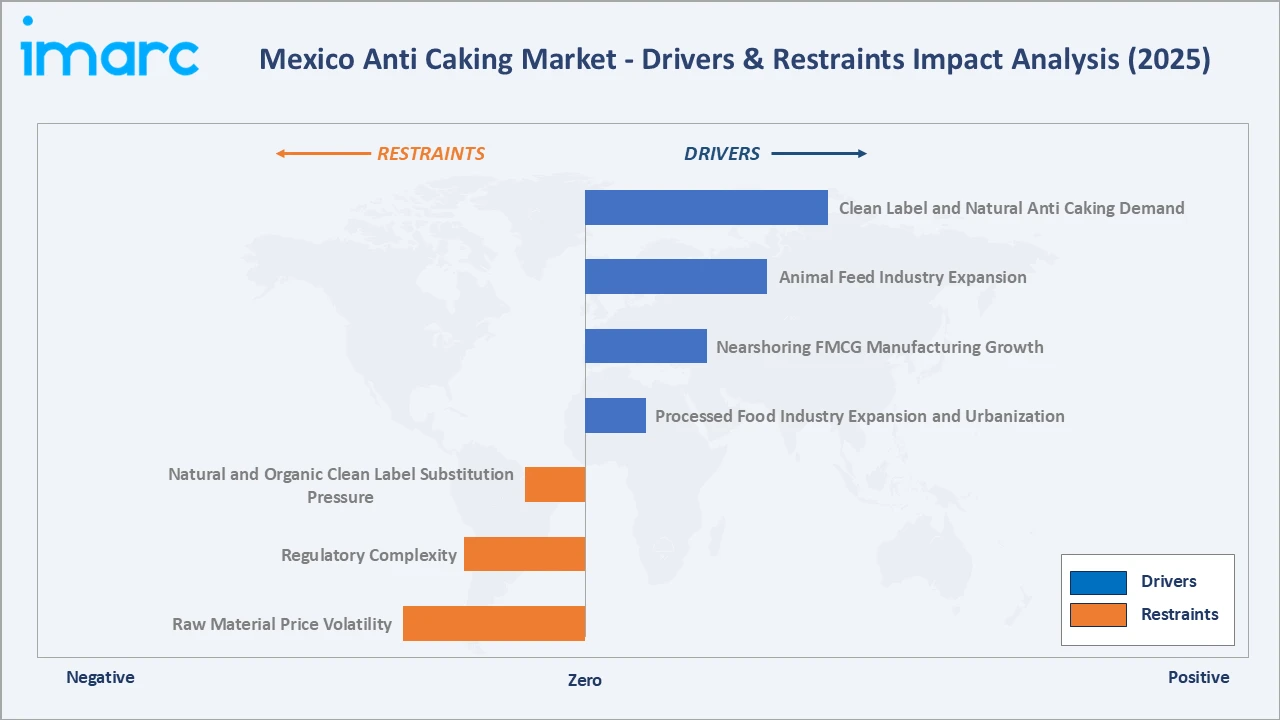
- Processed Food Industry Expansion and Urbanization: Mexico’s food processing industry (accounted for 17.2% of the country’s GDP in 2025) is the primary demand driver for anti caking agents, as every category of processed dry food requires anti caking agent to maintain product quality and manufacturing process efficiency.
- Nearshoring FMCG Manufacturing Growth: The nearshoring trend attracting international food, beverage, and household product manufacturers to establish or expand Mexico production facilities is driving above-baseline anti caking agent demand growth as incoming companies apply their global quality specifications to Mexican manufacturing.
- Animal Feed Industry Expansion: Mexico’s livestock and poultry production sector is one of Latin America’s largest, with broiler chicken, turkey, pork, and cattle production all growing to meet domestic protein demand and export market requirements. Anti caking agents are added to compound animal feed at 0.5–2% inclusion rates to maintain pellet flow characteristics, prevent moisture-induced caking of mineral premixes, and ensure uniform distribution of micro-ingredient nutrients throughout the feed batch.
- Clean Label and Natural Anti Caking Demand: Mexico’s food manufacturers are experiencing growing pressure from retail buyers and health-conscious consumers to transition from synthetic mineral anti caking agents toward natural alternatives including rice hulls powder, starch-based anti caking agents, microcrystalline cellulose, and natural magnesium compounds that qualify for clean label communication on product packaging.
Market Restraints
- Raw Material Price Volatility: Silicon dioxide anti caking agents are subject to raw material cost volatility driven by energy price cycles, silica sand quality and availability, and chemical precursor pricing for pyrogenic silica synthesis. Calcium compound anti caking agents depend on calcium carbonate and limestone raw material sourcing, where quarry operation costs and transport logistics influence production cost structures.
- Regulatory Complexity: Anti caking agents used in food applications in Mexico must comply with COFEPRIS regulations implementing Codex Alimentarius GSFA permissions, which specify for each anti caking substance the exact food categories permitted, maximum use levels, labelling requirements, and purity specifications.
- Natural and Organic Clean Label Substitution Pressure: Food manufacturers in the premium and organic segments are progressively formulating away from conventional mineral anti caking agents toward plant-derived flow agents that can be declared as natural ingredient names rather than chemical additive codes, reducing the market addressable by conventional anti caking suppliers in the fastest-growing premium product tiers.
Market Opportunities
- Pharmaceutical and Nutraceutical Anti Caking Applications: Mexico’s pharmaceutical manufacturing sector and its growing nutraceutical supplement manufacturing industry both consume pharmaceutical-grade and food-grade anti caking agents. Pharmaceutical-grade silicon dioxide commands 5–10x the price premium of food-grade silica anti caking agents, representing a high-value adjacent growth market for suppliers with pharmaceutical-grade product certification.
- Agricultural Chemical Anti Caking Applications: The growing adoption of precision fertilization techniques that require free-flowing, precisely calibrated granular fertilizer formulations is driving demand for anti caking agents in the agricultural input sector, representing a market development opportunity for calcium and silicon-based anti caking agents beyond the established food and feed applications.
Market Challenges
- Limited Domestic Anti Caking Manufacturing Capacity: Mexico has limited domestic manufacturing capacity for anti caking agents, with the market almost entirely served by imported products from the US, Germany, the Netherlands, and Japan. The absence of domestic production creates import cost exposure to exchange rate fluctuations, shipping cost variability, and supply chain lead time uncertainty that can affect just-in-time manufacturing operations at Mexican food processing facilities that maintain minimal ingredient inventories.
- Technical Application Knowledge Transfer Requirements: The correct specification and dosage of anti caking agents in food formulations requires technical application knowledge that is not uniformly available across Mexico’s food manufacturing sector: smaller regional food manufacturers, traditional food processors, and new entrant companies may lack the food science expertise to select the optimal anti caking agent type, particle size grade, and use level for their specific powder matrix.
Emerging Market Trends
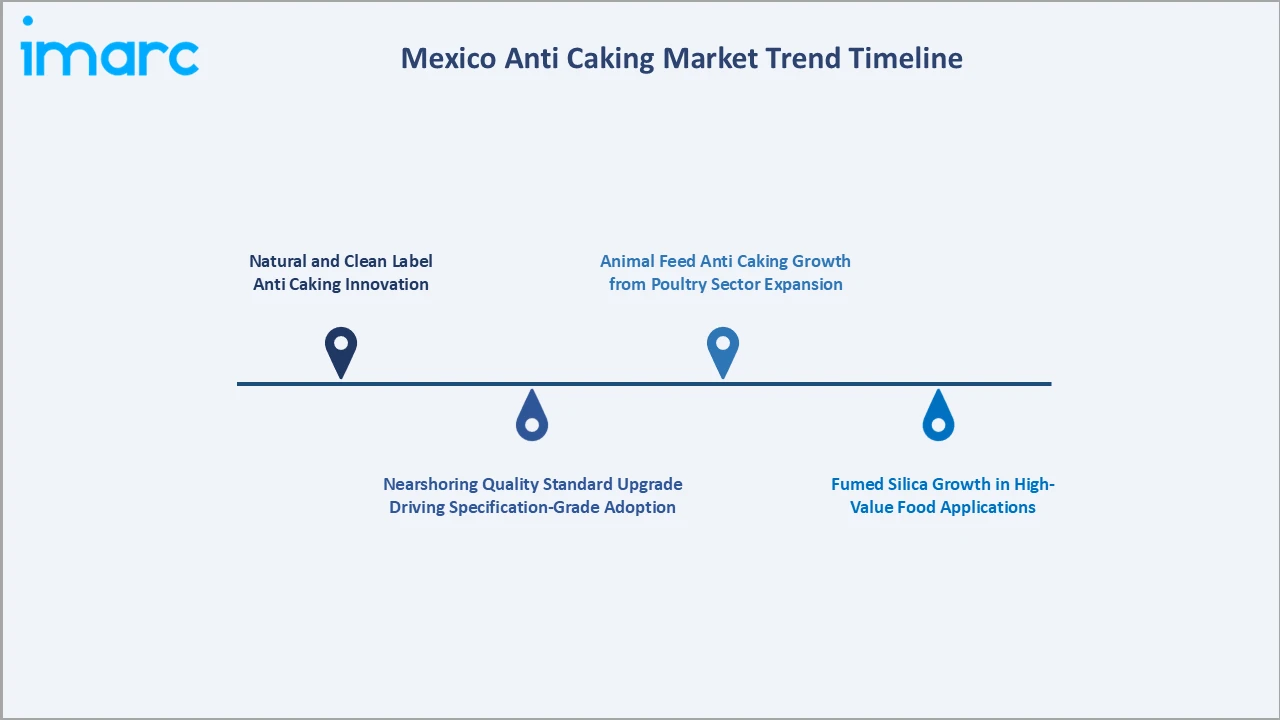
1. Natural and Clean Label Anti Caking Innovation
Mexico’s premium food manufacturers are actively developing natural anti caking formulations to meet clean label requirements. Rice hull powder, microcrystalline cellulose, native tapioca starch, and natural magnesium compounds are being evaluated and adopted as natural-declaration alternatives to conventional mineral anti caking agents. Cargill’s specialty ingredient portfolio for clean label food applications and IMCD N.V.’s specialty ingredient distribution network are among the commercial channels through which natural anti caking innovation is reaching Mexican food manufacturers in the premium and organic product segments.
2. Nearshoring Quality Standard Upgrade Driving Specification-Grade Adoption
International food and beverage companies establishing or expanding Mexico production facilities under the nearshoring trend are implementing global quality management standards that specify approved suppliers, grade standards, and traceability documentation for all food ingredients including anti caking agents. This quality standard upgrade is displacing commodity-grade and unspecified anti caking agents from Mexico’s food manufacturing sector toward documented, traceable, specification-grade products, thereby increasing average revenue per kilogram across the market.
3. Fumed Silica Growth in High-Value Food Applications
Fumed silica is gaining market share within the silicon dioxide anti caking segment in Mexico’s premium food applications due to its superior performance characteristics. Fumed silica achieves effective anti caking function at use levels of 0.5–1.0%, resulting in lower incorporation costs per ton of finished product despite a higher per-kilogram ingredient price, and delivers more consistent rheological performance in challenging formulations such as high-fat cheese powders, protein supplements, and moisture-sensitive bakery mixes.
4. Animal Feed Anti Caking Growth from Poultry Sector Expansion
Mexico’s poultry production sector is the primary growth engine for anti caking agent demand in the animal feed application segment. Compound feed for broiler chickens and laying hens requires mineral premix anti caking agents to ensure uniform micronutrient distribution and prevent caking of hygroscopic ingredients including salt, methionine, lysine, and vitamin-mineral premixes during storage and mechanical conveying at feed mill facilities.
Industry Value Chain Analysis
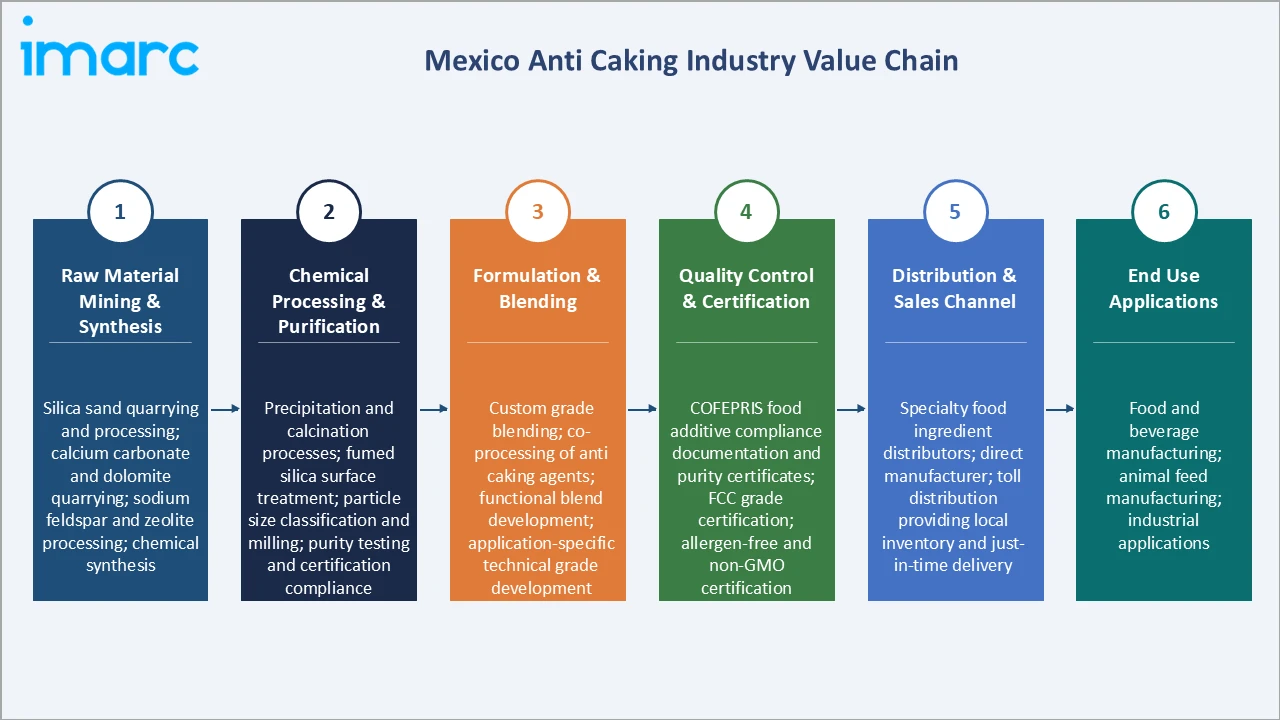
The Mexico anti caking market value chain spans raw material extraction and chemical synthesis through formulated food and feed product manufacture, with specialty ingredient distribution serving as the primary channel connecting international anti caking manufacturers to Mexico’s food and feed processing customers.
|
Stage |
Key Players / Examples |
| Raw Material Mining & Synthesis |
Silica sand quarrying and processing; calcium carbonate and dolomite quarrying; sodium feldspar and zeolite processing; chemical synthesis |
| Chemical Processing & Purification |
Precipitation and calcination processes; fumed silica surface treatment; particle size classification and milling; purity testing and certification compliance |
| Formulation & Blending |
Custom grade blending; co-processing of anti caking agents; functional blend development; application-specific technical grade development |
| Quality Control & Certification |
COFEPRIS food additive compliance documentation and purity certificates; FCC grade certification; allergen-free and non-GMO certification |
| Distribution & Sales Channel |
Specialty food ingredient distributors; direct manufacturer; toll distribution providing local inventory and just-in-time delivery |
| End Use Applications |
Food and beverage manufacturing; animal feed manufacturing; industrial applications |
Technology Landscape in the Mexico Anti Caking Industry
Fumed Silica (Pyrogenic Silicon Dioxide) Technology
Fumed silica represents the premium performance tier of silicon dioxide anti caking agents, offering unique chain-aggregate particle morphology that provides exceptional anti caking performance at low use levels in food and pharmaceutical applications. Fumed silica’s extremely high surface area enables it to absorb moisture and lubricate particle surfaces at use levels of 0.5–1.5% in food formulations, making it the anti caking agent of choice in high-value food applications including protein supplements, high-fat cheese powders, and moisture-sensitive baking premixes.
Precipitated Silica Technology
Precipitated silica is the workhorse anti caking grade for mid-market food applications in Mexico, offering effective anti caking performance at moderate use levels at lower cost than fumed silica. Furthermore, precipitated silica’s larger and more variable particle size distribution compared to fumed silica requires precise particle size specification and quality control to ensure consistent performance in food manufacturer production operations.
Calcium Compound Anti Caking Technology
Calcium silicate and tricalcium phosphate anti caking agents serve as cost-effective alternatives to silicon dioxide grades in food applications where the food matrix composition and regulatory permissions support their use. Calcium silicate’s ability to absorb moisture up to 600% of its own weight by mass while maintaining dry powder appearance makes it effective in high-moisture-sensitivity applications. Tricalcium phosphate’s simultaneous anti caking and nutritional fortification functions make it particularly valuable in calcium-fortified powdered food formulations where a single ingredient can deliver both functional and nutritional benefits.
Natural Anti Caking Technologies
The clean label food trend is driving commercial development of natural anti caking alternatives that can replace conventional mineral anti caking agents in food formulations while enabling natural ingredient declaration on product labels. Rice hull powder is gaining adoption in organic and natural food products requiring anti caking performance with natural ingredient positioning. Moreover, microcrystalline cellulose (MCC) functions as both an anti caking agent and a bulking agent in powder blends, enabling manufacturers to achieve anti caking performance within a single multi-functional natural ingredient addition.
Market Segmentation Analysis
The report covers the following segments:
|
Segment Category |
Leading Segment |
Market Share |
Year |
|
Type |
Silicon Dioxide |
39.6% |
2025 |
| Application | Food and Beverage |
71.8% |
2025 |
|
Region |
Central Mexico |
40.9% |
2025 |

By Type
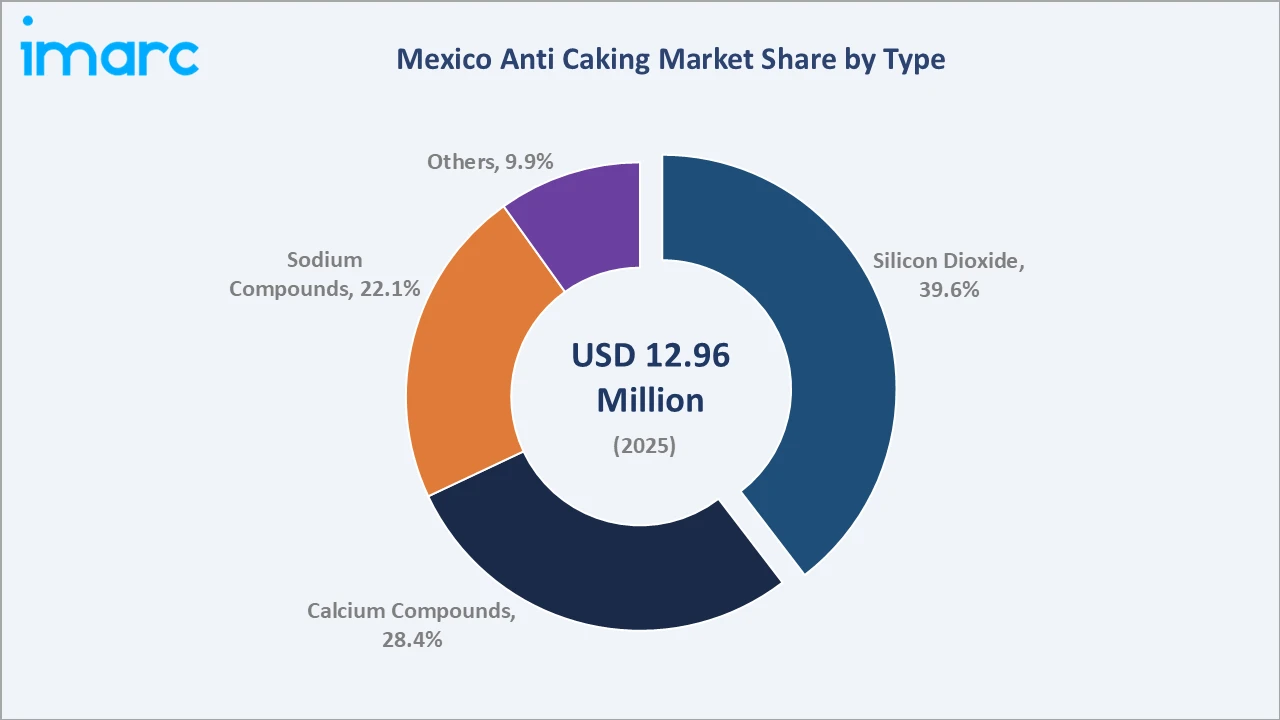
The type segment is analyzed across silicon dioxide (39.6%), calcium compounds (28.4%), sodium compounds (22.1%), and others (9.9%). Silicon dioxide’s dominance reflects its applicability across the broadest range of food anti caking applications: fumed silica grades for premium protein and fat-based powder matrices, precipitated silica for cost-effective general-purpose food powder anti caking, and colloidal silica for pharmaceutical-adjacent nutraceutical applications.
To access detailed market analysis, Request Sample
Calcium compounds serve Mexico’s large baking ingredient manufacturing sector (calcium phosphate in baking powder) and table salt processing (calcium silicate as a salt anti caking agent in iodized salt). Sodium compounds serve the table salt market (sodium aluminosilicate/sodium ferrocyanide in iodized and sea salt products) and processed cheese applications (sodium-based melting salts with anti caking secondary function).
By Application
The application segment is led by food and beverage (71.8%), animal feed (19.6%), and others (8.6%). Food and beverage’s dominance encompasses a wide range of product-specific anti caking applications: table salt processing represents the single largest volume anti caking agent application in Mexico. Additionally, powdered dairy applications require silicon dioxide anti caking agents to maintain flowability of highly hygroscopic protein-rich powder matrices.
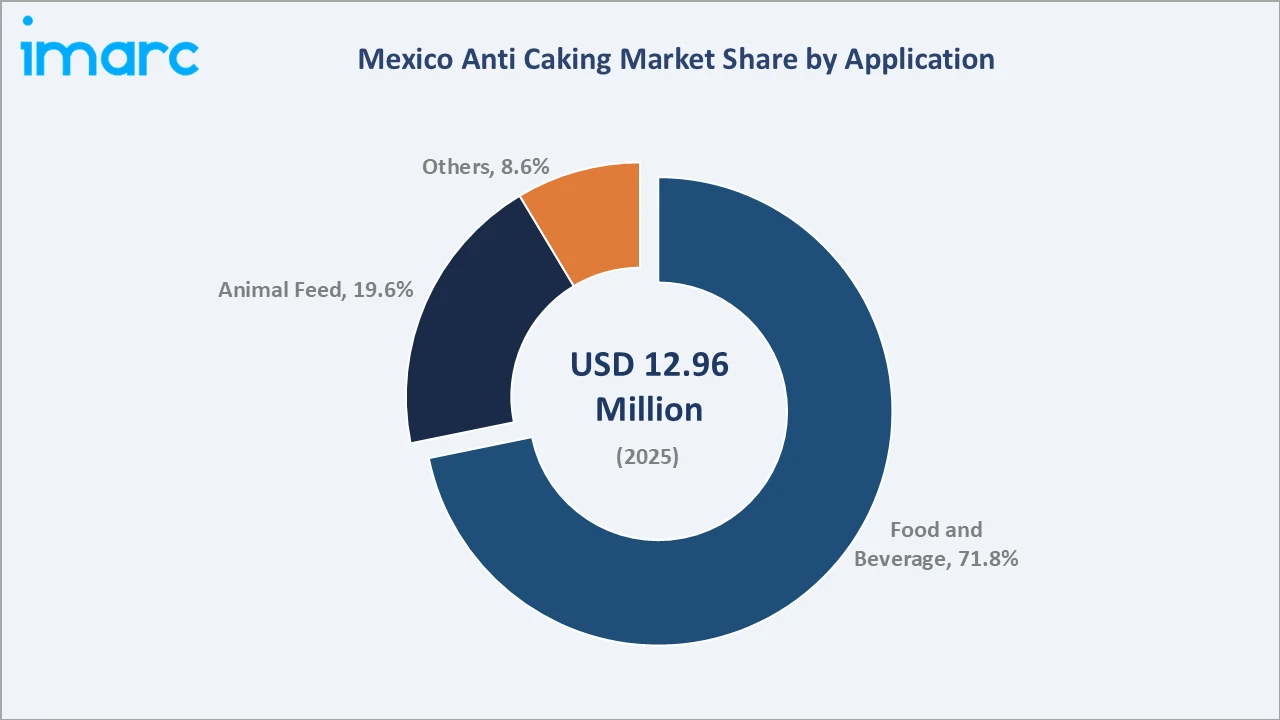
Animal feed uses calcium compounds and silicon dioxide in compound feed manufacturing, mineral premix blending, and amino acid supplement formulations for Mexico’s poultry, swine, and cattle production sectors.
Regional Market Insights
Central Mexico’s 40.9% market leadership reflects the Mexico City metropolitan area’s role as the country’s dominant food processing hub, with the highest concentration of salt processing, dairy manufacturing, seasoning production, and instant food manufacturing facilities that collectively represent the majority of Mexico’s anti caking agent consumption.
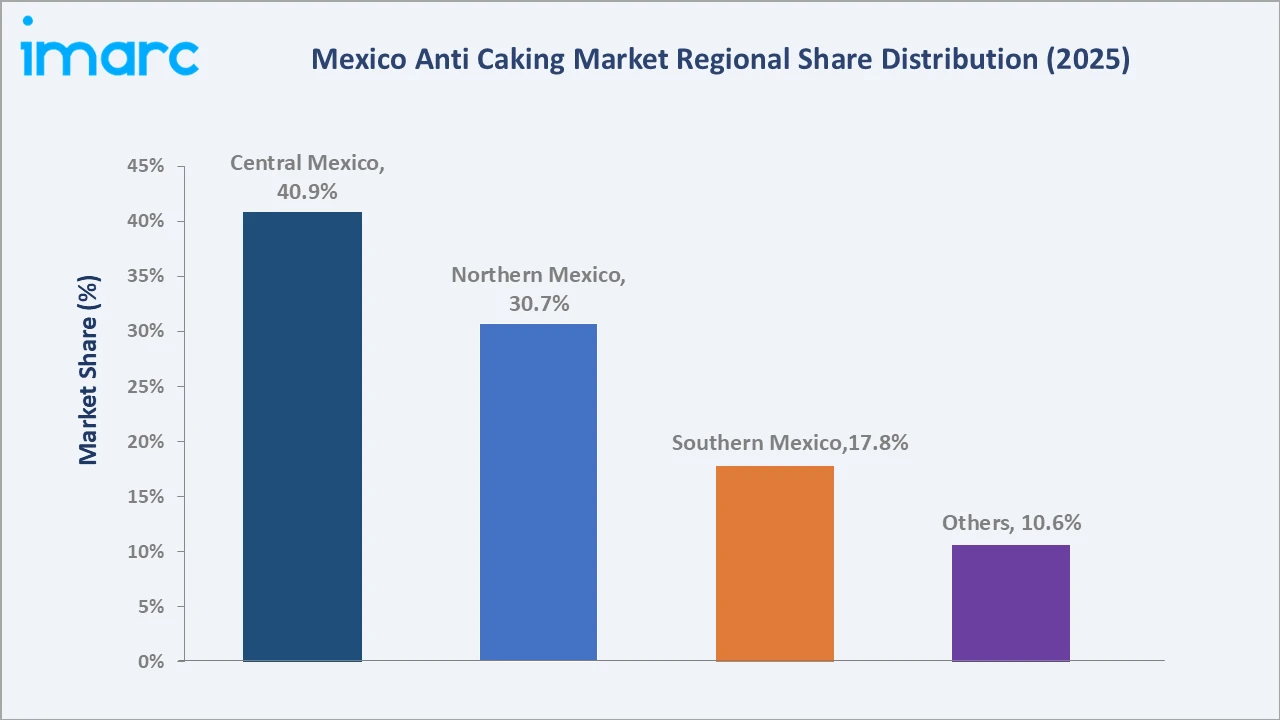
Northern Mexico’s 30.7% market share reflects the region’s dual role as an animal feed manufacturing hub and a growing food processing center. Sonora and Sinaloa host major compound feed mills and seafood processing operations that collectively consume significant volumes of calcium compound anti caking agents in feed mineral premix and dried seafood protein powder applications.
|
Region |
Share (2025) |
Key Growth Drivers |
|
Central Mexico |
40.9% |
Highest concentration of food processing facilities consuming anti caking agents; major salt processing operations; dairy powder, cheese, and seasoning manufacturing cluster; Mexico City’s specialty ingredient distribution hub enabling efficient supply chain service |
|
Northern Mexico |
30.7% |
Growing food processing and animal feed manufacturing in Nuevo León, Sonora, and Sinaloa; major poultry integrator compound feed mills consuming calcium anti caking agents; seafood processing requiring anti caking for export market products |
|
Southern Mexico |
17.8% |
Agricultural state food processing development; growing packaged food manufacturing penetration of regional food companies; animal feed production supporting Southern Mexico’s beef and dairy cattle sectors |
|
Others |
10.6% |
Peninsula and border region food processing development; growing export-oriented agricultural product processing; increasing regional food industry formalization adopting food safety standards that specify anti caking agent use |
Competitive Landscape
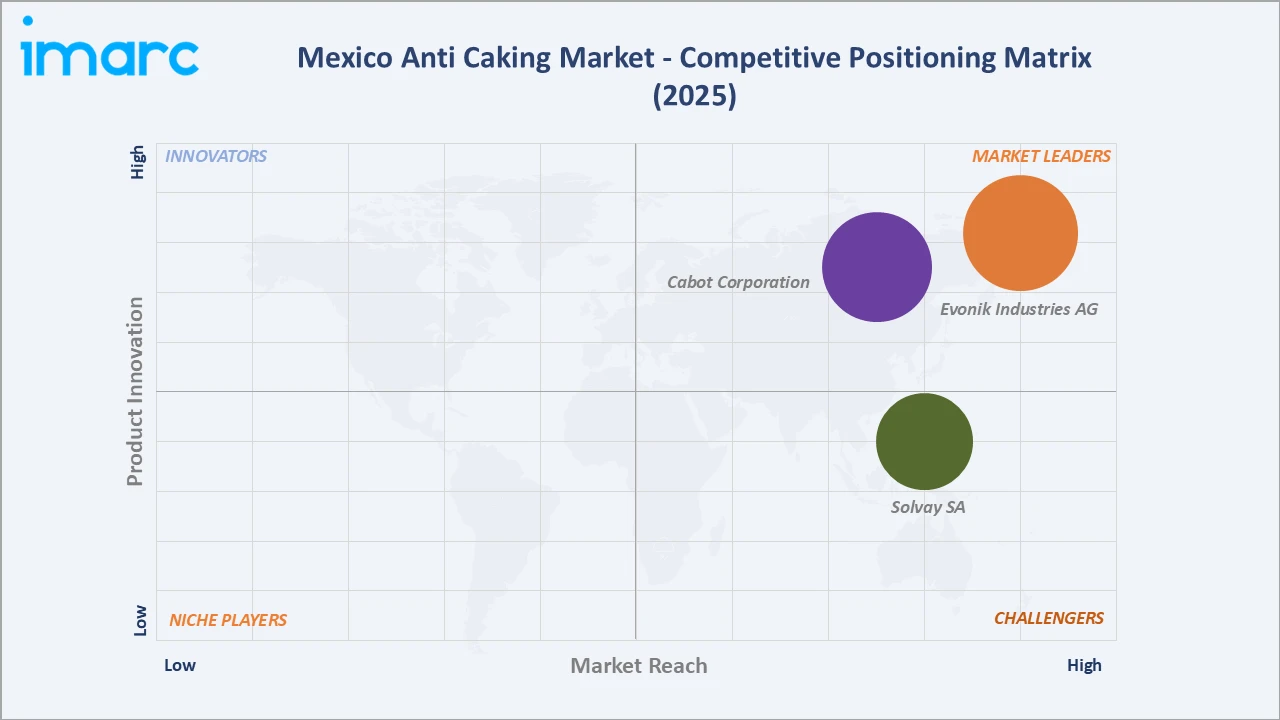
The Mexico anti caking market is served primarily by international specialty chemical manufacturers that produce anti caking agents at European and North American facilities and distribute to Mexico through specialty food ingredient distribution networks.
|
Company Name |
Brand/Product |
Market Position |
Core Strength |
| Evonik Industries AG |
AEROSIL 200, AEROSIL R972, AEROSIL 300 fumed silica grades; SIPERNAT precipitated silica, among others |
Market Leader |
Global fumed silica technology leader; AEROSIL brand the benchmark food anti caking grade in Mexico’s premium applications; wide FCC-grade food application portfolio |
| Cabot Corporation |
Cab-O-Sil |
Market Leader |
Global fumed silica and specialty silica manufacturer; Cab-O-Sil food-grade anti caking range; established distribution through specialty ingredient distributors |
| Solvay SA | Tixosil |
Challenger |
Established Mexico presence through Solvay Latin America operations; dairy and baking sector anti caking expertise |
Specialty ingredient distributors serve as the primary commercial interface between international anti caking manufacturers and Mexico’s food and feed processing customers, providing regulatory documentation, technical support, local inventory, and customized supply chain services that direct manufacturer sales forces cannot economically provide at Mexico’s fragmented food industry customer base scale.
Key Company Profiles
Evonik Industries AG
Evonik Industries AG is one of the world’s leading producers of fumed silica. Evonik’s AEROSIL product family is the global standard for premium food-grade anti caking applications, with decades of application development research supporting its use across hundreds of food product matrices.
- Product Portfolio: AEROSIL 200, AEROSIL R972, AEROSIL 300 fumed silica grades; SIPERNAT precipitated silica, among others.
- Recent Developments: Evonik Industries AG reported Q1 2026 external sales of EUR 3.43 billion, down 9% year on year, mainly reflecting lower volumes, prices, exchange-rate effects, and portfolio impacts. Adjusted EBITDA declined to EUR 475 million from EUR 560 million in Q1 2025, while free cash flow remained positive at EUR 183 million.
- Strategic Focus: Premium fumed silica anti caking market leadership through technical differentiation and application support; expansion of pharmaceutical-grade colloidal silicon dioxide sales into Mexico’s growing nutraceutical sector; clean label-compatible Aerosil positioning for natural food manufacturers.
Cabot Corporation
Cabot Corporation is one of the world’s largest producers of carbon black, specialty fluids, and fumed metal oxides including fumed silica. Cabot’s Performance Chemicals segment produces the Cab-O-Sil fumed silica product family that serves the food and pharmaceutical anti caking markets globally, distributed in Mexico.
- Brand/Products: CAB-O-SIL M-5 (fumed silica, 200 m²/g BET, principal food anti caking grade); CAB-O-SIL TS-720 (hydrophobic grade for water-repellent applications); CAB-O-SIL EH-5 (high surface area 380 m²/g for maximum performance).
- Recent Developments: In May 2026, Cabot Corporation reported Q2 FY2026 net sales of USD 904 million, along with performance chemicals EBIT rising 18% year over year to reach USD 59 million.
- Strategic Focus: Fumed silica market share growth in Mexico’s premium food and pharmaceutical applications; distributor partnership development for improved market access across Central and Northern Mexico food manufacturing clusters; protein supplement market development leveraging Cab-O-Sil’s established performance credentials in US sports nutrition applications.
Market Concentration Analysis
The Mexico anti caking market exhibits moderate-to-high concentration at the supply level, international specialty chemical manufacturers collectively supplying the majority of anti caking agent volume through a common distribution infrastructure of specialty food ingredient distributors. No domestic Mexican manufacturer produces significant volumes of food-grade anti caking agents, making the market entirely dependent on imported supply.
The specialty ingredient distribution model’s technical sales, regulatory support, and local inventory capabilities create meaningful service differentiation that justifies distributor margin premiums over direct manufacturer supply for Mexico’s fragmented food manufacturer customer base.
Investment & Growth Opportunities
Fastest Growing Segments
Fumed silica for protein supplement and nutraceutical anti caking applications (~6%+ CAGR within silicon dioxide segment); natural and clean label anti caking ingredients (rice hull powder, microcrystalline cellulose) for premium organic food manufacturing; pharmaceutical-grade colloidal silicon dioxide for nutraceutical tablet and capsule formulations; and calcium compound anti caking for Mexico’s expanding poultry feed manufacturing sector represent the highest-growth investment vectors within Mexico’s anti caking market through 2034.
Emerging Market Expansion
Mexico’s pharmaceutical and nutraceutical manufacturing sector represents an attractive adjacent market for anti caking agent suppliers with pharmaceutical-grade colloidal silicon dioxide and excipient-grade calcium phosphate product capabilities.
As Mexico’s dietary supplement contract manufacturing sector expands under nearshoring investment, the demand for pharmaceutical-grade anti caking agents in tablet, capsule, and powdered supplement formulations will grow substantially above the food-grade anti caking market growth rate, representing a market development opportunity for Evonik, Cabot, and other suppliers with pharmaceutical-grade product certifications.
Venture and Institutional Investment Trends
- Specialty ingredient distributors are actively expanding their Mexico operations through warehouse investment, technical sales team expansion, and product portfolio extension, creating improved market infrastructure for anti caking agent commercial development in Mexico’s secondary food manufacturing markets beyond the established Central Mexico concentration.
- Clean label food ingredient innovation companies are attracting investment for natural anti caking agent product development, with plant-derived silica, agricultural by-product-derived flow agents, and bio-based anti caking formulations offering premium price points that support attractive returns on product development and regulatory substantiation investment compared to commodity mineral anti caking market positions.
Future Market Outlook (2026-2034)
The Mexico anti caking market is positioned for steady, value-driven growth through 2034. From a base of USD 12.96 Million in 2025 to USD 13.50 Million in 2026, the market is projected to reach USD 18.91 Million by 2034 at a CAGR of 4.16%, representing total incremental value creation of USD 5.95 Million, a 45.9% market value increase over the forecast period.
This growth is driven by the proportional expansion of Mexico’s food processing sector, progressive premiumization toward specification-grade and natural anti caking products, and the systematic adoption of global quality standards by nearshoring food manufacturers that displaces commodity anti caking usage.
By 2034, Silicon dioxide will have maintained its type segment leadership at an estimated 42–44% of market value as fumed silica penetration into premium food and nutraceutical applications grows, while natural anti caking agents will have grown from 9.9% to an estimated 12–14% of market value as clean label food manufacturing proliferates across Mexico’s modern retail channel.
Research Methodology
Primary Research
Primary research comprised structured interviews with over 55 industry participants in 2024–2025, including food ingredient buyers at salt processing companies, dairy powder manufacturers, seasoning producers, and instant food companies; specialty ingredient distributor technical sales managers in Mexico; and animal feed compound manufacturer procurement directors across Central Mexico, Northern Mexico, and Jalisco.
Secondary Research
Secondary research encompassed the COFEPRIS food additive regulatory database and NOM food standard publications, Codex Alimentarius GSFA anti caking agent permissions documentation, Mexico Customs Authority import data for food additive silica and calcium compound HS codes, USDA GAIN report on Mexico’s food processing industry, and annual reports covering Latin America ingredient market performance.
Forecasting Models
Market size estimations were derived using top-down and bottom-up forecasting, incorporating Mexico’s food processing industry output value growth projections from INEGI, anti caking agent consumption intensity modelling, animal feed production volume projections, price trend modelling for silicon dioxide and calcium compound grades, and premiumization-driven average selling price uplift projections from clean label and specification-grade adoption trends.
Mexico Anti Caking Market Report Coverage:
| Report Features | Details |
|---|---|
| Base Year of the Analysis | 2025 |
| Historical Period | 2020-2025 |
| Forecast Period | 2026-2034 |
| Units | Million USD |
| Scope of the Report |
Exploration of Historical Trends and Market Outlook, Industry Catalysts and Challenges, Segment-Wise Historical and Future Market Assessment:
|
| Types Covered | Calcium Compounds, Sodium Compounds, Silicon Dioxide, Others |
| Applications Covered | Food and Beverage, Animal Feed, Others |
| Regions Covered | Northern Mexico, Central Mexico, Southern Mexico, Others |
| Companies Covered | Evonik Industries AG, Cabot Corporation, Solvay SA, etc. |
| Customization Scope | 10% Free Customization |
| Post-Sale Analyst Support | 10-12 Weeks |
| Delivery Format | PDF and Excel through Email (We can also provide the editable version of the report in PPT/Word format on special request) |
Key Benefits for Stakeholders:
- IMARC’s industry report offers a comprehensive quantitative analysis of various market segments, historical and current market trends, market forecasts, and dynamics of the Mexico anti caking market from 2020-2034.
- The research report provides the latest information on the market drivers, challenges, and opportunities in the Mexico anti caking market.
- Porter's five forces analysis assist stakeholders in assessing the impact of new entrants, competitive rivalry, supplier power, buyer power, and the threat of substitution. It helps stakeholders to analyze the level of competition within the Mexico anti caking industry and its attractiveness.
- Competitive landscape allows stakeholders to understand their competitive environment and provides an insight into the current positions of key players in the market.
Frequently Asked Questions About the Mexico Anti Caking Market Report
The Mexico anti caking market size is estimated at USD 13.50 Million in 2026.
The market is expected to grow at a CAGR of 4.16% during 2026-2034, driven by Mexico’s processed food industry expansion, nearshoring FMCG manufacturing growth bringing specification-grade requirements, animal feed sector expansion, and progressive premiumization toward natural and clean label anti caking alternatives.
Central Mexico leads with a 40.9% market share in 2025, anchored by the Mexico City metropolitan area’s concentration of salt processing, dairy manufacturing, seasoning production, and instant food manufacturing facilities that collectively represent the majority of Mexico’s anti caking agent consumption by volume and value.
Silicon dioxide dominates with a 39.6% share in 2025, reflecting its superior technical performance across the broadest range of food anti caking applications and the availability of both fumed and precipitated silica grades covering premium to cost-sensitive application tiers.
Food and beverage holds the largest application share at 71.8%, reflecting anti caking agents’ near-universal requirement across Mexico’s processed food categories including table salt, powdered dairy, seasonings, instant beverages, baking mixes, confectionery products, and protein supplements.
Some of the key players include Evonik Industries AG, Cabot Corporation, and Solvay SA.
Key drivers include Mexico’s food processing industry expansion (USD 35.8 Billion, growing 4–5% annually), animal feed sector expansion from poultry and livestock production growth, clean label and natural anti caking product adoption, and Mexico’s table salt iodization program requiring mandated anti caking agent addition.
Key challenges include complete import dependence for anti caking agents with no significant domestic manufacturing, clean label substitution pressure on conventional mineral anti caking agents in premium food segments, and the technical application knowledge gap among smaller Mexican food manufacturers.
Need more help?
- Speak to our experienced analysts for insights on the current market scenarios.
- Include additional segments and countries to customize the report as per your requirement.
- Gain an unparalleled competitive advantage in your domain by understanding how to utilize the report and positively impacting your operations and revenue.
- For further assistance, please connect with our analysts.
 Request Customization
 Speak to an Analyst
 Request Brochure
 Inquire Before Buying
Benefits of Customization
- Personalize this research
- Triangulate with your data
- Get data as per your format and definition
- Gain a deeper dive into a specific application, geography, customer, or competitor
- Any level of personalization
Get in Touch With Us
UNITED STATES
Phone: +1-201-971-6302
INDIA
Phone: +91-120-433-0800
UNITED KINGDOM
Phone: +44-753-714-6104
Email: [email protected]
Client Testimonials




.webp)




.webp)













Related Reports

Choose your plan
*Please note that the prices mentioned below are starting prices for each bundle type. Kindly contact our team for further details.*
Single User License
- 1 User License, Access on 2 Devices
- PDF Report + Excel Dataset (Password Protected)
- Lifetime Access
- No Printing Rights
- 10% Free Report Customization
- 10–12 Weeks of Analyst Support
Five User License
- Access for 5 Users, 2 Devices per User
- PDF Report + Excel Dataset (Password Protected)
- Lifetime Access
- Dedicated Account Manager
- 12–14 Weeks of Analyst Support
- No Printing Rights
- 15% Free Report Customization
- 25% Discount on Your Next Purchase
Corporate User License
- Unlimited User Access (Within Your Organization)
- PDF Report + Excel Dataset
- Lifetime Access
- Dedicated Account Manager
- 14–20 Weeks of Analyst Support
- No Printing Rights
- 20% Free Report Customization
- 30% Discount on Your Next Purchase
Essential Insights
What's included:
3 reports
- Lifetime Access
- PDF Reports
- Excel Datasets
- 2 Weeks of Free Analyst Support
- 2 User Licenses
- Access on 2 Devices
- Printing Rights
- Complimentary PowerPoint (PPT) Version
- Complimentary License Upgrade
Professional Access
What's included:
5 reports
- Lifetime Access
- PDF Reports
- Excel Datasets
- 8 Weeks of Free Analyst Support
- 2 User Licenses
- Access on 2 Devices
- Printing Rights
- Complimentary PowerPoint (PPT) Version
- Complimentary License Upgrade
Business Advantage
What's included:
8 reports
- Lifetime Access
- PDF Reports
- Excel Datasets
- 14 Weeks of Free Analyst Support
- 2 User Licenses
- Access on 2 Devices
- Printing Rights
- Complimentary PowerPoint (PPT) Version
- Complimentary License Upgrade
Enterprise Intelligence
What's included:
10 reports
- Lifetime Access
- PDF Reports
- Excel Datasets
- 20 Weeks of Free Analyst Support
- 2 User Licenses
- Access on 2 Devices
- Printing Rights
- Complimentary PowerPoint (PPT) Version
- Complimentary License Upgrade