
Mexico E-Pharmacy Market Size, Share, Trends and Forecast by Drug Type, Product Type, Platform, Payment Method, and Region, 2026-2034
Mexico E-Pharmacy Market Size, Share, Trends & Forecast (2026-2034)
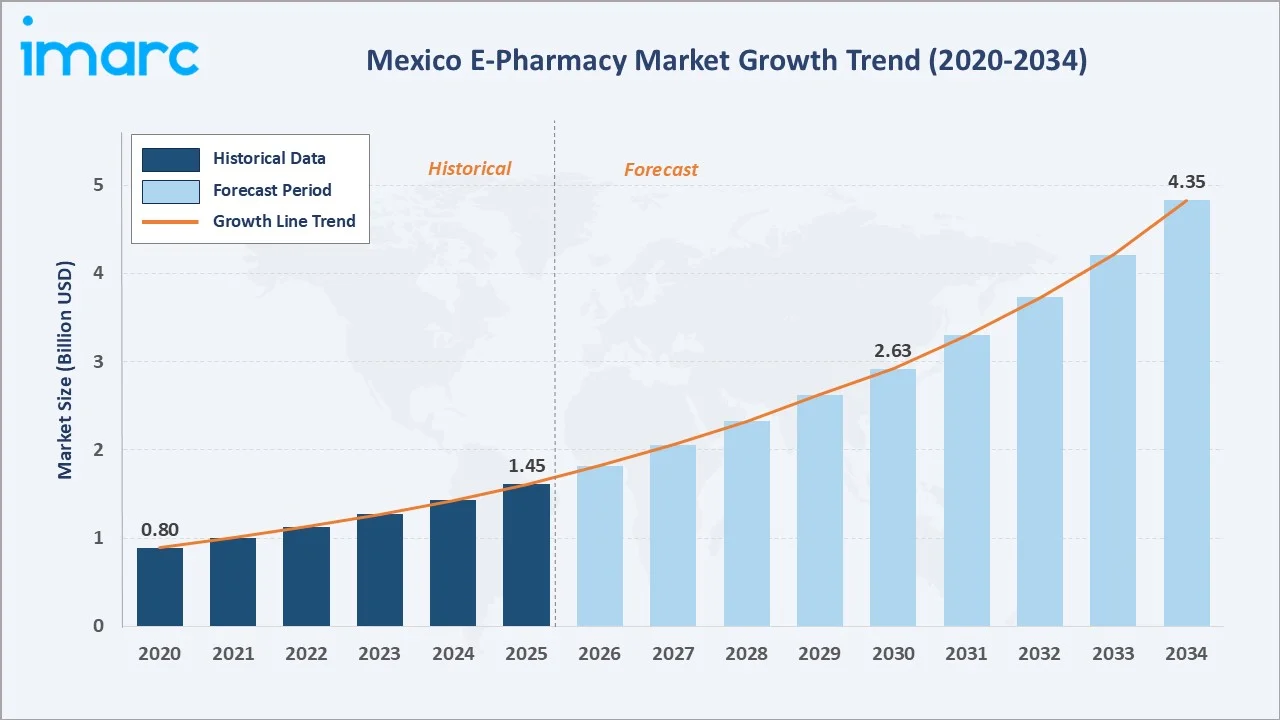
The Mexico e-pharmacy market size increased from USD 1.45 Billion in 2025 to USD 1.69 Billion in 2026 and is projected to reach USD 4.35 Billion by 2034, growing at a CAGR of 12.57% during 2026-2034. The market is driven by rising smartphone penetration, growing preference for doorstep medicine delivery, and increasing adoption of digital healthcare platforms. By late 2025, Mexico had around 110 million internet users, equal to an 83.5% penetration rate, while the total population reached nearly 132 million in October 2025, growing at 0.8% annually. This expanding digital base is driving the e-pharmacy market by increasing consumer access to online medicine ordering, digital prescriptions, teleconsultations, and doorstep healthcare delivery, especially across urban and semi-urban areas. Prescription drugs lead the drug type at 62.8%. App-based leads platform at 57.3%. Central Mexico leads regionally at 44.8%.
Market Snapshot
|
Metric |
Value |
|
Base Year Market Size (2025) |
USD 1.45 Billion |
| Market Size (2026) | USD 1.69 Billion |
|
Forecast Market Size (2034) |
USD 4.35 Billion |
|
CAGR (2026-2034) |
12.57% |
|
Base Year |
2025 |
|
Historical Period |
2020-2025 |
|
Forecast Period |
2026-2034 |
|
Dominant Drug Type |
Prescription Drugs (62.8%, 2025) |
|
Dominant Platform |
App-Based (57.3%, 2025) |
|
Leading Region |
Central Mexico (44.8%, 2025) |
The Mexico e-pharmacy market grew from USD 0.80 Billion in 2020 to USD 1.45 Billion in 2025 and an estimated USD 1.69 Billion in 2026, reflecting strong adoption of online medicine ordering and digital healthcare platforms. It is expected to reach USD 2.63 Billion by 2030, supported by rising internet penetration, smartphone usage, and demand for doorstep delivery. By 2034, the market is forecast to attain USD 4.35 Billion, driven by e-prescriptions, teleconsultations, chronic disease medication refills, and expanding digital pharmacy networks. This growth highlights the shift from traditional pharmacy purchases toward convenient, app-based healthcare access.
To get more information on this market, Request Sample
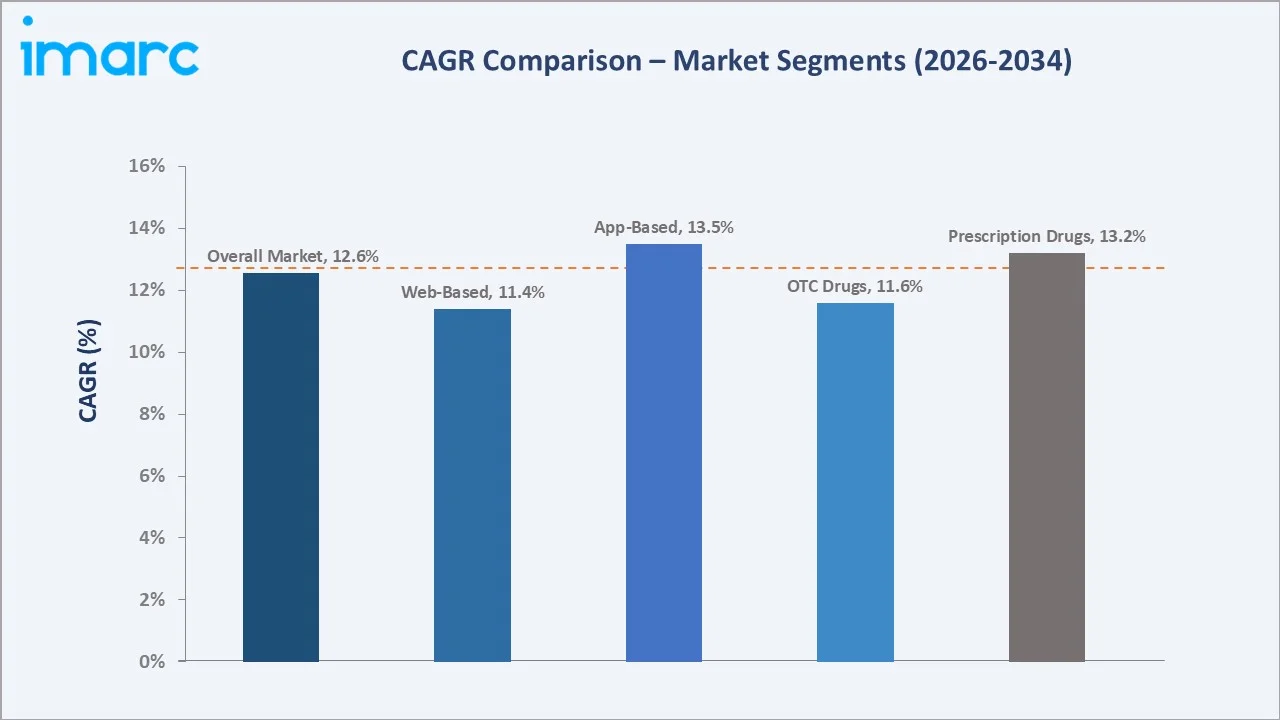
Prescription drugs grow fastest at ~13.2% CAGR through digital e-prescription and telemedicine Rx. App-based grows fastest at ~13.5% CAGR through loyalty app, subscription refill, and telemedicine integration. OTC grows at ~11.6% CAGR through the wellness and self-medication digital channel.
Executive Summary
Mexico’s e-pharmacy market is gaining momentum as consumers increasingly prefer convenient, app-based access to medicines, wellness products, and healthcare services. Growth is supported by rising internet penetration, smartphone usage, doorstep delivery demand, and wider acceptance of digital payments. Online pharmacies are also benefiting from teleconsultations, e-prescriptions, and recurring medicine refills for chronic diseases. Pharmacies, health-tech platforms, and retail chains are expanding digital channels to improve reach and customer retention. However, regulatory compliance, prescription verification, counterfeit medicine risks, and logistics reliability remain critical factors shaping market development. Prescription drugs at 62.8% lead through chronic Rx. App-based at 57.3% leads through the pharmacy loyalty app. Central Mexico leads regionally at 44.8%.
Key Market Insights
|
Insight |
Data |
|
Dominant Drug Type |
Prescription Drugs - 62.8% share (2025) |
|
Dominant Platform |
App-Based - 57.3% market share (2025) |
|
Leading Region |
Central Mexico - 44.8% share (2025) |
|
Market Opportunity |
Digital Rx telemedicine; chronic diabetes hypertension subscription refill; Health marketplace; OTC wellness nutrition growing; AI drug interaction check |
Key Analytical Observations Supporting The Above Data:
- Prescription Drugs at 62.8%: Prescription drugs dominate as consumers increasingly use online platforms for doctor-prescribed medicines, chronic disease refills, and regular treatment needs. E-prescriptions, teleconsultations, and doorstep delivery are further strengthening demand for prescription-based online pharmacy purchases.
- App-Based at 57.3%: App-based platforms dominate as consumers prefer mobile apps for quick medicine searches, prescription uploads, order tracking, and digital payments. Higher smartphone usage and push-based refill reminders further strengthen app-led pharmacy purchases.
- Central Mexico at 44.8%: Central Mexico dominates regionally due to its high urban population, stronger healthcare infrastructure, and dense concentration of pharmacies, hospitals, and delivery networks. Mexico City and nearby states also have higher digital adoption, supporting faster uptake of app-based medicine ordering and doorstep delivery.
Mexico E-Pharmacy Market Overview
The Mexico e-pharmacy market encompasses online sale and delivery of prescription drugs, OTC medicines, wellness products, personal care items, and chronic disease refills through apps and websites. It includes digital prescription uploads, teleconsultation-linked purchases, online payments, order tracking, and doorstep delivery services. The market also covers partnerships among pharmacies, healthcare platforms, logistics providers, and payment companies. Its growth is shaped by rising digital healthcare adoption, urban convenience demand, and expanding access to medicines across underserved areas. Macroeconomic factors include rising healthcare spending, population growth, higher internet penetration, and expanding smartphone-based commerce, which are increasing demand for online medicine access.
Market Dynamics
To evaluate market opportunities, Request Sample
Market Drivers
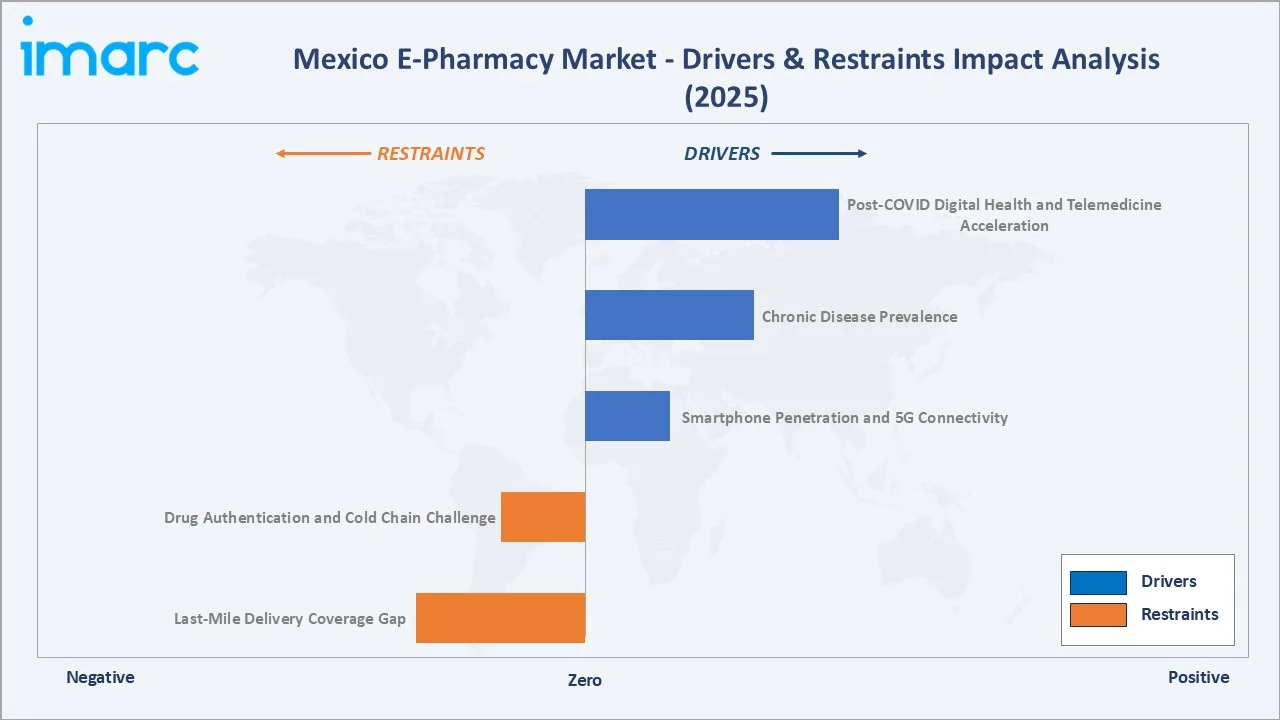
- Post-COVID Digital Health and Telemedicine Acceleration: Post-COVID digital health and telemedicine acceleration is increasing consumer comfort with remote consultations and online medicine purchases. Patients receiving virtual consultations can use digital prescriptions to order medicines directly through e-pharmacy apps and websites. This creates a seamless pathway from diagnosis to treatment, improving convenience and medication access. As telemedicine becomes more common for follow-ups, chronic care, and minor illnesses, e-pharmacies are benefiting from higher prescription volumes and repeat orders.
- Chronic Disease Prevalence: Chronic disease prevalence increases recurring demand for medicines used in diabetes, hypertension, cardiovascular diseases, respiratory disorders, and other long-term conditions. According to the International Diabetes Federation (IDF), in 2024, the number of adults (20–79 years) with diabetes in Mexico is 13.6 million and is expected to reach 19.9 million by 2050. Patients managing these illnesses require regular refills, making online pharmacies attractive for subscription orders, refill reminders, and doorstep delivery. E-pharmacy platforms also improve treatment adherence by offering easier access to medicines without repeated store visits. As chronic disease management becomes more continuous and home-based, digital pharmacy channels are gaining stronger relevance.
- Smartphone Penetration and 5G Connectivity: Smartphone penetration and 5G connectivity are making online medicine ordering faster, easier, and more accessible through mobile apps. Improved connectivity supports prescription uploads, teleconsultations, digital payments, real-time order tracking, and refill reminders. As of Q4 2024, Mexico held the third-highest position in Latin America in terms of 5G connection share by market, with 5G accounting for 9.4% of total connections, according to GSMA Intelligence. Faster mobile networks also enhance user experience by reducing app delays and enabling seamless interaction with healthcare providers. As more consumers rely on smartphones for healthcare needs, e-pharmacy platforms are expanding their reach across urban, semi-urban, and underserved regions.
Market Restraints
- Last-Mile Delivery Coverage Gap: Last-mile delivery coverage gaps limit timely medicine delivery outside major urban centers. Rural and semi-urban areas often face weaker logistics networks, longer delivery times, and higher fulfillment costs. This reduces consumer trust in online pharmacy platforms, especially for urgent prescriptions and temperature-sensitive medicines. Limited coverage also restricts e-pharmacy penetration in underserved regions, slowing nationwide market expansion.
- Drug Authentication and Cold Chain Challenge: Drug authentication and cold chain challenges are increasing the risk of counterfeit, expired, or improperly handled medicines entering online supply channels. Temperature-sensitive products such as insulin, vaccines, and certain specialty drugs require reliable cold storage and monitored delivery, which raises operating costs. Any failure in packaging, tracking, or temperature control can reduce medicine quality and damage consumer trust. These challenges make regulatory compliance, supplier verification, and logistics investment essential for sustainable e-pharmacy growth.
Market Opportunities
- Telemedicine and E-Prescription Integration: Telemedicine and e-prescription integration connecting virtual consultations directly with online medicine fulfillment. Digital prescriptions enable patients to order medications instantly through e-pharmacy platforms, reducing delays and improving treatment adherence. This integrated healthcare model supports chronic disease management, follow-up care, and convenient home delivery. As telemedicine adoption continues to expand, e-pharmacies are expected to benefit from higher prescription volumes, repeat purchases, and stronger customer engagement.
- Development of Faster Last-Mile and Cold-Chain Delivery Networks: Development of faster last-mile and cold-chain delivery networks is an opportunity as it can improve medicine availability, delivery speed, and service reliability. Stronger logistics infrastructure enables platforms to safely handle temperature-sensitive drugs such as insulin, vaccines, and specialty medicines. Faster delivery also supports urgent prescription fulfillment and improves customer trust in online pharmacy services. As e-pharmacies expand beyond major cities, investment in reliable last-mile and cold-chain systems can unlock growth in semi-urban and underserved regions.
Market Challenges
- Low Digital Trust Among Older and Rural Consumers: Low digital trust among older and rural consumers is slowing adoption of online medicine purchases. Many consumers remain concerned about prescription misuse, counterfeit medicines, payment security, and delivery reliability. Limited familiarity with apps, digital payments, and online health platforms further reduces confidence in e-pharmacy services. As a result, companies must invest in verified suppliers, clear prescription checks, customer support, and trust-building awareness campaigns to expand adoption beyond digitally active urban users.
- Prescription Verification and Regulatory Compliance Risks: Prescription verification and regulatory compliance risks are challenging as online platforms must ensure that restricted and prescription-only medicines are dispensed legally and safely. Weak verification processes can increase the risk of misuse, incorrect medication, counterfeit products, or unauthorized sales. Compliance with pharmacy licensing, prescription validation, data privacy, and drug safety rules adds operational complexity and costs. Any regulatory breach can damage consumer trust, attract penalties, and slow the expansion of e-pharmacy platforms.
Emerging Market Trends
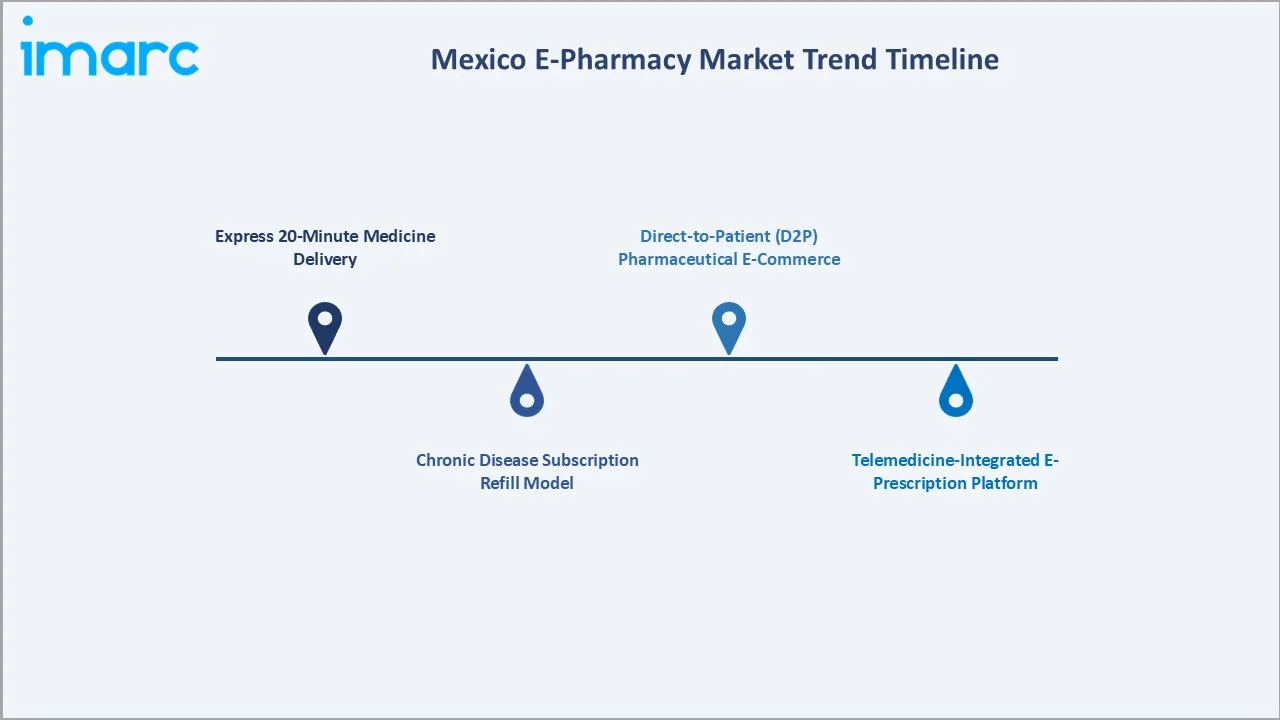
1. Express 20-Minute Medicine Delivery
Express 20-minute medicine delivery through platforms such as Rappi Turbo is shifting consumer expectations toward near-instant healthcare fulfillment. This model supports urgent demand for OTC medicines, wellness products, personal care items, and selected pharmacy essentials. It also strengthens platform loyalty by combining convenience, speed, app-based ordering, and real-time tracking. As urban consumers prioritize faster access to healthcare products, rapid-delivery pharmacy models are becoming an important competitive differentiator.
2. Chronic Disease Subscription Refill Model
The chronic disease subscription refill model enables patients to receive regular medicines automatically at scheduled intervals. This model is especially relevant for diabetes, hypertension, cardiovascular, and respiratory conditions that require continuous treatment. Subscription refills improve medication adherence, reduce missed doses, and create convenience for patients who need recurring prescriptions. For e-pharmacy platforms, it supports repeat purchases, stronger customer retention, and predictable revenue streams.
3. Direct-to-Patient (D2P) Pharmaceutical E-Commerce
Direct-to-patient pharmaceutical e-commerce is emerging as drug manufacturers increasingly use digital platforms to reach patients directly. This model improves access to chronic and specialty therapies by reducing dependence on only traditional pharmacy channels. It also supports better affordability, verified product sourcing, prescription refill convenience, and patient engagement. In July 2025, Novo Nordisk introduced its first Latin American e-commerce platform in Mexico, providing patients with direct access to its therapy portfolio. The launch aims to improve affordability and treatment availability for people managing chronic and rare diseases, including diabetes, obesity, and hemophilia, while reinforcing the company’s use of digital technology to enhance healthcare access. For chronic diseases such as diabetes, obesity, and hemophilia, D2P platforms can strengthen treatment continuity and improve long-term adherence.
4. Telemedicine-Integrated E-Prescription Platform
Telemedicine-integrated e-prescription platforms linking virtual consultations, digital prescriptions, and online medicine delivery into one seamless journey. Patients can consult doctors remotely, receive prescriptions digitally, and place pharmacy orders through apps or websites. This reduces waiting time, improves convenience, and supports faster treatment initiation. The trend also strengthens repeat usage for chronic care, follow-up consultations, and prescription refills, making e-pharmacies more integrated within Mexico’s digital healthcare ecosystem.
Industry Value Chain Analysis
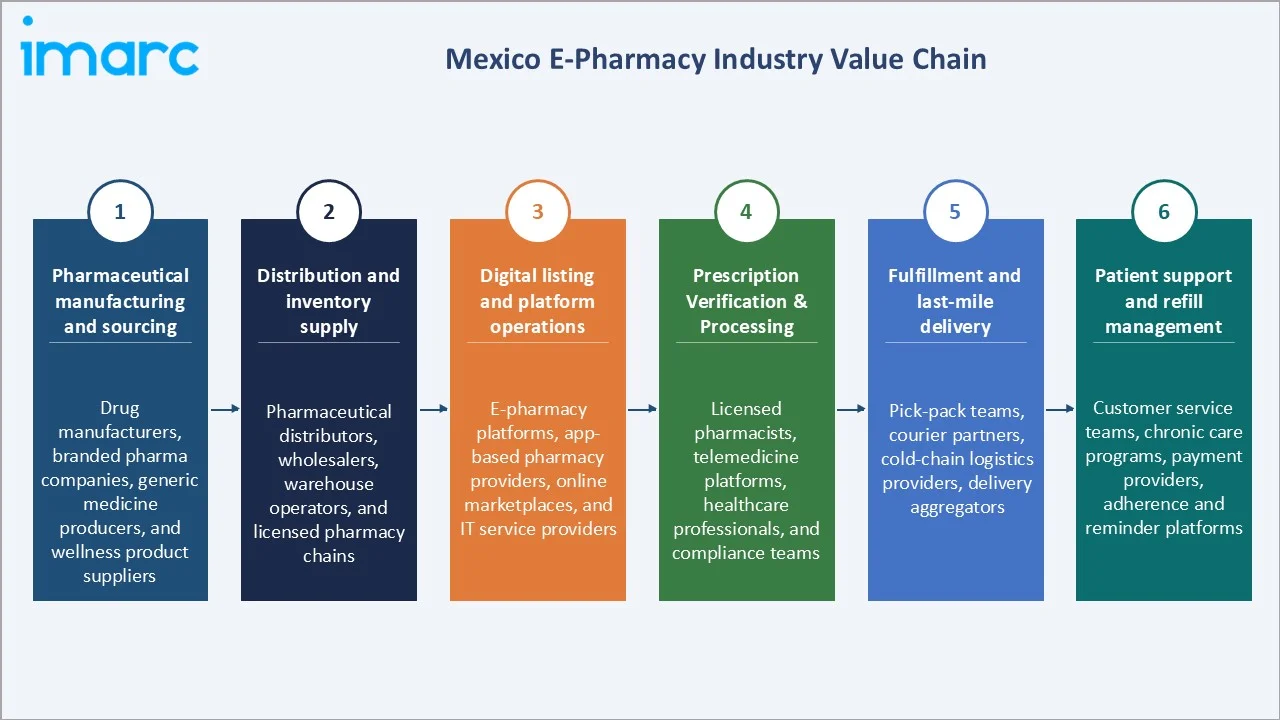
Mexico e-pharmacy value chain integrates pharmaceutical manufacturing and sourcing, distribution and inventory supply, digital listing and platform operations, prescription verification and order processing, fulfillment and last-mile delivery, and patient support and refill management.
|
Stage |
Key Participants |
|
Pharmaceutical manufacturing and sourcing |
Drug manufacturers, branded pharma companies, generic medicine producers, and wellness product suppliers |
|
Distribution and inventory supply |
Pharmaceutical distributors, wholesalers, warehouse operators, and licensed pharmacy chains |
|
Digital listing and platform operations |
E-pharmacy platforms, app-based pharmacy providers, online marketplaces, and IT service providers |
|
Prescription verification and order processing |
Licensed pharmacists, telemedicine platforms, healthcare professionals, and compliance teams |
|
Fulfillment and last-mile delivery |
Pick-pack teams, courier partners, cold-chain logistics providers, delivery aggregators |
|
Patient support and refill management |
Customer service teams, chronic care programs, payment providers, adherence and reminder platforms |
Prescription verification and order processing are the most value-added stages in the Mexico e-pharmacy value chain. This stage ensures regulatory compliance, validates prescriptions, prevents medication misuse, and enhances patient safety through licensed pharmacist oversight. It also integrates telemedicine, digital prescription management, payment authorization, and order approval, directly influencing customer trust, service quality, and successful order fulfillment.
Technology Landscape in the Mexico E-Pharmacy Industry
Digital Platform and App Technology
Digital platform and app technology enable consumers to search for medicines, upload prescriptions, place orders, make digital payments, and track deliveries through a single mobile application. Cloud-based platforms, intuitive user interfaces, and real-time inventory management improve operational efficiency and customer experience. Mobile apps also support personalized recommendations, refill reminders, and loyalty programs, increasing user engagement and repeat purchases. As smartphone adoption continues to rise, app-centric digital platforms are becoming the primary channel for online pharmacy services in Mexico.
Logistics and Cold Chain Technology
Logistics and cold chain technology enable safe, timely, and traceable delivery of medicines across urban and semi-urban areas. Temperature monitoring, insulated packaging, route optimization, and real-time tracking help maintain product quality for insulin, vaccines, biologics, and specialty drugs. These technologies reduce spoilage risk, improve delivery reliability, and strengthen consumer trust in online pharmacy platforms. As e-pharmacies expand beyond major cities, advanced logistics and cold-chain systems are becoming essential for scalable and compliant medicine distribution.
Real-Time Inventory Management Technology
Real-time inventory management technology provides live visibility into medicine availability across warehouses and pharmacy networks. It synchronizes inventory levels, automates stock replenishment, and reduces the risk of stockouts or overstocking. The technology also enables accurate order fulfillment, faster delivery, and seamless coordination with digital pharmacy platforms. As demand for online medicines grows, real-time inventory systems are improving operational efficiency, customer satisfaction, and supply chain reliability.
Market Segmentation Analysis
The report covers the following segments:
|
Segment Category |
Leading Segment |
Market Share |
Year |
|
Drug Type |
Prescription Drugs |
62.8% |
2025 |
|
Product Type |
🔒 |
🔒 |
2025 |
|
Platform |
App-Based |
57.3% |
2025 |
|
Payment Method |
🔒 |
🔒 |
2025 |
|
Region |
Central Mexico |
44.8% |
2025 |

By Drug Type
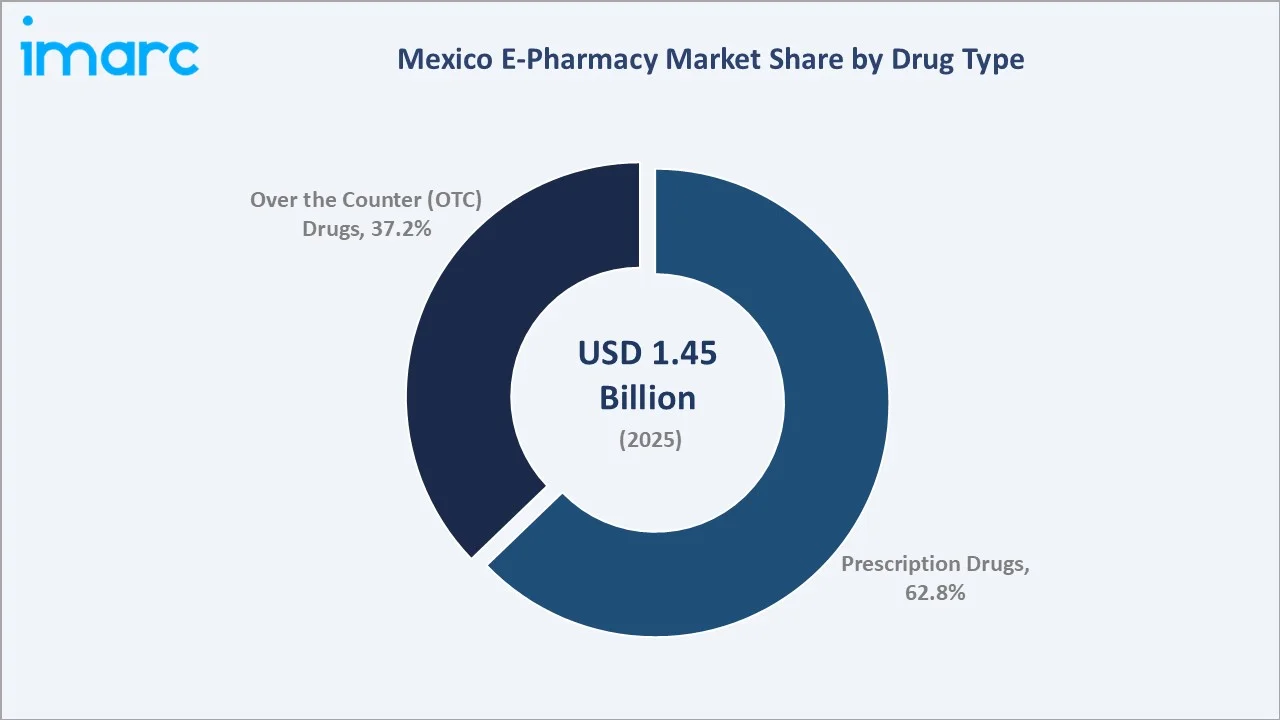
Prescription drugs lead at 62.8% (2025), due to rising demand for chronic disease medicines, doctor-prescribed treatments, and recurring refills. E-prescriptions, telemedicine consultations, and doorstep delivery further support the shift toward online purchase of prescription medicines.
To access detailed market analysis, Request Sample
Over the counter (OTC) drugs at 37.2% grow at ~11.6% CAGR through vitamins and supplements, pain relief, cold and flu, skin care, and wellness nutraceuticals through Amazon Mexico and GNC digital, growing consumer self-medication trend.
By Platform
App-based leads at 57.3% (2025), as consumers prefer mobile apps for prescription uploads, medicine searches, digital payments, and real-time delivery tracking. Higher smartphone penetration and refill reminders further support repeat purchases through app-based pharmacy channels.
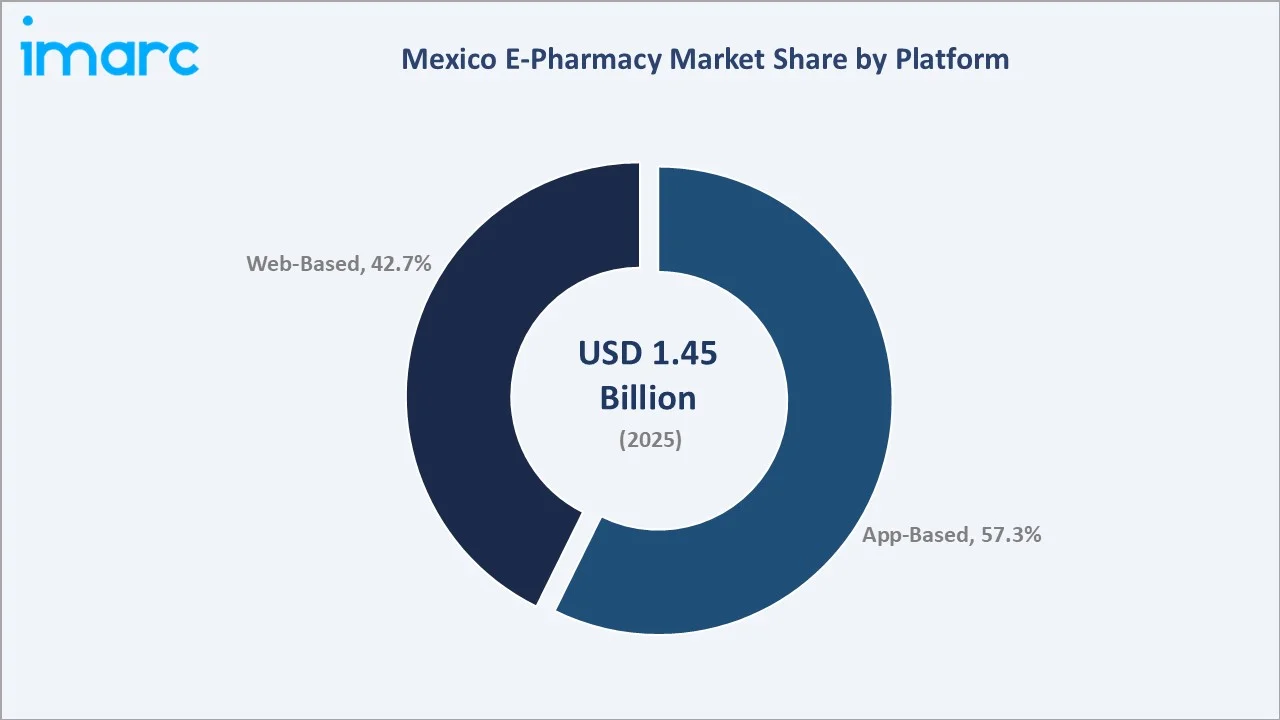
Web-based at 42.7%, offering easy access to medicine ordering through browsers without requiring app downloads. They are especially useful for desktop users, older consumers, and patients comparing products, prescriptions, prices, and delivery options across online pharmacy portals.
Regional Market Insights
|
Region |
Share (2025) |
Key Mexico E-Pharmacy Market Drivers & Characteristics |
|
Central Mexico |
44.8% |
Supported by high internet penetration, widespread smartphone usage, strong healthcare infrastructure, dense pharmacy networks, and rapid adoption of telemedicine and digital health services. |
|
Northern Mexico |
32.1% |
Reflects higher disposable incomes, advanced logistics infrastructure, cross-border healthcare influence, and increasing demand for app-based medicine ordering and fast home delivery. |
|
Southern Mexico |
18.7% |
Driven by expanding mobile connectivity, improving digital payment adoption, government healthcare initiatives, and growing access to online pharmacies in underserved areas. |
|
Others |
4.4% |
Other regions, including the Bajío region, the Yucatán Peninsula, and the Gulf Coast, contribute through increasing internet access, improving logistics networks, and the gradual expansion of digital healthcare and e-pharmacy services. |
Central Mexico's 44.8% dominance reflects its dense urban population, advanced healthcare infrastructure, high internet penetration, and widespread adoption of smartphones and digital payment systems. Northern Mexico's 32.1% follows with strong purchasing power, efficient logistics networks, and growing demand for app-based medicine delivery and telemedicine services.
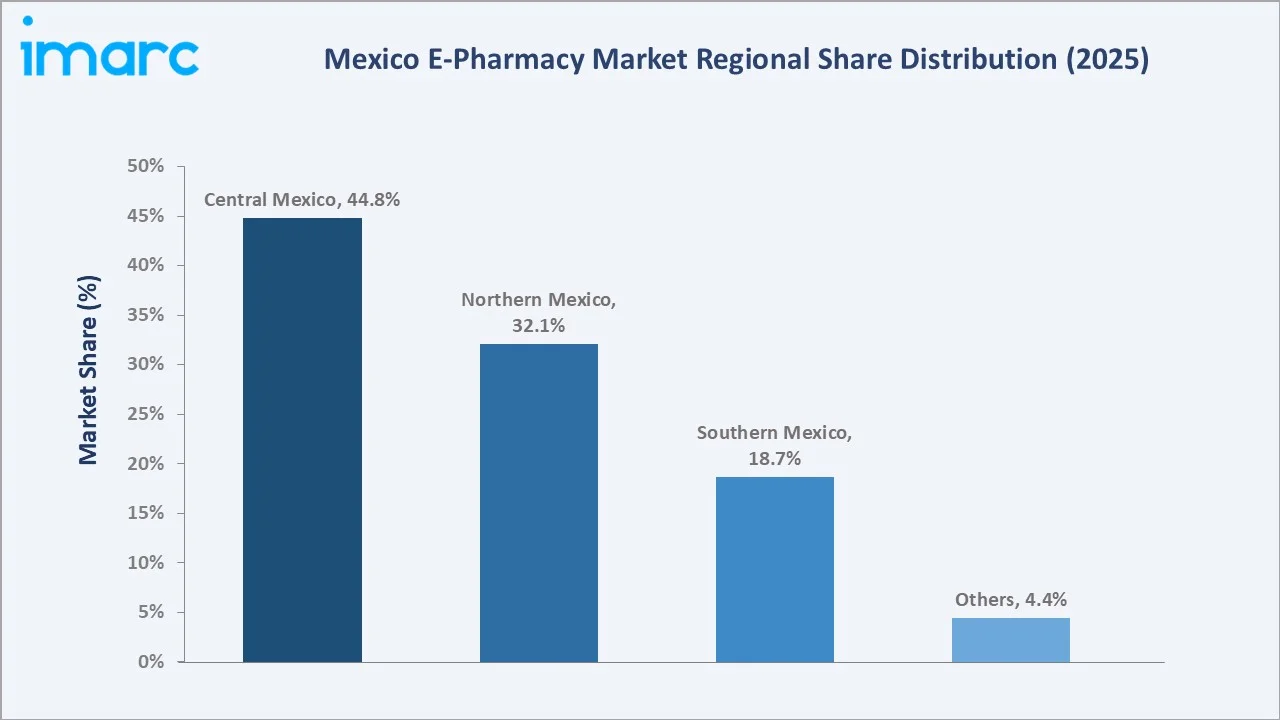
Southern Mexico's 18.7% is witnessing steady growth as internet connectivity, digital health awareness, and access to online pharmacy services continue to improve. Others at 4.4%, including the Bajío, Yucatán Peninsula, and Gulf Coast, are gradually expanding through investments in last-mile delivery, healthcare digitization, and broader e-commerce adoption.
Competitive Landscape
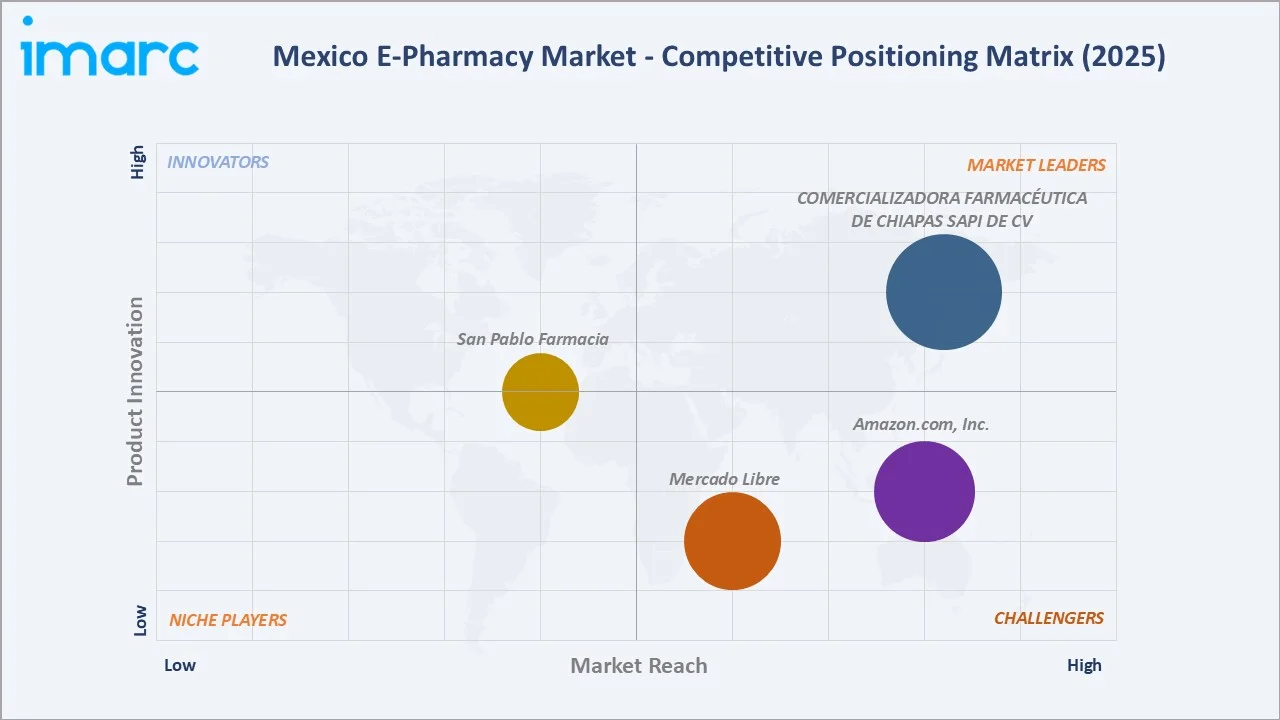
The Mexico e-pharmacy market is moderately competitive, with pharmacy chains, digital health platforms, retail marketplaces, and delivery aggregators competing on medicine availability, pricing, delivery speed, and platform convenience. Leading players are strengthening app-based ordering, prescription verification, telemedicine links, and chronic refill services to improve customer retention. Competition is also increasing from pharmaceutical manufacturers launching direct-to-patient digital channels.
|
Company |
Key Platform |
Market Position |
Core Strength |
|
COMERCIALIZADORA FARMACÉUTICA DE CHIAPAS SAPI DE CV |
Farmacias del Ahorro |
Market Leader |
COMERCIALIZADORA FARMACÉUTICA DE CHIAPAS, SAPI DE CV is the corporate entity behind Farmacias del Ahorro, one of the largest and most dominant pharmaceutical chains in Mexico. It plays a pioneering role in the Mexican e-pharmacy landscape by integrating physical stores with a robust digital delivery infrastructure. |
|
Amazon.com, Inc. |
Amazon |
Strong Challenger |
In Mexico, Amazon.com, Inc. operates primarily as an e-commerce marketplace rather than a licensed, direct-to-consumer prescription dispenser. In Mexico, the company acts as a massive digital storefront and logistics hub for over-the-counter (OTC) medications, health items, and third-party pharmacy retailers. |
|
Mercado Libre |
Mercado Libre |
Strong Challenger |
Mercado Libre serves as a dominant digital marketplace and aggregator for Mexico's e-pharmacy sector. Rather than acting as a direct pharmacy, it provides the essential digital storefront, logistics, and payment infrastructure that allow registered retailers to sell OTC medications, cosmetics, and health products. |
|
San Pablo Farmacia |
Farmacia San Pablo |
Established Player |
San Pablo Farmacia plays a pioneering role in the country's e-pharmacy and omnichannel market. By bridging physical brick-and-mortar operations with robust digital infrastructure, they shape the e-commerce landscape. |
Logistics capability, cold-chain handling, regulatory compliance, and verified medicine sourcing remain key differentiators. Partnerships with hospitals, insurers, fintech firms, and last-mile delivery providers are expected to intensify market competition.
Key Company Profiles
COMERCIALIZADORA FARMACÉUTICA DE CHIAPAS SAPI DE CV
COMERCIALIZADORA FARMACÉUTICA DE CHIAPAS SAPI DE CV, operating under the Farmacias del Ahorro platform, is one of Mexico's leading pharmacy retail chains with a nationwide network of stores supported by a rapidly expanding digital commerce platform. Its e-pharmacy platform enables online medicine ordering, prescription uploads, home delivery, and click-and-collect services, strengthening its position in Mexico's digital pharmacy ecosystem.
- Key Platform: Farmacias del Ahorro
- Strategic Focus: Strengthening its omnichannel pharmacy model by integrating its large physical store network with app-based and web-based medicine ordering. The company emphasizes fast home delivery, prescription fulfillment, click-and-collect services, and digital customer engagement to compete in Mexico’s e-pharmacy market.
Mercado Libre
Mercado Libre is a leading Latin American e-commerce and fintech platform, offering an integrated ecosystem that includes marketplace services, logistics, advertising, and digital financial solutions. In Mexico’s e-pharmacy market, the company supports online access to health, wellness, OTC, personal care, and pharmacy-related products through its large marketplace and fulfillment network. Mexico is one of Mercado Libre’s most important regional markets, supported by continued investment in technology, logistics, and financial services. Its strong digital payments, seller base, delivery infrastructure, and customer reach position it as a key enabler of online pharmacy and healthcare product distribution.
- Key Platform: Mercado Libre
- Strategic Focus: Centered on expanding its marketplace ecosystem for health, wellness, OTC, personal care, and pharmacy-related products. By combining e-commerce scale, logistics capability, and fintech integration, Mercado Libre is positioned to capture growing demand for app- and web-based pharmacy purchases in Mexico.
Market Concentration Analysis
The Mexico e-pharmacy market is moderately concentrated, with leading pharmacy chains, large e-commerce platforms, and delivery aggregators holding strong positions in urban markets. Established players benefit from brand trust, licensed pharmacy networks, supplier relationships, and wider logistics coverage. However, the market remains open to digital-first platforms, pharma-led direct-to-patient models, and regional online pharmacies. Competition is increasing around fast delivery, prescription verification, cold-chain capability, pricing, and app-based customer experience. Overall, consolidation is expected as larger players scale omnichannel models and smaller platforms partner with logistics, telemedicine, and payment providers.
Investment & Growth Opportunities
Highest Growth Segments
Prescription drugs (~13.2% CAGR), app-based (~13.5% CAGR through loyalty subscription), chronic disease subscription refill (~15% CAGR), telemedicine-integrated Rx (~14% CAGR), Southern Mexico growing (~13% CAGR), and AI drug interaction check (~18% CAGR from emerging) represent Mexico e-pharmacy's highest-growth investment vectors through 2034.
Investment Themes
- Telemedicine integrated e-prescription: Investing in integrated telemedicine and e-prescription platforms enables seamless online consultations, instant prescription validation, and direct medicine ordering, improving patient convenience and regulatory compliance.
- Chronic disease subscription auto-refill: Subscription-based auto-refill services for chronic medications create recurring revenue streams, improve medication adherence, and strengthen long-term customer retention through scheduled home deliveries.
Future Market Outlook (2026-2034)
Mexico e-pharmacy market is projected to grow from USD 1.45 Billion in 2025 to USD 1.69 Billion in 2026 and is forecast to reach USD 4.35 Billion by 2034, delivering a 12.57% CAGR over the forecast period through chronic disease Rx subscription structural demand, digital e-prescription scale, telemedicine-integrated Rx platform, express 20-minute delivery Rappi Turbo scale, and emerging AI personalized Rx. The market's anchor value of USD 2.63 Billion in 2030 represents Mexico's e-pharmacy at the telemedicine mainstream and digital inflection.
Three structural forces are expected to shape the growth of the Mexico e-pharmacy market through 2034. First, rising digital healthcare adoption, supported by expanding telemedicine, e-prescriptions, and smartphone penetration, will accelerate online medicine purchases. Second, increasing prevalence of chronic diseases will drive recurring demand for prescription medicines, subscription refill programs, and home delivery services. Third, continued investments in logistics infrastructure, cold-chain capabilities, and digital payment ecosystems will improve nationwide accessibility, delivery efficiency, and customer confidence, enabling e-pharmacy platforms to expand beyond major metropolitan areas.
Research Methodology
Primary Research
Primary research comprised interviews with e-pharmacy platforms, pharmacy chains, pharmaceutical distributors, telemedicine providers, logistics partners, and healthcare professionals. It also included discussions with consumers using online medicine delivery services to understand purchase behavior, trust levels, and service expectations. Inputs from industry participants helped validate market sizing, regional demand, competitive positioning, and emerging growth opportunities.
Secondary Research
Secondary research encompassed company annual reports, pharmaceutical industry publications, government healthcare statistics, regulatory guidelines, e-commerce databases, and digital health reports. It also included information from pharmacy associations, healthcare organizations, company websites, investor presentations, and reputable industry journals. These sources were used to assess market trends, competitive dynamics, technology adoption, regulatory developments, and long-term growth prospects in Mexico's e-pharmacy market.
Forecasting Models
Forecasting models combined historical market performance with forward-looking indicators such as internet penetration, smartphone adoption, digital health usage, prescription demand, and e-commerce growth. The analysis incorporated macroeconomic trends, healthcare expenditure, regulatory developments, and technology adoption to estimate future market potential. Data triangulation and scenario-based forecasting were applied to produce reliable market estimates through 2034.
Mexico E-Pharmacy Market Report Coverage:
| Report Features | Details |
|---|---|
| Base Year of the Analysis | 2025 |
| Historical Period | 2020-2025 |
| Forecast Period | 2026-2034 |
| Units | Billion USD |
| Scope of the Report |
Exploration of Historical Trends and Market Outlook, Industry Catalysts and Challenges, Segment-Wise Historical and Future Market Assessment:
|
| Drug Types Covered | Over the Counter (OTC) Drugs, Prescription Drugs |
| Product Types Covered | Skin Care, Dental, Cold and Flu, Vitamins, Weight Loss, Others |
| Platforms Covered | App-Based, Web-Based |
| Payment Methods Covered | Cash on Delivery, Online Payment |
| Regions Covered | Northern Mexico, Central Mexico, Southern Mexico, Others |
| Companies Covered | COMERCIALIZADORA FARMACÉUTICA DE CHIAPAS SAPI DE CV, Amazon.com, Inc., Mercado Libre, San Pablo Farmacia,etc. |
| Customization Scope | 10% Free Customization |
| Post-Sale Analyst Support | 10-12 Weeks |
| Delivery Format | PDF and Excel through Email (We can also provide the editable version of the report in PPT/Word format on special request) |
Key Benefits for Stakeholders:
- IMARC’s industry report offers a comprehensive quantitative analysis of various market segments, historical and current market trends, market forecasts, and dynamics of the Mexico e-pharmacy market from 2020-2034.
- The research report provides the latest information on the market drivers, challenges, and opportunities in the Mexico e-pharmacy market.
- Porter's five forces analysis assist stakeholders in assessing the impact of new entrants, competitive rivalry, supplier power, buyer power, and the threat of substitution. It helps stakeholders to analyze the level of competition within the Mexico e-pharmacy industry and its attractiveness.
- Competitive landscape allows stakeholders to understand their competitive environment and provides an insight into the current positions of key players in the market.
Frequently Asked Questions About the Mexico E-Pharmacy Market Report
The Mexico e-pharmacy market size is estimated at USD 1.69 Billion in 2026, driven by rising smartphone and internet penetration, increasing adoption of telemedicine and e-prescriptions, and growing consumer preference for convenient home delivery of medicines. Rising chronic disease prevalence and demand for recurring prescription refills further support online pharmacy adoption across urban and semi-urban areas.
The Mexico e-pharmacy market grows at 12.57% CAGR during 2026-2034, reaching USD 4.35 Billion by 2034. The CAGR reflects chronic disease prevalence, telemedicine integration, express delivery Rappi Turbo, and smartphone penetration structural demand.
Prescription drugs lead at 62.8% due to rising demand for chronic disease treatments, prescription refills, and doctor-recommended medicines. Telemedicine and e-prescription adoption further support online ordering and home delivery of prescribed drugs.
App-based leads at 57.3% as consumers prefer mobile apps for easy prescription uploads, medicine ordering, digital payments, and real-time delivery tracking. Refill reminders and personalized offers further support repeat purchases through apps.
Central Mexico leads at 44.8% due to its dense urban population, strong healthcare infrastructure, high internet penetration, and concentration of major pharmacy chains. Better logistics coverage and faster medicine delivery further support higher online pharmacy adoption in the region.
Leading companies include COMERCIALIZADORA FARMACÉUTICA DE CHIAPAS SAPI DE CV, Amazon.com, Inc., Mercado Libre, and San Pablo Farmacia, among others.
The market is projected to reach approximately USD 2.63 Billion by 2030, supported by rising telemedicine adoption, e-prescriptions, and app-based medicine delivery. Growth will also be driven by chronic disease prescription refills, expanding digital payments, and improved last-mile pharmacy logistics.
Three priority investment opportunities are emerging in the Mexico e-pharmacy market. Telemedicine-integrated e-prescription platforms can streamline digital consultations and prescription fulfillment, improving patient convenience and healthcare access. Chronic disease subscription and auto-refill services offer recurring revenue while enhancing medication adherence for long-term patients. Investments in AI-driven inventory management, cold-chain logistics, and rapid last-mile delivery can improve operational efficiency, expand coverage, and strengthen customer satisfaction as online medicine demand continues to grow.
Need more help?
- Speak to our experienced analysts for insights on the current market scenarios.
- Include additional segments and countries to customize the report as per your requirement.
- Gain an unparalleled competitive advantage in your domain by understanding how to utilize the report and positively impacting your operations and revenue.
- For further assistance, please connect with our analysts.
 Request Customization
 Speak to an Analyst
 Request Brochure
 Inquire Before Buying
Benefits of Customization
- Personalize this research
- Triangulate with your data
- Get data as per your format and definition
- Gain a deeper dive into a specific application, geography, customer, or competitor
- Any level of personalization
Get in Touch With Us
UNITED STATES
Phone: +1-201-971-6302
INDIA
Phone: +91-120-433-0800
UNITED KINGDOM
Phone: +44-753-714-6104
Email: [email protected]
Client Testimonials




.webp)




.webp)













Related Reports

Choose your plan
*Please note that the prices mentioned below are starting prices for each bundle type. Kindly contact our team for further details.*
Single User License
- 1 User License, Access on 2 Devices
- PDF Report + Excel Dataset (Password Protected)
- Lifetime Access
- No Printing Rights
- 10% Free Report Customization
- 10–12 Weeks of Analyst Support
Five User License
- Access for 5 Users, 2 Devices per User
- PDF Report + Excel Dataset (Password Protected)
- Lifetime Access
- Dedicated Account Manager
- 12–14 Weeks of Analyst Support
- No Printing Rights
- 15% Free Report Customization
- 25% Discount on Your Next Purchase
Corporate User License
- Unlimited User Access (Within Your Organization)
- PDF Report + Excel Dataset
- Lifetime Access
- Dedicated Account Manager
- 14–20 Weeks of Analyst Support
- No Printing Rights
- 20% Free Report Customization
- 30% Discount on Your Next Purchase
Essential Insights
What's included:
3 reports
- Lifetime Access
- PDF Reports
- Excel Datasets
- 2 Weeks of Free Analyst Support
- 2 User Licenses
- Access on 2 Devices
- Printing Rights
- Complimentary PowerPoint (PPT) Version
- Complimentary License Upgrade
Professional Access
What's included:
5 reports
- Lifetime Access
- PDF Reports
- Excel Datasets
- 8 Weeks of Free Analyst Support
- 2 User Licenses
- Access on 2 Devices
- Printing Rights
- Complimentary PowerPoint (PPT) Version
- Complimentary License Upgrade
Business Advantage
What's included:
8 reports
- Lifetime Access
- PDF Reports
- Excel Datasets
- 14 Weeks of Free Analyst Support
- 2 User Licenses
- Access on 2 Devices
- Printing Rights
- Complimentary PowerPoint (PPT) Version
- Complimentary License Upgrade
Enterprise Intelligence
What's included:
10 reports
- Lifetime Access
- PDF Reports
- Excel Datasets
- 20 Weeks of Free Analyst Support
- 2 User Licenses
- Access on 2 Devices
- Printing Rights
- Complimentary PowerPoint (PPT) Version
- Complimentary License Upgrade