
Mexico E-Wallet Market Size, Share, Trends and Forecast by Type, Ownership, Technology, Vertical, and Region, 2026-2034
Mexico E-Wallet Market Size, Share, Trends & Forecast (2026-2034)
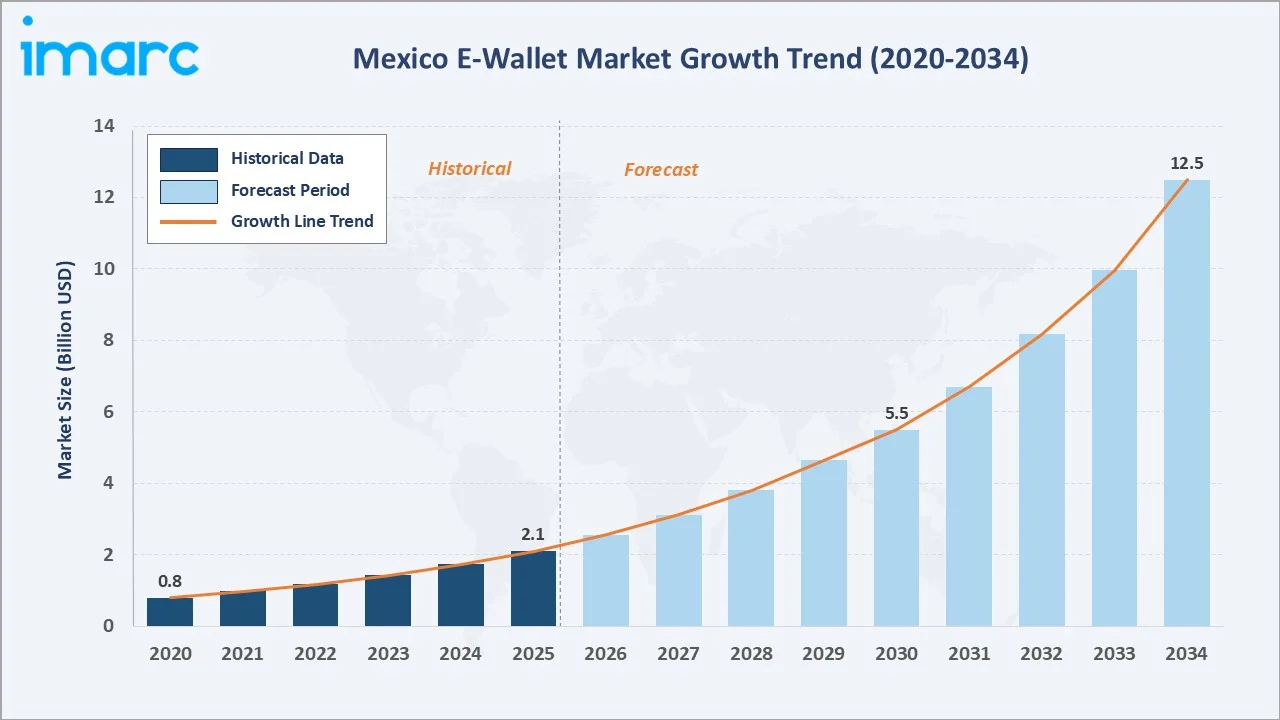
The Mexico e-wallet market reached USD 2.1 Billion in 2025 and is projected to reach USD 12.5 Billion by 2034, growing at a CAGR of 21.57% during 2026-2034. The market is driven by rapid smartphone penetration, expanding internet access, and a rising unbanked population. GSMA Intelligence reported that Mexico had approximately 145 million cellular mobile connections by the end of 2025, representing around 110% of the country’s total population. This high level of mobile connectivity is supporting the market by expanding consumer access to smartphone-based payment platforms. Semi-closed wallets lead the type at 48.6%. Optical/QR code technology dominates at 41.9%. Central Mexico leads regionally at 46.8%.
Market Snapshot
|
Metric |
Value |
|
Market Size (2025) |
USD 2.1 Billion |
|
Forecast Market Size (2034) |
USD 12.5 Billion |
|
CAGR (2026-2034) |
21.57% |
|
Base Year |
2025 |
|
Historical Period |
2020-2025 |
|
Forecast Period |
2026-2034 |
|
Dominant Type |
Semi-Closed (48.6%, 2025) |
|
Dominant Technology |
Optical/QR Code (41.9%, 2025) |
|
Leading Region |
Central Mexico (46.8%, 2025) |
The Mexico e-wallet market has demonstrated strong and sustained growth, increasing from USD 0.8 Billion in 2020 to USD 2.1 Billion in 2025, reflecting expanding digital payment activity across the country. The market is projected to reach USD 5.5 Billion by 2030 and further grow to USD 12.5 Billion by 2034, supported by a robust pipeline of fintech innovation and growing merchant acceptance.
To get more information on this market, Request Sample
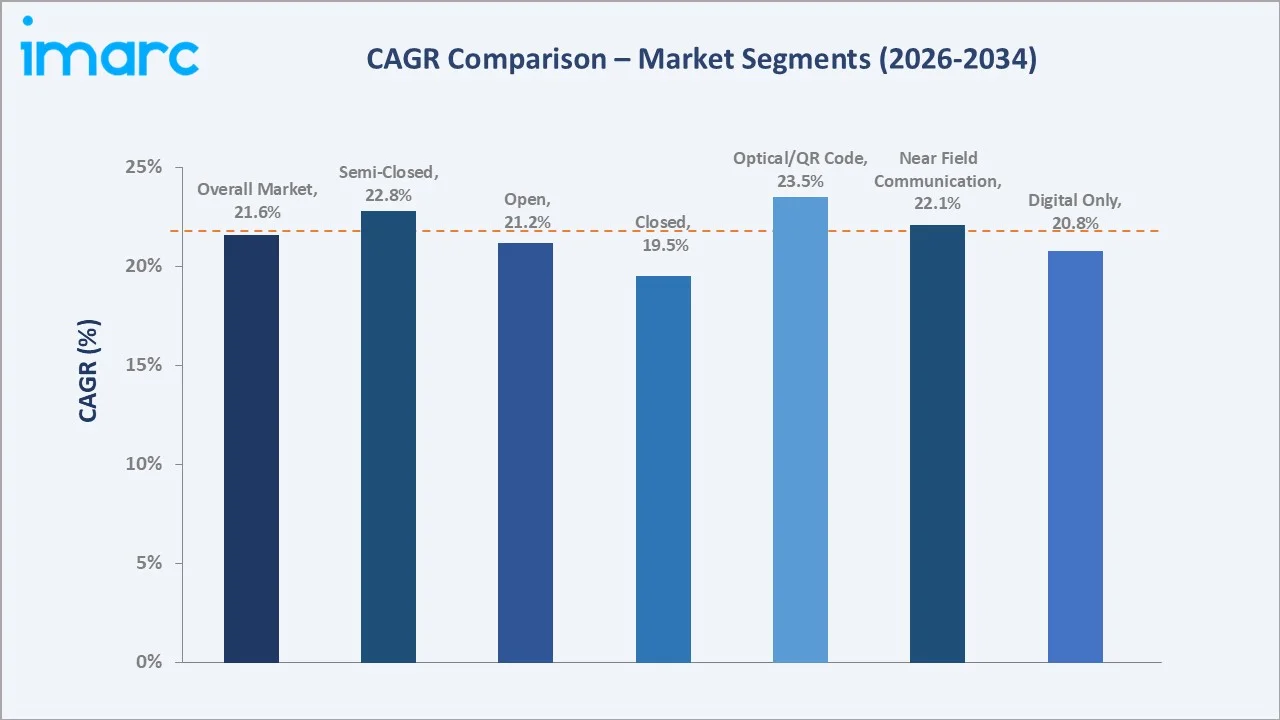
Semi-closed grows fastest at ~22.8% CAGR through super-app fintech ecosystem expansion. Optical/QR code leads at ~23.5% CAGR through point-of-sale fintech QR adoption. Near field communication (NFC) grows at ~22.1% CAGR through contactless payment terminal rollout across urban retail.
Executive Summary
The Mexico e-wallet market is witnessing robust growth, supported by the country's large smartphone user base, expanding digital infrastructure, and favourable regulatory environment. Rising e-wallet registrations, especially across retail, transportation, and e-commerce verticals, are strengthening Mexico's role as a preferred digital payment destination in Latin America.
Semi-closed at 48.6% leads through multi-merchant fintech super-app adoption. Optical/QR code at 41.9% leads through government-backed infrastructure. Central Mexico leads regionally at 46.8%.
Key Market Insights
|
Insight |
Data |
|
Dominant Type |
Semi-Closed – 48.6% share (2025) |
|
Leading Technology |
Optical/QR Code – 41.9% market share (2025) |
|
Leading Region |
Central Mexico – 46.8% share (2025) |
|
Market Opportunity |
Super-app BNPL credit; cross-border remittance digitalization; financial inclusion for unbanked; MSME QR onboarding; Open Banking API fintech ecosystem |
Key Analytical Observations Supporting the Above Data:
- Semi-Closed at 48.6%: Semi-Closed wallets dominate due to their flexibility across multiple registered merchants without direct cash withdrawal. Fintech super-app platforms enable high transaction frequency across retail, food delivery, and e-commerce verticals, making them the preferred wallet type.
- Optical/QR code at 41.9%: Optical/QR code technology dominates as it enables payment acceptance for informal merchants without expensive POS terminal infrastructure. In 2024, CoDi recorded more than 17 million transactions, representing an increase of over 23% compared with the previous year, while more than 11% of validated accounts used the platform at least once to complete a payment, driving adoption across formal and informal retail segments.
- Central Mexico at 46.8%: Central Mexico dominates regionally due to Mexico City's consumer base, high smartphone penetration, and the concentration of major fintech operator headquarters. The region's advanced digital infrastructure and faster e-wallet adoption support higher market activity.
Mexico E-Wallet Market Overview
The Mexico e-wallet market encompasses a broad range of digital payment solutions designed to enable consumers and businesses to store funds, execute transactions, and access financial services through mobile or web-based platforms. It includes semi-closed, open, and closed wallet types operating across QR code, NFC, digital-only, and text-based technology platforms. The market covers services such as peer-to-peer transfers, merchant payments, utility bill payments, e-commerce checkouts, and cross-border remittance receipt. It serves fintech companies, banks, telecom operators, device manufacturers, MSME merchants, and retail consumers.
The market spans multiple verticals including retail, transportation, media & entertainment, energy & utilities, and telecom. Growing digital adoption, open banking integrations, and AI-powered personalization are further expanding the scope of e-wallet services in Mexico. Macroeconomic factors include rising smartphone penetration, sustained fintech investment, and increasing foreign direct investment (FDI) in digital financial services.
Market Dynamics
To evaluate market opportunities, Request Sample
Market Drivers
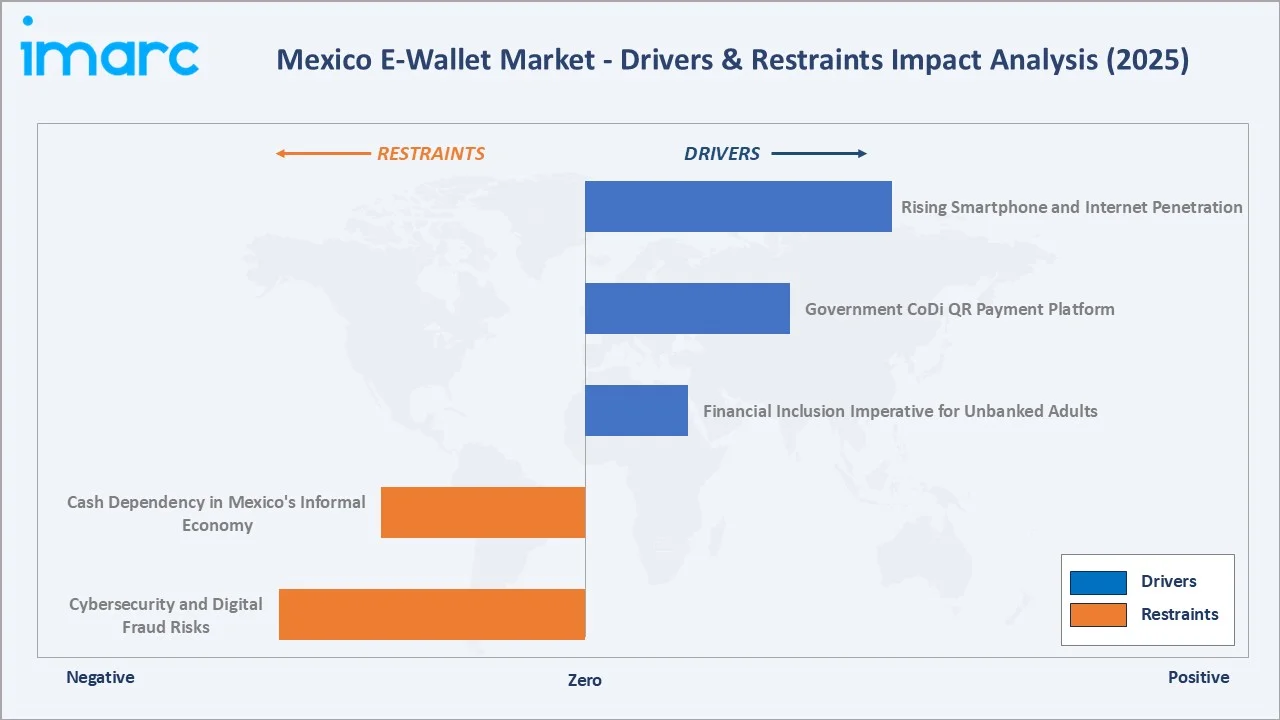
- Rising Smartphone and Internet Penetration: By late 2025, Mexico had approximately 110 million internet users, corresponding to an internet penetration rate of 83.5% of the total population. At the same time, GSMA Intelligence estimated around 145 million cellular mobile connections, equal to roughly 110% of the country’s population, enabling broader e-wallet access, especially among 18-34-year-old demographics. Growing 4G and 5G connectivity is expanding digital payment capabilities into semi-urban areas, accelerating e-wallet adoption across lower-income consumer segments.
- Government CoDi QR Payment Platform: In 2024, CoDi processed more than 17 million transactions, marking a year-over-year increase of over 23%, enabling real-time, zero-cost interbank QR transfers. The regulatory framework legitimized e-wallet operations and mandated open banking APIs, creating a structured regulatory foundation for fintech growth.
- Financial Inclusion Imperative for Unbanked Adults: In Mexico, over 66 million Mexicans, or 51% of the population, remain unbanked. E-wallets with simplified KYC onboarding, agent cash-in networks, and no-minimum-balance accounts are rapidly bridging this gap, expanding the total addressable market for mobile payment providers.
Market Restraints
- Cybersecurity and Digital Fraud Risks: In April 2026, organizations in Mexico experienced an average of 3,548 cyberattacks per week, representing a 4% increase compared with the same period in 2025. Phishing, account takeovers, and identity theft continue to undermine consumer trust in digital wallets, particularly among first-time users in lower-income segments.
- Cash Dependency in Mexico's Informal Economy: Mexico's informal economy accounts for approximately 22% of GDP. Cash remains the predominant payment medium in rural and semi-urban markets, limiting e-wallet penetration in underserved areas beyond major metropolitan regions.
Market Opportunities
- Remittance-Linked Digital Wallet Services: In June 2026, remittance inflows to Mexico increased for the fifth consecutive month, reaching USD 5,471.8 million, up 4.2% year over year. Integrating international money transfer receipts into e-wallets creates a large, recurring-use value proposition and eliminates cash collection requirements for millions of recipients.
- MSME Digital Payment Enablement: Mexico has approximately 5.4 million MSMEs. Government-supported QR merchant onboarding programs represent a large expansion opportunity for e-wallet providers targeting the merchant acceptance side.
Market Challenges
- Interoperability Between Wallet Platforms: Limited cross-platform interoperability between closed and semi-closed wallet ecosystems restricts seamless payment experiences. Fragmentation reduces network effects and complicates cross-platform merchant acceptance across different wallet providers.
- Consumer Education and Trust Building: A significant portion of Mexico's adult population, particularly those aged 50 and above, remains unfamiliar or skeptical of digital payment tools. Building trust through transparent fraud redressal mechanisms and consumer education campaigns is a persistent operational challenge.
Emerging Market Trends
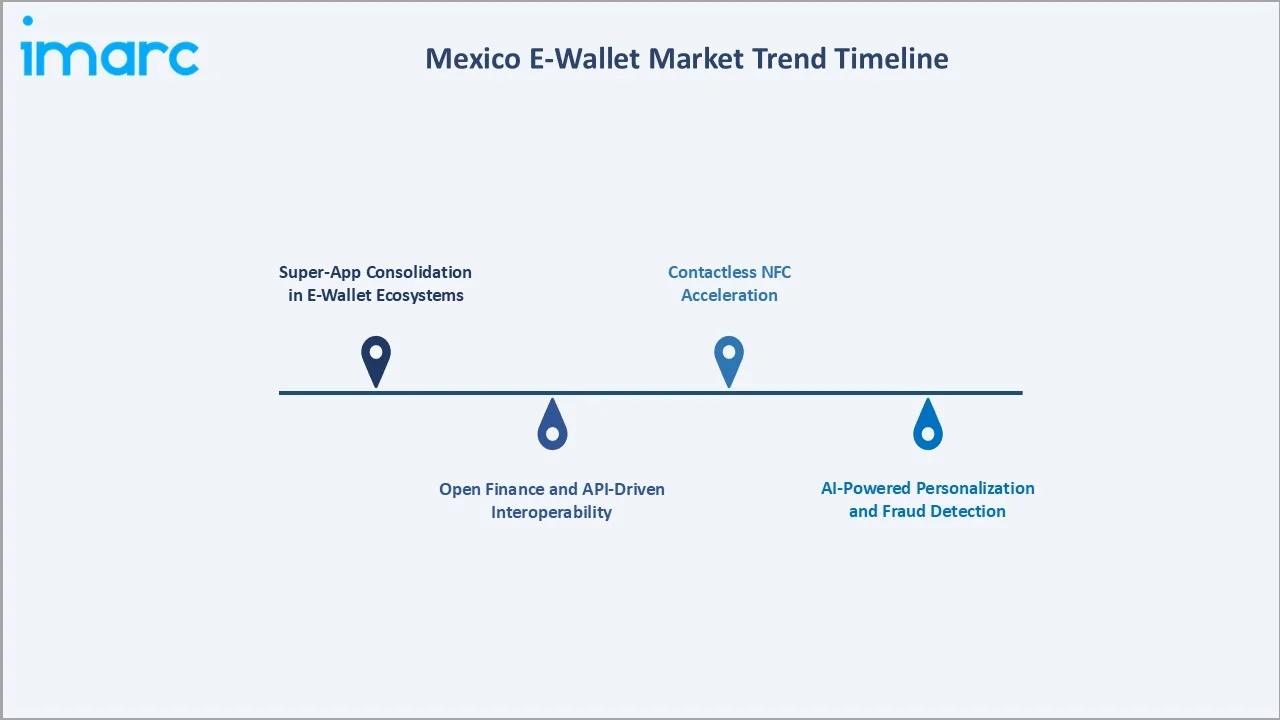
1. Super-App Consolidation in E-Wallet Ecosystems
E-wallet providers in Mexico are increasingly evolving into super-apps by integrating payments, lending, insurance, investments, and shopping within single platforms. In June 2026, Clip launched Mi Clip App, a digital wallet designed to expand digital payment adoption and financial inclusion across Mexico, supported by Ant International, Mastercard, and Televisa-Univision.
2. Open Finance and API-Driven Interoperability
Open finance and API-driven interoperability are emerging trends in the Mexico e-wallet market, enabling seamless data sharing and transactions between banks, fintech platforms, and digital wallets. Greater system connectivity is supporting integrated payment experiences, personalized financial services, and broader adoption of e-wallets across consumers and merchants.
3. Contactless NFC Acceleration
The rapid adoption of NFC-enabled smartphones, contactless cards, and tap-to-pay terminals is strengthening contactless payment usage in the Mexico e-wallet market. Faster and more convenient transactions are encouraging consumers and merchants to integrate digital wallets into everyday retail, transit, and service payments.
4. AI-Powered Personalization and Fraud Detection
AI-powered personalization is emerging as a key trend in the Mexico e-wallet market, enabling providers to deliver tailored offers, spending insights, and financial recommendations based on user behavior. At the same time, AI-driven fraud detection strengthens transaction security through real-time risk monitoring, helping increase consumer trust and digital wallet adoption.
Industry Value Chain Analysis
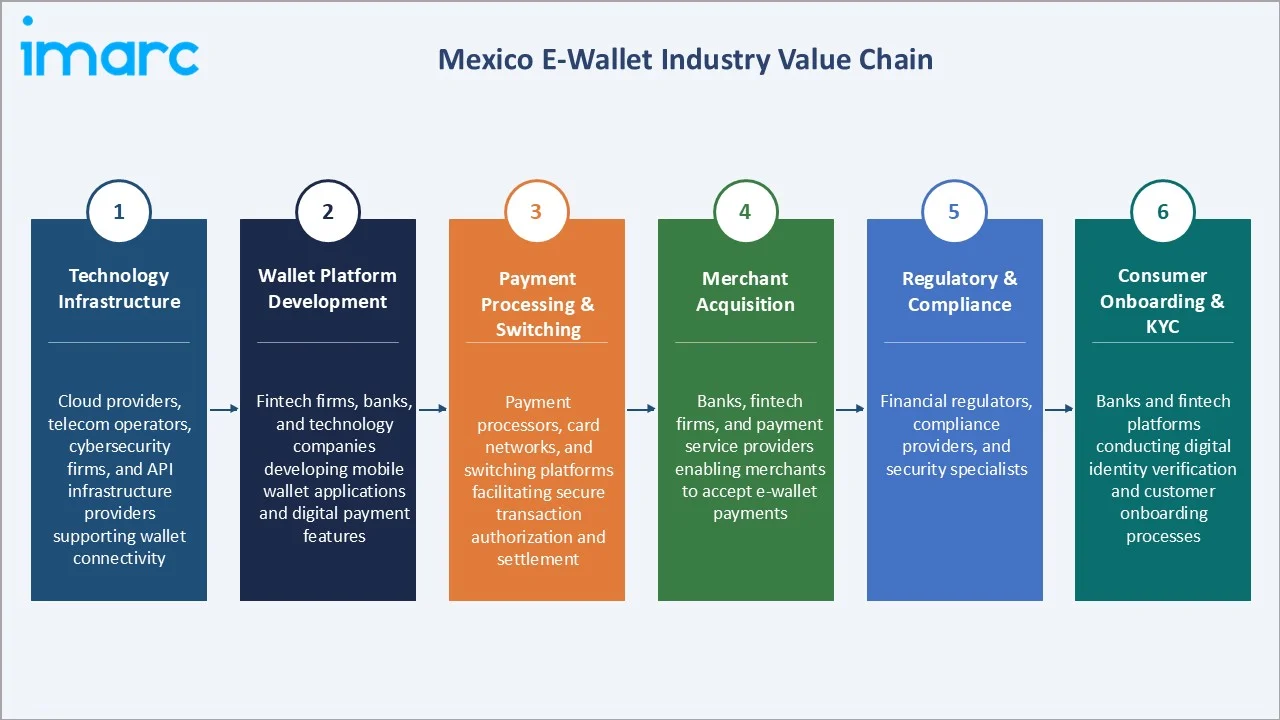
The Mexico e-wallet value chain integrates technology infrastructure, wallet platform development, regulatory compliance, merchant acquisition, payment processing, consumer engagement, and post-transaction services.
|
Stage |
Key Participants |
|
Technology Infrastructure |
Cloud providers, telecom operators, cybersecurity firms, and API infrastructure providers supporting wallet connectivity. |
|
Wallet Platform Development |
Fintech firms, banks, and technology companies developing mobile wallet applications and digital payment features. |
|
Payment Processing & Switching |
Payment processors, card networks, and switching platforms facilitating secure transaction authorization and settlement. |
|
Merchant Acquisition |
Banks, fintech firms, and payment service providers enabling merchants to accept e-wallet payments. |
|
Regulatory & Compliance |
Financial regulators, compliance providers, and security specialists. |
|
Consumer Onboarding & KYC |
Banks and fintech platforms conducting digital identity verification and customer onboarding processes. |
Payment processing and switching represents the most value-added stage in Mexico's e-wallet value chain, as it directly determines platform reliability, settlement speed, and user experience quality. This phase involves real-time fund transfers, merchant settlement, interbank clearing, and fraud monitoring, making it the most infrastructure-intensive and strategically critical segment.
Technology Landscape in the Mexico E-Wallet Industry
QR Code Payment Technology
QR-based systems enable consumers to make payments by scanning merchant codes through wallet applications. Their relatively low infrastructure requirements make them suitable for small merchants and informal businesses.
API and Open Finance Technology
APIs facilitate interoperability between e-wallets, banks, fintech platforms, and payment networks. Open finance frameworks further support data sharing and the development of integrated financial services.
Cloud Computing Technology
Cloud infrastructure enables e-wallet providers to scale transaction processing, data storage, and digital services efficiently. It also supports rapid deployment of new wallet features and integration with third-party platforms.
Market Segmentation Analysis
The report covers the following segments:
|
Segment Category |
Leading Segment |
Market Share |
Year |
|
Type |
Semi-Closed |
48.6% |
2025 |
|
Ownership |
🔒 |
🔒 |
2025 |
|
Technology |
Optical/QR Code |
41.9% |
2025 |
|
Vertical |
🔒 |
🔒 |
2025 |
|
Region |
Central Mexico |
46.8% |
2025 |

By Type
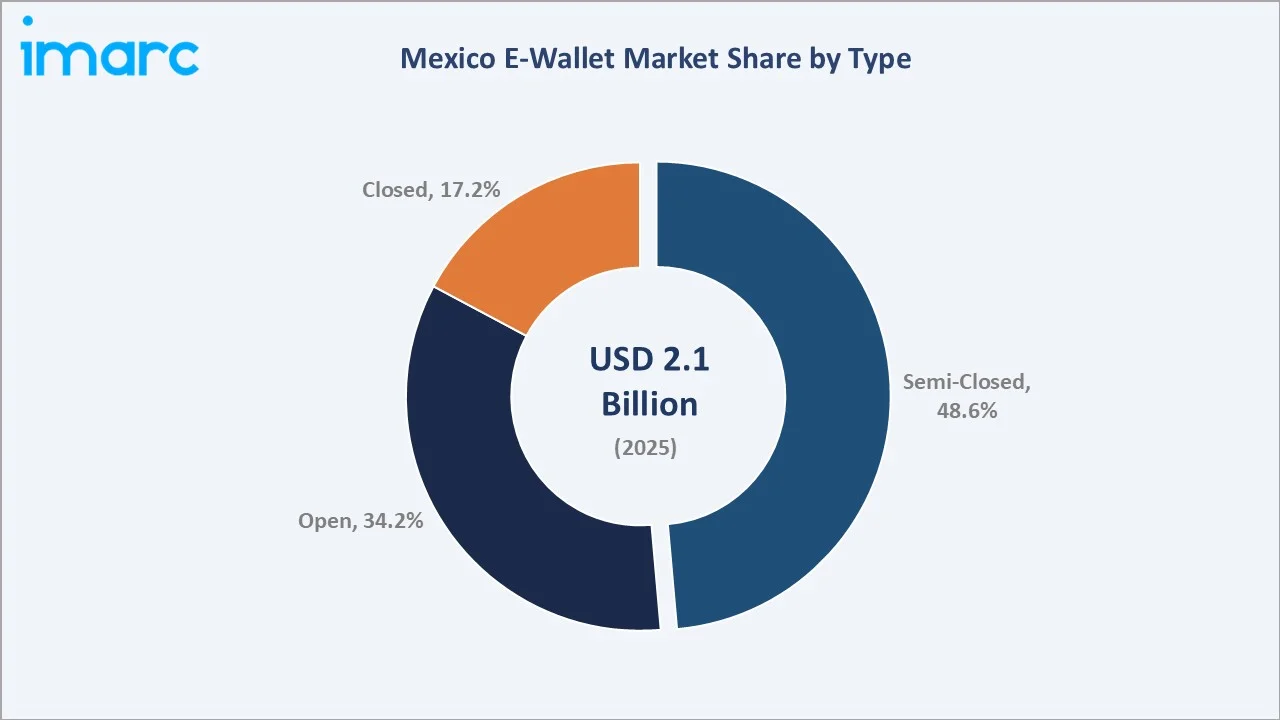
Semi-closed wallets lead at 48.6% (2025), reflecting strong fintech super-app adoption. These wallets enable transactions across multiple partner merchants without direct cash withdrawal, driving high transaction frequency and merchant network expansion.
To access detailed market analysis, Request Sample
Open wallets hold 34.2% (2025), primarily through bank-linked digital wallet offerings, enabling unrestricted fund withdrawals. Closed wallets represent 17.2% (2025), serving closed-loop retail ecosystems such as loyalty wallets from OXXO and department store chains.
By Technology
Optical/QR code technology leads at 41.9% (2025), driven by zero-cost merchant adoption and strong government CoDi platform support. QR enables payment acceptance for informal merchants without POS infrastructure, accelerating merchant network coverage across Mexico's diverse retail landscape of MSMEs.
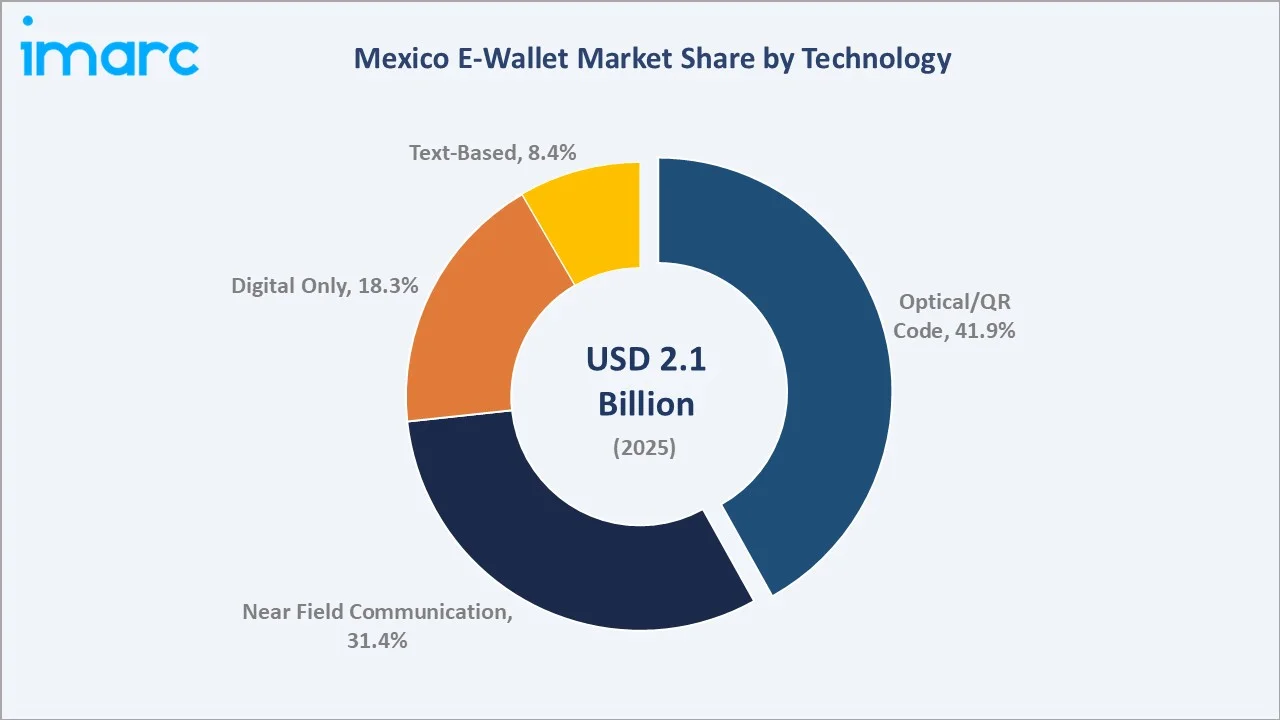
Near field communication (NFC) holds 31.4% (2025) through bank-linked contactless cards and smartphone NFC wallets in organized retail. Digital-only platforms account for 18.3% (2025), serving app-native e-commerce and P2P payment users. Text-based technology at 8.4% (2025) addresses feature phones and low-connectivity market segments in rural Mexico.
Regional Market Insights
|
Region |
Share (2025) |
Key E-Wallet Market Drivers & Characteristics |
|
Central Mexico |
46.8% |
Mexico City metropolitan area with a large number of consumers, high smartphone penetration, dense merchant e-payment infrastructure, and headquarters of major fintech operators. |
|
Northern Mexico |
31.7% |
Strong manufacturing and trade economy along the US border, high remittance inflows, growing e-commerce adoption, and higher per-capita income supporting premium digital payment services. |
|
Southern Mexico |
14.0% |
Emerging digital inclusion market with growing smartphone adoption, government fintech inclusion programs, and expanding OXXO agent cash-in networks serving underbanked populations. |
|
Others |
7.5% |
Peninsular and island regions with tourism-driven payment digitalization, seasonal e-wallet usage patterns, and targeted merchant acceptance expansion programs. |
Central Mexico's 46.8% dominance is driven by the concentration of Mexico City's large consumer base, advanced fintech ecosystem, and superior digital infrastructure. Northern Mexico's 31.7% follows closely, supported by its strong trade-linked cross-border payment demand, high remittance volumes from US-Mexico corridors, and higher per-capita income enabling premium digital payment adoption.
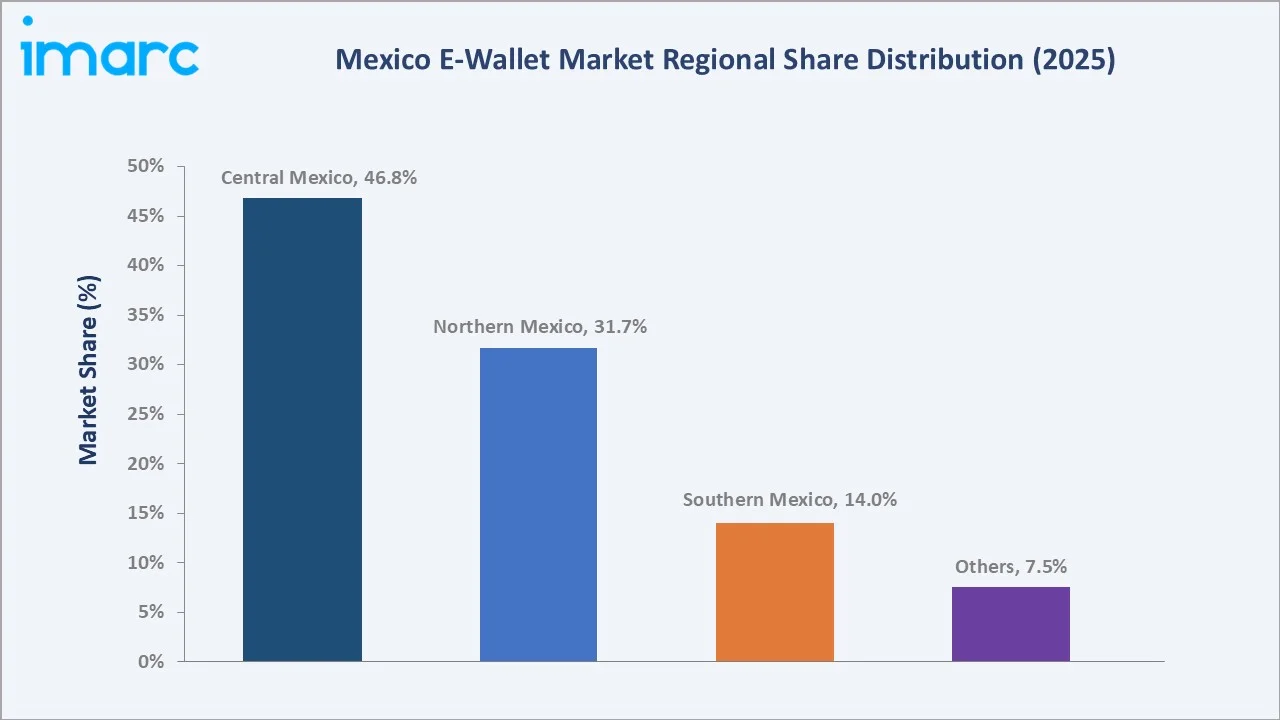
Southern Mexico's 14.0% remains a growing hub for financial inclusion-driven e-wallet adoption, benefiting from expanding smartphone penetration, government digital payment programs, and OXXO agent network coverage in underserved communities. The Others segment at 7.5% is witnessing steady growth due to tourism-driven payment digitalization in coastal and peninsular regions.
Competitive Landscape
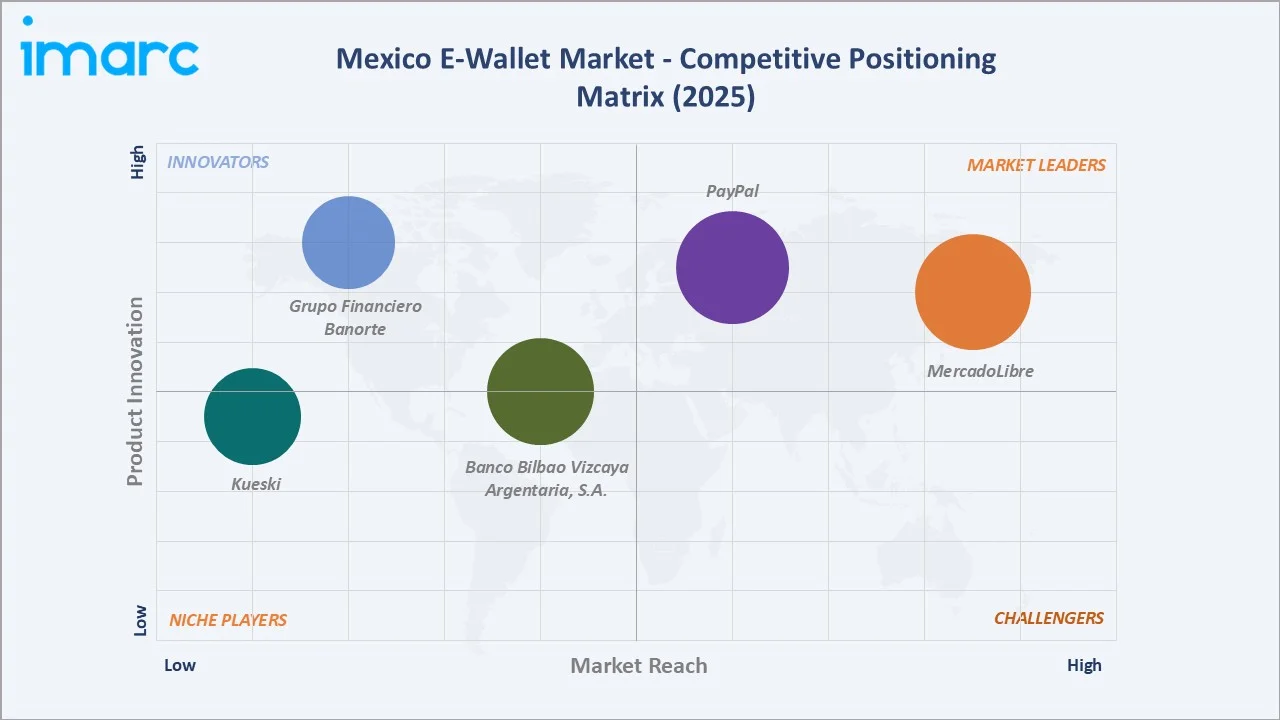
The Mexico e-wallet market is moderately fragmented, with competition among fintech companies, bank-owned digital wallet platforms, telecom-linked wallets, and specialized payment service providers. Market participants compete on technology reliability, merchant network breadth, consumer incentive programs, regulatory compliance, and financial product integration.
|
Company |
Key Offerings |
Market Position |
Core Strength |
|
MercadoLibre |
MercadoPago |
Market Leader |
In Mexico, Mercado Libre plays a massive role in the e-wallet space through its fintech arm, Mercado Pago. |
|
PayPal |
PayPal |
Market Leader |
PayPal acts as a premier digital wallet and payment gateway in Mexico, bridging the gap between cash-heavy local habits and the booming e-commerce market. |
|
Banco Bilbao Vizcaya Argentaria, S.A. |
BBVA Wallet app |
Established Player |
Banco Bilbao Vizcaya Argentaria, S.A. (BBVA) operates in the Mexican digital wallet and mobile payments landscape primarily through its local subsidiary, BBVA México. |
|
Kueski |
Kueski Pay |
Established Player |
Kueski is one of Latin America's largest Buy-Now, Pay-Later (BNPL) and digital consumer lending platforms, operating as a key driver of financial inclusion and e-commerce growth in Mexico. |
|
Grupo Financiero Banorte |
Bineo, Banorte Digital Link Account |
Innovator |
Grupo Financiero Banorte is one of the major forces in Mexico's digital wallet and mobile payment ecosystem. |
Companies are also investing in decentralized payment networks, AI-driven fraud prevention, cloud-based data management, and open banking API connectivity to improve e-wallet utility. The market is expected to witness further consolidation through fintech acquisitions and bank-fintech partnerships as leading platforms expand super-app ecosystems.
Key Company Profiles
MercadoLibre
MercadoLibre is one of Latin America's largest e-commerce platforms offering MercadoPago, a digital payments arm. In Mexico, MercadoPago serves as a comprehensive financial super-app ecosystem offering digital wallet, QR merchant payments, consumer credit, BNPL, investment accounts, and insurance products.
- Key Offerings: MercadoPago.
- Strategic Focus: Super-app model expansion integrating payments, credit, and financial services; merchant QR network expansion across informal retail; AI-driven credit scoring for underbanked segments.
PayPal
PayPal serves as a leading digital payment platform for e-commerce merchants and cross-border payments in Mexico. With integration across of Mexico's major e-commerce platforms, PayPal's trusted brand and established merchant relationships position it as a leading open wallet platform for international commerce.
- Key Offerings: PayPal.
- Strategic Focus: Strengthening local payment methods integration; expanding BNPL consumer credit offerings; deepening e-commerce checkout optimization for Mexican market.
Market Concentration Analysis
The Mexico e-wallet market is moderately fragmented, with the top five players, MercadoLibre, PayPal, Banco Bilbao Vizcaya Argentaria, S.A., Kueski, and Grupo Financiero Banorte, collectively estimated to account for approximately 60-65% of total transaction value in 2025. International fintech platforms and bank-owned wallets hold the largest share of high-value urban transactions, while specialized fintech operators and agent-network wallets drive volume in lower-income and rural segments.
Fragmentation persists across merchant acquiring, BNPL credit integration, and regional coverage, creating a competitive landscape where differentiated value propositions, super-app ecosystems, agent networks, or credit products determine market position. The market is expected to witness consolidation through strategic acquisitions, capacity expansion, and bank-fintech partnerships as sponsors seek faster, high-quality, and cost-effective digital payment execution infrastructure.
Investment & Growth Opportunities
Highest Growth Segments
Optical/QR code technology (~23.5% CAGR), semi-closed super-app wallets (~22.8% CAGR), BNPL-integrated digital wallets (~25%+ CAGR from emerging base), Central Mexico consumer fintech expansion, and remittance-linked e-wallet services represent Mexico's highest-growth investment vectors through 2034.
Investment Themes
- Financial inclusion platforms: Mexico's unbanked adult population represents a large, addressable market for e-wallets with simplified KYC, agent cash-in networks, and credit integration. Investors targeting this segment can benefit from high user acquisition potential and government fintech inclusion policy support.
- Cross-border remittance digital corridors: Mexico's remittance inflow presents a high-volume opportunity for e-wallets enabling digital receipt, storage, and spending of international transfers, reducing reliance on cash disbursement agents.
Future Market Outlook (2026-2034)
The Mexico e-wallet market is projected to grow from USD 2.1 Billion in 2025 to USD 12.5 Billion by 2034, delivering a 21.57% CAGR over the forecast period through optical/QR code super-app transaction growth, NFC contactless expansion, BNPL-credit wallet integration, and CoDi-linked digital inclusion scaling. The market's anchor value of USD 5.5 Billion in 2030 represents Mexico's e-wallet ecosystem at open banking mainstream and BNPL financial inclusion inflection.
Three structural forces are expected to define the growth of the Mexico e-wallet market through 2034. First, increasing government digital inclusion mandates, CoDi infrastructure expansion, and Ley Fintech open banking implementation will continue to expand digital payment activity. Second, the rapid adoption of super-app financial ecosystems, artificial intelligence, cloud-based data management, and BNPL credit integration will improve e-wallet utility and consumer engagement. Third, supportive regulatory reforms, expanding merchant acceptance infrastructure, and Mexico's large, underbanked consumer population will strengthen the country's position as a preferred destination for fintech investment and cost-effective digital payment innovation across Latin America.
Research Methodology
Primary Research
Primary research comprised in-depth interviews with senior executives from fintech companies, bank digital payment divisions, merchant acquiring platforms, regulatory technology providers, e-wallet product managers, and industry consultants. These discussions were conducted to validate market size estimates, assess emerging adoption trends, evaluate competitive dynamics, and gain insights into regulatory developments, technology investment priorities, and future growth opportunities in the Mexico e-wallet market.
Secondary Research
Secondary research encompassed company annual reports, regulatory publications, transaction data, digital inclusion surveys, industry association reports, fintech licensing databases, press releases, and credible financial media publications. These sources were used to analyze market trends, competitive positioning, regulatory developments, technology adoption, and digital payment activity across Mexico.
Forecasting Models
Forecasting models were developed using a combination of historical market trends, digital payment transaction volume data, smartphone penetration trajectories, e-commerce growth rates, and macroeconomic indicators including GDP growth and financial inclusion metrics. The analysis incorporated both top-down and bottom-up approaches, validated through primary research and secondary data cross-referencing. Regulatory developments, technology adoption curves, and competitive landscape evolution were incorporated to generate reliable forecasts through 2034.
Mexico E-Wallet Market Report Coverage:
| Report Features | Details |
|---|---|
| Base Year of the Analysis | 2025 |
| Historical Period | 2020-2025 |
| Forecast Period | 2026-2034 |
| Units | Billion USD |
| Scope of the Report |
Exploration of Historical Trends and Market Outlook, Industry Catalysts and Challenges, Segment-Wise Historical and Future Market Assessment:
|
| Types Covered | Open, Semi-Closed, Closed |
| Ownerships Covered | Banks, Telecom Companies, Device Manufacturers, Tech Companies |
| Technologies Covered | Near Field Communication, Optical/QR Code, Digital Only, Text-Based |
| Verticals Covered | Retail, Transportation, Media and Entertainment, Energy and Utilities, Telecommunication, Others |
| Regions Covered | Northern Mexico, Central Mexico, Southern Mexico, Others |
| Companies Covered | MercadoLibre, PayPal, Banco Bilbao Vizcaya Argentaria, S.A., Kueski, Grupo Financiero Banorte, etc. |
| Customization Scope | 10% Free Customization |
| Post-Sale Analyst Support | 10-12 Weeks |
| Delivery Format | PDF and Excel through Email (We can also provide the editable version of the report in PPT/Word format on special request) |
Key Benefits for Stakeholders:
- IMARC’s industry report offers a comprehensive quantitative analysis of various market segments, historical and current market trends, market forecasts, and dynamics of the Mexico e-wallet market from 2020-2034.
- The research report provides the latest information on the market drivers, challenges, and opportunities in the Mexico e-wallet market.
- Porter's five forces analysis assist stakeholders in assessing the impact of new entrants, competitive rivalry, supplier power, buyer power, and the threat of substitution. It helps stakeholders to analyze the level of competition within the Mexico e-wallet industry and its attractiveness.
- Competitive landscape allows stakeholders to understand their competitive environment and provides an insight into the current positions of key players in the market.
Frequently Asked Questions About the Mexico E-Wallet Market Report
The Mexico e-wallet market reached USD 2.1 Billion in 2025, driven by rising smartphone penetration, government CoDi digital payment initiatives, and growing e-commerce adoption. Expanding financial inclusion programs and fintech ecosystem development further support market growth.
The Mexico e-wallet market grows at 21.57% CAGR during 2026-2034, reaching USD 12.5 Billion by 2034. The CAGR reflects Mexico's large unbanked population opportunity, expanding digital commerce, and supportive fintech regulatory frameworks, including Ley Fintech and CoDi.
Semi-closed wallets lead at 48.6% (2025), driven by fintech super-app ecosystems enabling multi-merchant transactions across retail, food delivery, and e-commerce verticals without requiring full bank account linkage or cash withdrawal restrictions.
Optical/QR code technology dominates at 41.9% (2025) due to zero-cost merchant adoption, widespread smartphone compatibility, and government CoDi platform support enabling rapid onboarding of MSMEs without expensive POS terminal investments.
Central Mexico leads at 46.8% (2025), anchored by Mexico City's consumer base, smartphone penetration, and dense fintech operator concentration. The region hosts major fintech headquarters and the most advanced digital payment infrastructure in Mexico.
Leading companies include MercadoLibre, PayPal, Banco Bilbao Vizcaya Argentaria, S.A., Kueski, and Grupo Financiero Banorte, among others.
The market is projected to reach approximately USD 5.5 Billion by 2030, reflecting rapid CAGR-driven scaling. Growth will be supported by expanding BNPL integration, increasing MSME digital payment acceptance, and rising cross-border remittance digitalization across the US-Mexico corridor.
Priority investment opportunities include financial inclusion wallets for the unbanked adult population, BNPL-integrated credit products, cross-border remittance digital receipt platforms, and MSME merchant payment enablement through QR-based POS solutions and agent network expansion.
Need more help?
- Speak to our experienced analysts for insights on the current market scenarios.
- Include additional segments and countries to customize the report as per your requirement.
- Gain an unparalleled competitive advantage in your domain by understanding how to utilize the report and positively impacting your operations and revenue.
- For further assistance, please connect with our analysts.
 Request Customization
 Speak to an Analyst
 Request Brochure
 Inquire Before Buying
Benefits of Customization
- Personalize this research
- Triangulate with your data
- Get data as per your format and definition
- Gain a deeper dive into a specific application, geography, customer, or competitor
- Any level of personalization
Get in Touch With Us
UNITED STATES
Phone: +1-201-971-6302
INDIA
Phone: +91-120-433-0800
UNITED KINGDOM
Phone: +44-753-714-6104
Email: [email protected]
Client Testimonials




.webp)




.webp)













Related Reports

Choose your plan
*Please note that the prices mentioned below are starting prices for each bundle type. Kindly contact our team for further details.*
Single User License
- 1 User License, Access on 2 Devices
- PDF Report + Excel Dataset (Password Protected)
- Lifetime Access
- No Printing Rights
- 10% Free Report Customization
- 10–12 Weeks of Analyst Support
Five User License
- Access for 5 Users, 2 Devices per User
- PDF Report + Excel Dataset (Password Protected)
- Lifetime Access
- Dedicated Account Manager
- 12–14 Weeks of Analyst Support
- No Printing Rights
- 15% Free Report Customization
- 25% Discount on Your Next Purchase
Corporate User License
- Unlimited User Access (Within Your Organization)
- PDF Report + Excel Dataset
- Lifetime Access
- Dedicated Account Manager
- 14–20 Weeks of Analyst Support
- No Printing Rights
- 20% Free Report Customization
- 30% Discount on Your Next Purchase
Essential Insights
What's included:
3 reports
- Lifetime Access
- PDF Reports
- Excel Datasets
- 2 Weeks of Free Analyst Support
- 2 User Licenses
- Access on 2 Devices
- Printing Rights
- Complimentary PowerPoint (PPT) Version
- Complimentary License Upgrade
Professional Access
What's included:
5 reports
- Lifetime Access
- PDF Reports
- Excel Datasets
- 8 Weeks of Free Analyst Support
- 2 User Licenses
- Access on 2 Devices
- Printing Rights
- Complimentary PowerPoint (PPT) Version
- Complimentary License Upgrade
Business Advantage
What's included:
8 reports
- Lifetime Access
- PDF Reports
- Excel Datasets
- 14 Weeks of Free Analyst Support
- 2 User Licenses
- Access on 2 Devices
- Printing Rights
- Complimentary PowerPoint (PPT) Version
- Complimentary License Upgrade
Enterprise Intelligence
What's included:
10 reports
- Lifetime Access
- PDF Reports
- Excel Datasets
- 20 Weeks of Free Analyst Support
- 2 User Licenses
- Access on 2 Devices
- Printing Rights
- Complimentary PowerPoint (PPT) Version
- Complimentary License Upgrade