
Mexico Endoscopy Devices Market Size, Share, Trends and Forecast by Type, Application, End Use, and Region, 2026-2034
Mexico Endoscopy Devices Market Size, Share, Trends & Forecast (2026-2034)
The Mexico endoscopy devices market reached USD 792.2 Million in 2025 and is projected to reach USD 1,264.2 Million by 2034, growing at a CAGR of 5.17% during 2026-2034. Growth is anchored in the country's expanding hospital infrastructure, rising gastrointestinal and chronic disease burden, and the steady shift toward minimally invasive diagnosis and treatment.
The market spans endoscopes, endoscopy visualization systems, endoscopy visualization components, and operative devices used across gastrointestinal, urological, laparoscopic, gynecological, and arthroscopic applications. Demand is concentrated among hospitals and clinics, which perform the majority of advanced endoscopic procedures nationwide.
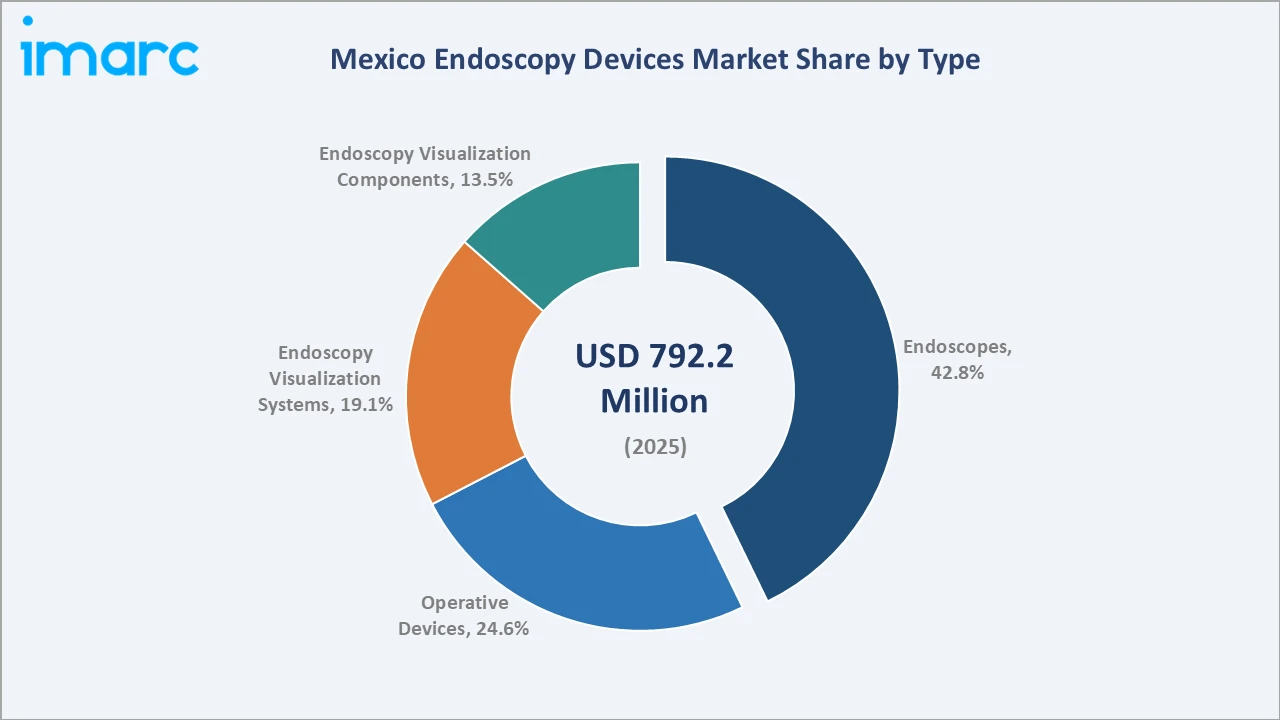
Endoscopes lead the type segment at 42.8%, hospitals and clinics dominate end use at 72.4%, and Central Mexico commands the largest regional share at 43.1% in 2025, reflecting the concentration of specialist healthcare infrastructure around Mexico City.
Looking ahead, the market's growth trajectory reflects a broader regional shift toward earlier disease detection and minimally invasive intervention. As hospital networks across Mexico continue to modernize imaging infrastructure and expand specialist capacity, the addressable base of patients eligible for endoscopic diagnosis and treatment is expected to widen steadily through 2034, reinforcing sustained multi-year device demand.
Market Snapshot
|
Metric |
Value |
|
Market Size (2025) |
USD 792.2 Million |
|
Forecast Market Size (2034) |
USD 1,264.2 Million |
|
CAGR (2026-2034) |
5.17% |
|
Base Year |
2025 |
|
Historical Period |
2020-2025 |
|
Forecast Period |
2026-2034 |
|
Dominant Type |
Endoscopes (42.8%, 2025) |
|
Dominant End Use |
Hospitals and Clinics (72.4%, 2025) |
|
Leading Region |
Central Mexico (43.1%, 2025) |
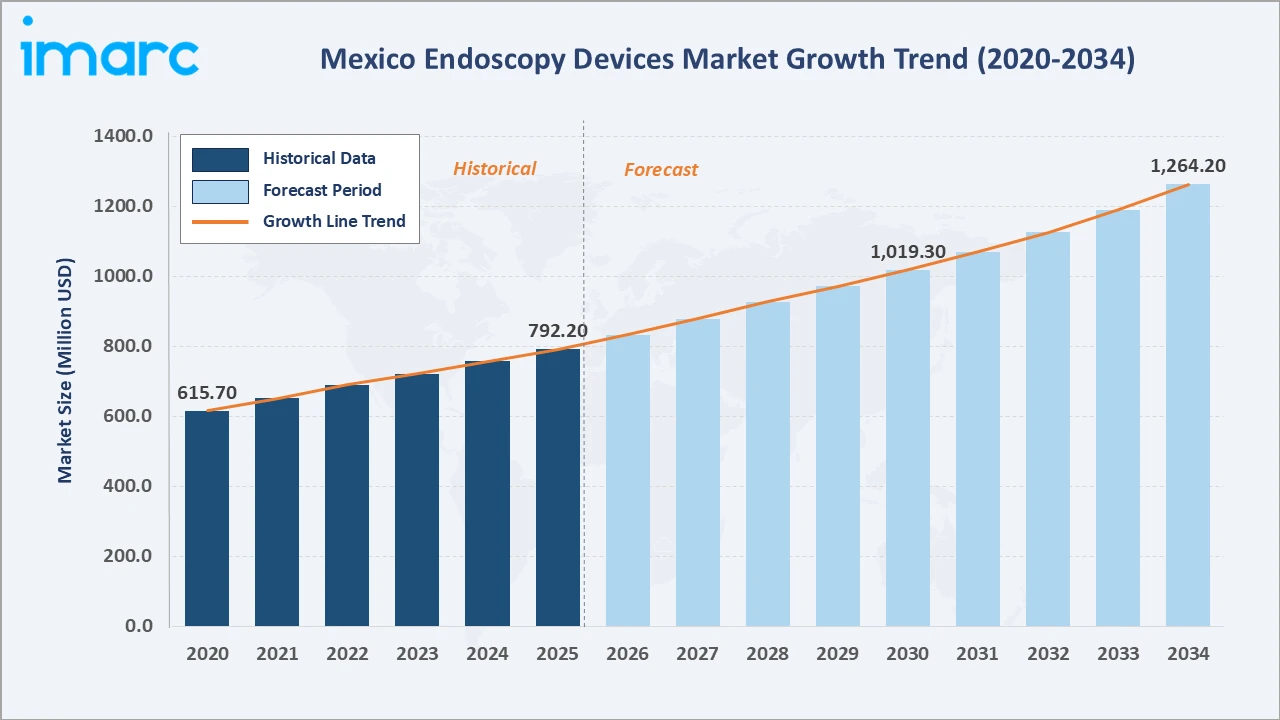
The market expanded from USD 615.7 Million in 2020 to USD 792.2 Million in 2025, is anchored at USD 1,019.3 Million in 2030, and is forecast to reach USD 1,264.2 Million by 2034, reflecting sustained multi-year capital investment across Mexico's healthcare system.
Post-pandemic investment in diagnostic and surgical infrastructure, coupled with rising screening volumes for colorectal and gastrointestinal conditions, sustained above-trend growth through 2022-2025 and continues to underpin the forecast trajectory to 2034.
To get more information on this market, Request Sample
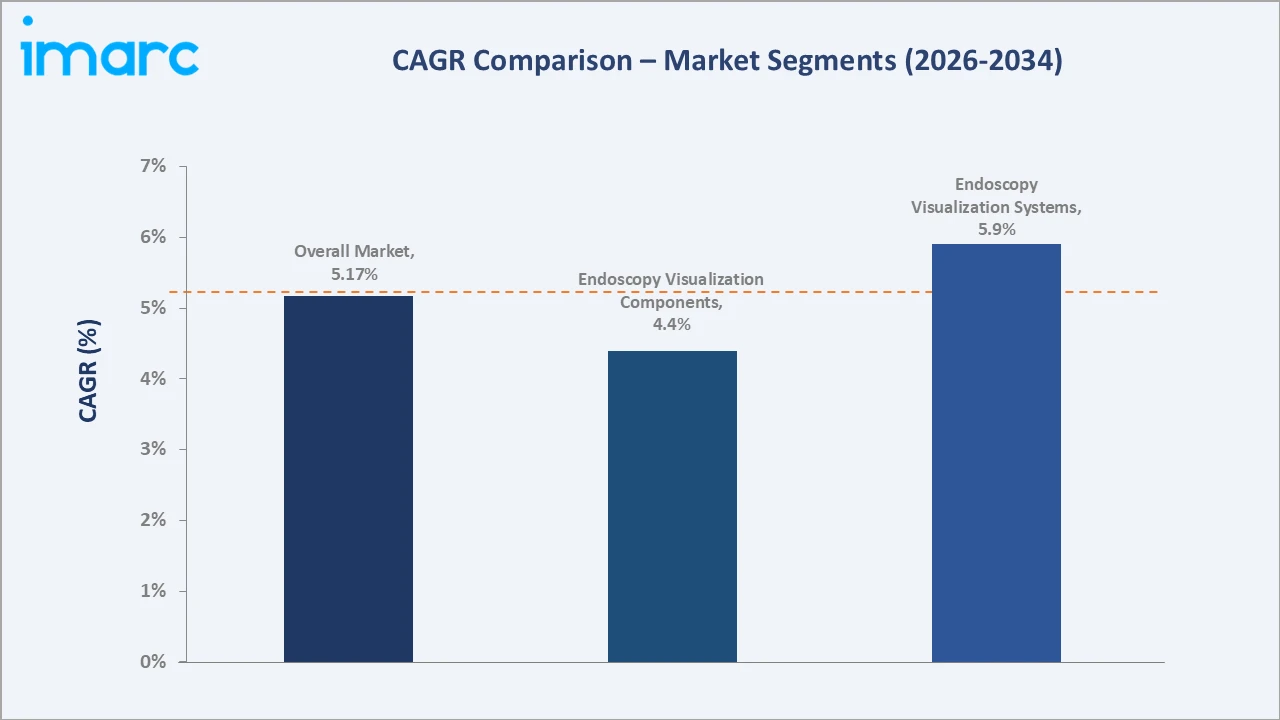
Endoscopy visualization systems post the fastest projected growth among device types as hospitals continue upgrading toward high-definition and AI-assisted imaging platforms, while endoscopes retain the largest overall revenue base through 2034.
This differential growth pattern reflects where hospital capital budgets are being directed: while endoscope replacement remains a steady, recurring expense, discretionary spending on visualization systems and operative accessories is expanding at a faster pace as facilities compete on diagnostic image quality and procedural capability.
Executive Summary
The Mexico endoscopy devices market reached USD 792.2 Million in 2025, reflecting the country's growing reliance on minimally invasive diagnostic and surgical technology across gastroenterology, urology, laparoscopy, gynecology, and arthroscopy.
The market encompasses endoscope manufacturing, visualization system and component supply, operative device production, hospital distribution, and clinical procedure delivery, forming an integrated ecosystem supporting both diagnostic and therapeutic care.
Endoscopes, at 42.8%, lead through their essential role in diagnostic and therapeutic procedures. Hospitals and clinics, at 72.4%, dominate with advanced endoscopy infrastructure and specialist expertise. Central Mexico, at 43.1%, leads through the concentration of tertiary hospitals and private healthcare investment, while Northern Mexico benefits from cross-border healthcare development.
Key Market Insights
|
Insight |
Data |
|
Dominant Type |
Endoscopes - 42.8% share (2025) |
|
Dominant End Use |
Hospitals and Clinics - 72.4% share (2025) |
|
Leading Region |
Central Mexico - 43.1% share (2025) |
|
Market Opportunity |
AI-assisted endoscopy; robotic-assisted systems; single-use endoscopes; capsule endoscopy; ambulatory surgical center expansion |
Key Analytical Observations Supporting The Above Data:
- Endoscopes at 42.8%: Endoscopes dominate due to their essential role in both diagnostic and interventional procedures, wide use across gastrointestinal and urological applications, and continuous replacement demand from public and private hospitals.
- Hospitals and Clinics at 72.4%: Hospitals and clinics lead end use because they house the specialist staff, sterilization infrastructure, and capital equipment required for complex endoscopic diagnosis and surgery, unlike smaller ambulatory settings.
- Central Mexico at 43.1%: Central Mexico dominates due to its concentration of tertiary care hospitals, private healthcare investment, and specialist medical talent centered around Mexico City and its metropolitan area.
Mexico Endoscopy Devices Market Overview
The Mexico endoscopy devices market encompasses the manufacturing, distribution, and clinical use of flexible and rigid endoscopes, visualization systems, and operative devices for gastrointestinal, urological, laparoscopic, gynecological, and arthroscopic procedures across public and private healthcare facilities.
Macroeconomic factors including rising healthcare expenditure, an aging population, and the increasing burden of gastrointestinal and chronic diseases are driving demand for endoscopic procedures. In addition, expanding private hospital infrastructure, medical tourism, and government investment in healthcare modernization are accelerating the adoption of high-definition and minimally invasive endoscopy technologies nationwide.
Market Dynamics
To evaluate market opportunities, Request Sample
Market Drivers
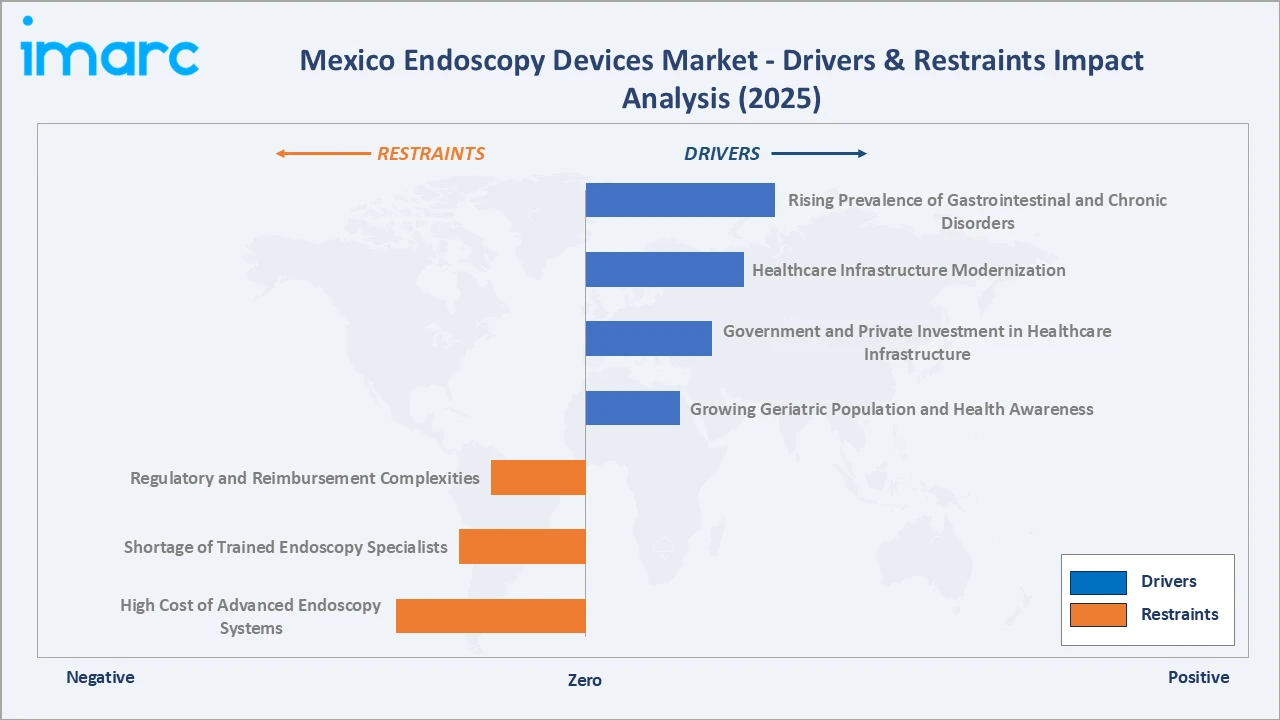
- Rising Prevalence of Gastrointestinal and Chronic Disorders: Increasing diagnoses of colorectal cancer, irritable bowel syndrome, ulcers, and gastrointestinal bleeding are driving frequent endoscopic examination for diagnosis, treatment, and follow-up across Mexican hospitals. Growing awareness of early screening benefits is further lifting procedure volumes among both public and private providers.
- Healthcare Infrastructure Modernization: Private and public hospitals are investing in high-definition video endoscopes and intelligent imaging technology as medical centers expand gastroenterology and surgical service portfolios nationwide, supported by capital budgets earmarked for diagnostic modernization.
- Growing Geriatric Population and Health Awareness: Rising life expectancy and greater preventive-care awareness are increasing demand for screening and treatment of age-related conditions such as colorectal cancer and urological complications, expanding the base of recurring endoscopic patients.
- Government and Private Investment in Healthcare Infrastructure: Public health initiatives and private-sector research investment are expanding domestic medical device production capacity and supporting broader adoption of advanced endoscopy equipment across underserved states.
Market Restraints
- High Cost of Advanced Endoscopy Systems: High-definition and robotic-assisted endoscopy systems require significant capital outlay, limiting adoption among smaller clinics and public facilities operating under budget constraints, particularly outside major metropolitan markets.
- Shortage of Trained Endoscopy Specialists: Limited availability of trained gastroenterologists, urologists, and biomedical technicians constrains procedural volume growth, particularly outside major metropolitan centers where specialist density remains low.
- Regulatory and Reimbursement Complexities: Lengthy COFEPRIS device registration timelines and inconsistent reimbursement coverage across Mexico's public and private insurance systems can delay new technology adoption and extend hospital procurement cycles.
Market Opportunities
- AI-Assisted and Robotic Endoscopy Adoption: Growing interest in AI-assisted lesion detection and robotic-assisted endoscopic platforms presents a long-term upgrade opportunity for hospitals seeking to improve diagnostic accuracy and procedural efficiency.
- Ambulatory Surgical Center Expansion: Rising investment in ambulatory surgical centers offering lower-cost outpatient endoscopic procedures is broadening access beyond traditional hospital settings, particularly in urban and peri-urban areas.
- Medical Tourism and Cross-Border Patient Flows: Mexico's growing reputation as a medical tourism destination, particularly in Northern border states, is encouraging private hospitals to invest in internationally competitive endoscopy capabilities to attract both domestic and foreign patients.
Market Challenges
- Dependence on Imported Technology and Components: Heavy reliance on imported endoscopes and visualization components exposes hospitals and distributors to currency fluctuation and supply chain disruption risk, occasionally delaying equipment replacement cycles.
- Sterilization and Reprocessing Infrastructure Gaps: Inconsistent access to advanced reprocessing and sterilization infrastructure outside major hospitals raises infection-control risk and can limit safe reuse of reusable endoscopic equipment.
- Uneven Distribution of Specialist Healthcare Talent: Concentration of gastroenterologists, urologists, and endoscopy-trained nursing staff in Central and Northern Mexico limits procedural capacity growth in Southern and rural states, widening regional access gaps.
Emerging Market Trends
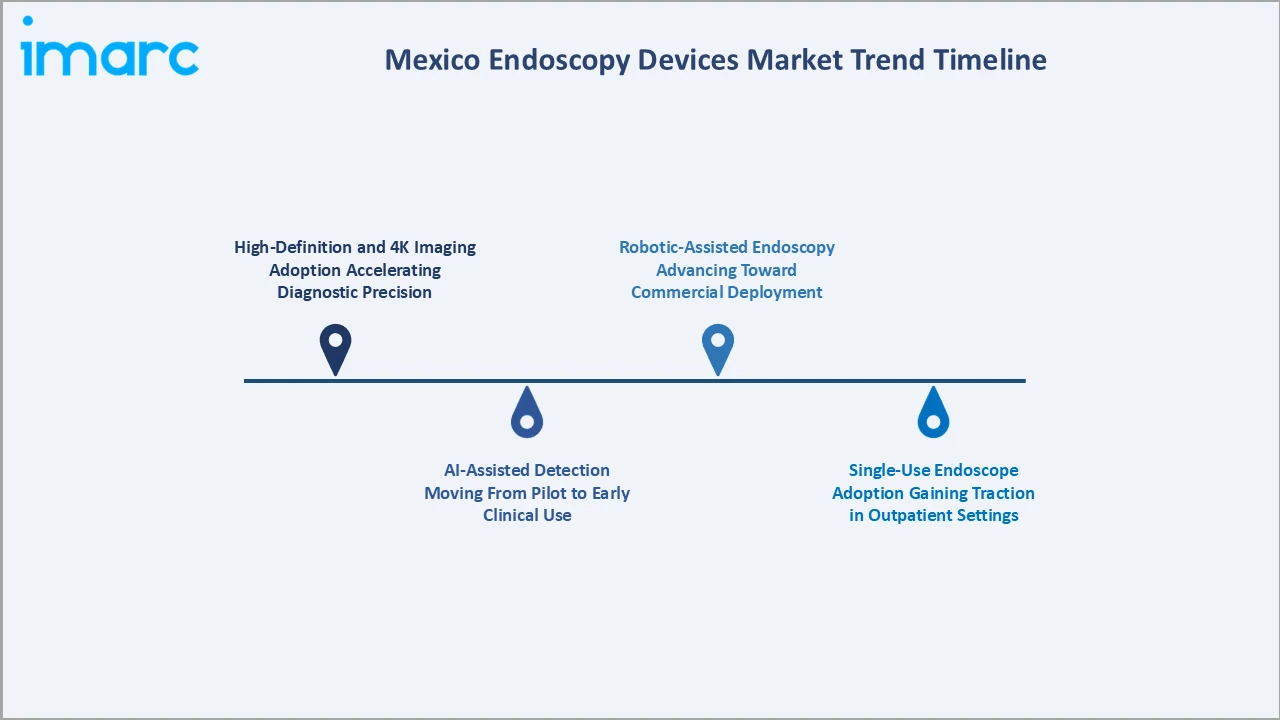
Mexico's endoscopy devices market is evolving alongside global shifts toward digital imaging, automation, and single-use technology, with hospitals gradually adopting next-generation platforms as replacement cycles and capital budgets allow.
1. High-Definition and 4K Imaging Adoption Accelerating Diagnostic Precision
Hospitals across Central and Northern Mexico are progressively replacing standard-definition endoscopes with high-definition and 4K imaging systems that improve visualization of subtle mucosal lesions. This transition is supported by manufacturer training programs and financing arrangements that lower the upfront cost barrier for mid-sized private hospitals. As image quality becomes a competitive differentiator among private providers, replacement cycles for older-generation systems are expected to shorten over the coming years.
2. AI-Assisted Detection Moving from Pilot to Early Clinical Use
Artificial intelligence-based polyp and lesion detection tools are moving from pilot deployments toward early clinical use in leading private hospitals, helping standardize detection quality across operators of varying experience levels. Continued validation studies are expected to support broader public-sector adoption over the coming years, particularly as manufacturers bundle detection software with new imaging platform purchases rather than pricing it as a standalone upgrade.
3. Single-Use Endoscope Adoption Gaining Traction in Outpatient Settings
Single-use and disposable endoscope technology is gaining traction in ambulatory surgical centers seeking to reduce reprocessing infrastructure requirements and infection-control risk. While upfront device costs remain higher than reusable alternatives, total cost-of-ownership benefits are improving adoption economics, especially for urology and bronchoscopy procedures where contamination risk carries higher clinical and reputational stakes.
4. Robotic-Assisted Endoscopy Advancing Toward Commercial Deployment
Robotic-assisted endoscopic platforms are progressing from demonstration projects toward early commercial deployment in flagship Mexico City hospitals, supporting complex laparoscopic and urological procedures with improved precision and reduced surgeon fatigue over long procedures. Broader rollout beyond flagship centers will likely depend on falling platform costs and the accumulation of local clinical outcome data to support wider hospital investment cases.
Collectively, these four trends point toward a market that is gradually shifting its investment emphasis from basic infrastructure buildout toward quality, safety, and precision upgrades. Manufacturers and distributors that can bundle imaging, software, and training support into a single value proposition are best positioned to capture this next phase of demand.
Industry Value Chain Analysis
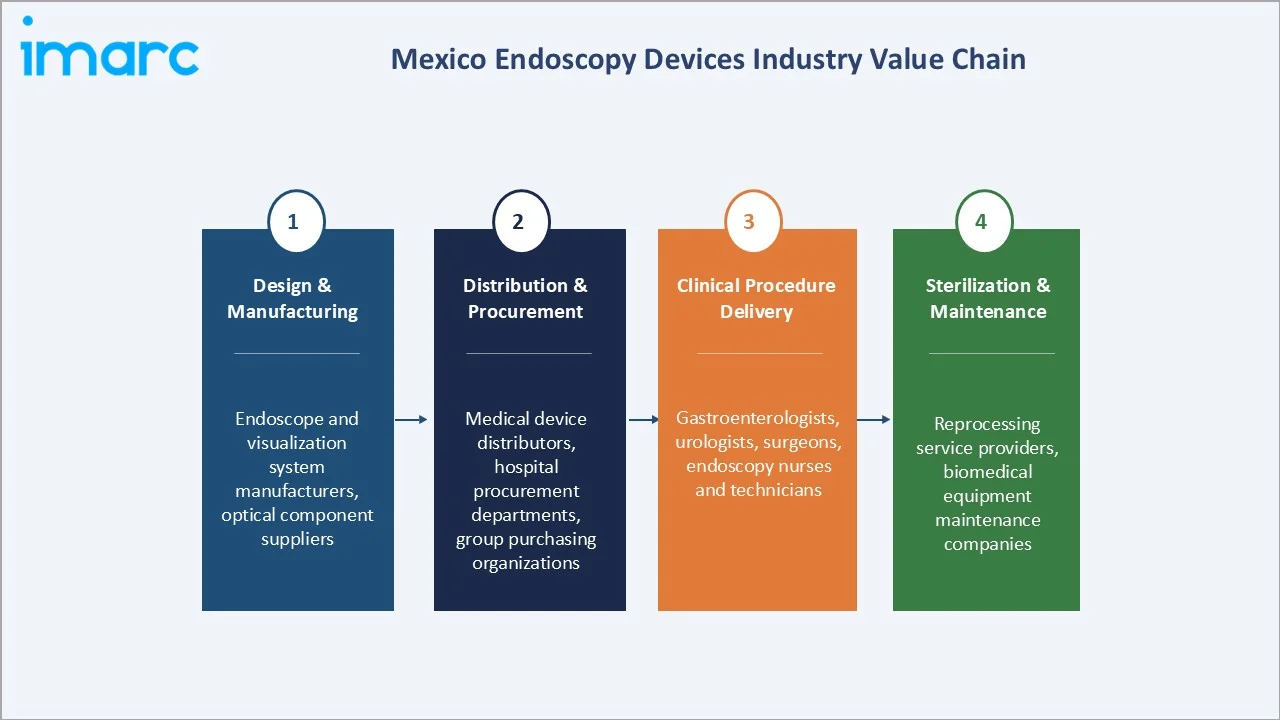
The Mexico endoscopy devices value chain integrates device design and manufacturing, component and visualization system supply, distribution and hospital procurement, clinical procedure delivery, and post-procedure sterilization and maintenance services, each contributing distinct technical and commercial value.
|
Stage |
Key Participants |
|
Design & Manufacturing |
Endoscope and visualization system manufacturers, optical component suppliers |
|
Distribution & Procurement |
Medical device distributors, hospital procurement departments, group purchasing organizations |
|
Clinical Procedure Delivery |
Gastroenterologists, urologists, surgeons, endoscopy nurses and technicians |
|
Sterilization & Maintenance |
Reprocessing service providers, biomedical equipment maintenance companies |
Clinical procedure delivery is the value chain's most technically demanding and commercially differentiated stage, as procedural quality directly shapes patient outcomes and hospital reputation. Distribution and procurement remain a critical gatekeeper stage, given Mexico's continued reliance on imported endoscopic technology.
Manufacturers that invest directly in local distributor training and after-sales technical support tend to achieve stronger clinical adoption outcomes than those relying solely on third-party import agents, since procedural confidence among physicians is closely tied to responsive equipment servicing and readily available consumables.
Technology Landscape in the Mexico Endoscopy Devices Industry
Technology adoption across Mexico's endoscopy devices market is progressing along four parallel tracks: imaging resolution, computer-assisted diagnosis, infection-control engineering, and procedural automation. Hospital purchasing committees increasingly evaluate new platforms not only on image quality but also on total cost of ownership, staff training requirements, and compatibility with existing sterilization workflows, shaping which technologies achieve broad clinical adoption.
High-Definition and 4K Endoscopic Imaging Technology
High-definition and 4K endoscopic imaging technology enables sharper visualization of tissue detail, supporting earlier detection of gastrointestinal lesions and improved surgical precision. Adoption is concentrated among tertiary hospitals and private centers with the capital budgets to support platform upgrades, while narrow-band and chromoendoscopy imaging modes are increasingly bundled with these systems to further improve early-stage lesion characterization.
AI-Assisted Detection and Diagnostic Support Software
AI-assisted detection software analyzes real-time endoscopic video to flag polyps and suspicious lesions, helping standardize detection quality across operators of varying experience levels. As validation evidence grows and regulatory clarity improves, these tools are expected to become a standard feature of premium endoscopy platforms across Mexico, with early deployments concentrated in Mexico City's leading private hospital networks.
Single-Use and Reprocessing-Free Endoscope Technology
Single-use endoscope technology eliminates the need for complex reprocessing infrastructure, reducing cross-contamination risk in outpatient and ambulatory settings. This technology is gaining particular traction in urology and bronchoscopy applications where infection control is a priority concern and is increasingly considered by ambulatory surgical centers that lack the sterilization capacity of large hospitals.
Robotic-Assisted Endoscopic Platforms
Robotic-assisted endoscopic platforms combine motorized scope control with enhanced imaging to support complex laparoscopic and urological procedures, reducing operator fatigue during long interventions. While still an early-stage technology in Mexico, flagship hospitals are beginning to pilot these systems, positioning the segment for accelerated adoption as procedural evidence and reimbursement pathways mature.
Taken together, these four technology tracks are expected to progressively raise the baseline standard of endoscopic care across Mexico's leading hospital networks, even as cost and training considerations mean adoption will remain uneven between Central Mexico's flagship institutions and smaller regional facilities for the foreseeable future.
Market Segmentation Analysis
The report covers the following segments:
|
Segment Category |
Leading Segment |
Market Share |
Year |
|
Type |
Endoscopes |
42.8% |
2025 |
|
Application |
🔒 |
🔒 |
2025 |
|
End Use |
Hospitals and Clinics |
72.4% |
2025 |
|
Region |
Central Mexico |
43.1% |
2025 |

By Type
Endoscopes lead the type segment at 42.8% (2025). The segment covers flexible and rigid endoscopes used across gastrointestinal, urological, laparoscopic, and arthroscopic procedures in hospitals and ambulatory settings nationwide, forming the foundation of most diagnostic and therapeutic procedures.
To access detailed market analysis, Request Sample
Operative devices hold 24.6% share through demand for biopsy forceps, snares, and therapeutic accessories used alongside diagnostic endoscopes. Endoscopy visualization systems, at 19.1%, and endoscopy visualization components, at 13.5%, together reflect continued hospital investment in high-definition imaging platforms and processor upgrades. As hospitals renew their equipment fleets, spending is gradually shifting from pure device replacement toward bundled purchases that combine endoscopes with upgraded visualization hardware.
By End Use
Hospitals and clinics lead end use at 72.4% (2025), reflecting their role as the primary sites for complex diagnostic and therapeutic endoscopic procedures across Mexico's public and private healthcare networks, supported by specialist staffing and capital equipment investment.
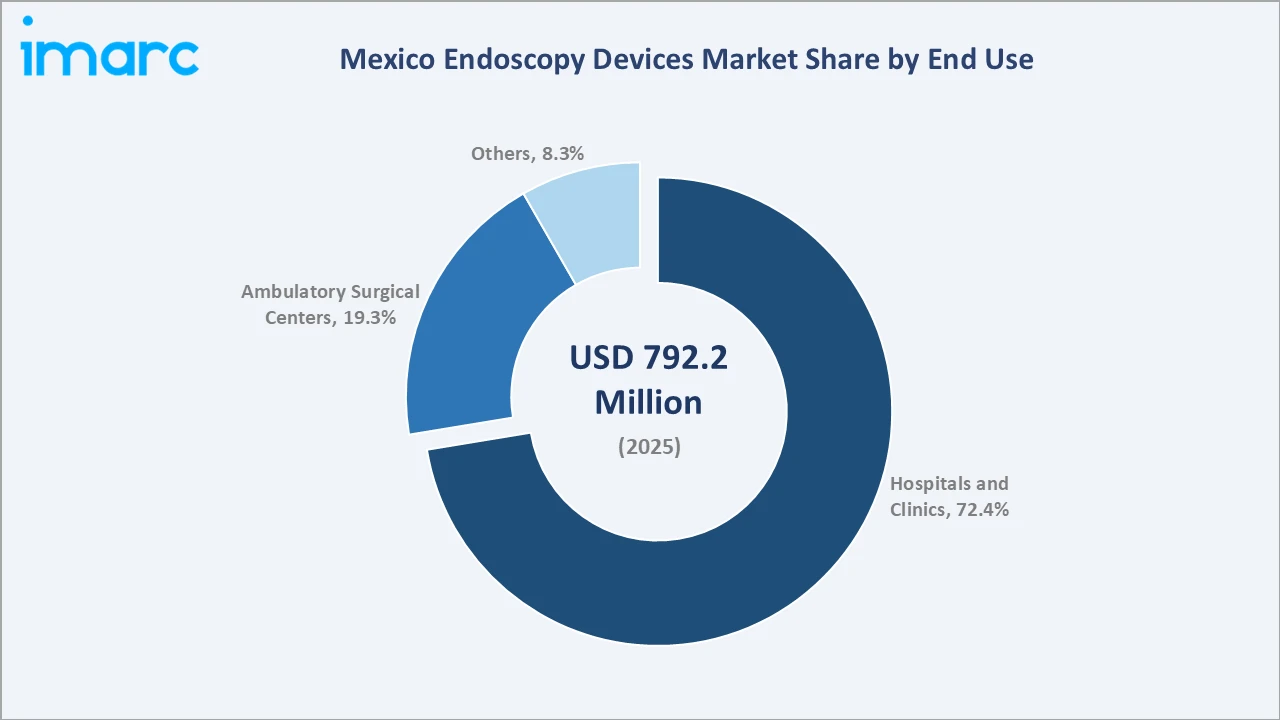
Ambulatory surgical centers hold 19.3% share, growing through demand for lower-cost outpatient procedures and shorter patient wait times. Others, at 8.3%, includes diagnostic imaging centers and specialty clinics offering limited endoscopic services. The gradual shift of routine, lower-complexity procedures toward ambulatory settings is expected to continue as private operators expand outpatient capacity, even as hospitals retain the bulk of complex and emergency endoscopic cases.
Regional Market Insights
|
Region |
Share (2025) |
Key Market Drivers & Characteristics |
|
Central Mexico |
43.1% |
Driven by Mexico City's concentration of tertiary hospitals, private healthcare investment, and specialist medical talent. |
|
Northern Mexico |
28.7% |
Supported by cross-border healthcare investment, industrial urban centers, and growing private hospital networks. |
|
Southern Mexico |
17.6% |
Driven by expanding public healthcare infrastructure and rising government investment in regional hospital modernization. |
|
Others |
10.6% |
Reflects emerging healthcare infrastructure development across smaller states and rural healthcare networks. |
Central Mexico's leadership is anchored by Mexico City's dense hospital network and concentration of specialist gastroenterology and urology practices. Northern Mexico benefits from industrial urban centers and private hospital investment near the United States border, while Southern Mexico's growth reflects expanding public healthcare investment.
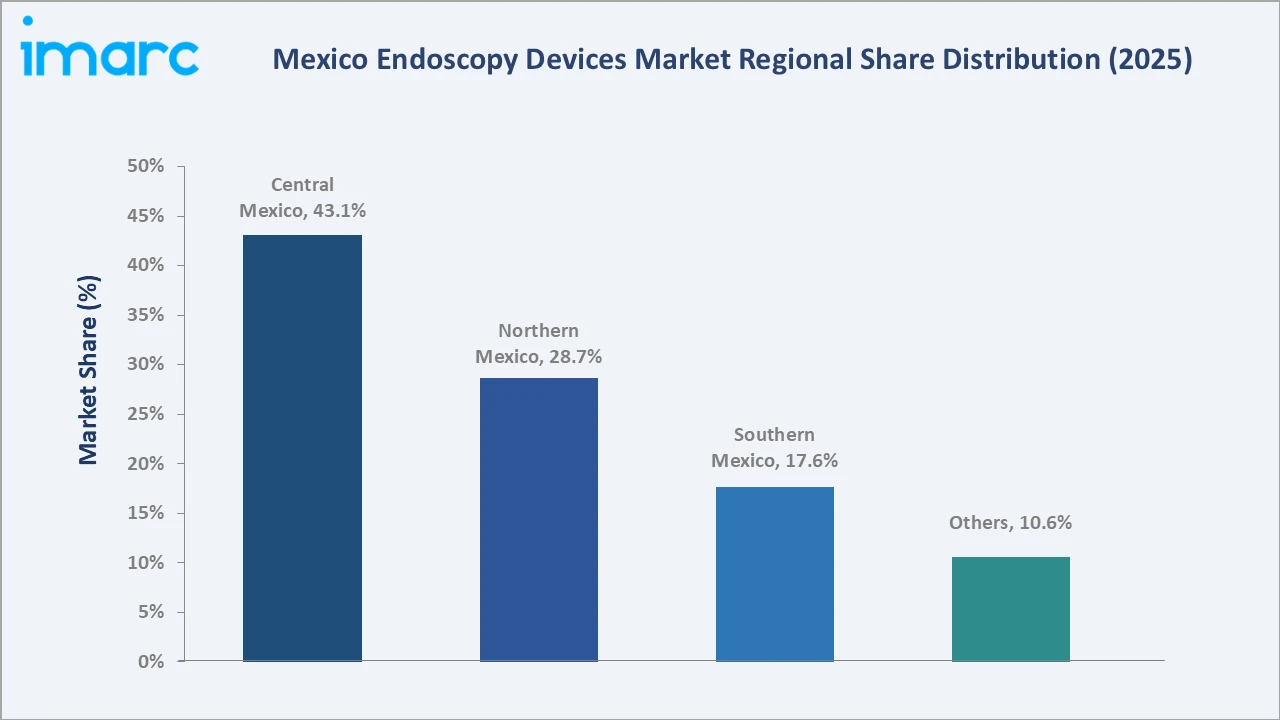
The gap between Central Mexico's 43.1% share and the combined 28.2% held by Southern Mexico and Others highlights a persistent urban-rural infrastructure divide. Closing this gap will depend on continued public investment in regional hospital capacity and on manufacturers extending distributor and service coverage beyond the country's principal metropolitan markets.
Competitive Landscape
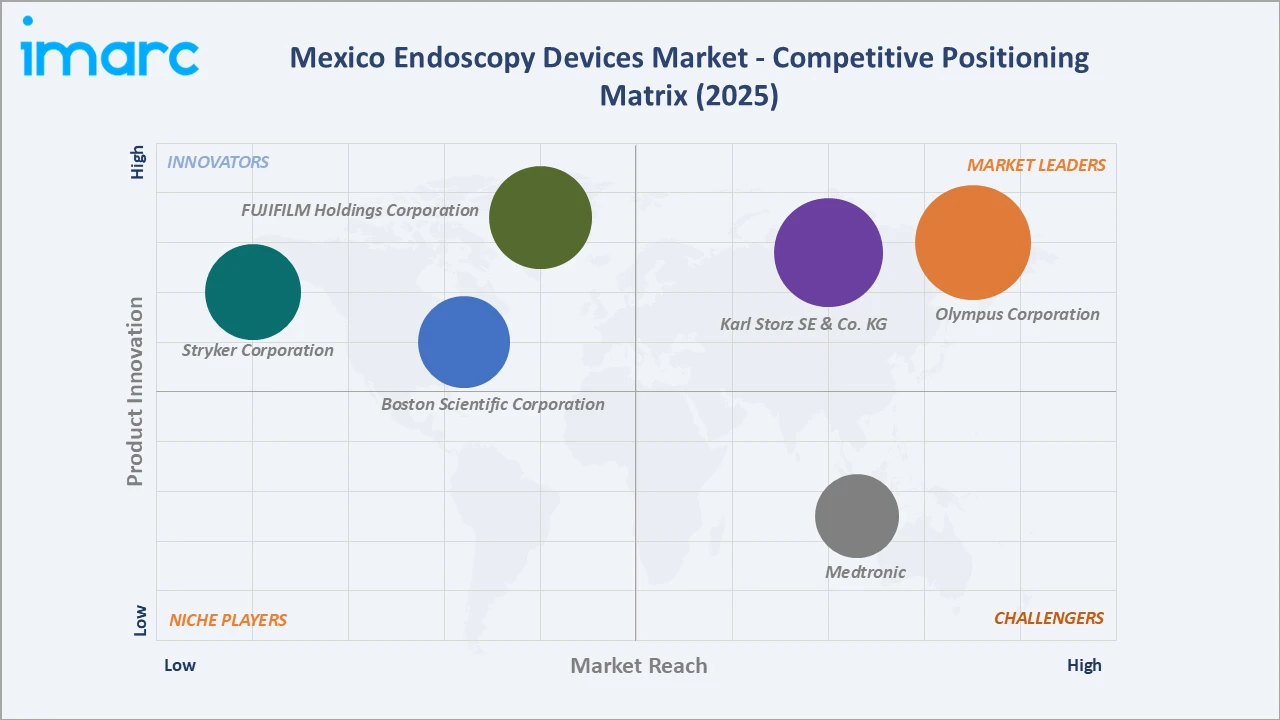
The Mexico endoscopy devices market features multinational medical device manufacturers competing on product breadth, imaging technology, distributor networks, and after-sales service and training support, alongside smaller regional players serving niche procedural segments.
Competitive success in this market depends heavily on the strength of local clinical training programs and equipment servicing infrastructure, since hospitals are often more willing to pay a premium for vendors that can guarantee rapid technical support and consistent consumable supply over strictly lower-priced alternatives.
|
Company Name |
Key Products |
Market Position |
Core Strength |
|
Olympus Corporation |
EVIS X1 system, flexible GI endoscopes, visualization processors |
Market Leader |
Broad flexible endoscope and visualization system portfolio with strong Mexico distribution and clinical training presence. |
|
KARL STORZ SE & Co. KG |
Rigid endoscopes, Imaging Solutions, laparoscopic instrumentation |
Market Leader |
Comprehensive rigid endoscopy and visualization systems across surgical and diagnostic specialties. |
|
FUJIFILM Holdings Corporation |
ELUXEO systems, flexible video endoscopes |
Established Player |
Advanced endoscopic imaging technology supporting early disease detection. |
|
Stryker Corporation |
Surgical visualization, laparoscopic instruments |
Established Player |
Integrated surgical endoscopy and visualization equipment for hospital operating rooms. |
|
Boston Scientific Corporation |
Biopsy forceps, snares |
Established Player |
Broad range of endoscopic operative devices and accessories for GI and urology procedures. |
|
Medtronic |
GI Genius AI module |
Challenger |
Growing presence in surgical endoscopy and minimally invasive device technology. |
Dutch and Japanese manufacturer concentration reflects deep technology investment cycles and clinical training infrastructure that sustain multinational leaders' competitive advantage. Mid-tier players compete on distribution responsiveness and pricing, particularly among smaller private hospitals outside Central Mexico. Consolidation pressure is expected to persist as hospital procurement increasingly favors vendors capable of supplying integrated imaging, software, and consumable ecosystems rather than single-product offerings.
Key Company Profiles
Olympus Corporation
Olympus Corporation is a leading global provider of endoscopic imaging and surgical technology, with an established distribution and clinical training presence across Mexico's hospital network. The company's broad installed base across both public and private facilities gives it significant influence over clinical imaging standards nationwide.
- Key Products: EVIS X1 endoscopy system, flexible gastrointestinal endoscopes, visualization processors.
- Recent Developments: In May 2026, Olympus Corporation announced an exclusive global distribution agreement with EndoRobotics Co., Ltd. to expand its EndoTherapy portfolio with robot-assisted endoscopy technologies. The partnership aims to enhance therapeutic endoscopy by supporting complex minimally invasive procedures, including endoscopic submucosal dissection (ESD), enabling greater precision and improved treatment outcomes for gastrointestinal diseases.
- Strategic Focus: Focused on advanced imaging technology, clinical training, and expansion of its hospital distribution network across Mexico.
KARL STORZ SE & Co. KG
KARL STORZ is a prominent provider of rigid endoscopy and visualization technology, serving gastroenterology, urology, gynecology, and arthroscopy specialties across Mexican hospitals and surgical centers. Its specialty-specific instrumentation portfolio makes it a preferred partner for hospitals building out dedicated surgical endoscopy programs.
- Key Products: Rigid endoscopes, camera and imaging systems, laparoscopic and arthroscopic instrumentation.
- Recent Developments: In June 2026, KARL STORZ SE & Co. KG announced a strategic collaboration with Medtronic to expand access to integrated ENT surgical solutions in the U.S. The partnership combines Medtronic's Stealth AXiS™ ENT surgical system with KARL STORZ's advanced endoscopy instrumentation and visualization systems, enabling more connected and efficient endoscopic ENT procedures while enhancing surgical workflow and patient care.
- Strategic Focus: Centered on integrated visualization systems and specialty-specific endoscopic instrumentation for hospital operating rooms.
FUJIFILM Holdings Corporation
FUJIFILM is a key player in the Mexico endoscopy devices market, offering advanced imaging technology that supports early detection of gastrointestinal disease. Its image-enhanced endoscopy portfolio has positioned the company as a preferred technology partner for hospitals prioritizing early cancer screening programs.
- Key Products: ELUXEO endoscopy systems, flexible video endoscopes, image-enhanced endoscopy technology.
- Recent Developments: In February 2026, FUJIFILM Holdings Corporation, through FUJIFILM India, inaugurated its endoscopy manufacturing facility in Jodhpur, Rajasthan, marking a significant milestone in its Make in India strategy. The facility will progressively localize the production of endoscopy systems while adhering to Fujifilm's global Japanese quality standards, strengthening domestic manufacturing capabilities and improving access to advanced minimally invasive diagnostic technologies in India.
- Strategic Focus: Focused on image-enhanced diagnostic technology and expanding hospital partnerships across the region.
Market Concentration Analysis
The Mexico endoscopy devices market is moderately concentrated, with multinational manufacturers holding significant share through established distribution, clinical training, and after-sales service networks that smaller entrants find difficult to replicate quickly.
Smaller regional distributors and device reprocessing companies compete on service responsiveness and pricing, particularly among public hospitals and smaller private clinics outside Central Mexico, where multinational service coverage is comparatively thinner.
Over the forecast period, concentration is likely to increase modestly at the technology platform tier as leading manufacturers bundle imaging hardware with AI software and consumables, while the broader distribution and reprocessing layer of the market is expected to remain fragmented and regionally competitive.
Investment & Growth Opportunities
Highest Growth Segments
Endoscopy visualization systems (~5.9% CAGR), operative devices (~5.6% CAGR), and AI-assisted diagnostic software represent the highest-growth investment vectors through 2034, as hospitals prioritize imaging quality upgrades alongside core endoscope replacement cycles. Investment in these segments is expected to be concentrated among private hospital groups in Central and Northern Mexico, which have greater capital flexibility than public-sector facilities.
Emerging Investment Opportunities
Ambulatory surgical center expansion represents the largest near-term investment opportunity, as private operators build lower-cost outpatient endoscopy capacity in urban and peri-urban Mexico. Companies establishing preferred-supplier relationships with these emerging networks are positioned for above-market growth. Southern Mexico's comparatively underserved hospital infrastructure also represents a longer-horizon opportunity for manufacturers willing to invest in regional distribution and training capacity ahead of broader market maturity.
Investment Themes
- AI-Assisted Diagnostic Software Licensing for Hospital Subscription Revenue: Cloud-connected AI detection software creates a recurring, above-hardware-margin revenue stream as hospital endoscopy fleets expand, positioning early platform providers for durable subscription growth.
- Single-Use Endoscope Manufacturing Capacity Investment: Localizing single-use endoscope production for the Mexican and broader Latin American market could reduce import dependence and improve cost competitiveness against reusable device alternatives.
- Regional Distributor and Service Network Expansion: Investing in distributor and technical service coverage across Southern and rural Mexico offers a differentiated route to market share gains as public healthcare infrastructure investment extends beyond the country's principal metropolitan hubs.
Future Market Outlook (2026-2034)
The Mexico endoscopy devices market is projected to grow from USD 792.2 Million in 2025 to USD 1,264.2 Million by 2034, delivering a 5.17% CAGR over the forecast period, supported by sustained hospital capital investment and rising procedural volumes.
The market's anchor value of USD 1,019.3 Million in 2030 reflects continued hospital capital investment, rising procedural volumes, and the gradual adoption of AI-assisted and single-use endoscopy technology across Mexico's healthcare system.
Growing focus on early disease detection, expansion of ambulatory surgical capacity, and government-backed healthcare modernization programs are expected to sustain steady, multi-year demand for endoscopic devices nationwide through 2034.
By the end of the forecast period, the competitive landscape is likely to reward manufacturers and distributors that have invested earliest in local clinical training, service infrastructure, and software-enabled diagnostic capability, as these factors increasingly outweigh price alone in hospital purchasing decisions.
Research Methodology
Primary Research
Primary research comprised structured interviews with hospital procurement heads, gastroenterologists, biomedical engineers, and regional medical device distributors across Mexico. These conversations were used to validate segment-level demand assumptions, procurement decision criteria, and emerging technology adoption timelines.
Secondary Research
Secondary research encompassed medical device industry publications, Mexican healthcare statistics, company annual reports, and regulatory filings relevant to the endoscopy devices industry. Public COFEPRIS device registration data and hospital infrastructure statistics were used to cross-check regional demand patterns identified through primary research.
Forecasting Models
Market revenue forecasts were developed using a segment bottom-up model covering device type, application, end use, and regional demand components, calibrated against historical procurement trends and validated through triangulation with primary research findings.
Mexico Endoscopy Devices Market Report Coverage:
| Report Features | Details |
|---|---|
| Base Year of the Analysis | 2025 |
| Historical Period | 2020-2025 |
| Forecast Period | 2026-2034 |
| Units | Million USD |
| Scope of the Report |
Exploration of Historical Trends and Market Outlook, Industry Catalysts and Challenges, Segment-Wise Historical and Future Market Assessment:
|
| Types Covered | Endoscopes, Endoscopy Visualization Systems, Endoscopy Visualization Components, Operative Devices |
| Applications Covered | Gastrointestinal Endoscopy, Urology Endoscopy, Laparoscopy, Gynecology Endoscopy, Arthroscopy, Others |
| End Uses Covered | Hospitals and Clinics, Ambulatory Surgical Centers, Others |
| Regions Covered | Northern Mexico, Central Mexico, Southern Mexico, Others |
| Companies Covered | Olympus Corporation, KARL STORZ SE & Co. KG, FUJIFILM Holdings Corporation, Stryker Corporation, Boston Scientific Corporation, Medtronic, etc. |
| Customization Scope | 10% Free Customization |
| Post-Sale Analyst Support | 10-12 Weeks |
| Delivery Format | PDF and Excel through Email (We can also provide the editable version of the report in PPT/Word format on special request) |
Key Benefits for Stakeholders:
- IMARC’s industry report offers a comprehensive quantitative analysis of various market segments, historical and current market trends, market forecasts, and dynamics of the Mexico endoscopy devices market from 2020-2034.
- The research report provides the latest information on the market drivers, challenges, and opportunities in the Mexico endoscopy devices market.
- Porter's five forces analysis assist stakeholders in assessing the impact of new entrants, competitive rivalry, supplier power, buyer power, and the threat of substitution. It helps stakeholders to analyze the level of competition within the Mexico endoscopy devices industry and its attractiveness.
- Competitive landscape allows stakeholders to understand their competitive environment and provides an insight into the current positions of key players in the market.
Frequently Asked Questions About the Mexico Endoscopy Devices Market Report
The Mexico endoscopy devices market reached USD 792.2 Million in 2025, driven by rising gastrointestinal disease prevalence and healthcare infrastructure modernization across public and private hospital networks.
The market is projected to grow at a CAGR of 5.17% during 2026-2034, reaching USD 1,264.2 Million by 2034, supported by sustained hospital capital investment and rising procedural volumes.
Endoscopes lead the type segment at 42.8% share in 2025, given their central role in diagnostic and therapeutic procedures across gastrointestinal, urological, and surgical applications.
Hospitals and clinics lead end use at 72.4% share, supported by their specialist staff, sterilization infrastructure, and advanced procedural equipment required for complex endoscopic cases.
Central Mexico leads at 43.1% share, anchored by Mexico City's concentration of tertiary hospitals, specialist practices, and private healthcare investment.
Leading companies include Olympus Corporation, KARL STORZ SE & Co. KG, FUJIFILM Holdings Corporation, Stryker Corporation, Boston Scientific Corporation and Medtronic, among others, competing on imaging technology, product breadth, and distribution reach.
The market is projected to reach approximately USD 1,019.3 Million by 2030, supported by continued hospital investment, expanding ambulatory surgical capacity, and rising procedural adoption.
Key trends include high-definition and 4K imaging adoption, AI-assisted lesion detection, single-use endoscope uptake, and early moves toward robotic-assisted endoscopy across leading private hospitals.
Need more help?
- Speak to our experienced analysts for insights on the current market scenarios.
- Include additional segments and countries to customize the report as per your requirement.
- Gain an unparalleled competitive advantage in your domain by understanding how to utilize the report and positively impacting your operations and revenue.
- For further assistance, please connect with our analysts.
 Request Customization
 Speak to an Analyst
 Request Brochure
 Inquire Before Buying
Benefits of Customization
- Personalize this research
- Triangulate with your data
- Get data as per your format and definition
- Gain a deeper dive into a specific application, geography, customer, or competitor
- Any level of personalization
Get in Touch With Us
UNITED STATES
Phone: +1-201-971-6302
INDIA
Phone: +91-120-433-0800
UNITED KINGDOM
Phone: +44-753-714-6104
Email: [email protected]
Client Testimonials




.webp)




.webp)













Related Reports

Choose your plan
*Please note that the prices mentioned below are starting prices for each bundle type. Kindly contact our team for further details.*
Single User License
- 1 User License, Access on 2 Devices
- PDF Report + Excel Dataset (Password Protected)
- Lifetime Access
- No Printing Rights
- 10% Free Report Customization
- 10–12 Weeks of Analyst Support
Five User License
- Access for 5 Users, 2 Devices per User
- PDF Report + Excel Dataset (Password Protected)
- Lifetime Access
- Dedicated Account Manager
- 12–14 Weeks of Analyst Support
- No Printing Rights
- 15% Free Report Customization
- 25% Discount on Your Next Purchase
Corporate User License
- Unlimited User Access (Within Your Organization)
- PDF Report + Excel Dataset
- Lifetime Access
- Dedicated Account Manager
- 14–20 Weeks of Analyst Support
- No Printing Rights
- 20% Free Report Customization
- 30% Discount on Your Next Purchase
Essential Insights
What's included:
3 reports
- Lifetime Access
- PDF Reports
- Excel Datasets
- 2 Weeks of Free Analyst Support
- 2 User Licenses
- Access on 2 Devices
- Printing Rights
- Complimentary PowerPoint (PPT) Version
- Complimentary License Upgrade
Professional Access
What's included:
5 reports
- Lifetime Access
- PDF Reports
- Excel Datasets
- 8 Weeks of Free Analyst Support
- 2 User Licenses
- Access on 2 Devices
- Printing Rights
- Complimentary PowerPoint (PPT) Version
- Complimentary License Upgrade
Business Advantage
What's included:
8 reports
- Lifetime Access
- PDF Reports
- Excel Datasets
- 14 Weeks of Free Analyst Support
- 2 User Licenses
- Access on 2 Devices
- Printing Rights
- Complimentary PowerPoint (PPT) Version
- Complimentary License Upgrade
Enterprise Intelligence
What's included:
10 reports
- Lifetime Access
- PDF Reports
- Excel Datasets
- 20 Weeks of Free Analyst Support
- 2 User Licenses
- Access on 2 Devices
- Printing Rights
- Complimentary PowerPoint (PPT) Version
- Complimentary License Upgrade