
Mexico Soup Market Size, Share, Trends and Forecast by Type, Category, Packaging, Distribution Channel, and Region, 2026-2034
Mexico Soup Market Size, Share, Trends & Forecast (2026-2034)
The Mexico soup market grew from USD 189.3 Million in 2025 to USD 195.8 Million in 2026 and is projected to reach USD 260.8 Million by 2034, exhibiting a CAGR of 3.44% during 2026-2034. Increasing urbanization, rising dual-income households, and expanding modern retail infrastructure are the primary drivers shaping market growth.
Non-vegetarian soup leads the category segment at 57.4%, pouched commands the largest packaging share at 48.6%, and Central Mexico dominates the regional landscape with a 44.7% share.
Market Snapshot
|
Metric |
Value |
|
Base Year Market Size (2025) |
USD 189.3 Million |
|
Market Size (2026) |
USD 195.8 Million |
|
Forecast Market Size (2034) |
USD 260.8 Million |
|
CAGR (2026-2034) |
3.44% |
|
Base Year |
2025 |
|
Historical Period |
2020-2025 |
|
Forecast Period |
2026-2034 |
|
Largest Region |
Central Mexico (44.7%, 2025) |
|
Second Largest Region |
Northern Mexico (33.6%, 2025) |
|
Leading Category |
Non-Vegetarian Soup (57.4%, 2025) |
|
Leading Packaging |
Pouched (48.6%, 2025) |
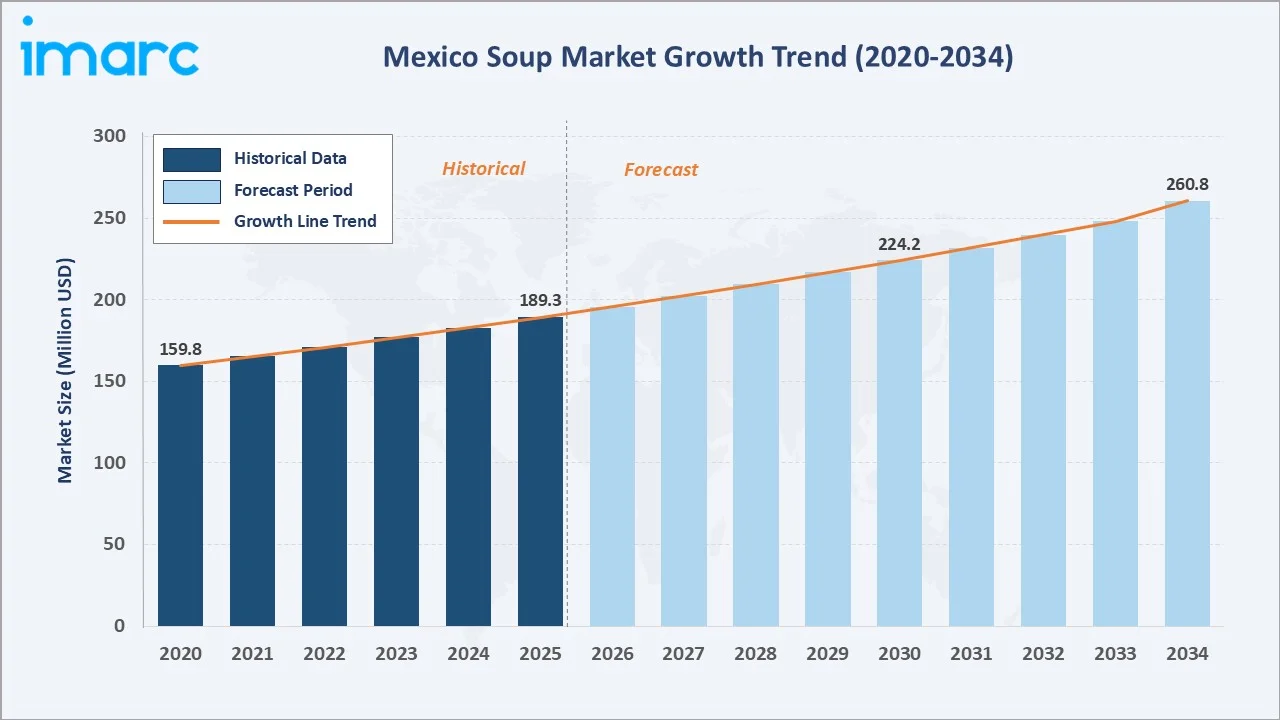
The Mexico soup market grew from USD 159.8 Million in 2020 to USD 189.3 Million in 2025 and is estimated to reach USD 195.8 Million in 2026. The market is further expected to grow to USD 224.2 Million by 2030 and USD 260.8 Million by 2034. The market growth is directly driven by rising urbanization and evolving consumer lifestyles and increasing demand for convenience and packaged food formats.
To get more information on this market, Request Sample
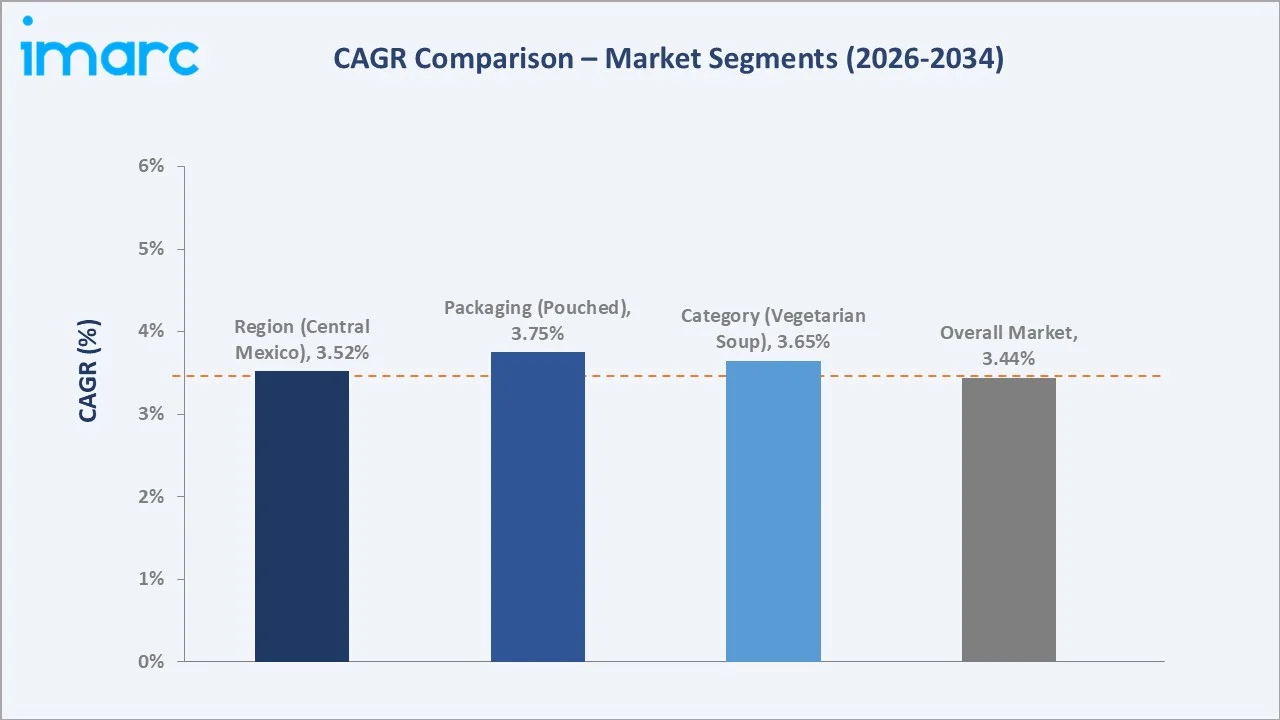
CAGR trajectories across category, packaging, and regional sub-segments show Southern Mexico and pouched as the fastest-growing region and packaging respectively, both outpacing the overall 3.44% market CAGR, driven by rising consumer demand and shifting preferences for convenient soup formats.
Executive Summary
The Mexico soup market expanded from USD 189.3 Million in 2025 to an estimated USD 195.8 Million in 2026, reflecting continued steady growth supported by rising urbanization, convenience food adoption, and expanding modern retail infrastructure. The market has evolved from predominantly home-cooked traditional preparations toward commercially packaged formats driven by changing consumer lifestyles, urbanization, and the rapid expansion of modern retail channels across Mexico's major metropolitan areas.
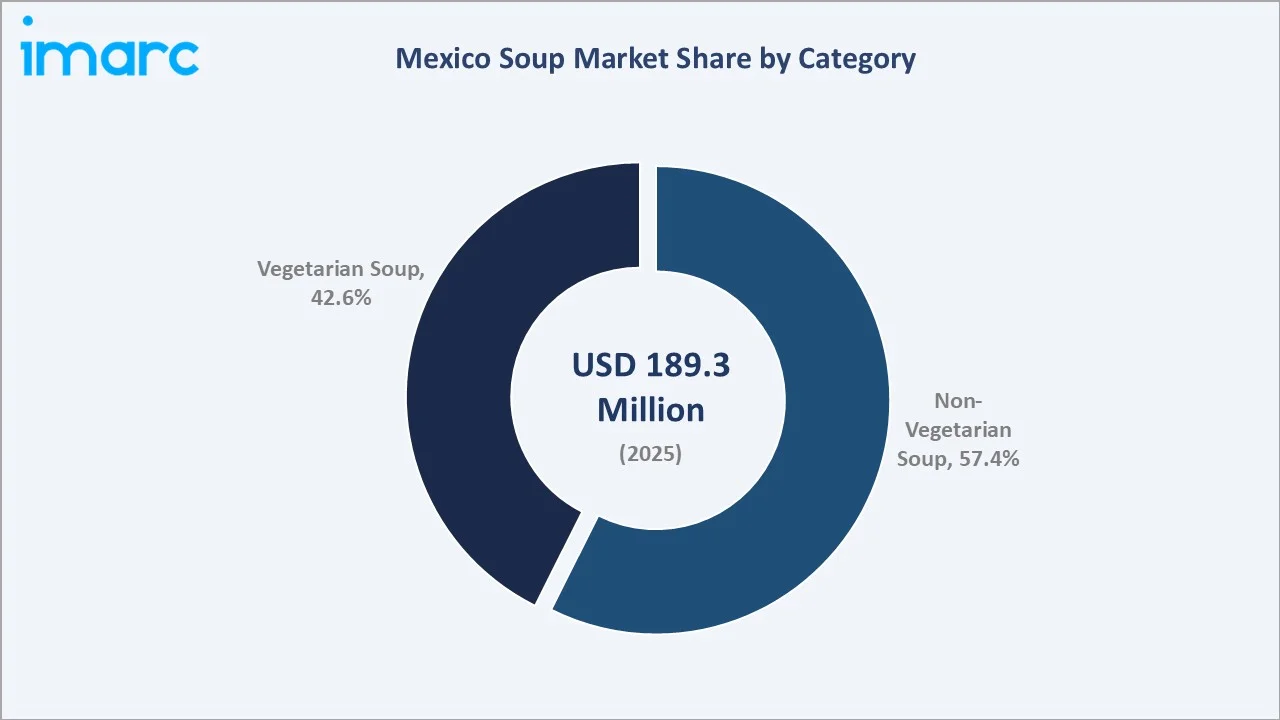
Non-vegetarian soup dominates the category breakdown at 57.4% in 2025, supported by strong consumer preference for chicken and beef-based soups rooted in Mexican culinary traditions. Pouched leads the packaging segment at 48.6%, favored for its convenience, portability, and lower unit cost compared to canned alternatives. Central Mexico commands 44.7% of the regional market share in 2025, anchored by the country's large consumer base and high density of modern retail infrastructure.
Key Market Insights
|
Insight |
Data |
|
Leading Category |
Non-Vegetarian Soup - 57.4% share (2025) |
|
Second Largest Category |
Vegetarian Soup - 42.6% share (2025) |
|
Leading Packaging |
Pouched - 48.6% share (2025) |
|
Second Largest Packaging |
Canned - 39.4% share (2025) |
|
Leading Region |
Central Mexico - 44.7% share (2025) |
|
Second Largest Region |
Northern Mexico - 33.6% share (2025) |
|
Top Companies |
The Campbell's Company, Nestlé S.A., Toyo Suisan Kaisha, Ltd., Conservas La Costeña, S.A. de C.V. |
Key Analytical Observations Expanding On the Data Above:
- Non-vegetarian soup dominance at 57.4% is driven by deeply embedded consumer preferences for chicken, beef, and seafood-based soups, with traditional Mexican recipes serving as the primary reference point for product development.
- Vegetarian soup at 42.6% is expanding in relevance as health-conscious consumers and younger urban demographics increasingly seek plant-based and fiber-rich dietary options.
- Pouched leadership at 48.6% reflects consumer preference for lightweight, resealable, and cost-efficient formats, with e-commerce fulfillment further accelerating adoption of flexible packaging solutions.
- Canned retains a 39.4% share, particularly among older consumer segments and regions where trust in shelf-stable preservation formats remains strong.
- Central Mexico at 44.7% leads the regional landscape, underpinned by Mexico City's large population base, high per-capita income levels nationally, and a great density of organized retail outlets.
Mexico Soup Market Overview
The Mexico soup market encompasses commercially manufactured and packaged soup products distributed through organized retail, foodservice, and direct-to-consumer channels. The market sits at the intersection of Mexico's deeply rooted soup-centric culinary culture and the ongoing modernization of its food retail infrastructure.
The market ecosystem integrates agricultural commodity suppliers, food processing and manufacturing companies, packaging material producers, logistics and cold chain operators, organized retail chains, foodservice operators, and increasingly, e-commerce platforms. Government food safety regulations and labeling standards administered by COFEPRIS shape the operating environment for all market participants.
Market Dynamics
To evaluate market opportunities, Request Sample
Market Drivers
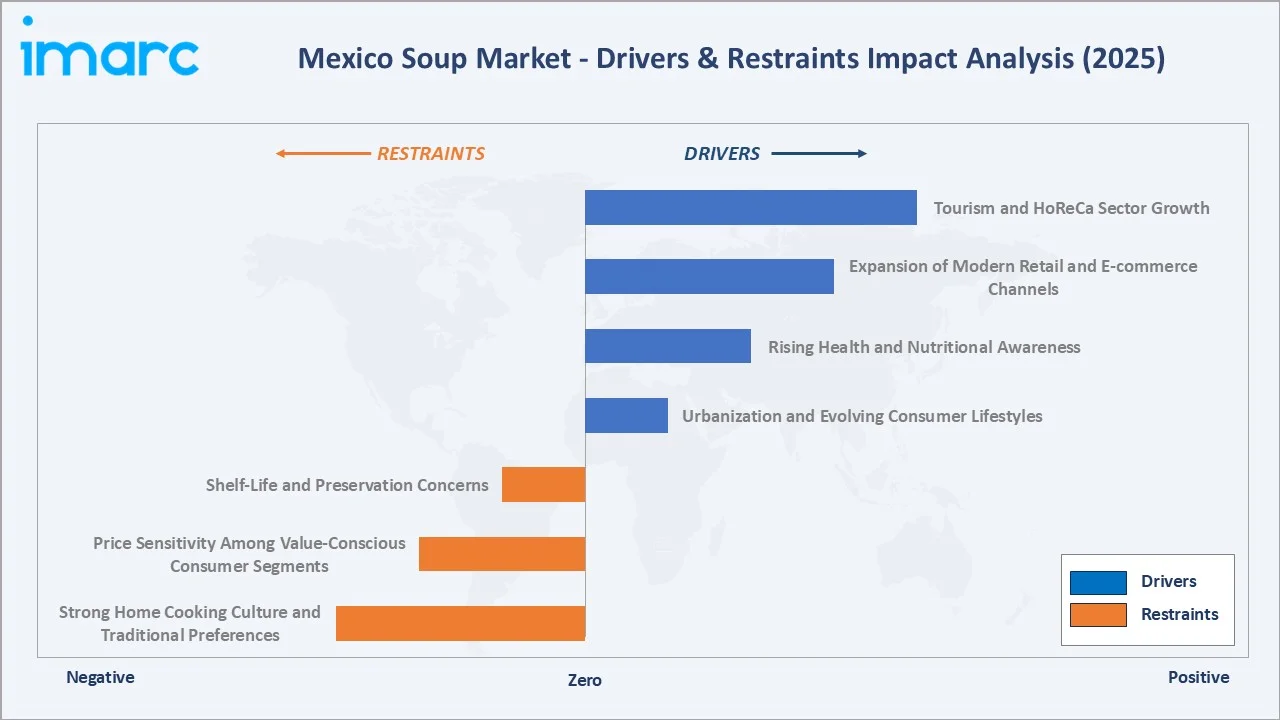
- Urbanization and Evolving Consumer Lifestyles: Rapid urbanization across Mexico's metropolitan areas is fundamentally reshaping dietary habits. As dual-income households become increasingly common, time-constrained consumers are shifting toward packaged convenience food formats. Packaged soups benefit directly from this behavioral transition, offering quick preparation, consistent quality, and broad flavor variety.
- Rising Health and Nutritional Awareness: Growing consumer interest in health-conscious eating is expanding the addressable market for low-sodium, high-protein, and vegetable-enriched soup products. This shift is encouraging manufacturers to expand healthier product formulations and diversify their offerings.
- Expansion of Modern Retail and E-commerce Channels: The continued rollout of supermarkets, hypermarkets, and specialty food retailers, combined with the rapid growth of e-commerce platforms, is broadening distribution reach for packaged soups. As per IMARC Group, the Mexico e-commerce market reached USD 54.39 Billion in 2025.
- Tourism and HoReCa Sector Growth: Mexico's robust tourism industry and the expansion of its HoReCa sector are supporting higher-volume soup consumption across foodservice channels, particularly for ready-to-use and bulk packaged formats. In 2025, Mexico welcomed a remarkable 47.79 Million international tourists.
Market Restraints
- Strong Home Cooking Culture and Traditional Preferences: Mexico's deep-rooted culinary tradition of preparing soups from scratch remains one of the most significant barriers to packaged soup adoption. A large proportion of Mexican households, particularly in rural and semi-urban areas, continue to prepare traditional soups using fresh local ingredients.
- Price Sensitivity Among Value-Conscious Consumer Segments: A substantial proportion of Mexico's consumer base remains highly price-sensitive, particularly in lower-income and rural demographics. Premium soup products and organic variants face limited addressable markets in these segments.
- Shelf-Life and Preservation Concerns: Consumer skepticism regarding artificial preservatives, additives, and the nutritional integrity of packaged soups relative to freshly prepared alternatives continues to constrain adoption in health-conscious consumer segments.
Market Opportunities
- Premium and Organic Soup Segments: Rising disposable incomes among urban middle-class consumers are creating demand for premium, organic, and clean-label soup products. The premiumization trend provides significant headroom for established brands and new entrants to capture higher-margin revenue streams.
- Regional Flavor Localization and Product Innovation: Opportunity exists for manufacturers to develop regionally inspired soup varieties reflecting Mexico's rich culinary diversity, driving incremental product launches and consumer trials.
Market Challenges
- Adapting to Evolving Food Labeling Requirements: Changing food labeling standards and nutritional disclosure requirements create formulation, packaging, and marketing challenges for soup manufacturers, increasing compliance costs and requiring continuous product and packaging adjustments.
- Supply Chain Volatility and Input Cost Inflation: Fluctuating commodity prices for meat, vegetables, and packaging materials, combined with logistics constraints, are creating cost pressures that challenge manufacturers' ability to maintain competitive price points in a price-sensitive market.
Emerging Market Trends
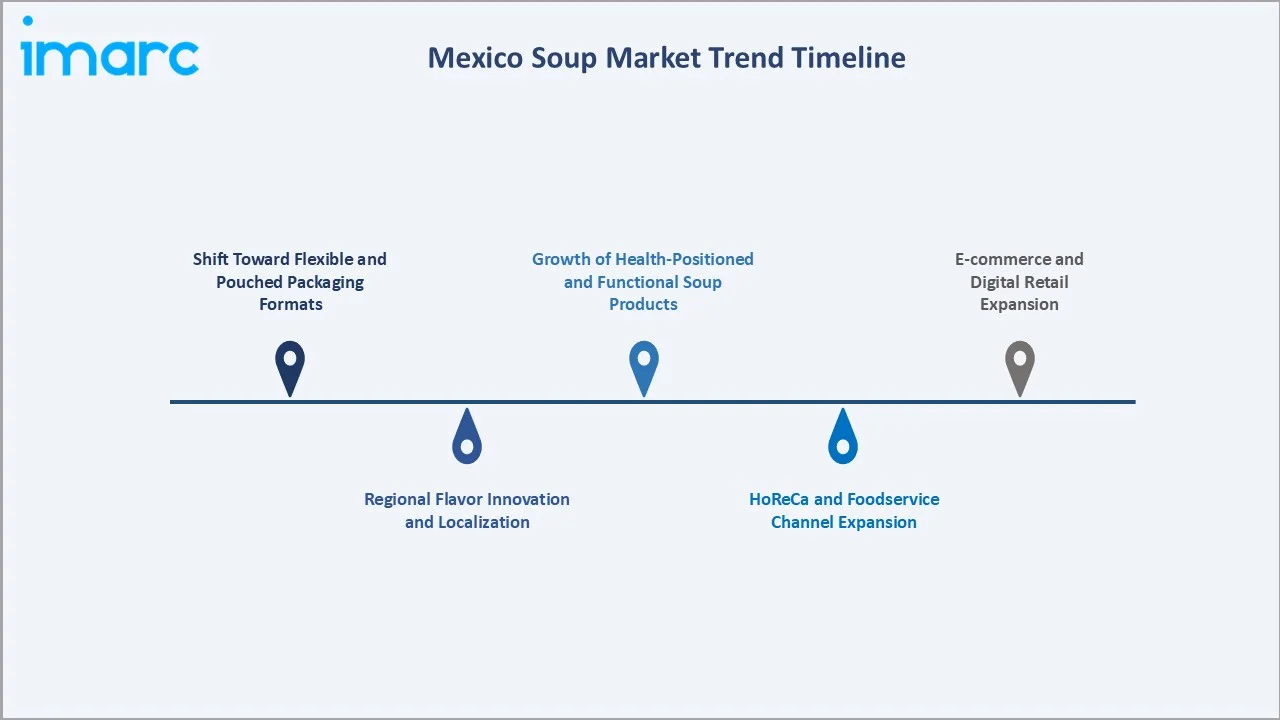
1. Shift Toward Flexible and Pouched Packaging Formats
Consumer preference is visibly shifting toward flexible pouch packaging over traditional cans. Pouches offer advantages including lighter weight, resealability, easier storage, and lower production cost per unit. Manufacturers are investing in stand-up pouch and retort pouch technologies to meet this demand, particularly for refrigerated and ready-to-eat soup formats positioned at convenience-oriented urban consumers.
2. Growth of Health-Positioned and Functional Soup Products
Health-conscious consumer behavior is fueling demand for low-sodium, high-protein, and vegetable-enriched soup products in Mexico's premium retail segment. Manufacturers are responding with product launches featuring natural ingredients, clean-label formulations, and reduced artificial additives.
3. E-commerce and Digital Retail Expansion
The accelerating penetration of online grocery platforms is creating new consumer touchpoints for packaged soup discovery and purchase. Digital retail is particularly influential among urban, younger demographics and enables manufacturers to reach previously underserved geographic segments more cost-effectively than traditional brick-and-mortar distribution.
4. Regional Flavor Innovation and Localization
International and domestic soup manufacturers are increasingly investing in product development that reflects Mexico's regional culinary heritage. Launches featuring traditional Mexican flavor profiles, including tomatillo, ancho chile, epazote, and huitlacoche variants, are gaining traction in both retail and foodservice channels.
5. HoReCa and Foodservice Channel Expansion
Mexico's growing hospitality and restaurant sector is expanding demand for bulk and institutional soup formats. Foodservice operators are increasingly sourcing commercially manufactured soup bases and ready-to-use concentrates to improve kitchen efficiency and menu consistency.
Industry Value Chain Analysis
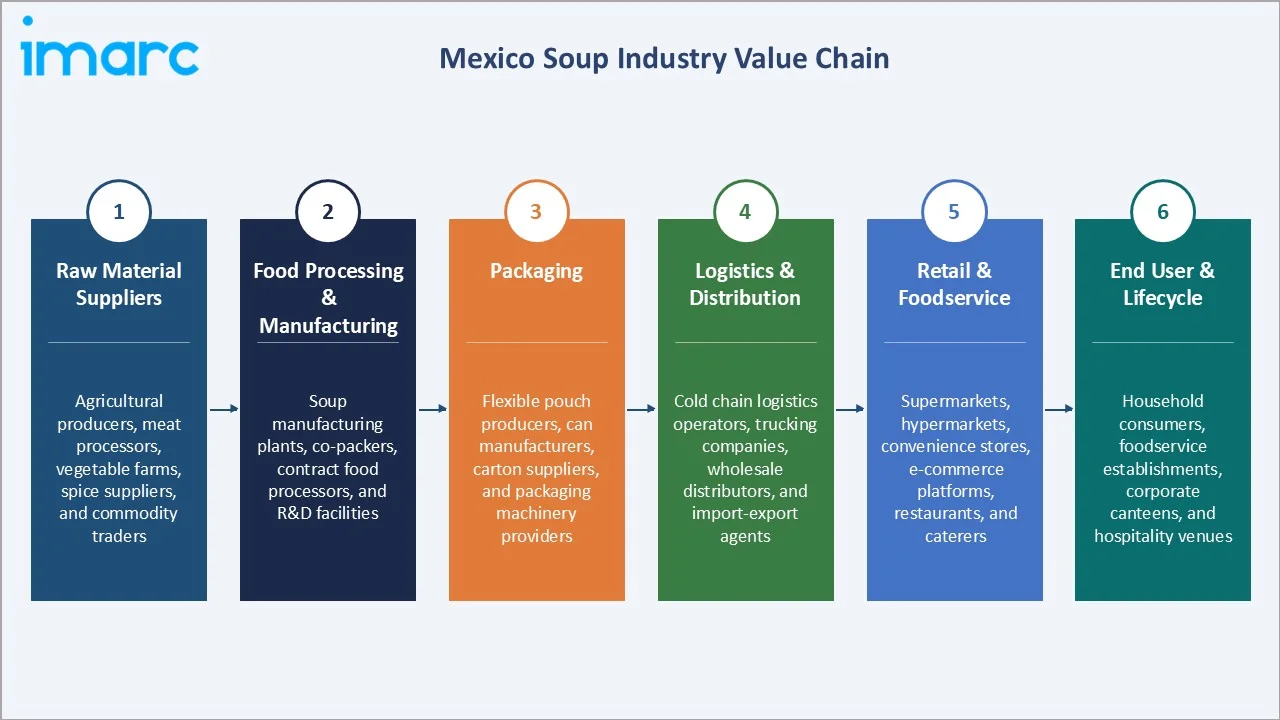
The Mexico soup market value chain spans six stages, from agricultural raw material sourcing through end-user engagement and lifecycle management. Raw material procurement, food processing, packaging, and logistics-to-retail represent the highest-cost stages, while brand equity and consumer relationships drive the greatest value capture at the downstream end of the chain.
|
Stage |
Key Players / Examples |
|
Raw Material Suppliers |
Agricultural producers, meat processors, vegetable farms, spice suppliers, and commodity traders supplying primary inputs |
|
Food Processing & Manufacturing |
Soup manufacturing plants, co-packers, contract food processors, and research and development facilities developing formulations |
|
Packaging |
Flexible pouch producers, can manufacturers, carton suppliers, and packaging machinery providers |
|
Logistics & Distribution |
Cold chain logistics operators, trucking and freight companies, wholesale distributors, and import-export agents |
|
Retail & Foodservice |
Supermarkets, hypermarkets, convenience stores, e-commerce platforms, restaurants, and institutional caterers |
|
End User & Lifecycle |
Household consumers, foodservice establishments, corporate canteens, and hospitality venues |
Vertically integrated manufacturers with direct supplier relationships and proprietary distribution networks are positioned to capture greater value than those reliant on intermediary distributors. The shift toward flexible packaging is reshaping capital requirements at the packaging stage, while the expansion of e-commerce reduces the historical dependency on large wholesale intermediaries.
Technology Landscape in the Mexico Soup Industry
Retort and Aseptic Processing Technologies
Modern retort processing and aseptic packaging technologies are enabling manufacturers to extend the shelf life of commercially packaged soups without compromising nutritional quality or flavor integrity. Investments in high-temperature short-time (HTST) processing are reducing thermal degradation of ingredients, supporting the premium soup segment's quality requirements.
Flexible Packaging Innovation
Advanced flexible packaging technologies, including multilayer retort pouches and stand-up doypack formats, are reshaping product design and consumer experience across the soup category. These technologies offer superior barrier properties, reduced material weight, and compatibility with microwave-safe requirements.
Automation and Manufacturing Efficiency
Leading soup manufacturers are deploying automated filling, sealing, and inspection systems to improve production throughput, reduce labor costs, and ensure consistent product quality. Automation investments are particularly relevant in the context of Mexico's rising minimum wages and the ongoing need to maintain price competitiveness.
Digital Supply Chain and Inventory Management
Technology adoption in supply chain management, including IoT-enabled cold chain monitoring, demand forecasting analytics, and inventory optimization platforms, is improving product freshness, reducing waste, and enhancing distribution efficiency across Mexico's geographically diverse retail network.
Market Segmentation Analysis
The report covers the following segments:
|
Segment Category |
Leading Segment |
Market Share |
Year |
|
Type |
🔒 |
🔒 |
2025 |
|
Category |
Non-Vegetarian Soup |
57.4% |
2025 |
|
Packaging |
Pouched |
48.6% |
2025 |
|
Distribution Channel |
🔒 |
🔒 |
2025 |
|
Region |
Central Mexico |
44.7% |
2025 |

By Category
Non-vegetarian soup commands a 57.4% majority share in 2025, driven by deeply embedded consumer preferences for chicken, beef, and seafood-based soups across both retail and foodservice channels. The segment benefits from the cultural centrality of meat-based soups in Mexican cuisine, with products ranging from traditional caldo de pollo formats to contemporary ready-to-eat chicken tortilla soup variants.
To access detailed market analysis, Request Sample
Vegetarian soup at 42.6% in 2025 is expanding as health-conscious consumers and younger urban demographics increasingly seek plant-based and fiber-rich dietary options. The segment is gaining relevance as manufacturers launch bean, lentil, vegetable, and mushroom-based soup products aligned with evolving nutritional awareness and sustainability preferences.
By Packaging
Pouched leads with 48.6% share in 2025, reflecting consumer preference for lightweight, resealable, and cost-efficient formats that align well with modern convenience requirements. Pouch formats are particularly favored in e-commerce distribution due to their reduced weight and damage resistance.
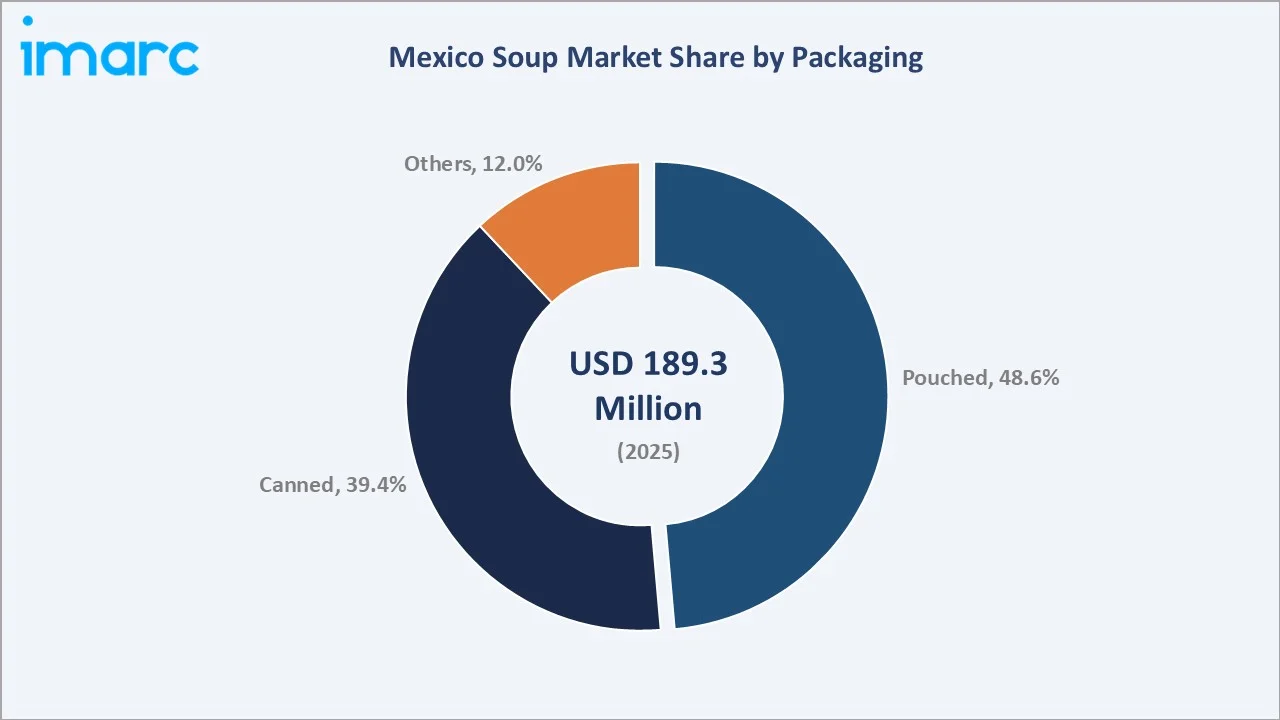
Canned retains a 39.4% share in 2025, supported by its long shelf life, cost efficiency, and strong brand familiarity among older consumer segments and regions with lower e-commerce penetration.
Regional Market Insights
|
Region |
Share (2025) |
Key Growth Drivers |
|
Central Mexico |
44.7% |
Large consumer base, highest retail density, strong foodservice sector, and highest per-capita food expenditure nationally |
|
Northern Mexico |
33.6% |
Above-average income levels, proximity to United States food culture, and well-developed organized retail infrastructure |
|
Southern Mexico |
16.7% |
Improving retail penetration, population growth, and increasing modern food channel access in historically underserved areas |
|
Others |
5.0% |
Coastal tourism markets and specialized regional demand for seafood and local cuisine-inspired soup variants |
Central Mexico at 44.7% in 2025 leads the regional landscape, anchored by its higher population density, urbanization, and concentration of retail and foodservice outlets.
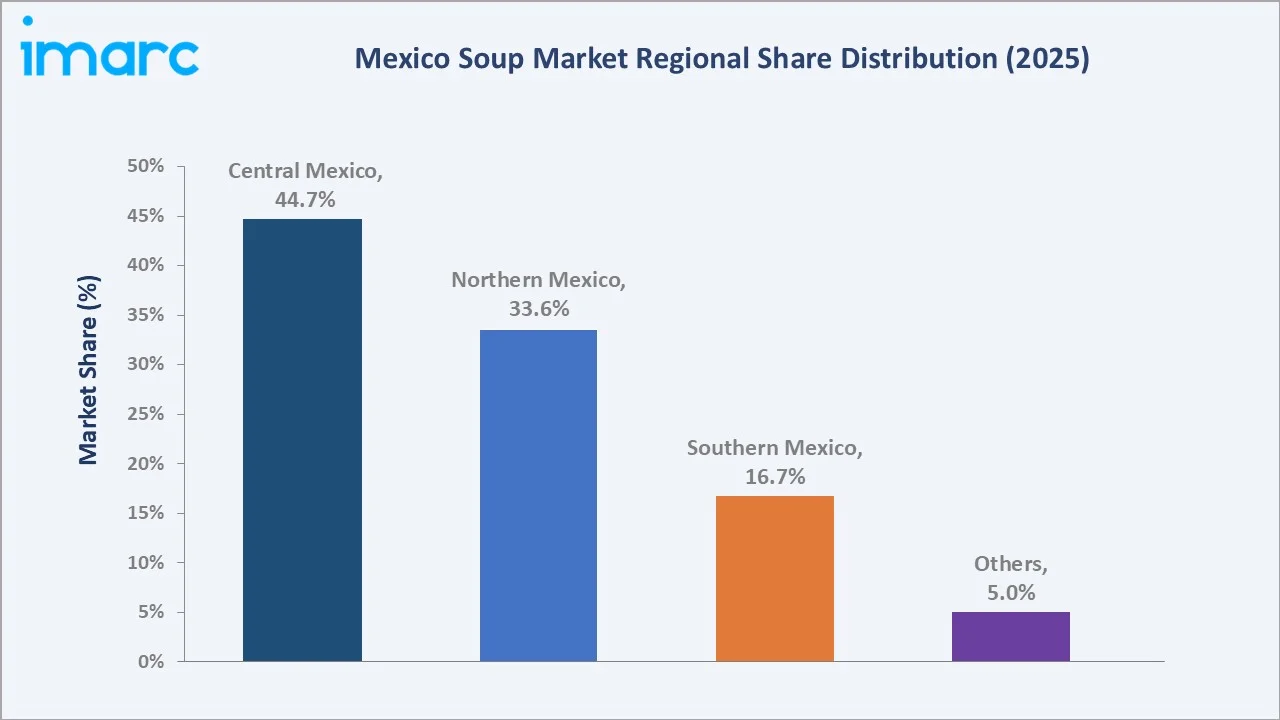
Northern Mexico holds a 33.6% share in 2025, supported by a comparatively higher average income level, strong proximity to United States food culture, and a well-developed organized retail sector in cities including Monterrey, Tijuana, and Ciudad Juárez.
Competitive Landscape
The Mexico soup market is moderately concentrated, with global food conglomerates holding leading positions by brand recognition and distribution reach, while domestic manufacturers compete on regional flavor expertise and price competitiveness. International players leverage their global research and development capabilities and established distribution networks to maintain premium-tier positions.
| Company Name | Brand / Key Product | Position | Strategic Focus |
|---|---|---|---|
| The Campbell's Company | Campbell's | Leader | Strengthening portfolio breadth and expanding distribution across organized retail channels |
| Nestlé S.A. | Maggi | Leader | Broadening instant and ready-to-eat soup product lines and reinforcing brand presence in retail |
| Toyo Suisan Kaisha, Ltd. | Maruchan | Leader | Expanding affordable packaged noodle soup offerings through mass retail and convenience channels |
| Conservas La Costeña, S.A. de C.V. | La Costeña | Challenger | Leveraging domestic brand equity and expanding packaged soup distribution across Mexico |
Key players include The Campbell's Company, Nestlé S.A., Toyo Suisan Kaisha, Ltd., and Conservas La Costeña, S.A. de C.V., among others.
Key Company Profiles
The Campbell's Company
The Campbell's Company is a United States-based global food and beverage company with a well-established brand presence in Mexico through its Campbell's range of ready-to-eat and condensed soup products.
- Product Portfolio: Ready-to-eat soups, condensed soups, broth-based soups, and recipe soup bases covering a wide range of flavor profiles and pack formats.
- Recent Developments: The Campbell's Company has continued to expand its product portfolio in emerging markets, focusing on health-positioned and reduced-sodium soup variants to align with evolving consumer nutritional preferences and regulatory requirements.
- Strategic Focus: Expanding premium soup portfolio and deepening retail distribution partnerships across Mexico's organized grocery segment.
Nestlé S.A.
Nestlé S.A. is a Swiss multinational food and beverage company with a significant presence in the Mexico soup market through its Maggi brand, which offers a comprehensive range of instant soups, soup seasonings, and culinary bases strongly embedded in Mexican cooking culture.
- Product Portfolio: Maggi instant soups, soup seasoning cubes, noodle soups, and culinary stock products available across mass retail and foodservice channels in Mexico.
- Recent Developments: Nestlé S.A. continues to invest in its Maggi brand portfolio in Mexico, launching new flavor variants aligned with traditional Mexican culinary traditions and adapting packaging formats to meet evolving consumer convenience preferences.
- Strategic Focus: Deepening Maggi brand relevance through flavor localization and expanding presence across e-commerce and convenience retail channels.
Toyo Suisan Kaisha, Ltd.
Toyo Suisan Kaisha, Ltd. is a Japanese food and beverage company headquartered in Tokyo, Japan, and the parent company of the Maruchan brand of instant ramen and noodle soup products, which hold a leading market position in Mexico's value-oriented soup and instant noodle segment.
- Product Portfolio: Instant ramen noodle soups, cup noodles, and ramen bowl products offered across a wide range of flavors tailored to Latin American consumer preferences.
- Recent Developments: Toyo Suisan Kaisha, Ltd. continues to invest in its Maruchan brand in Mexico, maintaining its dominant presence in the value instant noodle and soup segment through competitive pricing, broad retail coverage, and a product range tailored to Mexican consumer preferences.
- Strategic Focus: Maintaining leadership in the value instant noodle soup segment through broad distribution coverage and consistent product affordability.
Market Concentration Analysis
The Mexico soup market is moderately concentrated, with the top four players accounting for a significant share of retail product placements and brand visibility, reflecting the combined distribution muscle and marketing investment of global food conglomerates operating in the country.
Barriers to entry include the capital requirements for food-grade manufacturing and packaging infrastructure, the cost of obtaining COFEPRIS regulatory approvals and front-of-pack labeling compliance, and the challenge of establishing distribution relationships with organized retail chains that prefer to work with established vendors offering broad product portfolios and logistical scale.
Consolidation is gradually increasing as multinational food companies acquire domestic Mexican food brands to gain access to traditional recipes, local distribution networks, and cultural brand equity. Strategic partnerships between retailers and manufacturers for exclusive product lines are also emerging as a competitive differentiator.
Investment & Growth Opportunities
Fastest-Growing Segments
Vegetarian soup is expanding at a faster rate than non-vegetarian soup, driven by rising health consciousness, increased awareness of plant-based nutrition, and growing alignment with sustainability-oriented consumer values among Mexico's urban demographics.
Emerging Markets
Southern Mexico is the fastest-growing regional market, supported by improving retail infrastructure, expanding smartphone penetration enabling e-commerce adoption, and rising disposable incomes in previously underserved markets including the Yucatán Peninsula and the Pacific coastal corridor.
Venture & Investment Trends
Investment activity is concentrated in flexible packaging technology upgrades, e-commerce distribution capability development, and product reformulation for reduced-sodium and clean-label compliance. Private equity and strategic capital is also flowing into domestic Mexican food brands with regional specialty positioning, reflecting investor interest in authentic culinary heritage assets with premiumization potential.
Future Market Outlook (2026-2034)
The Mexico soup market is projected to grow from USD 189.3 Million in 2025 to USD 195.8 Million in 2026, reaching USD 260.8 Million by 2034, registering a CAGR of 3.44% during 2026-2034.
Four forces will shape the market through 2034: continued urbanization and the resulting lifestyle shifts toward convenience food formats; ongoing expansion of modern retail and e-commerce platforms extending product accessibility to previously underserved regions; the premiumization of consumer preferences among Mexico's growing urban middle class; and the increasing regulatory emphasis on health-oriented labeling that will incentivize product reformulation and innovation.
By 2034, the Mexico soup market is expected to be characterized by a more diverse product landscape spanning traditional value offerings, health-positioned functional soups, and premium artisan variants, with pouched formats commanding an expanding share of distribution as e-commerce continues to grow.
Research Methodology
Primary Research
Primary research included structured interviews with food industry executives, soup manufacturers, retail buyers, foodservice operators, and packaging specialists in Mexico, validating market sizing, segmentation assumptions, and key trend identification. Consumer intercept surveys and retailer discussions provided qualitative depth on purchasing behavior and category preferences.
Secondary Research
Secondary sources included publications from INEGI (Mexico's National Institute of Statistics and Geography), COFEPRIS regulatory announcements, the Mexican Food Industry Chamber, annual reports and investor presentations from publicly listed food companies, trade publications, and syndicated retail sales data from organized grocery channels.
Forecasting Models
Market forecasts were developed using top-down and bottom-up modeling approaches combining retail sales panel data, consumer expenditure trends, demographic projections, pricing analysis, and macroeconomic variables including GDP growth, urbanization rates, and retail channel expansion metrics.
Mexico Soup Market Report Coverage:
| Report Features | Details |
|---|---|
| Base Year of the Analysis | 2025 |
| Historical Period | 2020-2025 |
| Forecast Period | 2026-2034 |
| Units | Million USD |
| Scope of the Report |
Exploration of Historical Trends and Market Outlook, Industry Catalysts and Challenges, Segment-Wise Historical and Future Market Assessment:
|
| Types Covered | Canned/Preserved Soup, Chilled Soup, Dehydrated Soup, Frozen Soup, UHT Soup |
| Categories Covered | Vegetarian Soup, Non-Vegetarian Soup |
| Packagings Covered | Canned, Pouches, Others |
| Distribution Channels Covered | Supermarkets and Hypermarkets, Convenience Stores, Online Stores, Others |
| Regions Covered | Northern Mexico, Central Mexico, Southern Mexico, Others |
| Companies Covered | The Campbell's Company, Nestlé S.A., Toyo Suisan Kaisha, Ltd., Conservas La Costeña, S.A. de C.V., etc. |
| Customization Scope | 10% Free Customization |
| Post-Sale Analyst Support | 10-12 Weeks |
| Delivery Format | PDF and Excel through Email (We can also provide the editable version of the report in PPT/Word format on special request) |
Key Benefits for Stakeholders:
- IMARC’s industry report offers a comprehensive quantitative analysis of various market segments, historical and current market trends, market forecasts, and dynamics of the Mexico soup market from 2020-2034.
- The research report provides the latest information on the market drivers, challenges, and opportunities in the Mexico soup market.
- Porter's five forces analysis assist stakeholders in assessing the impact of new entrants, competitive rivalry, supplier power, buyer power, and the threat of substitution. It helps stakeholders to analyze the level of competition within the Mexico soup industry and its attractiveness.
- Competitive landscape allows stakeholders to understand their competitive environment and provides an insight into the current positions of key players in the market.
Frequently Asked Questions About the Mexico Soup Market Report
The Mexico soup market size is estimated at USD 195.8 Million in 2026, driven by rising urbanization, convenience food adoption, and the expansion of modern retail distribution channels across Mexico's major metropolitan areas.
The market is projected to grow at a CAGR of 3.44% from 2026-2034, reaching USD 260.8 Million, supported by changing consumer lifestyles and retail infrastructure expansion.
Non-vegetarian soup leads the category at 57.4% in 2025, driven by strong consumer preference for chicken, beef, and seafood-based soups rooted in Mexican culinary traditions.
Pouched leads with a 48.6% share in 2025, favored for its convenience, portability, resealability, and compatibility with e-commerce distribution requirements.
Central Mexico commands a 44.7% share in 2025, underpinned by Mexico City's large consumer base, high retail density, and strong per-capita food expenditure.
Leading players include The Campbell's Company, Nestlé S.A., Toyo Suisan Kaisha, Ltd., and Conservas La Costeña, S.A. de C.V., among others.
Urbanization, rising dual-income households, health-conscious consumer behavior, modern retail expansion, and the growth of e-commerce and foodservice channels are the primary drivers.
Strong home cooking traditions, price sensitivity among lower-income consumers, and regulatory challenges from Mexico's front-of-pack warning label system are the primary restraints.
Rising health consciousness is driving demand for low-sodium, high-protein, vegetable-enriched, and clean-label soup variants, supporting product innovation and premiumization across the market.
Need more help?
- Speak to our experienced analysts for insights on the current market scenarios.
- Include additional segments and countries to customize the report as per your requirement.
- Gain an unparalleled competitive advantage in your domain by understanding how to utilize the report and positively impacting your operations and revenue.
- For further assistance, please connect with our analysts.
 Request Customization
 Speak to an Analyst
 Request Brochure
 Inquire Before Buying
Benefits of Customization
- Personalize this research
- Triangulate with your data
- Get data as per your format and definition
- Gain a deeper dive into a specific application, geography, customer, or competitor
- Any level of personalization
Get in Touch With Us
UNITED STATES
Phone: +1-201-971-6302
INDIA
Phone: +91-120-433-0800
UNITED KINGDOM
Phone: +44-753-714-6104
Email: [email protected]
Client Testimonials














Related Reports

Choose your plan
*Please note that the prices mentioned below are starting prices for each bundle type. Kindly contact our team for further details.*
Single User License
- 1 User License, Access on 2 Devices
- PDF Report + Excel Dataset (Password Protected)
- Lifetime Access
- No Printing Rights
- 10% Free Report Customization
- 10–12 Weeks of Analyst Support
Five User License
- Access for 5 Users, 2 Devices per User
- PDF Report + Excel Dataset (Password Protected)
- Lifetime Access
- Dedicated Account Manager
- 12–14 Weeks of Analyst Support
- No Printing Rights
- 15% Free Report Customization
- 25% Discount on Your Next Purchase
Corporate User License
- Unlimited User Access (Within Your Organization)
- PDF Report + Excel Dataset
- Lifetime Access
- Dedicated Account Manager
- 14–20 Weeks of Analyst Support
- No Printing Rights
- 20% Free Report Customization
- 30% Discount on Your Next Purchase
Essential Insights
What's included:
3 reports
- Lifetime Access
- PDF Reports
- Excel Datasets
- 2 Weeks of Free Analyst Support
- 2 User Licenses
- Access on 2 Devices
- Printing Rights
- Complimentary PowerPoint (PPT) Version
- Complimentary License Upgrade
Professional Access
What's included:
5 reports
- Lifetime Access
- PDF Reports
- Excel Datasets
- 8 Weeks of Free Analyst Support
- 2 User Licenses
- Access on 2 Devices
- Printing Rights
- Complimentary PowerPoint (PPT) Version
- Complimentary License Upgrade
Business Advantage
What's included:
8 reports
- Lifetime Access
- PDF Reports
- Excel Datasets
- 14 Weeks of Free Analyst Support
- 2 User Licenses
- Access on 2 Devices
- Printing Rights
- Complimentary PowerPoint (PPT) Version
- Complimentary License Upgrade
Enterprise Intelligence
What's included:
10 reports
- Lifetime Access
- PDF Reports
- Excel Datasets
- 20 Weeks of Free Analyst Support
- 2 User Licenses
- Access on 2 Devices
- Printing Rights
- Complimentary PowerPoint (PPT) Version
- Complimentary License Upgrade