Chickpeas Prices Surge in Q2 2026 as Australia Reaches USD 1,855/MT - IMARC Group Reports
06-Aug-2026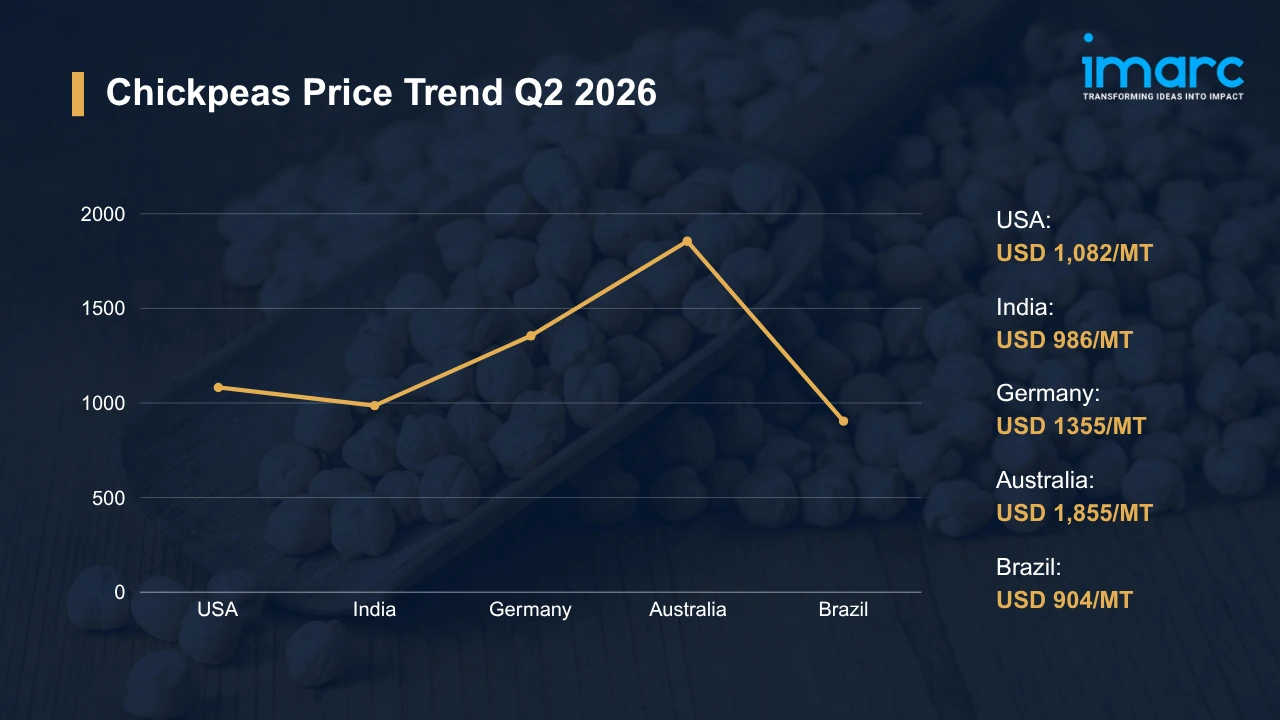
Chickpeas are round, beige-colored legumes prized for their firm texture and high protein content. Beyond culinary staples like hummus and salads, chickpeas prices increasingly reflect demand from gluten-free flour and plant-based protein manufacturers. Global sourcing spans North America, South Asia, and Oceania. Shaped by upstream acreage shifts, harvest yields, and freight costs on major trade lanes, pricing sensitivity also tracks consumption cycles within packaged and health-focused food segments.
Global Market Overview:
Globally, the chickpeas industry reached a volume of 19.7 Million Tons in 2025. Market projections indicate steady growth, with the industry expected to reach a volume of 26.0 Million Tons by 2034, with a compound annual growth rate (CAGR) of 3.12% during 2026-2034. Rising plant-based protein consumption and expanding use in ready-to-eat formulations sustain the chickpeas price trend, while improving global trade integration supports steady offtake across processed food channels.
Chickpeas Price Trend Q2 2026:
Regional prices (USD per MT) and QoQ changes Q2 2026 vs Q1 2026:
| Region | Price (USD/MT) | QoQ Change | Direction |
|---|---|---|---|
| USA | 1,082 | +1.23% | ↑ |
| India | 986 | +1.88% | ↑ |
| Germany | 1,355 | +2.12% | ↑ |
| Australia | 1,855 | +1.80% | ↑ |
| Brazil | 904 | +2.01% | ↑ |
To access real-time prices Request Sample
What Moved Prices:
USA:
- In Q2 2026, chickpeas prices in the USA climbed to USD 1,082/MT, supported by firm demand from hummus producers and packaged food manufacturers drawing on Gulf Coast supply chains. Inland logistics costs rose modestly as carriers passed through higher diesel surcharges, while converter run rates stayed elevated through the quarter.
- E-commerce fulfillment demand for shelf-stable pulses added incremental pressure on distribution centers, tightening near-term availability. The chickpeas price chart through the quarter reflected consistent upward momentum as buyers extended forward contracts ahead of anticipated planting uncertainty for the coming season, limiting spot market flexibility for late-quarter purchases.
India:
- During Q2 2026, chickpeas prices in India advanced to USD 986/MT as milling demand strengthened alongside steady wholesale offtake across key consumption states. Port gateway congestion at import hubs added marginal cost pressure, while farmer selling remained measured ahead of anticipated rabi harvest arrivals later in the season.
- Government procurement activity continued shaping open-market supply, limiting excess flow into trading channels. Export inquiries from neighboring South Asian markets firmed further, and cautious stockholding by bulk buyers reduced spot liquidity, reinforcing the gradual price appreciation observed across major distribution centers throughout the quarter.
Germany:
- In Q2 2026, chickpeas prices in Germany rose to USD 1,355/MT amid sustained import dependence and firm offtake from plant-based food manufacturers across the converter base. Limited availability from key exporting origins tightened supply, while elevated Asia-Europe freight costs added further pressure to landed procurement expenses this quarter.
- EU regulatory mandates governing food traceability and labeling standards raised administrative compliance costs for importers. Regional gas storage levels remained adequate, easing energy-related surcharges, though persistent consumer preference for protein-rich diets kept downstream demand resilient across German and neighboring European distribution networks.
Australia:
- During Q2 2026, chickpeas prices in Australia strengthened to USD 1,855/MT as constrained exportable surplus met robust overseas buying interest from Asian destinations. Weather-related uncertainty across key growing regions prompted cautious farmer selling, while export logistics providers reported firm booking activity through major shipping terminals this quarter.
- Domestic processing demand held steady, adding further support to already tight market conditions. Export commitments toward South Asia and the Middle East reduced flexibility for spot transactions, and producers largely held back additional volumes pending clearer signals on next season's planting outlook.
Brazil:
- In Q2 2026, chickpeas prices in Brazil increased to USD 904/MT, driven by expanding domestic consumption and rising import reliance to meet food processing sector requirements. Higher transportation costs across Sao Paulo distribution hubs added upward pressure, while limited local production kept the market exposed to global sourcing conditions.
- BRL currency volatility influenced import parity pricing, prompting distributors to adjust procurement schedules accordingly. Growing use of chickpeas within packaged and ready-to-eat food formulations supported consistent offtake, and market participants anticipated firmer near-term demand from expanding food service applications across major consumption centers.
Drivers Influencing the Market:
Several factors continue to shape chickpeas pricing and market behavior:
- Food Processing and Plant-Based Protein Demand: Hummus producers, snack manufacturers, and gluten-free flour processors continue to anchor baseline procurement volumes worldwide. Expanding retail interest in plant-based diets sustains consistent order flow, while seasonal promotional cycles among packaged food brands introduce periodic variability in near-term purchasing patterns across major consumption markets.
- Energy Costs in Processing and Storage: Electricity and fuel expenses for cleaning, sorting, and cold storage operations factor meaningfully into downstream distribution costs. Regional utility rate differences continue shaping competitive positioning among processors, and the chickpeas price index reflects these input cost variations across major processing hubs throughout the marketing year.
- Ocean Freight and Logistics Economics: Container shipping costs on key Asia-Europe and Transpacific corridors materially influence landed prices for import-dependent markets. According to Drewry's World Container Index, global freight rates decreased 3% to USD 4,255 per 40-foot container in late July 2026, reflecting softer demand on major trade lanes. Contract negotiations increasingly favor buyers under current conditions.
- Environmental and Regulatory Compliance: Food safety certification requirements and traceability mandates across major importing regions add administrative expense for exporters and distributors alike. Stricter residue testing protocols in key European and Asian markets continue raising compliance costs, which gradually filter into wholesale pricing structures across affected supply chains.
- Trade Policy and Currency Dynamics: Tariff structures and bilateral trade agreements shape competitive positioning among exporting nations across key consumption markets. Currency fluctuations in major importing economies alter landed cost calculations for distributors, prompting hedging strategies that influence contract pricing decisions well ahead of physical shipment schedules.
Recent Highlights & Strategic Developments:
Recent strategic moves within the industry further illustrate evolving dynamics:
- In July 2025, NuCicer, a company specializing in chickpea breeding and sustainable food ingredients, closed a Series A funding round valued at USD 11.5 Million, led by Rhapsody Venture Partners with participation from several agriculture-focused investors. The raise was set to accelerate development of higher-yielding chickpea varieties for commercial cultivation.
Outlook & Strategic Takeaways:
Looking ahead, the chickpeas market is expected to sustain steady expansion through 2034, propelled by rising plant-based protein adoption, growing gluten-free flour applications, and deepening integration into global processed food supply chains. Upstream acreage trends and freight cost trajectories will remain the pivotal variables shaping the chickpeas price forecast across major producing and importing regions alike.
To navigate this complex landscape, stakeholders should:
- Monitor Regional Price Differentials: Track quarterly pricing variations across the USA, India, Germany, Australia, and Brazil to identify cost-saving procurement windows. Compare landed costs against prevailing contract benchmarks to guide sourcing timing decisions.
- Assess Freight Market Developments: Monitor container shipping rate trends on Asia-Europe and Transpacific corridors to anticipate landed cost shifts. Negotiate flexible logistics contracts that incorporate rate adjustment mechanisms tied to prevailing spot conditions.
- Evaluate Downstream Demand Indicators: Track packaged food order books and hummus production volumes across major consumption regions. Correlate demand signals with procurement planning cycles to avoid inventory overstocking.
- Review Regulatory Compliance Expenditures: Audit current food safety certification and traceability costs across key importing markets. Identify operational efficiencies that reduce compliance burden without compromising quality assurance obligations.
- Strengthen Currency Exposure Management: Implement hedging strategies for procurement denominated in volatile currencies like the Brazilian real. Coordinate treasury and procurement functions to align currency coverage with import payment schedules.
- Explore Emerging Application Segments: Investigate growth potential within chickpea protein isolates and snack food innovations for portfolio diversification. Benchmarking chickpeas price per MT against regional contract rates will help identify cost-saving windows.
Subscription Plans & Customization:
IMARC offers flexible subscription models to suit varying needs:
- Monthly Updates: 12 deliverables/year
- Quarterly Updates: 4 deliverables/year
- Biannual Updates: 2 deliverables/year
Each includes detailed datasets (Excel + PDF) and post-report analyst support.

Get in Touch With Us
UNITED STATES
Phone: +1-201-971-6302
INDIA
Phone: +91-120-433-0800
UNITED KINGDOM
Phone: +44-753-714-6104
Email: [email protected]
Client Testimonials




.webp)




.webp)












