Global Corn Oil Prices Show Wide Regional Differences in Q2 2026, Germany Tops at USD 2,759/MT
10-Sep-2026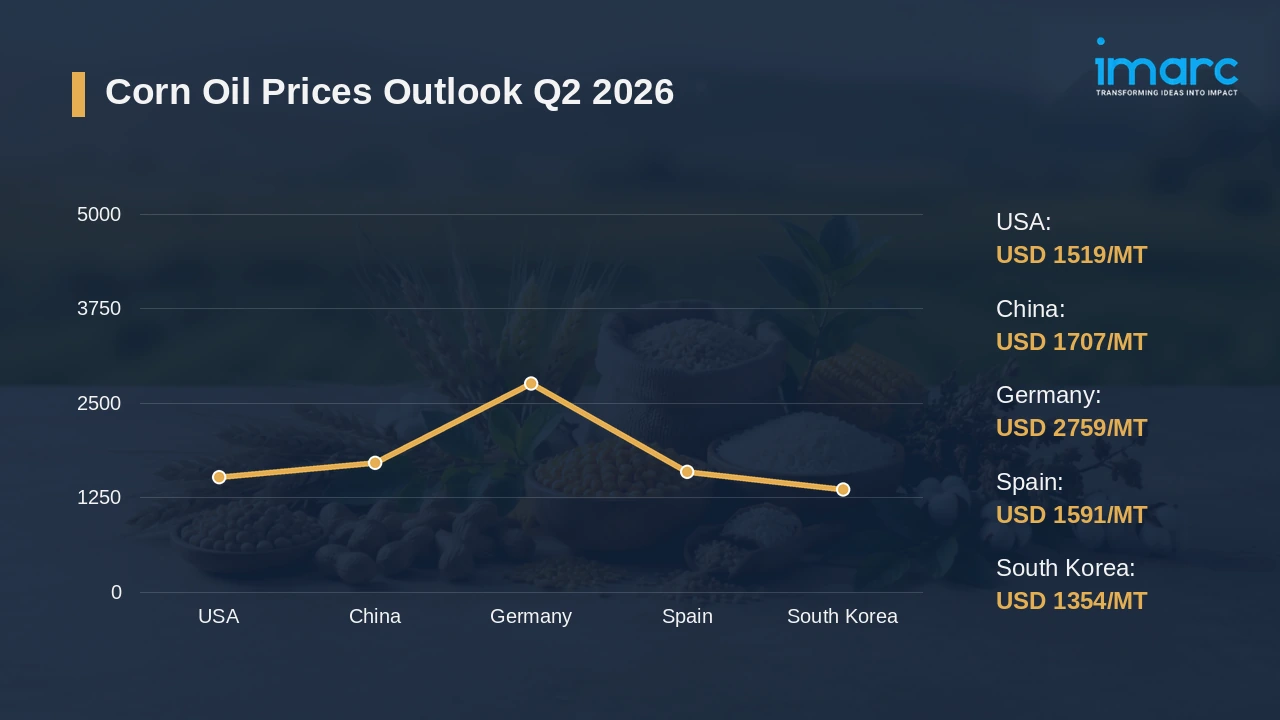
Corn oil is a refined edible oil extracted from the germ of corn kernels through pressing and solvent extraction, prized for its light color, neutral flavor, and high smoke point. It serves critical applications across food processing, packaged snack manufacturing, margarine production, commercial foodservice, and biofuel sectors. Corn oil prices are primarily shaped by upstream corn grain costs, energy expenditure in wet-milling and refining, freight logistics on major trade corridors, and consumption cycles within food manufacturing and renewable fuel industries.
Global Market Overview:
Globally, the corn oil industry was valued at USD 6.94 Billion in 2025. Market projections indicate steady growth, with the industry expected to reach USD 11.92 Billion by 2034, with a compound annual growth rate (CAGR) of 6.20% during 2026-2034. Shifting consumer preferences toward healthier edible oils and expanding biofuel production mandates across key economies reinforce demand broadly. The corn oil price trend reflects competitive food-versus-fuel dynamics, rising retail penetration in emerging markets, and wet-milling technological advances that have expanded global refining throughput.
Corn Oil Price Trend Q2 2026:
Regional prices (USD per MT) and QoQ changes Q2 2026 vs Q1 2026:
| Region | Price (USD/MT) | QoQ Change | Direction |
|---|---|---|---|
| USA | 1,519 | +3.23% | ↑ |
| China | 1,707 | +5.34% | ↑ |
| Germany | 2,759 | +2.21% | ↑ |
| Spain | 1,591 | +2.01% | ↑ |
| South Korea | 1,354 | +3.01% | ↑ |
To access real-time prices Request Sample
What Moved Prices:
USA:
- In Q2 2026, corn oil prices in the USA climbed to USD 1,519/MT as robust procurement from food processing and biodiesel sectors outpaced domestic crushing throughput. Heightened consumer preference for non-GMO and heart-healthy cooking oils intensified retail demand, compelling distributors to secure additional import volumes through the quarter.
- Constrained domestic availability, as export commitments absorbed significant crushing co-product output, kept supply tighter than seasonal norms. Rising corn futures added margin pressure, prompting producers to pass cost increments downstream. The corn oil price chart through Q2 2026 reflected consistent monthly gains, reinforced by firming Gulf Coast logistics costs and distributor restocking activity.
China:
- During Q2 2026, corn oil prices in China rose to USD 1,707/MT as food processors upgraded product formulations toward plant-based oils, intensifying procurement demand broadly. Domestic corn supply constraints, stemming from reduced milling activity, deepened import reliance, while import duties and logistics costs amplified the upward price movement through the period.
- Persistent shortages in domestic corn germ availability limited refinery throughput at major crushing facilities in Guangzhou and Shandong. Energy cost pressures on the processing side added further margin burden for refiners. Currency movements also influenced the delivered cost of imported corn oil, maintaining price levels above prior-quarter averages throughout the period.
Germany:
- In Q2 2026, corn oil prices in Germany advanced to USD 2,759/MT amid tightening supply conditions driven by strong export activity to neighboring European markets. Industrial end-use demand, particularly from biofuels and bioplastics manufacturers, remained firm, contributing to sustained upward price momentum through the quarter.
- Freight disruptions tied to port congestion on key North Sea and Baltic routes raised replacement costs for importers significantly. Controlled oilseed processing capacity, combined with consistent food sector offtake from packaged goods manufacturers, left aggregate supply insufficient to meet demand. Import sourcing diversified toward non-European origins, introducing additional cost layers into procurement calculations.
Spain:
- During Q2 2026, corn oil prices in Spain increased to USD 1,591/MT as adverse climate conditions curtailed domestic agricultural output, reducing local supply availability below seasonal expectations. Growing biofuel mandates sustained demand at elevated levels, while intensified reliance on imports from American producers introduced additional cost layers throughout the quarter.
- Mediterranean supply networks faced logistics cost increases as container freight rates on trans-Atlantic corridors firmed through Q2 2026. Biofuel and frit manufacturers maintained consistent procurement, preventing inventory drawdown despite higher price levels. Currency shifts relative to the US dollar amplified delivered costs on American-origin imports, sustaining elevated price floors.
South Korea:
- In Q2 2026, corn oil prices in South Korea reached USD 1,354/MT as food manufacturing and restaurant sectors escalated procurement of healthier cooking oils, sustaining strong market demand through the period. High international freight costs and supply chain disruptions affected delivered pricing, with processors passing increased input costs directly to downstream buyers.
- Currency fluctuations and robust international demand limited downward correction potential in the South Korean market. Refined edible oil importers faced constrained availability from key origin markets, including the USA and China. Distributor stocking activity ahead of peak food processing cycles further absorbed available supply, maintaining steady price growth into the close of the quarter.
Drivers Influencing the Market:
Several factors continue to shape corn oil pricing and market behavior:
- Food Processing and Food Service Sector Demand: Demand from packaged food manufacturers, commercial kitchens, and fast-food operators anchors baseline procurement volumes for corn oil globally. Urbanization and rising disposable incomes across Asia Pacific and the Middle East have broadened the consumer base for processed foods, expanding corn oil offtake. Health-conscious reformulations favoring polyunsaturated edible oils sustain corn oil's market share within the broader vegetable oil complex.
- Upstream Corn Grain Feedstock Cost Dynamics: Corn grain is the primary upstream feedstock for corn oil, with wet-milling economics linking grain prices directly to refined oil costs. Per USDA's Grains and Oilseeds Outlook (February 2025), the 2025-26 US corn crop was projected at a record 15.585 Billion bushels, up approximately 5% from the prior year. Strong export commitments keeping market prices firm continue to sustain feedstock cost pressure for global corn oil producers.
- Energy Expenditure in Extraction and Refining: Electricity and natural gas costs constitute a significant share of corn oil production economics, particularly in wet-milling and solvent extraction stages. The corn oil price index across key producing regions reflects cumulative energy pricing effects on refining margins, especially where natural gas supply remains exposed to seasonal tightening. Regional electricity tariff disparities among major producing countries create competitive cost advantages that influence export pricing and procurement flows.
- Ocean Freight and Logistics Economics: Container shipping dynamics on key trade lanes, including Asia-Pacific to North America and Asia-Europe corridors, materially influence the landed cost of imported corn oil. Port congestion events at major hub ports have caused delivery delays and increased dwell charges for importers operating on tight inventory cycles. Distributor-level logistics costs, encompassing inland transport and storage, add further layers to total procurement cost across consuming regions.
- Trade Policy and Currency Dynamics: Export restrictions, import tariff regimes, and preferential trade agreements shape cross-border corn oil flows and market pricing across regions. Currency volatility against major invoicing currencies, particularly the US dollar, amplifies procurement costs in import-dependent markets like South Korea and Spain. Adjustments to agricultural commodity tariff schedules can rapidly alter competitive dynamics between origin suppliers, influencing spot pricing and contract renegotiation cycles.
Recent Highlights & Strategic Developments:
Recent strategic moves within the industry further illustrate evolving dynamics:
- In August 2025, Kazakhstan's Agriculture Ministry unveiled plans to establish a corn deep-processing facility in the Turkistan region, targeting strengthened domestic processing of corn-based agricultural outputs. The plant was designed to support production of value-added derivatives including corn oil, starches, and sweeteners, expanding the country's processing capacity.
- In February 2025, Cargill announced a full acquisition plan for SJC Bioenergia, a Brazilian corn oil producer, targeting expansion of its renewable energy and biofuel operations. The deal aimed to enhance integrated agricultural feedstock processing capabilities and support growing markets where corn oil serves as a key renewable fuel input.
Outlook & Strategic Takeaways:
Looking ahead, the corn oil market is expected to sustain gradual expansion through 2034, supported by growing consumer demand for healthy edible oils, rising biofuel mandates, and expanding food processing throughput across Asia Pacific, the Middle East, and Latin America. The corn oil price forecast will hinge critically on upstream corn grain cost trajectories, evolving biofuel policy frameworks, and freight logistics economics on key trade corridors.
To navigate this complex landscape, stakeholders should:
- Monitor Regional Price Differentials: Track quarterly pricing variations across the USA, China, Europe, and Asia Pacific to identify cost-saving procurement windows. Establish benchmarking protocols comparing landed costs against prevailing contract rates for optimal sourcing decisions.
- Assess Freight Market Developments: Monitor container shipping rate trends on Asia-Pacific and trans-Atlantic corridors to anticipate landed cost movements. Negotiate flexible logistics contracts incorporating rate adjustment mechanisms tied to prevailing spot market freight conditions.
- Evaluate Downstream Demand Indicators: Track end-use sector activity across food processing, biofuel blending, and packaged goods manufacturing in principal consumption regions. Correlate demand signals with procurement planning cycles to optimize inventory positioning and minimize overstocking.
- Review Regulatory Compliance Expenditures: Audit compliance costs tied to biofuel blending mandates, food safety labeling protocols, and environmental handling requirements. Identify operational efficiencies that reduce regulatory burden without compromising product quality or safety obligations.
- Strengthen Currency Exposure Management: Implement hedging strategies for import-denominated procurement to stabilize corn oil price per MT projections against currency volatility. Align treasury and procurement functions to ensure foreign exchange coverage matches anticipated payment timelines for cross-border transactions.
- Explore Emerging Application Segments: Investigate growth potential within bioplastics, nutraceuticals, and industrial lubricant applications for portfolio diversification. Engage with research partners to assess commercial viability of novel corn oil end uses that could expand the addressable demand base.
Subscription Plans & Customization:
IMARC offers flexible subscription models to suit varying needs:
- Monthly Updates: 12 deliverables/year
- Quarterly Updates: 4 deliverables/year
- Biannual Updates: 2 deliverables/year
Each includes detailed datasets (Excel + PDF) and post-report analyst support.

Get in Touch With Us
UNITED STATES
Phone: +1-201-971-6302
INDIA
Phone: +91-120-433-0800
UNITED KINGDOM
Phone: +44-753-714-6104
Email: [email protected]
Client Testimonials




.webp)




.webp)












