Electrical Steel Prices Reach USD 5,362/MT in USA in Q2 2026 Amid Global Supply Shifts
02-Sep-2026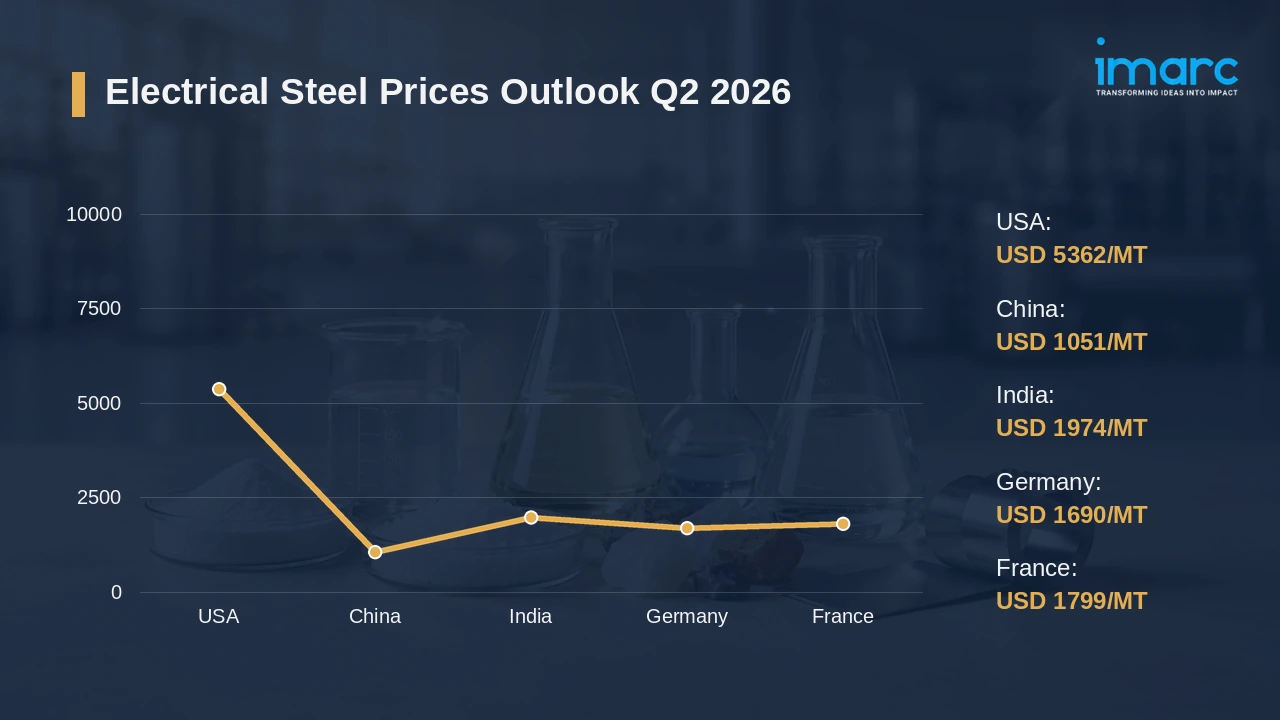
Electrical steel is a specialty steel tailored for electromagnetic properties, essential in transformers, motors, and generators. It is known for its high efficiency, low core loss, and crucial role in energy-efficient devices. Electrical steel prices are influenced by global iron ore costs, energy expenses, manufacturing demand, and technological advancements.
Global Market Overview:
Globally, the electrical steel market was valued at USD 44.1 Billion in 2025. Market projections indicate steady growth, with the industry expected to reach USD 67.2 Billion by 2034, showcasing a compound annual growth rate (CAGR) of 4.64% during 2026-2034. Increasing adoption in renewable energy and electric vehicle industries drives the electrical steel price trend. Expansions in infrastructure development and energy efficiency regulations are pivotal to sustaining growth.
Electrical Steel Price Trend Q2 2026:
Regional prices (USD per MT) and QoQ changes Q2 2026 vs Q1 2026:
| Region | Price (USD/MT) | QoQ Change | Direction |
|---|---|---|---|
| USA | 5,362 | -3.32% | ↓ |
| China | 1,051 | -2.23% | ↓ |
| India | 1,974 | -4.43% | ↓ |
| Germany | 1,690 | -5.56% | ↓ |
| France | 1,799 | -4.12% | ↓ |
To access real-time prices Request Sample
What Moved Prices:
USA:
- In Q2 2026, electrical steel prices in the USA fell to USD 5,362/MT due to tempered demand in the transformer and electric motor sectors. This downturn was further compounded by abundant domestic supply, which satisfied manufacturers' needs without pressuring prices upward.
- Reduced need for restocking contributed to low transaction activity across key distribution channels. Declining raw material expenses and competitive supplier strategies lowered offers, as highlighted in the electrical steel price chart displaying a continuous decline.
China:
- During Q2 2026, electrical steel prices in China decreased to USD 1,051/MT, with downstream sectors such as electric vehicle manufacturing showing limited demand. Despite steady domestic production, purchasing interest diminished as inventories met current consumption.
- Suppliers maintained robust production levels, ensuring sufficient supply and minimizing price pressure. Competitive pricing among local producers further drove down values, while a lack of export momentum reinforced the quarterly dip in prices.
India:
- In Q2 2026, electrical steel prices in India receded to USD 1,974/MT with stable production in the transformer and motor industries. Inventory management strategies by buyers limited new orders, aligning with stable supplier output.
- Consistent domestic production supported availability, keeping supply pressure low and regional prices steady. Declines in input costs permeated through to lower offers, helping suppliers maintain contracts with core clients under the subdued purchasing environment.
Germany:
- In the second quarter of 2026, electrical steel prices in Germany dropped to USD 1,690/MT as industrial demand for renewable technology components moderated. Buyers managed inventories carefully, reducing the need for new acquisitions despite steady factory activities.
- Stable European output bolstered ample supply, alleviating any concerns about distribution bottlenecks. Reduced input costs filtered into market dynamics, encouraging suppliers to offer flexible pricing to retain contract engagements amid cautious consumption trends.
France:
- In Q2 2026, electrical steel prices in France fell to USD 1,799/MT, driven by moderated demand from the automotive and electrical equipment sectors. Declines in global input costs coincided with balanced domestic production to ease price trajectories.
- Adequate stock levels lessened procurement urgency across industrial buyers. Market dynamics combined with competitive pricing initiatives from suppliers fostered a progressive softening of prices in line with moderate manufacturing activities across the quarter.
Drivers Influencing the Market:
Several factors continue to shape electrical steel pricing and market behavior:
- Renewable Energy and Electric Vehicle Adoption: Advancements in renewable energy solutions and increasing electric vehicle production bolster baseline demand for electrical steel. Per the IEA's Global EV Outlook 2026, global electric car sales exceeded 20 Million units in 2025, a 20% year-on-year rise, with one in four new cars sold worldwide being electric. As these high-efficiency sectors expand, they drive fluctuations in electrical steel price index determination, with regulatory and innovation shifts steering procurement patterns.
- Raw Material and Processing Costs: The production expenses for electrical steel are heavily influenced by the cost of raw materials, particularly iron ore and coal. The decline in coal prices over recent quarters has eased pressure on manufacturers’ production costs, thereby impacting the electrical steel price index across various regions.
- Energy Consumption in Manufacturing: Electricity and natural gas costs are critical in the energy-intensive production of electrical steel. Rising energy prices significantly affect manufacturing expenses. These rising benchmarks are vital considerations for producers, as energy expenditure drives the overall price structure for electrical steel in the market.
- Shipping and Transportation Costs: The global trade of electrical steel heavily relies on container shipping markets across major routes. High freight rates, as captured by logistics indices, can elevate the overall cost for importers, especially in regions like Asia and Europe, impacting the final electrical steel price chart.
- Regulatory and Compliance Costs: Compliance with evolving environmental policies and safety regulations increases the operational costs for electrical steel manufacturers. These costs are often reflected in pricing adjustments. Stringent regulatory environments necessitate careful cost management by industry participants.
- Trade Agreements and Foreign Exchange Fluctuations: Tariff policies, trade agreements, and currency movements can significantly affect the cost competitiveness of electrical steel. Changes in currency value against the US dollar can adjust procurement costs for buyers in different regions, influencing market dynamics.
Recent Highlights & Strategic Developments:
Recent strategic moves within the industry further illustrate evolving dynamics:
- In February 2026, Proterial allocated USD 80 Million to set up India's inaugural amorphous electrical steel production plant in Sri City, Andhra Pradesh as part of the PLI initiative for specialty steel. The facility was designed to generate 30,000 Tons each year in its first phase, with operations anticipated to start in October 2026, backed by increasing transformer demand and the growth of energy-intensive data centers.
- In August 2025, India’s JSW Steel and Japan’s JFE Steel revealed a collaborative investment of USD 669 Million focused on enhancing cold-rolled electrical steel production at two JSW Steel plants in India. This strategic investment highlighted the increasing local and regional need for premium electrical steel, especially in automotive, renewable energy, and industrial sectors.
Outlook & Strategic Takeaways:
Looking ahead, the electrical steel market is expected to grow steadily through 2034, driven by increased usage in automotive, renewable energy, and industrial applications. Price movements will depend on energy costs and raw material supply chains, fundamentally influencing the electrical steel price forecast.
To navigate this complex landscape, stakeholders should:
- Monitor Regional Price Differentials: Track quarterly price movements in the USA, China, India, Germany, and France to identify optimal procurement strategies. Compare landed costs against prevailing contract rates before finalizing procurement volumes.
- Assess Freight Market Developments: Keep a close eye on container freight rate trends across key trading routes. Negotiate flexible logistics contracts that can adjust according to current spot market conditions.
- Evaluate Downstream Demand Indicators: Monitor demand across key sectors such as automotive and renewable energy. Align inventory cycles with these demand trends to prevent overstocking and manage supply efficiently.
- Review Raw Material and Energy Cost Trends: Stay informed on trends affecting iron ore and coal, as well as electricity costs, as these directly impact the electrical steel price per MT. Use this data to strategize procurement and inventory decisions.
- Strengthen Currency Exposure Management: Utilize financial instruments to hedge against currency volatility that affects import/export costs. Ensure synchronization between financial operations and procurement to mitigate risks effectively.
- Explore Emerging Application Segments: Investigate potential growth areas such as advanced transformer manufacturing and energy-efficient motors. Consider partnerships to explore new technologies and product applications.
Subscription Plans & Customization:
IMARC offers flexible subscription models to suit varying needs:
- Monthly Updates: 12 deliverables/year
- Quarterly Updates: 4 deliverables/year
- Biannual Updates: 2 deliverables/year
Each includes detailed datasets (Excel + PDF) and post-report analyst support.

Get in Touch With Us
UNITED STATES
Phone: +1-201-971-6302
INDIA
Phone: +91-120-433-0800
UNITED KINGDOM
Phone: +44-753-714-6104
Email: [email protected]
Client Testimonials




.webp)




.webp)












