Praseodymium Neodymium Alloy Prices Q2 2026: USA Leads at USD 84,546/MT as Global Prices Diverge
30-Sep-2026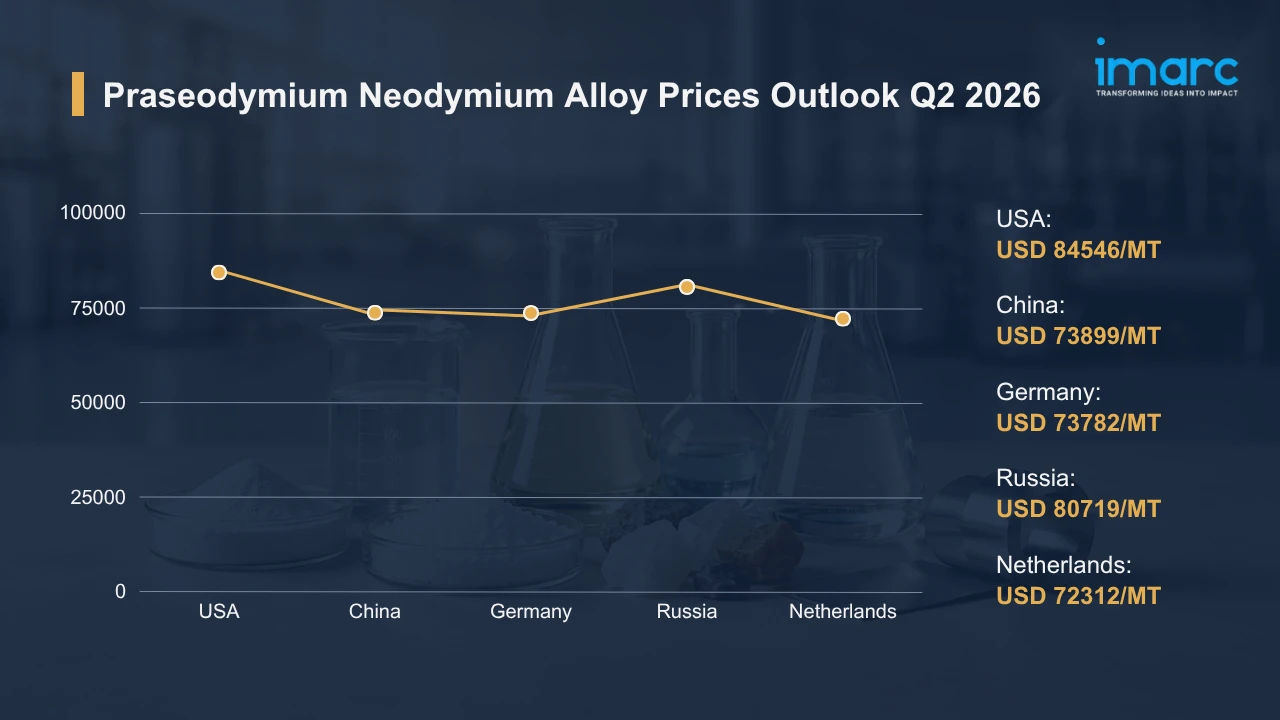
Praseodymium neodymium alloy is a silver-gray rare earth metal, generally cast as ingots or blocks, with neodymium as the dominant constituent and impurities held within tight limits. Praseodymium neodymium alloy prices are influenced by the cost of rare earth oxide feedstocks, energy requirements during alloy production, processing and transportation expenses, and fluctuations in demand from permanent magnet manufacturers.
Global Market Overview:
Globally, the praseodymium neodymium alloy industry was valued at USD 5.27 Billion in 2025. Market projections indicate steady growth, with the industry expected to reach USD 7.68 Billion by 2034, with a compound annual growth rate (CAGR) of 4.28% during 2026-2034. Across electrified drivetrains and wind generation, rising magnet intensity per unit anchors the praseodymium neodymium alloy price trend, while Western processing investment broadens supply. Recycling advances also improve feedstock circularity.
Praseodymium Neodymium Alloy Price Trend Q2 2026:
Regional prices (USD per MT) and QoQ changes Q2 2026 vs Q1 2026:
| Region | Price (USD/MT) | QoQ Change | Direction |
|---|---|---|---|
| USA | 84,546 | +4.45% | ↑ |
| China | 73,899 | +3.34% | ↑ |
| Germany | 73,782 | +4.12% | ↑ |
| Russia | 80,719 | +2.56% | ↑ |
| Netherlands | 72,312 | +4.11% | ↑ |
To access real-time prices Request Sample
What Moved Prices:
USA:
- In Q2 2026, praseodymium neodymium alloy prices in the USA climbed to USD 84,546/MT, a 4.45% QoQ gain, as magnet makers competed for scarce non-Chinese feedstock. Limited domestic reduction capacity kept buyers exposed. With federal support channeling investment into mining, refining, and alloy conversion, procurement teams paid firmer premiums to secure qualified material.
- Defense, aerospace, and EV motor programs sustained contract demand, keeping order books firm across Gulf Coast and Midwest fabricators. Along inland routes, trucking added modest cost layers. Against this backdrop, the praseodymium neodymium alloy price chart for the USA traced a steady climb, as buyers favored long-term offtake agreements over volatile spot exposure.
China:
- During Q2 2026, praseodymium neodymium alloy prices in China rose to USD 73,899/MT, up 3.34% QoQ, supported by disciplined mining and smelting output. Downstream magnet producers trimmed aggressive buying midquarter. Once inventories were rebalanced and export licensing expectations shifted again, sentiment firmed, restoring upward momentum across the Baotou and Ganzhou processing clusters well before quarter-end.
- Domestic consumption from EV motor and wind generator suppliers absorbed most refined output, leaving limited volumes for overseas inquiries. With the CNY stable, export offers stayed competitive. Tightening separation quotas restricted spot availability and encouraged alloy producers to hold offers firm against softer bids from domestic electronics, household appliance, and motor component manufacturers.
Germany:
- In Q2 2026, praseodymium neodymium alloy prices in Germany advanced to USD 73,782/MT, reflecting a 4.12% QoQ increase after modest softness in the opening quarter. Automotive suppliers in Bavaria resumed firmer buying. Heavily reliant on imported rare earth metals and magnet inputs, German converters absorbed higher replacement costs as limited European refining capacity offered little viable domestic alternative.
- Asia-Europe container rates stayed manageable, yet longer lead times on specialty metal cargoes pushed buyers toward earlier bookings. Under EU critical raw materials targets, manufacturers pursued diversified supply agreements with non-Chinese refiners in Australia and North America, lifting competition for qualified volumes among German buyers. Industrial automation and wind equipment makers kept consumption steady.
Russia:
- During Q2 2026, praseodymium neodymium alloy prices in Russia increased to USD 80,719/MT, a 2.56% QoQ rise and the smallest gain among tracked regions. Domestic heavy industry and metallurgical demand held steady. Shaped by shifting international trade flows, replacement costs for imported rare earth feedstock climbed, and local producers passed part of that burden into quarterly contract offers.
- Magnet and metal processing plants prioritized input security over price, favoring established sourcing channels. Throughout the quarter, logistics routings through Eurasian corridors added handling layers and extended delivery windows for refined alloy cargoes, keeping spot availability thin for smaller buyers. Outbound volumes stayed limited, tightening the domestic market further.
Netherlands:
- In Q2 2026, praseodymium neodymium alloy prices in the Netherlands rose to USD 72,312/MT, a 4.11% QoQ gain that reversed the mild decline of the preceding quarter. Rotterdam distribution hubs recorded brisker trading activity. Exposed to imported magnet-grade materials, Dutch buyers faced persistent sensitivity to Chinese supply policies, which kept traders reluctant to discount spot offers.
- Shipping availability on Asia-Europe lanes remained adequate, though freight timing for smaller specialty consignments stayed uneven. With warehousing and handling charges edging higher at bonded facilities, distributors lifted offers to protect margins while end users locked in longer, more predictable supply commitments. Policy support for European processing lifted buyer confidence.
Drivers Influencing the Market:
Several factors continue to shape praseodymium neodymium alloy pricing and market behavior:
- Electric Mobility and Wind Energy Demand: Permanent magnet consumption from EV traction motors and wind turbine generators forms the core demand base for praseodymium neodymium alloy. Per the IEA, global electric car sales grew 20% in 2025 to surpass 20 Million units, equal to one in four new cars sold worldwide that year. Because each traction motor embeds rare earth magnets, vehicle growth translates quickly into alloy procurement. Robotics adds a smaller, faster-growing demand tier.
- Upstream Praseodymium Neodymium Oxide Feedstock Costs: Oxide feedstock represents the largest share of alloy production cost, so its swings pass through rapidly. Changes in rare earth mining output, refining capacity, and feedstock availability can influence procurement costs and supplier pricing. Tight supply conditions can further increase price volatility across the alloy market.
- Energy Expenditure in Electrolytic Reduction: Molten salt electrolysis, the dominant route for converting praseodymium neodymium oxide into metal, consumes substantial electricity. For converters, power tariffs weigh heavily on margins. Where grid prices climb, particularly at European and North American facilities lacking low-cost baseload supply, producers embed energy surcharges into their quarterly and spot alloy offers. Such surcharges widen spreads against Chinese processors.
- Ocean Freight and Logistics Economics: Shipped in small, high-value consignments rather than bulk cargoes, the alloy carries insurance and handling costs that often outweigh base freight rates. Longer transit times also raise buyer working capital needs. Across Asia-Europe and transpacific lanes, shipment scheduling and bonded warehousing charges feed into CIF quotations, shaping the praseodymium neodymium alloy price index across most importing regions.
- Environmental and Regulatory Compliance: Rare earth separation generates acidic effluents and radioactive thorium residues, which draw strict environmental oversight in every producing jurisdiction. In China, periodic inspections have curtailed separation output. Under tightening permitting rules in Western markets, new refineries face lengthy approvals and costly waste management obligations, lifting the cost floor for non-Chinese alloy supply that magnet buyers require.
- Trade Policy and Currency Dynamics: Export licensing requirements in China govern how much refined rare earth material reaches overseas magnet makers, and shifts in that regime reset global pricing expectations quickly. On the US side, tariff adjustments add another cost variable. Meanwhile, CNY movements against the dollar alter the competitiveness of Chinese offers, while euro fluctuations influence landed costs for German and Dutch importers purchasing in dollar-denominated contracts.
Recent Highlights & Strategic Developments:
Recent strategic moves within the industry further illustrate evolving dynamics:
- In November 2025, USA Rare Earth, Inc. completed its purchase of Less Common Metals Ltd. (LCM), a producer whose portfolio spans samarium, samarium cobalt, and neodymium praseodymium metal alloys. The transaction advanced USAR's strategy of building a vertically integrated rare earth chain that could link upstream feedstock through to finished magnet manufacturing.
Outlook & Strategic Takeaways:
Looking ahead, the praseodymium neodymium alloy market is expected to expand steadily through 2034, sustained by EV traction motors, offshore and onshore wind generation, and aerospace magnet programs. Feedstock availability outside China will remain the pivotal variable in the praseodymium neodymium alloy price forecast, as new Western separation and reduction capacity gradually narrows regional premiums.
To navigate this complex landscape, stakeholders should:
- Assess Freight Market Developments: Track insurance, handling, and transit costs on Asia-Europe and transpacific lanes carrying high-value alloy consignments. Negotiate logistics contracts with rate adjustment clauses so landed cost budgets stay aligned with prevailing market conditions.
- Evaluate Downstream Demand Indicators: Monitor EV production schedules, wind turbine order books, and robotics output across principal consuming regions. Align these demand signals with procurement cycles to optimize inventory positioning and avoid costly overstocking during correction phases.
- Monitor Regional Price Differentials: Compare quarterly offers from the USA, Russia, and Western Europe against Chinese benchmarks to identify favorable sourcing windows. Benchmark praseodymium neodymium alloy price per MT against existing contract terms before committing annual volumes.
- Review Regulatory Compliance Expenditures: Audit costs linked to effluent treatment, residue handling, and permitting obligations across qualified supplier networks and internal facilities. Identify efficiencies that lower compliance burdens without compromising environmental or chemical safety commitments.
- Strengthen Currency Exposure Management: Implement hedging programs for CNY, euro, and dollar exposures embedded in alloy import contracts. Coordinate treasury and procurement teams so foreign exchange cover matches anticipated payment timelines and delivery schedules.
- Explore Emerging Application Segments: Investigate demand potential in humanoid robotics and high-efficiency industrial motors as new alloy outlets. Engage magnet recyclers and research partners to assess secondary praseodymium neodymium supply that could diversify sourcing.
Subscription Plans & Customization:
IMARC offers flexible subscription models to suit varying needs:
- Monthly Updates: 12 deliverables/year
- Quarterly Updates: 4 deliverables/year
- Biannual Updates: 2 deliverables/year
Each includes detailed datasets (Excel + PDF) and post-report analyst support.

Get in Touch With Us
UNITED STATES
Phone: +1-201-971-6302
INDIA
Phone: +91-120-433-0800
UNITED KINGDOM
Phone: +44-753-714-6104
Email: [email protected]
Client Testimonials




.webp)




.webp)












