Tesla Considers Haryana as Electric Vehicle Manufacturing in India (EV) Expands
28-Nov-2025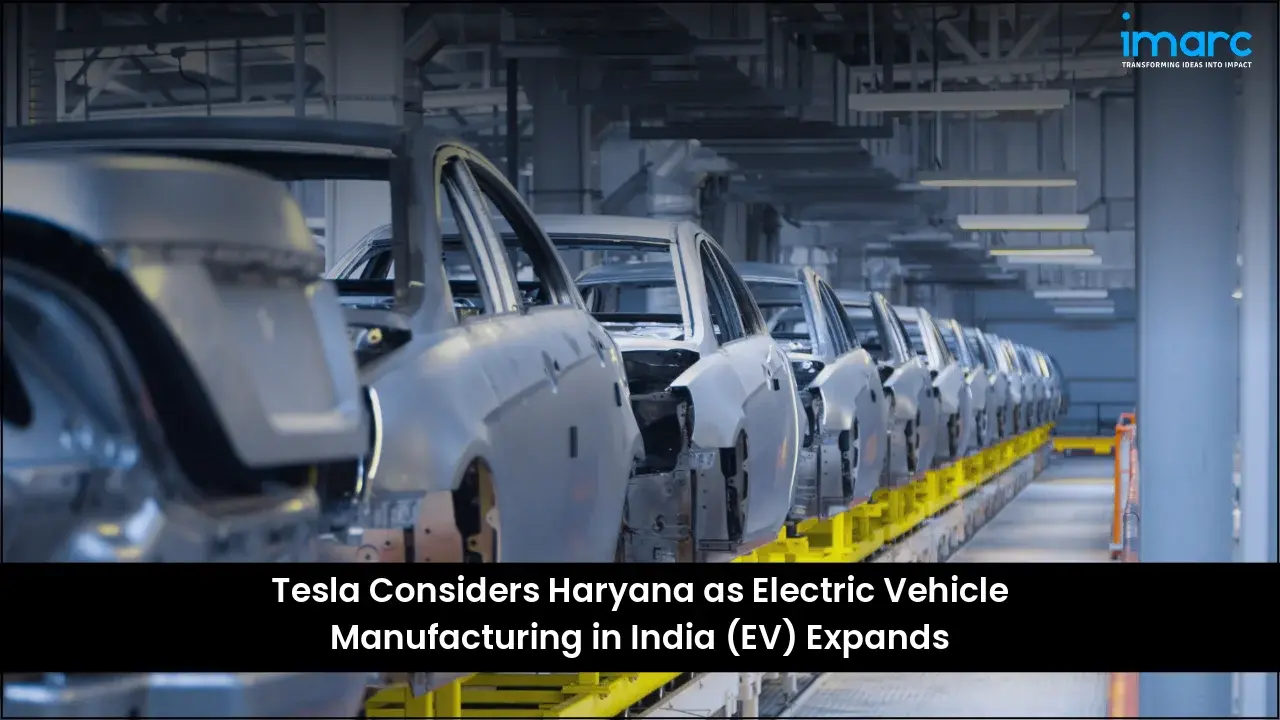
Key Takeaways:
- Haryana Chief Minister Nayab Singh Saini expresses confidence that Tesla will establish its first electric vehicle (EV) manufacturing plant in the state.
- The state has implemented pro-industry policies, including streamlined land leasing, regulatory reforms, and the Department of Foreign Cooperation to attract global investors.
- Haryana leads India in passenger vehicle production and has a robust industrial and supply chain ecosystem supporting EV manufacturing.
- The new Tesla India Motors Center in Gurugram marks a significant milestone in the company’s India entry strategy.
Haryana Positions Itself as an EV Manufacturing Hub:
Haryana Chief Minister Nayab Singh Saini on Thursday reaffirmed the state’s commitment to becoming a leading destination for electric vehicle manufacturing in India. Speaking at the inauguration of India’s first all-in-one Tesla India Motors Center in Gurugram, Saini highlighted Haryana’s existing strengths in the automobile and IT sectors, emphasizing that the state is not just a consumer market but a manufacturing powerhouse.
Saini expressed optimism that Tesla will select Haryana for its first EV manufacturing plant in India, along with establishing other related units in the state. The Gurugram facility, which integrates sales, service, delivery, and charging solutions under one roof, represents an important step in Tesla’s India expansion strategy.
Government Initiatives to Encourage Investment:
To facilitate global investments, the Haryana government has launched a series of measures aimed at reducing the cost and complexity of doing business. Key initiatives include:
- A special leasing policy for industrial plots.
- Strengthening the local supply chain in partnership with established industries.
- Establishing the Department of Foreign Cooperation to coordinate effectively with foreign companies and governments.
- Amending outdated regulatory laws through the Public Trust Ordinance, 2025, decriminalizing 164 provisions across 42 state acts.
These reforms have positioned Haryana as a leader in the ‘Top Achievers’ category of the Ease of Doing Business rankings, reflecting the state’s proactive approach to fostering a business-friendly ecosystem.
Haryana’s Industrial Strengths:
Haryana is India’s top producer of passenger vehicles and has witnessed substantial growth in exports—from INR 70,000 crore before 2014 to over INR 2,75,000 crore today. The state hosts more than 12 lakh micro, small, and medium enterprises (MSMEs), employing over 49 lakh people, and ranks as the 7th largest state for startups with more than 9,100 recognized ventures.
With dedicated AI hubs, a Department of the Future, and focused support for emerging technologies like robotics, biotechnology, and deep tech, Haryana aims to provide an advanced industrial ecosystem that aligns with Tesla’s long-term manufacturing and innovation objectives.
Next Steps in Tesla’s India Strategy:
While Tesla has not formally confirmed its manufacturing plans in India, Haryana’s robust infrastructure, skilled workforce, and investor-friendly policies make it a strong contender. Industry observers note that a Tesla plant in India could significantly enhance the country’s EV ecosystem, generating jobs, strengthening local supply chains, and accelerating the adoption of electric mobility nationwide.

About Author:
|
Soham Bhattacharya, Automotive Sector Analyst Soham Bhattacharya is an automotive industry analyst with 5 years of experience, focusing on market conditions, technological trends, and supply chain dynamics in automotive manufacturing. He specializes in electric vehicles, autonomous driving technologies, and the latest investment strategies shaping global automotive production. His work supports businesses in making data-driven decisions regarding manufacturing plant investments. |
_11zon.webp)
_11zon.webp)
_11zon.webp)
Get in Touch With Us
UNITED STATES
Phone: +1-201-971-6302
INDIA
Phone: +91-120-433-0800
UNITED KINGDOM
Phone: +44-753-714-6104
Email: [email protected]
Client Testimonials




.webp)




.webp)












