
Optical Coherence Tomography Market Size, Share, Trends and Forecast by Type, Technology, Application, and Region, 2026-2034
Optical Coherence Tomography Market Size and Share:
The global optical coherence tomography market grew from USD 2.6 Billion in 2025 to USD 3.0 Billion in 2026. Looking forward, IMARC Group estimates the market to reach USD 7.0 Billion by 2034, exhibiting a CAGR of 11.13% from 2026-2034. North America currently dominates the market, holding a market share of 38.7% in 2025. The region benefits from well-established healthcare infrastructure, high adoption of advanced diagnostic imaging technologies, increasing prevalence of ophthalmic disorders among aging populations, and strong investments in research and development activities across leading academic institutions and medical device manufacturers, all contributing to the optical coherence tomography market share.
The increasing rate of occurrence of various chronic eye conditions, including age-related macular degeneration, diabetic retinopathy, and glaucoma, is the major factor contributing to the growth of the optical coherence tomography market worldwide. The increasing geriatric population base is also contributing to the growth of the optical coherence tomography market, as the need for advanced diagnostic imaging tools is increasing to provide high-resolution images of the eye structures through non-invasive imaging techniques. The technological advancements in swept source and spectral domain optical coherence tomography systems are also contributing to the growth of the optical coherence tomography market, as the imaging speed, depth, and precision of the systems are improving, enabling the usage of optical coherence tomography systems in various medical fields. The integration of artificial intelligence algorithms into optical coherence tomography systems is also contributing to the growth of the optical coherence tomography market, as the ability of the system to detect biomarkers and monitor disease progression is improving, allowing the system to streamline clinical workflows and facilitate the adoption of early intervention techniques. The increasing healthcare expenditure in emerging markets is also contributing to the growth of the optical coherence tomography market worldwide.
The United States has also emerged as a promising market for optical coherence tomography, and this is due to several reasons. First and foremost, the country has a well-developed and mature ophthalmology market with strong insurance and reimbursement for advanced diagnostic procedures. Additionally, the increasing number of retinal disorders in the elderly population is creating a strong need for accurate diagnostic tools in both clinical and ambulatory settings. According to a study published by the Centers for Disease Control and Prevention in May 2024, vision and eye problems among Americans aged 40 years and older stood at 20.5 million, with more than three in every five persons experiencing such issues in the country. Furthermore, the country also offers strong government funding for research and development in medical devices, and this is creating a strong need for accurate diagnostic tools with the support of academic institutions and medical device manufacturers.
To get more information on this market Request Sample
Optical Coherence Tomography Market Trends:
Growing Integration of Artificial Intelligence
The convergence of artificial intelligence with imaging technologies is fundamentally transforming diagnostic capabilities in medical practice. Advanced deep learning algorithms are being embedded into imaging platforms to automate image analysis, enabling rapid detection of pathological features such as fluid accumulation, drusen deposits, and retinal layer disruptions with precision comparable to experienced clinicians. These intelligent systems reduce interpretation variability across practitioners while supporting real-time clinical decision-making during patient examinations. The ability to process volumetric scan data and extract quantitative biomarkers is enhancing longitudinal disease monitoring for conditions like glaucoma and diabetic retinopathy. For instance, in July 2025, Altris Inc. launched its Altris Sync application, which connects imaging devices from multiple manufacturers including Carl Zeiss, Topcon, and Heidelberg Engineering to provide artificial intelligence-powered analysis and longitudinal data insights for retinal disease management. This trend is empowering clinicians with more efficient tools for precision diagnostics across diverse ophthalmic conditions and clinical environments.
Expansion of Portable and Handheld Devices
The development of compact, portable imaging devices is significantly broadening the accessibility of advanced retinal diagnostics beyond traditional clinical settings. Handheld systems equipped with microelectromechanical components enable point-of-care imaging in remote locations, community health centers, and neonatal intensive care units where conventional tabletop equipment cannot operate effectively. These devices facilitate bedside screening for conditions such as retinopathy of prematurity in neonates and age-related macular degeneration in elderly patients with limited mobility. The miniaturization of optical components and improved battery technologies are enabling higher imaging quality in increasingly compact form factors, attracting interest from both developed and emerging healthcare markets. For instance, in February 2025, Optos launched its next-generation MonacoPro system combining ultra-widefield scanning laser ophthalmoscopy with spectral-domain imaging, boosting the optical coherence tomography market outlook. This portability trend is particularly relevant for underserved populations and telemedicine applications seeking to reduce diagnostic disparities.
Rising Applications in Cardiovascular Diagnostics
The expanding utilization of intravascular imaging in interventional cardiology is driving significant growth opportunities for advanced tomographic technologies. Cardiologists increasingly rely on high-resolution cross-sectional imaging to guide percutaneous coronary interventions, assess stent deployment accuracy, and evaluate plaque morphology with superior precision compared to conventional angiography alone. The ability to visualize arterial wall microstructures enables more informed treatment decisions, reduces procedural complications, and improves long-term patient outcomes. Multimodal imaging platforms that combine structural imaging with functional assessments such as fractional flow ratio measurements are gaining clinical adoption due to their comprehensive diagnostic capabilities. For instance, in April 2025, RSUD Al-Ihsan Hospital in Bandung, Indonesia, successfully executed two intricate coronary interventions with the Vivolight OCT-Cornaris P80, emphasizing its vital function in directing interventional procedures and enhancing patient results, bolstering the optical coherence tomography market forecast. This cardiovascular application expansion is opening new revenue streams for manufacturers beyond the traditional ophthalmology-focused segment.
Optical Coherence Tomography Industry Segmentation:
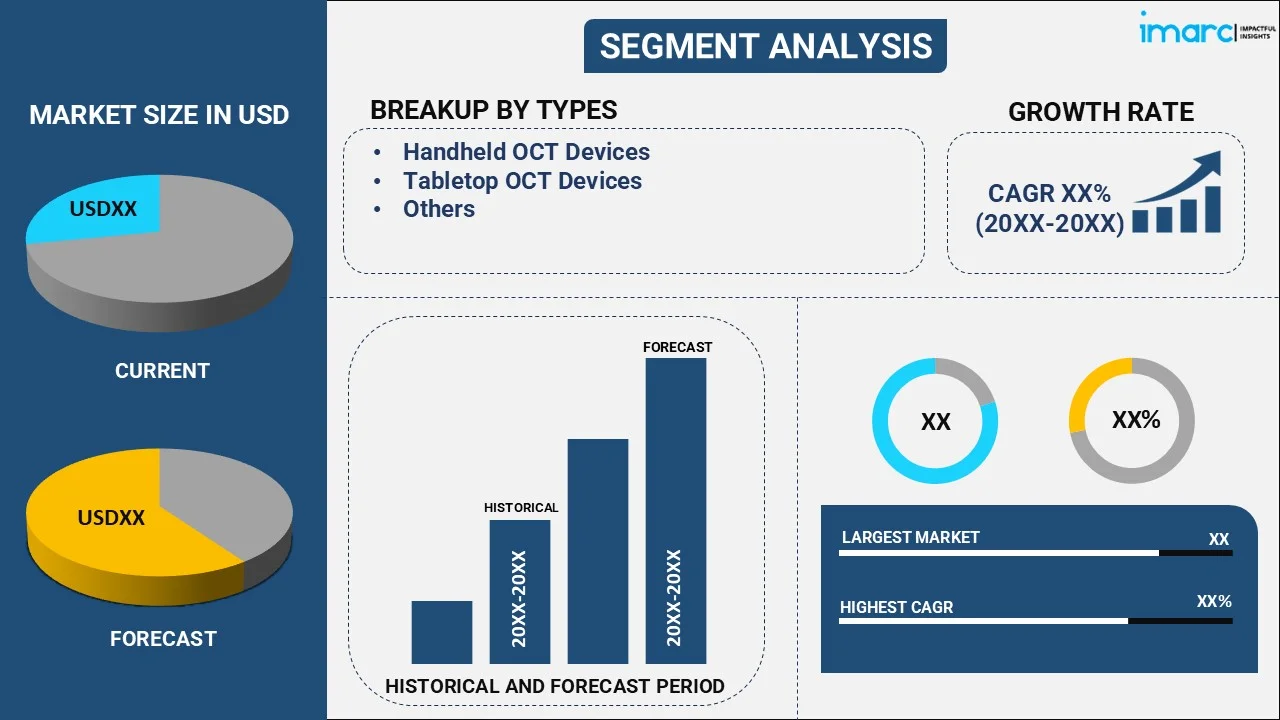
IMARC Group provides an analysis of the key trends in each segment of the global optical coherence tomography market, along with forecast at the global, regional, and country levels from 2026-2034. The market has been categorized based on type, technology, and application.
Analysis by Type:
To get detailed segment analysis of this market Request Sample
- Handheld OCT Devices
- Tabletop OCT Devices
- Others
Handheld OCT devices hold 38.1% of the market share. Handheld imaging devices represent a critical advancement in non-invasive diagnostic technology, offering portability and ease of use that traditional tabletop systems cannot match. These compact instruments utilize microelectromechanical systems integrated with advanced optical components to deliver high-resolution cross-sectional images of biological tissues at the point of care. Their lightweight design enables use in diverse clinical environments, including neonatal intensive care units, emergency departments, and remote healthcare facilities. The growing demand for accessible retinal screening tools, particularly for pediatric and geriatric populations with limited mobility, is accelerating adoption across both developed and developing markets. For instance, in June 2024, NIDEK Co. Ltd. launched the RS-1 Glauvas system featuring a 250 kHz scan speed with deep learning-based analytics for wide-area high-quality imaging. Ongoing miniaturization efforts and improved battery technologies continue to enhance portability while maintaining diagnostic precision.

Analysis by Technology:
- Time Domain OCT (TDOCT)
- Frequency Domain OCT (FD-OCT)
Time domain systems represent established and foundational technology within the imaging landscape, utilizing a reference mirror mechanism and low-coherence interferometry to generate cross-sectional tissue images. These systems offer reliable performance for routine clinical assessments and remain widely deployed across healthcare facilities with existing infrastructure investments. Their relatively lower acquisition costs compared to advanced spectral-domain and swept-source alternatives make them accessible for smaller practices and resource-constrained settings in developing regions. Time domain platforms continue to serve an important role in standard ophthalmic screening and basic retinal evaluation procedures.
Frequency domain systems have emerged as the preferred technology for advanced clinical and research applications, offering significantly faster scan speeds and superior image resolution compared to time domain alternatives. These platforms capture spectral information simultaneously rather than sequentially, enabling rapid volumetric data acquisition that supports comprehensive three-dimensional tissue analysis. Their enhanced depth penetration and signal-to-noise ratio capabilities facilitate detailed visualization of deeper biological structures across multiple medical specialties.
Analysis by Application:
- Dermatology
- Ophthalmology
- Cardiovascular
- Oncology
- Others
Ophthalmology leads the market with a share of 57.8%. Ophthalmic applications constitute the dominant clinical domain for advanced imaging technologies, driven by the critical role of high-resolution retinal visualization in diagnosing and monitoring a wide spectrum of ocular conditions. Clinicians rely extensively on cross-sectional imaging to evaluate macular degeneration, diabetic retinopathy, glaucoma progression, and macular edema, enabling timely therapeutic interventions that preserve patient vision. The technology provides precise quantitative measurements of retinal layer thickness, nerve fiber integrity, and choroidal structures that are essential for treatment planning and longitudinal disease tracking. Increasing global prevalence of age-related eye diseases, coupled with growing awareness of the benefits of early detection, continues to drive adoption across ophthalmology practices worldwide. According to the World Health Organization, at least 2.2 billion people globally have a vision impairment, with at least one billion cases being preventable or unaddressed. The incorporation of artificial intelligence-assisted analysis tools is further enhancing clinical utility in this segment.
Regional Analysis:
To get more information on the regional analysis of this market Request Sample
- North America
- United States
- Canada
- Asia Pacific
- China
- Japan
- India
- South Korea
- Australia
- Indonesia
- Others
- Europe
- Germany
- France
- United Kingdom
- Italy
- Spain
- Russia
- Others
- Latin America
- Brazil
- Mexico
- Others
- Middle East and Africa
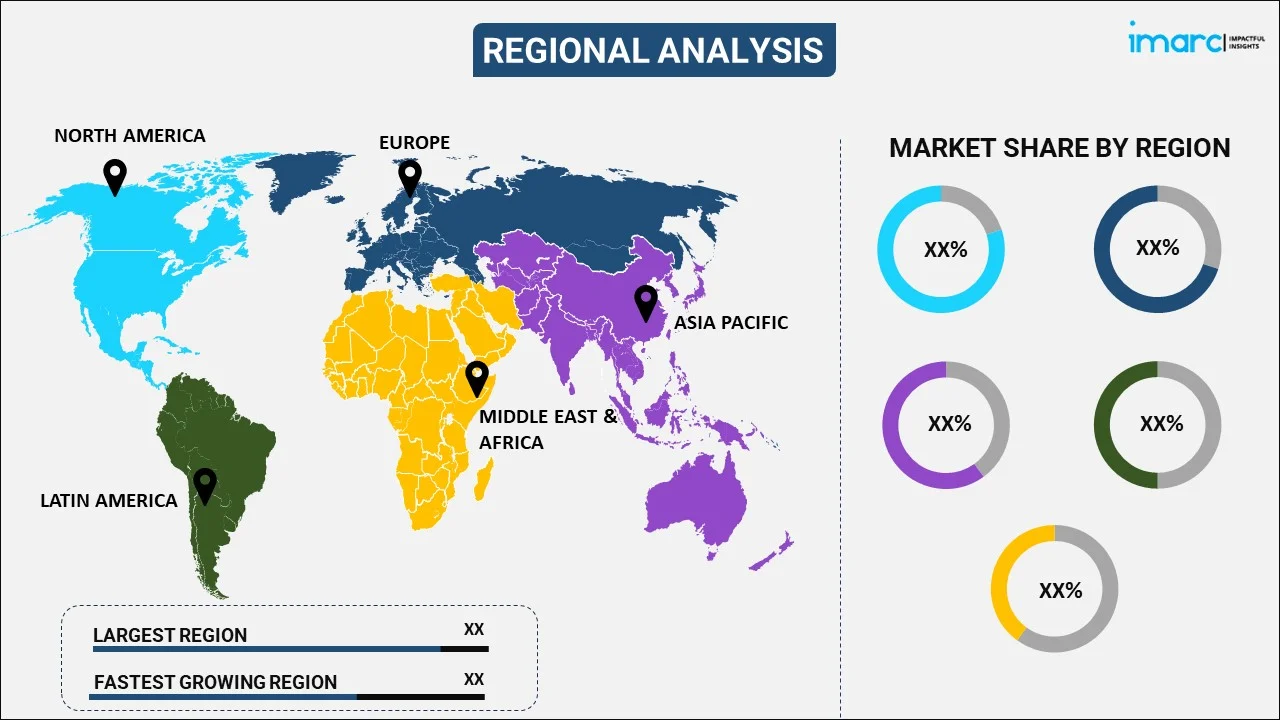
North America, accounting for 38.7% of the share, enjoys the leading position in the market. The region benefits from an advanced healthcare ecosystem characterized by widespread adoption of innovative diagnostic technologies, a well-established network of ophthalmic specialty clinics, and substantial investments in medical research and development. A highly favorable reimbursement environment supports the routine utilization of advanced imaging procedures across diverse healthcare settings. The presence of major medical device manufacturers and strong collaborations between industry and academic research institutions foster continuous technological innovation and rapid market penetration of next-generation imaging systems. According to the National Institutes of Health, the National Eye Institute allocated approximately USD 896.5 million in research funding for fiscal year 2023, supporting advancements in diagnostic imaging and retinal disease treatment methodologies. Additionally, an aging population base and rising prevalence of chronic ocular conditions drive sustained demand for precise diagnostic solutions.
Key Regional Takeaways:
United States Optical Coherence Tomography Market Analysis
The United States represents the most significant national market for advanced imaging diagnostics, supported by a mature healthcare infrastructure and widespread insurance coverage for ophthalmic procedures. The country hosts a concentration of leading medical device companies and research universities that continuously drive technological innovation in imaging platforms. Rising prevalence of diabetic retinopathy and age-related macular degeneration among the growing elderly population creates sustained demand for high-resolution diagnostic tools across clinical and ambulatory care settings. Strong regulatory frameworks facilitated by the FDA provide clear pathways for device approvals, encouraging manufacturers to introduce advanced systems incorporating artificial intelligence and enhanced imaging modalities. The expanding application of imaging technologies in cardiovascular interventions and dermatological assessments is further diversifying the domestic market landscape. For instance, in 2025, Johnson & Johnson MedTech, a worldwide frontrunner in cardiac arrhythmia management, revealed the U.S. introduction of the SOUNDSTAR CRYSTAL™ Ultrasound Catheter for intracardiac echocardiography (ICE) visualization in cardiac ablation treatments. The device delivers improved, clearer image quality when compared to other ICE cathetersii, showcasing a sophisticated 2D ICE catheter. Combined with the CARTO™ 3 Mapping System, featuring the CARTOSOUND™ FAM module for advanced AI-driven mapping capabilities, SOUNDSTAR CRYSTAL™ facilitates an effective workflow.
Europe Optical Coherence Tomography Market Analysis
Europe represents a substantial regional market for advanced imaging diagnostics, underpinned by well-developed public healthcare systems across major economies and strong emphasis on early disease detection and preventive care protocols. Countries such as Germany, the United Kingdom, and France possess extensive networks of specialized ophthalmology clinics and research institutions that drive clinical adoption of next-generation imaging technologies. Favorable regulatory frameworks under CE marking facilitate efficient market access for innovative medical devices across the European Economic Area. The region benefits from significant government and institutional funding for medical research, particularly in the areas of retinal disease management and cardiovascular diagnostics. An aging population and increasing incidence of chronic ocular conditions including glaucoma and diabetic eye diseases support sustained demand growth. For instance, in 2024, EssilorLuxottica acquired an approximately 80% stake in Heidelberg Engineering, a leading developer of ophthalmic diagnostic devices including advanced imaging systems, signaling continued consolidation and investment in the European diagnostic imaging sector. The optical coherence tomography market trends indicate that collaboration between healthcare providers and technology companies is further enhancing clinical capabilities.
Asia-Pacific Optical Coherence Tomography Market Analysis
The Asia-Pacific region is experiencing rapid growth in adoption of advanced diagnostic imaging technologies, driven by expanding healthcare infrastructure modernization efforts across major economies including China, Japan, India, and South Korea. Government investments in strengthening primary and secondary healthcare networks are improving access to sophisticated medical equipment in both urban and rural clinical settings. Anusandhan National Research Foundation (ANRF), in partnership with the Indian Council of Medical Research (ICMR) and the Gates Foundation, has initiated the Mission for Advancement in High-Impact Areas (MAHA)-Medical Technology (महा MedTech). This groundbreaking initiative seeks to enhance innovation in India’s medical tech industry, lessen dependence on costly imports, and foster fair access to affordable, high-quality medical technologies. The Mission will offer financial assistance to various entities such as Academic and R&D institutions, Hospitals, Startups, MSMEs, the MedTech sector, and partnerships among organizations. Through milestone-based funding ranging from ₹5 to ₹25 crore per project (and up to ₹50 crore in special instances), the Mission will back projects that deliver significant MedTech solutions to the market. Rising disposable incomes and growing awareness about ocular health are accelerating demand for advanced retinal screening and disease management tools. Japan and South Korea maintain technology leadership through domestic manufacturers and strong research programs.
Latin America Optical Coherence Tomography Market Analysis
Latin America is witnessing gradual but steady growth in the adoption of advanced diagnostic imaging solutions, driven by improving healthcare infrastructure and increasing government investments in public health systems. Brazil and Mexico represent the largest markets within the region, benefiting from expanding networks of specialized ophthalmic care facilities and growing awareness of the importance of early disease detection among their populations. For instance, in 2025, the Brazilian Ministry of Health announced expanded funding for specialized ophthalmic screening programs targeting underserved populations in northern and northeastern states. Rising prevalence of diabetes-related ocular conditions is generating additional demand for advanced retinal imaging tools.
Middle East and Africa Optical Coherence Tomography Market Analysis
The Middle East and Africa region presents emerging growth opportunities for advanced diagnostic imaging technologies, supported by increasing healthcare investments from both government entities and private sector participants. Gulf Cooperation Council countries, particularly the UAE and Saudi Arabia, are investing significantly in modernizing their healthcare infrastructure and establishing specialized medical facilities equipped with advanced diagnostic instruments. For instance, Saudi Arabia's Vision 2030 health transformation program allocated over USD 65 billion toward healthcare sector development and medical technology adoption during 2024-2025. Rising awareness of preventive healthcare and growing demand for specialized ophthalmic services are contributing to gradual market expansion.
Competitive Landscape:
The global optical coherence tomography market is characterized by the presence of several established medical device companies competing through continuous product innovation, strategic acquisitions, and expansion of clinical applications. Leading manufacturers invest substantially in research and development to enhance imaging resolution, scan speed, and integration of artificial intelligence (AI) capabilities into their platforms. Companies are pursuing partnerships with academic institutions and healthcare networks to validate new clinical applications and expand market reach. Strategic mergers and acquisitions (M&As) activity has intensified as larger conglomerates seek to strengthen their diagnostic portfolios through targeted technology acquisitions. The competitive environment also features emerging players from Asia introducing cost-competitive multimodal imaging platforms designed to broaden accessibility in price-sensitive markets, creating additional competitive dynamics.
The report provides a comprehensive analysis of the competitive landscape in the optical coherence tomography market with detailed profiles of all major companies, including:
- Abbott Laboratories
- Agfa-Gevaert N.V.
- Agiltron Inc.
- Carl Zeiss AG
- Haag-Streit Group
- Heidelberg Engineering Inc.
- Leica Microsystems GmbH (Danaher Corporation)
- Novacam Technologies Inc.
- OPTOPOL Technology Sp. z o.o.
- Terumo Corporation
- Thorlabs Inc.
- Topcon Corporation
Optical Coherence Tomography Market Report Scope:
| Report Features | Details |
|---|---|
| Base Year of the Analysis | 2025 |
| Historical Period | 2020-2025 |
| Forecast Period | 2026-2034 |
| Units | Billion USD |
| Scope of the Report |
Exploration of Historical Trends and Market Outlook, Industry Catalysts and Challenges, Segment-Wise Historical and Future Market Assessment:
|
| Types Covered | Handheld OCT Devices, Tabletop OCT Devices, Others |
| Technologies Covered | Time Domain OCT (TDOCT), Frequency Domain OCT (FD-OCT) |
| Applications Covered | Dermatology, Ophthalmology, Cardiovascular, Oncology, Others |
| Region Covered | Asia Pacific, Europe, North America, Latin America, Middle East and Africa |
| Countries Covered | United States, Canada, Germany, France, United Kingdom, Italy, Spain, Russia, China, Japan, India, South Korea, Australia, Indonesia, Brazil, Mexico |
| Companies Covered | Abbott Laboratories, Agfa-Gevaert N.V., Agiltron Inc., Carl Zeiss AG, Haag-Streit Group, Heidelberg Engineering Inc., Leica Microsystems GmbH (Danaher Corporation), Novacam Technologies Inc., OPTOPOL Technology Sp. z o.o., Terumo Corporation, Thorlabs Inc. and Topcon Corporation., etc. |
| Customization Scope | 10% Free Customization |
| Post-Sale Analyst Support | 10-12 Weeks |
| Delivery Format | PDF and Excel through Email (We can also provide the editable version of the report in PPT/Word format on special request) |
Key Benefits for Stakeholders:
- IMARC’s report offers a comprehensive quantitative analysis of various market segments, historical and current market trends, market forecasts, and dynamics of the optical coherence tomography market from 2020-2034.
- The research study provides the latest information on the market drivers, challenges, and opportunities in the global optical coherence tomography market.
- The study maps the leading, as well as the fastest-growing, regional markets. It further enables stakeholders to identify the key country-level markets within each region.
- Porter's Five Forces analysis assists stakeholders in assessing the impact of new entrants, competitive rivalry, supplier power, buyer power, and the threat of substitution. It helps stakeholders to analyze the level of competition within the optical coherence tomography industry and its attractiveness.
- Competitive landscape allows stakeholders to understand their competitive environment and provides an insight into the current positions of key players in the market.
Frequently Asked Questions About the Optical Coherence Tomography Market Report
The optical coherence tomography market size increased from USD 2.6 Billion in 2025 to USD 3.0 Billion in 2026.
The optical coherence tomography market is projected to exhibit a CAGR of 11.13% during 2026-2034, reaching a value of USD 7.0 Billion by 2034.
The rising prevalence of retinal and choroidal disorders, growing geriatric population worldwide, increasing demand for non-invasive diagnostic imaging solutions, integration of artificial intelligence into imaging platforms for automated disease detection, and expanding clinical applications in cardiovascular diagnostics and oncology are key factors driving the optical coherence tomography market.
North America currently dominates the optical coherence tomography market, accounting for a share of 38.7%. The region benefits from advanced healthcare infrastructure, strong adoption of innovative diagnostic technologies, favorable reimbursement frameworks, and significant research and development investments.
Some of the major players in the optical coherence tomography market include Abbott Laboratories, Agfa-Gevaert N.V., Agiltron Inc., Carl Zeiss AG, Haag-Streit Group, Heidelberg Engineering Inc., Leica Microsystems GmbH (Danaher Corporation), Novacam Technologies Inc., OPTOPOL Technology Sp. z o.o., Terumo Corporation, Thorlabs Inc. and Topcon Corporation., etc.
Need more help?
- Speak to our experienced analysts for insights on the current market scenarios.
- Include additional segments and countries to customize the report as per your requirement.
- Gain an unparalleled competitive advantage in your domain by understanding how to utilize the report and positively impacting your operations and revenue.
- For further assistance, please connect with our analysts.
 Request Customization
 Speak to an Analyst
 Request Brochure
 Inquire Before Buying
Benefits of Customization
- Personalize this research
- Triangulate with your data
- Get data as per your format and definition
- Gain a deeper dive into a specific application, geography, customer, or competitor
- Any level of personalization
Get in Touch With Us
UNITED STATES
Phone: +1-201-971-6302
INDIA
Phone: +91-120-433-0800
UNITED KINGDOM
Phone: +44-753-714-6104
Email: [email protected]
Client Testimonials




.webp)




.webp)













Related Reports

Choose your plan
*Please note that the prices mentioned below are starting prices for each bundle type. Kindly contact our team for further details.*
Single User License
- 1 User License, Access on 2 Devices
- PDF Report + Excel Dataset (Password Protected)
- Lifetime Access
- No Printing Rights
- 10% Free Report Customization
- 10–12 Weeks of Analyst Support
Five User License
- Access for 5 Users, 2 Devices per User
- PDF Report + Excel Dataset (Password Protected)
- Lifetime Access
- Dedicated Account Manager
- 12–14 Weeks of Analyst Support
- No Printing Rights
- 15% Free Report Customization
- 25% Discount on Your Next Purchase
Corporate User License
- Unlimited User Access (Within Your Organization)
- PDF Report + Excel Dataset
- Lifetime Access
- Dedicated Account Manager
- 14–20 Weeks of Analyst Support
- No Printing Rights
- 20% Free Report Customization
- 30% Discount on Your Next Purchase
Essential Insights
What's included:
3 reports
- Lifetime Access
- PDF Reports
- Excel Datasets
- 2 Weeks of Free Analyst Support
- 2 User Licenses
- Access on 2 Devices
- Printing Rights
- Complimentary PowerPoint (PPT) Version
- Complimentary License Upgrade
Professional Access
What's included:
5 reports
- Lifetime Access
- PDF Reports
- Excel Datasets
- 8 Weeks of Free Analyst Support
- 2 User Licenses
- Access on 2 Devices
- Printing Rights
- Complimentary PowerPoint (PPT) Version
- Complimentary License Upgrade
Business Advantage
What's included:
8 reports
- Lifetime Access
- PDF Reports
- Excel Datasets
- 14 Weeks of Free Analyst Support
- 2 User Licenses
- Access on 2 Devices
- Printing Rights
- Complimentary PowerPoint (PPT) Version
- Complimentary License Upgrade
Enterprise Intelligence
What's included:
10 reports
- Lifetime Access
- PDF Reports
- Excel Datasets
- 20 Weeks of Free Analyst Support
- 2 User Licenses
- Access on 2 Devices
- Printing Rights
- Complimentary PowerPoint (PPT) Version
- Complimentary License Upgrade