
Pears Prices, Trend, Chart, Market Analysis, News, Demand, Historical and Forecast Data Report 2026 Edition
Pears Price Trend, Index and Forecast
Track the latest insights on pears price trend and forecast with detailed analysis of regional fluctuations and market dynamics across North America, Latin America, Central Europe, Western Europe, Eastern Europe, Middle East, North Africa, West Africa, Central and Southern Africa, Central Asia, Southeast Asia, South Asia, East Asia, and Oceania.
Pears Prices Outlook Q2 2026
- USA: USD 1526/MT
- China: USD 1515/MT
- Chile: USD 1237/MT
- Argentina: USD 1422/MT
- South Africa: USD 1338/MT
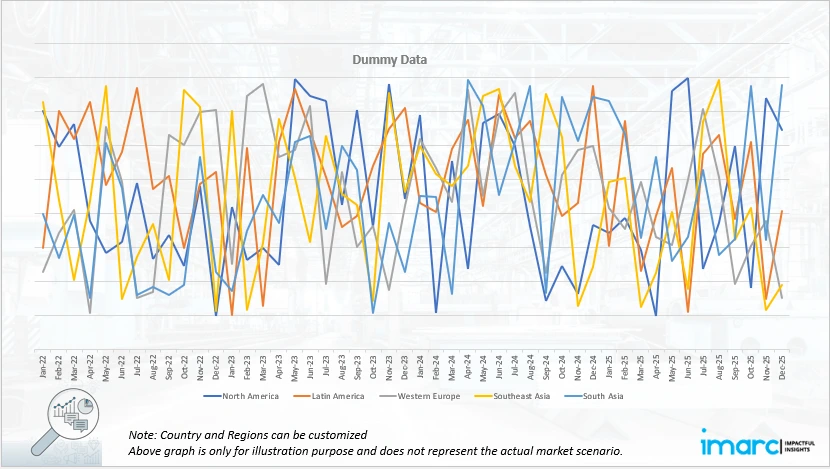
Pears Price Chart
Get real-time access to monthly/quarterly/yearly prices Request Sample
During the second quarter of 2026, the pears prices in the USA reached 1526 USD/MT in June. Prices declined as domestic pear availability remained comparatively strong and extended into the import marketing window, limiting demand for imported fruit. The continued presence of domestic supplies reduced purchasing urgency among importers and distributors, creating pressure across the market. Import demand for Chilean and Argentine pears was also affected by slower movement, which weakened buying interest for imported varieties.
During the second quarter of 2026, the pears prices in China reached 1515 USD/MT in June. Prices moved lower amid ample availability of seasonal fruit and relatively measured purchasing activity. Summer fruit supply increased across domestic wholesale channels, giving buyers greater flexibility when selecting varieties and quality grades. The broader fruit market showed signs of abundant seasonal availability, with stronger product inflows contributing to softer conditions for several fruit categories.
During the second quarter of 2026, the pears prices in Chile reached 1237 USD/MT in June. Prices declined as export market conditions remained competitive and trading activity faced pressure from softer international demand. Pear exporters continued to manage shipments across multiple destinations, while buyers maintained selective purchasing based on quality, variety, and expected shelf life. Broader Chilean fruit trade conditions were mixed, creating competition for logistics capacity and export handling resources across different fruit categories.
During the second quarter of 2026, the pears prices in Argentina reached 1422 USD/MT in June. Prices decreased even as exports showed signs of improvement toward the end of the quarter. The Argentine pear market operated with reduced crop availability following weather related production losses, including frost and hail impacts. Lower production restricted the quantity available for export, but this support was offset by cautious purchasing behavior across major destinations.
During the second quarter of 2026, the pears prices in South Africa reached 1338 USD/MT in June. Prices declined as export markets remained sensitive to supply quality, logistics, and demand conditions. Weather related disruptions affected parts of the South African fruit supply chain, with hail and adverse conditions influencing orchard performance, infrastructure, and the availability of export quality fruit. At the same time, strong harvest conditions in other producing areas helped maintain product availability and limited the extent of supply tightness.
Pears Prices Outlook Q3 2025
- USA: USD 1460/MT
- China: USD 1530/MT
- Chile: USD 1210/MT
- Argentina: USD 1360/MT
- South Africa: USD 1300/MT
During the third quarter of 2025, the pears prices in the USA reached 1460 USD/MT in September. The domestic market experienced downward price pressure due to steady orchard output combined with moderate retail demand. Favorable climatic conditions supported consistent fruit quality, which limited any supply-driven price escalation. At the same time, competition from imported pears in premium retail channels constrained sellers from adjusting prices upward.
During the third quarter of 2025, the pears prices in China reached 1530 USD/MT in September. Prices strengthened due to firm domestic consumption supported by steady urban retail demand. Supply conditions were comparatively tight as post-harvest inventories moved quickly through wholesale markets. Export demand from neighboring Asian countries also contributed to higher price realizations.
During the third quarter of 2025, the pears prices in Chile reached 1210 USD/MT in September. Prices softened due to ample export-oriented supply entering international markets. Strong harvest completion led to elevated availability, which pressured exporters to remain competitive. Demand from traditional overseas destinations remained stable but cautious, limiting pricing flexibility.
During the third quarter of 2025, the pears prices in Argentina reached 1360 USD/MT in September. The market faced downward price movement driven by steady production levels and restrained international demand. Export channels experienced cautious buying behavior amid global competition. Domestic consumption absorbed limited volumes, adding to surplus availability.
During the third quarter of 2025, the pears prices in South Africa reached 1300 USD/MT in September. Prices improved as export demand strengthened across key destination markets. Controlled harvest flow supported supply discipline, while efficient cold chain management preserved quality. Shipping schedules remained stable, enabling timely deliveries and reducing inventory pressure. Domestic market absorption remained consistent, supporting overall market balance.
Pears Prices Outlook Q2 2025
- USA: USD 1524/MT
- China: USD 1490/MT
- Chile: USD 1238/MT
- Argentina: USD 1405/MT
- South Africa: USD 1268/MT
During the second quarter of 2025, the pears prices in the USA reached 1524 USD/MT in June. Market conditions during the quarter were shaped by controlled inventory circulation and consistent retail participation. Seasonal supply transitions influenced procurement planning among distributors, while import volumes complemented domestic availability. Storage operations played a key role in determining shipment timing, allowing suppliers to align deliveries with demand cycles.
During the second quarter of 2025, the pears prices in China reached 1490 USD/MT in June. The quarter was characterized by active wholesale transactions supported by urban consumption patterns. Domestic production entered distribution channels in an organized manner, allowing traders to manage flow efficiently. Export shipments to regional markets added another layer of demand absorption. Logistics systems supported timely movement from production hubs to consumption centers.
During the second quarter of 2025, the pears prices in Chile reached 1238 USD/MT in June. Export-focused market dynamics played a central role during the quarter, with shipment schedules aligned closely to overseas demand. Harvest activities progressed in coordination with packing and storage operations. International buyer engagement remained active through contractual export programs.
During the second quarter of 2025, the pears prices in Argentina reached 1405 USD/MT in June. The market reflected coordinated supply movement across domestic and export channels. Harvest volumes entered commercial circulation under structured distribution strategies. Export demand was present through established trade routes, while domestic consumption absorbed a portion of available supply. Logistics and transportation operations supported uninterrupted delivery schedules.
During the second quarter of 2025, the pears prices in South Africa reached 1268 USD/MT in June. Export-oriented distribution remained a defining factor, with shipments directed toward key destination markets. Cold storage infrastructure allowed flexible inventory positioning. Domestic retail participation contributed to overall market absorption. Port operations and shipping availability supported predictable export execution. These operational factors collectively shaped market conditions during the quarter.
Regional Coverage
The report provides a detailed analysis of the market across different regions, each with unique pricing dynamics influenced by localized market conditions, supply chain intricacies, and geopolitical factors. This includes price trends, price forecast and supply and demand trends for each region, along with spot prices by major ports. The report also provides coverage of FOB and CIF prices, as well as the key factors influencing pears prices.
Europe Pears Price Trend
Q2 2026:
The Europe pear price index began Q2 under pressure from remaining inventories, moderate buying interest, and uneven quality across stored fruit. Market participants continued working through older stocks, which limited the pace of price recovery and encouraged sellers to maintain competitive offers. Demand improved selectively for higher quality pears, but slower movement for less suitable lots kept the wider market subdued. The arrival of imported fruit from Southern Hemisphere suppliers added another source of competition and reduced opportunities for stronger price gains. Weather conditions also influenced expectations for the coming crop, with frost, hail, heat, and storms affecting different producing areas. Higher energy, fertilizer, labor, and production costs provided cost support, but these pressures did not fully translate into stronger market prices because supply remained available and buyers remained selective.
Q3 2025:
The pears price index in Europe reflected fluctuating pricing trends. Market conditions were shaped by steady regional production and cautious retail demand. Import flows from Southern Hemisphere suppliers influenced availability, limiting upward price movement. Consumer purchasing patterns remained conservative, encouraging retailers to focus on promotions. Logistics efficiency supported consistent distribution, while storage levels prevented sudden supply tightness. Overall, prices reflected balanced supply-demand dynamics.
Q2 2025:
The pears price index in Europe reflected market conditions influenced by coordinated supply from domestic producers and external sourcing. Retail programs across major economies structured procurement schedules, while food service participation contributed to volume absorption. Import logistics functioned efficiently, allowing consistent availability across markets. Storage utilization supported inventory management decisions, helping market participants align distribution with consumption cycles throughout the quarter.
Detailed price information for pears can also be provided for an extensive list of European countries.
| Region | Countries Covered |
|---|---|
| Europe | Germany, France, United Kingdom, Italy, Spain, Russia, Turkey, Netherlands, Poland, Sweden, Belgium, Austria, Ireland, Switzerland, Norway, Denmark, Romania, Finland, Czech Republic, Portugal, and Greece, among other European countries. |
North America Pears Price Trend
Q2 2026:
The North America pear price index weakened during Q2 as domestic availability reduced dependence on imported fruit. A large domestic crop extended into the import season, limiting the selling window for incoming pears from Southern Hemisphere suppliers. Importers and distributors consequently faced slower movement and reduced purchasing urgency, placing pressure on imported fruit values. Quality and storage performance became important purchasing considerations, as buyers sought fruit capable of maintaining condition through the remaining marketing period. The seasonal transition toward domestic California production further increased local supply expectations and reinforced competitive pressure on imported pears.
Q3 2025:
The pears price index in North America showed mild downward pressure as market fundamentals leaned toward ample availability. Domestic production levels remained steady across key growing regions, ensuring continuous supply into wholesale channels. At the same time, import availability from Southern Hemisphere suppliers introduced additional competitive pressure, particularly in premium retail segments. Retail demand remained stable but lacked strong momentum, which limited pricing leverage for suppliers.
Q2 2025:
The pears price index in North America was shaped by seasonal supply rotation and integrated distribution networks. Domestic harvest timing influenced warehouse inventory strategies, while imports supplemented market requirements. Retail and processing sectors maintained regular procurement activity. Transportation reliability enabled uninterrupted movement across regional markets, supporting orderly commercial operations during the quarter.
Specific pears historical data within the United States and Canada can also be provided.
| Region | Countries Covered |
|---|---|
| North America | United States and Canada |
Middle East and Africa Pears Price Trend
Q2 2026:
The Middle East and Africa pear market remained under pressure as supply availability, import demand, and logistics costs shaped trading conditions. South African export activity remained important to regional and international supply, but weather disruptions affected fruit quality and infrastructure in selected growing areas. Buyers therefore placed greater emphasis on grade consistency, shelf life, and delivery reliability when assessing available supplies. Shipping conditions also remained an important consideration because geopolitical tensions increased uncertainty around some trade routes and freight arrangements. Where supply remained readily available, buyers were able to negotiate more actively, restricting upward price movement.
Q3 2025:
The pears market across the Middle East and Africa displayed upward pricing trends driven by evolving supply and demand dynamics across key import-dependent markets. Limited local production continued to place reliance on imported volumes, while controlled shipping schedules influenced availability timing. Demand from food service, hospitality, and institutional buyers strengthened across major urban centers, contributing to improved market absorption.
Q2 2025:
During the second quarter of 2025, the regional pears market operated under import-dependent supply structures. Shipping schedules and port handling efficiency played a key role in determining availability. Retail demand across urban centers contributed to volume absorption. Distribution networks functioned predictably, allowing consistent market participation across the region.
Region-wise data and information on specific countries within these regions can also be provided.
| Region | Countries Covered |
|---|---|
| Middle East & Africa | Saudi Arabia, UAE, Israel, Iran, South Africa, Nigeria, Oman, Kuwait, Qatar, Iraq, Egypt, Algeria, and Morocco, among other Middle Eastern and African countries. |
Asia Pacific Pears Price Trend
Q2 2026:
The Asia Pacific pear market recorded softer conditions, reflecting abundant seasonal fruit availability and selective consumer demand. In China, seasonal fruit inflows increased during the summer period, creating greater competition among fresh fruit categories and limiting the pricing power of individual products. Buyers remained focused on freshness, quality, and turnover rates, which encouraged differentiation between higher quality pears and more readily available standard fruit. Domestic supply conditions remained a major influence because stronger availability reduced the urgency of wholesale purchasing. Retail and online channels continued to support fruit consumption, but the presence of competing seasonal products constrained demand growth for pears.
Q3 2025:
The Asia Pacific region recorded upward pricing trends supported by strong and consistent consumer demand across major urban markets. Domestic production in key producing countries was effectively complemented by imports, ensuring uninterrupted supply without overwhelming market capacity. Wholesale markets remained active, with rapid absorption of available volumes. Efficient logistics infrastructure and well-developed cold chain systems supported quality preservation and timely distribution. Procurement strategies increasingly prioritized premium-grade fruit, reinforcing price strength in retail channels.
Q2 2025:
The Asia Pacific pears market reflected active wholesale trade supported by sustained urban consumption across major metropolitan areas. Domestic production from key growing regions was distributed alongside imported volumes through well-established supply chains, ensuring orderly market participation. Cold chain management played a critical role in preserving product quality, particularly for long-distance shipments and high-value retail segments.
This pears price analysis can be expanded to include a comprehensive list of countries within the region.
| Region | Countries Covered |
|---|---|
| Asia Pacific | China, India, Indonesia, Pakistan, Bangladesh, Japan, Philippines, Vietnam, Thailand, South Korea, Malaysia, Nepal, Taiwan, Sri Lanka, Hongkong, Singapore, Australia, and New Zealand, among other Asian countries. |
Latin America Pears Price Trend
Q2 2026:
The Latin America pear market remained weak as export supply, crop conditions, and external demand shaped market pricing. Chile faced softer export conditions as pear shipments moved through international markets with buyers maintaining selective purchasing behavior. Argentina also experienced lower production following frost and hail damage, reducing available fruit supply. This supply constraint provided some support to exporters, but weaker shipment performance earlier in the season limited the ability of producers to secure stronger pricing. By June, Argentine exports showed improvement, indicating better commercial activity and renewed demand from international destinations.
Q3 2025:
Latin American pears prices reflected softer market conditions shaped by abundant regional supply. Major producing countries experienced strong harvest volumes, leading to elevated availability across domestic and export markets. Export-oriented channels faced intensified competition from other global suppliers, which limited pricing flexibility in international trade. Domestic consumption absorbed a portion of the supply, but overall availability remained high relative to demand.
Q2 2025:
During the second quarter of 2025, the Latin American pears market was influenced by regional production cycles and export-oriented trade structures. Harvest timing across producing countries determined the flow of volumes into domestic and international channels. Domestic consumption absorbed a portion of the available supply through retail and traditional market outlets, while international shipments proceeded according to established export programs.
This comprehensive review can be extended to include specific countries within Latin America.
| Region | Countries Covered |
|---|---|
| Latin America | Brazil, Mexico, Argentina, Columbia, Chile, Ecuador, and Peru, among other Latin American countries. |
Pears Pricing Report, Market Analysis, and News
IMARC's latest publication, “Pears Prices, Trend, Chart, Demand, Market Analysis, News, Historical and Forecast Data Report 2026 Edition,” presents a detailed examination of the pears market, providing insights into both global and regional trends that are shaping prices. This report delves into the spot price of pears at major ports and analyzes the composition of prices, including FOB and CIF terms. It also presents detailed pears prices trend analysis by region, covering North America, Europe, Asia Pacific, Latin America, and Middle East and Africa. The factors affecting pears pricing, such as the dynamics of supply and demand, geopolitical influences, and sector specific developments, are thoroughly explored. This comprehensive report helps stakeholders stay informed with the latest market news, regulatory updates, and technological progress, facilitating informed strategic decision-making and forecasting.
Pears Industry Analysis
The global pears market size reached 26.9 Million Tons in 2025. By 2034, IMARC Group expects the market to reach 35.5 Million Tons, at a projected CAGR of 3.10% during 2026-2034. The market is primarily driven by rising consumer preference for fresh fruits, expansion of organized retail distribution, and improvements in cold chain logistics.
Latest News and Developments:
- November 2025: Dole and Better Trade Group jointly conducted a signing ceremony for the “2025–2026 Regional Strategic Development Agreement for Pear Varieties” during the 8th China International Import Expo. The event marked a further strengthening of collaboration between the two companies and reflected their shared commitment to advancing the strategic positioning of Belgian pears within the Chinese market.
Product Description
Pears are edible fruits produced by trees belonging mainly to the genus Pyrus and are valued for their sweet taste, aroma, moisture content, and nutritional profile. Their composition is primarily water, carbohydrates, natural sugars, dietary fiber, organic acids, minerals, and bioactive compounds including phenolic substances. Common sugars include fructose, glucose, and sorbitol, while malic acid contributes to the characteristic flavor profile of the fruit. Pears have a firm texture when harvested and generally soften during ripening as cell wall components break down. Their physical and sensory properties vary according to cultivar, maturity, storage conditions, and growing environment. Commercial varieties are consumed as fresh fruit and are also processed into juice, puree, nectar, dried fruit, canned products, jams, preserves, bakery ingredients, baby food, and fruit based beverages. Pear puree is used in food formulations as a natural fruit ingredient, while dried pears are incorporated into snacks, cereals, bakery products, and confectionery. The fruit is also valued for its fiber content and natural sweetness, supporting applications across retail, foodservice, and processed food industries.
Report Coverage
| Key Attributes | Details |
|---|---|
| Product Name | Pears |
| Report Features | Exploration of Historical Trends and Market Outlook, Industry Demand, Industry Supply, Gap Analysis, Challenges, Pears Price Analysis, and Segment-Wise Assessment. |
| Currency/Units | US$ (Data can also be provided in local currency) or Metric Tons |
| Region/Countries Covered | The current coverage includes analysis at the global and regional levels only. Based on your requirements, we can also customize the report and provide specific information for the following countries: Asia Pacific: China, India, Indonesia, Pakistan, Bangladesh, Japan, Philippines, Vietnam, Thailand, South Korea, Malaysia, Nepal, Taiwan, Sri Lanka, Hongkong, Singapore, Australia, and New Zealand Europe: Germany, France, United Kingdom, Italy, Spain, Russia, Turkey, Netherlands, Poland, Sweden, Belgium, Austria, Ireland, Switzerland, Norway, Denmark, Romania, Finland, Czech Republic, Portugal and Greece North America: United States and Canada Latin America: Brazil, Mexico, Argentina, Columbia, Chile, Ecuador, and Peru Middle East & Africa: Saudi Arabia, UAE, Israel, Iran, South Africa, Nigeria, Oman, Kuwait, Qatar, Iraq, Egypt, Algeria, and Morocco The list of countries presented is not exhaustive. Information on additional countries can be provided if required by the client. |
| Information Covered for Key Suppliers |
|
| Customization Scope | The report can be customized as per the requirements of the customer |
| Report Price and Purchase Option |
Plan A: Monthly Updates - Annual Subscription
Plan B: Quarterly Updates - Annual Subscription
Plan C: Biannually Updates - Annual Subscription
|
| Post-Sale Analyst Support | 360-degree analyst support after report delivery |
| Delivery Format | PDF and Excel through email (We can also provide the editable version of the report in PPT/Word format on special request) |
Key Benefits for Stakeholders:
- IMARC’s report presents a detailed analysis of pears pricing, covering global and regional trends, spot prices at key ports, and a breakdown of FOB and CIF prices.
- The study examines factors affecting pears price trend, including input costs, supply-demand shifts, and geopolitical impacts, offering insights for informed decision-making.
- The competitive landscape review equips stakeholders with crucial insights into the latest market news, regulatory changes, and technological advancements, ensuring a well-rounded, strategic overview for forecasting and planning.
- IMARC offers various subscription options, including monthly, quarterly, and biannual updates, allowing clients to stay informed with the latest market trends, ongoing developments, and comprehensive market insights. The pears price charts ensure our clients remain at the forefront of the industry.
Need more help?
- Speak to our experienced analysts for insights on the current market scenarios.
- Include additional segments and countries to customize the report as per your requirement.
- Gain an unparalleled competitive advantage in your domain by understanding how to utilize the report and positively impacting your operations and revenue.
- For further assistance, please connect with our analysts.
 Request Customization
 Inquire Before Buying
 Speak to an Analyst
 Request Brochure
Benefits of Customization
- Personalize this research
- Triangulate with your data
- Get data as per your format and definition
- Gain a deeper dive into a specific application, geography, customer, or competitor
- Any level of personalization
Get in Touch With Us
UNITED STATES
Phone: +1-201-971-6302
INDIA
Phone: +91-120-433-0800
UNITED KINGDOM
Phone: +44-753-714-6104
Email: [email protected]
Client Testimonials




.webp)




.webp)













Related Reports

Why Choose Us
IMARC offers trustworthy, data-centric insights into commodity pricing and evolving market trends, enabling businesses to make well-informed decisions in areas such as procurement, strategic planning, and investments. With in-depth knowledge spanning more than 1000 commodities and a vast global presence in over 150 countries, we provide tailored, actionable intelligence designed to meet the specific needs of diverse industries and markets.
1000
+Commodities
150
+Countries Covered
3000
+Clients
20
+Industry

Robust Methodologies & Extensive Resources
IMARC delivers precise commodity pricing insights using proven methodologies and a wealth of data to support strategic decision-making.

Subscription-Based Databases
Our extensive databases provide detailed commodity pricing, import-export trade statistics, and shipment-level tracking for comprehensive market analysis.

Primary Research-Driven Insights
Through direct supplier surveys and expert interviews, we gather real-time market data to enhance pricing accuracy and trend forecasting.

Extensive Secondary Research
We analyze industry reports, trade publications, and market studies to offer tailored intelligence and actionable commodity market insights.
Trusted by 3000+ industry leaders worldwide to drive data-backed decisions. From global manufacturers to government agencies, our clients rely on us for accurate pricing, deep market intelligence, and forward-looking insights.