
Pecans Prices, Trend, Chart, Market Analysis, News, Demand, Historical and Forecast Data Report 2026 Edition
Pecans Price Trend, Index and Forecast
Track the latest insights on pecans price trend and forecast with detailed analysis of regional fluctuations and market dynamics across North America, Latin America, Central Europe, Western Europe, Eastern Europe, Middle East, North Africa, West Africa, Central and Southern Africa, Central Asia, Southeast Asia, South Asia, East Asia, and Oceania.
Pecans Prices Outlook Q2 2026
- USA: USD 5948/lb
- Mexico: USD 5438/lb
- Canada: USD 5527/lb
- Germany: USD 5270/lb
- Netherlands: USD 5059/lb
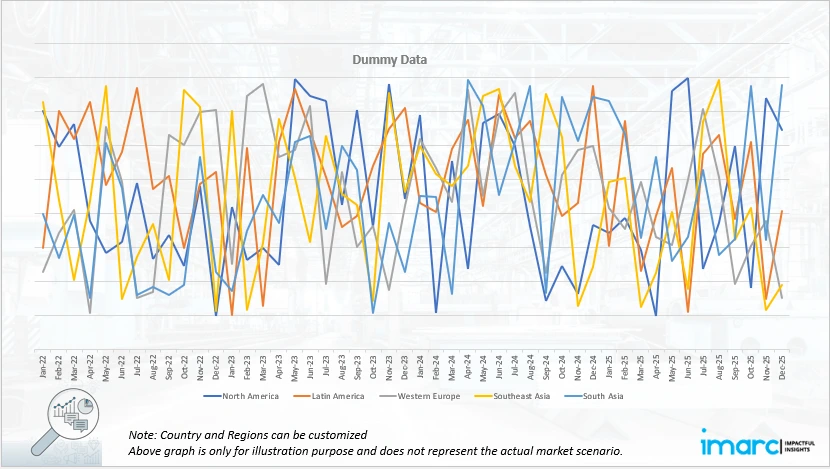
Pecans Prices Chart
Get real-time access to monthly/quarterly/yearly prices Request Sample
During the second quarter of 2026, the pecans prices in the USA reached 5948 USD/lb in June. Prices moved downward as improved supply availability and cautious purchasing reduced pressure on the domestic market. Seasonal availability supported sufficient inventories among processors and distributors, while buyers focused mainly on immediate requirements rather than building additional stocks. Demand from confectionery, bakery, snack, and packaged food manufacturers remained stable but was not strong enough to tighten overall availability.
During the second quarter of 2026, the pecans prices in Mexico reached 5438 USD/lb in June. Prices declined as comfortable supply conditions and moderate purchasing activity reduced upward pressure across the market. Mexico remained an important producing market, and sufficient availability allowed processors and exporters to meet regular requirements without significant supply concerns. Demand from confectionery, bakery, snack, and food processing applications remained steady, although buyers generally avoided aggressive inventory accumulation.
During the second quarter of 2026, the pecans prices in Canada reached 5527 USD/lb in June. Prices moved downward as sufficient imported availability and cautious downstream purchasing kept the market adequately supplied. Canadian buyers maintained regular procurement for bakery, confectionery, snack, retail, and food processing applications, but purchasing was largely aligned with immediate consumption requirements. Importers and distributors maintained comfortable inventory positions, reducing the need for aggressive replenishment during the quarter.
During the second quarter of 2026, the pecans prices in Germany reached 5270 USD/lb in June. Prices declined as adequate import availability and measured demand from food manufacturers reduced pressure on market quotations. Procurement from bakery, confectionery, snack, cereal, and specialty food manufacturers remained stable, although buyers generally purchased according to near term production requirements. Importers maintained sufficient inventories, limiting urgency for additional replenishment and reducing supplier negotiating power.
During the second quarter of 2026, the pecans prices in the Netherlands reached 5059 USD/lb in June. Prices moved downward as comfortable import availability and controlled purchasing reduced market tightness. As an important European trading and distribution market, the Netherlands maintained regular inflows of nuts for domestic consumption and redistribution to neighboring markets. Buyers from bakery, confectionery, snack, retail, and food processing sectors continued procurement, but purchasing remained closely aligned with immediate requirements.
Pecans Prices Outlook Q3 2025
- USA: USD 5600/lb
- Mexico: USD 5100/lb
- Canada: USD 5220/lb
- Germany: USD 4950/lb
- Netherlands: USD 4725/lb
During the third quarter of 2025, the pecans prices in the USA reached 5600 USD/lb in September. Prices increased due to strong domestic demand from retail, snack, and confectionery manufacturers. Export interest remained firm, tightening available supply. Growers and distributors adopted disciplined selling strategies, while inventory levels were closely managed, supporting upward price movement across the domestic market.
During the third quarter of 2025, the pecans prices in Mexico reached 5100 USD/lb in September. Prices moved higher supported by steady export demand and controlled availability. Harvest volumes were largely aligned with expectations, but strong cross-border shipments reduced domestic supply flexibility. Buyers maintained active procurement to secure volumes, contributing to firmer market conditions.
During the third quarter of 2025, the pecans prices in Canada reached 5220 USD/lb in September. Prices increased as import costs rose alongside firm demand from food processors and retailers. Supply remained reliant on imports, and buyers sought consistent coverage amid active consumption. Inventory planning and stable logistics conditions influenced procurement strategies during the quarter.
During the third quarter of 2025, the pecans prices in Germany reached 4950 USD/lb in September. Prices climbed due to strong demand from bakery, confectionery, and specialty food producers. Import reliance exposed buyers to higher procurement costs, while steady consumption supported supplier pricing strategies. Distributors focused on maintaining supply continuity amid active downstream demand.
During the third quarter of 2025, the pecans prices in the Netherlands reached 4725 USD/lb in September. Prices moved upward as trading activity through distribution hubs remained strong. Demand from re-export channels and food manufacturing supported procurement, while controlled inflows limited excess availability. Buyers emphasized forward planning to manage supply requirements efficiently.
Pecans Prices Outlook Q2 2025
- USA: USD 5323/lb
- Mexico: USD 4894/lb
- Canada: USD 5053/lb
- Germany: USD 4644/lb
- Netherlands: USD 4561/lb
During the second quarter of 2025, the pecans prices in the USA reached 5323 USD/lb in June. Market conditions were influenced by steady domestic consumption and active export programs. Supply availability remained balanced, while buyers focused on inventory planning ahead of peak seasonal demand. Procurement activity was largely stable, supported by predictable logistics.
During the second quarter of 2025, the pecans prices in Mexico reached 4894 USD/lb in June. Supply conditions reflected ongoing harvest distribution and export commitments. Demand from international buyers remained steady, while domestic consumption supported baseline offtake. Procurement strategies emphasized contract fulfillment and inventory alignment.
During the second quarter of 2025, the pecans prices in Canada reached 5053 USD/lb in June. The market relied on consistent import inflows to meet retail and processing demand. Buyers focused on securing supply ahead of anticipated demand growth, while logistics stability supported orderly procurement activity.
During the second quarter of 2025, the pecans prices in Germany reached 4644 USD/lb in June. Demand from food processing and specialty retail channels remained steady. Imports supplemented domestic availability, while distributors managed inventory positions cautiously ahead of higher seasonal consumption.
During the second quarter of 2025, the pecans prices in the Netherlands reached 4561 USD/lb in June. Trading activity through regional distribution centers remained stable, supported by re-export demand. Buyers emphasized supply continuity and inventory planning, while procurement remained largely contract-driven.
Regional Coverage
The report provides a detailed analysis of the market across different regions, each with unique pricing dynamics influenced by localized market conditions, supply chain intricacies, and geopolitical factors. This includes pecans price trends, price forecast, and supply and demand trends for each region, along with spot prices by major ports. The report also provides coverage of FOB and CIF prices, as well as the key factors influencing pecans prices.
Europe Pecans Price Trend
Q2 2026:
The pecans price index in Europe moved downward as adequate import availability and cautious downstream procurement reduced pressure on regional quotations. Germany and the Netherlands experienced softer market conditions as importers and distributors maintained sufficient inventories and focused on purchases aligned with immediate requirements. Demand from bakery, confectionery, snack, cereal, retail, and specialty food applications remained stable but did not create significant supply tightness. Competitive sourcing opportunities from major producing countries improved buyer negotiating positions and limited replacement pressure. Traders remained cautious about accumulating excessive inventories while monitoring consumer demand and future crop availability.
Q3 2025:
As per the pecans price index, Europe recorded upward price movement, reflecting developments in Germany and the Netherlands. Demand from bakery, confectionery, and premium snack manufacturers remained firm, particularly ahead of seasonal consumption peaks. Import dependence exposed buyers to higher procurement costs, while steady inflows through major ports supported availability without creating surplus. Distribution hubs in Northwestern Europe maintained active trading volumes, and buyers emphasized forward contracts to secure supply amid sustained downstream interest.
Q2 2025:
Europe’s pecans market was shaped by steady consumption patterns and well-established import channels. Food processors and specialty retailers maintained consistent procurement schedules, while inventory planning ahead of higher-demand periods influenced purchasing decisions. Trade activity remained orderly, supported by efficient logistics networks and predictable shipment flows through key distribution centers.
Detailed price information for pecans can also be provided for an extensive list of European countries.
| Region | Countries Covered |
|---|---|
| Europe | Germany, France, United Kingdom, Italy, Spain, Russia, Turkey, Netherlands, Poland, Sweden, Belgium, Austria, Ireland, Switzerland, Norway, Denmark, Romania, Finland, Czech Republic, Portugal, and Greece, among other European countries. |
North America Pecans Price Trend
Q2 2026:
The pecans price index in North America moved downward as improved availability and cautious purchasing maintained comfortable regional supply conditions. The USA experienced softer quotations as processors and distributors managed adequate inventories, while Canada benefited from sufficient imported material and competitive sourcing opportunities. Mexico also maintained comfortable availability, supporting regular trade flows across the region. Demand from bakery, confectionery, snacks, retail products, cereals, and other food applications remained steady but was insufficient to tighten overall market balances. Buyers generally avoided aggressive stock accumulation and focused on securing volumes for immediate processing and retail requirements.
Q3 2025:
As per the pecans price index, North America experienced upward price movement, driven by conditions in the USA and Canada. Strong retail demand, combined with active export shipments, reduced supply flexibility within the region. Food processors and snack manufacturers maintained steady offtake, while buyers prioritized securing volumes through forward purchasing. Inventory management became increasingly important as distributors balanced domestic demand with export obligations.
Q2 2025:
North America’s pecans market reflected stable consumption across retail, food service, and processing applications. Supply relied on domestic production supported by cross-border trade, particularly between the USA and Canada. Procurement strategies focused on aligning inventory positions with anticipated seasonal demand, while logistics stability allowed for predictable replenishment cycles.
Specific pecans historical data within the United States and Canada can also be provided.
| Region | Countries Covered |
|---|---|
| North America | United States and Canada |
Middle East and Africa Pecans Price Trend
Q2 2026:
The study includes pecans price trends across the Middle East and Africa, taking into consideration variables that have a direct impact on market prices, such as regional industrial expansion, natural resource availability, and geopolitical conflicts.
Q3 2025:
As per pecans price chart, the prices in the Middle East and Africa fluctuated due to a complex interplay of factors, primarily driven by supply chain disruptions, seasonal demand shifts, and geopolitical influences.
Q2 2025:
The report explores the pecans pricing trends and pecans price chart in the Middle East and Africa, considering factors like regional industrial growth, the availability of natural resources, and geopolitical tensions that uniquely influence market prices.
Region-wise data and information on specific countries within these regions can also be provided.
| Region | Countries Covered |
|---|---|
| Middle East & Africa | Saudi Arabia, UAE, Israel, Iran, South Africa, Nigeria, Oman, Kuwait, Qatar, Iraq, Egypt, Algeria, and Morocco, among other Middle Eastern and African countries. |
Asia Pacific Pecans Price Trend
Q2 2026:
Pecans prices across Asia Pacific moved downward as adequate international supply and selective import purchasing supported softer market conditions. Demand from bakery, confectionery, snack, retail, and premium food applications remained stable across major consuming markets, but buyers generally maintained disciplined procurement strategies. Importers focused on immediate requirements and avoided excessive inventory accumulation as they monitored international availability and consumer demand. Competitive offers from major producing countries improved sourcing options and reduced replacement pressure for regional distributors. Food processors maintained regular consumption, particularly in premium snacks, bakery products, cereals, and confectionery, although purchasing activity was insufficient to tighten regional availability.
Q3 2025:
In the Asia Pacific region, the pecans market was shaped by import dependency and consumption trends across key consuming economies. Demand from bakery, confectionery, and premium snack segments remained steady, particularly in urban markets. With minimal domestic production, buyers relied heavily on imports from North America. Procurement strategies emphasized forward booking, origin selection, and inventory planning to manage lead times and ensure consistent supply.
Q2 2025:
Asia Pacific’s pecans market reflected stable consumption patterns supported by food processing, retail, and hospitality sectors. Import flows remained the primary source of availability, while buyers focused on supplier reliability and quality consistency. Logistics coordination, shipment scheduling, and inventory management played an important role in maintaining smooth supply chains across the region.
This pecans price analysis can be expanded to include a comprehensive list of countries within the region.
| Region | Countries Covered |
|---|---|
| Asia Pacific | China, India, Indonesia, Pakistan, Bangladesh, Japan, Philippines, Vietnam, Thailand, South Korea, Malaysia, Nepal, Taiwan, Sri Lanka, Hongkong, Singapore, Australia, and New Zealand, among other Asian countries. |
Latin America Pecans Price Trend
Q2 2026:
Pecan prices across Latin America moved downward as comfortable regional availability and measured export procurement reduced pressure on supplier quotations. Mexico remained an important source of pecans within the region, providing sufficient material for domestic processing and international trade. Demand from bakery, confectionery, snacks, retail products, and other food processing applications remained stable, supporting regular consumption without creating significant market tightness. Exporters continued to serve overseas customers, although buyers remained selective and closely managed procurement according to inventory requirements. Competitive international market conditions also limited the ability of suppliers to maintain stronger offers.
Q3 2025:
In Latin America, pecans prices moved higher, shaped primarily by conditions in Mexico, where prices increased. Strong export demand tightened domestic availability, directing a significant share of volumes toward international markets. Buyers focused on meeting shipment commitments, while domestic consumption remained steady. Supply planning and export scheduling played a central role in shaping procurement decisions and market operations.
Q2 2025:
Latin America’s pecans market was characterized by balanced supply conditions and consistent consumption patterns, particularly in Mexico. Export-oriented trade flows influenced availability, while buyers emphasized inventory planning and contract management to ensure continuity. Logistics coordination and shipment timing remained key considerations for market participants across the region.
This comprehensive review can be extended to include specific countries within Latin America.
| Region | Countries Covered |
|---|---|
| Latin America | Brazil, Mexico, Argentina, Columbia, Chile, Ecuador, and Peru, among other Latin American countries. |
Pecans Pricing Report, Market Analysis, and News
IMARC's latest publication, “Pecans Prices, Trend, Chart, Demand, Market Analysis, News, Historical and Forecast Data Report 2026 Edition,” offers a comprehensive examination of the pecans market, providing insights into both global and regional trends that are shaping prices. This report explores the spot price of pecans at major markets and analyzes the composition of prices, incorporating production and logistic costs. It presents in-depth pecans price trend analysis by region, covering North America, Europe, Asia Pacific, Latin America, and Middle East and Africa. Factors affecting pecans pricing, such as supply and demand dynamics, regulatory influences, and sectoral developments, are meticulously detailed. This comprehensive report aids stakeholders in staying informed with the latest market news, regulatory changes, and technological advancements, enabling informed strategic decision-making and forecasting.
Pecans Industry Analysis
The global pecans industry size reached 180.8 Thousand Tons in 2025. By 2034, IMARC Group expects the market to reach 243.9 Thousand Tons, at a projected CAGR of 3.39% during 2026-2034. Market growth is supported by rising consumer demand for tree nuts, increasing use in bakery and confectionery products, expanding snack food applications, and growing awareness of the nutritional benefits associated with pecans across global markets.
Latest News and Developments:
- December 2025: American Pecan Council partnered with Haldiram’s Nagpur to launch a special festive dessert collection in Mumbai and Nagpur incorporating pecans into products like Pecan Plum Cake, Pecan and Chocolate Burfi, Pecan Dodha Burfi, and other desserts. The collaboration brings premium American pecans into traditional Indian sweet offerings available across select Haldiram’s stores for the holiday season.
Product Description
Pecan is an edible tree nut obtained from Carya illinoinensis, a species belonging to the walnut family. The nut consists of an edible kernel enclosed within a hard shell and is known for its rich flavor, soft texture, and high oil content. Pecans naturally contain fats, protein, dietary fiber, carbohydrates, vitamins, minerals, and various plant compounds. They are commercially supplied in several forms, including whole kernels, halves, pieces, chopped nuts, and processed ingredients. Pecans are widely used in bakery products, confectionery, desserts, cereals, snack foods, spreads, sauces, and other prepared food products. They are also consumed directly as raw, roasted, flavored, or packaged snacks. Commercial pecan processing generally involves harvesting, drying, cleaning, grading, shelling, sorting, and packaging. Proper moisture control and storage conditions are important for maintaining product quality, flavor, texture, and shelf life.
Report Coverage
| Key Attributes | Details |
|---|---|
| Product Name | Pecans |
| Report Features | Exploration of Historical Trends and Market Outlook, Industry Demand, Industry Supply, Gap Analysis, Challenges, Pecans Price Analysis, and Segment-Wise Assessment. |
| Currency/Units | US$ (Data can also be provided in local currency) or Metric Tons |
| Region/Countries Covered | The current coverage includes analysis at the global and regional levels only. Based on your requirements, we can also customize the report and provide specific information for the following countries: Asia Pacific: China, India, Indonesia, Pakistan, Bangladesh, Japan, Philippines, Vietnam, Thailand, South Korea, Malaysia, Nepal, Taiwan, Sri Lanka, Hongkong, Singapore, Australia, and New Zealand Europe: Germany, France, United Kingdom, Italy, Spain, Russia, Turkey, Netherlands, Poland, Sweden, Belgium, Austria, Ireland, Switzerland, Norway, Denmark, Romania, Finland, Czech Republic, Portugal and Greece North America: United States and Canada Latin America: Brazil, Mexico, Argentina, Columbia, Chile, Ecuador, and Peru Middle East & Africa: Saudi Arabia, UAE, Israel, Iran, South Africa, Nigeria, Oman, Kuwait, Qatar, Iraq, Egypt, Algeria, and Morocco The list of countries presented is not exhaustive. Information on additional countries can be provided if required by the client. |
| Information Covered for Key Suppliers |
|
| Customization Scope | The report can be customized as per the requirements of the customer |
| Report Price and Purchase Option |
Plan A: Monthly Updates - Annual Subscription
Plan B: Quarterly Updates - Annual Subscription
Plan C: Biannually Updates - Annual Subscription
|
| Post-Sale Analyst Support | 360-degree analyst support after report delivery |
| Delivery Format | PDF and Excel through email (We can also provide the editable version of the report in PPT/Word format on special request) |
Key Benefits for Stakeholders:
- IMARC’s report presents a detailed analysis of pecans pricing, covering global and regional trends, spot prices at key ports, and a breakdown of FOB and CIF prices.
- The study examines factors affecting pecans price trend, including input costs, supply-demand shifts, and geopolitical impacts, offering insights for informed decision-making.
- The competitive landscape review equips stakeholders with crucial insights into the latest market news, regulatory changes, and technological advancements, ensuring a well-rounded, strategic overview for forecasting and planning.
- IMARC offers various subscription options, including monthly, quarterly, and biannual updates, allowing clients to stay informed with the latest market trends, ongoing developments, and comprehensive market insights. The pecans price charts ensure our clients remain at the forefront of the industry.
Need more help?
- Speak to our experienced analysts for insights on the current market scenarios.
- Include additional segments and countries to customize the report as per your requirement.
- Gain an unparalleled competitive advantage in your domain by understanding how to utilize the report and positively impacting your operations and revenue.
- For further assistance, please connect with our analysts.
 Request Customization
 Inquire Before Buying
 Speak to an Analyst
 Request Brochure
Benefits of Customization
- Personalize this research
- Triangulate with your data
- Get data as per your format and definition
- Gain a deeper dive into a specific application, geography, customer, or competitor
- Any level of personalization
Get in Touch With Us
UNITED STATES
Phone: +1-201-971-6302
INDIA
Phone: +91-120-433-0800
UNITED KINGDOM
Phone: +44-753-714-6104
Email: [email protected]
Client Testimonials




.webp)




.webp)













Related Reports

Why Choose Us
IMARC offers trustworthy, data-centric insights into commodity pricing and evolving market trends, enabling businesses to make well-informed decisions in areas such as procurement, strategic planning, and investments. With in-depth knowledge spanning more than 1000 commodities and a vast global presence in over 150 countries, we provide tailored, actionable intelligence designed to meet the specific needs of diverse industries and markets.
1000
+Commodities
150
+Countries Covered
3000
+Clients
20
+Industry

Robust Methodologies & Extensive Resources
IMARC delivers precise commodity pricing insights using proven methodologies and a wealth of data to support strategic decision-making.

Subscription-Based Databases
Our extensive databases provide detailed commodity pricing, import-export trade statistics, and shipment-level tracking for comprehensive market analysis.

Primary Research-Driven Insights
Through direct supplier surveys and expert interviews, we gather real-time market data to enhance pricing accuracy and trend forecasting.

Extensive Secondary Research
We analyze industry reports, trade publications, and market studies to offer tailored intelligence and actionable commodity market insights.
Trusted by 3000+ industry leaders worldwide to drive data-backed decisions. From global manufacturers to government agencies, our clients rely on us for accurate pricing, deep market intelligence, and forward-looking insights.