
Personalized Skin Care Products Market Size, Share, Trends and Forecast by Product, Gender, Pricing Type, Age Group, Distribution Channel, and Region, 2026-2034
Personalized Skin Care Products Market Size and Share:
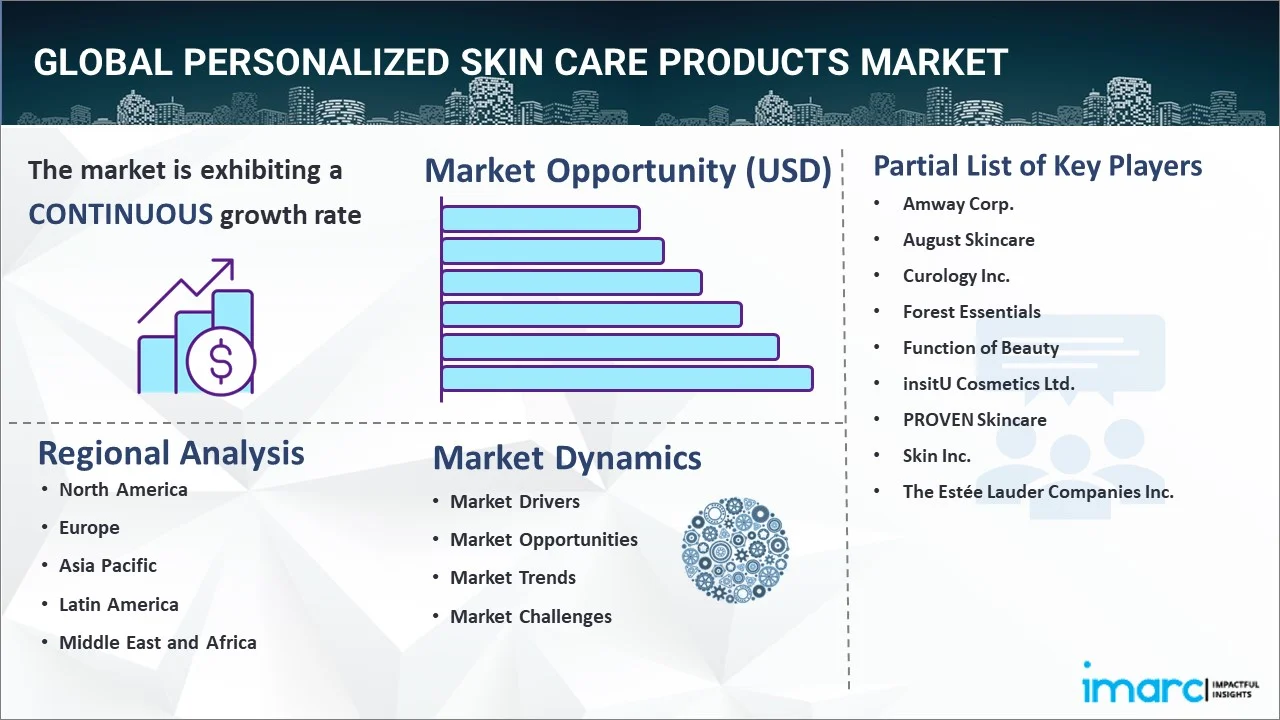
The global personalized skin care products market size was valued at USD 28.26 Billion in 2025. Looking forward, IMARC Group estimates the market to reach USD 40.65 Billion by 2034, exhibiting a CAGR of 3.77% from 2026-2034. Europe currently dominates the market, holding a market share of 31.6% in 2025. The region benefits from a mature consumer base with high disposable incomes, widespread adoption of premium and customized beauty formulations, robust investment in biotechnology-driven ingredient innovation, and strong regulatory frameworks that promote product safety and user trust, collectively contributing to the personalized skin care products market share in the region.
The global personalized skin care products market is driven by increasing user demand for customized beauty solutions tailored to individual skin types, concerns, and lifestyles. People are increasingly seeking products formulated according to specific needs such as hydration, anti-aging, acne control, and sensitivity management. Advancements in skin analysis technologies, artificial intelligence (AI), and data-driven beauty platforms are enabling brands to develop highly targeted formulations. The growing influence of digital beauty tools, mobile applications, and online diagnostic platforms is also supporting the adoption of personalized skincare regimens. In addition, rising awareness about skin health, ingredient transparency, and product efficacy is encouraging individuals to move away from generic skincare products toward personalized alternatives. Expanding disposable incomes and the strong presence of premium beauty brands are further contributing to the growth of personalized skincare solutions worldwide.
The United States is emerging as a major region in the personalized skin care products market due to the presence of a highly informed user base that prioritizes ingredient transparency, dermatological safety, and clinically supported formulations. Consumers are increasingly seeking skincare solutions tailored to specific skin conditions, sensitivities, and long-term skin health needs. This demand is closely linked to the rising prevalence of dermatological concerns across the population. According to the Asthma and Allergy Foundation of America, in 2024, more than 20 million adults in the United States were affected by eczema, representing around 8 out of every 100 adults. The growing incidence of such skin conditions is encouraging people to adopt customized skincare regimens designed to address individual sensitivities and treatment requirements, thereby supporting the expanding demand for personalized skin care products across the country.
To get more information on this market Request Sample
Personalized Skin Care Products Market Trends:
Augmented Reality (AR) Integration Enhancing Digital Skin Diagnostics
The integration of augmented reality (AR) technologies into skincare platforms is emerging as a key trend driving the personalized skin care products market by transforming how people analyze and understand their skin conditions. AR-powered tools enable users to visualize skin concerns in real time, allowing brands to deliver highly interactive and customized digital consultations without requiring physical visits to dermatology clinics or retail stores. This technology enhances user engagement by providing immediate visual feedback on issues, such as wrinkles, pores, pigmentation, and redness, while also enabling brands to recommend targeted skincare solutions based on individual skin assessments. Reflecting this shift toward immersive digital diagnostics, in 2026, Revieve introduced LiveAR, a real-time AR feature designed to enhance online skin analysis experiences. The technology overlays digital indicators directly on a user’s face to highlight visible skin concerns, helping beauty brands provide tailored skincare insights across web and mobile platforms. Such innovations are strengthening digital personalization capabilities and encouraging consumers to adopt technology-driven skincare solutions.
Wearable Skin Monitoring Driving Predictive Personalized Skincare
The adoption of wearable health technologies in dermatology is creating new opportunities for predictive and data-driven skincare personalization. Advanced wearable devices are enabling continuous monitoring of environmental exposure, hydration levels, and biological skin responses, allowing brands and dermatology platforms to analyze how external and internal factors influence skin ageing and health. This approach shifts skincare from reactive treatment to proactive prevention by identifying potential skin concerns before they become visible. In 2025, Amorepacific introduced Skinsight, a next-generation beauty technology developed in collaboration with MIT to track and predict skin ageing patterns. The system combined a wearable sensor patch, Bluetooth connectivity, and an AI-powered application to monitor environmental and biological skin changes in real time. Using the collected data, the platform predicts ageing trends and recommends personalized skincare routines and product selections tailored to each user’s skin profile. The growing integration of wearable diagnostics with AI is strengthening the role of predictive analytics in personalized skincare.
Science-Backed Premium Personalization Expanding in Emerging Markets
The increasing demand for clinically supported and premium skincare solutions is shaping a new trend within the personalized skin care products market, particularly across rapidly developing beauty markets. People are increasingly seeking formulations supported by dermatological research and active ingredients known for targeted skin benefits. Furthermore, brands are combining scientific formulations with digital technologies that assess skin conditions and recommend customized product regimens. This convergence of dermatology, technology, and premium ingredients is expanding the appeal of personalized skincare among urban users who prioritize efficacy and product transparency. Reflecting this trend, in 2025, Hyderabad-based brand GlowBareSkin launched a science-backed luxury skincare line targeting urban Indian consumers. The brand introduced dermatologist-supported formulations featuring ingredients, such as Kakadu plum, bakuchiol, and niacinamide, while incorporating AI-driven skin analysis tools to recommend personalized product selections. Such initiatives highlight how emerging markets are increasingly contributing to innovation in premium, technology-enabled personalized skincare solutions.
Personalized Skin Care Products Industry Segmentation:
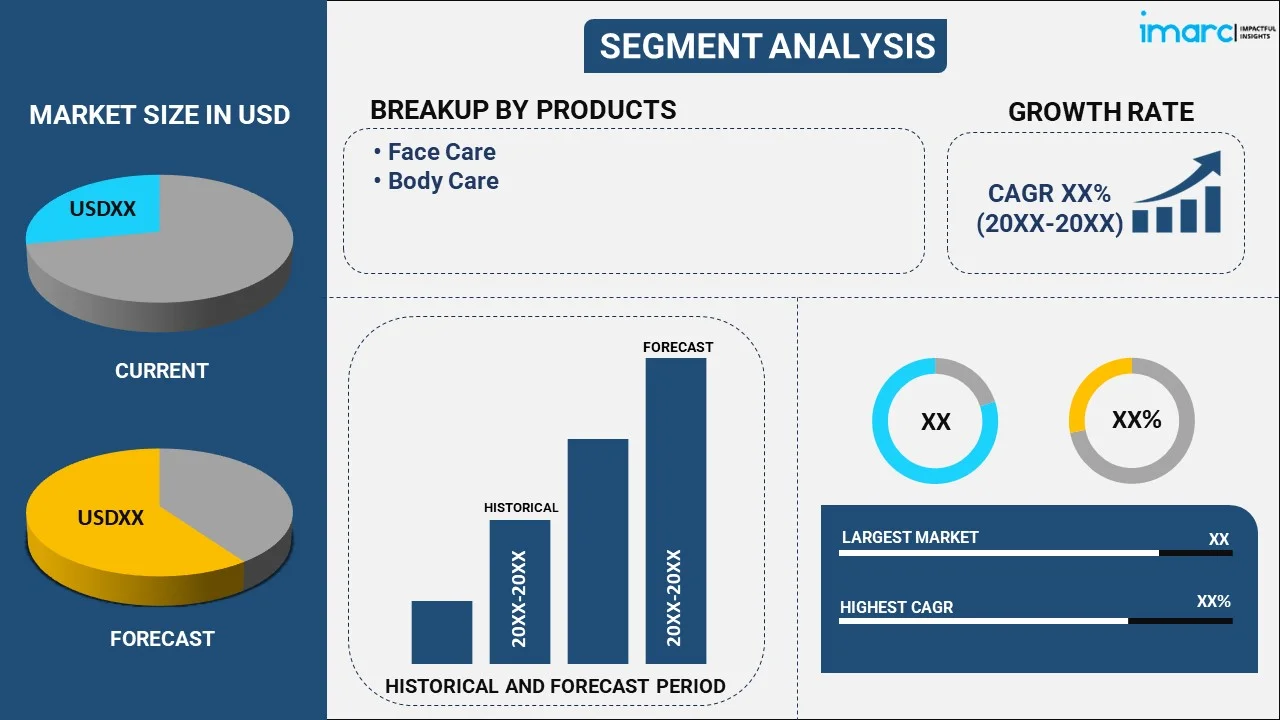
IMARC Group provides an analysis of the key trends in each segment of the global personalized skin care products market, along with forecast at the global, regional, and country levels from 2026-2034. The market has been categorized based on product, gender, pricing type, age group, and distribution channel.
Analysis by Product:
To get detailed segment analysis of this market Request Sample
- Face Care
- Body Care
Face care holds 63.8% of the market share. Face care products encompass a comprehensive range of personalized formulations targeting skin concerns specific to the face, including serums, moisturizers, toners, cleansers, masks, and treatments designed to address acne, hyperpigmentation, aging, and sensitivity. The segment benefits from high user engagement with facial skin health, driven by the social and aesthetic significance of the face as a primary focus of personal care routines. Personalized face care commands premium pricing because people are willing to pay for formulations precisely calibrated to their unique skin type, concerns, and environmental conditions. The increasing integration of AI-powered diagnostics, genomic testing, and microbiome analysis in face care product development is further deepening personalization possibilities and driving user trial and repeat purchase. In April 2025, Skin Analytics secured £15 million in a seed funding round to deliver AI-powered skin analysis solutions, reflecting the growing investment in clinical-grade diagnostics for personalized face care.
Analysis by Gender:
- Male
- Female
Female leads the market with a share of 68.4%, reflecting historically strong engagement with the beauty and personal care sector. This segment often adopts a comprehensive skincare routine and shows greater interest in ingredient knowledge, dermatological efficacy, and product innovation. Skincare needs frequently evolve across life stages, including concerns related to hormonal acne, pregnancy-related skin changes, and menopausal skin conditions, encouraging the adoption of customized formulations designed for specific concerns. In addition, a female consumer is strongly influenced by beauty content shared across digital platforms, including social media communities, skincare forums, and beauty influencers, which increases awareness about advanced skincare technologies and personalized products. The popularity of subscription-based skincare services, diagnostic-led product recommendations, and tailored beauty regimens remains particularly strong within the female demographic, further strengthening female dominance in the market. These developments reflect evolving personalized skin care products market trends, characterized by increasing demand for customized formulations, rising influence of digital beauty platforms, and the growing adoption of diagnostic-based skincare solutions among users.
Analysis by Pricing Type:
- Mass
- Premium
Premium dominates the market, with a share of 56.4%, owing to the strong alignment between customization and willingness of users to invest in high-quality skincare solutions. Personalized skincare often emphasizes precise formulations designed to address individual skin concerns, which naturally positions many products within the premium category. These products commonly incorporate advanced active ingredients such as retinoids, peptides, growth factors, and specialized botanical extracts that support targeted treatment and improved skin performance. Premium offerings also benefit from sophisticated packaging, specialized retail environments, and expert-driven consultations that enhance perceived value. In addition, the integration of dermatological knowledge with luxury brand positioning strengthens consumer confidence in product effectiveness. As people increasingly prioritize visible results, product safety, and scientifically developed formulations, there is a rise in the demand for premium personalized skincare solutions, thus offering a positive personalized skin care products market outlook.
Analysis by Age Group:
- Below 15 Years
- 15-25 Years
- 26-45 Years
- 46-60 Years
- Above 60 Years
The 26–45 years age group represents the leading segment, accounting for a 42.2% share, due to its strong purchasing power and heightened awareness about preventive and corrective skincare solutions. People in this demographic actively seek treatments addressing concerns like early signs of aging, uneven skin tone, reduced elasticity, and acne-related damage. Their familiarity with digital technologies enables them to engage easily with advanced diagnostic tools and customized skincare platforms. This trend is reinforced by technological innovation in personalized beauty services. In 2025, Revieve introduced Skin Age Diagnostics, an AI-powered tool that analyzes facial images to estimate a user’s skin age and recommend tailored skincare solutions. The technology compared facial characteristics with biological age benchmarks, and skincare brand RoC became the first to integrate it into its digital platform. Such innovations are strengthening user engagement and encouraging adoption of personalized skincare products within this age group.
Analysis by Distribution Channel:
- Online
- Offline
Offline channels hold 61.3% of the market share, because of the experiential and consultative nature of skincare purchasing. Individuals often prefer in-store environments where they can receive professional advice, undergo skin assessments, and test products before making purchasing decisions. Department stores, specialty beauty retailers, dermatology clinics, and pharmacies serve as key touchpoints that allow brands to deliver personalized consultations and build consumer trust through direct engagement. The effectiveness of such in-store diagnostics is reflected in technological adoption across retail networks. In 2026, ChoiceTech Korea reported that Olive Young’s AI-powered “SKIN SCAN” diagnostic service surpassed one million cumulative uses across its stores. The system analyzes skin indicators including pigmentation, pores, sebum, and wrinkles using optical imaging and AI algorithms, demonstrating how physical retail environments enhance personalized skincare experiences and strengthen user adoption. These developments support a favorable personalized skin care products market forecast, driven by the expanding adoption of personalized beauty services across retail channels.
Regional Analysis:
To get more information on the regional analysis of this market Request Sample
- North America
- United States
- Canada
- Europe
- Germany
- France
- United Kingdom
- Italy
- Spain
- Others
- Asia-Pacific
- China
- Japan
- India
- South Korea
- Australia
- Indonesia
- Others
- Latin America
- Brazil
- Mexico
- Others
- Middle East and Africa
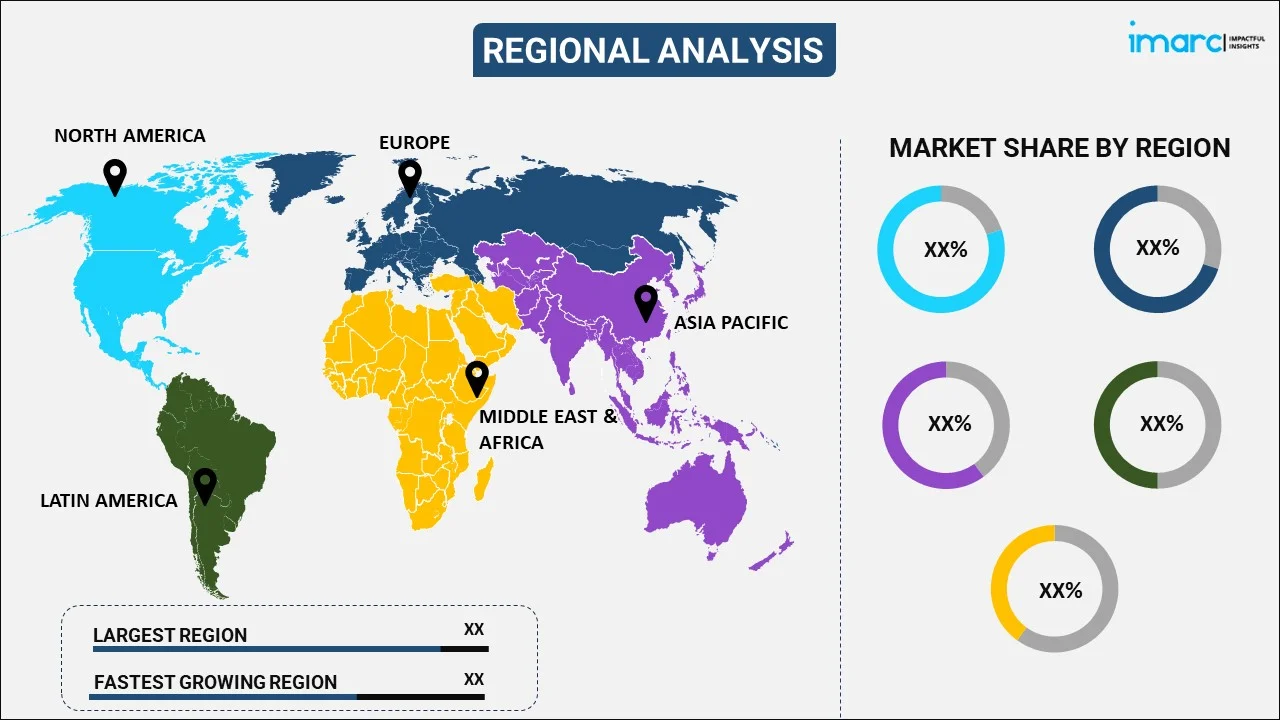
Europe, accounting for 31.6% of the share, holds the leading position in the market attributed to its highly informed user base and strong regulatory environment governing cosmetic formulations and product safety. People across the region demonstrate a high level of awareness regarding skincare ingredients, dermatological efficacy, and formulation transparency, which supports the demand for customized skincare solutions. This sophisticated market environment also encourages innovation in technology-enabled retail experiences. In 2025, The Body Shop opened a technology-driven flagship store on Oxford Street in London featuring AI-powered skin analysis and interactive retail experiences. The AI system conducted facial mapping to identify multiple skin concerns and recommend personalized skincare solutions. The store also incorporated features like a “Scent Piano” and dedicated skincare testing areas, highlighting how advanced retail formats are strengthening user engagement and supporting the personalized skin care products market growth across Europe.
Key Regional Takeaways:
North America Personalized Skin Care Products Market Analysis
North America represents one of the most dynamic and innovation-driven regions in the market, influenced by a technologically advanced retail environment and a highly informed user base. People across the region increasingly seek science-backed, clinically validated skincare formulations tailored to individual skin profiles, encouraging brands to develop personalized products supported by dermatological research and digital diagnostic tools. The region also benefits from strong retail infrastructure that enables rapid product accessibility and brand expansion. This trend is reflected in the growing presence of personalized skincare brands within major retail chains. In 2024, personalized skincare brand Curology expanded its retail presence by launching its products in 3,338 Walmart stores across the United States, aiming to make dermatologist-developed skincare solutions accessible to a broader audience. The product lineup included cleansers, moisturizers, and acne treatments, along with an exclusive Acne Care Kit. Such large-scale retail integration highlights how personalized skincare brands are leveraging established distribution networks to expand reach and strengthen market penetration across North America.
United States Personalized Skin Care Products Market Analysis
The United States represents the most commercially advanced market for personalized skin care products, because of strong user demand, sophisticated digital infrastructure, and continuous investment in dermatology-driven beauty innovation. People in the country demonstrate high skincare literacy and show strong interest in clinically validated formulations tailored to individual skin concerns. The widespread use of digital health platforms, AI-powered skin diagnostics, and subscription-based skincare services is further strengthening the adoption of personalized skincare solutions. Strategic corporate investments are also reinforcing the market’s development. In 2024, Shiseido Americas completed the acquisition of Dr. Dennis Gross Skincare, enhancing its presence in the prestige skincare segment across the Americas. The acquisition supported Shiseido’s broader skin beauty strategy while expanding its brand portfolio and geographic reach. Dr. Dennis Gross Skincare, widely recognized for dermatologist-developed, science-based formulations, including the Alpha Beta® Daily Peels, is illustrating how major companies are investing in clinically backed skincare brands to strengthen their position within the market.
Europe Personalized Skin Care Products Market Analysis
Europe holds a leading position in the personalized skin care products market, owing to strict regulatory oversight, sophisticated consumer demand, and a well-established cosmetics innovation ecosystem. The European Union maintains comprehensive cosmetics regulations that enforce rigorous safety, transparency, and efficacy requirements, fostering strong user trust in advanced and customized skincare solutions. This regulatory environment encourages companies to invest in clinically supported, technology-enabled formulations tailored to individual skin profiles. Reflecting this momentum, in 2025, HealthTech startup FORMEL SKIN secured €33.9 million in Series A funding to expand its digital dermatology platform across Europe, highlighting the growing investor confidence in personalized dermatology services. The platform enabled patients to upload skin images, consult dermatologists remotely, and receive customized treatment prescriptions through an integrated digital system. The funding was intended to scale the platform across additional European markets, strengthen the medical team, and enhance data-driven dermatology capabilities. Such developments reinforce Europe’s leadership in advancing personalized, technology-supported skincare solutions and accelerating user adoption of individualized treatment approaches.
Asia-Pacific Personalized Skin Care Products Market Analysis
Asia-Pacific represents one of the fastest growing market driven by its large user base, deep-rooted skincare culture, and increasing integration of digital technologies into beauty and wellness services. People across key markets are actively adopting advanced skincare routines and showing strong interest in products tailored to individual skin conditions. Technology-driven personalization is gaining traction as companies combine AI with rapid product development capabilities. Reflecting this shift, in 2025, SmartSKN Labs introduced K-OWN, an AI-powered platform that allowed users to create customized skincare formulations based on detailed skin analysis. The system integrated AI diagnostics with compact manufacturing labs to produce personalized formulas within minutes while also assisting dermatology professionals in developing tailored treatment solutions, further accelerating the adoption of personalized skincare across the region.
Latin America Personalized Skin Care Products Market Analysis
Latin America is emerging as a promising market for personalized skin care products, supported by rising awareness about skincare science, expanding disposable incomes in urban areas, and a deeply rooted beauty culture that places strong importance on personal care. Individuals across major markets are increasingly seeking advanced and customized skincare solutions, driving the demand for premium and specialized products. Brazil remains the region’s leading market, reflecting both strong user engagement with beauty products and a competitive retail environment. Supporting this momentum, the Brazil skincare market reached USD 2,500.46 million in 2024, according to IMARC Group, highlighting the scale of spending on skincare. This growing market size, combined with increasing middle-class aspirations in Brazil and Mexico, continues to encourage the adoption of personalized and premium skincare offerings across the region.
Middle East and Africa Personalized Skin Care Products Market Analysis
The Middle East and Africa region is emerging as an important market for personalized skin care products, supported by a young, digitally connected population, increasing disposable incomes in Gulf Cooperation Council countries, and rising demand for beauty products suited to diverse skin tones and climatic conditions. People across the region are showing growing interest in technology-enabled skincare solutions that provide individualized product recommendations and treatment guidance. Reflecting this trend, in 2025, beauty retailer Faces partnered with Revieve to introduce an AI-powered Skin Advisor across the UAE, Saudi Arabia, and Egypt. The tool analyzes user selfies and lifestyle inputs to evaluate skin parameters and provide personalized skincare recommendations. Such initiatives are strengthening digital beauty engagement and encouraging wider adoption of customized skincare solutions across the region.
Competitive Landscape:
The personalized skin care products market is intensely competitive, with multinational conglomerates, direct-to-consumer (DTC) startups, and mid-tier brands competing through technological innovation, including proprietary diagnostic platforms, AI recommendation engines, and subscription models that drive customer retention. Major players are aggressively acquiring digital beauty startups to enhance personalization capabilities, while brand equity, clinical efficacy claims, and dermatologist endorsements serve as key differentiators in the premium segment. Companies are also competing on sustainability, clean formulations, and ingredient transparency. Geographic expansion into emerging markets and localized product development are increasingly central to competitive strategy. The market features a mix of established luxury houses leveraging heritage and scientific credibility, alongside agile digital-native brands that use data-driven personalization to build loyal consumer communities. Strategic partnerships with technology firms, research institutions, and healthcare providers are enabling brands to accelerate innovation and access new user segments.
The report provides a comprehensive analysis of the competitive landscape in the personalized skin care products market with detailed profiles of all major companies, including:
- Amway Corp.
- August Skincare
- Curology Inc.
- Forest Essentials
- Function of Beauty
- insitU Cosmetics Ltd.
- PROVEN Skincare
- Skin Inc.
- The Estée Lauder Companies Inc.
Latest News and Developments:
- In February 2026, Telesthetician launched a digital platform that connects people with licensed estheticians for virtual skincare consultations and guidance. The service helps users build personalized skincare routines, receive expert advice, and access curated product recommendations remotely. The platform aims to simplify skincare decision-making by combining professional expertise with convenient online access.
- In January 2026, Perfect Corp. partnered with PHOENIX Pharma Italia to introduce an AI-powered skin analysis and product recommendation system in Italian pharmacies. The solution uses facial scanning and AI technology to analyze multiple skin concerns and provide personalized skincare recommendations. The initiative aims to enhance in-store consumer experiences and support pharmacies in offering data-driven skincare guidance.
Personalized Skin Care Products Market Report Scope:
| Features | Details |
|---|---|
| Base Year of the Analysis | 2025 |
| Historical Period | 2020-2025 |
| Forecast Period | 2026-2034 |
| Units | Billion USD |
| Scope of the Report | Exploration of Historical and Forecast Trends, Industry Catalysts and Challenges, Segment-Wise Historical and Predictive Market Assessment:
|
| Products Covered | Face Care, Body Care |
| Genders Covered | Male, Female |
| Pricing Types Covered | Mass, Premium |
| Age Groups Covered | Below 15 Years, 15-25 Years, 26-45 Years, 46-60 Years, Above 60 Years |
| Distribution Channels Covered | Online, Offline |
| Regions Covered | Asia-Pacific, Europe, North America, Latin America, Middle East and Africa |
| Countries Covered | United States, Canada, Germany, France, United Kingdom, Italy, Spain, China, Japan, India, South Korea, Australia, Indonesia, Brazil, Mexico |
| Companies Covered | Amway Corp., August Skincare, Curology Inc., Forest Essentials, Function of Beauty, insitU Cosmetics Ltd., PROVEN Skincare, Skin Inc., The Estée Lauder Companies Inc., etc. |
| Customization Scope | 10% Free Customization |
| Post-Sale Analyst Support | 10-12 Weeks |
| Delivery Format | PDF and Excel through Email (We can also provide the editable version of the report in PPT/Word format on special request) |
Key Benefits for Stakeholders:
- IMARC's report offers a comprehensive quantitative analysis of various market segments, historical and current market trends, market forecasts, and dynamics of the personalized skin care products market from 2020-2034.
- The research study provides the latest information on the market drivers, challenges, and opportunities in the global personalized skin care products market.
- The study maps the leading, as well as the fastest-growing, regional markets. It further enables stakeholders to identify the key country-level markets within each region.
- Porter's Five Forces analysis assists stakeholders in assessing the impact of new entrants, competitive rivalry, supplier power, buyer power, and the threat of substitution. It helps stakeholders to analyze the level of competition within the personalized skin care products industry and its attractiveness.
- Competitive landscape allows stakeholders to understand their competitive environment and provides an insight into the current positions of key players in the market.
Frequently Asked Questions About the Personalized Skin Care Products Market Report
The personalized skin care products market was valued at USD 28.26 Billion in 2025.
The personalized skin care products market is projected to exhibit a CAGR of 3.77% during 2026-2034, reaching a value of USD 40.65 Billion by 2034.
Key factors driving the personalized skin care products market include the growing adoption of AR for real-time skin diagnostics, increasing use of wearable devices for continuous skin monitoring and predictive skincare insights, and the rising demand for science-backed premium formulations supported by dermatological research and AI-enabled personalized skincare recommendation technologies.
Europe currently dominates the personalized skin care products market, accounting for a share of 31.6%. The region benefits from stringent regulatory standards, highly sophisticated consumers, and a robust biotechnology ecosystem that continuously supplies innovative actives and delivery systems to personalized skincare brands across the continent.
Some of the major players in the personalized skin care products market include Amway Corp., August Skincare, Curology Inc., Forest Essentials, Function of Beauty, insitU Cosmetics Ltd., PROVEN Skincare, Skin Inc., The Estée Lauder Companies Inc., etc.
Need more help?
- Speak to our experienced analysts for insights on the current market scenarios.
- Include additional segments and countries to customize the report as per your requirement.
- Gain an unparalleled competitive advantage in your domain by understanding how to utilize the report and positively impacting your operations and revenue.
- For further assistance, please connect with our analysts.
 Request Customization
 Speak to an Analyst
 Request Brochure
 Inquire Before Buying
Benefits of Customization
- Personalize this research
- Triangulate with your data
- Get data as per your format and definition
- Gain a deeper dive into a specific application, geography, customer, or competitor
- Any level of personalization
Get in Touch With Us
UNITED STATES
Phone: +1-201-971-6302
INDIA
Phone: +91-120-433-0800
UNITED KINGDOM
Phone: +44-753-714-6104
Email: [email protected]
Client Testimonials




.webp)




.webp)













Related Reports

Choose your plan
*Please note that the prices mentioned below are starting prices for each bundle type. Kindly contact our team for further details.*
Single User License
- 1 User License, Access on 2 Devices
- PDF Report + Excel Dataset (Password Protected)
- Lifetime Access
- No Printing Rights
- 10% Free Report Customization
- 10–12 Weeks of Analyst Support
Five User License
- Access for 5 Users, 2 Devices per User
- PDF Report + Excel Dataset (Password Protected)
- Lifetime Access
- Dedicated Account Manager
- 12–14 Weeks of Analyst Support
- No Printing Rights
- 15% Free Report Customization
- 25% Discount on Your Next Purchase
Corporate User License
- Unlimited User Access (Within Your Organization)
- PDF Report + Excel Dataset
- Lifetime Access
- Dedicated Account Manager
- 14–20 Weeks of Analyst Support
- No Printing Rights
- 20% Free Report Customization
- 30% Discount on Your Next Purchase
Essential Insights
What's included:
3 reports
- Lifetime Access
- PDF Reports
- Excel Datasets
- 2 Weeks of Free Analyst Support
- 2 User Licenses
- Access on 2 Devices
- Printing Rights
- Complimentary PowerPoint (PPT) Version
- Complimentary License Upgrade
Professional Access
What's included:
5 reports
- Lifetime Access
- PDF Reports
- Excel Datasets
- 8 Weeks of Free Analyst Support
- 2 User Licenses
- Access on 2 Devices
- Printing Rights
- Complimentary PowerPoint (PPT) Version
- Complimentary License Upgrade
Business Advantage
What's included:
8 reports
- Lifetime Access
- PDF Reports
- Excel Datasets
- 14 Weeks of Free Analyst Support
- 2 User Licenses
- Access on 2 Devices
- Printing Rights
- Complimentary PowerPoint (PPT) Version
- Complimentary License Upgrade
Enterprise Intelligence
What's included:
10 reports
- Lifetime Access
- PDF Reports
- Excel Datasets
- 20 Weeks of Free Analyst Support
- 2 User Licenses
- Access on 2 Devices
- Printing Rights
- Complimentary PowerPoint (PPT) Version
- Complimentary License Upgrade