
Plant Genomics Market Size, Share, Trends and Forecast by Type, Technology, Trait, Application, and Region, 2026-2034
Plant Genomics Market Size and Share:
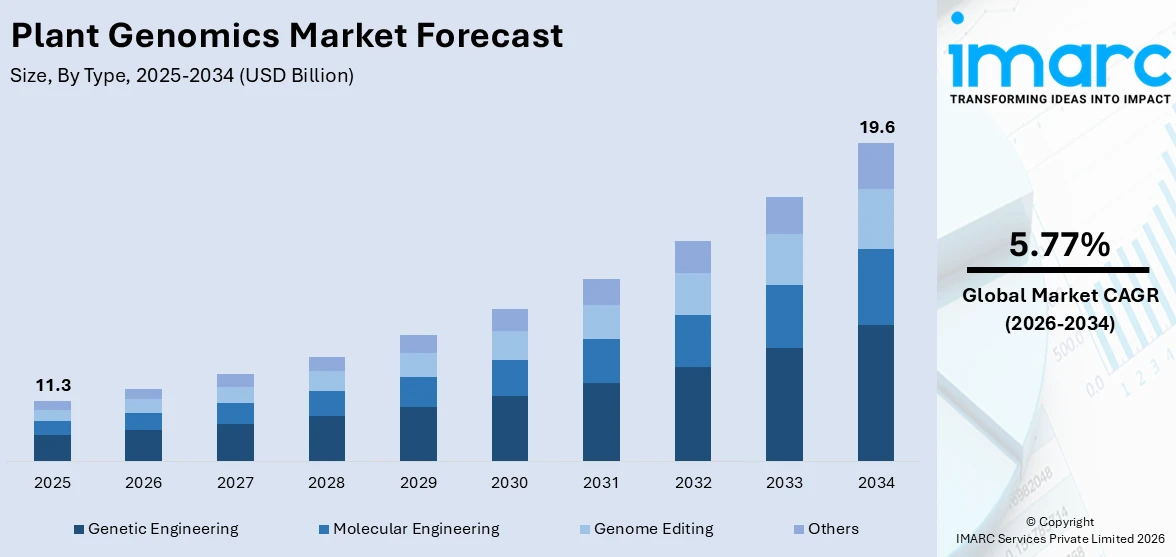
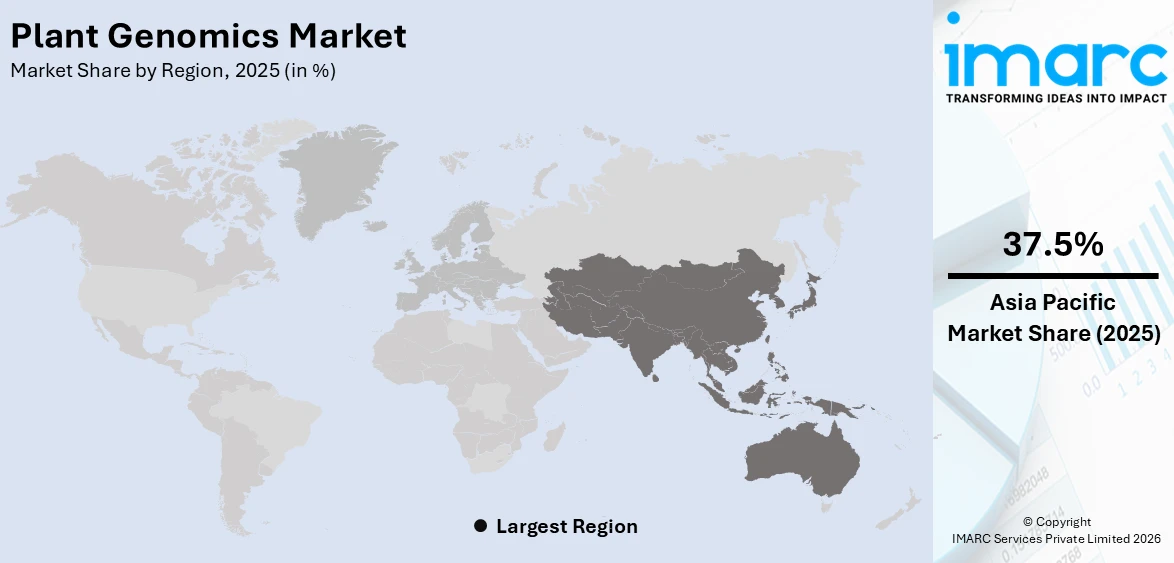
The global plant genomics market size was valued at USD 11.3 Billion in 2025. Looking forward, IMARC Group estimates the market to reach USD 19.6 Billion by 2034, exhibiting a CAGR of 5.77% from 2026-2034. Asia-Pacific currently dominates the market, holding a market share of 37.5% in 2025. The region benefits from large-scale government-backed genomics programs in China and India, a rapidly expanding agricultural biotechnology sector, and the growing adoption of advanced sequencing technologies to enhance the productivity of staple food crops, all of which contributes to the plant genomics market share.
The global plant genomics market is being driven by the rising need to increase agricultural productivity and ensure global food security as the world population continues to grow. The growing demand for high-yield, disease-resistant, and climate-resilient crops is encouraging the adoption of genomic tools that enable precise crop improvement and faster breeding processes. Advances in technologies, such as DNA sequencing, genotyping, and genome editing, are also accelerating research and commercial applications in crop development. In addition, increasing investments in agricultural biotechnology and government funding for research are supporting innovation in plant genomics. The shift toward sustainable farming practices and the need to reduce pesticide and fertilizer use are further boosting the demand for genomics-based solutions that help develop crops with improved resistance and environmental adaptability.
The United States is emerging as a major region in the global plant genomics market, supported by a highly developed agricultural biotechnology ecosystem that includes leading research universities, specialized genomics companies, and a regulatory environment that has historically supported the commercialization of improved crop varieties. Strong collaboration between academic institutions, private firms, and government agencies continues to advance genomic research, accelerating crop improvement and innovation in agricultural biotechnology. Reflecting these developments, in 2025, PlantArcBio secured patents in the United States and South Korea for its DIPPER™ platform designed to optimize gene expression in gene-edited crops. The technology enabled researchers to identify precise DNA modifications that enhance traits, such as drought tolerance, yield potential, and crop resilience. Such advancements support faster development and commercialization of improved crop varieties through the application of advanced gene-editing technologies including CRISPR.
To get more information on this market Request Sample
Plant Genomics Market Trends:
Rising International Research Collaborations
Increasing international research partnerships aimed at improving crop productivity and climate resilience are supporting the expansion of plant genomics applications worldwide. Collaborative programs allow agricultural institutions, universities, and biotechnology organizations to share genomic data, research infrastructure, and breeding technologies, accelerating the development of crop varieties suited to regional environmental conditions. Such partnerships are particularly significant in regions facing food security challenges, where improved crop genetics can help address pest outbreaks, extreme weather events, and declining soil productivity. By combining expertise in plant genetics, molecular biology, and agricultural science, these collaborations help translate genomic discoveries into practical farming solutions. In 2024, scientists and agricultural institutions from Africa, Australia, and the United States established a joint research alliance focused on developing improved crop varieties for smallholder farmers in sub-Saharan Africa. The initiative emphasizes accelerating crop research and introducing modern agricultural innovations that address climate challenges, pest pressures, and low agricultural productivity. Efforts such as these are expanding the application of genomic research in agriculture and strengthening global efforts to improve crop performance and sustainable food production.
Advancements in Synthetic Genome Engineering
Progress in synthetic genome engineering is emerging as a major factor accelerating innovation in plant genomics research. Advanced DNA synthesis and genome assembly technologies are enabling scientists to design and construct complex plant genomes with greater precision, opening new opportunities to enhance crop performance and introduce novel biological functions. Chloroplast genomes are attracting particular interest because they regulate critical processes such as photosynthesis and metabolic pathways, making them valuable targets for improving plant productivity and environmental tolerance. Synthetic chloroplast genome development can help researchers engineer crops that withstand extreme temperatures, drought conditions, and other climate-related stresses while maintaining stable yields. In addition to agricultural benefits, engineered plant systems also have the potential to function as biological production platforms for high-value compounds. In 2025, Camena Bioscience and Constructive Bio partnered with the Max-Planck Institute of Molecular Plant Physiology and several academic collaborators to develop synthetic chloroplast genomes. Supported by £9.1 million in funding from ARIA, the initiative focused on overcoming the complexity of chloroplast DNA using advanced DNA synthesis and genome assembly technologies to support crop resilience and plant-based manufacturing.
Emergence of Next-Generation Gene-Editing Platforms
The development of next-generation gene-editing technologies is significantly expanding the capabilities of plant genomics research. Modern gene-editing platforms allow scientists to introduce targeted genetic modifications with higher precision, enabling the rapid development of crop varieties with improved agronomic traits. Compared with traditional breeding techniques, these technologies shorten breeding cycles and allow direct manipulation of plant genomes to enhance yield potential, disease resistance, and tolerance to environmental stresses. Continuous improvements in editing accuracy and insertion efficiency are also helping researchers overcome previous technical limitations associated with genome modification. Such advances are encouraging biotechnology companies and research organizations to invest in innovative genome engineering tools that support large-scale agricultural improvement programs. Reflecting this trend, in 2025, the Danforth Technology Company launched Spearhead Bio, a startup focused on developing a new gene-editing technology known as TAHITI. The platform enabled the precise insertion of genetic material into plant genomes, improving the efficiency and accuracy of gene-editing systems, such as CRISPR. Technologies of this kind are helping accelerate the development of improved crop varieties while strengthening the technological foundation of modern plant genomics research.
Plant Genomics Industry Segmentation:
IMARC Group provides an analysis of the key trends in each segment of the global plant genomics market, along with forecast at the global, regional, and country levels from 2026-2034. The market has been categorized based on type, technology, trait, and application.
Analysis by Type:
- Molecular Engineering
- Genetic Engineering
- Genome Editing
- Others
Genetic engineering holds 44.2% of the market share. The approach involves the direct modification of plant genomes using advanced biotechnology tools to insert, alter, or silence specific genes, enabling the development of crop varieties with targeted traits, such as improved pest resistance, enhanced nutritional composition, greater herbicide tolerance, and higher yield potential. The increasing demand for crops capable of performing under changing environmental conditions has accelerated research and innovation in this field. Reflecting ongoing scientific progress, in 2025, researchers at Texas Tech University developed a technique that accelerates gene engineering and gene-edited crop development by removing the need for conventional tissue culture. The method activated plants’ natural regeneration pathways, allowing engineered shoots to grow directly from wounded plant tissue. Such technological advances support faster crop biotechnology research and enable the development of improved plant varieties with desirable agronomic characteristics, thereby contributing to the overall plant genomics market growth.
Analysis by Technology:
- DNA/RNA Sequencing
- Genotyping
- Marker-Assisted Selection (MAS)
- Bioinformatics
- Others
DNA/RNA sequencing leads the market with a share of 31.7%. These sequencing technologies serve as the core infrastructure of modern plant genomics, enabling researchers to decode genetic information that supports trait mapping, gene discovery, molecular marker identification, and genome-wide association studies across numerous crop species. The growing availability of advanced sequencing platforms and bioinformatics tools has significantly accelerated plant breeding research and crop improvement programs worldwide. Reflecting this expansion in genomic capabilities, in 2025, Leads Agri Genetics launched India’s first privately owned Integrated Centre of Excellence for cattle and plant genomics in Greater Noida. The facility provides advanced genomics services including DNA sequencing, genotyping, and bioinformatics to support crop and livestock research. Such initiatives strengthen trait discovery efforts, enhance breeding programs, and support improvements in agricultural productivity through the broader adoption of genomic technologies. These developments are not only strengthening crop improvement efforts but also offering a positive plant genomics market outlook.
Analysis by Trait:
- Yield Improvement
- Disease Resistance
- Herbicide Tolerance
- Others
Herbicide tolerance dominates the market, with a share of 34.5%. The widespread adoption of herbicide-tolerant crops across major agricultural economies has significantly increased the importance of genomics-based trait development, enabling farmers to manage weeds more efficiently while improving crop productivity. Advances in genomic research and molecular breeding continue to support the development of new crop varieties with improved herbicide compatibility and resistance management capabilities. Reflecting the growing innovation in this area, in 2026, the UK-based agricultural biotechnology startup Bindbridge raised USD 3.8 Million to develop a next-generation herbicide designed to replace glyphosate. The company applies artificial intelligence to design molecular compounds that trigger targeted protein degradation in weeds, creating new herbicide modes of action. Such developments highlight the expanding role of genomics and advanced technologies in addressing herbicide resistance while supporting more efficient and environmentally sustainable crop protection strategies. The plant genomics market forecast reflects continued growth driven by advances in herbicide tolerance technologies and genomics-based crop improvement.
Analysis by Application:
Access the comprehensive market breakdown Request Sample
- Cereals and Grains
- Oilseeds and Pulses
- Fruits and Vegetables
- Others
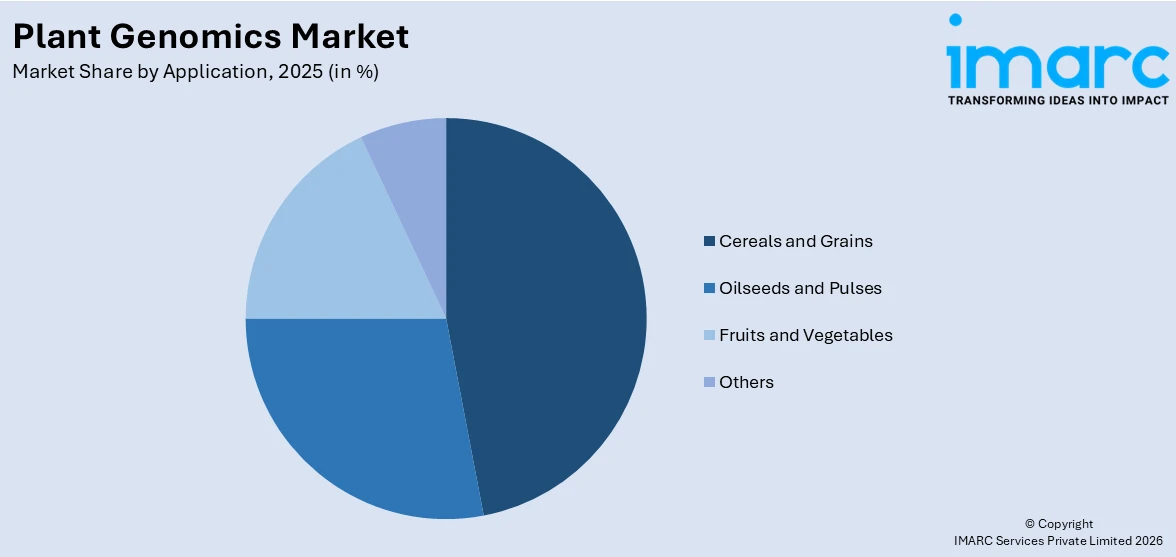
Cereals and grains represent the leading segment, accounting for 46.7% of the market share. The strong focus on these crops is driven by their essential role in global food security and the significant economic value associated with staple crops like rice, wheat, maize, barley, and sorghum. Genomic technologies are widely applied to improve yield potential, enhance disease resistance, and strengthen tolerance to environmental stresses, enabling more reliable crop performance across diverse agricultural systems. Reflecting this growing application of genomics in cereal breeding, in 2026, Syngenta announced plans to roll out its X-Terra® hybrid wheat technology across Europe following regulatory approval in France. The technology integrates advanced genomic screening with hybrid breeding to improve yield stability, strengthen disease resistance, and enhance climate resilience in wheat. Such innovations support more productive and sustainable cereal cultivation while helping farmers respond to increasing environmental and production challenges. The continued integration of advanced genomic technologies in staple crop breeding highlights key developments shaping plant genomics market trends.
Regional Analysis:
To get more information on the regional analysis of this market Request Sample
- North America
- United States
- Canada
- Asia-Pacific
- China
- Japan
- India
- South Korea
- Australia
- Indonesia
- Others
- Europe
- Germany
- France
- United Kingdom
- Italy
- Spain
- Russia
- Others
- Latin America
- Brazil
- Mexico
- Others
- Middle East and Africa
Asia-Pacific, accounting for 37.5% of the share, enjoys the leading position in the market. Asia-Pacific commands the largest share of the global plant genomics market, propelled by its vast agricultural landscape, expanding biotechnology capabilities, and strong government initiatives promoting genomics-driven food security. Countries across the region are adopting advanced genomic tools to enhance crop productivity, strengthen biodiversity conservation, and improve resilience to climate-related stresses. Research institutions and public agencies are investing in large-scale genomic studies that support both agricultural development and ecosystem management. Reflecting this progress, in 2024, scientists at the Botanic Gardens of Sydney launched a genomics-based project analyzing DNA from tens of thousands of plants to support the restoration and conservation of Australian native species. The initiative has collected samples from more than 89,000 plants to guide seed sourcing and improve genetic diversity in restoration efforts. Such projects demonstrate the region’s commitment to applying genomics technologies to strengthen plant resilience, support conservation strategies, and advance sustainable agricultural systems.
Key Regional Takeaways:
North America Plant Genomics Market Analysis
North America represents one of the most technologically advanced and commercially active regions in the market, due to a strong ecosystem of biotechnology companies, leading public research universities, and an established regulatory structure that has enabled the commercialization of genetically improved crops for decades. The region continues to invest heavily in genomic sequencing, crop breeding technologies, and data-driven agricultural solutions aimed at improving yield, resilience, and resource efficiency. Governments and industry organizations are also expanding funding programs that integrate advanced technologies, such as genomics and AI to accelerate agricultural innovation. Reflecting this commitment, in 2025, Protein Industries Canada launched USD 15 Million in new programs focused on genomics and AI to strengthen the country’s agrifood sector. The initiative supported crop breeding, seed genetics research, and digital tools designed to improve agricultural productivity and sustainability. Such investments contribute to the development of innovative crop varieties and strengthen the regional food supply chain from agricultural production to food manufacturing.
United States Plant Genomics Market Analysis
The United States represents a crucial market, owing to a highly advanced agricultural biotechnology ecosystem that includes leading genomics technology providers, major seed companies, prominent research universities, and strong public-sector funding. Continuous collaboration among academic institutions, private firms, and government agencies drives the development of improved crop traits, advanced sequencing technologies, and data-driven breeding approaches that enhance agricultural productivity and sustainability. Public investment remains a central element supporting innovation in crop science and genomic research. In 2025, the U.S. Department of Agriculture’s National Institute of Food and Agriculture (NIFA) continued funding plant breeding, genetics, and genomics programs focused on developing improved crop traits, advancing breeding techniques, and integrating data-driven agricultural technologies. These initiatives support research aimed at increasing crop yield, strengthening resilience to environmental stress, and improving crop quality. Such sustained investment reinforces the country’s leadership in plant genomics while supporting long-term agricultural productivity and global food security.
Europe Plant Genomics Market Analysis
Europe holds a significant position in the plant genomics market, attributed to a long-standing tradition of publicly funded plant science research, a strong network of agricultural biotechnology firms, and continuous advancements in genomic sequencing and breeding technologies. Universities, research institutes, and private companies across the region actively collaborate to improve crop productivity, enhance disease resistance, and develop varieties capable of adapting to changing climatic conditions. In addition, the regulatory environment plays an important role in shaping the pace of innovation and adoption of genomic technologies. Reflecting this evolving policy landscape, in 2025, the European Council and the European Parliament reached a provisional agreement on new rules governing new genomic techniques (NGTs) in agriculture. The regulation established a structured legal framework designed to encourage innovation in plant breeding while maintaining safeguards for environmental and public health. Such policy developments support research investment, strengthen the competitiveness of the EU agrifood sector, and facilitate the development of climate-resilient crops.
Asia-Pacific Plant Genomics Market Analysis
Asia-Pacific holds the largest share in the global plant genomics market, because of the extensive public investments in agricultural biotechnology, expanding genomic research infrastructure, and strong demand for high-yielding and climate-resilient crop varieties. Governments, research institutes, and private companies across the region are actively adopting advanced sequencing and breeding technologies to improve crop productivity and address challenges related to climate variability and food security. This focus on genomics-driven innovation is reflected in ongoing scientific breakthroughs. In 2025, India announced its first Telomere-to-Telomere (T2T) plant genome for Punjab Basmati-3 rice at the Genomics India Conference in Bengaluru, providing a near-complete genetic map of the crop to support marker-assisted breeding and improved crop development. Such initiatives strengthen the region’s ability to develop resilient crop varieties while supporting sustainable agricultural productivity across diverse agroclimatic environments.
Latin America Plant Genomics Market Analysis
Latin America is becoming an important contributor to the global plant genomics market, driven by its strong position as a leading producer and exporter of key agricultural commodities, such as soybean, maize, sugarcane, and coffee. Genomics technologies are used across the region to enhance crop productivity, improve disease resistance, and develop varieties suited to diverse climatic conditions, strengthening the commercial value of agricultural production. Reflecting this momentum, in 2025, Corbel Seeds entered the Mexican market with a genetics-focused strategy centered on tomato and pepper seed development, conducting trials, expanding its breeding portfolio, and developing disease-resistant rootstocks and improved seed traits. Such initiatives demonstrate the growing role of genomics-driven breeding in supporting crop performance and improving productivity across Latin American agriculture.
Middle East and Africa Plant Genomics Market Analysis
The Middle East and Africa are emerging as important regions in the plant genomics market, supported by rising food security concerns, rapid population growth, and government emphasis on developing resilient agricultural systems. Countries across the region are increasingly investing in genomics research to improve crop productivity and adaptability to harsh climatic conditions like drought, salinity, and extreme heat. This shift is reflected in strategic collaborations between public institutions and agricultural technology providers. In 2025, Silal partnered with Limagrain Vegetable Seeds to establish the Center of Excellence for Abiotic Resilience and Crop Genomics (ARC-GEN) in Al Ain, UAE, a facility dedicated to developing crop varieties tolerant to heat, drought, and salinity through plant physiology research and advanced gene editing technologies, strengthening sustainable food production across arid regions.
Competitive Landscape:
Key players in the plant genomics market are actively investing in advanced genomic technologies, expanding research capabilities, and strengthening collaborations with agricultural and biotechnology organizations to accelerate crop improvement. Companies are developing high-throughput DNA sequencing, genotyping, and bioinformatics tools that enable faster identification of desirable plant traits and more efficient breeding programs. Many firms are also integrating genome editing technologies and large genomic datasets to support the development of crops with improved yield, nutritional quality, and resistance to environmental stress. Strategic partnerships with seed developers, research institutes, and agricultural companies are being pursued to expand genomic applications across crop breeding pipelines. In addition, companies are enhancing data analytics platforms and expanding global research networks to support precision agriculture and address long-term challenges related to food security and sustainable crop production.
The report provides a comprehensive analysis of the competitive landscape in the plant genomics market with detailed profiles of all major companies, including:
- Agilent Technologies Inc.
- BGI Genomics
- Eurofins Scientific SE
- Floragenex Inc.
- GENEWIZ Inc. (Azenta Inc.)
- Illumina Inc.
- Keygene N.V.
- LC Sciences
- Neogen Corporation
- Novogene Co. Ltd.
- NRGene Technologies Ltd.
- Oxford Nanopore Technologies plc
- Qiagen N.V.
Latest News and Developments:
- In February 2026, China launched the international Plant Planet Project in Beijing with participation from 49 research institutions across 15 countries and regions. The initiative will use AI to decode plant genomes and build a complete evolutionary tree of plants. The project aims to support food security, biodiversity conservation, and the development of climate-resilient crops.
- In February 2026, SynergiaBIO and Global Plant Genetics expanded their genetics partnership to develop and commercialize next-generation raspberry and blackberry varieties across South and Central America. The collaboration focuses on varietal evaluation, regional trials, and breeding programs aimed at improving yield, fruit quality, and resilience. The initiative also aims to create berry varieties adapted to diverse climatic conditions while supporting sustainable growth in the Latin American berry industry.
Plant Genomics Market Report Scope:
| Report Features | Details |
|---|---|
| Base Year of the Analysis | 2025 |
| Historical Period | 2020-2025 |
| Forecast Period | 2026-2034 |
| Units | Billion USD |
| Scope of the Report |
Exploration of Historical Trends and Market Outlook, Industry Catalysts and Challenges, Segment-Wise Historical and Future Market Assessment:
|
| Types Covered | Molecular Engineering, Genetic Engineering, Genome Editing, Others |
| Technologies Covered | DNA/RNA Sequencing, Genotyping, Marker-Assisted Selection (MAS), Bioinformatics, Others |
| Traits Covered | Yield Improvement, Disease Resistance, Herbicide Tolerance, Others |
| Applications Covered | Cereals and Grains, Oilseeds and Pulses, Fruits and Vegetables, Others |
| Regions Covered | Asia-Pacific, Europe, North America, Latin America, Middle East and Africa |
| Countries Covered | United States, Canada, China, Japan, India, South Korea, Australia, Indonesia, Germany, France, United Kingdom, Italy, Spain, Russia, Brazil, Mexico |
| Companies Covered | Agilent Technologies Inc., BGI Genomics, Eurofins Scientific SE, Floragenex Inc., GENEWIZ Inc. (Azenta Inc.), Illumina Inc., Keygene N.V., LC Sciences, Neogen Corporation, Novogene Co. Ltd., NRGene Technologies Ltd., Oxford Nanopore Technologies plc, Qiagen N.V., etc. |
| Customization Scope | 10% Free Customization |
| Post-Sale Analyst Support | 10-12 Weeks |
| Delivery Format | PDF and Excel through Email (We can also provide the editable version of the report in PPT/Word format on special request) |
Key Benefits for Stakeholders:
- IMARC's report offers a comprehensive quantitative analysis of various market segments, historical and current market trends, market forecasts, and dynamics of the plant genomics market from 2020-2034.
- The research study provides the latest information on the market drivers, challenges, and opportunities in the global plant genomics market.
- The study maps the leading, as well as the fastest-growing, regional markets. It further enables stakeholders to identify the key country-level markets within each region.
- Porter's Five Forces analysis assists stakeholders in assessing the impact of new entrants, competitive rivalry, supplier power, buyer power, and the threat of substitution. It helps stakeholders to analyze the level of competition within the plant genomics industry and its attractiveness.
- Competitive landscape allows stakeholders to understand their competitive environment and provides an insight into the current positions of key players in the market.
Frequently Asked Questions About the Plant Genomics Market Report
The plant genomics market was valued at USD 11.3 Billion in 2025.
The plant genomics market is projected to exhibit a CAGR of 5.77% during 2026-2034, reaching a value of USD 19.6 Billion by 2034.
The plant genomics market is driven by the rising number of research alliances, advances in synthetic genomics, and the emergence of precision gene-editing platforms. These developments enable faster crop improvement, support climate-resilient agriculture, and enhance the development of high-yield, disease-resistant plant varieties to strengthen global food security.
Asia-Pacific currently dominates the plant genomics market, accounting for a share of 37.5%. The region benefits from massive government-backed agricultural genomics programs in China and India, a rapidly expanding biotechnology sector, and strong demand for genomically improved food crop varieties.
Some of the major players in the plant genomics market include Agilent Technologies Inc., BGI Genomics, Eurofins Scientific SE, Floragenex Inc., GENEWIZ Inc. (Azenta Inc.), Illumina Inc., Keygene N.V., LC Sciences, Neogen Corporation, Novogene Co. Ltd., NRGene Technologies Ltd., Oxford Nanopore Technologies plc, Qiagen N.V., etc.
Need more help?
- Speak to our experienced analysts for insights on the current market scenarios.
- Include additional segments and countries to customize the report as per your requirement.
- Gain an unparalleled competitive advantage in your domain by understanding how to utilize the report and positively impacting your operations and revenue.
- For further assistance, please connect with our analysts.
 Request Customization
 Speak to an Analyst
 Request Brochure
 Inquire Before Buying
Benefits of Customization
- Personalize this research
- Triangulate with your data
- Get data as per your format and definition
- Gain a deeper dive into a specific application, geography, customer, or competitor
- Any level of personalization
Get in Touch With Us
UNITED STATES
Phone: +1-201-971-6302
INDIA
Phone: +91-120-433-0800
UNITED KINGDOM
Phone: +44-753-714-6104
Email: [email protected]
Client Testimonials




.webp)




.webp)













Related Reports

Choose your plan
*Please note that the prices mentioned below are starting prices for each bundle type. Kindly contact our team for further details.*
Single User License
- 1 User License, Access on 2 Devices
- PDF Report + Excel Dataset (Password Protected)
- Lifetime Access
- No Printing Rights
- 10% Free Report Customization
- 10–12 Weeks of Analyst Support
Five User License
- Access for 5 Users, 2 Devices per User
- PDF Report + Excel Dataset (Password Protected)
- Lifetime Access
- Dedicated Account Manager
- 12–14 Weeks of Analyst Support
- No Printing Rights
- 15% Free Report Customization
- 25% Discount on Your Next Purchase
Corporate User License
- Unlimited User Access (Within Your Organization)
- PDF Report + Excel Dataset
- Lifetime Access
- Dedicated Account Manager
- 14–20 Weeks of Analyst Support
- No Printing Rights
- 20% Free Report Customization
- 30% Discount on Your Next Purchase
Essential Insights
What's included:
3 reports
- Lifetime Access
- PDF Reports
- Excel Datasets
- 2 Weeks of Free Analyst Support
- 2 User Licenses
- Access on 2 Devices
- Printing Rights
- Complimentary PowerPoint (PPT) Version
- Complimentary License Upgrade
Professional Access
What's included:
5 reports
- Lifetime Access
- PDF Reports
- Excel Datasets
- 8 Weeks of Free Analyst Support
- 2 User Licenses
- Access on 2 Devices
- Printing Rights
- Complimentary PowerPoint (PPT) Version
- Complimentary License Upgrade
Business Advantage
What's included:
8 reports
- Lifetime Access
- PDF Reports
- Excel Datasets
- 14 Weeks of Free Analyst Support
- 2 User Licenses
- Access on 2 Devices
- Printing Rights
- Complimentary PowerPoint (PPT) Version
- Complimentary License Upgrade
Enterprise Intelligence
What's included:
10 reports
- Lifetime Access
- PDF Reports
- Excel Datasets
- 20 Weeks of Free Analyst Support
- 2 User Licenses
- Access on 2 Devices
- Printing Rights
- Complimentary PowerPoint (PPT) Version
- Complimentary License Upgrade