
Polycystic Ovarian Syndrome Treatment Market Size, Share, Trends and Forecast by Drug Class, Surgery Type, Distribution Channel and Region, 2026-2034
Polycystic Ovarian Syndrome Treatment Market Size and Share:
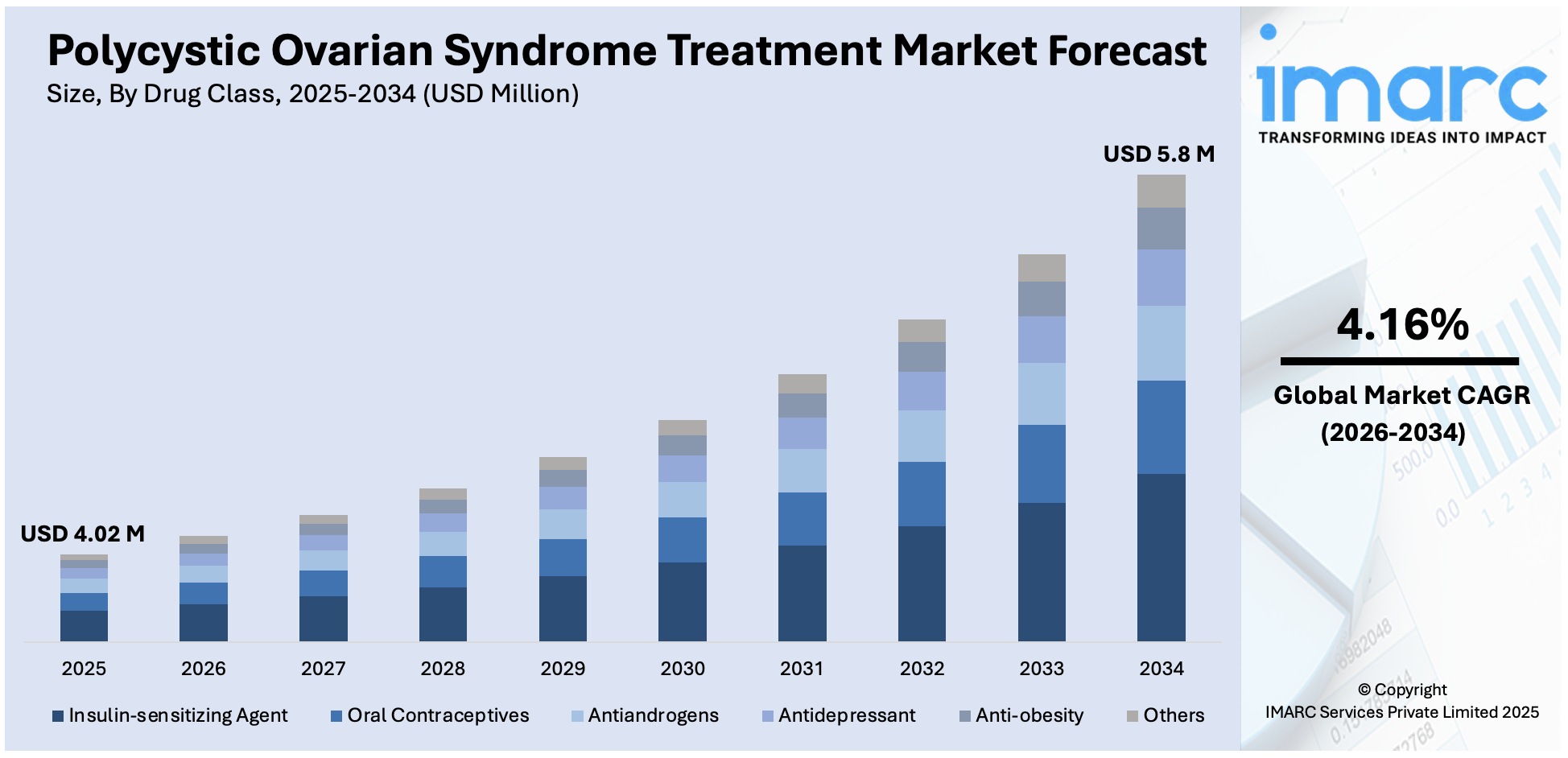
The global polycystic ovarian syndrome treatment market size was valued at USD 4.02 Million in 2025. Looking forward, IMARC Group estimates the market to reach USD 5.8 Million by 2034, exhibiting a CAGR of 4.16% from 2026-2034. North America currently dominates the market, holding a market share of 36%. The market addresses a complex endocrine disorder affecting reproductive-age women worldwide. Therapeutic interventions encompass pharmacological approaches and surgical procedures designed to manage symptoms, restore hormonal balance, and improve fertility outcomes. Medical professionals utilize multifaceted treatment protocols tailored to individual patient presentations, incorporating metabolic management, hormonal regulation, and assisted reproductive technologies. Healthcare systems increasingly recognize the importance of comprehensive care pathways that integrate lifestyle modifications with medical interventions. As diagnostic capabilities advance and awareness expands, treatment accessibility continues to improve across diverse healthcare settings, contributing to enhanced patient outcomes and quality of life while driving polycystic ovarian syndrome treatment market share.
|
Report Attribute
|
Key Statistics
|
|---|---|
|
Base Year
|
2025
|
|
Forecast Years
|
2026-2034
|
|
Historical Years
|
2020-2025
|
|
Market Size in 2025
|
USD 4.02 Million |
|
Market Forecast in 2034
|
USD 5.8 Million |
| Market Growth Rate (2026-2034) | 4.16% |
The expanding global prevalence of metabolic syndrome and associated endocrine disorders drives substantial demand for polycystic ovarian syndrome treatment solutions. Healthcare providers increasingly recognize the interconnected nature of insulin resistance, hormonal imbalances, and reproductive dysfunction, prompting comprehensive treatment approaches that address underlying metabolic pathways. Medical research continues to illuminate the complex pathophysiology linking glucose metabolism with ovarian function, leading to refined therapeutic protocols that optimize both metabolic and reproductive outcomes. The growing burden of lifestyle-related conditions, including obesity and type 2 diabetes, correlates strongly with increased diagnosis rates, as these conditions share common pathogenic mechanisms with polycystic ovarian syndrome. Healthcare systems worldwide are implementing screening protocols within routine gynecological care, enabling earlier identification and intervention. Additionally, the rising emphasis on women's health initiatives has catalyzed investment in specialized treatment centers and multidisciplinary care teams, improving access to evidence-based therapies and supporting market expansion through enhanced healthcare infrastructure.
To get more information on this market Request Sample
The United States dominates the therapeutic landscape with an impressive 88.5% market concentration, driven by advanced healthcare infrastructure and comprehensive insurance coverage for reproductive health services. American healthcare providers benefit from extensive clinical research networks that accelerate the translation of scientific discoveries into clinical practice, enabling rapid adoption of innovative treatment modalities. The robust pharmaceutical development ecosystem supports continuous advancement of targeted therapies, while specialized fertility centers offer integrated care models combining medical management with assisted reproductive technologies. Regulatory frameworks facilitate timely approval of new therapeutic agents, and patient advocacy groups actively promote awareness and education initiatives. The prevalence of metabolic conditions in the American population creates substantial demand for treatments addressing both reproductive and metabolic manifestations. Furthermore, the well-established network of endocrinologists, gynecologists, and reproductive specialists ensures patients receive coordinated care across multiple therapeutic dimensions, supporting optimal treatment outcomes and sustained market growth.
Polycystic Ovarian Syndrome Treatment Market Trends:
Precision Medicine Approaches in Hormonal Management
Therapeutic strategies increasingly incorporate personalized medicine principles, utilizing genetic profiling and metabolic biomarkers to tailor treatment regimens. Healthcare providers employ advanced diagnostic tools to identify specific phenotypic presentations, enabling targeted interventions that address individual pathophysiological profiles. This paradigm shift toward precision therapeutics optimizes treatment efficacy while minimizing adverse effects, as clinicians select medications based on patient-specific metabolic characteristics and hormonal patterns. In March 2025, Bayer announced the expansion of its women's health research program, focusing on developing targeted therapies for reproductive endocrine disorders, with investment in biomarker-driven treatment algorithms, underscoring the growing emphasis on precision approaches in hormonal management. The integration of pharmacogenomic data guides medication selection, particularly for insulin-sensitizing agents and hormonal modulators, improving response rates and patient adherence. Digital health technologies facilitate continuous monitoring of treatment responses, allowing real-time adjustments to therapeutic protocols based on objective metabolic and hormonal markers.
Minimally Invasive Surgical Innovations
Surgical interventions continue evolving toward less invasive techniques that reduce recovery times and improve patient outcomes. Advanced laparoscopic technologies incorporate robotic assistance and enhanced visualization systems, enabling precise ovarian tissue manipulation with minimal trauma to surrounding structures. These technological refinements allow surgeons to perform targeted procedures that restore ovulatory function while preserving maximum ovarian reserve. The development of refined drilling techniques optimizes the therapeutic effect on ovarian tissue, balancing the restoration of normal follicular development with the preservation of long-term reproductive potential. Olycystic ovarian syndrome treatment trends show that patient preferences increasingly favor procedures offering rapid recovery and minimal scarring, driving adoption of sophisticated minimally invasive approaches across surgical centers worldwide.
Integrated Metabolic-Reproductive Care Models
Healthcare delivery systems increasingly recognize the necessity of addressing metabolic dysfunction alongside reproductive symptoms, implementing comprehensive care pathways that coordinate endocrinology and gynecology services. Multidisciplinary teams collaborate to manage insulin resistance, dyslipidemia, and cardiovascular risk factors concurrently with reproductive concerns, acknowledging the systemic nature of the condition. In February 2025, Medtronic launched a comprehensive digital health platform specifically designed for managing metabolic aspects of reproductive endocrine conditions, integrating continuous glucose monitoring with reproductive health tracking, highlighting the role of technology in supporting holistic patient care. This holistic approach improves long-term health outcomes by preventing progression to metabolic diseases while optimizing fertility potential. Treatment protocols now routinely incorporate lifestyle intervention programs, nutritional counseling, and behavioral health support as foundational elements. Healthcare facilities are establishing specialized clinics that provide coordinated care across multiple specialties, streamlining patient experiences and improving treatment adherence through integrated service delivery.
Polycystic Ovarian Syndrome Treatment Industry Segmentation:
IMARC Group provides an analysis of the key trends in each segment of the global polycystic ovarian syndrome treatment market, along with forecast at the global, regional, and country levels from 2026-2034. The market has been categorized based on drug class, surgery type, and distribution channel.
Analysis by Drug Class:
- Oral Contraceptives
- Antiandrogens
- Insulin-sensitizing Agent
- Antidepressant
- Anti-obesity
- Others
Insulin-sensitizing agents command 36.2% of the drug class segment, reflecting their fundamental role in addressing the underlying metabolic dysfunction characteristic of the condition. These pharmaceutical agents improve cellular insulin sensitivity, thereby reducing hyperinsulinemia and its downstream effects on ovarian androgen production and follicular development. The therapeutic mechanism directly targets the metabolic root cause, offering benefits that extend beyond reproductive function to include improvements in glucose metabolism, lipid profiles, and cardiovascular risk factors. Clinical evidence consistently demonstrates their efficacy in restoring menstrual regularity and improving ovulation rates, particularly in patients with documented insulin resistance. Healthcare providers frequently prescribe these agents as first-line therapy due to their favorable safety profile and multisystem benefits. The segment's dominance reflects the widespread recognition among clinicians that addressing insulin resistance represents a cornerstone of effective management, with therapeutic effects that encompass both immediate reproductive concerns and long-term metabolic health.
Analysis by Surgery Type:
- Ovarian Wedge Resection
- Laparoscopic Ovarian Drilling
Laparoscopic ovarian drilling captures 68.7% of the surgical segment, representing the preferred interventional approach for patients who require surgical management. This minimally invasive technique effectively restores ovulatory function by reducing androgen-producing ovarian tissue through targeted thermal or laser energy application. The procedure's popularity stems from its excellent efficacy profile combined with rapid recovery times and minimal complications compared to more extensive surgical approaches. Surgeons appreciate the technique's flexibility, allowing precise control over the extent of ovarian tissue treatment while maintaining visualization throughout the procedure. Patient outcomes demonstrate sustained improvements in menstrual cyclicity and spontaneous ovulation rates, often eliminating the need for ongoing pharmacological ovulation induction. The procedure particularly benefits women who have not responded adequately to medical management or who prefer a definitive intervention to reduce long-term medication requirements. Its minimally invasive nature aligns with contemporary surgical principles emphasizing tissue preservation and rapid return to normal activities.
Analysis by Distribution Channel:
Access the comprehensive market breakdown Request Sample
- Hospitals and Clinics
- Retail Pharmacies
- Online Stores
- Others
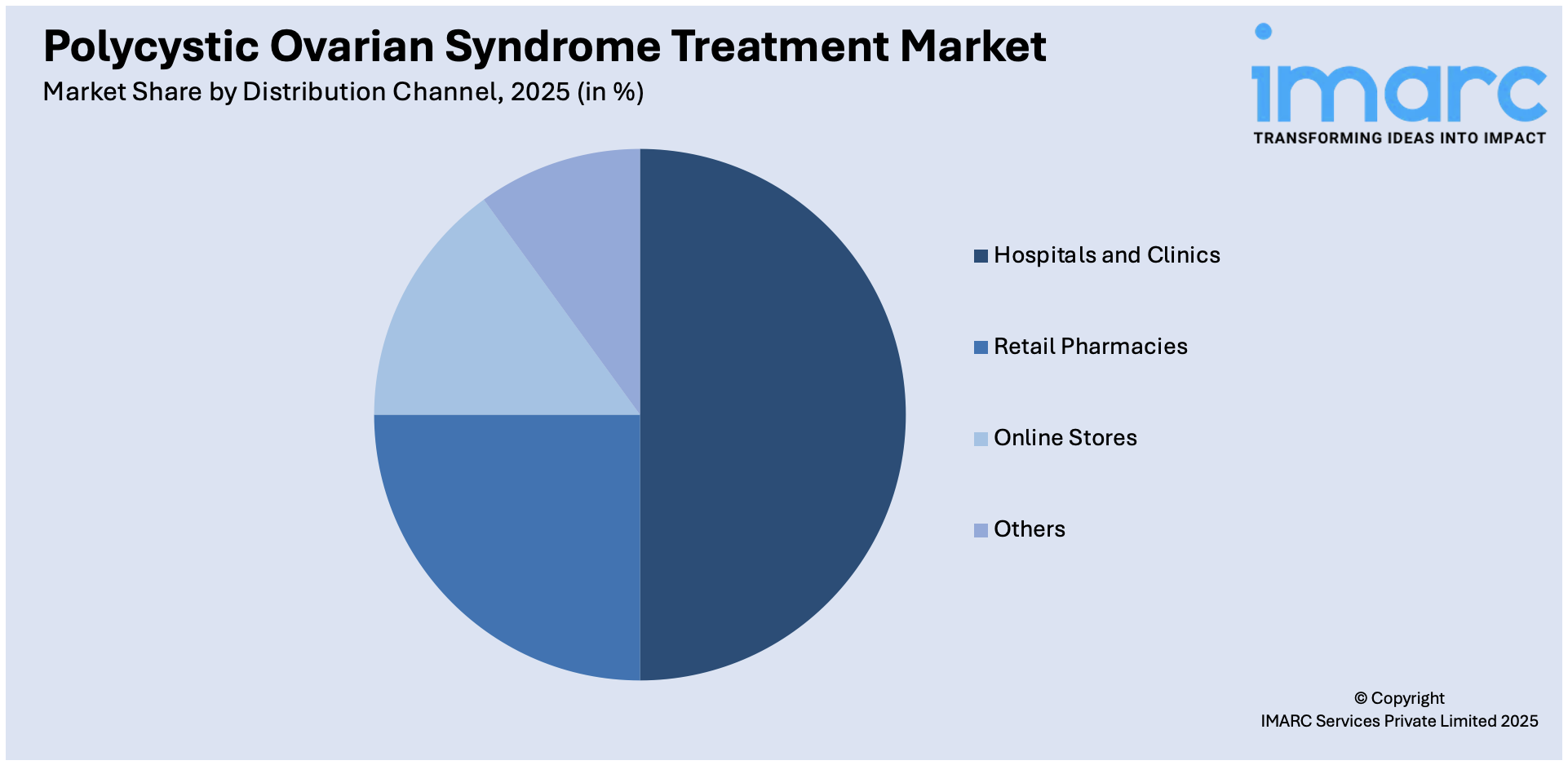
Hospitals and clinics account for 49.6% of the distribution channel segment, reflecting the specialized nature of treatment delivery and the need for multidisciplinary care coordination. These established healthcare facilities provide comprehensive diagnostic capabilities, including hormonal assays, metabolic panels, and advanced imaging studies necessary for accurate diagnosis and treatment planning. The infrastructure supports integration of pharmaceutical management with procedural interventions, nutritional counseling, and reproductive endocrinology services within coordinated care pathways. Patients benefit from access to specialized providers, including reproductive endocrinologists, metabolic specialists, and surgical teams experienced in minimally invasive gynecological procedures. The hospital and clinic setting facilitates longitudinal care relationships, enabling ongoing monitoring of treatment responses and timely adjustment of therapeutic strategies. Additionally, these facilities maintain the equipment and expertise necessary for both diagnostic procedures and surgical interventions, providing seamless care transitions as patient needs evolve throughout their treatment journey.
Regional Analysis:
To get more information on the regional analysis of this market Request Sample
- North America
- United States
- Canada
- Asia Pacific
- China
- Japan
- India
- South Korea
- Australia
- Indonesia
- Others
- Europe
- Germany
- France
- United Kingdom
- Italy
- Spain
- Russia
- Others
- Latin America
- Brazil
- Mexico
- Others
- Middle East and Africa
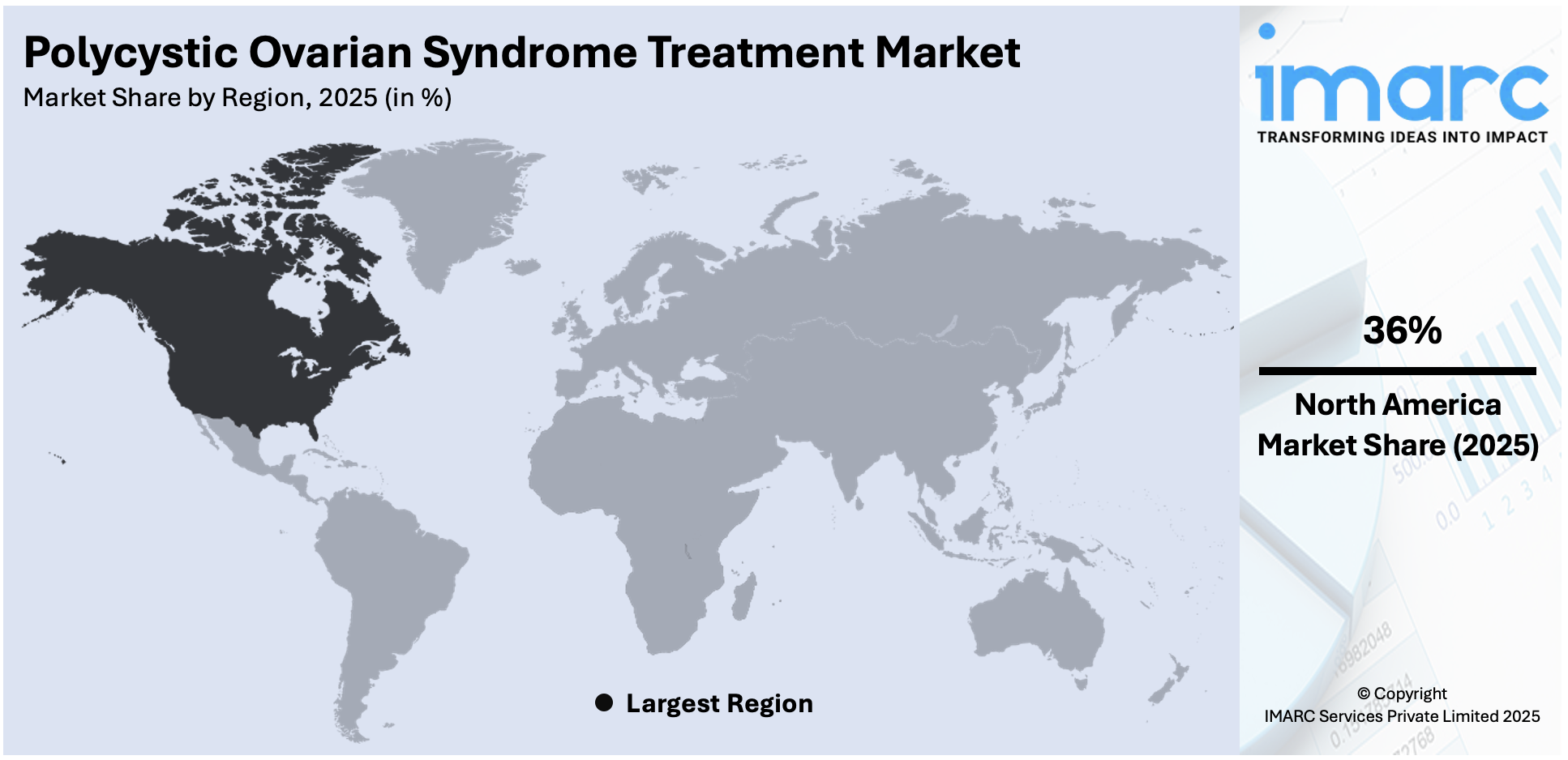
North America commands 36% of the regional distribution, establishing the continent as the dominant market for therapeutic interventions. The region's leadership reflects advanced healthcare infrastructure, strong pharmaceutical presence, and widespread availability of specialized care services. Healthcare systems across North America emphasize evidence-based practice, rapidly incorporating emerging research findings into clinical protocols. The concentration of pharmaceutical research and development activities ensures early access to innovative therapeutic agents, while regulatory frameworks support timely approval processes. Patient populations benefit from comprehensive diagnostic capabilities and multidisciplinary treatment teams available through extensive networks of hospitals, specialized clinics, and academic medical centers. The region's focus on women's health initiatives has catalyzed investment in research, education, and service delivery infrastructure, creating an environment conducive to continuous advancement in treatment approaches and improved patient outcomes.
Key Regional Takeaways:
United States Polycystic Ovarian Syndrome Treatment Market Analysis
The American market demonstrates exceptional sophistication in treatment delivery, supported by extensive research infrastructure and widespread access to specialized reproductive health services. Healthcare providers benefit from comprehensive clinical guidelines developed through robust evidence synthesis, ensuring standardized yet personalized care approaches. Insurance coverage frameworks generally support both pharmacological and surgical interventions, reducing financial barriers to treatment access. The nation's extensive network of academic medical centers drives continuous innovation through clinical trials investigating novel therapeutic agents and refined surgical techniques. Patient education initiatives and advocacy organizations maintain high awareness levels, encouraging early diagnosis and treatment engagement. The integration of reproductive endocrinology services within major healthcare systems ensures patients receive coordinated care addressing both immediate reproductive concerns and long-term metabolic health. Advanced fertility preservation options complement standard treatment protocols, providing comprehensive solutions for women pursuing reproductive goals across diverse life stages.
Asia Pacific Polycystic Ovarian Syndrome Treatment Market Analysis
The Asia Pacific region exhibits dynamic growth driven by increasing healthcare accessibility, rising awareness, and expanding diagnostic capabilities across diverse markets. Healthcare infrastructure development supports establishment of specialized reproductive health services in major urban centers, improving treatment availability for substantial populations. Economic growth enables greater healthcare spending, including coverage for reproductive health services previously considered discretionary. Medical education initiatives enhance provider expertise in managing complex endocrine conditions, while international collaborations facilitate knowledge transfer and adoption of best practices. The region's large population base, combined with increasing prevalence of metabolic conditions associated with urbanization and lifestyle changes, creates substantial demand for effective treatment solutions. Government health initiatives increasingly prioritize women's health issues, supporting screening programs and treatment accessibility improvements that drive market expansion.
Europe Polycystic Ovarian Syndrome Treatment Market Analysis
European markets demonstrate strong treatment penetration supported by comprehensive healthcare systems and robust medical research traditions. National health services across the continent generally provide coverage for both medical and surgical interventions, ensuring equitable access regardless of socioeconomic status. The region's collaborative research networks advance understanding of pathophysiology and therapeutic mechanisms, contributing to global knowledge while informing clinical practice guidelines. Healthcare providers benefit from well-established training programs in reproductive endocrinology and minimally invasive surgery, maintaining high standards of care delivery. Patient advocacy and educational initiatives maintain awareness levels, encouraging proactive health-seeking behaviors and early intervention. The emphasis on integrated care models aligns well with the multidisciplinary requirements of effective management, supporting optimal patient outcomes through coordinated service delivery across primary care, endocrinology, and gynecology specialties.
Latin America Polycystic Ovarian Syndrome Treatment Market Analysis
Latin American markets experience progressive development as healthcare infrastructure expands and awareness increases across the region. Urban centers offer increasingly sophisticated diagnostic and treatment capabilities, though rural areas continue facing access challenges. Economic development supports growing middle-class populations with greater healthcare purchasing power and insurance coverage. Medical education programs increasingly emphasize reproductive endocrinology, expanding the provider base capable of delivering specialized care. International pharmaceutical companies maintain growing presence throughout major markets, improving availability of evidence-based therapeutic agents. Regional health authorities progressively recognize reproductive health as essential healthcare, implementing policies that support service availability and affordability. The combination of demographic factors, economic growth, and healthcare system development positions the region for continued market expansion.
Middle East and Africa Polycystic Ovarian Syndrome Treatment Market Analysis
The Middle East and Africa region presents diverse market characteristics, with sophisticated healthcare systems in certain nations contrasting with developing infrastructure in others. Gulf Cooperation Council countries demonstrate advanced treatment capabilities through modern medical facilities and international healthcare partnerships, offering comprehensive services comparable to developed markets. Urban centers across the region increasingly provide specialized reproductive health services, though availability remains concentrated geographically. Cultural factors influence healthcare-seeking behaviors and treatment preferences, requiring culturally sensitive care delivery approaches. Economic disparities affect treatment accessibility, with private healthcare sectors often providing more comprehensive services than public systems. International medical tourism represents a significant factor in certain markets, as patients seek specialized care in regional healthcare hubs. Progressive healthcare policies in several nations support women's health initiatives, gradually improving service availability and treatment accessibility across diverse populations.
Competitive Landscape:
The competitive landscape encompasses diverse pharmaceutical manufacturers and medical device companies developing innovative therapeutic solutions. Polycystic ovarian syndrome treatment market forecast indicates continued evolution driven by advancing scientific understanding and technological innovation. Market participants focus on developing targeted pharmacological agents with improved efficacy and safety profiles, while surgical equipment manufacturers refine minimally invasive technologies. Companies invest substantially in clinical research demonstrating therapeutic value across diverse patient phenotypes, supporting regulatory approvals and clinical adoption. Strategic collaborations between pharmaceutical firms and medical device companies create comprehensive treatment portfolios addressing multiple therapeutic modalities. The competitive environment encourages continuous innovation as organizations pursue differentiation through novel mechanisms of action, enhanced delivery systems, and integrated diagnostic-therapeutic approaches. Market dynamics reflect the complex, multifaceted nature of the condition, requiring diverse therapeutic options tailored to individual patient needs and preferences.
The report provides a comprehensive analysis of the competitive landscape in the polycystic ovarian syndrome treatment market with detailed profiles of all major companies, including:
- Abbott Laboratories
- AstraZeneca Plc
- Bayer AG
- Bristol Myers Squibb Company
- Ferring B.V.
- Merck KGaA
- Novartis AG
- Pfizer Inc.
- Sanofi S.A.
- Teva Pharmaceutical Industries Ltd.
Latest News and Developments:
- In March 2025, May Health raised US$25 million to develop a less-invasive outpatient “ovarian rebalancing” procedure aimed at restoring natural ovulation in women with PCOS-related infertility.
- In February 2025, researchers developed an AI model using InceptionV3 to automatically classify PCOS from ultrasound scans, achieving ~90.5% accuracy. This innovation could enable faster, more standardized diagnosis for women with PCOS, improving early detection and treatment planning.
Polycystic Ovarian Syndrome Treatment Market Report Scope:
| Report Features | Details |
|---|---|
| Base Year of the Analysis | 2025 |
| Historical Period | 2020-2025 |
| Forecast Period | 2026-2034 |
| Units | Million USD |
| Scope of the Report |
Exploration of Historical Trends and Market Outlook, Industry Catalysts and Challenges, Segment-Wise Historical and Future Market Assessment:
|
| Drug Classes Covered | Oral Contraceptives, Antiandrogens, Insulin-sensitizing Agent, Antidepressant, Anti-obesity, Others |
| Surgery Types Covered | Ovarian Wedge Resection, Laparoscopic Ovarian Drilling |
| Distribution Channels Covered | Hospitals and Clinics, Retail Pharmacies, Online Stores, Others |
| Regions Covered | Asia Pacific, Europe, North America, Latin America, Middle East and Africa |
| Countries Covered | United States, Canada, Germany, France, United Kingdom, Italy, Spain, Russia, China, Japan, India, South Korea, Australia, Indonesia, Brazil, Mexico |
| Companies Covered | Abbott Laboratories, AstraZeneca Plc, Bayer AG, Bristol Myers Squibb Company, Ferring B.V., Merck KGaA, Novartis AG, Pfizer Inc., Sanofi S.A., Teva Pharmaceutical Industries Ltd, etc. |
| Customization Scope | 10% Free Customization |
| Post-Sale Analyst Support | 10-12 Weeks |
| Delivery Format | PDF and Excel through Email (We can also provide the editable version of the report in PPT/Word format on special request) |
Key Benefits for Stakeholders:
- IMARC’s report offers a comprehensive quantitative analysis of various market segments, historical and current market trends, market forecasts, and dynamics of the polycystic ovarian syndrome treatment market from 2020-2034.
- The research study provides the latest information on the market drivers, challenges, and opportunities in the global polycystic ovarian syndrome treatment market.
- The study maps the leading, as well as the fastest-growing, regional markets. It further enables stakeholders to identify the key country-level markets within each region.
- Porter's five forces analysis assist stakeholders in assessing the impact of new entrants, competitive rivalry, supplier power, buyer power, and the threat of substitution. It helps stakeholders to analyze the level of competition within the polycystic ovarian syndrome treatment industry and its attractiveness.
- Competitive landscape allows stakeholders to understand their competitive environment and provides an insight into the current positions of key players in the market.
Frequently Asked Questions About the Polycystic Ovarian Syndrome Treatment Market Size Report
The polycystic ovarian syndrome treatment market was valued at USD 4.02 Million in 2025.
The polycystic ovarian syndrome treatment market is projected to exhibit a CAGR of 4.16% during 2026-2034, reaching a value of USD 5.8 Million by 2034.
The polycystic ovarian syndrome treatment market growth is driven by increasing global prevalence of metabolic syndrome, advancing precision medicine approaches enabling personalized treatment protocols, expanding healthcare infrastructure particularly in emerging markets, and growing awareness of reproductive health issues. Additionally, innovation in minimally invasive surgical techniques and development of targeted pharmacological agents with improved efficacy profiles support sustained market expansion.
North America currently dominates the polycystic ovarian syndrome treatment market, accounting for a share of 36%. The region's leadership reflects advanced healthcare infrastructure, comprehensive insurance coverage, extensive clinical research networks, and widespread availability of specialized reproductive endocrinology services.
Some of the major players in the polycystic ovarian syndrome treatment market include Abbott Laboratories, AstraZeneca Plc, Bayer AG, Bristol Myers Squibb Company, Ferring B.V., Merck KGaA, Novartis AG, Pfizer Inc., Sanofi S.A., Teva Pharmaceutical Industries Ltd, etc.
Need more help?
- Speak to our experienced analysts for insights on the current market scenarios.
- Include additional segments and countries to customize the report as per your requirement.
- Gain an unparalleled competitive advantage in your domain by understanding how to utilize the report and positively impacting your operations and revenue.
- For further assistance, please connect with our analysts.
 Request Customization
 Speak to an Analyst
 Request Brochure
 Inquire Before Buying
Benefits of Customization
- Personalize this research
- Triangulate with your data
- Get data as per your format and definition
- Gain a deeper dive into a specific application, geography, customer, or competitor
- Any level of personalization
Get in Touch With Us
UNITED STATES
Phone: +1-201-971-6302
INDIA
Phone: +91-120-433-0800
UNITED KINGDOM
Phone: +44-753-714-6104
Email: [email protected]
Client Testimonials




.webp)




.webp)













Related Reports

Choose your plan
*Please note that the prices mentioned below are starting prices for each bundle type. Kindly contact our team for further details.*
Single User License
- 1 User License, Access on 2 Devices
- PDF Report + Excel Dataset (Password Protected)
- Lifetime Access
- No Printing Rights
- 10% Free Report Customization
- 10–12 Weeks of Analyst Support
Five User License
- Access for 5 Users, 2 Devices per User
- PDF Report + Excel Dataset (Password Protected)
- Lifetime Access
- Dedicated Account Manager
- 12–14 Weeks of Analyst Support
- No Printing Rights
- 15% Free Report Customization
- 25% Discount on Your Next Purchase
Corporate User License
- Unlimited User Access (Within Your Organization)
- PDF Report + Excel Dataset
- Lifetime Access
- Dedicated Account Manager
- 14–20 Weeks of Analyst Support
- No Printing Rights
- 20% Free Report Customization
- 30% Discount on Your Next Purchase
Essential Insights
What's included:
3 reports
- Lifetime Access
- PDF Reports
- Excel Datasets
- 2 Weeks of Free Analyst Support
- 2 User Licenses
- Access on 2 Devices
- Printing Rights
- Complimentary PowerPoint (PPT) Version
- Complimentary License Upgrade
Professional Access
What's included:
5 reports
- Lifetime Access
- PDF Reports
- Excel Datasets
- 8 Weeks of Free Analyst Support
- 2 User Licenses
- Access on 2 Devices
- Printing Rights
- Complimentary PowerPoint (PPT) Version
- Complimentary License Upgrade
Business Advantage
What's included:
8 reports
- Lifetime Access
- PDF Reports
- Excel Datasets
- 14 Weeks of Free Analyst Support
- 2 User Licenses
- Access on 2 Devices
- Printing Rights
- Complimentary PowerPoint (PPT) Version
- Complimentary License Upgrade
Enterprise Intelligence
What's included:
10 reports
- Lifetime Access
- PDF Reports
- Excel Datasets
- 20 Weeks of Free Analyst Support
- 2 User Licenses
- Access on 2 Devices
- Printing Rights
- Complimentary PowerPoint (PPT) Version
- Complimentary License Upgrade