
Pressure Vessel Composite Materials Market Size, Share, Trends and Forecast by Material, Application, End User, and Region, 2026-2034
Pressure Vessel Composite Materials Market Size and Share:
The pressure vessel composite materials market size was valued at USD 521.5 Million in 2025. Looking forward, IMARC Group estimates the market to reach USD 775.75 Million by 2034, exhibiting a CAGR of 4.13% from 2026-2034. Asia-Pacific currently dominates the market, holding a market share of 37.5% in 2025. The region benefits from widespread manufacturing infrastructure, strong governmental backing for hydrogen mobility and clean energy transition programs, rising demand across the automotive and industrial gas sectors, and sustained investments in composite fabrication technologies, all of which continue to support the pressure vessel composite materials market share.
The global pressure vessel composite materials market is experiencing sustained expansion, driven by the accelerating shift toward clean energy transportation and industrial gas storage solutions. Rising demand for compressed natural gas (CNG) vehicles across emerging economies, particularly in Asia and Latin America, is significantly expanding the need for high-performance composite vessels. Government-backed hydrogen mobility programs in Europe, North America, and East Asia are further propelling investment in Type III and Type IV composite cylinder technologies. The growing adoption of lightweight materials in aerospace and defense applications, where reducing payload weight is mission-critical, continues to deepen the addressable market. Additionally, stringent safety regulations governing high-pressure storage systems are prompting a widespread transition from conventional steel cylinders to advanced fiber-reinforced polymer composites, fueling pressure vessel composite materials market growth across industrial and transportation segments worldwide.
The United States has emerged as a major region in the pressure vessel composite materials market owing to many factors. The country's expanding hydrogen infrastructure, supported by federal investments under the Bipartisan Infrastructure Law and the Inflation Reduction Act, is creating substantial demand for advanced composite pressure vessels in refueling stations and fuel cell electric vehicles. The aerospace and defense sector's continued procurement of lightweight, high-pressure gas storage systems further reinforces domestic composite cylinder production. Additionally, the rising adoption of CNG-powered commercial vehicles in logistics and transit fleets generates consistent demand for Type II and Type III vessels. As of January 30, 2025, California had 42 operational public hydrogen refueling stations, with the California Energy Commission projecting at least 175 light-duty retail stations by 2027, underscoring the nation's growing commitment to hydrogen infrastructure.
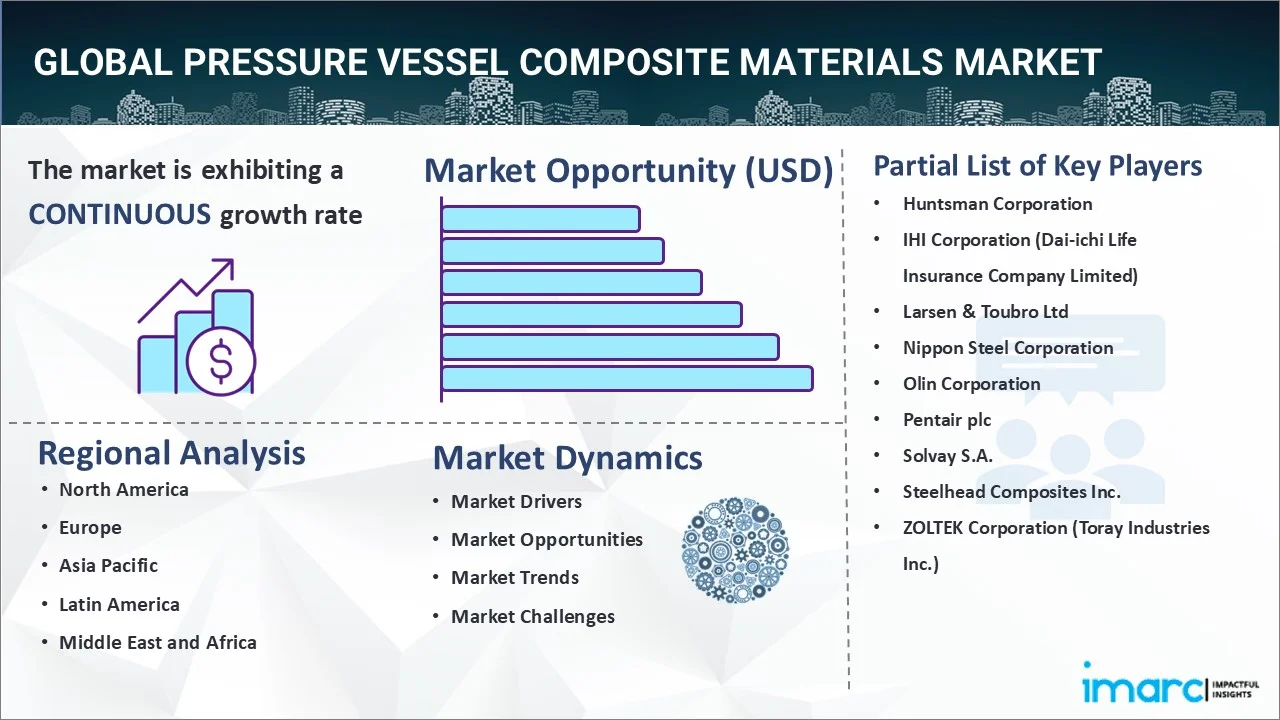
To get more information on this market Request Sample
Pressure Vessel Composite Materials Market Trends:
Rising Hydrogen Mobility Demand
The accelerating global transition to zero-emission transportation is fundamentally reshaping demand for composite pressure vessels. Hydrogen fuel cell vehicles require high-pressure onboard storage systems, typically operating at 700 bar, where conventional metallic cylinders fail to meet weight and structural efficiency requirements. Type IV composite vessels, featuring fully composite construction with a polymer liner, are becoming the design standard for passenger fuel cell electric vehicles, offering significant weight reductions while meeting international safety certifications. Beyond passenger vehicles, hydrogen is gaining traction in medium and heavy commercial trucks, public transit buses, and rail systems, all of which rely on composite pressure vessel storage for operational viability. Government initiatives across Asia, Europe, and North America are actively funding hydrogen refueling corridors, directly expanding certified composite vessel demand. For instance, in September 2025, a major Chinese state-owned automaker announced plans to build a facility in Ruzhou, China, to convert 1,000 trucks and 450 other vehicles to hydrogen operation over three years, reflecting strong industrial momentum behind this rapidly expanding sector.
Advanced Composite Manufacturing Techniques
The pressure vessel composite materials sector is undergoing a manufacturing revolution driven by automation and process innovation. Automated fiber placement and filament winding technologies enable high-volume production of composite cylinders with precise fiber orientation, ensuring mechanical performance that manual layup processes cannot reliably deliver. The industry is simultaneously shifting toward thermoplastic composite matrices, which offer superior recyclability, faster processing cycles through induction or resistance welding, and performance comparable to conventional thermoset systems. These advances are progressively lowering production costs while expanding design flexibility, strengthening the pressure vessel composite materials market outlook for manufacturers seeking to scale efficient, cost-effective operations.
Aerospace and Defense Sector Adoption
The aerospace and defense sectors represent a growing application domain for composite pressure vessels, driven by the need for lightweight, high-performance gas storage across demanding operational environments. Carbon and glass fiber composites are uniquely suited for aircraft onboard oxygen systems, cryogenic fuel tanks, and portable military gas storage solutions, as they offer exceptional strength-to-weight ratios and resistance to thermal and mechanical stress. The broader adoption of fuel cell propulsion in unmanned aerial vehicles and next-generation military aircraft is further creating specialized demand for composite cylinders capable of operating reliably at extreme altitudes and temperatures. These evolving application requirements are reinforcing a positive pressure vessel composite materials market forecast across defense and aerospace procurement pipelines.
Pressure Vessel Composite Materials Industry Segmentation:
IMARC Group provides an analysis of the key trends in each segment of the global pressure vessel composite materials market, along with forecast at the global, regional, and country levels from 2026-2034. The market has been categorized based on material, application, and end user.
Analysis by Material:
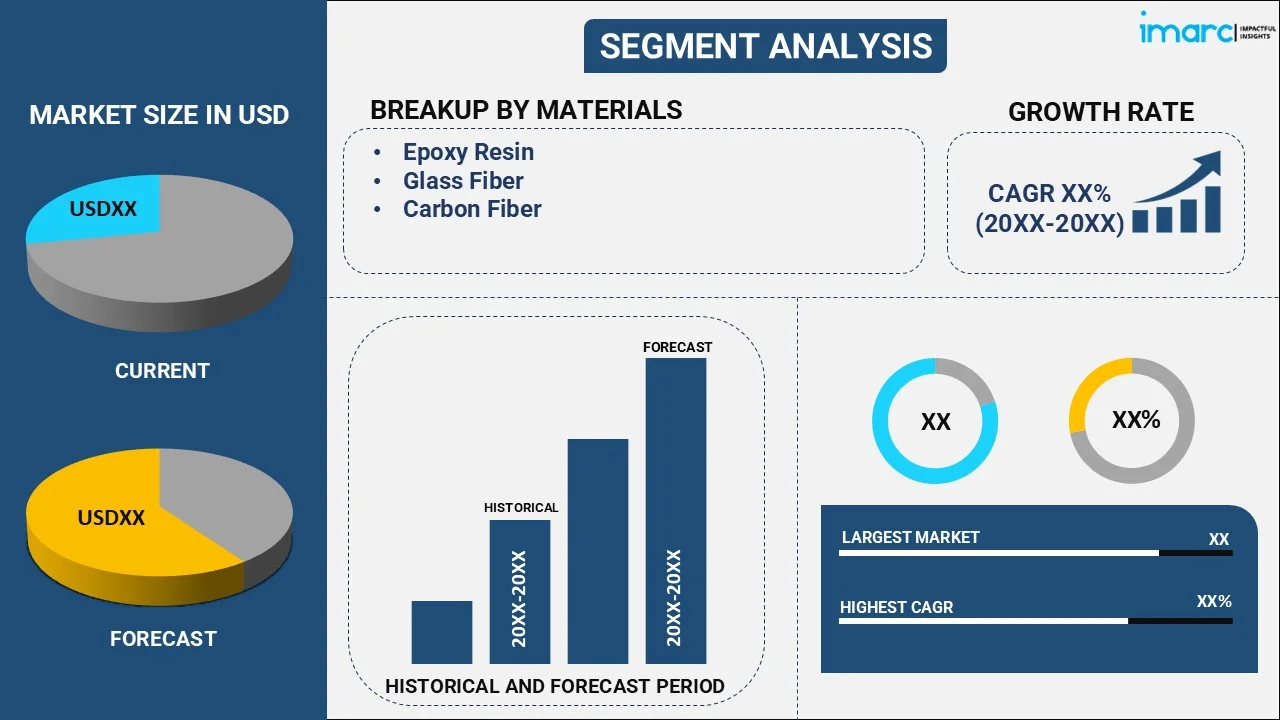
To get detailed segment analysis of this market Request Sample
- Epoxy Resin
- Glass Fiber
- Carbon Fiber
Epoxy resin holds 44.7% of the market share. Epoxy resin is the dominant matrix material in composite pressure vessel manufacturing owing to its superior mechanical properties, excellent chemical resistance, and outstanding compatibility with both carbon and glass fiber reinforcements during filament winding and automated layup processes. Its high crosslink density provides exceptional dimensional stability under thermal cycling and elevated pressures, making it ideally suited for Type III and Type IV cylinder construction. The material's adhesion characteristics allow intimate fiber-matrix bonding, translating to predictable failure modes and enhanced structural reliability when vessels are subject to cyclic loading in transportation and industrial gas storage applications. Curing versatility further enables manufacturers to tailor resin formulations for specific temperature-pressure performance envelopes. Plastic-lined composite tanks using carbon-epoxy composites are increasingly penetrating mass transit buses and medium and heavy commercial vehicles owing to their maximum weight savings and pressure retention performance. In 2024, the European Commission's updated CO2 standards for heavy-duty vehicles, mandating a 45% reduction in tailpipe emissions by 2030 for new trucks, prompted European fleet operators to accelerate procurement of lightweight carbon-epoxy composite cylinders for CNG and hydrogen powertrains.
Analysis by Application:
- CNG Vehicle
- Hydrogen Vehicle
- Gas Storage
CNG vehicle leads the market with a share of 39.6%. CNG vehicles represent the largest application segment for composite pressure vessels, driven by their widespread deployment across commercial transportation, public transit, and industrial logistics fleets globally. The adoption of composite cylinders, particularly Type III aluminum-liner and Type IV polymer-liner vessels, in CNG-powered buses and trucks offers significant weight advantages over conventional steel tanks, directly improving vehicle fuel efficiency, payload capacity, and operational range. Regulatory mandates in developing economies, particularly across South and Southeast Asia, have accelerated the transition from steel to composite cylinders in public transit fleets. The expanding availability of CNG refueling infrastructure in urban and nearby regions across emerging markets is increasing opportunities for composite cylinder manufacturers. Improved fuel access is encouraging greater adoption of CNG-powered vehicles among commercial fleets. As a result, demand for certified composite CNG cylinders is rising, driven by operators seeking cost-effective fuel alternatives, improved vehicle efficiency, and reduced maintenance requirements compared with conventional fuel systems.

Analysis by End User:
- Automotive
- Aircraft and Military
- Aerospace
- Marine
- Others
Automotive dominates the market, with a share of 47.9%. The automotive sector accounts for the largest share of composite pressure vessel demand, driven by the accelerating global transition to clean-fuel powertrains encompassing both CNG and hydrogen fuel cell vehicle platforms. Composite pressure cylinders are integral to vehicle design, providing the lightweight, high-pressure gas storage essential for achieving competitive driving range without significantly adding to vehicle mass. The proliferation of Type IV vessels in passenger cars, light commercial vans, and medium-duty trucks has been particularly pronounced, as automotive manufacturers balance range performance, payload capacity, and total vehicle weight under increasingly stringent emissions regulations. Automotive OEMs are collaborating closely with composite material suppliers to develop next-generation vessel designs optimized for automated high-volume production while meeting evolving international safety standards.
Regional Analysis:
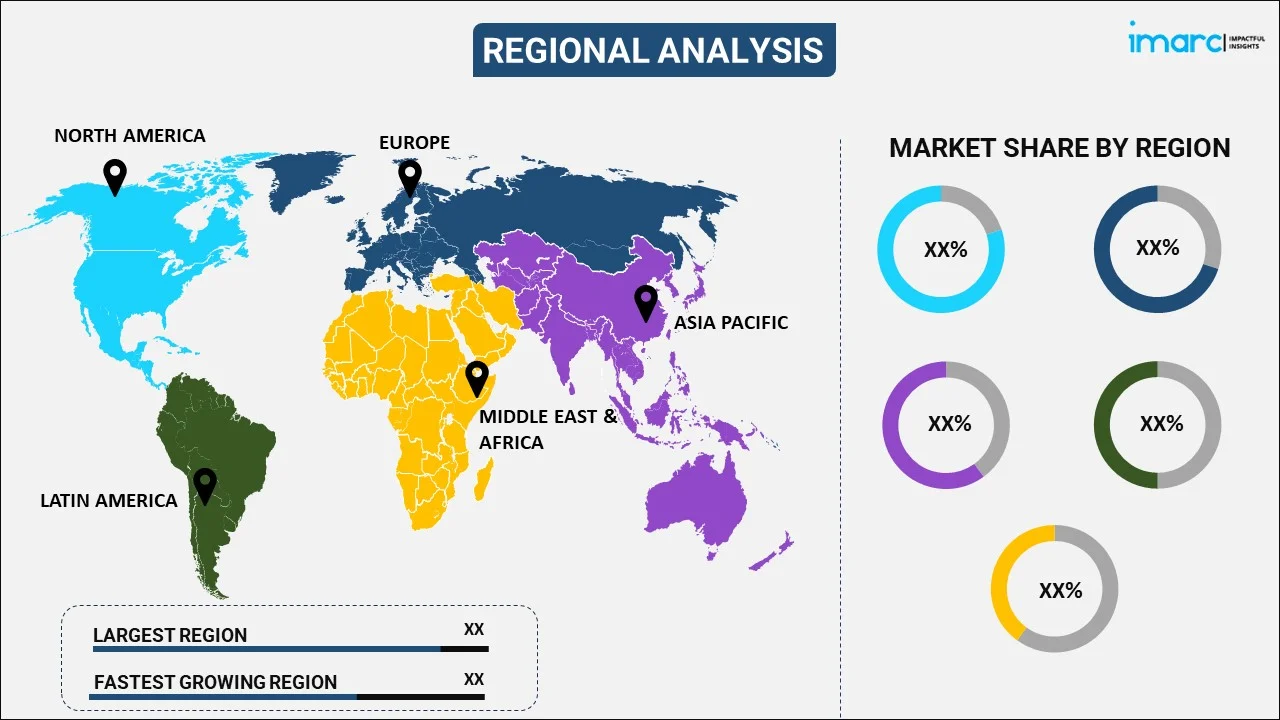
To get more information on the regional analysis of this market Request Sample
- North America
- United States
- Canada
- Asia-Pacific
- China
- Japan
- India
- South Korea
- Australia
- Indonesia
- Others
- Europe
- Germany
- France
- United Kingdom
- Italy
- Spain
- Russia
- Others
- Latin America
- Brazil
- Mexico
- Others
- Middle East and Africa
Asia-Pacific, accounting for 37.5% of the share, enjoys the leading position in the market. Asia-Pacific's dominance in the pressure vessel composite materials market is anchored by an unmatched combination of manufacturing scale, technological capability, and demand volume across China, Japan, South Korea, and India. China leads the regional landscape with the world's largest CNG vehicle fleet and rapidly expanding hydrogen fuel cell infrastructure, sustaining vast domestic demand for composite cylinders. Japan's government-backed hydrogen economy strategy, including substantial public investment in FCEV technology, production infrastructure, and refueling networks, continues to generate high-specification composite vessel demand. South Korea's complementary hydrogen roadmap and significant fuel cell system exports further reinforce Asia-Pacific's regional position. India's growing CNG bus and truck fleet, supported by subsidized natural gas pricing and urban clean air mandates, adds a sizeable and expanding demand base. Japan's national hydrogen strategy targets over 800,000 fuel cell electric vehicles by 2030, directly fueling investments in composite pressure vessel production capacity across the region.
Key Regional Takeaways:
North America Pressure Vessel Composite Materials Market Analysis
North America is a significant market for pressure vessel composite materials, underpinned by strong federal investment in clean hydrogen infrastructure and stringent emissions regulations that are accelerating the adoption of CNG and hydrogen powertrains across commercial vehicle fleets. The United States and Canada jointly benefit from a mature aerospace and defense sector that relies heavily on lightweight composite gas storage systems for both military and civilian applications. Growing national commitments to net-zero emission targets are prompting significant capital allocation toward hydrogen production, storage, and distribution, all of which require advanced composite cylinder solutions. The region's well-established industrial gas infrastructure, combined with a sophisticated automotive manufacturing base, provides a favorable environment for composite vessel technology commercialization. Academic research institutions and engineering consortia across the region are actively advancing thermoplastic and smart composite vessel technologies, supporting the development of next-generation products. In 2025, the US Department of Energy's Regional Clean Hydrogen Hubs program allocated USD 8 billion across seven designated regional hub projects, creating substantial and sustained demand for advanced composite hydrogen storage vessels across both stationary and mobile application segments.
United States Pressure Vessel Composite Materials Market Analysis
The United States is the dominant contributor to the North American pressure vessel composite materials market, supported by a diverse base of demand spanning clean energy transportation, aerospace, defense, and industrial gas applications. The country's substantial investment in hydrogen economy infrastructure, facilitated by federal legislative initiatives including the Bipartisan Infrastructure Law and the Inflation Reduction Act, is directly stimulating procurement of composite pressure cylinders for hydrogen refueling stations and fuel cell vehicle programs. The US military's ongoing procurement of lightweight gas storage systems for portable power and vehicle electrification programs sustains steady demand for high-performance composite cylinders in defense applications. The automotive sector's rapid expansion of fuel cell vehicle platforms further reinforces commercial adoption of Type III and IV pressure vessels. The nation's robust materials science research ecosystem continues to generate advances in fiber-matrix interfacial performance, contributing to improvements in composite vessel durability and safety ratings.
Europe Pressure Vessel Composite Materials Market Analysis
Europe represents a pivotal regional market for composite pressure vessels, driven by ambitious hydrogen economy targets embedded in the European Union's REPowerEU plan and national hydrogen roadmaps across Germany, France, and the Netherlands. The region's well-established automotive and industrial manufacturing base is actively transitioning toward low-emission powertrains, generating robust demand for Type III and IV composite cylinders in both passenger and commercial vehicle applications. Strategic industrial decarbonization policies are also spurring demand for composite vessels in industrial gas storage and distribution, particularly as European manufacturers expand compressed hydrogen logistics networks. Evolving pressure vessel composite materials market trends in Europe, including growing collaboration between engineering institutes, automotive OEMs, and material suppliers, are accelerating the pace of product innovation and certification activity. For instance, in November 2025, AZL Aachen GmbH (Germany) launched a Joint Partner Project on “Thermoplastic Pressure Vessels, Benchmarking Design-for-Manufacturing Strategies” to improve material efficiency and cost. Early participants, including Toyota Motor Europe, emphasize the value of comparing design and manufacturing approaches for thermoplastic composite pressure vessels.
Asia-Pacific Pressure Vessel Composite Materials Market Analysis
Asia-Pacific is the leading region in the global pressure vessel composite materials market, anchored by dominant manufacturing capacities in China, Japan, South Korea, and India. China's rapid expansion of hydrogen refueling infrastructure and the proliferation of fuel cell commercial vehicles are generating substantial demand for composite cylinder production. Japan's targeted FCEV development policies and aggressive hydrogen supply chain investment, combined with South Korea's commitment to hydrogen city and transport corridor programs, further reinforce the region's growth trajectory. India’s expanding CNG vehicle fleet, supported by policy-driven fuel transition initiatives and increasing energy demand, is contributing to rising regional consumption of composite pressure vessels. The Asia-Pacific region plays a central role in the global market, supported by strong adoption of alternative fuel vehicles and expanding gas infrastructure. This growing demand environment is encouraging manufacturers to invest in production capacity, technological innovation, and advanced composite materials for pressure vessel applications.
Latin America Pressure Vessel Composite Materials Market Analysis
Latin America presents a steadily growing market for pressure vessel composite materials, driven primarily by the region's extensive natural gas vehicle sector. Brazil operates one of the world's largest CNG vehicle fleets, sustained by a dense natural gas distribution infrastructure and government incentives encouraging alternative fuel adoption. Mexico's expanding industrial manufacturing base and growing logistics sector are gradually increasing demand for compressed gas storage solutions. Regional governments' ongoing investment in cleaner transportation alternatives is stimulating demand for certified composite cylinders. In 2024, Brazil's national energy regulatory authority approved expanded natural gas distribution networks and new vehicle conversion incentive programs, reinforcing steady regional composite vessel demand throughout the medium-term outlook horizon.
Middle East and Africa Pressure Vessel Composite Materials Market Analysis
The Middle East and Africa region is emerging as a notable growth frontier for composite pressure vessel materials, supported by the rapid advancement of hydrogen energy programs in Gulf Cooperation Council nations and growing CNG vehicle adoption across African markets. Saudi Arabia and the UAE are leading efforts in large-scale hydrogen production and export, creating strong demand for advanced composite storage and transportation systems. Regional investments in clean energy diversification are driving the procurement of high-performance pressure vessels for hydrogen storage and distribution, supporting the growth of the composite pressure vessel market across the Middle East.
Competitive Landscape:
The global pressure vessel composite materials market features a moderately competitive landscape shaped by a mix of specialty composite manufacturers, engineering conglomerates, chemical companies, and industrial equipment suppliers. Key players are investing heavily in research and development to advance high-performance resin systems and fiber reinforcements that improve pressure rating and fatigue life while reducing overall vessel weight and production cost. Strategic partnerships with automotive OEMs and clean energy companies are increasingly prevalent as manufacturers seek long-term supply agreements aligned with the expanding hydrogen and CNG vehicle transition. Mergers, acquisitions, and capacity expansion initiatives continue to reshape competitive dynamics, as leading companies broaden their geographic footprint and product portfolios to capitalize on emerging hydrogen storage and clean energy infrastructure opportunities. Growing participation from engineering research consortia and academic institutions, collaborating with industry on thermoplastic composite technologies and smart vessel monitoring systems, is further intensifying innovation-driven competition throughout the value chain.
The report provides a comprehensive analysis of the competitive landscape in the pressure vessel composite materials market with detailed profiles of all major companies, including:
- Huntsman Corporation
- IHI Corporation (Dai-ichi Life Insurance Company Limited)
- Larsen & Toubro Ltd
- Nippon Steel Corporation
- Olin Corporation
- Pentair plc
- Solvay S.A.
- Steelhead Composites Inc.
- ZOLTEK Corporation (Toray Industries Inc.)
Latest News and Developments:
- In September 2025, Hexcel Corporation, a global leader in advanced composite technologies, unveiled a Type IV carbon overwrap pressure vessel (COPV). Developed in partnership with HyPerComp Engineering Inc. (HEI), the vessel is constructed using Hexcel’s high-performance HexTow IM11-R/12K carbon fiber, highlighting cutting-edge material application in high-pressure storage solutions.
- In July 2025, AZL Aachen launched a Joint Partner Project, “Thermoplastic Pressure Vessel Production, Benchmarking Design-for-Manufacturing Strategies to Optimize Material Efficiency and Cost,” inviting companies across the pressure vessel and composites sectors to collaborate on developing sustainable high-pressure storage solutions.
Pressure Vessel Composite Materials Market Report Scope:
| Report Features | Details |
|---|---|
| Base Year of the Analysis | 2025 |
| Historical Period | 2020-2025 |
| Forecast Period | 2026-2034 |
| Units | Million USD |
| Scope of the Report |
Exploration of Historical Trends and Market Outlook, Industry Catalysts and Challenges, Segment-Wise Historical and Future Market Assessment:
|
| Materials Covered | Epoxy Resin, Glass Fiber, Carbon Fiber |
| Applications Covered | CNG Vehicle, Hydrogen Vehicle, Gas Storage |
| End Users Covered | Automotive, Aircraft and Military, Aerospace, Marine, Others |
| Region Covered | Asia-Pacific, Europe, North America, Latin America, Middle East and Africa |
| Countries Covered | United States, Canada, China, Japan, India, South Korea, Australia, Indonesia, Germany, France, United Kingdom, Italy, Spain, Russia, Brazil, Mexico, and Others |
| Companies Covered | Huntsman Corporation, IHI Corporation (Dai-ichi Life Insurance Company Limited), Larsen & Toubro Ltd, Nippon Steel Corporation, Olin Corporation, Pentair plc, Solvay S.A., Steelhead Composites Inc., ZOLTEK Corporation (Toray Industries Inc.), etc. |
| Customization Scope | 10% Free Customization |
| Post-Sale Analyst Support | 10-12 Weeks |
| Delivery Format | PDF and Excel through Email (We can also provide the editable version of the report in PPT/Word format on special request) |
Key Benefits for Stakeholders:
- IMARC's report offers a comprehensive quantitative analysis of various market segments, historical and current market trends, market forecasts, and dynamics of the pressure vessel composite materials market from 2020-2034.
- The research study provides the latest information on the market drivers, challenges, and opportunities in the global pressure vessel composite materials market.
- The study maps the leading, as well as the fastest-growing, regional markets. It further enables stakeholders to identify the key country-level markets within each region.
- Porter's Five Forces analysis assists stakeholders in assessing the impact of new entrants, competitive rivalry, supplier power, buyer power, and the threat of substitution. It helps stakeholders to analyze the level of competition within the pressure vessel composite materials industry and its attractiveness.
- Competitive landscape allows stakeholders to understand their competitive environment and provides an insight into the current positions of key players in the market.
Frequently Asked Questions About the Pressure Vessel Composite Materials Market Report
The pressure vessel composite materials market was valued at USD 521.5 Million in 2025.
The pressure vessel composite materials market is projected to exhibit a CAGR of 4.13% during 2026-2034, reaching a value of USD 775.75 Million by 2034.
The pressure vessel composite materials market is driven by the accelerating global transition to clean energy transportation, rising CNG and hydrogen vehicle adoption, expanding hydrogen refueling infrastructure investment, and stringent emissions regulations. Growing aerospace and defense procurement of lightweight gas storage systems and advances in composite manufacturing technologies further strengthen demand across industrial and transportation segments.
Asia-Pacific currently dominates the pressure vessel composite materials market, accounting for a share of 37.5%. The region benefits from widespread manufacturing infrastructure, strong governmental support for hydrogen and CNG vehicle programs, rising automotive sector demand across China, Japan, South Korea, and India, and growing investments in hydrogen economy supply chains and refueling infrastructure.
Some of the major players in the pressure vessel composite materials market include Huntsman Corporation, IHI Corporation (Dai-ichi Life Insurance Company Limited), Larsen & Toubro Ltd, Nippon Steel Corporation, Olin Corporation, Pentair plc, Solvay S.A., Steelhead Composites Inc., ZOLTEK Corporation (Toray Industries Inc.), etc.
Need more help?
- Speak to our experienced analysts for insights on the current market scenarios.
- Include additional segments and countries to customize the report as per your requirement.
- Gain an unparalleled competitive advantage in your domain by understanding how to utilize the report and positively impacting your operations and revenue.
- For further assistance, please connect with our analysts.
 Request Customization
 Speak to an Analyst
 Request Brochure
 Inquire Before Buying
Benefits of Customization
- Personalize this research
- Triangulate with your data
- Get data as per your format and definition
- Gain a deeper dive into a specific application, geography, customer, or competitor
- Any level of personalization
Get in Touch With Us
UNITED STATES
Phone: +1-201-971-6302
INDIA
Phone: +91-120-433-0800
UNITED KINGDOM
Phone: +44-753-714-6104
Email: [email protected]
Client Testimonials




.webp)




.webp)













Related Reports

Choose your plan
*Please note that the prices mentioned below are starting prices for each bundle type. Kindly contact our team for further details.*
Single User License
- 1 User License, Access on 2 Devices
- PDF Report + Excel Dataset (Password Protected)
- Lifetime Access
- No Printing Rights
- 10% Free Report Customization
- 10–12 Weeks of Analyst Support
Five User License
- Access for 5 Users, 2 Devices per User
- PDF Report + Excel Dataset (Password Protected)
- Lifetime Access
- Dedicated Account Manager
- 12–14 Weeks of Analyst Support
- No Printing Rights
- 15% Free Report Customization
- 25% Discount on Your Next Purchase
Corporate User License
- Unlimited User Access (Within Your Organization)
- PDF Report + Excel Dataset
- Lifetime Access
- Dedicated Account Manager
- 14–20 Weeks of Analyst Support
- No Printing Rights
- 20% Free Report Customization
- 30% Discount on Your Next Purchase
Essential Insights
What's included:
3 reports
- Lifetime Access
- PDF Reports
- Excel Datasets
- 2 Weeks of Free Analyst Support
- 2 User Licenses
- Access on 2 Devices
- Printing Rights
- Complimentary PowerPoint (PPT) Version
- Complimentary License Upgrade
Professional Access
What's included:
5 reports
- Lifetime Access
- PDF Reports
- Excel Datasets
- 8 Weeks of Free Analyst Support
- 2 User Licenses
- Access on 2 Devices
- Printing Rights
- Complimentary PowerPoint (PPT) Version
- Complimentary License Upgrade
Business Advantage
What's included:
8 reports
- Lifetime Access
- PDF Reports
- Excel Datasets
- 14 Weeks of Free Analyst Support
- 2 User Licenses
- Access on 2 Devices
- Printing Rights
- Complimentary PowerPoint (PPT) Version
- Complimentary License Upgrade
Enterprise Intelligence
What's included:
10 reports
- Lifetime Access
- PDF Reports
- Excel Datasets
- 20 Weeks of Free Analyst Support
- 2 User Licenses
- Access on 2 Devices
- Printing Rights
- Complimentary PowerPoint (PPT) Version
- Complimentary License Upgrade