
Pressure Washer Market Size, Share, Trends and Forecast by Power Source, Output, Application, Distribution Channel, and Region, 2026-2034
Pressure Washer Market Size, Share, Trends & Forecast (2026-2034)
The global pressure washer market reached USD 3.00 Billion in 2025 and is projected to reach USD 3.80 Billion by 2034, growing at a CAGR of 2.53% during 2026-2034. The market is driven by rising demand for efficient cleaning solutions across residential, commercial, industrial, and automotive applications. Growing construction activity, vehicle ownership, urban sanitation needs, and preference for time-saving high-pressure cleaning equipment further support market growth. During the first four months of 2026, the US construction spending reached USD 657.2 billion, representing a modest 0.2% increase compared to USD 656.1 billion during the same period in 2025. Ongoing construction activity increases demand for pressure washers for site preparation, equipment maintenance, concrete surface cleaning, debris removal, and post-construction cleanup. Electricity based leads power source at 56.0%. Offline distribution leads at 72.0%. North America leads regionally at 35.0%.
Market Snapshot
|
Metric |
Value |
|
Market Size (2025) |
USD 3.00 Billion |
|
Forecast Market Size (2034) |
USD 3.80 Billion |
|
CAGR (2026-2034) |
2.53% |
|
Base Year |
2025 |
|
Historical Period |
2020-2025 |
|
Forecast Period |
2026-2034 |
|
Dominant Power Source |
Electricity Based (56.0%, 2025) |
|
Dominant Distribution Channel |
Offline Distribution (72.0%, 2025) |
|
Leading Region |
North America (35.0%, 2025) |
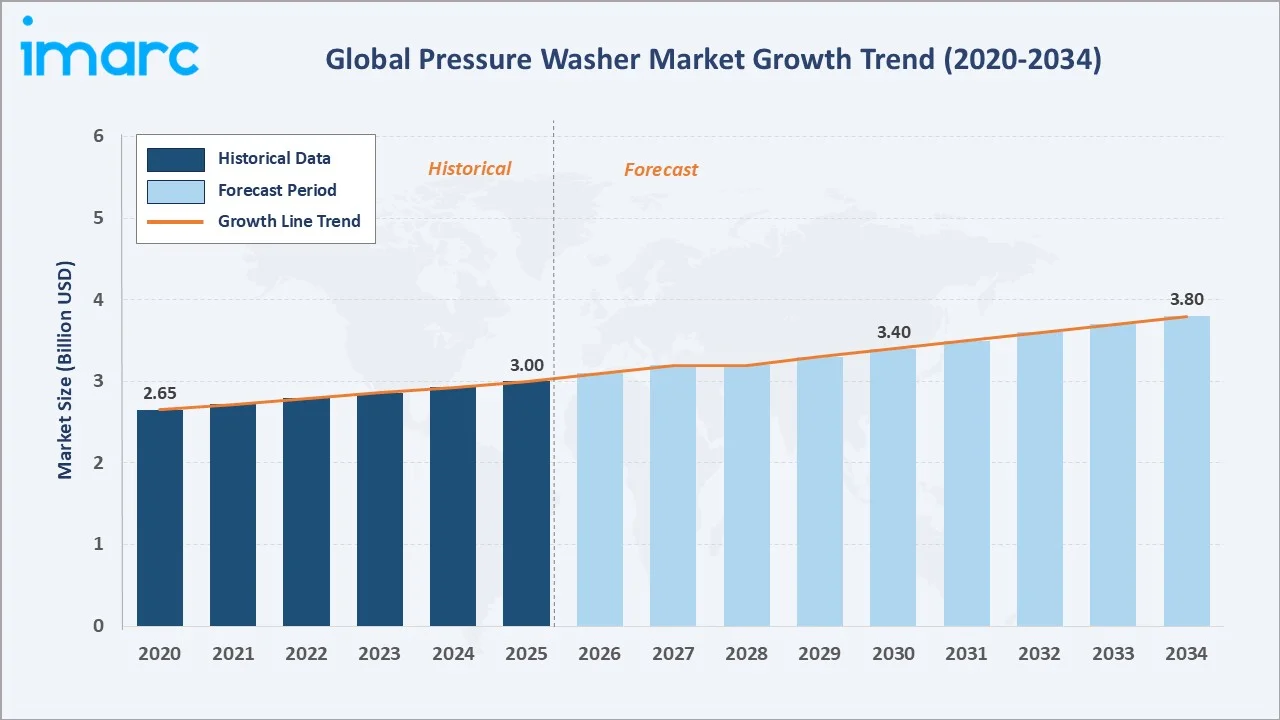
The global pressure washer market is showing steady growth, rising from USD 2.65 billion in 2020 to USD 3.00 billion in 2025. It is expected to reach USD 3.40 billion by 2030 and further expand to USD 3.80 billion by 2034. Growth is supported by rising demand from residential cleaning, automotive washing, construction sites, and industrial maintenance. Increasing preference for efficient, time-saving, and water-conscious cleaning solutions is also strengthening market adoption.
To get more information on this market, Request Sample
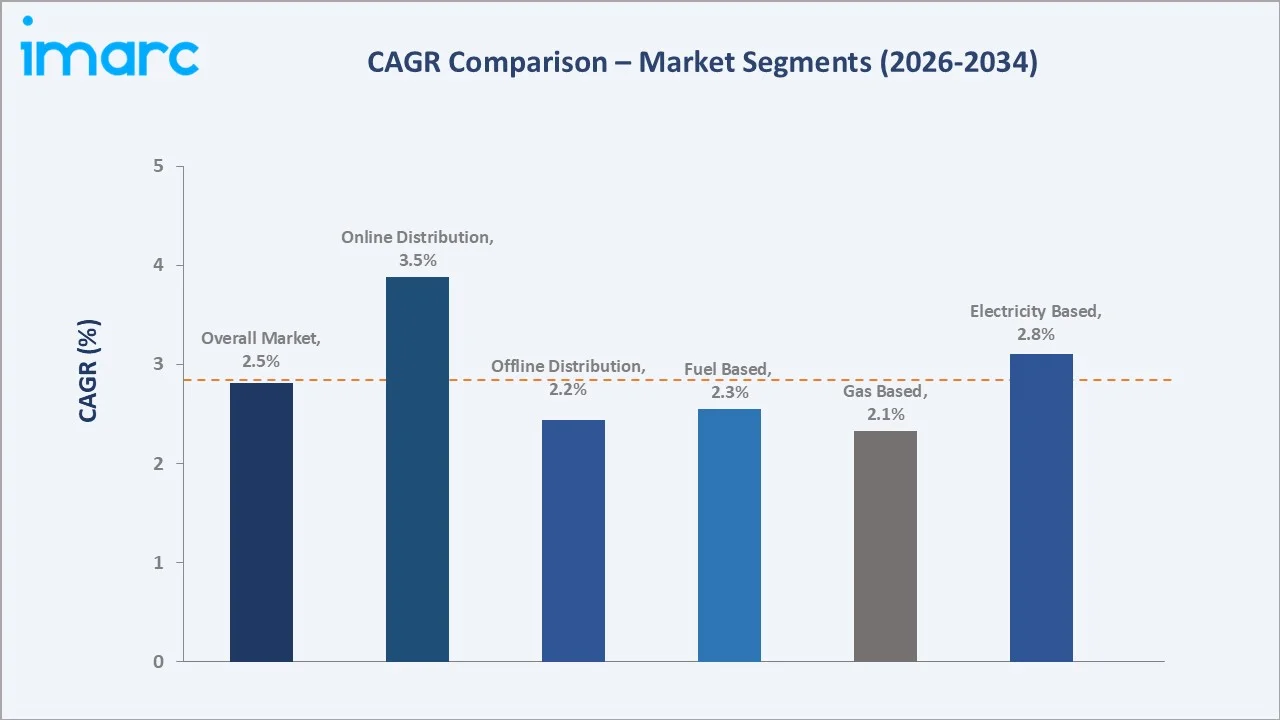
Online distribution grows fastest at ~3.5% CAGR through Amazon, Home Depot online, and DTC brand e-commerce. Electricity based grows at ~2.8% CAGR through cordless battery and IoT-smart models. Gas based grows at ~2.1% CAGR and fuel based at ~2.3% CAGR through diesel and fuel-powered industrial units.
Executive Summary
The global pressure washer market is growing steadily, supported by rising residential, commercial, construction, automotive, and industrial cleaning demand. Market value increased from USD 2.65 billion in 2020 to USD 3.00 billion in 2025 and is projected to reach USD 3.80 billion by 2034. Growth is driven by the need for faster, labor-saving, and efficient surface-cleaning solutions. Expanding construction activity and vehicle ownership continue to support demand for equipment cleaning, exterior washing, and post-construction cleanup. Electric and portable pressure washers are gaining traction due to convenience, lower noise, and suitability for household and light commercial use. Overall, the market outlook remains positive, with steady adoption across both developed and emerging economies. Electricity based power source at 56.0% leads through residential and light commercial. Offline distribution at 72.0% leads through Home Depot and dealers. North America leads regionally at 35.0%.
Key Market Insights
|
Insight |
Data |
|
Dominant Power Source |
Electricity Based - 56.0% share (2025) |
|
Dominant Distribution Channel |
Offline Distribution - 72.0% market share (2025) |
|
Leading Region |
North America - 35.0% share (2025) |
|
Market Opportunity |
Cordless battery pressure washers; IoT-connected smart models; commercial vehicle wash systems; eco-friendly low-water models; Asia Pacific residential market expansion; robotic autonomous wash units emerging |
Key Analytical Observations Supporting the Above Data:
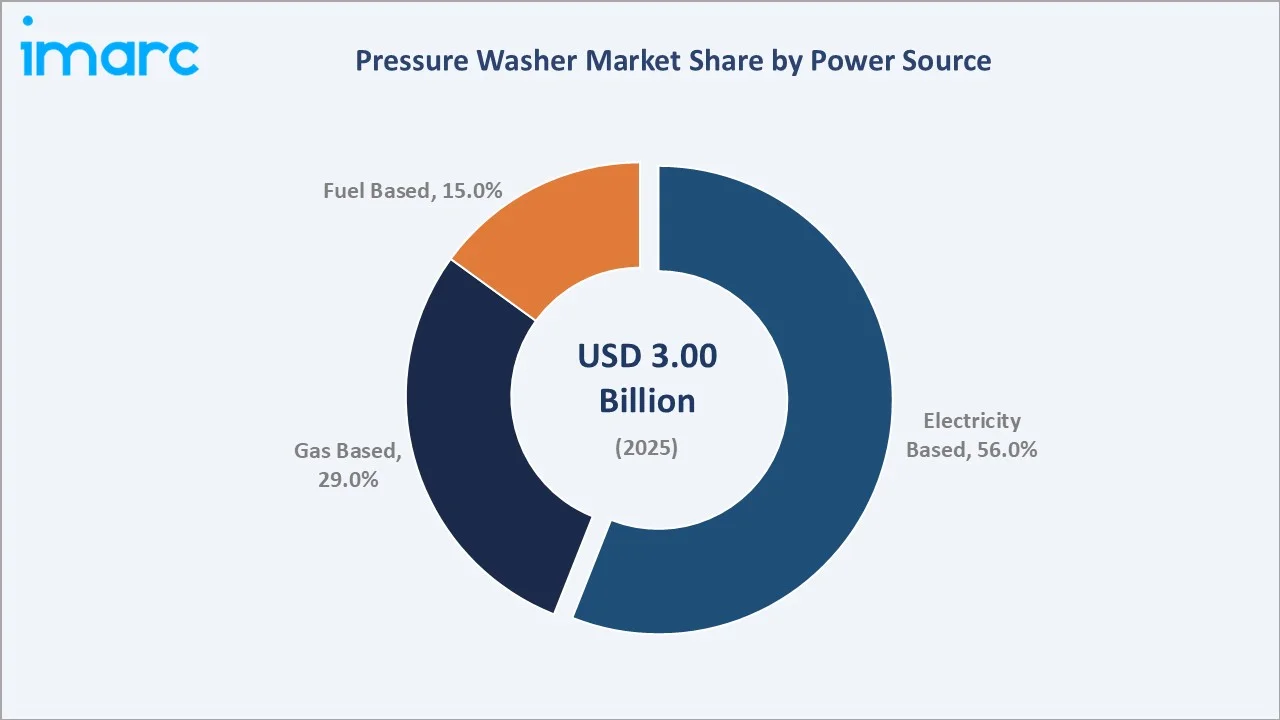
- Electricity Based at 56.0%: The electricity-based segment dominates due to its lower noise, ease of use, reduced emissions, and suitability for residential and light commercial cleaning. Its affordability, portability, and low maintenance requirements make it preferred over fuel-based models for routine cleaning applications.
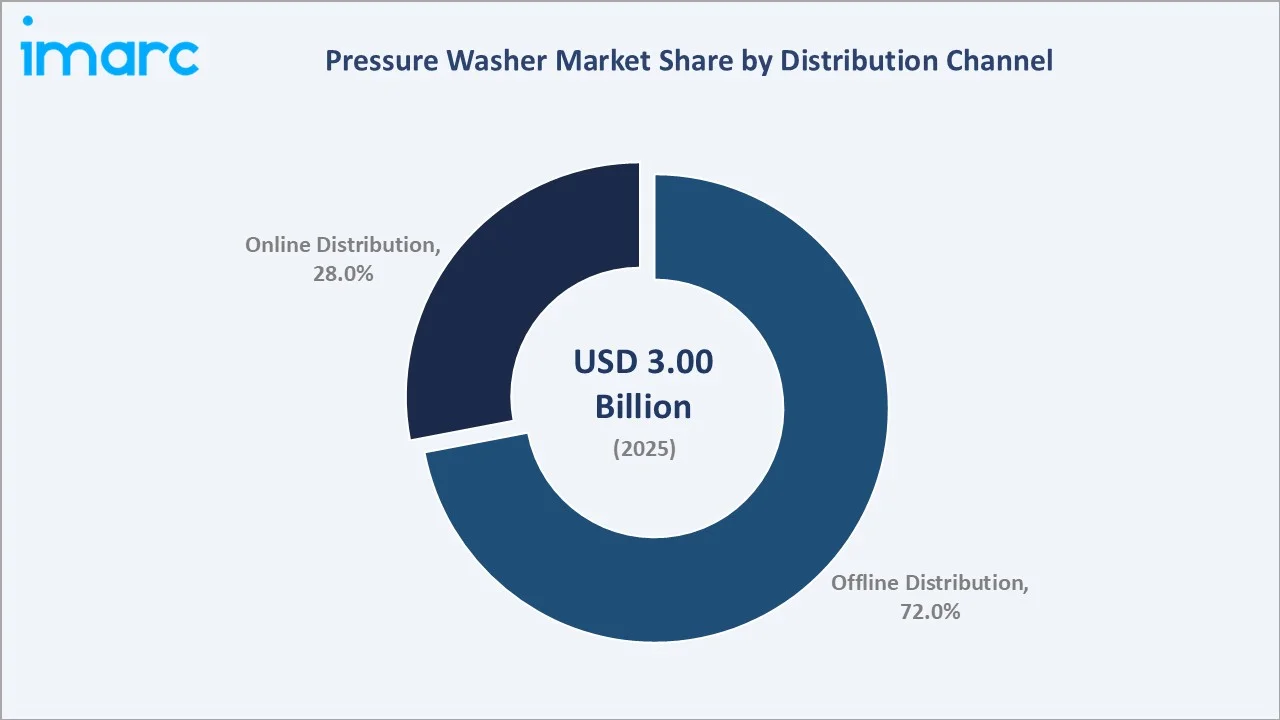
- Offline Distribution at 72.0%: The offline distribution segment dominates due to strong customer preference for physical product inspection, dealer guidance, and after-sales support before purchasing pressure washers.
- North America at 35.0%: North America dominates due to high adoption across residential cleaning, automotive detailing, construction, and commercial maintenance applications. Strong DIY culture, higher purchasing power, and widespread availability through retail and dealer networks further support regional demand.
Pressure Washer Market Overview
The global pressure washer market encompasses cold water electric, cold water gas, hot water electric, hot water gas, and hot water diesel/fuel-powered pressure washers across PSI ranges from residential 1,200 PSI through professional 3,000 PSI to industrial above-4,000 PSI. The pressure washer market’s uniqueness lies in its broad end-use versatility, serving residential, automotive, construction, commercial, and industrial cleaning needs with one core technology. Its growth is also supported by the shift toward electric, portable, low-noise, and water-efficient models that combine convenience with sustainability. Key macroeconomic factors include rising construction and infrastructure investments, increasing urbanization, and growth in vehicle ownership, all of which drive demand for efficient cleaning equipment.
Market Dynamics
To evaluate market opportunities, Request Sample
Market Drivers
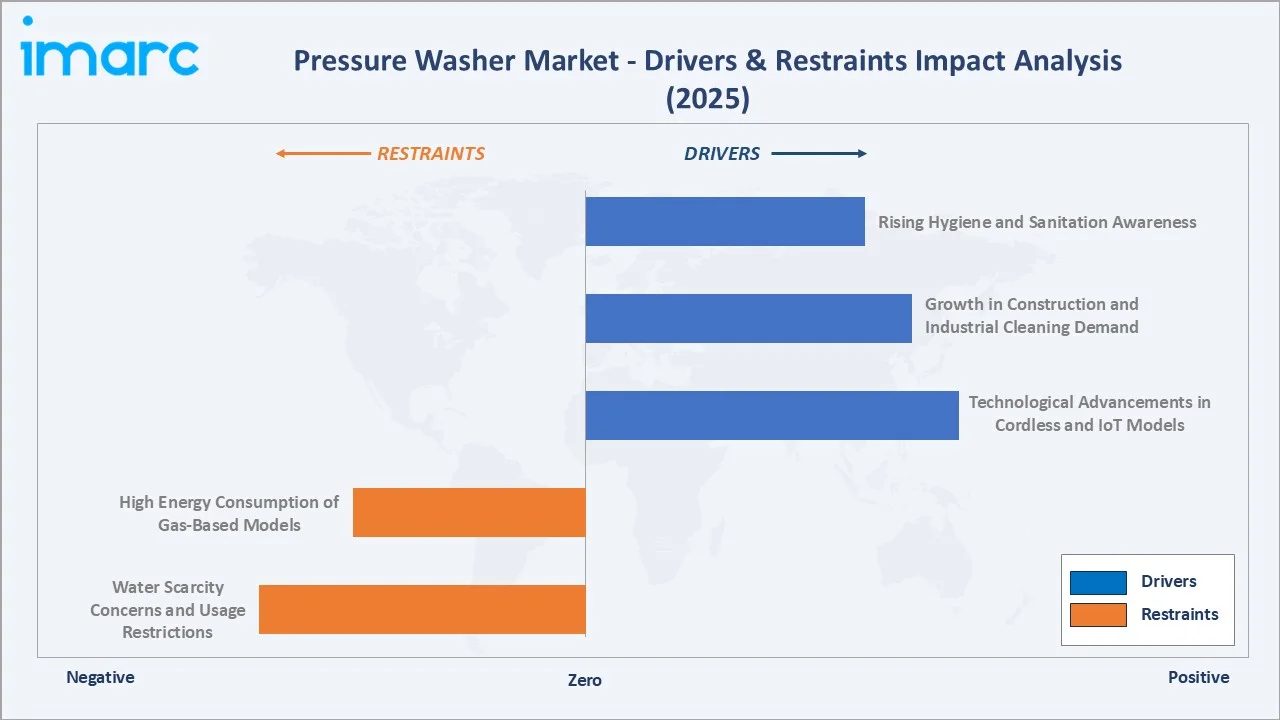
- Rising Hygiene and Sanitation Awareness: Pressure washers provide an effective solution for removing dirt, grease, mold, bacteria, and contaminants from surfaces in residential, commercial, and industrial settings. Between 2015 and 2024, global access to essential WASH services improved steadily, with safely managed sanitation rising from 48% to 58% and basic hygiene coverage increasing from 66% to 80%. The heightened focus on cleanliness in public spaces, healthcare facilities, food processing units, and workplaces has accelerated equipment adoption. Additionally, pressure washing offers a faster and more water-efficient cleaning method compared to traditional cleaning techniques, further supporting market growth.
- Growth in Construction and Industrial Cleaning Demand: Growth in construction and industrial cleaning demand is driving the market as construction sites require efficient cleaning for machinery, concrete surfaces, tools, and post-project debris removal. Industrial facilities also use pressure washers for equipment maintenance, floor cleaning, degreasing, and contamination control. Rising infrastructure development, manufacturing activity, and facility maintenance needs are increasing the demand for durable, high-pressure cleaning systems. This supports adoption across contractors, factories, warehouses, and commercial service providers.
- Technological Advancements in Cordless and IoT Models: Technological advancements in cordless and IoT models are improving portability, convenience, and user control. Battery-powered cordless models reduce dependence on fixed power sources, making them suitable for outdoor, residential, and mobile cleaning applications. IoT-enabled pressure washers allow users to monitor performance, adjust pressure settings, track maintenance needs, and improve operational efficiency. In April 2026, Dylect launched a handheld cordless pressure washer gun to further expand its pressure washer portfolio. Designed around the idea of compact power, the gun-style device combines portability and strong cleaning performance for everyday household cleaning needs. These innovations are attracting both household users and commercial operators seeking smarter, flexible, and low-maintenance cleaning solutions.
Market Restraints
- High Energy Consumption of Gas-Based Models: High energy consumption of gas-based models is hampering the market, as these units depend on fuel, increasing operating costs for users. Gas-powered washers also generate higher emissions and noise, making them less suitable for indoor, residential, and regulated commercial environments. Rising fuel prices and stricter environmental standards further reduce their attractiveness compared to electric alternatives. This is encouraging users to shift toward energy-efficient, low-maintenance electric and cordless pressure washers.
- Water Scarcity Concerns and Usage Restrictions: Water scarcity concerns and usage restrictions are hampering the market as some regions limit non-essential water use during droughts or shortages. These restrictions can reduce pressure washer usage in residential cleaning, car washing, and outdoor maintenance. Growing awareness of water conservation also makes consumers cautious about purchasing high-water-use cleaning equipment. As a result, manufacturers face pressure to develop low-flow, water-efficient, and recycling-compatible pressure washer models.
Market Opportunities
- Water-Efficient and Low-Flow Cleaning Systems: Water-efficient and low-flow cleaning systems represent a significant opportunity as governments, businesses, and consumers increasingly prioritize water conservation. Advanced pressure washers can deliver effective cleaning while using substantially less water than conventional hoses and cleaning methods. Growing environmental regulations and water-use restrictions are encouraging the adoption of low-flow technologies, water recycling systems, and smart flow-control features. Manufacturers that develop highly efficient, eco-friendly models can capture demand from residential, commercial, industrial, and municipal users seeking sustainable cleaning solutions.
- Rental and Equipment-Leasing Models: Rental and equipment-leasing models make high-performance equipment accessible without significant upfront investment. Construction contractors, facility managers, cleaning service providers, and occasional users increasingly prefer rentals for short-term or project-based requirements. Leasing options also enable businesses to access advanced models with lower capital expenditure and predictable operating costs. The growing equipment rental industry is expanding the customer base and creating recurring revenue opportunities for pressure washer manufacturers and distributors.
Market Challenges
- Noise and Emission Concerns: Noise and emission concerns are challenging, especially for gas-powered models used in residential and urban areas. High noise levels can limit usage in noise-sensitive locations such as housing complexes, hospitals, schools, and commercial spaces. Fuel-based models also produce exhaust emissions, making them less attractive amid stricter environmental regulations. These concerns are pushing users toward quieter, cleaner electric and battery-powered alternatives.
- Maintenance and Durability Concerns in Heavy-Duty Use: Maintenance and durability concerns in heavy-duty use challenge the market because continuous operation can lead to pump wear, hose damage, nozzle blockage, and motor overheating. Industrial and construction users require highly durable machines, and frequent breakdowns can increase downtime and repair costs. Poor-quality or low-cost models may fail under demanding cleaning conditions, reducing buyer confidence. This makes after-sales service, spare parts availability, and rugged product design critical for market growth.
Emerging Market Trends
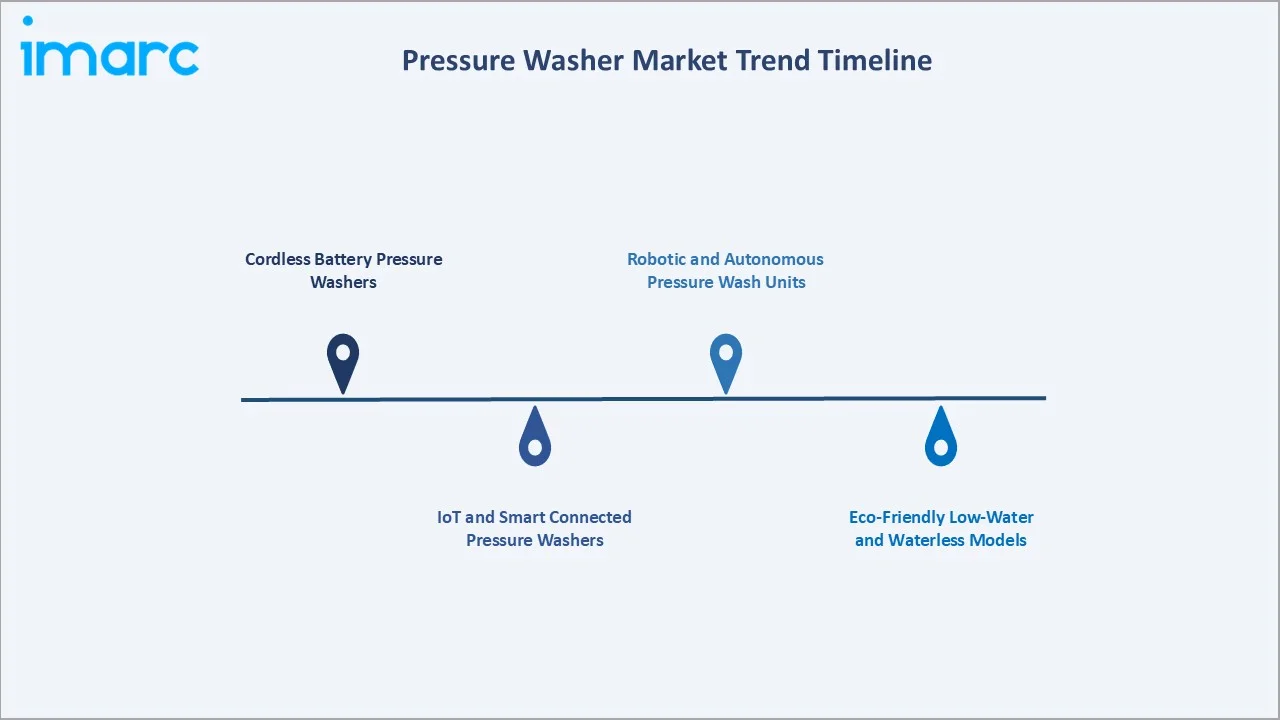
1. Cordless Battery Pressure Washers
Cordless battery pressure washers are emerging due to their portability, ease of use, and suitability for quick outdoor cleaning tasks. They eliminate dependence on fixed power outlets and long cables, making them attractive for home users, car owners, campers, and mobile cleaning services. In March 2026, Portronics launched the Torque X, a compact foldable cordless water gun designed for routine cleaning at home or on the go. Suitable for cars, bikes, balconies, patios, and gardens, it operates without a fixed water connection and supports bucket, tank, or bottle water input through a self-priming hose. Powered by a 13,500 RPM motor, the Torque X delivers up to 1.5 MPa pressure and a 2.8 L/min flow rate to remove dirt, mud, and grime. This trend is also supporting demand for compact, lightweight, and low-noise models across residential and light commercial applications.
2. IoT and Smart Connected Pressure Washers
IoT and smart connected pressure washers are emerging as users seek better control, monitoring, and efficiency in cleaning operations. These models can offer app-based pressure adjustment, usage tracking, maintenance alerts, and performance diagnostics. For commercial and industrial users, connected features help reduce downtime, optimize water and energy use, and improve equipment lifecycle management. This trend is encouraging manufacturers to differentiate products through smart controls, automation, and data-driven service support.
3. Eco-Friendly Low-Water and Waterless Models
Eco-friendly low-water and waterless models are emerging as consumers and businesses focus on sustainable cleaning solutions. These systems reduce water consumption while maintaining cleaning efficiency, making them suitable for drought-prone and water-restricted regions. Waterless or near-waterless models also appeal to automotive detailing, residential cleaning, and mobile service providers. This trend is encouraging manufacturers to develop low-flow designs, water-recycling compatibility, and environmentally responsible cleaning technologies.
4. Robotic and Autonomous Pressure Wash Units
Robotic and autonomous pressure wash units are emerging as users look to reduce manual labor and improve cleaning consistency. These systems can automate repetitive cleaning tasks across large facilities, parking areas, warehouses, solar panels, and industrial sites. Integration with sensors, navigation systems, and programmable cleaning paths helps improve safety, efficiency, and coverage. This trend is creating opportunities for advanced pressure washer models designed for commercial, municipal, and industrial applications.
Industry Value Chain Analysis
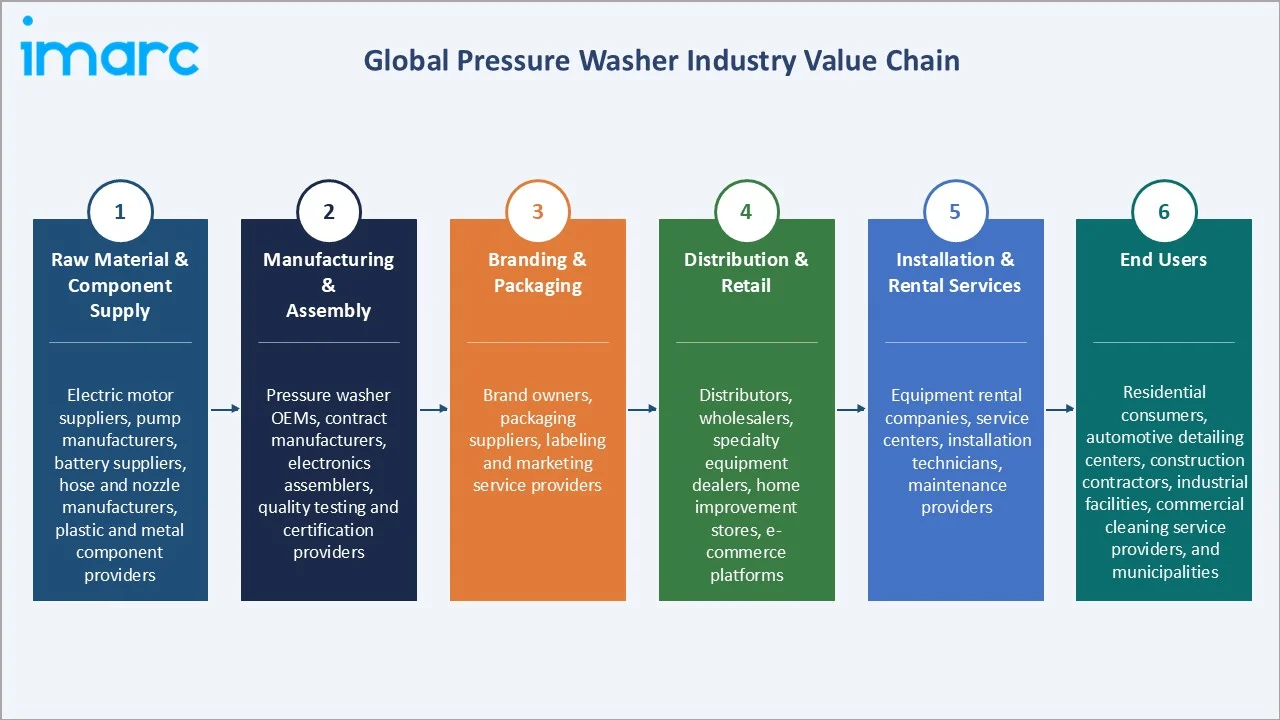
The global pressure washer value chain integrates raw material & component supply, manufacturing & assembly, branding & packaging, distribution & retail, installation & rental services, and end users.
|
Stage |
Key Participants |
|
Raw Material & Component Supply |
Electric motor suppliers, pump manufacturers, battery suppliers, hose and nozzle manufacturers, plastic and metal component providers |
|
Manufacturing & Assembly |
Pressure washer OEMs, contract manufacturers, electronics assemblers, quality testing and certification providers |
|
Branding & Packaging |
Brand owners, packaging suppliers, labeling and marketing service providers |
|
Distribution & Retail |
Distributors, wholesalers, specialty equipment dealers, home improvement stores, e-commerce platforms |
|
Installation & Rental Services |
Equipment rental companies, service centers, installation technicians, maintenance providers |
|
End Users |
Residential consumers, automotive detailing centers, construction contractors, industrial facilities, commercial cleaning service providers, and municipalities |
The manufacturing and assembly segment is the most value-added stage in the pressure washer market, as it converts components such as motors, pumps, hoses, nozzles, and batteries into finished equipment. Value creation is highest here through product design, performance engineering, durability testing, smart features, and brand differentiation.
Technology Landscape in the Pressure Washer Industry
Motor and Pump Technology
Motor and pump technology directly influences cleaning performance, pressure output, energy efficiency, and product durability. Manufacturers are increasingly adopting brushless motors, high-efficiency induction motors, and advanced axial or triplex plunger pumps to improve reliability and reduce maintenance requirements. Innovations in motor design also support quieter operation, lower power consumption, and compatibility with cordless battery-powered systems. These advancements are enabling the development of compact, high-performance, and smart-connected pressure washers for both residential and commercial applications.
Premium High-Performance Pressure Washers
Premium high-performance pressure washers are driving innovation in high-pressure pumps, commercial-grade engines, and heavy-duty component design. Manufacturers are integrating advanced brass pump heads, durable hoses, all-terrain mobility systems, and precision nozzle technologies to improve cleaning efficiency and equipment lifespan. The demand for professional-grade performance is also encouraging the use of reliable powertrains, such as Honda engines, and enhanced safety and control features. In July 2024, Yard Force launched its new premium pressure washer range powered by Honda engines. The YF3600-H and YF3200-H models are designed to deliver strong cleaning performance while reinforcing Yard Force’s focus on quality and reliability.
Noise-Reduction Technology
Users demand quieter operation in residential, commercial, and noise-sensitive environments. Manufacturers are incorporating brushless motors, improved pump designs, vibration-dampening components, and acoustic insulation to reduce operating noise. These innovations enhance user comfort and help comply with local noise regulations. As a result, low-noise pressure washers are gaining popularity in urban areas, hospitality facilities, healthcare institutions, and indoor cleaning applications.
Market Segmentation Analysis
The report covers the following segments:
|
Segment Category |
Leading Segment |
Market Share |
Year |
|
Power Source |
Electricity Based |
56.0% |
2025 |
|
Output |
🔒 |
🔒 |
2025 |
|
Application |
Garden Washer |
🔒 |
2025 |
|
Distribution Channel |
Offline Distribution |
72.0% |
2025 |
|
Region |
North America |
35.0% |
2025 |

By Power Source
Electricity based leads at 56.0% (2025), through corded electric and rapidly growing cordless battery (40V-60V) and IoT-connected models.
To access detailed market analysis, Request Sample
Gas based at 29.0% reflects PSI professional and contractor pressure washers for commercial and industrial cleaning. Fuel based at 15.0% reflects diesel and fuel-powered industrial units for heavy-duty degreasing, oil and gas, and remote-location applications.
By Distribution Channel
Offline distribution leads at 72.0% (2025), through specialist dealers, B2B outlets, equipment rental companies, and commercial cleaning distributors. Online distribution at 28.0% grows fastest at ~3.5% CAGR through Amazon and brand DTC websites.
Regional Market Insights
|
Region |
Share (2025) |
Key Pressure Washer Market Drivers & Characteristics |
|
North America |
35.0% |
Driven by strong residential DIY culture, high vehicle ownership, commercial cleaning demand, and widespread adoption of advanced electric and gas-powered pressure washers. |
|
Europe |
27.0% |
Reflects growing demand for eco-friendly and water-efficient cleaning equipment, supported by stringent environmental regulations, expanding facility maintenance activities, and increasing adoption of electric models. |
|
Asia Pacific |
24.0% |
Reflects rapid urbanization, rising construction activity, increasing disposable incomes, and growing demand for residential and commercial cleaning solutions |
|
Latin America |
8.0% |
Reflects increasing infrastructure development, expansion of automotive cleaning services, and rising awareness of efficient cleaning technologies in residential and commercial sectors. |
|
Middle East & Africa |
6.0% |
Reflects growing construction projects, industrial facility maintenance requirements, hospitality sector expansion, and increasing demand for outdoor cleaning equipment in harsh climatic conditions. |
North America's 35.0% dominance is supported by a strong DIY cleaning culture, high vehicle ownership, commercial cleaning demand, and widespread retail availability. Europe's 27.0% due to demand for eco-friendly, electric, and water-efficient models under strict environmental standards.
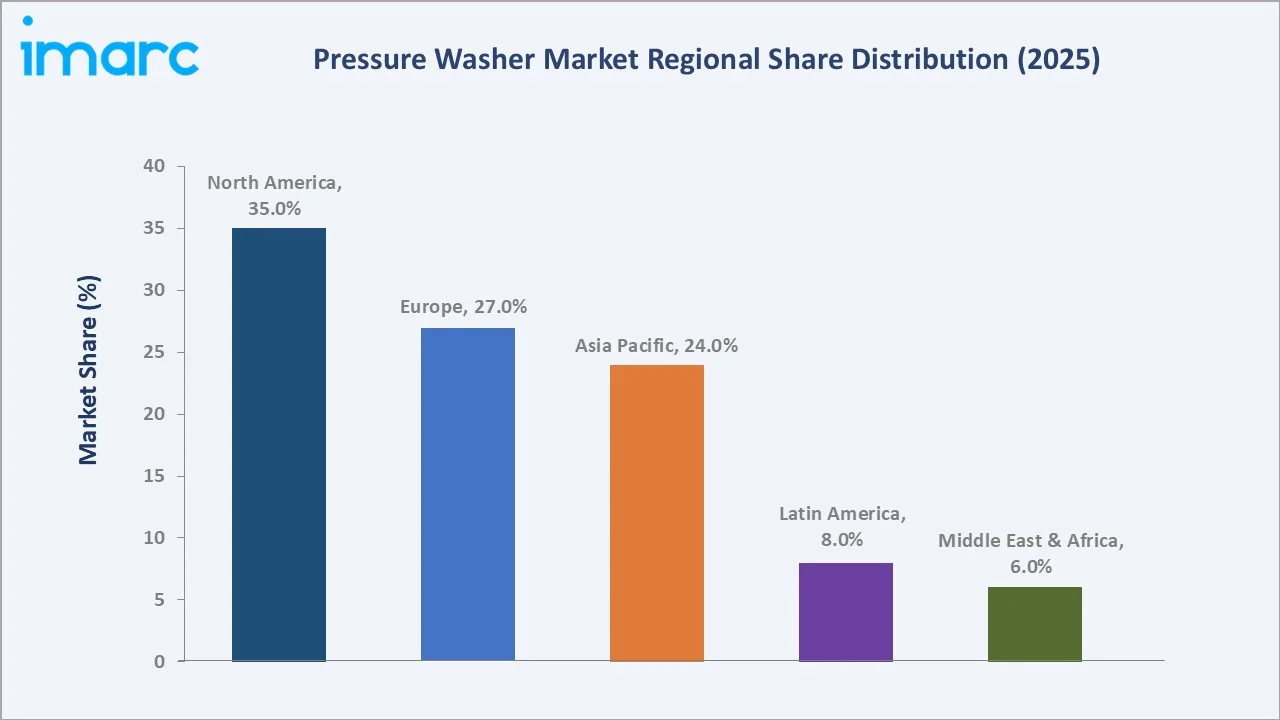
Asia Pacific's 24.0% growing rapidly with urbanization, construction activity, rising disposable incomes, and expanding residential cleaning needs. Latin America's 8.0% supported by infrastructure development, automotive cleaning services, and the gradual adoption of efficient cleaning equipment. Middle East & Africa’s 6.0% driven by construction projects, hospitality growth, industrial maintenance, and outdoor cleaning needs in dusty climatic conditions.
Competitive Landscape
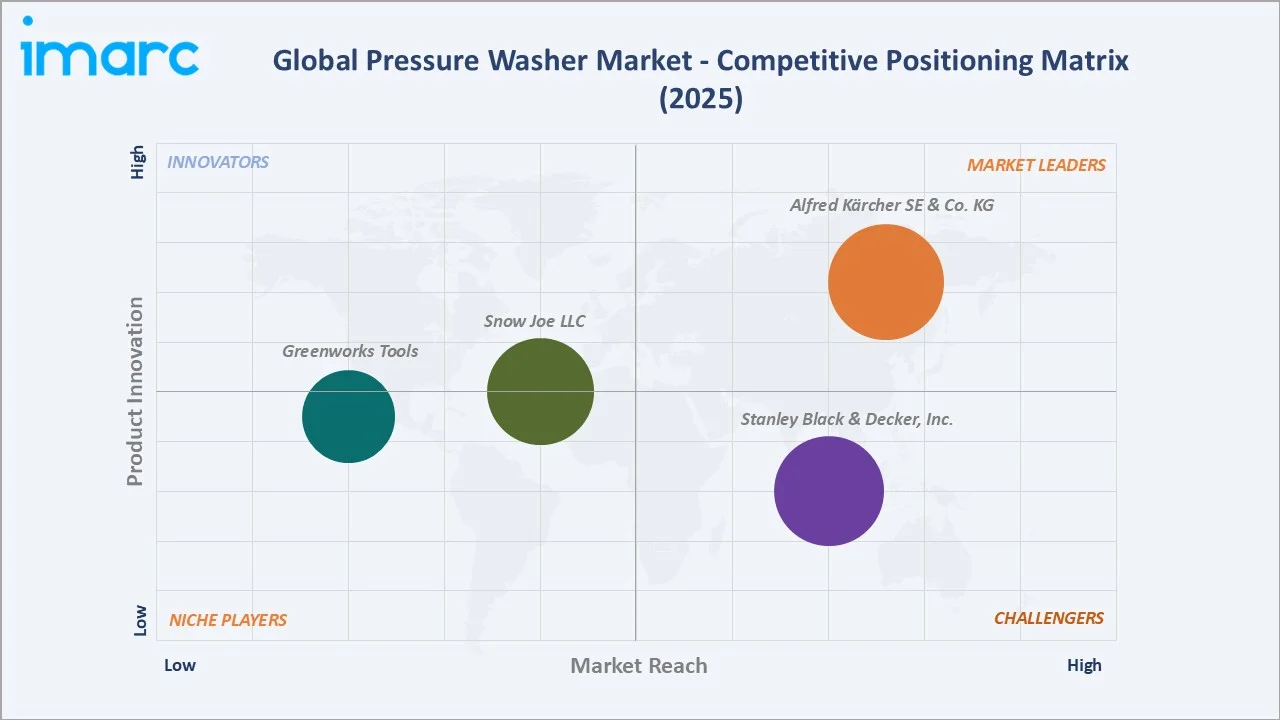
The global pressure washer market is moderately fragmented, with competition centered on product performance, durability, energy efficiency, and technological innovation. Leading manufacturers are expanding their portfolios with cordless, battery-powered, smart-connected, and water-efficient pressure washers to address evolving consumer and commercial requirements. Companies are also focusing on premium high-pressure models, enhanced pump technologies, and noise-reduction features to differentiate their offerings.
|
Company |
Key Products |
Market Position |
Core Strength |
|
Alfred Kärcher SE & Co. KG |
K 7 Comfort Premium, K 7 Comfort Premium Home, K 7 Comfort Premium Connect, K 7 WCM Premium, K 7 WCM, K 6 Comfort Premium |
Market Leader |
Alfred Kärcher SE & Co. KG is the global market leader in cleaning technology, revolutionized both commercial and residential cleaning by pioneering portable, high-efficiency pressure washers. |
|
Stanley Black & Decker, Inc. |
2,000 MAX psi* 1.2 gpm* Electric Cold Water Pressure Washer, 1,600 MAX psi* 1.2 gpm* Electric Cold Water Pressure Washer, 1,850 MAX psi* 1.2 gpm* Electric Cold Water Pressure Washer |
Strong Challenger |
Stanley Black & Decker, Inc. designs, manufactures, and markets a broad portfolio of pressure washers spanning DIY, light-duty, and job-site contractor applications. |
|
Snow Joe LLC |
Sun Joe SPX3000 Certified Rated 2030 PSI Electric Pressure Washer, Sun Joe SPX3000 -XT XTREAM Clean Electric Pressure Washer, Sun Joe 2000 PSI Max All-Purpose Electric Pressure Washer |
Established Player |
Snow Joe LLC, operating primarily under its Sun Joe brand, the company disrupted the outdoor power tool market by offering highly accessible, affordable, and easy-to-assemble corded and cordless electric washers. |
|
Greenworks Tools |
2700 PSI 1.2 GPM Cold Water Electric Pressure Washer, 2300 PSI 1.2 GPM Cold Water Electric Pressure Washer, 2100 PSI 1.2 GPM Portable Cold Water Electric Pressure Washer, 1900 PSI 1.2 GPM Portable Hand Carry Cold Water Electric Pressure Washer |
Established Player |
Greenworks Tools play a leading role in the outdoor power equipment market by offering highly efficient, eco-friendly electric and battery-operated alternatives to traditional gas pressure washers. |
Strategic initiatives such as product launches, distribution network expansion, e-commerce partnerships, and after-sales service enhancements remain key competitive strategies. Growing demand from residential, automotive, construction, and industrial users is encouraging continuous investment in product innovation and brand positioning.
Key Company Profiles
Alfred Kärcher SE & Co. KG
Alfred Kärcher SE & Co. KG is one of the leading manufacturers of cleaning technology and a dominant player in the global pressure washer market. The company offers a comprehensive portfolio of consumer and professional pressure washers, including electric, hot-water, cold-water, battery-powered, and industrial-grade models.
- Key Products: K 7 Comfort Premium, K 7 Comfort Premium Home, K 7 Comfort Premium Connect, K 7 WCM Premium, K 7 WCM, K 6 Comfort Premium.
- Recent Developments: In March 2024, Kärcher expanded its home and garden pressure washer range with the launch of the K 2 Horizontal, K 2 Premium Horizontal, and K 3 Horizontal models. Designed with a compact horizontal structure, these models combine Kärcher’s quality standards with premium components for reliable and powerful cleaning around homes and gardens.
- Strategic Focus: Strengthening its leadership in the pressure washer market through continuous innovation in electric, battery-powered, and professional-grade cleaning solutions.
Stanley Black & ecker, Inc.
Stanley Black & Decker, Inc. is a leading manufacturer of tools, outdoor equipment, and industrial solutions with a significant presence in the pressure washer market. The company offers a broad portfolio of electric and gas-powered pressure washers designed for residential, commercial, and professional users.
- Key Products: 2,000 MAX psi* 1.2 gpm* Electric Cold Water Pressure Washer, 1,600 MAX psi* 1.2 gpm* Electric Cold Water Pressure Washer, 1,850 MAX psi* 1.2 gpm* Electric Cold Water Pressure Washer.
- Strategic Focus: Expanding its pressure washer portfolio through its well-established brands, targeting both consumer and professional users.
Market Concentration Analysis
The pressure washer market is moderately fragmented, with a mix of global brands and regional manufacturers competing across residential, commercial, and industrial segments. Leading players hold strong positions through brand reputation, product quality, and broad distribution networks. However, competition remains intense due to the presence of low-cost Asian manufacturers and private-label brands. Market concentration is higher in premium and professional-grade models, where technology, durability, and after-sales service are key differentiators. In contrast, entry-level residential models face strong price competition and lower brand loyalty. Overall, companies are focusing on innovation, cordless models, water efficiency, and service support to strengthen their market position.
Investment & Growth Opportunities
Highest Growth Segments
Online distribution (~3.5% CAGR), electricity based (~2.8% CAGR), Asia Pacific residential (~4-5% CAGR from growing base through India and China domestic), commercial and industrial PW (~3-4% CAGR through construction and fleet wash), and robotic and autonomous pressure washers (~10-15% CAGR) from emerging base through industrial automation represent global pressure washers highest-growth investment vectors through 2034.
Investment Themes
- Cordless battery pressure washers: Cordless battery-powered pressure washers represent an attractive investment theme as advances in lithium-ion battery technology are improving runtime, portability, and cleaning performance. Growing consumer preference for lightweight, cable-free, and energy-efficient equipment is driving adoption across residential, automotive, and outdoor cleaning applications. Manufacturers investing in battery platforms and fast-charging technologies are well-positioned to capture this growing demand.
- IoT and smart connected pressure washers: IoT-enabled pressure washers present a high-growth opportunity as users increasingly seek intelligent, data-driven cleaning solutions. Features such as remote monitoring, app-based controls, predictive maintenance alerts, and performance analytics enhance operational efficiency and user convenience. Rising digitalization across commercial and industrial cleaning operations is expected to accelerate investment in smart connected pressure washer technologies.
Future Market Outlook (2026-2034)
The global pressure washer market is projected to grow from USD 3.00 Billion in 2025 to USD 3.80 Billion by 2034, delivering a 2.53% CAGR over the forecast period through sustained residential DIY demand, commercial and industrial cleaning expansion, cordless battery and IoT technology premiumization, online channel disruption, and emerging Asia Pacific residential market. The market's anchor value of USD 3.40 Billion in 2030 represents global pressure washer at technology and channel inflection.
Three structural forces define the global pressure washer market growth through 2034. First, rising hygiene and sanitation awareness among households, businesses, and public institutions is increasing demand for efficient cleaning equipment. Second, growing construction activity, industrial maintenance requirements, and vehicle cleaning services are expanding the need for high-performance pressure washing solutions. Third, technological advancements in cordless battery-powered, smart-connected, and water-efficient models are improving convenience, sustainability, and user experience, accelerating adoption across residential and commercial end-use sectors.
Research Methodology
Primary Research
Primary research comprised interviews and discussions with pressure washer manufacturers, distributors, dealers, rental service providers, and end users across residential, commercial, industrial, and automotive segments. Inputs were gathered on product demand, pricing trends, technology adoption, purchase preferences, and after-sales requirements.
Secondary Research
Secondary research encompassed company websites, annual reports, product catalogs, press releases, industry databases, trade publications, and government construction and sanitation statistics. It also included a review of distributor listings, retail trends, and technology developments across electric, gas, cordless, and smart pressure washers.
Forecasting Models
Forecasting models combined historical market performance, pressure washer shipment trends, construction activity, vehicle ownership growth, and sanitation expenditure data to estimate future demand. A hybrid approach incorporating time-series analysis, end-use industry indicators, and technology adoption trends was used to project market growth through 2034. Scenario-based modeling was applied to account for shifts in consumer preferences, regulatory developments, and advancements in cordless and smart-connected cleaning technologies.
Global Pressure Washer Market Report Coverage:
| Report Features | Details |
|---|---|
| Base Year of the Analysis | 2025 |
| Historical Period | 2020-2025 |
| Forecast Period | 2026-2034 |
| Units | Billion USD |
| Scope of the Report | Exploration of Historical and Forecast Trends, Industry Catalysts and Challenges, Segment-Wise Historical and Predictive Market Assessment:
|
| Power Sources Coverage | Electricity Based, Gas Based, Fuel Based |
| Outputs Coverage | Upto 1500 PSI, 1501 to 3000 PSI, 3001 to 4000 PSI, Above 4000 PSI |
| Applications Coverage | Car Washer, Garden Washer, Home Exterior Washer, Floor Cleaning, Others |
| Distribution Channels Coverage | Online Distribution, Offline Distribution |
| Regions Covered | Asia Pacific, Europe, North America, Latin America, Middle East and Africa |
| Countries Covered | United States, Canada, Germany, France, United Kingdom, Italy, Spain, Russia, China, Japan, India, South Korea, Australia, Indonesia, Brazil, Mexico |
| Companies Covered | Alfred Kärcher SE & Co. KG, Stanley Black & Decker, Inc., Snow Joe LLC, Greenworks Tools, etc. |
| Customization Scope | 10% Free Customization |
| Post-Sale Analyst Support | 10-12 Weeks |
| Delivery Format | PDF and Excel through Email (We can also provide the editable version of the report in PPT/Word format on special request) |
Key Benefits for Stakeholders:
- IMARC’s report offers a comprehensive quantitative analysis of various market segments, historical and current market trends, market forecasts, and dynamics of the pressure washer market from 2020-2034.
- The research study provides the latest information on the market drivers, challenges, and opportunities in the global pressure washer market.
- The study maps the leading, as well as the fastest-growing, regional markets. It further enables stakeholders to identify the key country-level markets within each region.
- Porter's five forces analysis assist stakeholders in assessing the impact of new entrants, competitive rivalry, supplier power, buyer power, and the threat of substitution. It helps stakeholders to analyze the level of competition within the pressure washer industry and its attractiveness.
- Competitive landscape allows stakeholders to understand their competitive environment and provides an insight into the current positions of key players in the market.
Frequently Asked Questions About the Pressure Washer Market Report
The global pressure washer market reached USD 3.00 Billion in 2025, driven by rising demand for efficient cleaning solutions across residential, commercial, automotive, construction, and industrial applications. Growing hygiene awareness, vehicle ownership, infrastructure activity, and adoption of electric, cordless, and water-efficient models further support market growth.
The global pressure washer market grows at 2.53% CAGR during 2026-2034, reaching USD 3.80 Billion by 2034. The CAGR reflects sustained residential DIY demand, commercial expansion, cordless battery and IoT technology, online channel growth, and the Asia Pacific emerging market.
Electricity based leads at 56.0% due to their low noise, zero direct emissions, easy operation, and suitability for residential and light commercial cleaning. Their lower maintenance needs, compact design, and affordability make them more attractive than gas-powered models for routine cleaning tasks.
Offline distribution leads at 72.0% because customers often prefer to physically inspect equipment, compare specifications, and receive demonstrations before purchasing. Specialty dealers, hardware stores, and home improvement retailers also provide installation guidance, maintenance support, and after-sales services, which are important factors for buyers of cleaning equipment.
North America leads at 35.0% due to strong residential DIY cleaning culture, high vehicle ownership, and widespread use in construction, automotive detailing, and commercial maintenance. Higher purchasing power and strong retail/dealer networks further support regional dominance.
Leading companies include Alfred Kärcher SE & Co. KG, Stanley Black & Decker, Inc., Snow Joe LLC, and Greenworks Tools, among others.
The market is projected to reach approximately USD 3.40 Billion by 2030, driven by rising demand for efficient cleaning solutions across residential, commercial, and industrial sectors. Continued adoption of cordless, smart-connected, and water-efficient pressure washers is expected to support steady market expansion throughout the forecast period.
Three priority investment opportunities in the pressure washer market include cordless battery-powered pressure washers, driven by growing demand for portable and user-friendly cleaning equipment. IoT-enabled smart pressure washers offer strong potential through features such as remote monitoring, predictive maintenance, and app-based controls that enhance operational efficiency. Additionally, water-efficient and eco-friendly pressure washers present significant growth prospects as consumers, businesses, and regulators increasingly prioritize sustainable cleaning solutions and water conservation.
Need more help?
- Speak to our experienced analysts for insights on the current market scenarios.
- Include additional segments and countries to customize the report as per your requirement.
- Gain an unparalleled competitive advantage in your domain by understanding how to utilize the report and positively impacting your operations and revenue.
- For further assistance, please connect with our analysts.
 Request Customization
 Speak to an Analyst
 Request Brochure
 Inquire Before Buying
Benefits of Customization
- Personalize this research
- Triangulate with your data
- Get data as per your format and definition
- Gain a deeper dive into a specific application, geography, customer, or competitor
- Any level of personalization
Get in Touch With Us
UNITED STATES
Phone: +1-201-971-6302
INDIA
Phone: +91-120-433-0800
UNITED KINGDOM
Phone: +44-753-714-6104
Email: [email protected]
Client Testimonials




.webp)




.webp)













Related Reports

Choose your plan
*Please note that the prices mentioned below are starting prices for each bundle type. Kindly contact our team for further details.*
Single User License
- 1 User License, Access on 2 Devices
- PDF Report + Excel Dataset (Password Protected)
- Lifetime Access
- No Printing Rights
- 10% Free Report Customization
- 10–12 Weeks of Analyst Support
Five User License
- Access for 5 Users, 2 Devices per User
- PDF Report + Excel Dataset (Password Protected)
- Lifetime Access
- Dedicated Account Manager
- 12–14 Weeks of Analyst Support
- No Printing Rights
- 15% Free Report Customization
- 25% Discount on Your Next Purchase
Corporate User License
- Unlimited User Access (Within Your Organization)
- PDF Report + Excel Dataset
- Lifetime Access
- Dedicated Account Manager
- 14–20 Weeks of Analyst Support
- No Printing Rights
- 20% Free Report Customization
- 30% Discount on Your Next Purchase
Essential Insights
What's included:
3 reports
- Lifetime Access
- PDF Reports
- Excel Datasets
- 2 Weeks of Free Analyst Support
- 2 User Licenses
- Access on 2 Devices
- Printing Rights
- Complimentary PowerPoint (PPT) Version
- Complimentary License Upgrade
Professional Access
What's included:
5 reports
- Lifetime Access
- PDF Reports
- Excel Datasets
- 8 Weeks of Free Analyst Support
- 2 User Licenses
- Access on 2 Devices
- Printing Rights
- Complimentary PowerPoint (PPT) Version
- Complimentary License Upgrade
Business Advantage
What's included:
8 reports
- Lifetime Access
- PDF Reports
- Excel Datasets
- 14 Weeks of Free Analyst Support
- 2 User Licenses
- Access on 2 Devices
- Printing Rights
- Complimentary PowerPoint (PPT) Version
- Complimentary License Upgrade
Enterprise Intelligence
What's included:
10 reports
- Lifetime Access
- PDF Reports
- Excel Datasets
- 20 Weeks of Free Analyst Support
- 2 User Licenses
- Access on 2 Devices
- Printing Rights
- Complimentary PowerPoint (PPT) Version
- Complimentary License Upgrade