
Probiotics Market Size, Share, Trends and Forecast by Ingredient, Distribution Channel, Application, Form, and Region, 2026-2034
Probiotics Market Size, Share, Trends & Forecast (2026-2034)
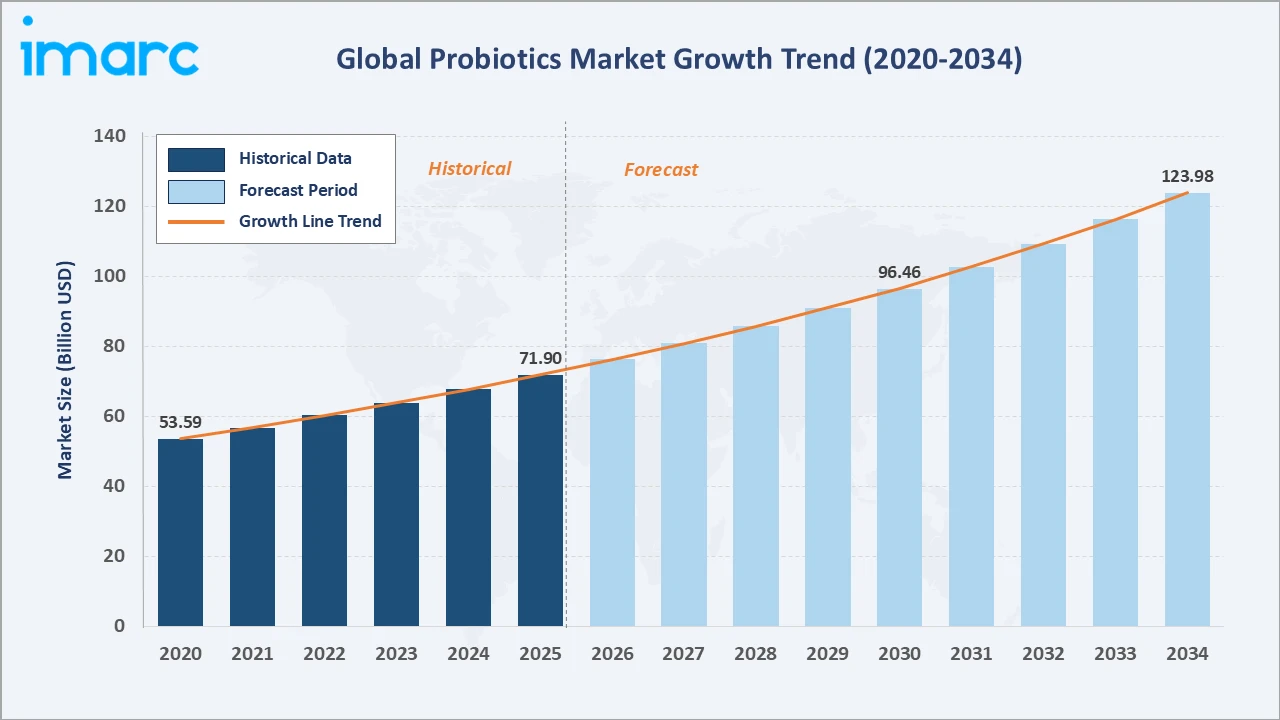
The global probiotics market reached USD 71.90 Billion in 2025 and is projected to reach USD 123.98 Billion by 2034, growing at a CAGR of 6.05% during 2026-2034. The market is driven by rising digestive-health awareness, expanding functional food and beverage consumption, growing clinical validation of probiotic strains, and increasing demand for preventive gut-health solutions. Bacteria dominates the ingredient segment at 88.4%, while supermarkets and hypermarkets lead distribution at 34.8%. Asia-Pacific commands 41.7% of the global market share, supported by rising disposable incomes and an expanding aging population across China, Japan, and South Korea.
Market Snapshot
|
Metric |
Value |
|
Market Size (2025) |
USD 71.90 Billion |
|
Forecast Market Size (2034) |
USD 123.98 Billion |
|
CAGR (2026-2034) |
6.05% |
|
Base Year |
2025 |
|
Historical Period |
2020-2025 |
|
Forecast Period |
2026-2034 |
|
Dominant Ingredient |
Bacteria (88.4%, 2025) |
|
Dominant Distribution Channel |
Supermarkets and Hypermarkets (34.8%, 2025) |
|
Leading Region |
Asia-Pacific (41.7%, 2025) |
The market expanded from USD 53.59 Billion in 2020 to USD 71.90 Billion in 2025, anchored at USD 96.46 Billion in 2030 and forecast to reach USD 123.98 Billion by 2034. Rising consumer focus on gut-health and immunity, alongside expanding functional food portfolios from global manufacturers, has sustained steady demand growth through the historical and forecast periods. Year-on-year gains have remained consistent across the timeline, with no material slowdown recorded even through periods of broader macroeconomic uncertainty, underscoring the structurally defensive nature of gut-health and preventive-nutrition spending.
To get more information on this market, Request Sample
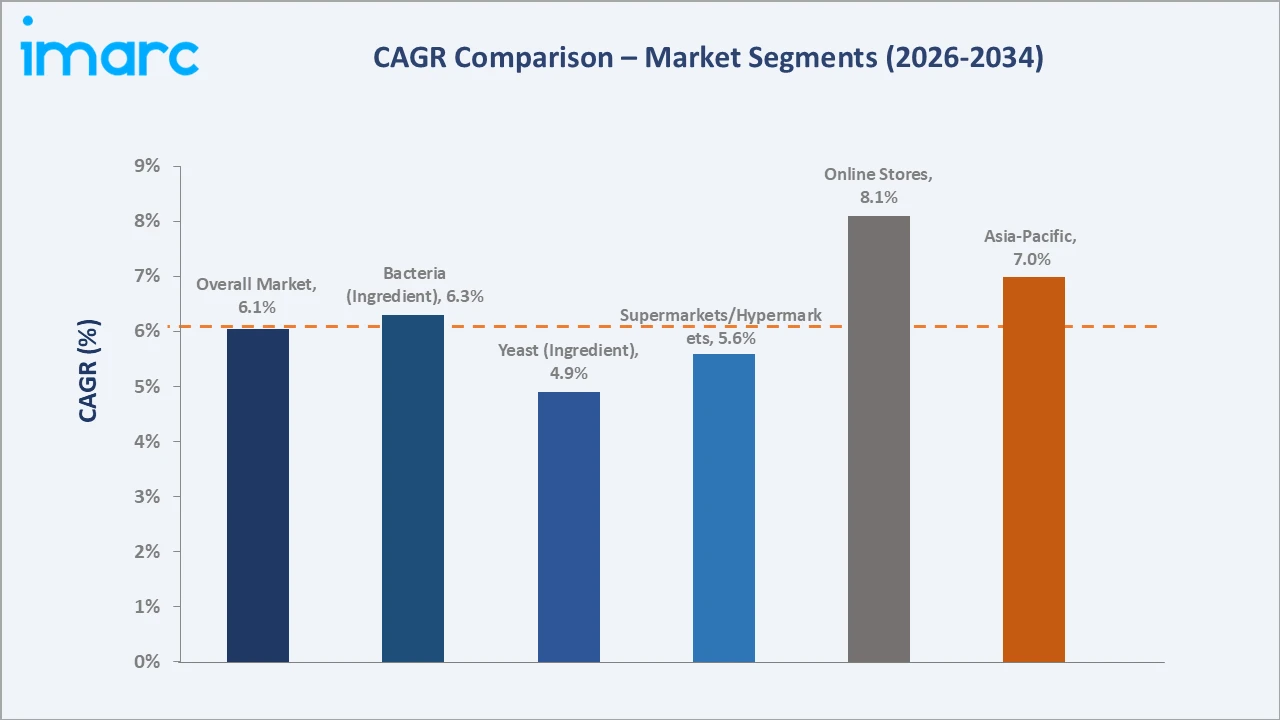
Online stores post the fastest CAGR at 8.1% as e-commerce penetration accelerates direct-to-consumer probiotic supplement sales. Asia-Pacific grows at 7.0% CAGR, ahead of the global average, as regional manufacturers scale functional food and supplement production.
Executive Summary
The global probiotics market reached USD 71.90 Billion in 2025, reflecting sustained consumer demand for digestive and immune-health products across food, beverage, and supplement categories. The market is projected to reach USD 123.98 Billion by 2034, growing at a 6.05% CAGR.
Bacteria at 88.4% dominates the ingredient segment through well-researched, widely incorporated strains such as Lactobacillus and Bifidobacterium. Supermarkets and hypermarkets at 34.8% lead distribution through broad product variety and convenient consumer access. Asia-Pacific at 41.7% leads globally through rising disposable incomes, government health initiatives, and a rapidly aging population base.
Key Market Insights
|
Insight |
Data |
|
Dominant Ingredient |
Bacteria - 88.4% revenue share (2025) |
|
Dominant Distribution Channel |
Supermarkets and Hypermarkets - 34.8% market share (2025) |
|
Leading Region |
Asia-Pacific - 41.7% market share (2025) |
|
Market Opportunity |
Postbiotic and synbiotic formulations; microencapsulation technology; personalized probiotic products; plant-based probiotic innovation |
Key Analytical Observations Supporting the Above Data:
- Bacteria at 88.4%: Bacteria dominates as extensively researched strains such as Lactobacillus and Bifidobacterium offer proven digestive and immune benefits, driving widespread incorporation across dairy, supplement, and functional food formulations by major global manufacturers.
- Supermarkets and Hypermarkets at 34.8%: This channel leads through broad product assortments, in-store promotions, and convenient one-stop access, enabling consumers to compare probiotic brands easily alongside routine grocery purchases.
- Asia-Pacific at 41.7%: The region dominates through rising disposable incomes, expanding functional food manufacturing, and a large aging population in China, Japan, and South Korea seeking preventive gut-health solutions.
Probiotics Market Overview
The global probiotics market encompasses the development, production, and distribution of live microorganisms and microbial-derived ingredients used across food and beverage, dietary supplement, and animal feed applications. The ecosystem integrates strain developers, fermentation and formulation companies, encapsulation technology providers, and retail and e-commerce distribution networks. Manufacturers across this ecosystem are progressively aligning product development with scientifically substantiated health claims, reflecting a broader industry shift toward evidence-based nutrition.
The ecosystem is shaped by rising healthcare costs, growing preventive-health awareness, expanding functional food portfolios, and regulatory frameworks governing probiotic health claims across major consumption markets. Continued investment in strain research, encapsulation technology, and cold-chain logistics infrastructure is enabling manufacturers to expand product shelf life and reach a wider base of retail and e-commerce distribution partners.
Market Dynamics
To evaluate market opportunities, Request Sample
Market Drivers
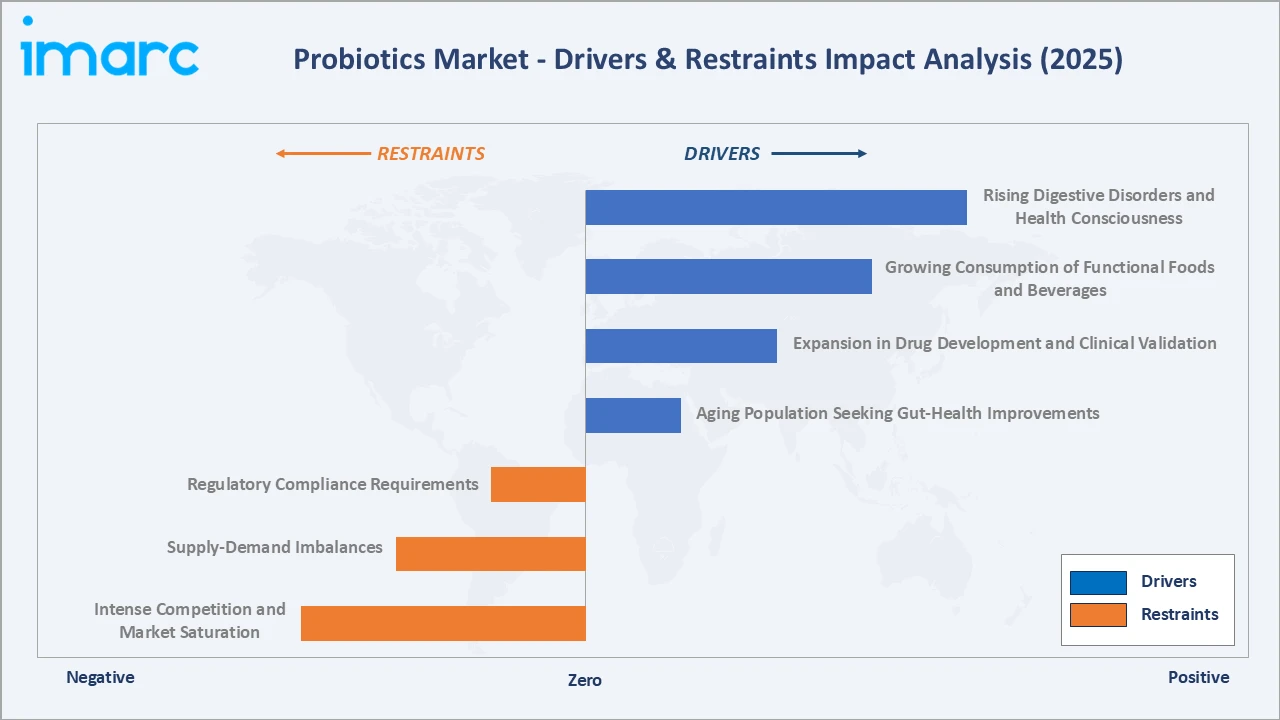
- Rising Digestive Disorders and Health Consciousness: Growing prevalence of digestive disorders is increasing consumer focus on gut-health management. Rising awareness of probiotics' preventive benefits is driving adoption across dietary supplements, fortified foods, and functional beverages worldwide. Consumers are increasingly seeking evidence-backed products that support long-term digestive wellness rather than symptomatic relief alone. This behavioural shift is prompting manufacturers to reformulate legacy product lines with clinically studied probiotic strains.
- Growing Consumption of Functional Foods and Beverages: Expanding demand for functional foods is boosting probiotic ingredient incorporation into yogurt, fermented drinks, and snacks. Manufacturers are launching fortified product lines, widening probiotic accessibility across mainstream retail channels. Convenience-oriented formats such as ready-to-drink shots and on-the-go supplement sachets are further broadening daily consumption occasions. This trend is reinforced by growing retailer support for dedicated functional food and beverage shelf space.
- Expansion in Drug Development and Clinical Validation: Increasing clinical research validating probiotic strain efficacy is strengthening consumer trust and regulatory acceptance, encouraging pharmaceutical and nutraceutical companies to expand probiotic-based drug and supplement development pipelines. A growing body of peer-reviewed studies linking specific strains to targeted health outcomes is enabling more precise product positioning. This is accelerating collaboration between contract research organizations and probiotic manufacturers.
- Aging Population Seeking Gut-Health Improvements: Rapidly aging populations, particularly across Asia-Pacific and Europe, are increasing demand for digestive and immune-support products, as older consumers prioritize preventive healthcare and microbiome-supporting dietary regimens. Age-related declines in natural gut flora diversity are prompting healthcare practitioners to recommend probiotic supplementation more routinely. Elderly-focused product formats, including easy-to-swallow capsules and fortified nutrition drinks, are gaining wider commercial traction.
Market Restraints
- Intense Competition and Market Saturation: A crowded competitive landscape with numerous regional and global players is intensifying pricing pressure and margin compression, particularly within mature supermarket and pharmacy distribution channels. Frequent private-label entries are further compressing branded manufacturer margins in developed markets. This saturation is compelling established players to differentiate through clinical substantiation and premium strain formulations rather than price alone.
- Supply-Demand Imbalances: Fluctuations in raw material and probiotic culture availability can disrupt production schedules, increasing costs for manufacturers and limiting the scalability of fortified food and supplement portfolios. Dependence on specialized fermentation facilities and temperature-controlled logistics adds further vulnerability to supply disruptions. Manufacturers are consequently investing in backward integration to secure culture supply continuity.
- Regulatory Compliance Requirements: Stringent and varying regulatory frameworks governing probiotic health claims across regions increase compliance costs and can delay product launches, particularly for companies expanding into new geographic markets. Divergent labeling and strain-approval standards between jurisdictions require costly market-specific reformulation and documentation. This regulatory complexity disproportionately burdens smaller manufacturers with limited compliance infrastructure.
Market Opportunities
- Postbiotic and Synbiotic Formulation Development: Rising interest in postbiotic and synbiotic formulations, offering enhanced stability and efficacy, is creating new product development opportunities for manufacturers targeting premium gut-health segments. These formulations address shelf-stability limitations associated with live-culture products, widening their suitability for non-refrigerated retail distribution. Early clinical interest suggests strong potential for premium pricing within specialty health channels.
- Personalized Probiotic Products: Advances in microbiome testing are enabling personalized probiotic recommendations, opening opportunities for companies to develop tailored supplement lines aligned with individual gut-health profiles. Subscription-based personalized nutrition platforms are beginning to integrate at-home microbiome test kits with customized strain blends. This convergence of diagnostics and supplementation is expected to command premium consumer pricing over standard formulations.
Market Challenges
- Strain Viability During Storage and Distribution: Maintaining probiotic strain viability through manufacturing, storage, and distribution remains challenging, requiring advanced encapsulation and cold-chain investment that raises overall production costs. Viability losses during long-distance shipping and extended retail shelf time remain a persistent quality-control concern. Manufacturers are addressing this through moisture-resistant packaging and stabilized freeze-dried strain technologies.
- Consumer Skepticism Around Efficacy Claims: Inconsistent clinical evidence across product categories fuels consumer skepticism regarding probiotic efficacy claims, requiring sustained investment in research and transparent labeling to build trust. Media scrutiny of unsubstantiated health claims has heightened regulatory and consumer expectations for verifiable clinical data. Building long-term brand credibility increasingly depends on third-party certification and published clinical trial outcomes.
Emerging Market Trends
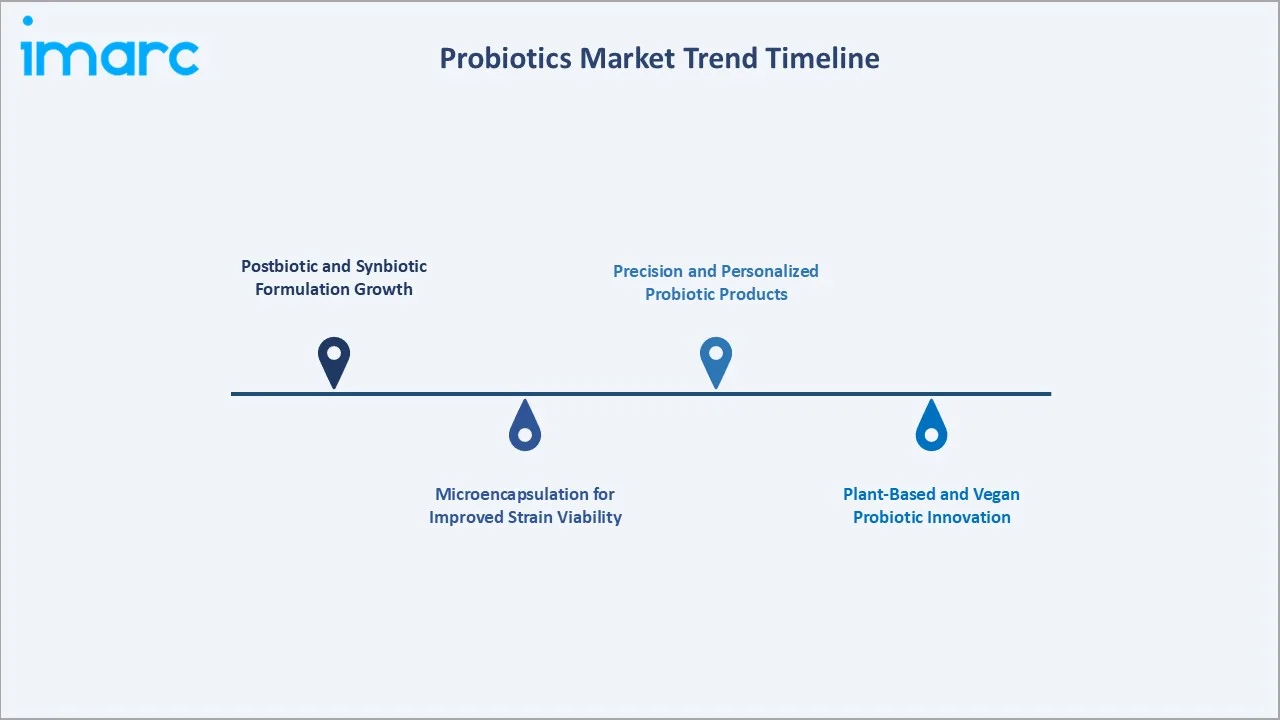
1. Postbiotic and Synbiotic Formulation Growth
Manufacturers are increasingly developing postbiotic and synbiotic formulations that combine probiotics with prebiotics or metabolic byproducts, offering improved shelf stability and targeted digestive-health benefits across supplement and functional food categories.
2. Microencapsulation for Improved Strain Viability
Microencapsulation technologies are enhancing probiotic strain survival through processing, storage, and gastric transit, enabling manufacturers to extend shelf life and improve product efficacy across fortified food and beverage applications.
3. Precision and Personalized Probiotic Products
Growing consumer interest in microbiome testing is driving demand for personalized probiotic supplements tailored to individual gut-health profiles, creating differentiated premium product opportunities for nutraceutical companies.
4. Plant-Based and Vegan Probiotic Innovation
Rising vegan and plant-based dietary trends are prompting manufacturers to develop dairy-free probiotic formulations using plant substrates, expanding the addressable consumer base across functional beverage and supplement segments.
Industry Value Chain Analysis
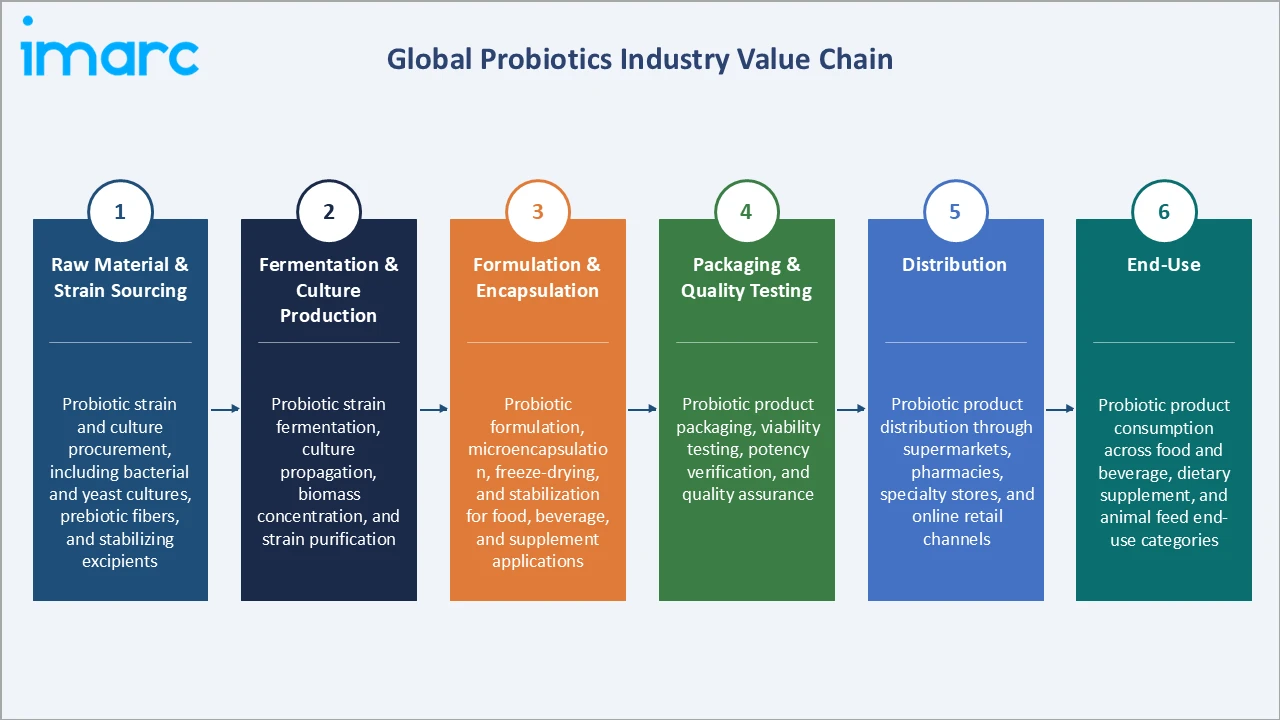
The probiotics value chain integrates raw material and strain sourcing, fermentation and culture production, formulation and encapsulation, packaging and quality testing, multi-channel distribution, and end-use application across food, supplement, and animal feed manufacturers.
|
Stage |
Key Participants |
|
Raw Material & Strain Sourcing |
Probiotic strain and culture procurement, including bacterial and yeast cultures, prebiotic fibers, and stabilizing excipients |
|
Fermentation & Culture Production |
Probiotic strain fermentation, culture propagation, biomass concentration, and strain purification |
|
Formulation & Encapsulation |
Probiotic formulation, microencapsulation, freeze-drying, and stabilization for food, beverage, and supplement applications |
|
Packaging & Quality Testing |
Probiotic product packaging, viability testing, potency verification, and quality assurance |
|
Distribution |
Probiotic product distribution through supermarkets, pharmacies, specialty stores, and online retail channels |
|
End-Use |
Probiotic product consumption across food and beverage, dietary supplement, and animal feed end-use categories |
The fermentation and culture production stage is the value chain's most technically critical stage, directly determining strain potency and product efficacy. The distribution stage is undergoing the fastest structural shift as online stores capture rising direct-to-consumer probiotic supplement demand. Manufacturers are increasingly integrating quality-testing and formulation stages to reduce lead times and maintain consistent strain viability from production through to end-consumer delivery.
Technology Landscape in the Probiotics Industry
Microencapsulation Technology
Microencapsulation technology protects probiotic strains from heat, moisture, and gastric acidity, improving viability and shelf stability. Its adoption is expanding across fortified foods, beverages, and supplement capsules requiring extended storage life.
Freeze-Drying (Lyophilization) Technology
Freeze-drying technology preserves probiotic strain potency during processing and storage, offering long shelf life and formulation flexibility, making it a preferred method for supplement manufacturers producing shelf-stable capsules and powders.
Postbiotic and Synbiotic Formulation Technology
Postbiotic and synbiotic formulation technology combines inactivated probiotic metabolites or live strains with complementary prebiotic fibers, delivering enhanced digestive benefits without strict cold-chain requirements. Its growing adoption is supporting premium product differentiation across supplement and functional food categories, particularly in regions where distribution infrastructure limits reliable cold-chain access.
Strain Identification and Genomic Sequencing Technology
Genomic sequencing and strain identification technologies enable precise characterization of probiotic strains, supporting targeted health-claim substantiation and regulatory compliance. Their use is expanding as manufacturers seek scientifically differentiated, clinically validated strain portfolios that can withstand increasing regulatory and consumer scrutiny of efficacy claims.
Market Segmentation Analysis
The report covers the following segments:
|
Segment Category |
Leading Segment |
Market Share |
Year |
|
Ingredient |
Bacteria |
88.4% |
2025 |
|
Distribution Channel |
Supermarkets and Hypermarkets |
34.8% |
2025 |
|
Application |
Food and Beverages |
🔒 |
2025 |
|
Form |
Liquid |
🔒 |
2025 |
|
Region |
Asia-Pacific |
41.7% |
2025 |

By Ingredient
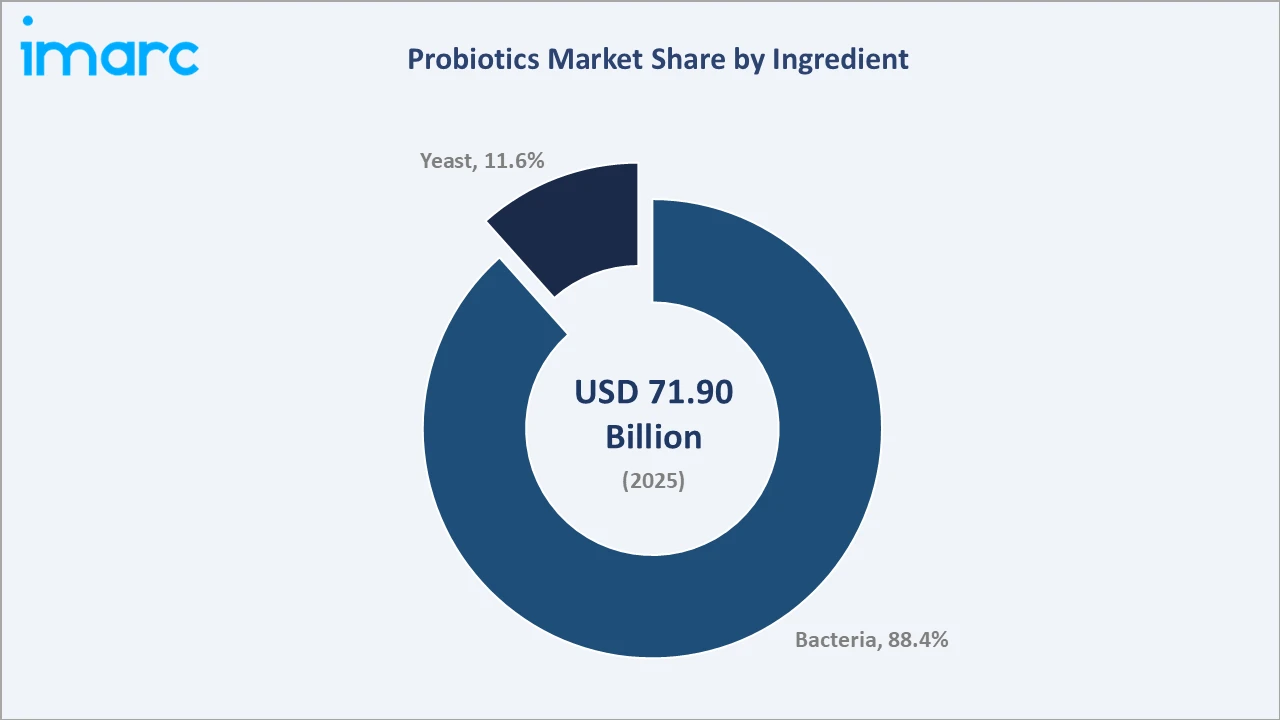
Bacteria leads at 88.4% in 2025, encompassing well-researched strains such as Lactobacillus and Bifidobacterium that are widely incorporated across dairy, supplement, and functional food formulations.
To access detailed market analysis, Request Sample
Yeast at 11.6% serves niche applications, led by Saccharomyces boulardii, valued for its resilience to antibiotic treatment and its targeted use in digestive-health supplement formulations, particularly among consumers seeking alternatives to bacteria-based strains.
By Distribution Channel
Supermarkets and hypermarkets lead at 34.8% through broad product variety and convenient one-stop consumer access. Pharmacies and drugstores follow at 25.7%, driven by consumer trust in health-focused retail environments.
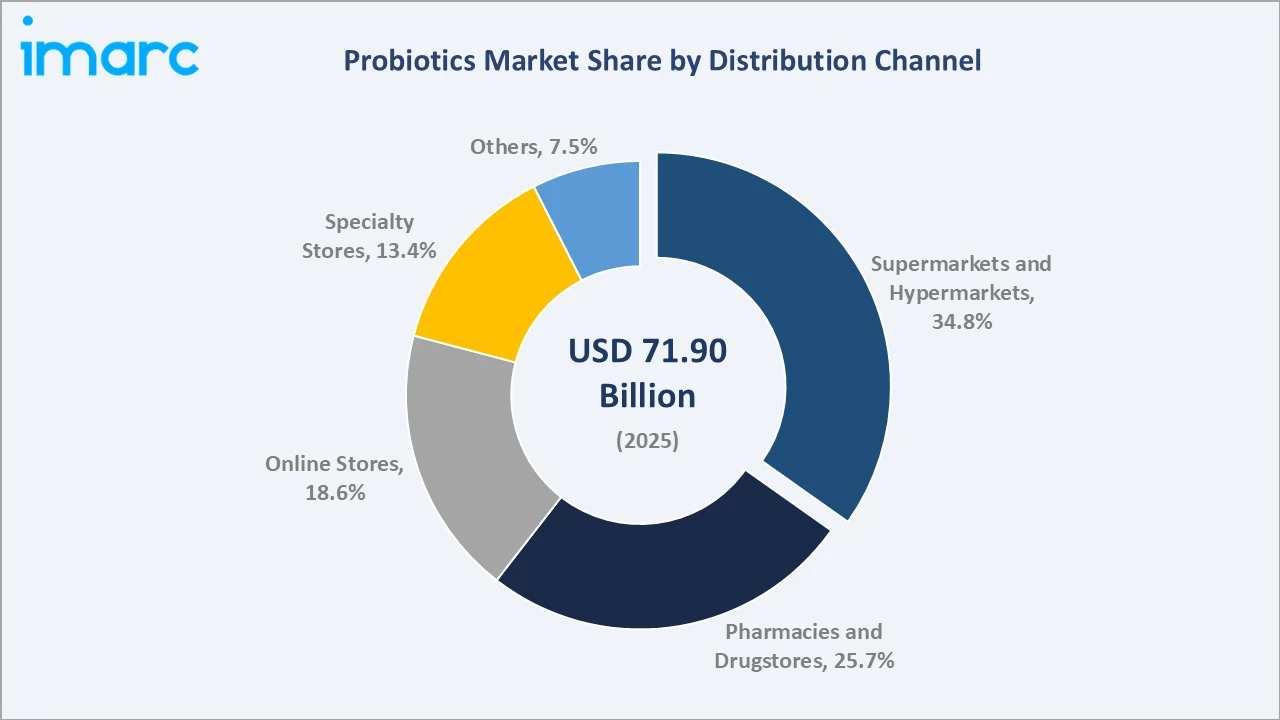
Online stores at 18.6% are growing fastest through e-commerce convenience and expanding direct-to-consumer subscription models. Specialty stores at 13.4% and other channels at 7.5% serve niche and health-focused consumer segments.
Regional Market Insights
|
Region |
Share (2025) |
Key Probiotics Market Drivers & Characteristics |
|
Asia-Pacific |
41.7% |
Driven by rising disposable incomes, expanding functional food manufacturing capacity, supportive government health initiatives, and a growing aging population |
|
Europe |
25.4% |
Supported by strong functional food traditions, stringent quality regulations, and high consumer awareness of gut-health benefits |
|
North America |
21.8% |
Driven by expanding dietary supplement adoption, strong retail infrastructure, and growing preventive-healthcare consumer behavior |
|
Latin America |
6.4% |
Driven by rising health awareness, expanding modern retail penetration, and growing functional food consumption |
|
Middle East and Africa |
4.7% |
Emerging with growing health consciousness, expanding retail infrastructure, and increasing interest in functional nutrition |
Asia-Pacific, at 41.7%, leads through expanding functional food manufacturing capacity, rising disposable incomes, and a rapidly growing health-conscious consumer base. Europe, at 25.4%, reflects strong functional food traditions and stringent quality regulation.
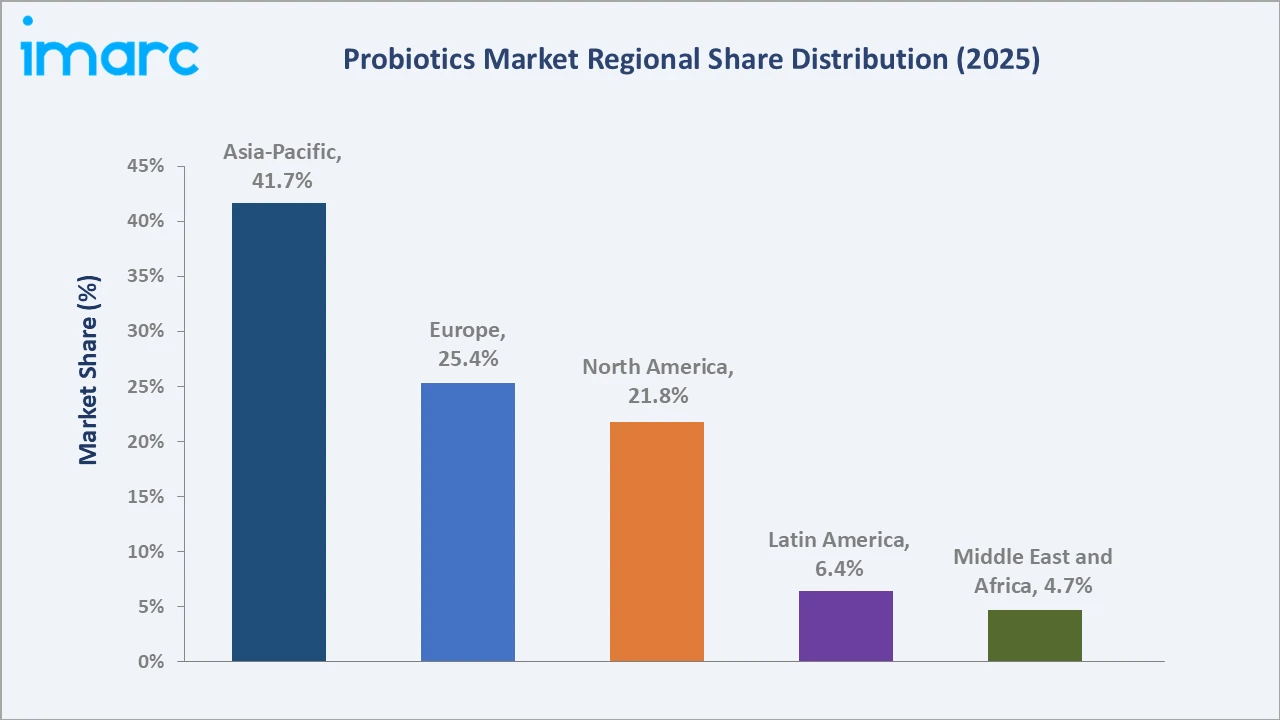
North America, at 21.8%, reflects robust dietary supplement adoption and preventive-healthcare consumer trends. Latin America, at 6.4%, and MEA, at 4.7%, represent early-stage but growing probiotics markets, supported by expanding modern retail infrastructure and gradually rising consumer awareness of functional nutrition benefits.
Competitive Landscape
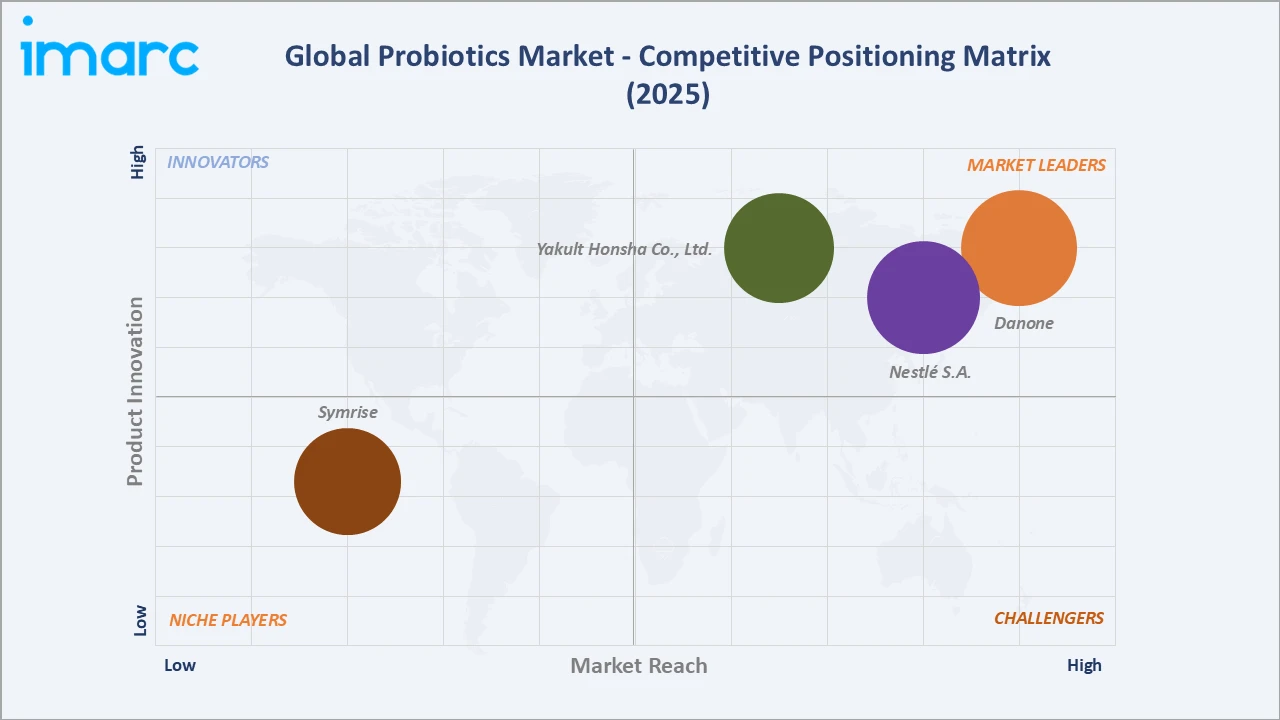
The global probiotics market competitive landscape is moderately fragmented, comprising diversified global food and beverage conglomerates, specialized probiotic culture developers, and regional dairy and supplement manufacturers. Competitive intensity is highest within the supermarket and pharmacy channels, where established brands defend shelf space against a growing number of private-label and regional entrants.
|
Company Name |
Key Products |
Market Position |
Core Strength |
|
Danone |
Activia, Actimel |
Market Leader |
Global leadership in probiotic dairy and fermented food brands |
|
Nestlé S.A. |
NESTLÉ a+ Actiplus Probiotic Dahi |
Market Leader |
Extensive global distribution and nutrition science research capability |
|
Yakult Honsha Co., Ltd. |
Yakult Fermented Milk Drink |
Market Leader |
Pioneer in probiotic fermented milk beverages with strong Asian penetration |
|
Symrise |
Probi Probiotic Strains |
Niche Player |
Specialized clinically-documented probiotic strain development |
Key players include Danone, Nestlé S.A., Yakult Honsha Co., Ltd., Symrise, and others.
Key Company Profiles
Danone
Danone is a France-based global food and beverage company with a leading presence in the probiotics market through its Activia and Actimel fermented dairy product lines.
- Key Products: Activia, Actimel
- Strategic Focus: Strengthening its global probiotic dairy leadership through product innovation, clinical research investment, and expansion into emerging functional food categories. The company is also prioritizing sustainable sourcing and packaging initiatives to align its probiotic portfolio with evolving consumer environmental expectations.
Nestlé S.A.
Nestlé S.A. is a Switzerland-based global nutrition and health company with a strong presence in the probiotics market through its dedicated probiotic supplement and fortified nutrition offerings.
- Key Products: NESTLÉ a+ Actiplus Probiotic Dahi
- Strategic Focus: Expanding its global nutrition science capabilities and probiotic-fortified product portfolio across supplement and functional food segments. Nestlé is also deepening its research partnerships with academic and clinical institutions to accelerate strain-specific health-claim validation.
Market Concentration Analysis
The probiotics market is moderately fragmented, with the top five key players collectively accounting for a significant share of global branded probiotic food, beverage, and supplement revenue. Market concentration is expected to gradually increase over the forecast period as leading players pursue acquisitions and strain-technology partnerships to strengthen their competitive positioning. Regional dairy and supplement manufacturers continue to hold meaningful local share, particularly in emerging markets where consumer preference favors culturally established fermented product formats and locally trusted brand names.
Investment & Growth Opportunities
Highest Growth Segments
Online stores (~8.1% CAGR), Asia-Pacific regional demand (~7.0% CAGR), and postbiotic and synbiotic premium formulations represent the highest-growth investment vectors through 2034. These segments are benefiting from a combination of rising digital retail penetration, expanding regional manufacturing capacity, and growing consumer willingness to pay a premium for scientifically substantiated gut-health products.
Emerging Investment Opportunities
Personalized probiotic supplement platforms represent a high-value emerging opportunity, as microbiome-testing-linked product recommendations command premium pricing over standard fortified food and supplement offerings. Investment in direct-to-consumer subscription models is further strengthening customer retention and enabling manufacturers to build recurring revenue streams around personalized gut-health regimens.
Investment Themes
- Strain Technology Vertical Integration: Companies investing in proprietary strain research and encapsulation technology can secure a sustainable efficacy and shelf-stability advantage over competitors reliant on third-party culture sourcing. This vertical integration also reduces exposure to raw material supply disruptions, supporting more resilient long-term production planning.
- E-Commerce and Direct-to-Consumer Expansion: Investment in online distribution infrastructure captures the probiotics market's fastest-growing channel, enabling subscription-based supplement models and improved consumer retention. Digital channels also provide manufacturers with richer consumer data, supporting more targeted product development and marketing strategies.
Future Market Outlook (2026-2034)
The global probiotics market is projected to grow from USD 71.90 Billion in 2025 to USD 123.98 Billion by 2034, delivering a 6.05% CAGR over the forecast period. The market's anchor value of USD 96.46 Billion in 2030 reflects steady structural demand growth. Postbiotic and synbiotic formulations are expected to achieve wider mainstream adoption, personalized probiotic products will gain commercial traction, and online distribution will continue capturing rising consumer share.
Two structural forces define probiotics market growth through 2034 with strong confidence. Rising global preventive-healthcare awareness creates a self-reinforcing demand cycle for gut-health products. Asia-Pacific's expanding aging population and functional food manufacturing base sustain above-average regional demand growth throughout the forecast period.
A third reinforcing factor is the accelerating shift of probiotic consumption from single-format dairy products toward a diversified range of beverages, supplements, and fortified snacks, broadening the market's addressable consumer base. As clinical validation deepens and manufacturing technologies mature, probiotics are expected to become an increasingly standard component of preventive nutrition strategies across both developed and emerging economies, reinforcing the market's long-term structural growth outlook through 2034 and beyond.
Research Methodology
Primary Research
Primary research comprised structured interviews with industry stakeholders (2025), including probiotic strain scientists, functional food product managers, supplement manufacturers, and retail category leads. These interviews provided qualitative insight into evolving product development priorities, regulatory challenges, and channel-specific demand dynamics.
Secondary Research
Secondary research encompassed company annual reports, regulatory health-claim databases, functional food industry publications, and probiotics market forecast studies. Over 50 secondary sources were reviewed to validate market sizing, segmentation shares, and regional growth assumptions.
Forecasting Models
Market revenue forecasts were developed using a bottom-up model incorporating ingredient-level consumption trends, distribution-channel revenue analysis, and regional demand growth adjusted for regulatory and pricing factors. Historical growth patterns from 2020 to 2025 were used to calibrate forecast assumptions through 2034.
Probiotics Market Report Scope:
| Report Features | Details |
|---|---|
| Base Year of the Analysis | 2025 |
| Historical Period | 2020-2025 |
| Forecast Period | 2026-2034 |
| Units | Billion USD |
| Scope of the Report | Exploration of Historical Trends and Probiotics Market Outlook, Industry Catalysts and Challenges, Segment-Wise Historical and Future Market Assessment:
|
| Ingredients Covered | Bacteria, Yeast |
| Distribution channels Covered | Supermarkets and Hypermarkets, Pharmacies/Drugstores, Specialty Stores, Online Stores, Others |
| Applications Covered | Food and Beverages, Dietary Supplements, Animal Feed |
| Forms Covered | Dry, Liquid |
| Regions Covered | Asia Pacific, Europe, North America, Latin America, Middle East and Africa |
| Countries Covered | United States, Canada, Germany, France, United Kingdom, Italy, Spain, Russia, China, Japan, India, South Korea, Australia, Indonesia, Brazil, Mexico |
| Companies Covered | Danone, Nestlé S.A., Yakult Honsha Co., Ltd., Symrise, etc. |
| Customization Scope | 10% Free Customization |
| Post-Sale Analyst Support | 10-12 Weeks |
| Delivery Format | PDF and Excel through Email (We can also provide the editable version of the report in PPT/Word format on special request) |
Key Benefits for Stakeholders:
- IMARC’s industry report offers a comprehensive quantitative analysis of various market segments, historical and current market trends, market forecasts, and dynamics of the probiotics market from 2020-2034.
- The research report provides the latest information on the market drivers, challenges, and opportunities in the global probiotics market.
- The study maps the leading, as well as the fastest-growing, regional markets. It further enables stakeholders to identify the key country-level markets within each region.
- Porter's five forces analysis assists stakeholders in assessing the impact of new entrants, competitive rivalry, supplier power, buyer power, and the threat of substitution. It helps stakeholders to analyze the level of competition within the probiotics industry and its attractiveness.
- The competitive landscape allows stakeholders to understand their competitive environment and provides insight into the current positions of key players in the market.
Frequently Asked Questions About the Probiotics Market Report
The global probiotics market reached USD 71.90 Billion in 2025, driven by the bacteria ingredient segment dominant at 88.4%, supermarkets and hypermarkets leading distribution at 34.8%, and Asia-Pacific commanding 41.7% market share. This scale reflects sustained global consumer demand for gut-health and immunity-focused nutrition.
The probiotics market grows at 6.05% CAGR during 2026-2034, reaching USD 123.98 Billion by 2034, reflecting sustained gut-health demand and expanding functional food and supplement portfolios. This growth trajectory is anchored by a market value of approximately USD 96.46 Billion in 2030.
Bacteria leads at 88.4%, capturing well-researched strains such as Lactobacillus and Bifidobacterium widely incorporated across dairy, supplement, and functional food formulations. Yeast accounts for the remaining 11.6%, led by targeted strains such as Saccharomyces boulardii.
Supermarkets and hypermarkets lead at 34.8% through broad product variety and convenient consumer access, while online stores grow fastest at ~8.1% CAGR through expanding e-commerce penetration. Pharmacies and drugstores follow closely at 25.7%, supported by strong consumer trust in health-focused retail settings.
Asia-Pacific leads at 41.7% through the region's expanding functional food manufacturing scale and growing health-conscious consumer base, followed by Europe at 25.4% and North America at 21.8%.
Leading companies include Danone, Nestlé S.A., Yakult Honsha Co., Ltd., Symrise, and others.
The probiotics market is projected to reach approximately USD 96.46 Billion by 2030, with postbiotic and synbiotic formulations gaining broader mainstream commercial adoption and online distribution channels continuing to expand their consumer reach.
Three priority investment opportunities: strain technology vertical integration, e-commerce and direct-to-consumer expansion, and personalized microbiome-linked probiotic product development. Each of these areas offers manufacturers a pathway to premium pricing and stronger long-term consumer loyalty.
Need more help?
- Speak to our experienced analysts for insights on the current market scenarios.
- Include additional segments and countries to customize the report as per your requirement.
- Gain an unparalleled competitive advantage in your domain by understanding how to utilize the report and positively impacting your operations and revenue.
- For further assistance, please connect with our analysts.
 Request Customization
 Speak to an Analyst
 Request Brochure
 Inquire Before Buying
Benefits of Customization
- Personalize this research
- Triangulate with your data
- Get data as per your format and definition
- Gain a deeper dive into a specific application, geography, customer, or competitor
- Any level of personalization
Get in Touch With Us
UNITED STATES
Phone: +1-201-971-6302
INDIA
Phone: +91-120-433-0800
UNITED KINGDOM
Phone: +44-753-714-6104
Email: [email protected]
Client Testimonials




.webp)




.webp)













Related Reports

Choose your plan
*Please note that the prices mentioned below are starting prices for each bundle type. Kindly contact our team for further details.*
Single User License
- 1 User License, Access on 2 Devices
- PDF Report + Excel Dataset (Password Protected)
- Lifetime Access
- No Printing Rights
- 10% Free Report Customization
- 10–12 Weeks of Analyst Support
Five User License
- Access for 5 Users, 2 Devices per User
- PDF Report + Excel Dataset (Password Protected)
- Lifetime Access
- Dedicated Account Manager
- 12–14 Weeks of Analyst Support
- No Printing Rights
- 15% Free Report Customization
- 25% Discount on Your Next Purchase
Corporate User License
- Unlimited User Access (Within Your Organization)
- PDF Report + Excel Dataset
- Lifetime Access
- Dedicated Account Manager
- 14–20 Weeks of Analyst Support
- No Printing Rights
- 20% Free Report Customization
- 30% Discount on Your Next Purchase
Essential Insights
What's included:
3 reports
- Lifetime Access
- PDF Reports
- Excel Datasets
- 2 Weeks of Free Analyst Support
- 2 User Licenses
- Access on 2 Devices
- Printing Rights
- Complimentary PowerPoint (PPT) Version
- Complimentary License Upgrade
Professional Access
What's included:
5 reports
- Lifetime Access
- PDF Reports
- Excel Datasets
- 8 Weeks of Free Analyst Support
- 2 User Licenses
- Access on 2 Devices
- Printing Rights
- Complimentary PowerPoint (PPT) Version
- Complimentary License Upgrade
Business Advantage
What's included:
8 reports
- Lifetime Access
- PDF Reports
- Excel Datasets
- 14 Weeks of Free Analyst Support
- 2 User Licenses
- Access on 2 Devices
- Printing Rights
- Complimentary PowerPoint (PPT) Version
- Complimentary License Upgrade
Enterprise Intelligence
What's included:
10 reports
- Lifetime Access
- PDF Reports
- Excel Datasets
- 20 Weeks of Free Analyst Support
- 2 User Licenses
- Access on 2 Devices
- Printing Rights
- Complimentary PowerPoint (PPT) Version
- Complimentary License Upgrade