
Purified Terephthalic Acid (PTA) Prices, Trend, Chart, Demand, Market Analysis, News, Historical and Forecast Data Report 2026 Edition
Purified Terephthalic Acid (PTA) Price Trend, Index and Forecast
Track the latest insights on purified terephthalic acid (PTA) price trend and forecast with detailed analysis of regional fluctuations and market dynamics across North America, Latin America, Central Europe, Western Europe, Eastern Europe, Middle East, North Africa, West Africa, Central and Southern Africa, Central Asia, Southeast Asia, South Asia, East Asia, and Oceania.
Purified Terephthalic Acid (PTA) Prices Outlook Q3 2026
- USA: USD 1028/MT
- China: USD 715/MT
- Japan: USD 766/MT
- Germany: USD 965/MT
- Turkey: USD 864/MT
Purified Terephthalic Acid (PTA) Price Chart
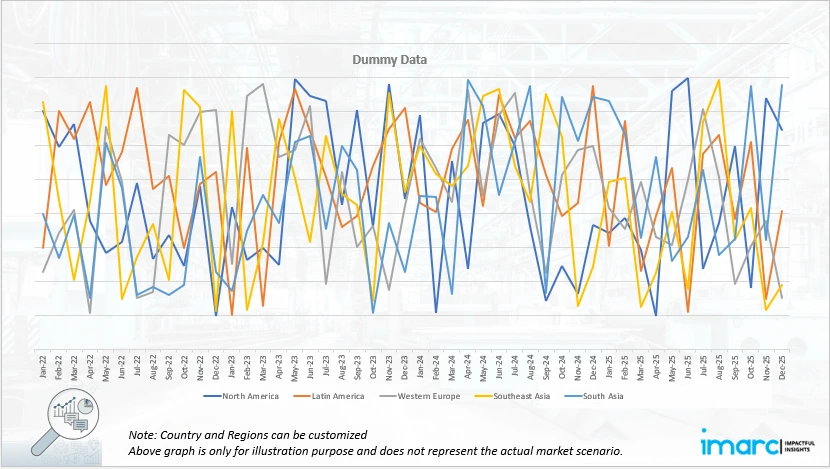
Get real-time access to monthly/quarterly/yearly prices Request Sample
During the third quarter of 2026, the purified terephthalic acid (PTA) prices in the USA reached 1028 USD/MT in September. Prices moved upward as domestic producers carried firmer replacement costs for paraxylene feedstock into their quarterly quotations. Plant operating rates at downstream polyester and bottle resin units stayed firm, which kept procurement of prompt material active through the period.
During the third quarter of 2026, the purified terephthalic acid (PTA) prices in China reached 715 USD/MT in September. Prices advanced as domestic producers directed a larger share of output toward export commitments, which trimmed the volumes offered into the local market. Steady demand from polyester fiber and filament yarn manufacturers absorbed the material that remained available.
During the third quarter of 2026, the purified terephthalic acid (PTA) prices in Japan reached 766 USD/MT in September. Prices moved higher as import dependent buyers faced firmer replacement costs on material sourced from established overseas origins. Steady demand from polyester fiber, film and resin producers kept processing activity firm through the period. Domestic production covers only part of requirements, so the market stayed sensitive to landed costs at Japanese ports.
During the third quarter of 2026, the purified terephthalic acid (PTA) prices in Germany reached 965 USD/MT in September. Prices advanced as European buyers absorbed firmer replacement costs on material sourced from established overseas origins. Steady demand from polyester fiber, packaging film and bottle resin converters kept offtake consistent through the period. Importers across the region depend on incoming cargoes for a substantial part of their requirements, so movements in origin prices fed quickly into landed values.
During the third quarter of 2026, the purified terephthalic acid (PTA) prices in Turkey reached 864 USD/MT in September. Prices climbed as importers and domestic converters passed on firmer replacement costs for material purchased from established overseas suppliers. Steady demand from polyester yarn, textile and packaging producers kept procurement active through the period. Traders held cautious stock positions, which restricted the volume of spot material available for immediate delivery.
Purified Terephthalic Acid (PTA) Prices Outlook Q2 2026
- USA: USD 969/MT
- China: USD 678/MT
- Japan: USD 722/MT
- Germany: USD 886/MT
- Turkey: USD 803/MT
During the second quarter of 2026, the purified terephthalic acid (PTA) prices in the USA reached 969 USD/MT in June. The market experienced a marginal increase, supported by steady demand from polyester producers and improved downstream operating conditions. PTA suppliers adjusted offers as feedstock availability and production economics influenced market sentiment. Stable consumption from textile and packaging sectors helped maintain buying activity, while inventory management by producers limited excessive price movements.
During the second quarter of 2026, the purified terephthalic acid (PTA) prices in China reached 678 USD/MT in June. Prices increased as domestic demand from polyester manufacturers improved gradually and supported market activity. Production adjustments among PTA producers helped maintain supply discipline, while fluctuations in feedstock costs influenced overall pricing trends. Export demand remained an important factor for market participants as producers assessed international opportunities.
During the second quarter of 2026, the purified terephthalic acid (PTA) prices in Japan reached 722 USD/MT in June. PTA prices recorded an upward movement due to stable demand from polyester fiber and resin manufacturers. Producers maintained firm offers as feedstock cost conditions supported higher production expenses. Import trends and regional supply availability influenced procurement strategies among buyers. The market benefited from consistent downstream consumption, particularly from textile related industries.
During the second quarter of 2026, the purified terephthalic acid (PTA) prices in Germany reached 886 USD/MT in June. The market witnessed a moderate increase due to stable industrial demand and firm supplier pricing. PTA consumers in polyester applications managed procurement carefully as energy costs and feedstock conditions affected production economics. Regional supply availability and import competition played an important role in determining price levels.
During the second quarter of 2026, the purified terephthalic acid (PTA) prices in Turkey reached 803 USD/MT in June. PTA prices increased as demand from polyester processing industries remained supportive. Import costs, regional supply conditions, and currency related procurement considerations influenced market pricing. Buyers maintained regular purchasing activity due to ongoing requirements from textile and packaging manufacturers. Supplier pricing strategies reflected changes in production economics and availability of material.
Purified Terephthalic Acid (PTA) Prices Outlook Q1 2026
- USA: USD 965/MT
- China: USD 649/MT
- Japan: USD 643/MT
- Germany: USD 840/MT
- Turkey: USD 776/MT
During the first quarter of 2026, the purified terephthalic acid (PTA) prices in the USA reached 965 USD/MT in March. Prices moved downward as downstream polyester and PET resin buyers limited spot procurement and relied on contracted volumes. Feedstock paraxylene costs offered some support, but the effect was weakened by muted demand from packaging and textile converters. Adequate domestic availability and cautious buying reduced the urgency for fresh orders.
During the first quarter of 2026, the purified terephthalic acid (PTA) prices in China reached 649 USD/MT in March. Prices increased as feedstock paraxylene costs stayed firm and supported producer offers. Downstream polyester operating activity improved after holiday related pauses, which encouraged selective restocking by fiber and packaging converters. Sellers benefited from firmer raw material costs, but gains were controlled by ample domestic PTA capacity and cautious procurement.
During the first quarter of 2026, the purified terephthalic acid (PTA) prices in Japan reached 643 USD/MT in March. Prices rose sharply due to tighter paraxylene availability and higher landed feedstock costs. Regional cargo competition, plant related supply limits, and delayed shipments strengthened seller confidence. PET and polyester buyers purchased cautiously, yet lower spot availability encouraged restocking at higher offer levels. Import replacement costs also increased, giving domestic suppliers stronger pricing support.
During the first quarter of 2026, the purified terephthalic acid (PTA) prices in Germany reached 840 USD/MT in March. Prices increased as firmer paraxylene costs raised production expenses across the European PTA chain. Buyers in polyester, bottle grade resin, and industrial applications remained selective, but restocking needs supported steady procurement. Supply remained controlled as regional producers adjusted operating rates to match moderate demand.
During the first quarter of 2026, the purified terephthalic acid (PTA) prices in Turkey reached 776 USD/MT in March. Prices increased as import dependent buyers faced higher replacement costs from Asian and European suppliers. Firmer paraxylene values supported PTA offers, and freight related expenses added pressure to delivered cargoes. Polyester and textile demand showed selective improvement, encouraging buyers to rebuild inventories when prices appeared likely to remain firm.
Purified Terephthalic Acid (PTA) Prices Outlook Q4 2025
- USA: USD 972/MT
- China: USD 621/MT
- Japan: USD 567/MT
- Germany: USD 797/MT
- Turkey: USD 742/MT
During the fourth quarter of 2025, the purified terephthalic acid prices in the USA reached 972 USD/MT in December. The upward price movement was largely supported by firm downstream polyester demand from packaging and textile sectors, which maintained steady offtake levels throughout the quarter. Domestic producers operated under elevated energy and feedstock cost pressure, limiting pricing flexibility and encouraging sellers to push offers higher.
During the fourth quarter of 2025, the purified terephthalic acid prices in China reached 621 USD/MT in December. Prices trended upward due to balanced supply conditions and stable operating rates at major PTA facilities. Feedstock cost firmness, particularly from upstream aromatics, encouraged producers to maintain higher offer levels. Seasonal restocking by polyester manufacturers ahead of year-end production schedules provided consistent demand support.
During the fourth quarter of 2025, the purified terephthalic acid prices in Japan reached 567 USD/MT in December. Prices softened during the quarter as downstream polyester demand remained subdued, particularly from export-oriented textile producers. Ample domestic availability and steady import inflows added to supply comfort, limiting sellers’ ability to defend earlier price levels.
During the fourth quarter of 2025, the purified terephthalic acid prices in Germany reached 797 USD/MT in December. Prices moved upward amid rising production costs linked to energy and compliance-related expenses. Downstream demand from packaging and industrial fiber manufacturers remained resilient, supporting consistent material offtake. Limited regional supply availability due to controlled operating rates also tightened market conditions.
During the fourth quarter of 2025, the purified terephthalic acid prices in Turkey reached 742 USD/MT in December. The market experienced upward price pressure driven by strong import reliance and currency-related cost escalation. Downstream textile and fiber producers maintained steady demand, particularly for export-oriented manufacturing. Limited availability from key supplying regions tightened supply chains, prompting buyers to secure volumes proactively.
Purified Terephthalic Acid (PTA) Prices Outlook Q3 2025
- USA: USD 960/MT
- China: USD 614/MT
- Japan: USD 574/MT
- Germany: USD 757/MT
- Turkey: USD 726/MT
During the third quarter of 2025, the purified terephthalic acid (PTA) prices in the USA reached 960 USD/MT in September. Prices rose compared with the previous quarter due to firmer polyester chain activity and steady offtake from packaging and fiber producers. Import timing and feedstock supply consistency supported stable operations, while moderate inventory rebuilding by converters contributed to the upward movement.
During the third quarter of 2025, the purified terephthalic acid (PTA) prices in China reached 614 USD/MT in September. Prices declined relative to the prior quarter as downstream polyester producers procured cautiously amid stable but not accelerating demand. Adequate availability and continuous PTA throughput supported the downward shift, while buyers relied more on existing stocks to manage procurement cycles.
During the third quarter of 2025, the purified terephthalic acid (PTA) prices in Japan reached 574 USD/MT in September. Prices softened compared with the prior quarter as downstream procurement remained conservative and operational efficiencies improved. Import flows and predictable feedstock logistics contributed to sufficient supply, allowing buyers to delay purchases and reinforcing the downward movement.
During the third quarter of 2025, the purified terephthalic acid (PTA) prices in Germany reached 757 USD/MT in September. Prices increased versus the previous quarter as the polyester and resin sectors expanded procurement. Some supply tightness emerged from scheduled maintenance, and cross-border transportation variability encouraged buyers to secure volumes earlier, supporting the upward pricing direction.
During the third quarter of 2025, the purified terephthalic acid (PTA) prices in Turkey reached 726 USD/MT in September. Prices declined relative to the prior quarter as downstream producers moderated purchases and maintained comfortable inventory levels. Stable import arrivals, along with steady plant throughput among regional suppliers, supported the overall softening in market sentiment.
Purified Terephthalic Acid (PTA) Prices Outlook Q2 2025
- USA: USD 943/MT
- China: USD 641/MT
- Japan: USD 586/MT
- Germany: USD 713/MT
- Turkey: USD 736/MT
During the second quarter of 2025, purified terephthalic acid (PTA) prices in the USA reached 943 USD/MT in June. The U.S. purified terephthalic acid market saw stable-to-firm prices, supported by consistent demand from the polyester and PET resin sectors. Raw material paraxylene costs remained steady, helping maintain balanced pricing. Seasonal demand from the packaging and textile industries kept consumption levels healthy, while steady domestic production avoided significant supply pressure. Export interest was moderate, with limited impact from global market fluctuations. Overall, stable input costs and sustained downstream demand kept the U.S. PTA price trend relatively firm during the quarter.
During the second quarter of 2025, purified terephthalic acid (PTA) prices in China reached 641 USD/MT in June. China’s PTA prices in the second quarter of 2025 experienced mild upward movement, supported by steady demand from polyester and PET resin manufacturers. Production rates remained high, but were balanced by solid domestic consumption, preventing oversupply pressures. Feedstock paraxylene prices held relatively steady, offering cost stability for producers. Export demand was moderate, influenced by seasonal trends in key textile markets. Environmental compliance costs and controlled capacity additions also played a role in sustaining prices. Overall, the market reflected healthy fundamentals with limited volatility during the quarter.
During the second quarter of 2025, the purified terephthalic acid (PTA) prices in Japan reached 586 USD/MT in June. Japan’s purified terephthalic acid (PTA) prices remained stable, driven by balanced supply-demand dynamics. Domestic polyester and PET resin producers maintained steady consumption levels, while paraxylene feedstock costs showed little fluctuation, ensuring pricing consistency. Imports and exports remained in check, as regional trade flows aligned with seasonal textile industry demand. Environmental regulations and energy costs contributed slightly to production expenses, but without causing major price swings. The market outlook stayed steady, with minimal disruption from global shifts during the quarter.
During the second quarter of 2025, the purified terephthalic acid (PTA) prices in Germany reached 713 USD/MT in June. Germany’s purified terephthalic acid (PTA) market saw steady prices, underpinned by stable demand from the packaging, textile, and industrial sectors. Feedstock paraxylene costs held firm, keeping production costs predictable. European environmental regulations and energy pricing factored into operational expenses but did not trigger significant market volatility. Imports complemented domestic supply, ensuring a balanced market. Seasonal demand from the beverage packaging industry further supported consumption levels, leading to a stable-to-slightly firm price trend throughout the quarter.
During the second quarter of 2025, the purified terephthalic acid (PTA) prices in Turkey reached 736 USD/MT in June. Turkey’s purified terephthalic acid (PTA) market experienced stable pricing, supported by steady consumption from the polyester fiber and PET resin industries. Feedstock paraxylene costs remained stable, ensuring cost predictability for producers. Domestic supply was supplemented by imports, with trade flows aligned to meet local demand without creating oversupply. Seasonal activity in the textile sector helped sustain demand, while regional market dynamics in Europe and Asia had a limited influence. The overall trend remained balanced, with minimal price volatility during the quarter.
Purified Terephthalic Acid (PTA) Prices Outlook Q1 2025
- USA: USD 955/MT
- China: USD 657/MT
- Japan: USD 596/MT
- Germany: USD 737/MT
During the first quarter of 2025, the purified terephthalic acid (PTA) prices in the USA reached 955 USD/MT in March. As per the purified terephthalic acid (PTA) price chart, prices fluctuated due to shifting demand and supply restrictions. Demand increased briefly in January due to restocking and downstream orders, but it immediately tapered off as supplies were restored. Extreme winter weather caused port congestion, which helped to keep prices stable.
During the first quarter of 2025, the purified terephthalic acid (PTA) prices in China reached 657 USD/MT in March. PTA prices in China were under pressure due to tight supply and logistical bottlenecks. Prices rose in January, spurred by restocking before the Lunar New Year. However, by March, prices had weakened as downstream demand remained weak, notably in the polyester sector. Reduced demand for packaging and sluggish processing rates from polyester makers, combined with a decline in upstream feedstock prices, contributed to alleviating market tensions as the quarter ended.
During the first quarter of 2025, the purified terephthalic acid (PTA) prices in Japan reached 596 USD/MT in March. Prices in Japan rose owing to consistent production and strong demand from the automotive sector. Despite some problems, such as weather-related disruptions and port delays, production remained consistent, putting upward pressure on pricing. The automotive industry's demand boosted polyol use, while the building sector encountered challenges from increased material costs and inflation.
During the first quarter of 2025, the purified terephthalic acid (PTA) prices in Germany reached 737 USD/MT in March. Due to high manufacturing expenses, numerous PTA plants were closed during the winter season, resulting in a tighter supply. Port congestion and delays to trade routes lead to additional price increases. Rising feedstock costs in February drove up manufacturing costs, while demand from the polyester and packaging industries remained mainly muted.
Regional Coverage
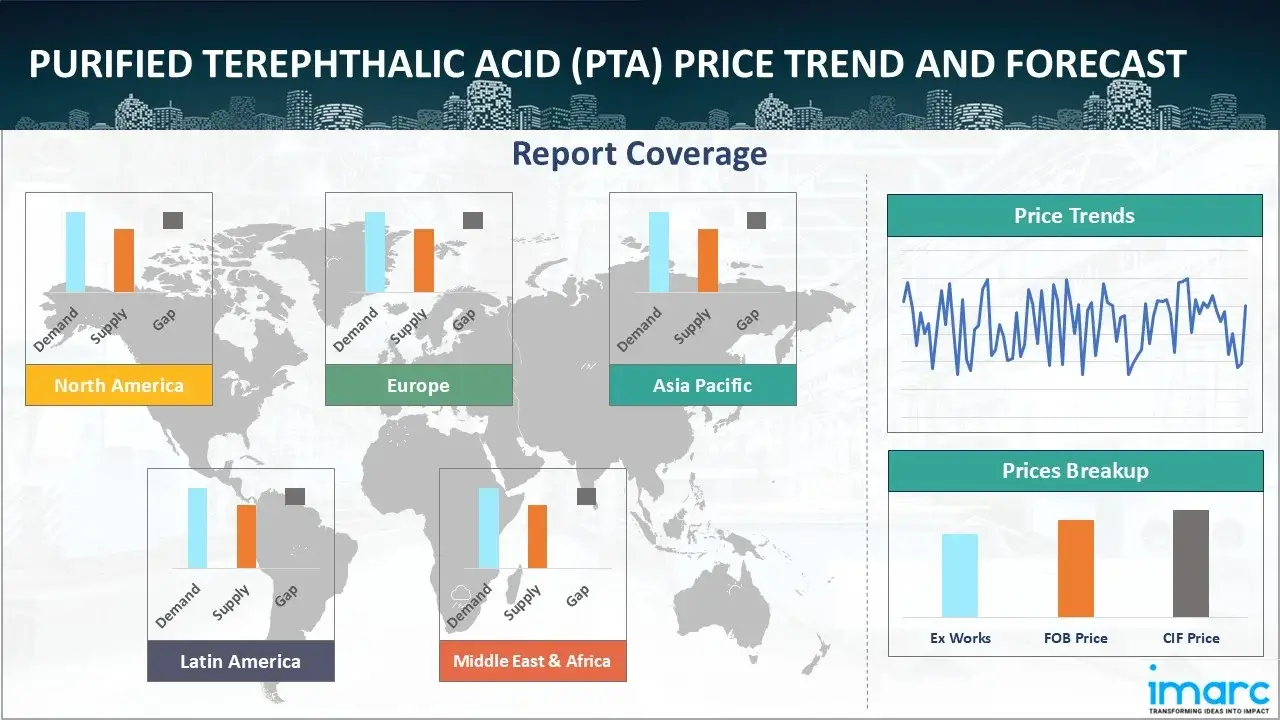
The report provides a detailed analysis of the market across different regions, each with unique pricing dynamics influenced by localized market conditions, supply chain intricacies, and geopolitical factors. This includes price trends, price forecast and supply and demand trends for each region, along with spot prices by major ports. The report also provides coverage of FOB and CIF prices, as well as the key factors influencing purified terephthalic acid (PTA) prices.
Europe Purified Terephthalic Acid (PTA) Price Trend
Q3 2026:
The purified terephthalic acid (PTA) price index in Europe moved upward through the quarter, supported by firmer replacement costs on imported material and steady demand from polyester converters. Germany, the principal importing and processing market covered for the region, recorded higher values as buyers absorbed firmer offers for material sourced from established overseas origins. European converters depend on incoming cargoes for a substantial part of their requirements, so movements in origin prices fed quickly into landed values. Demand from fiber, film and bottle resin producers kept procurement active through the period, which sustained offtake at processing sites. Availability of prompt material at the main ports remained adequate but offered little cushion for buyers seeking immediate delivery. Freight and handling charges on bulk consignments moved between terminals and inland processing plants added to delivered costs.
Q2 2026:
In Europe, the purified terephthalic acid (PTA) price index increased as market conditions reflected stable downstream consumption and firm supplier offers. Demand from polyester fiber and packaging sectors supported pricing activity, while production costs remained influenced by feedstock availability and energy related expenses. European buyers continued managing inventories carefully, balancing domestic supply with imported material availability. The market also experienced support from improved industrial activity across several polyester consuming segments. However, competitive imports and cautious procurement strategies limited stronger price gains. Supplier negotiations remained focused on maintaining margins amid changing cost structures and regional supply conditions.
Q1 2026:
In Europe, the purified terephthalic acid (PTA) price index moved upward as paraxylene costs firmed and import replacement values increased. Regional producers faced higher raw material expenses, which supported firmer PTA offers despite cautious buying from polyester and PET converters. Demand was selective rather than broad, with buyers focusing on immediate needs and avoiding excess inventory. Still, seasonal restocking and steady packaging requirements kept market activity from weakening. Logistics disruptions and port related costs raised delivered values for some cargoes, especially where import routes were affected.
Q4 2025:
The purified terephthalic acid price index in Europe reflected a sustained upward trend driven primarily by mounting cost-side pressures. Energy markets across the region remained strained, directly elevating production and operational expenses for PTA manufacturers. In parallel, stricter environmental compliance frameworks increased regulatory costs, prompting producers to adjust pricing strategies to preserve margins. Despite macroeconomic caution, downstream demand from packaging, automotive textiles, and industrial fiber applications remained stable, ensuring consistent material offtake.
Q3 2025:
In Europe, the purified terephthalic acid price index reflected a mixed but overall moderated trend as Germany recorded an upward movement while Turkey saw a decline, resulting in a balanced regional outcome. Demand from polyester fiber and PET applications improved modestly, yet buyers remained selective due to softer sentiment in several importing markets. Cross-border freight conditions varied, prompting some manufacturers to reinforce inventory coverage, especially where supply tightness emerged from scheduled maintenance in certain hubs. At the same time, Turkey’s weaker pricing influenced overall regional sentiment, encouraging buyers in nearby markets to adopt more cautious procurement strategies. The resulting environment showed localized firmness but did not translate into broad regional tightening, producing a moderately mixed trend compared with the previous quarter.
Q2 2025:
In Europe, PTA prices eased moderately. A sluggish demand backdrop among polyester converters, combined with sufficient stock levels, led to gradual downward pressure. However, by late June, prices stabilized as feedstock supply remained reliable and purchasing patterns remained steady with minimal volatility. Quieter procurement activity and disciplined inventory management helped cement a softly bearish to neutral pricing trajectory by quarter-end.
Q1 2025:
As per the purified terephthalic acid (PTA) price index, prices in Europe rose in the quarter. Despite low demand in January, prices in Germany remained stable due to limited supply and reduced production, which was compounded by plant shutdowns caused by high production costs and severe winter conditions. These issues, along with port congestion and delayed trade routes, constrained supply even further. In February, feedstock costs such as paraxylene and propylene escalated, raising manufacturing costs. Although polyester demand remained low, interest in recycled PET increased PTA demand marginally.
This analysis can be extended to include detailed purified terephthalic acid (PTA) price information for a comprehensive list of countries.
| Region | Countries Covered |
|---|---|
| Europe | Germany, France, United Kingdom, Italy, Spain, Russia, Turkey, Netherlands, Poland, Sweden, Belgium, Austria, Ireland, Switzerland, Norway, Denmark, Romania, Finland, Czech Republic, Portugal, and Greece, among other European countries. |
North America Purified Terephthalic Acid (PTA) Price Trend
Q3 2026:
The purified terephthalic acid (PTA) price index in North America moved upward during the quarter, shaped by firm demand from polyester and packaging producers across the region. The USA, the principal producing and consuming market covered for the region, recorded higher values as domestic producers passed on firmer costs for paraxylene feedstock. Plant operating rates at polyester and bottle resin units stayed firm, which kept procurement of prompt material active through the period. Availability of spot volumes remained limited relative to the pace of offtake, so sellers held offer levels steady for buyers outside established contract arrangements. Firmer costs on material moved between production sites and blending plants fed into delivered values. Freight and handling charges on bulk loads added further pressure to prices quoted to downstream converters.
Q2 2026:
In North America, the purified terephthalic acid (PTA) price index moved upward as demand from polyester based applications remained stable. Producers adjusted pricing based on feedstock cost movements and regional supply availability. The market received support from consistent requirements from packaging and industrial polyester manufacturers. Buyers continued evaluating inventory positions and procurement schedules to manage supply risks. Domestic production conditions and import availability influenced market balance during the quarter. However, controlled purchasing patterns among end users prevented excessive price increases.
Q1 2026:
In North America, the purified terephthalic acid (PTA) price index softened slightly as muted downstream demand outweighed cost support from paraxylene. PET and textile buyers maintained careful procurement, relying on contracted material and limiting spot purchases. Domestic inventories were adequate, which reduced urgency among converters. Some freight and export related costs supported offers, but the effect was not strong enough to change the overall direction. Producers faced pressure from subdued consumption and limited export pull.
Q4 2025:
The purified terephthalic acid price index in North America showed clear upward momentum during Q4 2025, supported by a combination of demand resilience and supply-side discipline. Downstream polyester and packaging sectors maintained steady operating levels, providing a reliable consumption base for PTA producers. At the same time, controlled plant utilization and limited new supply additions prevented excess material from entering the market. Elevated logistics costs, particularly related to inland transportation and warehousing, increased overall delivery expenses.
Q3 2025:
In North America, the purified terephthalic acid price index showed upward movement driven by the rise reported in the USA, the region's primary market. Downstream demand from polyester fiber and bottle resin producers improved modestly, encouraging buyers to secure volumes earlier. Supply remained adequate, though certain procurement cycles tightened as shipping schedules and regional feedstock planning influenced availability. Distributors maintained disciplined inventory approaches, prompting manufacturers to adjust purchasing strategies to ensure timely supply. Overall, the region experienced firmer pricing than in the previous quarter, supported by strengthened procurement behavior and a more selective supply environment.
Q2 2025:
Purified terephthalic acid (PTA) prices in North America held relatively steady, reflecting balanced market conditions. While downstream demand remained muted, inventories were ample, and supply remained strong. A subtle uptick in the price index occurred, but overall, the market exhibited a cautious, neutral tone. Seasonal demand from the packaging sector failed to spark large price moves, and pricing remained anchored by consistent supply and conservative buying behavior.
Q1 2025:
During the first quarter of 2025, prices were volatile due to shifting demand and external forces. In January, restocking activity increased, particularly with fresh orders from end use sectors, but demand immediately fell when inventories were supplied. Port bottleneck, compounded by winter weather, kept US prices steady. However, supply shortages intensified in February as several US PTA plants announced force majeure due to harsh weather. Manufacturing costs were high, notably for propylene and paraxylene, putting PTA margins under pressure. Demand from areas such as polyester and packaging remained low during the quarter.
Specific purified terephthalic acid (PTA) historical data within the United States and Canada can also be provided.
| Region | Countries Covered |
|---|---|
| North America | United States and Canada |
Middle East and Africa Purified Terephthalic Acid (PTA) Price Trend
Q3 2026:
The purified terephthalic acid (PTA) price index in the Middle East and Africa moved upward through the quarter, supported by firmer replacement costs and steady demand from polyester converters. Importing markets across the Gulf, North Africa and Sub Saharan Africa depend on incoming cargoes for the bulk of their requirements, so movements in origin prices fed quickly into landed values. Polyester yarn, textile and packaging producers kept procurement active through the period, which sustained offtake at converting plants. Availability of prompt material at the main ports remained adequate but offered little cushion for buyers seeking immediate delivery. Freight and handling charges on bulk consignments moved between terminals and inland processing sites added to delivered costs. Currency movements against supplying nations introduced further uncertainty into procurement planning for distributors.
Q2 2026:
In the Middle East and Africa, purified terephthalic acid (PTA) prices showed a steady trend as producers managed supply according to regional demand conditions. The availability of feedstock and integrated petrochemical production capabilities influenced supplier pricing decisions. Demand from polyester manufacturing and packaging industries supported market activity across major consuming regions. Export opportunities also affected producer strategies as suppliers evaluated international market conditions. However, competitive supply and cautious buying decisions limited upward price movement. Market participants continued monitoring downstream demand recovery and production economics to determine future pricing strategies.
Q1 2026:
In the Middle East and Africa, pricing was influenced by import costs, freight availability, and regional demand from packaging and polyester chains. Buyers in the region remained cautious, especially where finished goods demand was uneven. Higher paraxylene costs in global markets lifted replacement values for imported PTA cargoes. Shipping route disruptions and longer transit planning also raised delivered cost expectations. Demand from bottle resin and textile applications offered moderate support, but buyers avoided heavy stock building due to uncertain end market sales.
Q4 2025:
Purified terephthalic acid prices in the Middle East and Africa strengthened during the fourth quarter of 2025 due to persistent structural supply limitations. The region’s reliance on imports, coupled with limited local production capacity, heightened exposure to global market fluctuations. Steady downstream demand from textile and packaging manufacturers supported consistent procurement activity. Supply chain constraints, including port congestion and longer transit times, added to landed costs.
Q3 2025:
As per purified terephthalic acid (PTA) price chart, the market exhibited a combination of supply-side adjustments and cautious downstream demand. Import-dependent markets experienced periodic availability fluctuations due to variable shipping schedules and longer transit times, which influenced procurement planning. Downstream demand from textile, packaging, and industrial applications remained stable but conservative, with buyers largely focusing on fulfilling immediate requirements rather than building inventories.
Q2 2025:
The report explores the purified terephthalic acid (PTA) pricing trends and purified terephthalic acid (PTA) price chart in the Middle East and Africa, considering factors like regional industrial growth, the availability of natural resources, and geopolitical tensions that uniquely influence market prices.
In addition to region-wise data, information on purified terephthalic acid (PTA) prices for countries can also be provided.
| Region | Countries Covered |
|---|---|
| Middle East & Africa | Saudi Arabia, UAE, Israel, Iran, South Africa, Nigeria, Oman, Kuwait, Qatar, Iraq, Egypt, Algeria, and Morocco, among other Middle Eastern and African countries. |
Asia Pacific Purified Terephthalic Acid (PTA) Price Trend
Q3 2026:
The purified terephthalic acid (PTA) price index in Asia Pacific moved upward through the quarter, supported by firm replacement costs and steady polyester demand across the region. China recorded higher values as domestic producers directed part of their output toward export commitments, leaving less material available for local converters. Japan followed the same direction, with import dependent buyers facing firmer landed costs on material sourced from established overseas origins. Polyester fiber, film and bottle resin producers kept procurement active through the period, which sustained processing activity across consuming markets. Availability of prompt material remained limited relative to the pace of enquiries, which supported higher offer levels in the spot market.
Q2 2026:
In Asia Pacific, purified terephthalic acid (PTA) prices increased due to improving polyester sector demand and changes in regional supply conditions. China, Japan, and other Asian markets experienced support from steady consumption in textile and packaging applications. Producers adjusted operating strategies based on inventory levels and feedstock economics. Export activity remained an important factor influencing market sentiment, particularly among major regional suppliers. Although demand improved, sufficient supply availability prevented significant price escalation. The market remained competitive as producers focused on maintaining operational efficiency and responding to changing consumption patterns.
Q1 2026:
In the Asia Pacific, prices were supported by firmer paraxylene values and restocking after seasonal slowdowns. Japan recorded a strong increase due to tighter feedstock supply, shipping delays, and higher landed costs. China also moved upward, supported by polyester operating activity and raw material strength, though excess domestic capacity kept margins under pressure. Besides, other export hubs faced competitive regional conditions, but cargo availability remained a key factor for delivered prices. Buyers in textile and PET chains purchased selectively, balancing restocking needs with caution about downstream demand.
Q4 2025:
The Asia Pacific market experienced mixed purified terephthalic acid pricing shaped by balanced supply-demand dynamics. Producers across the region maintained controlled operating rates, preventing inventory accumulation despite steady production levels. Downstream demand from polyester fiber, film, and packaging sectors remained stable, offering reliable consumption support. Export activity improved moderately, particularly toward deficit regions, helping absorb surplus volumes.
Q3 2025:
Asia Pacific experienced a largely downward trend this quarter, consistent with declines in China and Japan. Downstream polyester producers in several markets procured cautiously due to comfortable inventories and stable but not expanding demand. Production continuity across major PTA complexes maintained adequate supply, further reinforcing the downward direction. Freight conditions across Asian corridors were broadly stable, reducing landed-cost volatility. Buyers focused on maintaining existing coverage rather than expanding purchases, and the region registered subdued sentiment across most PTA applications. The combined effect was a cohesive regional softening aligned with the major producing and consuming countries’ trends.
Q2 2025:
The Asia Pacific's PTA prices began the quarter on a softer note, weighed down by weak polyester demand and high inventories. Prices dipped notably in April before staging a sharp recovery toward the end of June, supported by surging crude oil costs and tighter spot supply. Despite cautious downstream buying, prices rebounded significantly late in the period as restocking picked up and feedstock costs climbed, marking a volatile but upward-leaning finish to the quarter.
Q1 2025:
Prices in the APAC area fell briefly before gradually rising. Thailand's prices rose in January due to restricted supply from China and significant restocking activity before the Lunar New Year, despite poor performance in the packaging and polyester industries. Rising feedstock prices and logistical delays contributed to higher manufacturing expenses. By March, PTA prices in Thailand had begun to fall as downstream demand from industries, such as packaging and polyester, remained low. A decline in crude oil prices and lower freight costs helped to create more competitive market conditions.
This purified terephthalic acid (PTA) price analysis can be expanded to include a comprehensive list of countries within the region.
| Region | Countries Covered |
|---|---|
| Asia Pacific | China, India, Indonesia, Pakistan, Bangladesh, Japan, Philippines, Vietnam, Thailand, South Korea, Malaysia, Nepal, Taiwan, Sri Lanka, Hongkong, Singapore, Australia, and New Zealand, among other Asian countries. |
Latin America Purified Terephthalic Acid (PTA) Price Trend
Q3 2026:
The purified terephthalic acid (PTA) market in Latin America is primarily shaped by regional import dependency and downstream industrial demand across polyester fiber, PET bottle resin, and polyester film applications. However, due to logistics constraints and varying regulatory regimes, purified terephthalic acid (PTA) prices might fluctuate dynamically across the region.
Q2 2026:
The market for purified terephthalic acid (PTA) in Latin America is primarily driven by the region's plentiful natural resources, particularly in Chile and Brazil. However, the price of purified terephthalic acid (PTA) can change dramatically due to political instability and disparities in regulatory regimes.
Q1 2026:
The abundance of natural resources in Latin America, particularly in important nations like Chile and Brazil, greatly influences the continent's terephthalic acid (PTA) industry. However, political unpredictability and differing regulatory regimes frequently cause swings in terephthalic acid (PTA) prices, which lead to market instability.
Q4 2025:
Latin America's purified terephthalic acid (PTA) market is predominantly influenced by its rich natural reserves, particularly in countries like Chile and Brazil. However, political instability and inconsistent regulatory frameworks can lead to significant volatility in purified terephthalic acid (PTA) prices.
Q3 2025:
Infrastructure challenges and logistical inefficiencies often impact the supply chain, affecting Latin America’s ability to meet international demand consistently. Moreover, the purified terephthalic acid (PTA) price index, economic fluctuations, and currency devaluation are critical factors that need to be considered when analyzing purified terephthalic acid (PTA) pricing trends in this region.
This comprehensive review can be extended to include specific countries within the region.
| Region | Countries Covered |
|---|---|
| Latin America | Brazil, Mexico, Argentina, Columbia, Chile, Ecuador, and Peru, among other Latin American countries. |
Purified Terephthalic Acid (PTA) Pricing Report, Market Analysis, and News
IMARC's latest publication, “Purified Terephthalic Acid (PTA) Prices, Trend, Chart, Demand, Market Analysis, News, Historical and Forecast Data Report 2026 Edition,” presents a detailed examination of the purified terephthalic acid (PTA) market, providing insights into both global and regional trends that are shaping prices. This report delves into the spot price of purified terephthalic acid (PTA) at major ports and analyzes the composition of prices, including FOB and CIF terms. It also presents detailed purified terephthalic acid (PTA) prices trend analysis by region, covering North America, Europe, Asia Pacific, Latin America, and Middle East and Africa. The factors affecting purified terephthalic acid (PTA) pricing, such as the dynamics of supply and demand, geopolitical influences, and sector specific developments, are thoroughly explored. This comprehensive report helps stakeholders stay informed with the latest market news, regulatory updates, and technological progress, facilitating informed strategic decision-making and forecasting.
Purified Terephthalic Acid (PTA) Industry Analysis
The global purified terephthalic acid (PTA) market size reached USD 100.00 Billion in 2025. By 2034, IMARC Group expects the market to reach USD 144.21 Billion, at a projected CAGR of 4.15% during 2026-2034. Market growth is being driven by rising demand for polyester fiber and filament yarn, expanding use of PET resin in beverage bottles and food packaging, and steady consumption in films and engineered plastics across textile, packaging and industrial segments.
Latest News and Developments:
- October 2025: Magpet Polymer Pvt Ltd commissioned Herbold Meckesheim to install a new PET bottle washing line in India, doubling its washing capacity and advancing its bottle to bottle recycling initiative. The expansion strengthens PET recycling in the region, which in turn supports steady demand for key feedstocks such as PTA across the polyester chain.
- June 2024: Coperion partnered with Herbold Meckesheim to assist Magpet Polymer Pvt Ltd in India with a complete bottle to bottle recycling line covering mechanical processing, extrusion, pelletizing and an SSP reactor. The installation targets high quality recycling in the PET chain, which relies on PTA as a key raw material for polyester production.
- June 2024: Coca Cola India launched 100% recycled PET bottles in Odisha in a 250 ml Affordable Small Sparkling Package format, with a 36% lower emission footprint than virgin PET packaging. Since PTA is the principal feedstock for PET resin production, the launch supports demand across the polyester value chain.
Product Description
Purified terephthalic acid (PTA) is a purified grade of terephthalic acid, an aromatic dicarboxylic acid and the para positional isomer of phthalic acid. Its molecular formula is C8H6O4. The product is a white crystalline solid that is only sparingly soluble in water, with low volatility under normal handling conditions. Its two carboxylic acid groups make it a difunctional monomer that reacts with diols to form linear polyesters. Industrially it serves the polyester, packaging, textile, film and engineering plastics sectors. In polyethylene terephthalate resin it acts as a raw material monomer that governs the rigidity of the polymer chain. In polyester staple and filament fiber it is a principal monomer for apparel, home textiles and technical textiles. In polyester film and polybutylene terephthalate engineering resin it serves as a monomer for packaging, electronics and automotive parts. Industrially, purified terephthalic acid is commonly produced by liquid phase catalytic oxidation of paraxylene with oxygen in acetic acid, followed by hydrogenation and crystallization of the crude acid.
Report Coverage
| Key Attributes | Details |
|---|---|
| Product Name | Purified Terephthalic Acid (PTA) |
| Report Features | Exploration of Historical Trends and Market Outlook, Industry Demand, Industry Supply, Gap Analysis, Challenges, Purified Terephthalic Acid (PTA) Price Analysis, and Segment-Wise Assessment. |
| Currency/Units | US$ (Data can also be provided in local currency) or Metric Tons |
| Region/Countries Covered | The current coverage includes analysis at the global and regional levels only. Based on your requirements, we can also customize the report and provide specific information for the following countries: Asia Pacific: China, India, Indonesia, Pakistan, Bangladesh, Japan, Philippines, Vietnam, Thailand, South Korea, Malaysia, Nepal, Taiwan, Sri Lanka, Hongkong, Singapore, Australia, New Zealand Europe: Germany, France, United Kingdom, Italy, Spain, Russia, Turkey, Netherlands, Poland, Sweden, Belgium, Austria, Ireland, Switzerland, Norway, Denmark, Romania, Finland, Czech Republic, Portugal, Greece North America: United States, Canada Latin America: Brazil, Mexico, Argentina, Columbia, Chile, Ecuador, Peru Middle East & Africa: Saudi Arabia, UAE, Israel, Iran, South Africa, Nigeria, Oman, Kuwait, Qatar, Iraq, Egypt, Algeria, Morocco The list of countries presented is not exhaustive. Information on additional countries can be provided if required by the client. |
| Information Covered for Key Suppliers |
|
| Customization Scope | The report can be customized as per the requirements of the customer |
| Report Price and Purchase Option |
Plan A: Monthly Updates - Annual Subscription
Plan B: Quarterly Updates - Annual Subscription
Plan C: Biannually Updates - Annual Subscription
|
| Post-Sale Analyst Support | 360-degree analyst support after report delivery |
| Delivery Format | PDF and Excel through email (We can also provide the editable version of the report in PPT/Word format on special request) |
Key Benefits for Stakeholders:
- IMARC’s report presents a detailed analysis of purified terephthalic acid (PTA) price index, covering global and regional trends, spot prices at key ports, and a breakdown of Ex Works, FOB, and CIF prices.
- The study examines factors affecting purified terephthalic acid (PTA) price trend, including raw material costs, supply-demand shifts, geopolitical impacts, and industry developments, offering insights for informed decision-making.
- The competitive landscape review equips stakeholders with crucial insights into the latest market news, regulatory changes, and technological advancements, ensuring a well-rounded, strategic overview for forecasting and planning.
- IMARC offers various subscription options, including monthly, quarterly, and biannual updates, allowing clients to stay informed with the latest market trends, ongoing developments, and comprehensive market insights. The purified terephthalic acid (PTA) price chart ensure our clients remain at the forefront of the industry.
Need more help?
- Speak to our experienced analysts for insights on the current market scenarios.
- Include additional segments and countries to customize the report as per your requirement.
- Gain an unparalleled competitive advantage in your domain by understanding how to utilize the report and positively impacting your operations and revenue.
- For further assistance, please connect with our analysts.
 Request Customization
 Inquire Before Buying
 Speak to an Analyst
 Request Brochure
Benefits of Customization
- Personalize this research
- Triangulate with your data
- Get data as per your format and definition
- Gain a deeper dive into a specific application, geography, customer, or competitor
- Any level of personalization
Get in Touch With Us
UNITED STATES
Phone: +1-201-971-6302
INDIA
Phone: +91-120-433-0800
UNITED KINGDOM
Phone: +44-753-714-6104
Email: [email protected]
Client Testimonials























Related Reports

Why Choose Us
IMARC offers trustworthy, data-centric insights into commodity pricing and evolving market trends, enabling businesses to make well-informed decisions in areas such as procurement, strategic planning, and investments. With in-depth knowledge spanning more than 1000 commodities and a vast global presence in over 150 countries, we provide tailored, actionable intelligence designed to meet the specific needs of diverse industries and markets.
1000
+Commodities
150
+Countries Covered
3000
+Clients
20
+Industry

Robust Methodologies & Extensive Resources
IMARC delivers precise commodity pricing insights using proven methodologies and a wealth of data to support strategic decision-making.

Subscription-Based Databases
Our extensive databases provide detailed commodity pricing, import-export trade statistics, and shipment-level tracking for comprehensive market analysis.

Primary Research-Driven Insights
Through direct supplier surveys and expert interviews, we gather real-time market data to enhance pricing accuracy and trend forecasting.

Extensive Secondary Research
We analyze industry reports, trade publications, and market studies to offer tailored intelligence and actionable commodity market insights.
Trusted by 3000+ industry leaders worldwide to drive data-backed decisions. From global manufacturers to government agencies, our clients rely on us for accurate pricing, deep market intelligence, and forward-looking insights.