
Qatar Genomics Market Size, Share, Trends and Forecast by Component, Technology, Application, End User, and Region, 2026-2034
Qatar Genomics Market Summary:
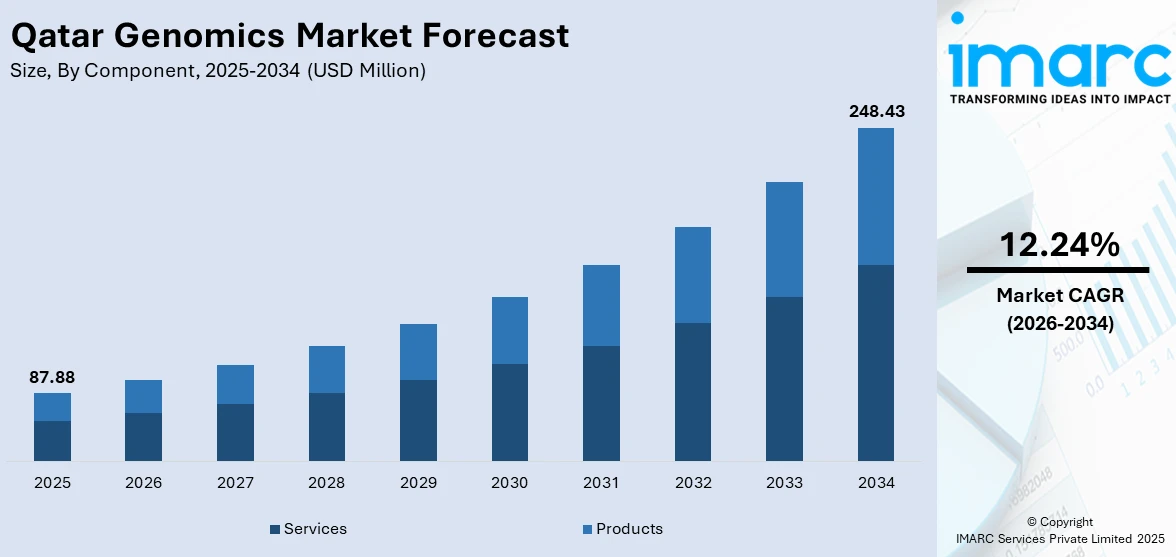
The Qatar genomics market size was valued at USD 87.88 Million in 2025 and is projected to reach USD 248.43 Million by 2034, growing at a compound annual growth rate of 12.24% from 2026-2034.
The market's growth is driven by Qatar's ambitious national genomics programs, high prevalence of rare genetic diseases linked to consanguinity, and substantial government investments in precision medicine infrastructure. Moreover, the heightened focus on developing customized genotyping microarray and strategic partnerships with international research institutions are accelerating the development of gene therapies and population-specific genomic tools. These initiatives position the country as a regional leader in genomic medicine and personalized healthcare, thereby expanding the Qatar genomics market share.
Key Takeaways and Insights:
- By Component: Services dominate the market with a share of 56% in 2025, driven byexpanding genomic testing, sequencing services, and precision medicine applications.
- By Technology: Sequencing leads the market with a share of 40% in 2025, supported by next-generation sequencing acceptance for population-wide genomic studies.
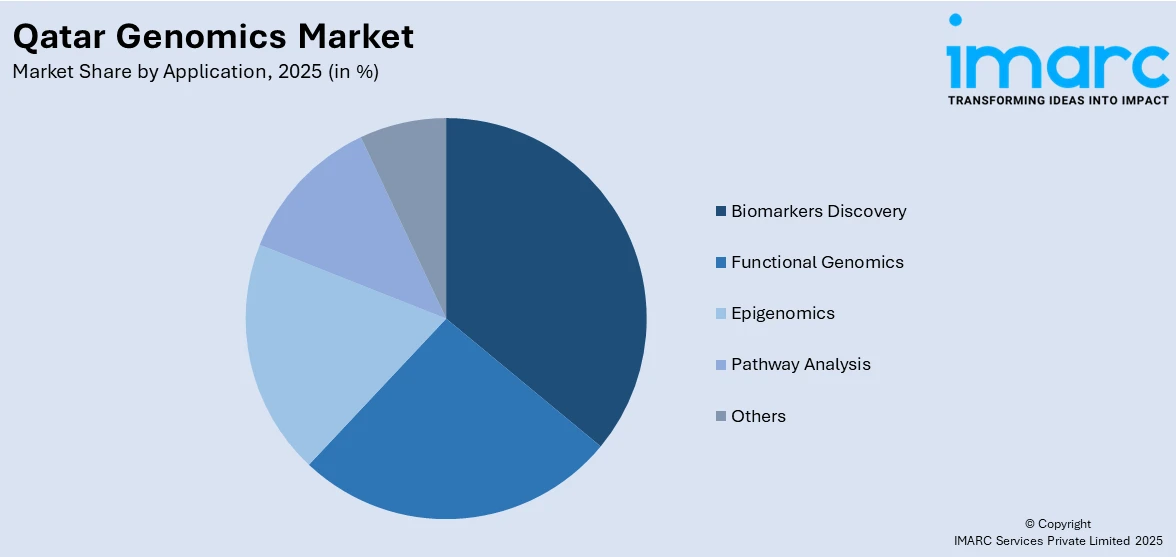
- By Application: Biomarkers discovery represents the largest segment with a market share of 31% in 2025, fueled by comprehensive disease variant identification programs.
- By End User: Research centers accounts for the largest segment with 35% share in 2025, led by major institutions advancing genomic research and clinical applications.
- By Region: Ad Dawhah holds the largest share of 48% in 2025, hosting the country’s primary genomic research infrastructure and healthcare institutions.
- Key Players: Key genomics companies in Qatar are enhancing their business by forming strategic partnerships, introducing advanced genetic testing services, investing in research, and developing personalized genomic solutions to support precision healthcare.
To get more information on this market Request Sample
Qatar's genomics market benefits from unique population genetics characterized by high consanguinity rates, making it an ideal setting for studying rare diseases and developing targeted treatments. Apart from this, the country has established comprehensive genomic databases through the Qatar Genome Program, which has sequenced over 33,000 whole genomes and identified 88 million genetic variants, including 24 million novel variants specific to the Qatari and Arab populations. This wealth of genetic data supports precision medicine initiatives and provides valuable insights into disease susceptibility patterns. In December 2025, Sidra Medicine revealed a new strategic collaboration with Arbor Biotechnologies to launch the inaugural gene-editing therapy platform for rare diseases specific to Qatar and its region. The collaboration aims to establish a shared framework for cutting-edge CRISPR gene-editing technologies alongside genomic data to support future treatments. The collaboration will concentrate on recognizing rare diseases and is prioritized for joint development. Arbor will subsequently utilize its sophisticated computational technologies to create and evaluate CRISPR editing guides. These guides will later undergo evaluation and validation in vitro to determine the most promising therapeutic candidates.
Qatar Genomics Market Trends:
Government-Led National Genomics Programs Driving Population-Wide Sequencing
Qatar has positioned itself at the forefront of Middle Eastern genomics through the Qatar Genome Program, a national initiative launched by Qatar Foundation. Moreover, the program has successfully sequenced over 33,000 whole genomes, creating one of the most comprehensive genetic databases in the Arab world. This extensive sequencing effort has enabled researchers to identify population-specific genetic variants and develop the Q-Chip, a customized genotyping microarray based on Qatar-specific genetic data that provides more accurate diagnostic results than international alternatives while reducing costs associated with sending samples abroad. In 2025, Rady Children’s Institute for Genomic Medicine (RCIGM®) has announced a partnership with Sidra Medicine, a premier specialty healthcare provider for women, children, and youth in Qatar, to work together on launching RCIGM’s genome-focused newborn screening research initiative, BeginNGS. Sidra Medicine becomes the inaugural international site for the BeginNGS Consortium.
Integration of Artificial Intelligence (AI) and Advanced Sequencing Technologies for Rare Disease Diagnosis
The Qatar genomics market is experiencing rapid technological advancement through the integration of AI with next-generation sequencing platforms. In December 2025, Sidra Medicine joined the international HiFi Solves Consortium to advance long-read sequencing technology for rare disease diagnosis. This collaboration brings together leading clinical genomics experts worldwide to accelerate the clinical adoption of long-read sequencing, which sequences large sections of DNA without fragmentation, achieving unprecedented completeness and accuracy. The hospital implemented clinical-grade whole genome sequencing, significantly reducing diagnostic times for critically ill pediatric patients. The integration of AI-enhanced diagnostics enables rapid analysis of complex genomic data, improving identification of genetic variants associated with diseases and supporting more precise treatment selection.
Emergence of Gene Therapy and CRISPR-Based Treatment Platforms
Qatar is establishing itself as a regional hub for gene therapy and precision medicine through groundbreaking partnerships and clinical implementations. In December 2025, Sidra Medicine partnered with Arbor Biotechnologies to launch Qatar's first gene-editing therapy platform using CRISPR technology for rare diseases unique to the region. The partnership focuses on developing state-of-the-art CRISPR-based gene-editing technologies using genomic data as a basis for future therapies. Additionally, in 2025, Roche Pharmaceuticals, via its local partner Ebn Sina Medical, a wholly owned subsidiary of Aamal Company, has collaborated to host the Duchenne Muscular Dystrophy (DMD) Peer-to-Peer Exchange 2025 at Sidra Medicine in Doha, Qatar. The prominent event brought together 25 top neurologists from nine countries worldwide who gathered in Qatar to exchange best practices and gain insights from Sidra Medicine’s exceptional rare disease program. The Global DMD Exchange initiative highlights Roche’s dedication to promoting science and aiding the worldwide medical community. The preceptorship offers an essential opportunity for doctors to acquire firsthand knowledge from a hub of expertise that is currently applying innovative treatments for DMD.
Market Outlook 2026-2034:
The Qatar genomics industry is poised for substantial growth driven by continued expansion of national genomics programs, increasing clinical adoption of precision medicine, and strategic investments in gene therapy infrastructure. Qatar's unique position as a genomics research hub for the Middle East will attract international collaborations and pharmaceutical partnerships focused on developing treatments for region-specific genetic conditions. The market generated a revenue of USD 87.88 Million in 2025 and is projected to reach a revenue of USD 248.43 Million by 2034, growing at a compound annual growth rate of 12.24% from 2026-2034. The establishment of specialized genomic centers, expanding clinical trials programs, and integration of AI-driven diagnostic tools will further accelerate market growth. Moroever, companies are launching newborn screening programs through international collaboration, establishing Qatar's first large-scale newborn genome screening research initiative that will generate extensive longitudinal genomic data and expand precision medicine applications from birth.
Qatar Genomics Market Report Segmentation:
|
Segment Category |
Leading Segment |
Market Share |
|
Component |
Services |
56% |
|
Technology |
Sequencing |
40% |
|
Application |
Biomarkers Discovery |
31% |
|
End User |
Research Centers |
35% |
|
Region |
Ad Dawhah |
48% |
Component Insights:
- Products
- Instruments and Software
- Consumables and Reagents
- Services
- Core Genomics Services
- NGS-Based Services
- Biomarker Translation Services
- Computational Services
- Others
Services dominate with a market share of 56% of the total Qatar genomics market in 2025.
The services segment leads the Qatar genomics market due to the extensive sequencing and analysis requirements of national genomics programs and clinical precision medicine initiatives. Qatar Genome Program's population-wide sequencing efforts require comprehensive genomic services including DNA extraction, library preparation, sequencing, bioinformatics analysis, and clinical interpretation. The expansion of precision medicine into clinical settings has increased demand for genomic testing services, pharmacogenomics analysis, and genetic counseling. Research institutions and hospitals increasingly outsource complex genomic analyses to specialized service providers to access advanced technologies and expertise without substantial capital investments in equipment and infrastructure.
The growth of genomic services is accelerated by strategic partnerships and program expansions. In 2025, Sidra Medicine launched the BeginNGS newborn screening program through international collaboration with Rady Children's Institute, establishing Qatar's first large-scale newborn genome screening research initiative (NOOR-QATAR). This program requires extensive genomic sequencing services, bioinformatics analysis, and clinical validation for thousands of newborns. Additionally, the integration of genomic data into clinical care pathways at major hospitals like Sidra Medicine and Hamad Medical Corporation increases utilization of genomic testing services for disease diagnosis, treatment selection, and patient management.
Technology Insights:
- Sequencing
- Microarray
- Polymerase Chain Reaction
- Nucleic Acid Extraction and Purification
- Others
Sequencing leads with a share of 40% of the total Qatar genomics market in 2025.
Sequencing technologies, such as next-generation sequencing and whole genome sequencing, are significantly advancing the genomics sector in Qatar. These technologies enable rapid and accurate identification of genetic variants, helping clinicians diagnose rare and complex diseases more efficiently. By analyzing patients’ genomes, healthcare providers can tailor treatment plans to individual needs, improving patient outcomes and reducing trial-and-error approaches in therapy. Integrating these technologies locally also reduces reliance on international laboratories, speeding up results and enhancing Qatar’s healthcare infrastructure.
In addition to clinical benefits, sequencing technologies support large-scale research and precision medicine initiatives in the country. Projects like the Qatar Genome Programme leverage population-specific genetic data to better understand regional health risks and disease prevalence. This information aids in developing personalized therapies, preventive healthcare strategies, and targeted drug interventions. Furthermore, sequencing contributes to global scientific collaboration by providing unique genomic insights from Qatar’s population, positioning the country as a regional leader in genomics research and innovation.
Application Insights:
Access the comprehensive market breakdown Request Sample
- Functional Genomics
- Epigenomics
- Biomarkers Discovery
- Pathway Analysis
- Others
Biomarkers discovery exhibits a clear dominance with a 31% share of the total Qatar genomics market in 2025.
Biomarker discovery involves identifying biological molecules, such as proteins, genes, or metabolites, that indicate the presence, progression, or risk of a disease. In Qatar, this field is gaining momentum as advanced technologies, including genomics, proteomics, and metabolomics, enable researchers to detect subtle molecular changes associated with specific health conditions. Biomarkers play a critical role in early diagnosis, allowing healthcare providers to identify diseases before symptoms appear, which can significantly improve treatment outcomes and reduce healthcare costs.
Beyond diagnosis, biomarker discovery supports personalized medicine by guiding the selection of targeted therapies tailored to individual patients. For instance, understanding specific genetic or protein markers can help predict how a patient will respond to a particular treatment, minimizing adverse effects and maximizing effectiveness. Additionally, biomarkers are essential in monitoring disease progression and evaluating treatment responses, making them valuable tools for both clinical practice and biomedical research. In Qatar, initiatives integrating biomarker research with genomic data are paving the way for more precise, population-specific healthcare solutions.
End User Insights:
- Research Centers
- Hospitals and Clinics
- Pharmaceutical and Biotechnology Companies
- Others
Research centers lead with a share of 35% of the total Qatar genomics market in 2025.
Research centers in Qatar play a central role as key end users in the genomics market, driving both innovation and practical application of advanced technologies. Institutions such as Sidra Medicine, Qatar Biomedical Research Institute, and Hamad Medical Corporation use genomics tools to conduct cutting-edge research on genetic disorders, cancer, and population health. These centers require high-throughput sequencing platforms, bioinformatics solutions, and data analysis capabilities to support large-scale studies and generate meaningful insights. Their work not only advances scientific knowledge but also provides foundational data for clinical decision-making and precision medicine initiatives across the country.
Beyond research, these centers contribute to developing national healthcare strategies by translating genomic discoveries into practical applications. They collaborate with international partners, share genomic data, and train specialists in bioinformatics and molecular diagnostics. By serving as hubs for innovation, these research centers help optimize healthcare delivery, support the development of targeted therapies, and enable personalized treatment approaches for the local population. Their active engagement ensures that advances in genomics are effectively integrated into Qatar’s healthcare system and aligned with the country’s long-term public health goals.

Regional Insights:
- Ad Dawhah
- Al Rayyan
- Al Wakrah
- Others
Ad Dawhah exhibits a clear dominance with a 48% share of the total Qatar genomics market in 2025.
Ad Dawhah stands out as the leading region in Qatar’s genomics market, primarily because it is the country’s central hub for healthcare, research, and innovation. As the location of the capital city, Doha, the region hosts most of the nation’s hospitals, research centers, and biotechnology firms, which drives demand for genetic testing, sequencing services, and other genomic solutions. Initiatives like the Qatar Genome Program are largely concentrated here, making Ad Dawhah a focal point for both clinical applications and research in genomics. The presence of advanced infrastructure and skilled professionals further solidifies its dominance in the market.
Beyond infrastructure, the region’s high population density and concentration of institutions enable faster adoption of genomic technologies compared to other areas in Qatar. Research collaborations, biobanking, and precision medicine projects are largely coordinated from Ad Dawhah, allowing it to attract more investments and projects. As Qatar continues to prioritize genomics and personalized medicine in its national healthcare strategy, Ad Dawhah is expected to maintain its leadership role, shaping the development and implementation of genomic services across the country.
Market Dynamics:
Growth Drivers:
Why is the Qatar Genomics Market Growing?
High Consanguinity Rates and Elevated Rare Disease Prevalence
Qatar's unique population genetics, characterized by high consanguinity rates and elevated prevalence of rare genetic diseases, creates substantial demand for genomic medicine solutions. Analysis of 14,392 whole genomes from the Qatar Genome Program revealed that 3.5% of Qataris carry medically actionable variants, with an additional 1.4% carrying heterozygous variants in autosomal recessive disease genes, affecting 5% of the population overall. The high disease burden drives implementation of population-wide screening programs and precision medicine initiatives. The Qatar Genome Program published genome-wide association studies identifying genetic associations with 45 clinically relevant traits, supporting preventive medicine strategies and personalized treatment selection based on genetic risk profiles.
Strategic Government Investment in Healthcare Infrastructure and personalized Medicine Initiatives
The Qatar government has committed substantial financial resources to genomics and personalized medicine as part of its national health strategy. This funding enables procurement of advanced sequencing equipment, establishment of bioinformatics infrastructure, recruitment of specialized personnel, and international collaborations. The broader biotechnology sector in Qatar has seen investments exceeding in recent years, fostering a conducive environment for genomic innovation. Government support extends beyond direct funding to policy frameworks promoting precision medicine implementation. These strategic investments position Qatar as a regional leader in genomics, attracting international researchers, biotechnology companies, and pharmaceutical partners seeking access to unique Middle Eastern genetic data and precision medicine infrastructure. IMARC Group predicts that the Qatar personalized medicine market is projected to attain USD 2,587.03 Million by 2034.
Development of Population-Specific Genomic Tools and Localized Testing Infrastructure
Qatar is developing customized genomic tools specifically designed for the Arab population, addressing limitations of international genomic databases and diagnostic platforms that predominantly represent European ancestries. The Q-Chip, a cost-effective customized genotyping microarray, is under development using extensive data from whole genome sequencing of the Qatari population and data provided by national stakeholders. This population-specific tool contains gene variants identified through sequencing and genetic screening of thousands of Qatari citizens. Unlike genetic results from international laboratories or gene assays developed using data from other populations, diagnosis using the Q-Chip provides results based on genetic information derived from Qataris, making outcomes more relevant and accurate. The Q-Chip saves healthcare providers substantial funds by eliminating the need to send samples abroad for diagnosis of many hereditary diseases. The development of localized genomic infrastructure reduces dependence on international services while improving diagnostic accuracy. This population-specific reference genome is essential for studying genetic diseases and tailoring treatments for individuals in similar populations. Qatar Biobank, with biological samples from over 20,000 participants with comprehensive phenotyping, provides an invaluable resource for validating genomic tools and developing clinical applications specific to the Arab population.
Market Restraints:
What Challenges the Qatar Genomics Market is Facing?
Data Privacy and Regulatory Compliance Requirements Creating Implementation Barriers
Qatar's genomics market faces significant challenges related to data privacy protection and regulatory compliance. The Qatar Personal Data Privacy Protection Law, the first national data protection law in the Arabian Gulf region issued in 2016, establishes strict requirements for personal data processing including genomic information. Organizations must implement comprehensive administrative, technical, and financial measures to safeguard personal data, with fines up to QAR 5 million for non-compliance. The National Cyber Security Agency's recent guidelines for secure adoption of artificial intelligence address critical risks including privacy violations and security vulnerabilities, particularly relevant for AI-enhanced genomic analysis platforms. Genomic data represents arguably the most sensitive personal information, with major implications not only for individuals but their families, requiring stringent privacy-by-design approaches. The evolving regulatory landscape, including discussions around cloud policy implementation and cross-border data transfers following international precedents like Schrems II, creates uncertainty for organizations implementing genomic programs. Ethical considerations around consent management, data sharing for research purposes, and potential discrimination based on genetic information require careful navigation.
Shortage of Skilled Genomic Medicine Professionals Limiting Market Expansion
The Qatar genomics market faces workforce constraints due to limited availability of trained professionals capable of implementing and operating complex genomic medicine programs. Specialized roles including clinical geneticists, genetic counselors, bioinformaticians, and genomic data scientists remain in short supply. The rapid expansion of genomics initiatives has created demand exceeding current workforce capacity. Interpreting complex genomic data requires expertise in molecular genetics, computational biology, and clinical medicine, with few professionals possessing the interdisciplinary skills necessary for precision medicine implementation. Development of training programs, establishment of genetic counseling certification pathways, and expansion of bioinformatics education represent necessary but time-intensive solutions.
High Costs of Advanced Sequencing Technologies and Infrastructure Limiting Accessibility
Despite declining costs of genomic sequencing globally, establishing and maintaining clinical-grade genomic facilities requires substantial capital investment that limits widespread adoption. Advanced technologies including long-read sequencing platforms, which Sidra Medicine adopted through joining the HiFi Solves Consortium in December 2025, remain expensive compared to traditional short-read sequencing. CRISPR-based gene-editing platforms, such as those being developed through Sidra Medicine's partnership with Arbor Biotechnologies, require significant research and development investments before clinical implementation. The financial burden of maintaining specialized equipment, employing highly trained personnel, and implementing quality assurance programs limits genomics accessibility despite government support and strategic investments in healthcare infrastructure.
Competitive Landscape:
The Qatar genomics market exhibits a collaborative ecosystem involving major research institutions, international genomic technology providers, and pharmaceutical companies. International players lead as the primary genomics research and clinical hub, having established comprehensive capabilities including whole genome sequencing, gene therapy, and clinical trials infrastructure. Qatar Precision Health Institute, building on Qatar Biobank and Qatar Genome Program foundations, maintains extensive genomic databases and coordinates national precision health initiatives. International technology providers supply sequencing platforms and consumables supporting research and clinical applications. Pharmaceutical partnerships facilitate gene therapy programs, while collaborations advance CRISPR-based treatment development. The market emphasizes public-private partnerships and international collaborations rather than competitive dynamics, with Qatar Foundation coordinating strategic initiatives across research institutions, healthcare providers, and technology partners to advance genomic medicine implementation.
Recent Developments:
- In January 2026, Hamad Medical Corporation (HMC), alongside Qatar Foundation (QF), the Qatar Precision Health Institute (QPHI), Weill Cornell Medicine-Qatar, and Hamad Bin Khalifa University, has initiated an innovative pilot study demonstrating how genetic research can be securely and efficiently applied to practical clinical care, paving the way for advancements in early cancer detection and prevention. The release of the study signifies a tactical move positioning the State of Qatar among the globe’s top countries in precision medicine. Featured in the international journal Biomedicines, the research stems from a national institutional partnership designed to connect scientific inquiry with medical practice, turning genomic research discoveries into practical clinical uses in Qatar's healthcare system.
Qatar Genomics Market Report Coverage:
| Report Features | Details |
|---|---|
| Base Year of the Analysis | 2025 |
| Historical Period | 2020-2025 |
| Forecast Period | 2026-2034 |
| Units | Million USD |
| Scope of the Report |
Exploration of Historical Trends and Market Outlook, Industry Catalysts and Challenges, Segment-Wise Historical and Future Market Assessment:
|
| Components Covered |
|
| Technologies Covered | Sequencing, Microarray, Polymerase Chain Reaction, Nucleic Acid Extraction and Purification, Others |
| Applications Covered | Functional Genomics, Epigenomics, Biomarkers Discovery, Pathway Analysis, Others |
| End Users Covered | Research Centers, Hospitals and Clinics, Pharmaceutical and Biotechnology Companies, Others |
| Regions Covered | Ad Dawhah, Al Rayyan, Al Wakrah, Others |
| Customization Scope | 10% Free Customization |
| Post-Sale Analyst Support | 10-12 Weeks |
| Delivery Format | PDF and Excel through Email (We can also provide the editable version of the report in PPT/Word format on special request) |
Frequently Asked Questions About the Qatar Genomics Market Report
The Qatar genomics market size was valued at USD 87.88 Million in 2025.
The Qatar genomics market is expected to grow at a compound annual growth rate of 12.24% from 2026-2034 to reach USD 248.43 Million by 2034.
Services dominates the component segment with 56% market share in 2025, driven by extensive sequencing requirements of national genomics programs, clinical precision medicine applications, and outsourcing of complex genomic analyses by research institutions and hospitals seeking specialized expertise without substantial capital investments in equipment infrastructure.
Key factors driving the Qatar genomics market include high consanguinity rates creating elevated rare disease prevalence requiring specialized genomic solutions, strategic government investments in health technology initiatives and precision medicine infrastructure, and development of population-specific genomic tools including the Q-Chip offering cost-effective localized testing alternatives to international laboratories.
Major challenges include strict data privacy requirements under Qatar Personal Data Privacy Protection Law with fines up to QAR 5 million for non-compliance creating implementation complexities, shortage of skilled genomic medicine professionals including clinical geneticists and bioinformaticians limiting expansion capabilities, and high costs of advanced sequencing technologies and gene therapy platforms restricting widespread adoption beyond major research institutions.
Need more help?
- Speak to our experienced analysts for insights on the current market scenarios.
- Include additional segments and countries to customize the report as per your requirement.
- Gain an unparalleled competitive advantage in your domain by understanding how to utilize the report and positively impacting your operations and revenue.
- For further assistance, please connect with our analysts.
 Request Customization
 Speak to an Analyst
 Request Brochure
 Inquire Before Buying
Benefits of Customization
- Personalize this research
- Triangulate with your data
- Get data as per your format and definition
- Gain a deeper dive into a specific application, geography, customer, or competitor
- Any level of personalization
Get in Touch With Us
UNITED STATES
Phone: +1-201-971-6302
INDIA
Phone: +91-120-433-0800
UNITED KINGDOM
Phone: +44-753-714-6104
Email: [email protected]
Client Testimonials




.webp)




.webp)













Related Reports

Choose your plan
*Please note that the prices mentioned below are starting prices for each bundle type. Kindly contact our team for further details.*
Single User License
- 1 User License, Access on 2 Devices
- PDF Report + Excel Dataset (Password Protected)
- Lifetime Access
- No Printing Rights
- 10% Free Report Customization
- 10–12 Weeks of Analyst Support
Five User License
- Access for 5 Users, 2 Devices per User
- PDF Report + Excel Dataset (Password Protected)
- Lifetime Access
- Dedicated Account Manager
- 12–14 Weeks of Analyst Support
- No Printing Rights
- 15% Free Report Customization
- 25% Discount on Your Next Purchase
Corporate User License
- Unlimited User Access (Within Your Organization)
- PDF Report + Excel Dataset
- Lifetime Access
- Dedicated Account Manager
- 14–20 Weeks of Analyst Support
- No Printing Rights
- 20% Free Report Customization
- 30% Discount on Your Next Purchase
Essential Insights
What's included:
3 reports
- Lifetime Access
- PDF Reports
- Excel Datasets
- 2 Weeks of Free Analyst Support
- 2 User Licenses
- Access on 2 Devices
- Printing Rights
- Complimentary PowerPoint (PPT) Version
- Complimentary License Upgrade
Professional Access
What's included:
5 reports
- Lifetime Access
- PDF Reports
- Excel Datasets
- 8 Weeks of Free Analyst Support
- 2 User Licenses
- Access on 2 Devices
- Printing Rights
- Complimentary PowerPoint (PPT) Version
- Complimentary License Upgrade
Business Advantage
What's included:
8 reports
- Lifetime Access
- PDF Reports
- Excel Datasets
- 14 Weeks of Free Analyst Support
- 2 User Licenses
- Access on 2 Devices
- Printing Rights
- Complimentary PowerPoint (PPT) Version
- Complimentary License Upgrade
Enterprise Intelligence
What's included:
10 reports
- Lifetime Access
- PDF Reports
- Excel Datasets
- 20 Weeks of Free Analyst Support
- 2 User Licenses
- Access on 2 Devices
- Printing Rights
- Complimentary PowerPoint (PPT) Version
- Complimentary License Upgrade