
Qatar Hydrogen Fuel Cell Market Size, Share, Trends and Forecast by Type, Technology, Application, and Region, 2026-2034
Qatar Hydrogen Fuel Cell Market Summary:
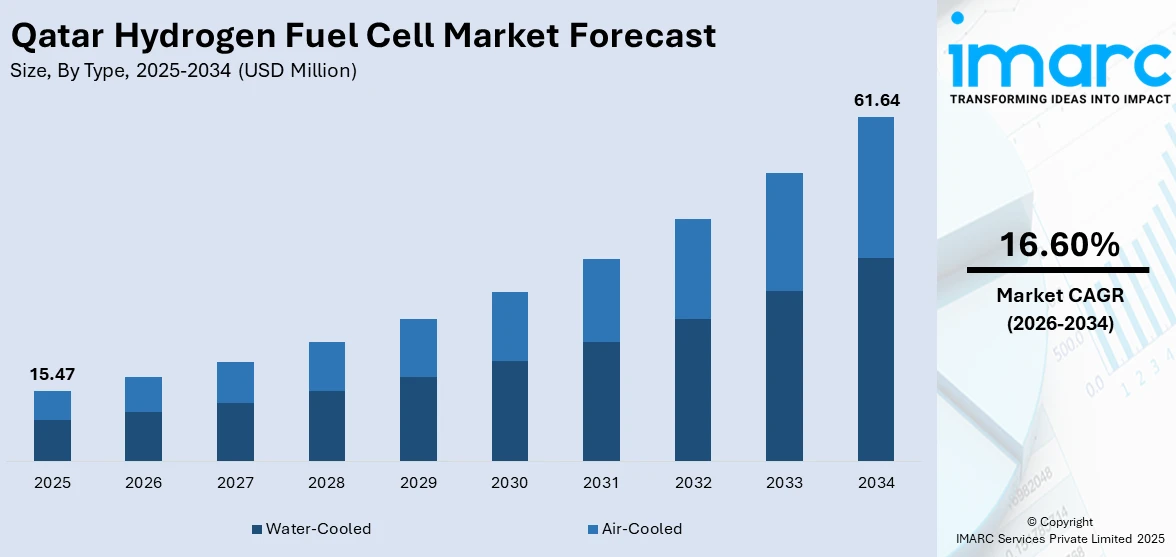
The Qatar hydrogen fuel cell market size was valued at USD 15.47 Million in 2025 and is projected to reach USD 61.64 Million by 2034, growing at a compound annual growth rate of 16.60% from 2026-2034.
The Qatar hydrogen fuel cell market is experiencing robust expansion driven by the nation's strategic commitment to clean energy diversification and decarbonization initiatives under Qatar National Vision 2030. Government investments in hydrogen production infrastructure, renewable energy integration, and sustainable transportation solutions are accelerating market development. The emergence of pilot projects for green hydrogen production, coupled with substantial investments in blue hydrogen and ammonia facilities, is establishing Qatar as a regional leader in hydrogen technologies, contributing significantly to the Qatar hydrogen fuel cell market share.
Key Takeaways and Insights:
- By Type: Water-cooled dominate the market with a share of 56% in 2025, due to their effective thermal management, making them ideal for Qatar’s hot climate and demanding industrial and energy applications.
- By Technology: Proton exchange membrane fuel cells lead the market with a share of 48% in 2025, reflecting their versatility for transportation applications and quick startup characteristics suitable for diverse operational requirements.
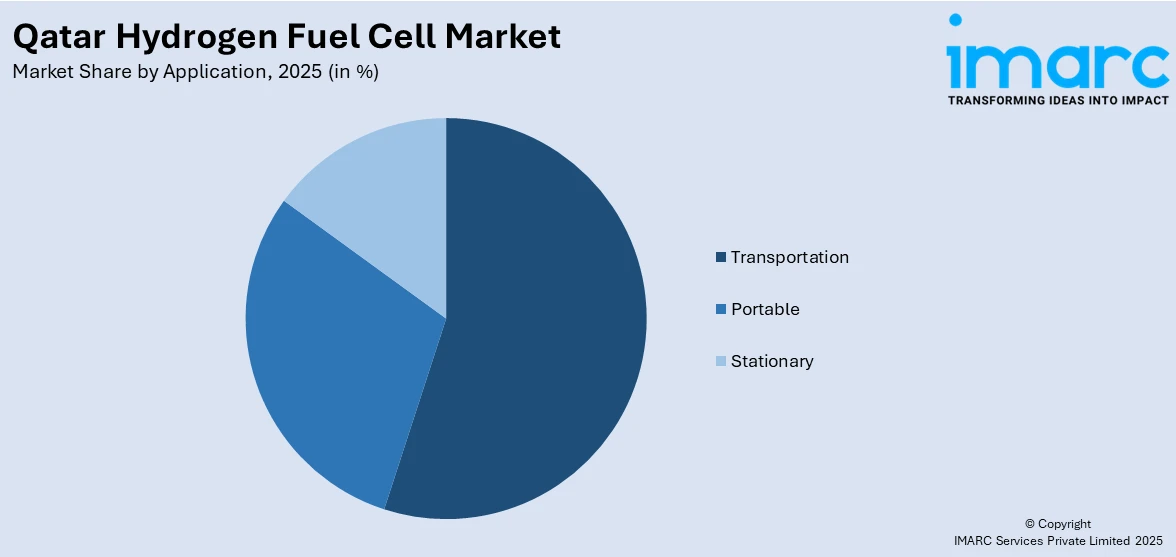
- By Application: Transportation dominate the market with a share of 50% in 2025, supported by government initiatives promoting clean mobility solutions and the integration of hydrogen fuel cell technology in public transport systems.
- By Region: Ad Dawhah represents the largest regional segment with a 42% market share in 2025, benefiting from concentrated industrial activities, advanced infrastructure development, and proximity to major hydrogen production facilities.
- Key Players: The Qatar hydrogen fuel cell market exhibits a dynamic competitive landscape characterized by collaborations between state-owned energy entities and international technology providers, focused on advancing fuel cell efficiency, expanding hydrogen production capabilities, and establishing comprehensive infrastructure for sustainable energy solutions.
To get more information on this market Request Sample
The Qatar hydrogen fuel cell market is steadily gaining traction as the country advances a clean energy strategy aligned with long-term sustainability and decarbonization objectives. National initiatives and policy support are encouraging the development of hydrogen technologies across the value chain, creating a favorable environment for fuel cell adoption. Qatar’s strong natural gas base supports the development of low-carbon hydrogen pathways, while expanding renewable energy capacity enables progress toward cleaner hydrogen production methods. Innovation and research play an important role in this transition, with pilot projects and collaborative efforts demonstrating alternative and sustainable approaches to hydrogen generation. By diversifying production routes and integrating advanced technologies, Qatar is strengthening its hydrogen ecosystem. This evolving landscape positions hydrogen fuel cells as a promising component of the country’s future energy mix, supporting energy diversification, industrial applications, and broader environmental goals.
Qatar Hydrogen Fuel Cell Market Trends:
Expansion of Clean Mobility Solutions
The Qatar hydrogen fuel cell market is experiencing significant growth driven by the expanding adoption of clean mobility solutions throughout the transportation sector. Hydrogen fuel cell vehicles are gaining traction as environmentally sustainable alternatives to conventional fossil fuel-powered transportation. Government initiatives promoting zero-emission public transport and commercial vehicle fleets are establishing foundational infrastructure and driving consumer acceptance. Qatar's Ministry of Transport has outlined plans for sustainable transportation development, with approximately 74% of public buses already transitioned to electric platforms by mid-2025, creating pathways for future hydrogen fuel cell integration in heavy-duty transport applications, positively influencing Qatar hydrogen fuel cell market growth.
Industrial Integration and Decarbonization
Qatari industries are increasingly leveraging hydrogen fuel cell applications to optimize energy consumption and reduce environmental footprints. Hydrogen fuel cells provide reliable, on-demand power for industrial facilities, warehousing operations, and manufacturing processes. The adoption in critical industrial applications enhances operational continuity while reducing carbon emissions and dependence on conventional electricity grids. Qatar's commitment to achieving net-zero greenhouse gas emissions by 2050, as outlined in the National Climate Change Action Plan 2030, is driving industrial decarbonization efforts. The integration of fuel cells in energy-intensive applications is supported by technological innovations in high-capacity hydrogen storage and efficient fuel cell systems.
Strategic Infrastructure Development
Infrastructure development plays a pivotal role in the growth of Qatar’s hydrogen fuel cell market. Establishing refueling stations, storage facilities, and distribution networks is essential to support widespread adoption of hydrogen technologies. Large-scale projects in hydrogen production, including integrated facilities with carbon capture capabilities, highlight Qatar’s strategic focus on building a complete hydrogen value chain. These initiatives demonstrate the nation’s commitment to advancing clean energy solutions, strengthening its position as a competitive player in the emerging global hydrogen economy, and supporting long-term energy diversification and sustainability objectives.
Market Outlook 2026-2034:
The Qatar hydrogen fuel cell market outlook remains highly favorable as the nation accelerates its transition toward sustainable energy systems and clean transportation solutions. Growing investments in renewable energy infrastructure, including the 800MW Al Kharsaah Solar PV plant and planned additional solar facilities totaling 875MW, are creating pathways for green hydrogen production. The market is expected to benefit from technological advancements in fuel cell efficiency, expanding government incentives, and increasing international partnerships focused on hydrogen technology transfer. The market generated a revenue of USD 15.47 Million in 2025 and is projected to reach a revenue of USD 61.64 Million by 2034, growing at a compound annual growth rate of 16.60% from 2026-2034.
Qatar Hydrogen Fuel Cell Market Report Segmentation:
|
Segment Category |
Leading Segment |
Market Share |
|
Type |
Water-Cooled |
56% |
|
Technology |
Proton Exchange Membrane Fuel Cells |
48% |
|
Application |
Transportation |
50% |
|
Region |
Ad Dawhah |
42% |
Type Insights:
- Air-Cooled
- Water-Cooled
Water-cooled dominates with a market share of 56% of the total Qatar hydrogen fuel cell market in 2025.
Water-cooled hydrogen fuel cell systems maintain dominant market positioning due to their superior thermal management capabilities and enhanced performance characteristics in high-power applications. These systems effectively dissipate heat generated during electrochemical reactions, enabling sustained operation under demanding conditions prevalent in Qatar's climate. The water-cooled technology offers advantages in efficiency, durability, and power output consistency, making it particularly suitable for transportation and stationary power generation applications where continuous operation and high power density are essential requirements.
The preference for water-cooled systems is reinforced by their scalability for industrial and commercial applications. Qatar's focus on heavy-duty transportation and large-scale stationary power applications favors water-cooled configurations that can deliver higher power outputs while maintaining optimal operating temperatures. International collaborations with technology providers are bringing advanced water-cooled fuel cell systems to the market, supporting Qatar's objectives for clean energy integration across industrial and transportation sectors.
Technology Insights:
- Proton Exchange Membrane Fuel Cells
- Phosphoric Acid Fuel Cells
- Solid Oxide Fuel Cells
- Others
Proton exchange membrane fuel cells lead the market with a share of 48% of the total Qatar hydrogen fuel cell market in 2025.
Proton exchange membrane (PEM) fuel cells hold the largest share in the technology segment due to their versatility, fast startup capabilities, and suitability for transportation applications. Operating at relatively low temperatures with a solid polymer electrolyte membrane, PEM fuel cells deliver rapid response times and efficient power output, making them well-suited for vehicles. Their widespread adoption internationally has facilitated technology transfer and supports the deployment of advanced fuel cell solutions within Qatar’s growing hydrogen economy.
The growing preference for PEM technology in Qatar aligns with global automotive and transportation trends, where this technology has demonstrated commercial viability. PEM fuel cells offer high power density, compact design, and zero tailpipe emissions, making them ideal for buses, trucks, and commercial vehicles targeted for hydrogen integration. Qatar's research institutions and energy companies are collaborating with international PEM technology providers to develop localized expertise and establish manufacturing capabilities that support long-term market development.
Application Insights:
Access the comprehensive market breakdown Request Sample
- Transportation
- Portable
- Stationary
Transportation represents the largest share at 50% of the total Qatar hydrogen fuel cell market in 2025.
Transportation applications dominate the Qatar hydrogen fuel cell market, driven by government initiatives promoting sustainable mobility and decarbonization of the transport sector. Hydrogen fuel cell vehicles offer advantages including extended driving ranges, rapid refueling times, and zero tailpipe emissions, positioning them as viable alternatives for commercial fleets and public transportation. Qatar's commitment to sustainable transportation under National Vision 2030 is creating favorable conditions for hydrogen mobility adoption.
The transportation sector's dominance reflects strategic alignment with Qatar's broader energy transition objectives and the nation's hosting of major international events that have accelerated clean transport infrastructure development. Heavy-duty vehicles including buses and trucks, represent primary targets for hydrogen fuel cell adoption, as these applications benefit most from hydrogen's energy density advantages compared to battery electric alternatives. Research conducted by Hamad Bin Khalifa University has demonstrated the life cycle cost competitiveness of hydrogen fuel cell vehicles in Qatar's context, supporting policy frameworks for expanded deployment.
Regional Insights:
- Ad Dawhah
- Al Rayyan
- Al Wakrah
- Others
Ad Dawhah exhibits a clear dominance with a 42% share of the total Qatar hydrogen fuel cell market in 2025.
Ad Dawhah, as Qatar’s capital and economic hub, drives significant demand for hydrogen fuel cell technologies due to high energy requirements from commercial, governmental, and residential sectors. The city’s focus on clean energy adoption and decarbonization initiatives under national sustainability strategies positions hydrogen as a key solution for reducing emissions. Advanced mobility projects, including hydrogen-powered transportation and public service vehicles, further stimulate interest in fuel cells. Investment in urban infrastructure, supported by government and private sector initiatives, creates a conducive environment for hydrogen technology deployment across multiple applications.
The presence of research institutions, innovation hubs, and pilot projects in Ad Dawhah fosters technology development and knowledge transfer in hydrogen fuel cells. Collaborative programs with international partners accelerate innovation, enabling testing and demonstration of both transportation and stationary fuel cell systems. Policy support, regulatory frameworks, and government incentives encourage private sector participation, creating a pipeline for commercial adoption. Together, these factors position Ad Dawhah as a strategic center for hydrogen fuel cell growth, supporting Qatar’s broader energy diversification and sustainable development objectives.

Market Dynamics:
Growth Drivers:
Why is the Qatar Hydrogen Fuel Cell Market Growing?
Government Initiatives and Strategic Investments
The Qatari government’s strong commitment to hydrogen energy development serves as a key driver for the fuel cell market. National strategies outline clear operational targets for hydrogen production and utilization while offering incentives to encourage private sector participation in hydrogen technologies. Significant public investment is supporting the development of hydrogen projects, fostering infrastructure and expertise. By expanding renewable energy capacity, Qatar is creating a robust foundation for integrating hydrogen fuel cells into transportation, industrial applications, and other sectors, reinforcing the nation’s long-term energy diversification and sustainability objectives.
Advancements in Fuel Cell Technology and Infrastructure
Technological progress in hydrogen fuel cell systems is improving efficiency, durability, and commercial feasibility, supporting market growth in Qatar. Investment in research and development (R&D) at the national level is driving innovation in fuel cell design, materials, and production methods. New developments in membrane technology, catalyst activities, and integration in systems are improving the overall efficiency of operation and reducing the costs. Global experience with mature fuel cell technologies enables knowledge transfer and collaboration, allowing Qatar to adopt proven solutions. The developments make hydrogen fuel cells a promising and scalable source of transportation, industrial, and energy to address the clean energy and sustainability of the country.
Integration with Renewable Energy Infrastructure
The increasing renewable energy infrastructure in Qatar is providing prospects of green hydrogen production, which supports the hydrogen fuel cell market directly. The massive solar projects in the industrial and urban regions would be a good and renewable source of energy for the generation of hydrogen. Continuous and systematic solar projects allow the introduction of special green hydrogen plants, which will provide the fuel cells with hydrogen, produced locally and in a low-carbon form. That is why, by combining renewable energy with hydrogen production, By combining renewable energy with hydrogen production, Qatar is enhancing its clean energy ecosystem, providing fuel cells to transportation, industry, and energy uses, and furthering its sustainability and energy diversification goals.
Market Restraints:
What Challenges the Qatar Hydrogen Fuel Cell Market is Facing?
Limited Hydrogen Distribution Infrastructure
Qatar currently lacks comprehensive infrastructure for hydrogen distribution, which hampers market development. The absence of pipelines and refueling stations limits accessibility of hydrogen for end-users, particularly in transportation applications. Establishing a robust hydrogen distribution network requires significant investments estimated at approximately USD 400 million, creating barriers to rapid market expansion and consumer adoption.
High Initial Investment Costs
Hydrogen fuel cell projects face significant challenges due to the high upfront capital required for establishing production and facility infrastructure. The costs of specialized equipment, advanced technologies, and critical components such as catalysts create financial hurdles, making investment decisions more complex. These factors can lengthen payback periods and deter potential investors, even when long-term economic benefits and sustainability advantages are clear.
Water Resource Constraints
Qatar's heavy reliance on desalination for freshwater presents challenges for large-scale hydrogen production. Green hydrogen production requires approximately nine liters of freshwater per kilogram, while blue hydrogen requires 12-19 liters per kilogram. Expanding hydrogen production necessitates parallel expansion of energy-intensive desalination capacity, increasing operational complexity and costs for hydrogen fuel cell value chain development.
Competitive Landscape:
The Qatar hydrogen fuel cell market competitive landscape is characterized by dynamic collaboration between state-owned energy entities and international technology providers. Competition centers on securing technology partnerships, advancing fuel cell capabilities, and developing integrated hydrogen value chains that serve both domestic applications and potential export markets. Market participants are focusing on scaling production efficiencies, optimizing fuel cell performance for regional conditions, and establishing early-mover advantages in infrastructure development. Strategic collaborations with global engineering firms and research institutions are enabling access to advanced technologies and specialized expertise, while domestic entities leverage existing energy infrastructure and market knowledge to strengthen competitive positioning in the emerging clean energy economy.
Recent Developments:
- November 2024: QatarEnergy and Qatar Fertiliser Company (QAFCO) broke ground on the world's largest blue ammonia and blue hydrogen project at Mesaieed Industrial City. The facility features an ammonia production unit with a capacity of 1.2 million tonnes per year, along with a carbon capture and storage unit capable of sequestering 1.5 million tonnes of carbon dioxide annually. The project is scheduled to commence production in the first quarter of 2026.
- June 2024: Qatar Shell Research and Technology Centre achieved a significant milestone with its HyPEC (Hybrid Photo-electro Chemical Production) pilot project successfully producing green hydrogen from wastewater at Qatar Science and Technology Park. The project, developed in collaboration with Texas A&M University at Qatar and India's National Chemical Laboratories with support from Qatar National Research Fund, demonstrates innovative approaches to sustainable hydrogen generation supporting Qatar National Vision 2030.
Qatar Hydrogen Fuel Cell Market Report Coverage:
| Report Features | Details |
|---|---|
| Base Year of the Analysis | 2025 |
| Historical Period | 2020-2025 |
| Forecast Period | 2026-2034 |
| Units | Million USD |
| Scope of the Report | Exploration of Historical Trends and Market Outlook, Industry Catalysts and Challenges, Segment-Wise Historical and Future Market Assessment:
|
| Types Covered | Air-Cooled, Water-Cooled |
| Technologies Covered | Proton Exchange Membrane Fuel Cells, Phosphoric Acid Fuel Cells, Solid Oxide Fuel Cells, Others |
| Applications Covered | Transportation, Portable, Stationary |
| Regions Covered | Ad Dawhah, Al Rayyan, Al Wakrah, Others |
| Customization Scope | 10% Free Customization |
| Post-Sale Analyst Support | 10-12 Weeks |
| Delivery Format | PDF and Excel through Email (We can also provide the editable version of the report in PPT/Word format on special request) |
Frequently Asked Questions About the Qatar Hydrogen Fuel Cell Market Report
The Qatar hydrogen fuel cell market size was valued at USD 15.47 Million in 2025.
The Qatar hydrogen fuel cell market is expected to grow at a compound annual growth rate of 16.60% from 2026-2034 to reach USD 61.64 Million by 2034.
Water-cooled represent the largest market share at 56% in 2025, driven by superior thermal management capabilities essential for Qatar's high-temperature climate and demanding industrial applications requiring sustained high-power operation.
Key factors driving the Qatar hydrogen fuel cell market include government strategic investments and National Hydrogen Strategy 2023, expanding renewable energy infrastructure, technological advancements in fuel cell efficiency, and growing emphasis on sustainable transportation and industrial decarbonization.
Major challenges include limited hydrogen distribution infrastructure and refueling stations, high initial investment costs for production facilities and fuel cell systems, water resource constraints requiring expanded desalination capacity, and supply chain dependencies for specialized equipment and materials.
Need more help?
- Speak to our experienced analysts for insights on the current market scenarios.
- Include additional segments and countries to customize the report as per your requirement.
- Gain an unparalleled competitive advantage in your domain by understanding how to utilize the report and positively impacting your operations and revenue.
- For further assistance, please connect with our analysts.
 Request Customization
 Speak to an Analyst
 Request Brochure
 Inquire Before Buying
Benefits of Customization
- Personalize this research
- Triangulate with your data
- Get data as per your format and definition
- Gain a deeper dive into a specific application, geography, customer, or competitor
- Any level of personalization
Get in Touch With Us
UNITED STATES
Phone: +1-201-971-6302
INDIA
Phone: +91-120-433-0800
UNITED KINGDOM
Phone: +44-753-714-6104
Email: [email protected]
Client Testimonials




.webp)




.webp)













Related Reports

Choose your plan
*Please note that the prices mentioned below are starting prices for each bundle type. Kindly contact our team for further details.*
Single User License
- 1 User License, Access on 2 Devices
- PDF Report + Excel Dataset (Password Protected)
- Lifetime Access
- No Printing Rights
- 10% Free Report Customization
- 10–12 Weeks of Analyst Support
Five User License
- Access for 5 Users, 2 Devices per User
- PDF Report + Excel Dataset (Password Protected)
- Lifetime Access
- Dedicated Account Manager
- 12–14 Weeks of Analyst Support
- No Printing Rights
- 15% Free Report Customization
- 25% Discount on Your Next Purchase
Corporate User License
- Unlimited User Access (Within Your Organization)
- PDF Report + Excel Dataset
- Lifetime Access
- Dedicated Account Manager
- 14–20 Weeks of Analyst Support
- No Printing Rights
- 20% Free Report Customization
- 30% Discount on Your Next Purchase
Essential Insights
What's included:
3 reports
- Lifetime Access
- PDF Reports
- Excel Datasets
- 2 Weeks of Free Analyst Support
- 2 User Licenses
- Access on 2 Devices
- Printing Rights
- Complimentary PowerPoint (PPT) Version
- Complimentary License Upgrade
Professional Access
What's included:
5 reports
- Lifetime Access
- PDF Reports
- Excel Datasets
- 8 Weeks of Free Analyst Support
- 2 User Licenses
- Access on 2 Devices
- Printing Rights
- Complimentary PowerPoint (PPT) Version
- Complimentary License Upgrade
Business Advantage
What's included:
8 reports
- Lifetime Access
- PDF Reports
- Excel Datasets
- 14 Weeks of Free Analyst Support
- 2 User Licenses
- Access on 2 Devices
- Printing Rights
- Complimentary PowerPoint (PPT) Version
- Complimentary License Upgrade
Enterprise Intelligence
What's included:
10 reports
- Lifetime Access
- PDF Reports
- Excel Datasets
- 20 Weeks of Free Analyst Support
- 2 User Licenses
- Access on 2 Devices
- Printing Rights
- Complimentary PowerPoint (PPT) Version
- Complimentary License Upgrade