
Refurbished and Used Mobile Phones Market Size, Share, Trends and Forecast by Type, Price Range, Distribution Channel, and Region, 2026-2034
Refurbished and Used Mobile Phones Market Size and Share:
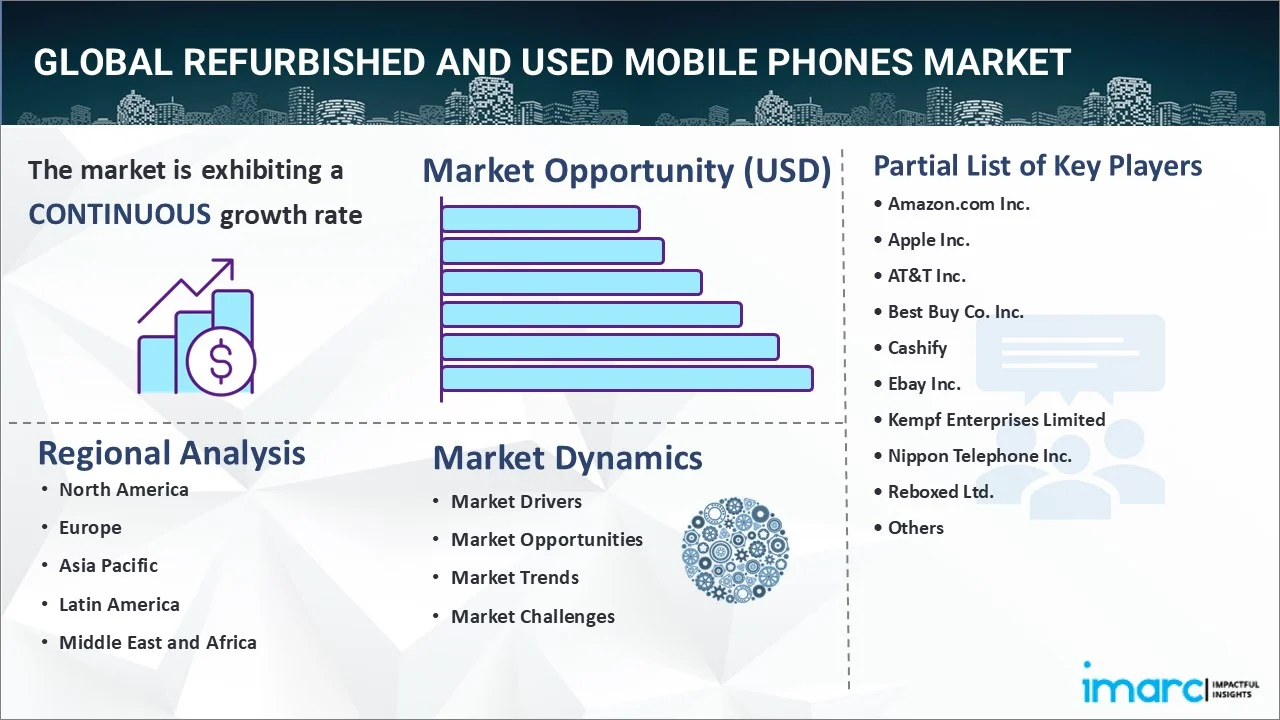
The global refurbished and used mobile phones market size was valued at USD 74.03 Billion in 2025. Looking forward, IMARC Group estimates the market to reach USD 140.26 Billion by 2034, exhibiting a CAGR of 7.05% from 2026-2034. Asia Pacific currently dominates the market, holding a market share of 38.7% in 2025. The region benefits from large price-sensitive consumer populations in China, India, and Southeast Asia, combined with widespread e-commerce penetration and government-supported e-waste policies that actively promote device reuse, strengthening the refurbished and used mobile phones market share.
The global refurbished and used mobile phones market is experiencing robust expansion driven by multiple converging forces. The steadily rising prices of flagship smartphones from major manufacturers have made brand-new devices unaffordable for a large segment of the world's population, creating strong and sustained demand for certified pre-owned alternatives. Consumers across both developed and developing economies are recognizing the significant cost savings offered by refurbished devices without compromising performance or reliability. Growing environmental consciousness around electronic waste has further shifted purchasing behavior, as buyers increasingly prefer sustainable options that extend device lifecycles. The proliferation of dedicated e-commerce platforms and manufacturer-certified programs has standardized quality assurance and warranty offerings, reducing the trust deficit that previously limited secondary market adoption. These combined macro forces underpin consistent refurbished and used mobile phones market growth across all major geographies.
The United States has emerged as a major region in the refurbished and used mobile phones market owing to many factors. The country benefits from a mature trade-in ecosystem supported by all major carriers, enabling a steady and high-quality supply of pre-owned flagship devices entering the secondary market. Consumer interest in sustainable electronics is accelerating, with increasing numbers of households opting for refurbished devices as an eco-conscious and cost-efficient alternative. The 5G upgrade cycle has pushed large quantities of near-new, high-specification handsets into the secondary channel as users trade in functional devices for the latest connectivity capabilities.
To get more information on this market Request Sample
Refurbished and Used Mobile Phones Market Trends:
Surging Demand for Affordable Smartphones
The accelerating cost of new premium smartphones has become one of the most consequential drivers reshaping the global secondary device market. This affordability gap is particularly impactful in emerging markets across Asia, Latin America, and Africa, where purchasing power constraints make new devices financially inaccessible for vast demographic segments. Refurbished and used phones provide a pragmatic solution that balances technology access with budget realities. The trend is reinforced by rising consumer sophistication, with buyers now demonstrating greater confidence in the quality of professionally refurbished devices, particularly those backed by manufacturer warranties. The expansion of certified pre-owned programs by major brands and authorized third-party refurbishers has legitimized the market, attracting a broader buyer base across age groups and income levels, driving consistent volume growth.
Rising Environmental Awareness and E-Waste Regulations
Growing global awareness of the environmental consequences of electronic waste is fundamentally altering consumer purchasing behavior and corporate procurement strategies, contributing to a broader refurbished and used mobile phones market outlook. The volume of e-waste generated worldwide has emerged as a pressing sustainability concern, with the United Nations' Global E-waste Monitor 2024 report indicating that global electronic waste generation is increasing by approximately 2.6 million metric tons annually and is projected to reach 82 million metric tons by 2030. Refurbished and used mobile phones offer a direct and practical solution by extending device lifecycles, reducing demand for new manufacturing, and minimizing hazardous waste streams. Regulatory frameworks are reinforcing this shift: the European Union's Ecodesign and Repairability Regulation, mandated that smartphones sold in the EU must display standardized repairability scores from A to E, and manufacturers are required to provide spare parts and software updates for a minimum of seven years after a product's discontinuation. These rules are accelerating refurbishment adoption across the continent and setting a precedent for similar policy frameworks in other jurisdictions.
Expansion of OEM-Certified Refurbishment Programs
A pivotal structural shift in the market has been the rapid expansion of manufacturer-certified refurbishment programs, which have fundamentally transformed consumer confidence in pre-owned devices and broadened the addressable buyer base, shaping the refurbished and used mobile phones market forecast. Original equipment manufacturers have recognized that certified secondary sales represent a significant revenue opportunity while also strengthening brand loyalty and supporting circular economy commitments. By offering devices that have undergone rigorous multi-point quality inspections, complete hardware and software restoration, and come packaged with genuine replacement parts and standard one-year manufacturer warranties, OEMs are effectively narrowing the perceived quality gap between new and refurbished products. In February 2026, Apple began selling certified refurbished iPhone 16 and iPhone 16 Pro models in the United States, Canada, the United Kingdom, France, Germany, and several other markets, with prices discounted by 12 to 22 percent from original retail pricing, reflecting the growing institutionalization of certified refurbishment as a mainstream channel strategy. Samsung's parallel expansion of its Certified Re-Newed program to France, Germany, and the United Kingdom in January 2026, starting with the Galaxy S25 series, further underscores how OEM-led secondary market programs are reshaping competitive dynamics.
Refurbished and Used Mobile Phones Industry Segmentation:
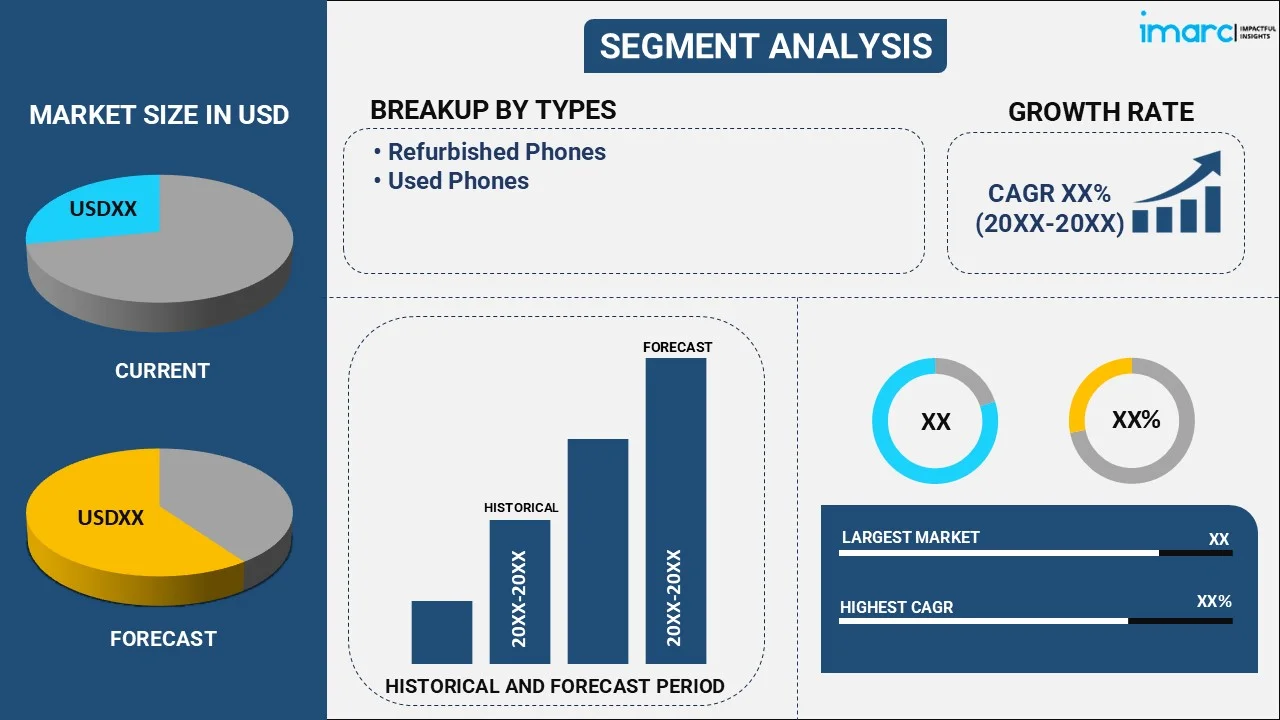
IMARC Group provides an analysis of the key trends in each segment of the global refurbished and used mobile phones market, along with forecast at the global, regional, and country levels from 2026-2034. The market has been categorized based on type, price range, and distribution channel.
Analysis by Type:
To get detailed segment analysis of this market Request Sample
- Refurbished Phones
- Used Phones
Refurbished phones hold 62.8% of the market share. Refurbished phones refer to pre-owned devices that have undergone a rigorous professional restoration process, typically conducted by the original manufacturer or an authorized refurbisher, to restore them to like-new condition. This process encompasses thorough hardware diagnostics, component replacement using genuine parts, cosmetic restoration, software reinstallation, and comprehensive quality testing before resale. The appeal of refurbished phones lies in their combination of affordability and quality assurance; buyers receive a device that performs to factory specifications and is typically accompanied by a warranty, which substantially reduces the perceived risk associated with purchasing a pre-owned product. Institutional and corporate buyers favor this segment because certified devices integrate seamlessly with enterprise device management systems, security protocols, and compliance frameworks. The consistent inflow of high-specification trade-in units generated by rapid smartphone upgrade cycles among consumers in developed markets ensures a steady supply of premium-grade inventory for refurbishers, sustaining volume growth and enabling an expanding range of models in the certified refurbished segment. Growing OEM participation has further elevated quality standards across this segment.

Analysis by Price Range:
- Low Price (Below $200)
- Mid-Price ($200 to $500)
- Premium (Above $500)
Mid-Price ($200 to $500) leads the market with a share of 47.9%. The mid-price segment occupies the most strategically important position in the refurbished and used mobile phones market because it balances meaningful cost savings with access to high-quality, feature-rich devices. Devices in this range include recent-generation smartphones from leading brands, offering consumers capable cameras, strong processing power, and 5G connectivity at a fraction of the new retail price. This segment has strong appeal across both developed and developing markets, attracting upwardly mobile consumers in emerging economies seeking premium brand experiences, as well as cost-conscious buyers in mature markets who want flagship-grade functionality without paying full retail prices. The mid-price bracket benefits from the regular introduction of near-new models into the secondary channel as consumers in high-income countries upgrade to the latest generation, creating a consistent and well-maintained supply of desirable inventory. Retailer and platform investment in quality grading and warranty programs for this price tier has further strengthened consumer confidence and accelerated adoption.
Analysis by Distribution Channel:
- Offline
- Online
Offline dominates the market, with a share of 56.4%. The offline distribution channel maintains its leading position in the refurbished and used mobile phones market by addressing fundamental consumer needs for physical product inspection, immediate gratification, and face-to-face assurance when purchasing pre-owned devices. In many markets, especially across Asia, Africa, and Latin America, buyers strongly prefer to examine device condition, test functionality, and negotiate pricing in person before completing a transaction, making physical retail stores, dedicated refurbished device shops, and carrier trade-in counters indispensable channels. The offline channel is further reinforced by post-purchase service infrastructure, with nearby repair and support centers providing consumers with confidence in long-term ownership. Carrier trade-in programs operated through physical store networks also drive significant offline volumes, with telecom operators processing large quantities of returned devices at retail locations. Established retail chains and specialty electronics stores have expanded their certified pre-owned sections, introducing structured warranty programs that bring the quality assurance of certified products to brick-and-mortar environments, maintaining the channel's dominance in most regions.
Regional Analysis:
To get more information on the regional analysis of this market Request Sample
- North America
- United States
- Canada
- Europe
- Germany
- France
- United Kingdom
- Italy
- Spain
- Others
- Asia Pacific
- China
- Japan
- India
- South Korea
- Australia
- Indonesia
- Others
- Latin America
- Brazil
- Mexico
- Others
- Middle East and Africa
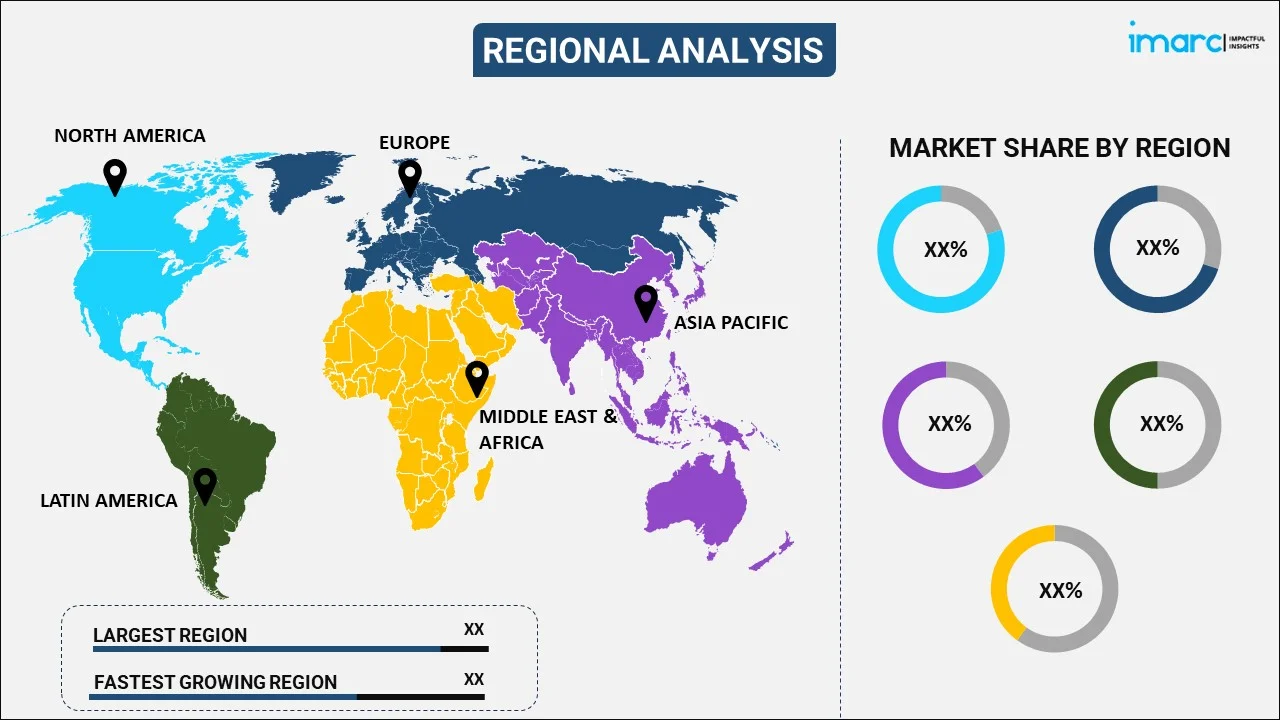
Asia Pacific, accounting for 38.7% of the share, enjoys the leading position in the market. The region has the highest share due to the presence of a massive population base with different income groups, a wide e-commerce market, and well-established local refurbishment markets. The country of China also contributes to the regional market significantly because of the presence of large-scale refurbishment centers and the availability of a wide range of refurbished global as well as local brand devices in the country. India has also seen rapid development of organized refurbishment markets to cater to the massive number of price-sensitive smartphone users in the country. Southeast Asia is also seen as one of the emerging growth areas for the refurbishment market, with countries such as Indonesia, Vietnam, and the Philippines showing strong demand for pre-owned devices as the number of smartphone users in the region keeps growing. The e-waste refurbishment mandates by the governments of China and India, as well as the strong e-commerce markets in the region, also contribute to the strong position of the Asia Pacific region in the global refurbishment market throughout the forecast period.
Key Regional Takeaways:
North America Refurbished and Used Mobile Phones Market Analysis
North America represents one of the most mature and value-intensive markets for refurbished and used mobile phones globally, underpinned by high consumer willingness to pay for premium certified devices, a well-established trade-in ecosystem operated by major carriers, and growing corporate adoption of refurbished handsets as part of enterprise sustainability strategies. The region benefits from a strong supply of high-quality pre-owned inventory generated by frequent smartphone upgrade cycles among affluent consumers who regularly exchange nearly new flagship devices for the latest models. Major carrier programs and manufacturer-certified channels provide buyers with guaranteed quality, warranty coverage, and customer support that closely mirror new device purchasing experiences. Corporate ESG mandates are increasingly driving institutional procurement of refurbished devices as organizations seek to reduce Scope 3 emissions associated with employee devices while managing hardware budgets. The regulatory environment in North America, though less prescriptive than the EU, is gradually evolving, with right-to-repair legislation gaining momentum at the state level across the United States, which is expected to further stimulate supply and reduce refurbishment costs. Canada's market is also experiencing expansion, with growing environmental consciousness and increasing availability of certified devices through retail partners.
United States Refurbished and Used Mobile Phones Market Analysis
The United States represents the single largest national market within the global refurbished and used mobile phones sector, supported by a deep and diverse ecosystem of carrier-backed trade-in programs, manufacturer-certified storefronts, and specialized third-party resale platforms that collectively ensure broad consumer access to quality-assured pre-owned devices. Consumer adoption has accelerated markedly as awareness of certified programs grows and as the price gap between new flagship smartphones and their certified refurbished equivalents widens across key model categories. Carrier trade-in programs serve as the primary supply engine for the United States market. The growing 5G upgrade cycle has continued to inject large volumes of recently released, near-new handsets into the secondary channel, elevating the average quality and specification of available inventory. Enterprise adoption is also a meaningful growth driver, with companies increasingly formalizing device refurbishment within their IT asset disposition practices to reduce costs and support corporate sustainability commitments. Strong e-commerce infrastructure further amplifies market reach, ensuring broad geographic distribution.
Europe Refurbished and Used Mobile Phones Market Analysis
Europe represents one of the most structurally robust markets for refurbished and used mobile phones, shaped by progressive regulatory frameworks, a deeply embedded sustainability culture, and a well-organized secondary device infrastructure. The region benefits from strong legislative momentum around circular economy principles, with governments mandating extended product lifespans, repairability standards, and spare part availability for consumer electronics, creating a favorable environment for the refurbishment sector to expand. These regulatory developments have increased the long-term viability of refurbishing operations by improving access to components and lowering reconditioning costs, while simultaneously elevating consumer confidence in the quality and longevity of pre-owned devices. Environmental awareness is particularly pronounced among European consumers, who increasingly view purchasing refurbished smartphones as a meaningful contribution to reducing electronic waste. Germany, the United Kingdom, and France are the leading national markets, each supported by established refurbishment networks, mature e-commerce platforms, and growing institutional procurement of certified pre-owned devices. The expansion of manufacturer-certified programs across the continent has further strengthened the quality assurance ecosystem, attracting a broader and more diverse buyer base.
Asia Pacific Refurbished and Used Mobile Phones Market Analysis
Asia Pacific accounts for the largest share of the global refurbished and used mobile phones market, driven by a vast and economically diverse population base, expanding smartphone penetration, and rapidly maturing secondary market infrastructure across the region's leading economies. China is the region's largest market in absolute terms, supported by an extensive e-commerce ecosystem, large-scale local refurbishment facilities, and high consumer familiarity with pre-owned devices. India has emerged as one of the fastest-growing markets, driven by a large and predominantly price-sensitive consumer base for whom refurbished smartphones offer the only financially viable path to accessing modern mobile technology. Japan's certified secondary device market reached 3.15 million units in fiscal year 2024, up 15.5% year on year, reflecting rising mainstream acceptance of certified pre-owned handsets supported by major carriers and OEM programs. Southeast Asian markets, including Indonesia, Vietnam, and the Philippines, are expanding rapidly as smartphone penetration increases and consumers seek affordable connectivity solutions.
Latin America Refurbished and Used Mobile Phones Market Analysis
Latin America is a growing market for refurbished and used mobile phones, propelled by a large population of cost-sensitive consumers for whom affordability is the central purchasing criterion. Brazil and Mexico lead regional demand, supported by expanding e-commerce channels including Mercado Libre and Trocafone that connect buyers with certified pre-owned devices in urban and semi-urban areas. Growing sustainability awareness among younger demographics is also gradually redirecting purchasing preferences toward pre-owned devices.
Middle East and Africa Refurbished and Used Mobile Phones Market Analysis
The Middle East and Africa region represents an emerging market for refurbished and used mobile phones, driven by strong population growth, rising smartphone adoption, and broad income disparity that positions affordable pre-owned devices as the preferred choice for a large consumer segment. The UAE and Saudi Arabia lead in the Middle East, where brand consciousness and cost savings on flagship models drive demand. Africa shows strong long-term growth potential, with mobile-first adoption accelerating in Nigeria, South Africa, and Kenya. E-commerce platforms such as Jumia are expanding distribution into markets with limited traditional retail infrastructure, while rising smartphone penetration continues to underpin the region's expanding secondary device market.
Competitive Landscape:
The global refurbished and used mobile phones market has been identified to be competitive and consolidated, with key players including original equipment manufacturers, telecom carriers, refurbishment platforms, and diversified technology retail stores. OEM certified programs undertaken by key players in the smartphone industry have changed the competitive landscape of the global refurbished and used mobile phones market, where key players have been able to provide quality products to consumers, creating a benchmark for the industry. The key competitive strategies undertaken by players in the global refurbished and used mobile phones market have been to expand their presence in emerging nations, form partnerships with enterprise companies to procure mobile phones in bulk, and invest in technology to make the refurbishment process more efficient and environmentally friendly. The refurbished and used mobile phones market trends reflect intensifying competition on quality assurance, warranty terms, and pricing transparency, as players seek to differentiate in an environment where consumer expectations are rapidly converging with those of the new device market. Price competition remains significant in the lower-end segments, while certified and premium segments compete increasingly on trust, branding, and after-sales service quality.
The report provides a comprehensive analysis of the competitive landscape in the refurbished and used mobile phones market with detailed profiles of all major companies, including:
- Amazon.com Inc.
- Apple Inc.
- AT&T Inc.
- Best Buy Co. Inc.
- Cashify
- eBay Inc.
- Kempf Enterprises Limited
- Nippon Telephone Inc.
- Reboxed Ltd.
- Samsung Electronics Co. Ltd.
- Verizon Communications Inc.
- Walmart Inc.
Refurbished and Used Mobile Phones Market Report Scope:
| Report Features | Details |
|---|---|
| Base Year of the Analysis | 2025 |
| Historical Period | 2020-2025 |
| Forecast Period | 2026-2034 |
| Units | Billion USD |
| Scope of the Report | Exploration of Historical and Forecast Trends, Industry Catalysts and Challenges, Segment-Wise Historical and Predictive Market Assessment:
|
| Types Covered | Refurbished Phones, Used Phones |
| Price Ranges Covered | Low Price (Below $200), Mid-Price ($200 to $500), Premium (Above $500) |
| Distribution Channels Covered | Offline, Online |
| Regions Covered | Asia Pacific, Europe, North America, Latin America, Middle East and Africa |
| Countries Covered | United States, Canada, Germany, France, United Kingdom, Italy, Spain, China, Japan, India, South Korea, Australia, Indonesia, Brazil, Mexico |
| Companies Covered | Amazon.com Inc., Apple Inc., AT&T Inc., Best Buy Co. Inc., Cashify, eBay Inc., Kempf Enterprises Limited, Nippon Telephone Inc., Reboxed Ltd., Samsung Electronics Co. Ltd., Verizon Communications Inc., Walmart Inc., etc. |
| Customization Scope | 10% Free Customization |
| Post-Sale Analyst Support | 10-12 Weeks |
| Delivery Format | PDF and Excel through Email (We can also provide the editable version of the report in PPT/Word format on special request) |
Key Benefits for Stakeholders:
- IMARC's report offers a comprehensive quantitative analysis of various market segments, historical and current market trends, market forecasts, and dynamics of the refurbished and used mobile phones market from 2020-2034.
- The research study provides the latest information on the market drivers, challenges, and opportunities in the global refurbished and used mobile phones market.
- The study maps the leading, as well as the fastest-growing, regional markets. It further enables stakeholders to identify the key country-level markets within each region.
- Porter's Five Forces analysis assists stakeholders in assessing the impact of new entrants, competitive rivalry, supplier power, buyer power, and the threat of substitution. It helps stakeholders to analyze the level of competition within the refurbished and used mobile phones industry and its attractiveness.
- Competitive landscape allows stakeholders to understand their competitive environment and provides an insight into the current positions of key players in the market.
Frequently Asked Questions About the Refurbished and Used Mobile Phones Market Report
The refurbished and used mobile phones market was valued at USD 74.03 Billion in 2025.
The refurbished and used mobile phones market is projected to exhibit a CAGR of 7.05% during 2026-2034, reaching a value of USD 140.26 Billion by 2034.
The refurbished and used mobile phones market is driven by rising new smartphone prices that prompt cost-sensitive consumers to seek affordable alternatives, growing environmental awareness encouraging device reuse, the expansion of manufacturer-certified programs that improve quality trust, supportive e-waste regulations in major economies, and the proliferation of e-commerce platforms providing wider access to certified pre-owned devices globally.
Asia Pacific currently dominates the refurbished and used mobile phones market, accounting for a share of 38.7%. The region benefits from its massive price-sensitive consumer population, advanced e-commerce infrastructure, government-supported e-waste refurbishment policies, and the large-scale refurbishment capabilities of China and India that ensure substantial and consistent supply of affordable pre-owned devices.
Some of the major players in the refurbished and used mobile phones market include Amazon.com Inc., Apple Inc., AT&T Inc., Best Buy Co. Inc., Cashify, eBay Inc., Kempf Enterprises Limited, Nippon Telephone Inc., Reboxed Ltd., Samsung Electronics Co. Ltd., Verizon Communications Inc., Walmart Inc., etc.
Need more help?
- Speak to our experienced analysts for insights on the current market scenarios.
- Include additional segments and countries to customize the report as per your requirement.
- Gain an unparalleled competitive advantage in your domain by understanding how to utilize the report and positively impacting your operations and revenue.
- For further assistance, please connect with our analysts.
 Request Customization
 Speak to an Analyst
 Request Brochure
 Inquire Before Buying
Benefits of Customization
- Personalize this research
- Triangulate with your data
- Get data as per your format and definition
- Gain a deeper dive into a specific application, geography, customer, or competitor
- Any level of personalization
Get in Touch With Us
UNITED STATES
Phone: +1-201-971-6302
INDIA
Phone: +91-120-433-0800
UNITED KINGDOM
Phone: +44-753-714-6104
Email: sales@imarcgroup.com
Client Testimonials




.webp)




.webp)













Related Reports

Choose your plan
*Please note that the prices mentioned below are starting prices for each bundle type. Kindly contact our team for further details.*
Single User License
- 1 User License, Access on 2 Devices
- PDF Report + Excel Dataset (Password Protected)
- Lifetime Access
- No Printing Rights
- 10% Free Report Customization
- 10–12 Weeks of Analyst Support
Five User License
- Access for 5 Users, 2 Devices per User
- PDF Report + Excel Dataset (Password Protected)
- Lifetime Access
- Dedicated Account Manager
- 12–14 Weeks of Analyst Support
- No Printing Rights
- 15% Free Report Customization
- 25% Discount on Your Next Purchase
Corporate User License
- Unlimited User Access (Within Your Organization)
- PDF Report + Excel Dataset
- Lifetime Access
- Dedicated Account Manager
- 14–20 Weeks of Analyst Support
- No Printing Rights
- 20% Free Report Customization
- 30% Discount on Your Next Purchase
Essential Insights
What's included:
3 reports
- Lifetime Access
- PDF Reports
- Excel Datasets
- 2 Weeks of Free Analyst Support
- 2 User Licenses
- Access on 2 Devices
- Printing Rights
- Complimentary PowerPoint (PPT) Version
- Complimentary License Upgrade
Professional Access
What's included:
5 reports
- Lifetime Access
- PDF Reports
- Excel Datasets
- 8 Weeks of Free Analyst Support
- 2 User Licenses
- Access on 2 Devices
- Printing Rights
- Complimentary PowerPoint (PPT) Version
- Complimentary License Upgrade
Business Advantage
What's included:
8 reports
- Lifetime Access
- PDF Reports
- Excel Datasets
- 14 Weeks of Free Analyst Support
- 2 User Licenses
- Access on 2 Devices
- Printing Rights
- Complimentary PowerPoint (PPT) Version
- Complimentary License Upgrade
Enterprise Intelligence
What's included:
10 reports
- Lifetime Access
- PDF Reports
- Excel Datasets
- 20 Weeks of Free Analyst Support
- 2 User Licenses
- Access on 2 Devices
- Printing Rights
- Complimentary PowerPoint (PPT) Version
- Complimentary License Upgrade