
Mexico Telecom Services Market Size, Share, Trends and Forecast by Services, and Region, 2026-2034
Mexico Telecom Services Market Size, Share, Trends & Forecast (2026-2034)
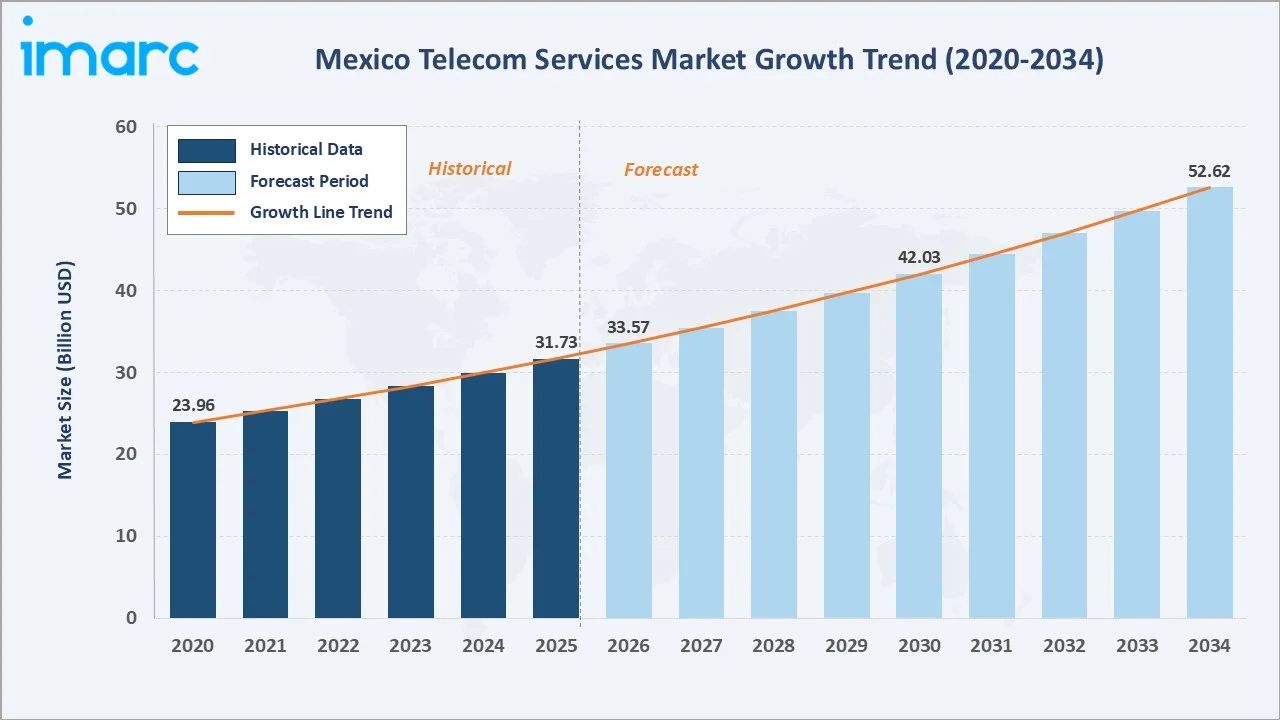
The Mexico telecom services market grew from USD 31.73 Billion in 2025 to USD 33.57 Billion in 2026 and is projected to reach USD 52.62 Billion by 2034, growing at a CAGR of 5.78% during 2026-2034. The market is driven by rapid 5G network deployment, Mexico's nearshoring boom, OTT platform proliferation driving residential broadband upgrades, continued smartphone penetration growth, and the Mexico integrated telecom infrastructure market. As of Q4 2024, 5G accounted for 9.4% of mobile connections in Mexico, ranking the country third in Latin America by 5G connection share. The expanding adoption of 5G is driving the market by increasing demand for high-speed mobile data, enhanced network capacity, and low-latency connectivity. Data and messaging services lead at 48.5% by service type, and Central Mexico commands the largest regional share at 40.5%.
Market Snapshot
|
Metric |
Value |
|
Base Year Market Size (2025) |
USD 31.73 Billion |
|
Market Size (2026) |
USD 33.57 Billion |
|
Forecast Market Size (2034) |
USD 52.62 Billion |
|
CAGR (2026-2034) |
5.78% |
|
Base Year |
2025 |
|
Historical Period |
2020-2025 |
|
Forecast Period |
2026-2034 |
|
Dominant Services |
Data and Messaging Services (48.5%, 2025) |
|
Leading Region |
Central Mexico (40.5%, 2025) |
The Mexico telecom services market size increased from USD 23.96 Billion in 2020 to USD 31.73 Billion in 2025 and is estimated to reach USD 33.57 Billion in 2026, reflecting consistent expansion driven by digital transformation across consumer and enterprise segments. The market is projected to reach USD 42.03 Billion by 2030 and USD 52.62 Billion by 2034.
To get more information on this market, Request Sample
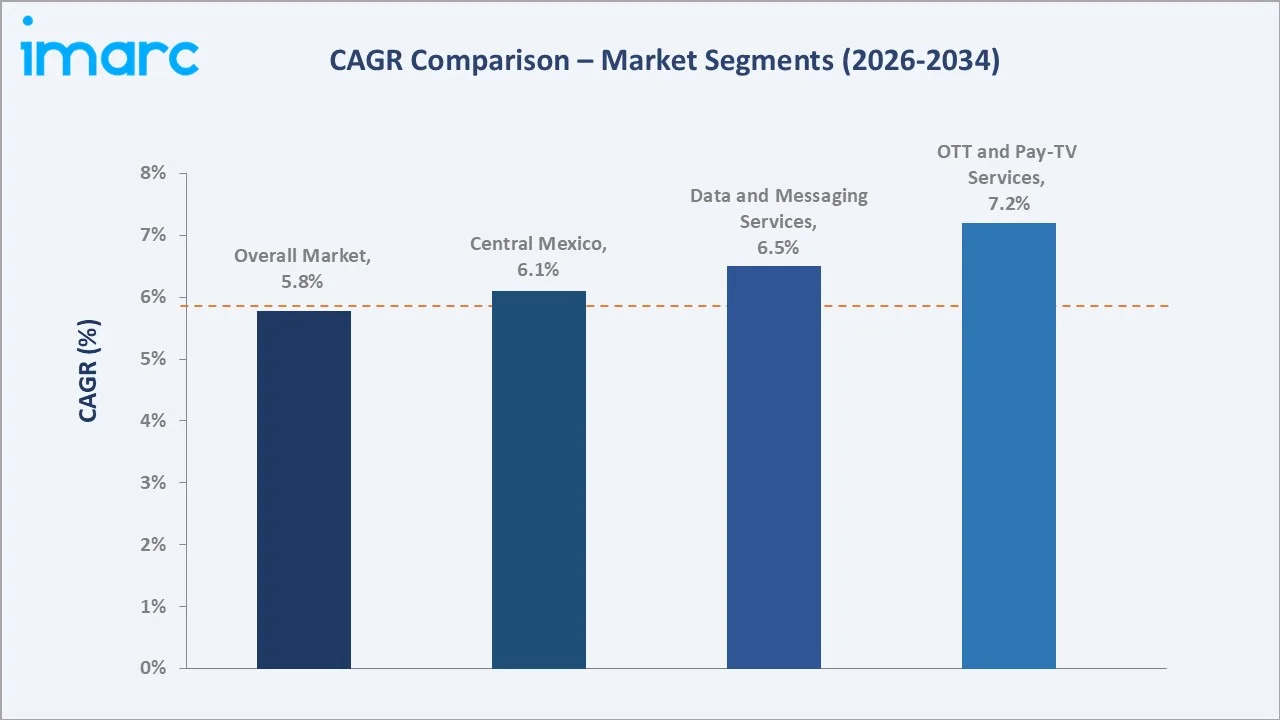
OTT and pay-TV services grow at ~7.2% CAGR through streaming platform expansion and cord-cutting. Data and messaging services grow at ~6.5% CAGR through mobile data and enterprise connectivity. Central Mexico grows at ~6.1% CAGR through urban corporate and residential demand concentration.
Executive Summary
The Mexico telecom services market is in a period of structural transformation, shifting from traditional voice revenue dependence toward a data, digital content, and enterprise connectivity growth model that reflects both global telecom industry trends and Mexico-specific economic and demographic drivers. The COVID-19 pandemic accelerated digital adoption by compressing years of behavioral change into months, permanently elevating broadband connectivity from a discretionary to an essential household service and creating enterprise IT investment urgency that sustained network upgrade spending through the post-pandemic period. Data and messaging services at 48.5% lead through mobile data and enterprise broadband demand. Central Mexico leads regionally at 40.5%.
Key Market Insights
|
Insight |
Data |
|
Dominant Services |
Data and Messaging Services - 48.5% share (2025) |
|
Leading Region |
Central Mexico - 40.5% (2025) |
|
Key Market Opportunities |
5G network expansion, fiber-to-the-home deployment, enterprise digitalization, IoT connectivity, cloud and edge services, private 5G networks, rural broadband expansion, and rising demand for high-speed mobile data services. |
Key Analytical Observations Supporting the Above Data:
- Data and Messaging Services at 48.5%: Data and messaging services dominate through the combination of mobile broadband growth from 4G/5G subscribers, fixed broadband subscription expansion driven by OTT streaming and remote work, and enterprise data connectivity procurement from Mexico's expanding manufacturing and services sectors.
- Central Mexico at 40.5%: Central Mexico's regional dominance reflects Mexico City's extraordinary concentration of corporate headquarters, government agencies, financial institutions, and technology companies that collectively generate the highest enterprise telecom procurement in the country.
Mexico Telecom Services Market Overview
The Mexico telecom services market encompasses all telecommunications service revenues generated from consumer and enterprise subscribers across three primary service categories: data and messaging services (mobile broadband, fixed broadband, enterprise data connectivity, SMS, and MMS), voice services (wireless voice subscriptions, fixed-line telephony, and VoIP), and OTT and pay-TV services (subscription streaming video, over-the-top communication services, and traditional pay television). The country's connectivity infrastructure spans urban FTTH and HFC fixed broadband networks, extensive 4G LTE coverage, and the developing 5G network deployments concentrated in major cities with progressive geographic expansion.
Market Dynamics
To evaluate market opportunities, Request Sample
Market Drivers
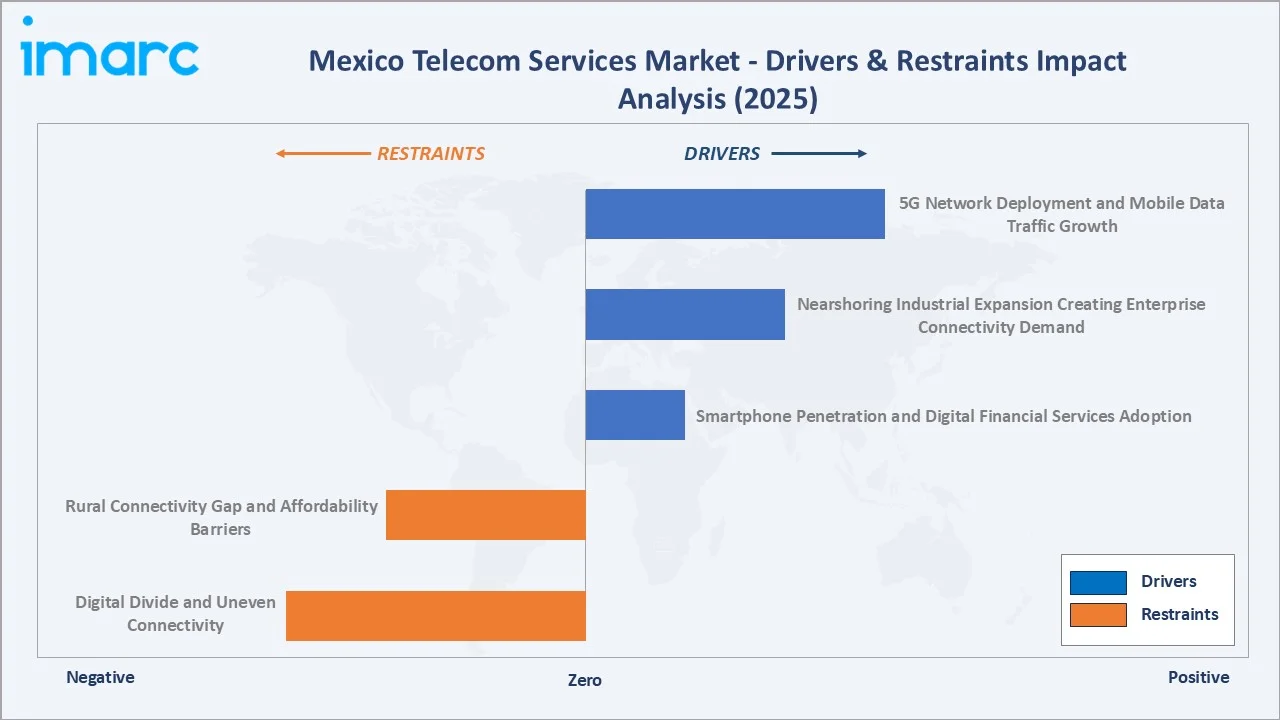
- 5G Network Deployment and Mobile Data Traffic Growth: As of Q4 2024, Mexico held the third-highest share of 5G connections in Latin America, with 5G representing approximately 9.4% of connections in the country. 5G's enhanced speed and capacity characteristics support premium mobile plan upgrades that increase ARPU substantially as users consume higher data volumes through 5G-enabled video, cloud gaming, and augmented reality applications.
- Nearshoring Industrial Expansion Creating Enterprise Connectivity Demand: Mexico's manufacturing sector is experiencing unprecedented foreign direct investment driven by nearshoring trends. Each new industrial park and manufacturing facility requires robust enterprise connectivity, including dedicated fiber broadband, private LTE or 5G networks for IoT applications, and cloud connectivity, creating recurring enterprise telecom revenue that supplements consumer segment growth.
- Smartphone Penetration and Digital Financial Services Adoption: At the beginning of 2025, Mexico recorded approximately 127 million active cellular mobile connections, equivalent to 96.5% of its population. During the same period, the country had around 110 million internet users, representing an internet penetration rate of 83.3%, which continues to expand the addressable market for mobile data services among first-time data consumers. The digital financial services revolution creates additional mobile data usage occasions that sustain mobile ARPU growth even as competition moderates pricing.
Market Restraints
- Digital Divide and Uneven Connectivity: Significant differences in telecom infrastructure and internet accessibility persist between urban and remote regions. Lower commercial returns in sparsely populated areas can discourage operators from making large-scale infrastructure investments.
- Rural Connectivity Gap and Affordability Barriers: Mexico's significant rural population faces limited connectivity options due to the high cost of infrastructure deployment in geographically challenging terrain. Affordability barriers for lower-income urban consumers, where entry-level smartphones and service plan costs represent significant proportions of household income, additionally constrain market penetration growth.
Market Opportunities
- Expansion of High-Capacity Fiber Connectivity: Investments in submarine and fiber-optic infrastructure create opportunities for telecom operators to expand high-speed broadband coverage, improve regional connectivity, and address rising data consumption across Mexico. In September 2025, Telmex launched its TMX5 submarine cable, a 383-kilometer fiber-optic network connecting Baja California Sur with the rest of Mexico. Backed by an investment exceeding USD 25 million, the project is designed to strengthen regional telecommunications connectivity.
- Fixed Wireless Access for Underserved Markets: Fixed wireless access (FWA) technology, deploying 4G or 5G radio access to provide home broadband services without fixed-line infrastructure, enables economically viable connectivity expansion into peri-urban and rural communities where fiber or HFC rollout costs are prohibitive.
Market Challenges
- Infrastructure Deployment Security and Network Resilience: Mexico's telecom infrastructure deployment faces significant security challenges in certain regions where organized crime activity creates risks for field technicians, equipment installations, and network maintenance operations. Infrastructure vandalism, service disruptions from criminal activities, and operational security costs in affected regions increase deployment expenses and can delay network expansion in areas where security conditions complicate standard field operations.
- Regulatory Uncertainty and Spectrum Timeline Delays: IFT's spectrum auction schedules and regulatory decision timelines, subject to legal challenges, political uncertainty, and institutional resource constraints, create planning uncertainty for operators committing to multi-billion peso capital investment programs. Regulatory uncertainty regarding 5G frequency band allocations, tower permitting processes, and right-of-way approvals for fiber deployment can delay network rollout timelines and increase investment costs relative to markets with more predictable regulatory frameworks.
Emerging Market Trends
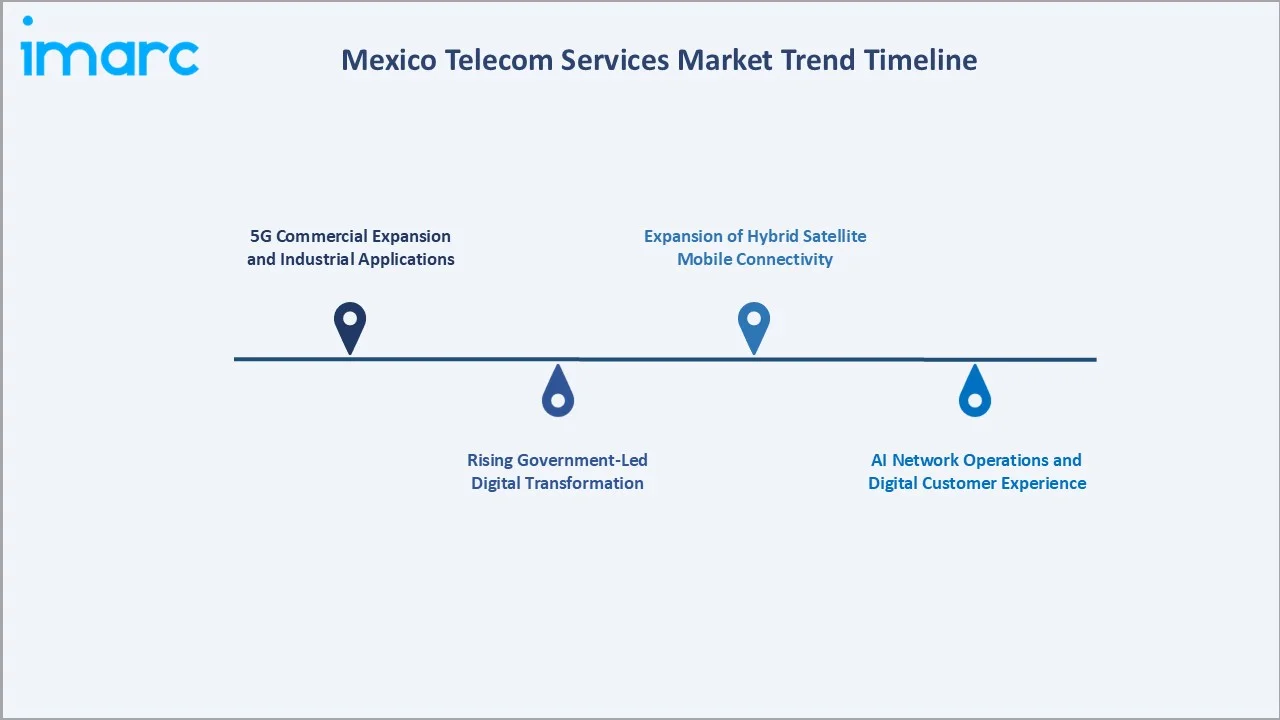
1. 5G Commercial Expansion and Industrial Applications
Mexico's 5G deployment trajectory is accelerating as major market players expand coverage beyond initial urban anchor cities into secondary cities, industrial zones, and tourism destinations. 5G's impact on the Mexico telecom market extends beyond consumer speed upgrades into transformative enterprise applications: private 5G networks for automotive assembly plants, pharmaceutical manufacturing, and electronics production are creating a new enterprise connectivity revenue category that was not addressable with 4G infrastructure.
2. Rising Government-Led Digital Transformation
In December 2024, Mexico established the Digital Transformation and Telecommunications Agency (ATDT) to oversee national policies related to digital technologies, telecommunications, and technological sovereignty, with a focus on digitalizing public services and improving system interoperability. The establishment of ATDT reflects a growing trend toward centralized digital governance, stronger telecommunications policy coordination, and wider adoption of interoperable digital public services across Mexico.
3. Expansion of Hybrid Satellite Mobile Connectivity
Telecom providers are increasingly combining satellite and LTE networks to extend broadband coverage into underserved and remote areas, supporting wider digital inclusion and stronger nationwide connectivity in Mexico. In November 2024, Viasat, in partnership with Altán, launched home and mobile broadband services in Mexico, combining satellite and LTE technologies to expand connectivity in underserved areas. The service is available across 13 states and provides coverage to more than 150,000 people.
4. AI Network Operations and Digital Customer Experience
Mexican telecom operators are deploying AI and machine learning across network operations, customer service automation, and predictive maintenance applications. AI-powered network optimization enables operators to dynamically allocate spectrum, predict congestion events, and automatically manage network configuration to maintain service quality as traffic patterns evolve. Customer-facing AI applications including virtual assistants, predictive churn models, and personalized plan recommendation engines are reducing operating costs while improving customer satisfaction scores that support retention in Mexico's increasingly competitive mobile and fixed broadband markets.
Industry Value Chain Analysis
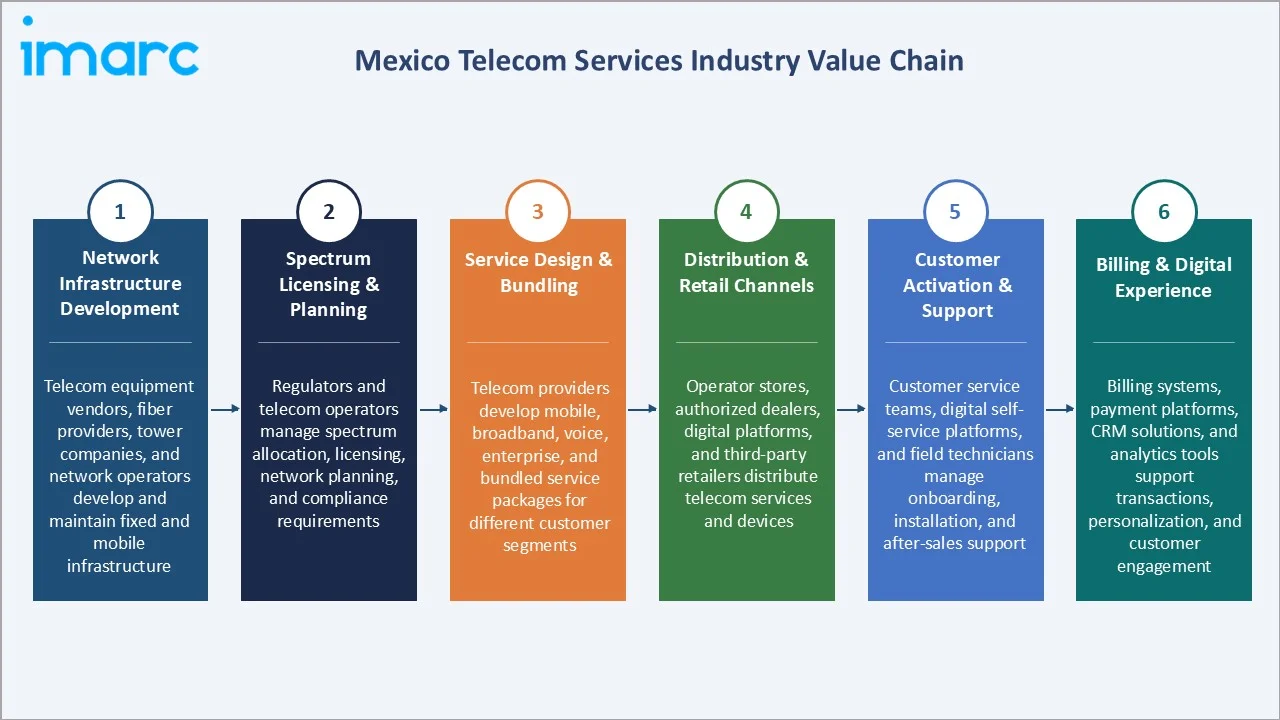
The Mexico telecom services value chain integrates network infrastructure development, spectrum licensing and planning, service design and bundling, distribution and retail channels, customer activation and support, and billing and digital experience management across consumer and enterprise customer segments.
|
Stage |
Key Participants |
|
Network Infrastructure Development |
Telecom equipment vendors, fiber providers, tower companies, and network operators develop and maintain fixed and mobile infrastructure. |
|
Spectrum Licensing & Planning |
Regulators and telecom operators manage spectrum allocation, licensing, network planning, and compliance requirements. |
|
Service Design & Bundling |
Telecom providers develop mobile, broadband, voice, enterprise, and bundled service packages for different customer segments. |
|
Distribution & Retail Channels |
Operator stores, authorized dealers, digital platforms, and third-party retailers distribute telecom services and devices. |
|
Customer Activation & Support |
Customer service teams, digital self-service platforms, and field technicians manage onboarding, installation, and after-sales support. |
|
Billing & Digital Experience |
Billing systems, payment platforms, CRM solutions, and analytics tools support transactions, personalization, and customer engagement. |
Network infrastructure development represents the highest capital intensity stage in Mexico's telecom value chain, with fiber operators collectively investing billions of US dollars annually in radio access network upgrades, 5G site densification, fiber backbone expansion, and data center capacity. The competitive dynamics of Mexico's telecom market are substantially determined by capital deployment scale and network quality differentials between operators, making infrastructure investment the primary source of sustainable competitive advantage.
Technology Landscape in the Mexico Telecom Services Industry
5G Radio Access Network Technology
Mexico's 5G network deployment leverages 3GPP 5G NR (New Radio) standards across multiple spectrum bands, Sub-6 GHz (n78 3.5 GHz band and n77 bands) for broad coverage and initial 5G service delivery, and millimeter wave spectrum for ultra-high capacity in densely populated urban zones. Network slicing capability, virtualizing the network into multiple isolated logical networks on shared physical infrastructure, enables customized service parameters for industrial IoT, public safety, and consumer applications on the same 5G infrastructure.
Fixed Broadband Technology: FTTH and HFC Upgrades
Mexico's fixed broadband network is undergoing a generational technology transition from legacy copper DSL and coaxial cable HFC toward fiber-to-the-home (FTTH) architecture. These technology upgrades support the bandwidth-intensive OTT video and gaming applications that are the primary motivation for residential broadband speed upgrades that drive ARPU growth.
Cloud and Edge Computing Integration
Mexican telecom operators are developing cloud and edge computing capabilities that extend their infrastructure value beyond pure connectivity services into platform and cloud services that command higher margins. These platform service capabilities position telecom operators to capture a broader share of enterprise IT spending beyond connectivity-only revenues.
Market Segmentation Analysis
The report covers the following segments:
|
Segment Category |
Leading Segment |
Market Share |
Year |
|
Services |
Data and Messaging Services |
48.5% |
2025 |
|
Region |
Central Mexico |
40.5% |
2025 |

By Services
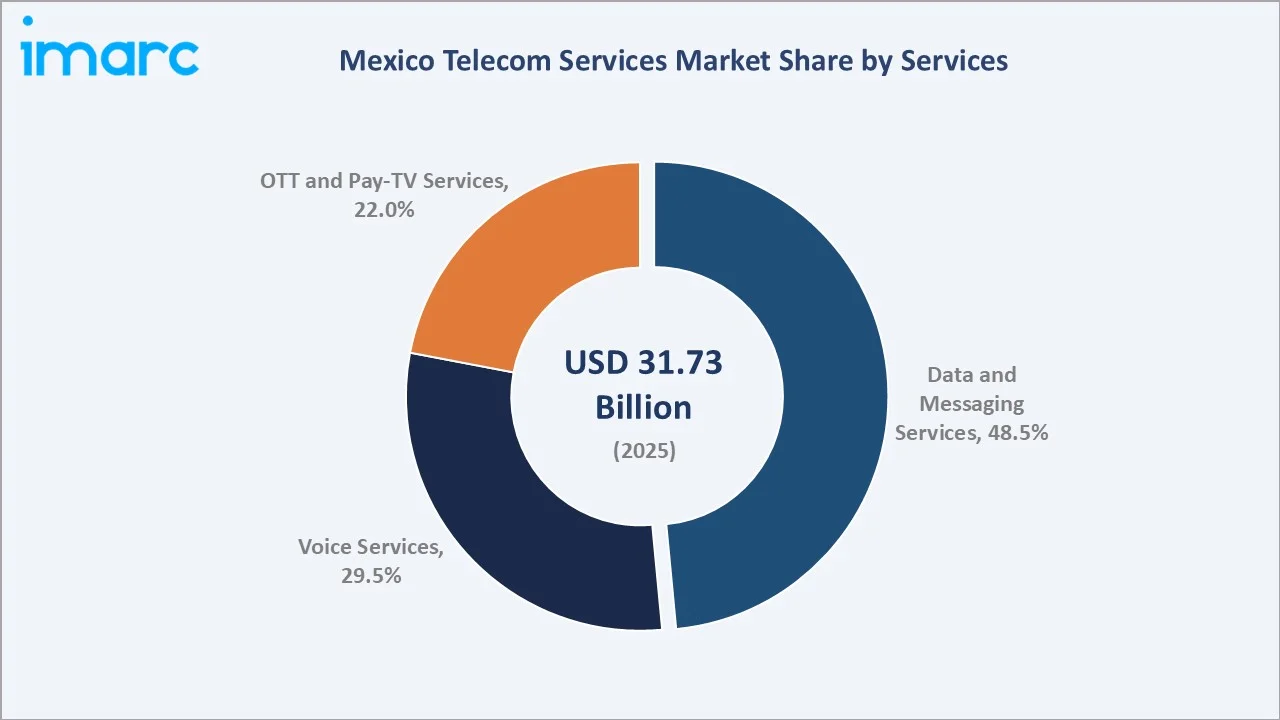
Data and messaging services lead at 48.5% (2025), driven by mobile data traffic growth from smartphone video consumption, enterprise broadband procurement from nearshoring industrial expansion, and fixed broadband subscription growth fueled by OTT streaming adoption across Mexico's urban households.
To access detailed market analysis, Request Sample
Voice services at 29.5% reflect the continued significance of mobile voice subscriptions, including prepaid voice plans that remain important for lower-income consumers, alongside enterprise fixed-line and VoIP services. OTT and pay-TV services at 22.0% are the fastest-growing category at ~7.2% CAGR through streaming platform adoption, cord-cutting from traditional pay television toward OTT services, and convergent broadband-OTT bundle uptake that creates new revenue from consumers previously subscribing to only one service type.
Regional Market Insights
|
Region |
Share (2025) |
Key Mexico Telecom Services Market Drivers & Characteristics |
|
Central Mexico |
40.5% |
Leads the market due to high population density, concentration of corporate and government activities, extensive telecom infrastructure, and strong demand for mobile, broadband, and enterprise connectivity services. |
|
Northern Mexico |
32.5% |
Benefits from strong industrial activity, cross-border trade with the United States, nearshoring investments, and rising connectivity requirements across manufacturing and logistics clusters. |
|
Southern Mexico |
18.5% |
Growth is supported by expanding mobile and broadband coverage, digital inclusion initiatives, tourism activity, and increasing adoption of telecom services among households and businesses. |
|
Others |
8.5% |
Represents less densely populated markets where ongoing network expansion, rural connectivity programs, and improving mobile broadband access are gradually increasing telecom service penetration. |
Central Mexico's 40.5% dominance reflects Mexico City's extraordinary scale as one of the largest megacities and Latin America's premier corporate and financial hub, where enterprise telecom contracts and thousands of multinational corporation Mexico headquarters generate premium connectivity revenue per square kilometer that no other Mexican market can match. Northern Mexico's 32.5% reflects the extraordinary manufacturing transformation of the US-Mexico border corridor, where nearshoring FDI is creating world-class industrial parks with sophisticated connectivity requirements for automated manufacturing, supply chain management, and cross-border business operations.
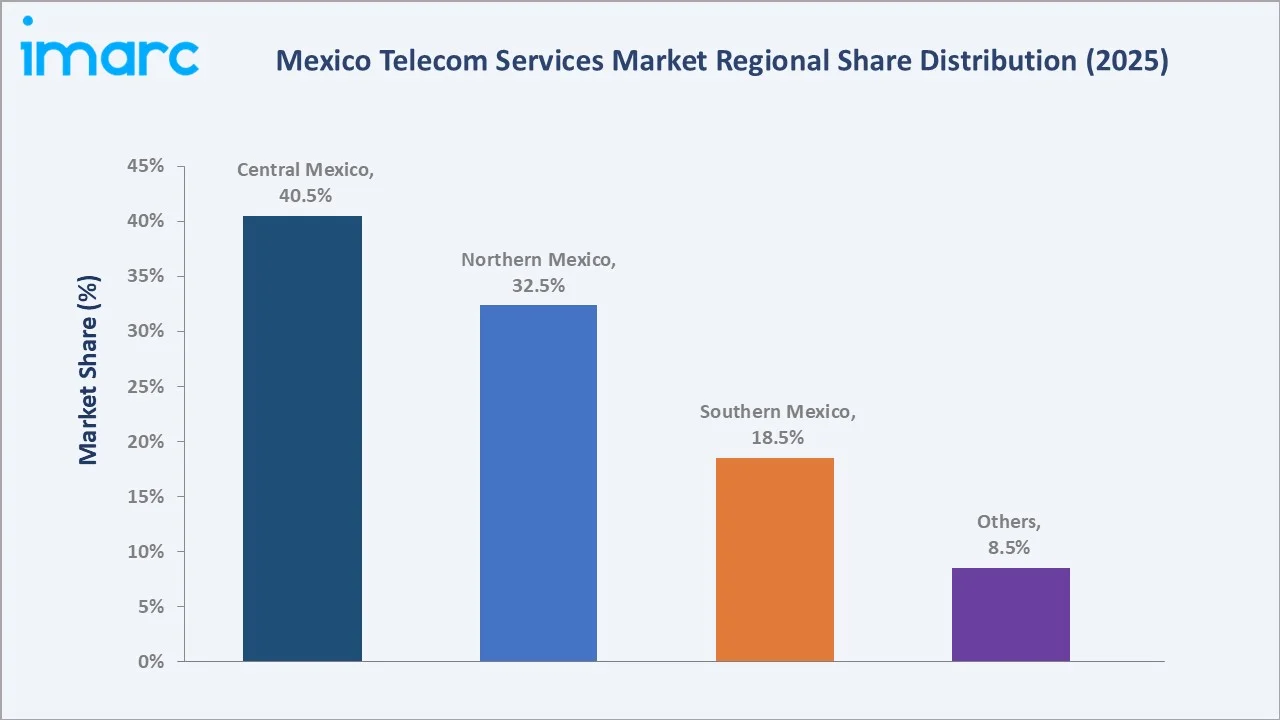
Southern Mexico's 18.5% reflects emergence as Mexico's second technology hub alongside the broader western Mexico consumer and enterprise market. The Others segment at 8.5% represents significant growth potential as government connectivity programs, wholesale network expansion, and satellite coverage extend broadband access to the millions of Mexicans in rural and peri-urban communities currently underserved by commercial telecom infrastructure.
Competitive Landscape
The Mexico telecom services market is highly competitive, with established operators competing on network coverage, pricing, service quality, and bundled offerings. Competition is intensifying as providers invest in 5G, fiber broadband, digital platforms, and advanced enterprise connectivity, while partnerships and infrastructure expansion strengthen market positioning.
|
Company |
Key Offerings |
Market Position |
Core Strength |
|
Megacable Holdings, S.A.B. de C.V. |
High-Speed Internet, Cable TV, Telephony, Mobile Services, MCM Business Tech-Co |
Market Leader |
Megacable Holdings is one of the largest cable operators and a leading telecommunications provider in Mexico, offering residential and business communication services. |
|
Grupo Salinas |
Fiber-Optic Internet (FTTH), Telephony, IPTV / Pay Television, MPLS Services |
Established Player |
Grupo Salinas plays a major role in Mexico’s telecommunications sector primarily through Totalplay, its premier fiber-optic internet, television, and fixed-telephony provider. |
|
Viasat, Inc. |
Home internet, Business internet |
Challenger |
Viasat, Inc. expands internet access and bridges the digital divide in rural and underserved regions of Mexico through strategic public-private partnerships and satellite technology |
Companies across the competitive landscape are investing in 5G network densification, FTTH deployment, enterprise connectivity products, and OTT content partnerships. The Mexico telecom market is expected to see continued competitive intensity as these operators gain market share from incumbent players in premium urban consumer and enterprise segments.
Key Company Profiles
Megacable Holdings, S.A.B. de C.V.
Megacable Holdings, S.A.B. de C.V. is a major telecommunications and media services provider in Mexico, offering broadband internet, fixed telephony, pay-TV, mobile services, and enterprise connectivity solutions. The company serves residential and business customers through an expanding fiber and cable network. Its presence in the market is supported by continued investment in high-speed connectivity, bundled services, and digital infrastructure.
- Key Offerings: High-Speed Internet, Cable TV, Telephony, Mobile Services, MCM Business Tech-Co.
- Strategic Focus: Expanding high-speed broadband and fiber coverage, strengthening bundled residential offerings, and growing its mobile and enterprise connectivity businesses. The company is also emphasizing network modernization, digital service integration, and improved customer experience to reinforce its competitive position.
Grupo Salinas
Grupo Salinas is a diversified Mexican business group with a presence in the Mexico telecom services market through its telecommunications operations, including Totalplay. The group offers broadband internet, fiber-based connectivity, telephony, pay-TV, and enterprise communication services. Its telecom activities are supported by continued investment in digital infrastructure, high-speed networks, and integrated connectivity solutions for residential and business customers.
- Key Offerings: Fiber-Optic Internet (FTTH), Telephony, IPTV / Pay Television, MPLS Services.
- Strategic Focus: Expanding fiber-based broadband coverage, strengthening high-speed connectivity, and growing its residential and enterprise customer base through Totalplay. The group also emphasizes bundled digital services, network modernization, and technology-driven customer experiences to enhance competitiveness and support long-term growth.
Market Concentration Analysis
The Mexico telecom services market exhibits a high level of concentration, with a few large operators accounting for a substantial portion of mobile, fixed broadband, and telephony services. Established players benefit from extensive network infrastructure, large subscriber bases, and strong brand presence. However, ongoing fiber and 5G investments, wholesale network access, and the expansion of alternative providers are gradually strengthening competitive intensity.
Investment & Growth Opportunities
Highest Growth Segments
OTT and pay-TV services (~7.2% CAGR), data and messaging services (~6.5% CAGR), enterprise 5G private networks for nearshoring manufacturing, Mexico IoT telecom services for industrial automation, FTTH deployment in underserved markets, and satellite broadband for rural connectivity represent the highest-growth investment vectors in Mexico's telecom market through 2034.
Investment Themes
- Enterprise 5G private network development for industrial clients: Mexico's nearshoring manufacturing boom creates multi-year recurring demand for private 5G enterprise networks in industrial parks. Operators that develop specialized enterprise 5G deployment capability, SLA-backed managed network services for manufacturing, and IoT platform integration can command significant pricing premiums over standard commercial connectivity in the high-value manufacturing enterprise segment.
- FTTH expansion in peri-urban and secondary city markets: Mexico's secondary cities represent underserved fixed broadband markets where incumbent copper infrastructure and limited cable competition create greenfield fiber deployment opportunities. Operators that move first with FTTH in these markets can establish long-term subscriber relationships before competition intensifies, creating durable revenue streams at competitive acquisition costs.
Future Market Outlook (2026-2034)
The Mexico telecom services market is projected to grow from USD 31.73 Billion in 2025 to USD 33.57 Billion in 2026, reaching USD 52.62 Billion by 2034, exhibiting a CAGR of 5.78% during 2026-2034. The market is projected to reach an anchor value of USD 42.03 Billion by 2030, representing the mid-period milestone at which 5G network coverage achieves broad urban geographic reach, the nearshoring-driven enterprise connectivity boom reaches sustained scale, and OTT streaming displaces traditional pay television as the primary video entertainment format for Mexican households.
Three structural forces will define Mexico's telecom market through 2034. First, Mexico's nearshoring manufacturing boom will sustain enterprise telecom demand growth that is largely independent of consumer market dynamics, as each new industrial park, automotive assembly facility, and electronics manufacturing operation creates multi-year dedicated connectivity procurement with premium pricing characteristics. Second, the progressive 5G network maturation and FTTH infrastructure expansion will create a bifurcated competitive market where premium connectivity quality commands pricing power in the consumer and enterprise segments simultaneously. Third, Mexico's digital economy expansion will continuously generate new telecom usage occasions that sustain data traffic growth well above population growth rates.
Research Methodology
Primary Research
Primary research comprised in-depth interviews with telecom operator executives, enterprise connectivity procurement officers, regulatory affairs specialists, telecom industry analysts, and enterprise technology consultants active in Mexico's manufacturing and services sectors. These discussions validated market size estimates, assessed service demand dynamics by category and region, evaluated competitive positioning, and provided insights into regulatory developments and future market evolution.
Secondary Research
Secondary research encompassed quarterly telecommunications sector statistical reports, GSMA Intelligence Mexico market data, operator annual reports, and industry publications covering Latin America and Mexico telecom market developments.
Forecasting Models
Forecasting models incorporated historical telecom market revenue trends, 5G technology adoption curves, FTTH infrastructure deployment projections, OTT streaming subscription growth data, nearshoring FDI enterprise connectivity demand projections, and macroeconomic indicators including Mexican GDP growth, inflation, household income growth, and digital adoption metrics. Both top-down sector revenue modeling and bottom-up subscriber count and ARPU estimation approaches were cross-validated.
Mexico Telecom Services Market Report Coverage:
|
Report Features |
Details |
|
Base Year of the Analysis |
2025 |
|
Historical Period |
2020-2025 |
|
Forecast Period |
2026-2034 |
|
Units |
Million USD |
|
Scope of the Report |
Exploration of Historical Trends and Market Outlook, Industry Catalysts and Challenges, Segment-Wise Historical and Future Market Assessment:
|
|
Services Covered |
|
|
Regions Covered |
Northern Mexico, Central Mexico, Southern Mexico, Others |
| Companies Covered | Megacable Holdings, S.A.B. de C.V., Grupo Salinas, Viasat, Inc., etc. |
|
Customization Scope |
10% Free Customization |
|
Post-Sale Analyst Support |
10-12 Weeks |
|
Delivery Format |
PDF and Excel through Email (We can also provide the editable version of the report in PPT/Word format on special request) |
Key Benefits for Stakeholders:
- IMARC's industry report offers a comprehensive quantitative analysis of various market segments, historical and current market trends, market forecasts, and dynamics of the Mexico telecom services market from 2020-2034.
- The research report provides the latest information on the market drivers, challenges, and opportunities in the Mexico telecom services market.
- Porter's five forces analysis assist stakeholders in assessing the impact of new entrants, competitive rivalry, supplier power, buyer power, and the threat of substitution. It helps stakeholders to analyze the level of competition within the Mexico telecom services industry and its attractiveness.
- Competitive landscape allows stakeholders to understand their competitive environment and provides an insight into the current positions of key players in the market.
Frequently Asked Questions About the Mexico Telecom Services Market Report
The Mexico telecom services market reached USD 33.57 Billion in 2026, driven by 5G network deployment accelerating mobile data consumption, nearshoring boom generating enterprise broadband demand, OTT streaming adoption driving residential broadband upgrades, and progressive smartphone penetration expansion among lower-income demographic segments.
The Mexico telecom services market is projected to grow at a CAGR of 5.78% during 2026-2034, sustained by 5G network maturation, nearshoring enterprise connectivity demand, OTT content streaming broadband upgrades, digital economy expansion, and progressive connectivity penetration in underserved markets through FWA and satellite broadband.
The market is projected to reach approximately USD 42.03 Billion by 2030, representing the mid-period milestone at which 5G coverage achieves broad urban geographic reach, nearshoring enterprise connectivity demand reaches sustained scale, and OTT streaming displaces traditional pay television as the primary video format for Mexican households.
The Mexico telecom services market is projected to reach USD 52.62 Billion by 2034, driven by sustained nearshoring enterprise demand, 5G ARPU premiums from consumer and enterprise segments, progressive OTT and data service growth, digital economy expansion, and connectivity penetration improvements in underserved regions.
Data and messaging services lead with a 48.5% share in 2025, driven by mobile broadband data traffic growth from smartphone video consumption, enterprise connectivity demand from nearshoring manufacturing expansion, and fixed broadband subscription growth motivated by OTT streaming and remote work connectivity requirements.
Central Mexico leads with a 40.5% share in 2025, reflecting Mexico City's concentration of corporate headquarters, government agencies, financial institutions, and technology companies generating the country's highest enterprise telecom procurement, alongside the Bajío industrial corridor's nearshoring manufacturing demand.
Key players include Megacable Holdings, S.A.B. de C.V., Grupo Salinas, and Viasat, Inc., among others.
The OTT and Pay-TV segment's ~7.2% CAGR reflects Mexico's rapid streaming platform adoption led by Netflix, Disney+, Amazon Prime Video, and others, cord-cutting from traditional cable and satellite television toward OTT subscriptions, and convergent broadband-OTT bundles that create new revenue from consumers upgrading service quality to support high-definition streaming content.
Need more help?
- Speak to our experienced analysts for insights on the current market scenarios.
- Include additional segments and countries to customize the report as per your requirement.
- Gain an unparalleled competitive advantage in your domain by understanding how to utilize the report and positively impacting your operations and revenue.
- For further assistance, please connect with our analysts.
 Request Customization
 Speak to an Analyst
 Request Brochure
 Inquire Before Buying
Benefits of Customization
- Personalize this research
- Triangulate with your data
- Get data as per your format and definition
- Gain a deeper dive into a specific application, geography, customer, or competitor
- Any level of personalization
Get in Touch With Us
UNITED STATES
Phone: +1-201-971-6302
INDIA
Phone: +91-120-433-0800
UNITED KINGDOM
Phone: +44-753-714-6104
Email: [email protected]
Client Testimonials




.webp)




.webp)













Related Reports

Choose your plan
*Please note that the prices mentioned below are starting prices for each bundle type. Kindly contact our team for further details.*
Single User License
- 1 User License, Access on 2 Devices
- PDF Report + Excel Dataset (Password Protected)
- Lifetime Access
- No Printing Rights
- 10% Free Report Customization
- 10–12 Weeks of Analyst Support
Five User License
- Access for 5 Users, 2 Devices per User
- PDF Report + Excel Dataset (Password Protected)
- Lifetime Access
- Dedicated Account Manager
- 12–14 Weeks of Analyst Support
- No Printing Rights
- 15% Free Report Customization
- 25% Discount on Your Next Purchase
Corporate User License
- Unlimited User Access (Within Your Organization)
- PDF Report + Excel Dataset
- Lifetime Access
- Dedicated Account Manager
- 14–20 Weeks of Analyst Support
- No Printing Rights
- 20% Free Report Customization
- 30% Discount on Your Next Purchase
Essential Insights
What's included:
3 reports
- Lifetime Access
- PDF Reports
- Excel Datasets
- 2 Weeks of Free Analyst Support
- 2 User Licenses
- Access on 2 Devices
- Printing Rights
- Complimentary PowerPoint (PPT) Version
- Complimentary License Upgrade
Professional Access
What's included:
5 reports
- Lifetime Access
- PDF Reports
- Excel Datasets
- 8 Weeks of Free Analyst Support
- 2 User Licenses
- Access on 2 Devices
- Printing Rights
- Complimentary PowerPoint (PPT) Version
- Complimentary License Upgrade
Business Advantage
What's included:
8 reports
- Lifetime Access
- PDF Reports
- Excel Datasets
- 14 Weeks of Free Analyst Support
- 2 User Licenses
- Access on 2 Devices
- Printing Rights
- Complimentary PowerPoint (PPT) Version
- Complimentary License Upgrade
Enterprise Intelligence
What's included:
10 reports
- Lifetime Access
- PDF Reports
- Excel Datasets
- 20 Weeks of Free Analyst Support
- 2 User Licenses
- Access on 2 Devices
- Printing Rights
- Complimentary PowerPoint (PPT) Version
- Complimentary License Upgrade