
Stem Cell Manufacturing Market Size, Share, Trends and Forecast by Product, Application, End User, and Region, 2026-2034
Global Stem Cell Manufacturing Market Size, Share, Trends & Forecast (2026-2034)
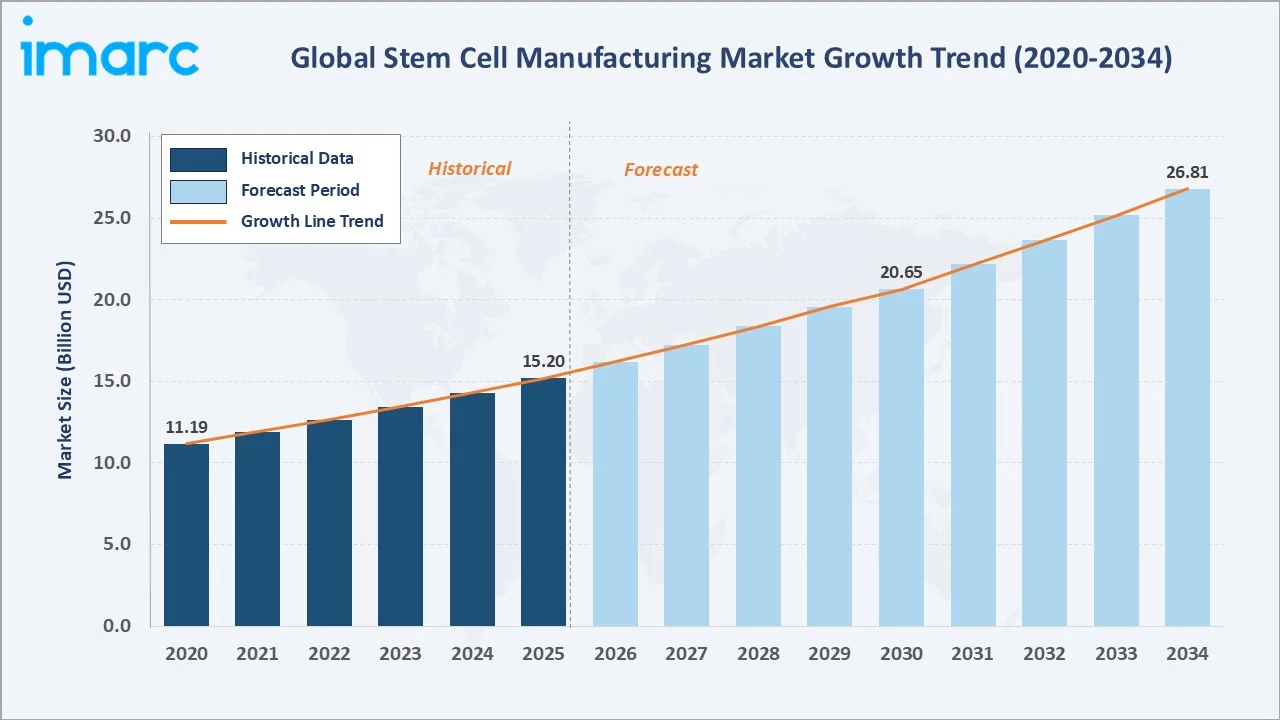
The global stem cell manufacturing market size reached USD 15.20 Billion in 2025 and is projected to reach USD 26.81 Billion by 2034, growing at a CAGR of 6.31% during 2026-2034, driven by rising chronic disease prevalence, expanding regenerative medicine research, and increasing venture capital investment worldwide.
Market Snapshot
|
Metric |
Value |
|
Market Size (2025) |
USD 15.20 Billion |
|
Forecast Market Size (2034) |
USD 26.81 Billion |
|
CAGR (2026-2034) |
6.31% |
|
Base Year |
2025 |
|
Historical Period |
2020-2025 |
|
Forecast Period |
2026-2034 |
|
Dominant Product Segment |
Consumables (48.6%, 2025) |
|
Dominant Application Segment |
Research Applications (52.8%, 2025) |
|
Leading Region |
North America (37.8%, 2025) |
The market expanded from an estimated USD 11.19 Billion in 2020 to USD 15.20 Billion in 2025, supported by steady increases in stem cell research funding and clinical pipeline activity despite pandemic-related disruptions to laboratory operations and supply chains. Anchored at USD 20.65 Billion in 2030, the market is forecast to reach USD 26.81 Billion by 2034 as bioprocessing automation, expanding cell and gene therapy pipelines, and growing government support for regenerative medicine infrastructure continue to widen the addressable base for consumables, instruments, and stem cell line procurement.
To get more information on this market, Request Sample
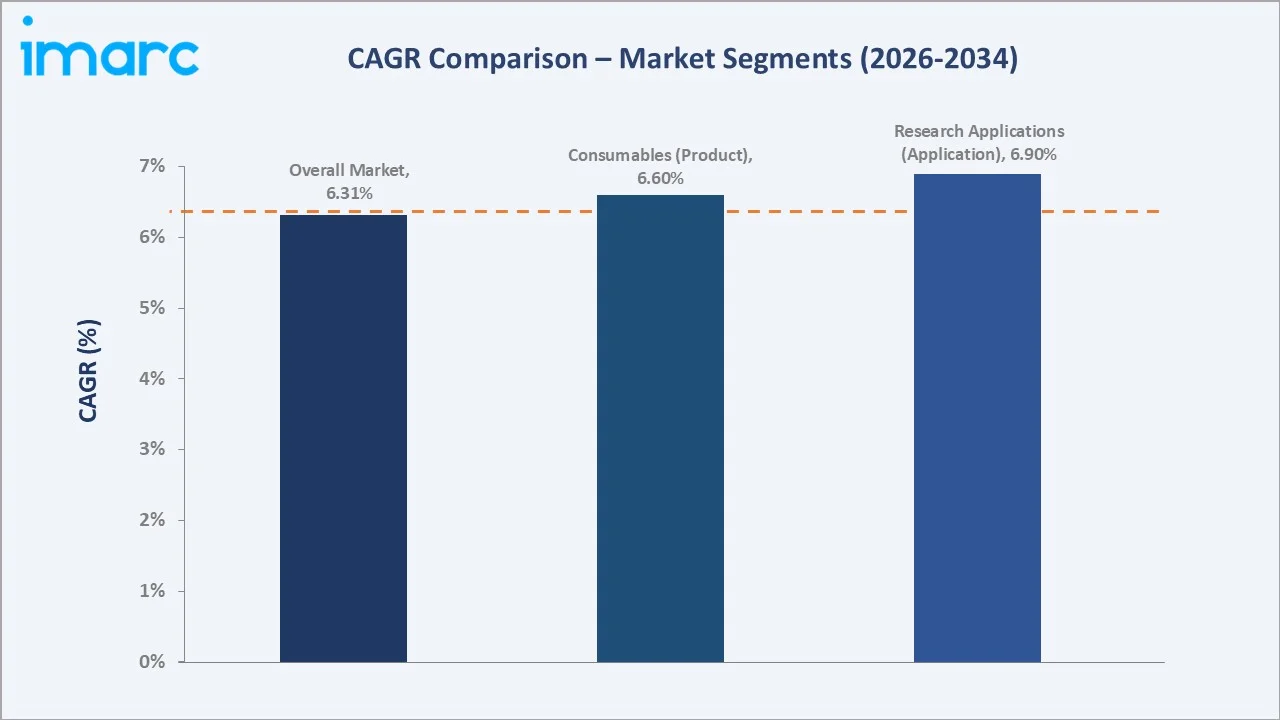
Consumables, the leading product category, grows at an estimated 6.6% CAGR as recurring culture media and reagent purchases scale with expanding production volumes. Research Applications, the dominant application category, grow fastest at approximately 6.9% CAGR as life science research and drug discovery pipelines continue to widen the demand base for stem cell lines, culture consumables, and laboratory instrumentation across academic and industry settings.
Executive Summary
This stem cell manufacturing market analysis shows that the global market reached USD 15.20 Billion in 2025, reflecting the biopharmaceutical industry's structural shift toward cell-based research and regenerative therapeutics. Stem cell manufacturing underpins the consumables, instrumentation, and cell-line supply that biotechnology companies, academic institutions, and clinical developers depend on to advance research and commercialize regenerative treatments. The market is projected to reach USD 26.81 Billion by 2034.
Consumables, at 48.6%, dominate product demand through recurring culture media and reagent consumption tied to expanding research and production volumes. Research Applications, at 52.8%, lead application demand as academic and industrial laboratories continue prioritizing stem cell-based discovery work. North America, at 37.8%, leads regionally through its concentration of biotechnology companies, robust R&D infrastructure, and supportive regulatory framework for stem cell commercialization.
Key Market Insights
|
Insight |
Data |
|
Dominant Product |
Consumables - 48.6% share (2025) |
|
Dominant Application |
Research Applications - 52.8% market share (2025) |
|
Leading Region |
North America - 37.8% market share (2025) |
|
Market Opportunity |
iPSC-derived therapy scale-up; automated bioprocessing; academia-industry collaboration; emerging market manufacturing capacity |
Key Analytical Observations Supporting the Above Data:
- Consumables at 48.6%: Consumables dominate due to recurring demand for culture media, reagents, and growth factors required across expanding stem cell research and clinical trial activity, reinforced by continuous technological advancement in consumable production.
- Research Applications at 52.8%: Research Applications lead as life science research and drug discovery programs rely on stem cells to investigate disease mechanisms and therapeutic pathways, supported by rising government and institutional funding for regenerative medicine research.
- North America at 37.8%: North America leads through its concentration of leading biotechnology and pharmaceutical companies, a supportive regulatory framework for clinical trials, and robust R&D infrastructure driving sustained demand for stem cell manufacturing inputs.
Stem Cell Manufacturing Market Overview
The global stem cell manufacturing market encompasses the consumables, instruments, and stem cell lines used to support stem cell-based research, drug discovery, clinical therapy development, and cell and tissue banking. The ecosystem integrates culture media and reagent suppliers, bioreactor and cell sorter manufacturers, stem cell line providers, contract research and manufacturing organizations, pharmaceutical and biotechnology companies, academic institutions, and regulatory bodies overseeing cell therapy approval standards.
Macroeconomic factors shaping the market include rising chronic disease burden, expanding venture capital funding for regenerative medicine, growing government research grants, and increasing collaboration between academia and industry to accelerate stem cell therapy commercialization. The market is also benefiting from a broader biopharmaceutical shift toward cell and gene therapy platforms, which is drawing sustained capital investment into upstream manufacturing infrastructure and supply chains.
Market Dynamics
To evaluate market opportunities, Request Sample
Market Drivers
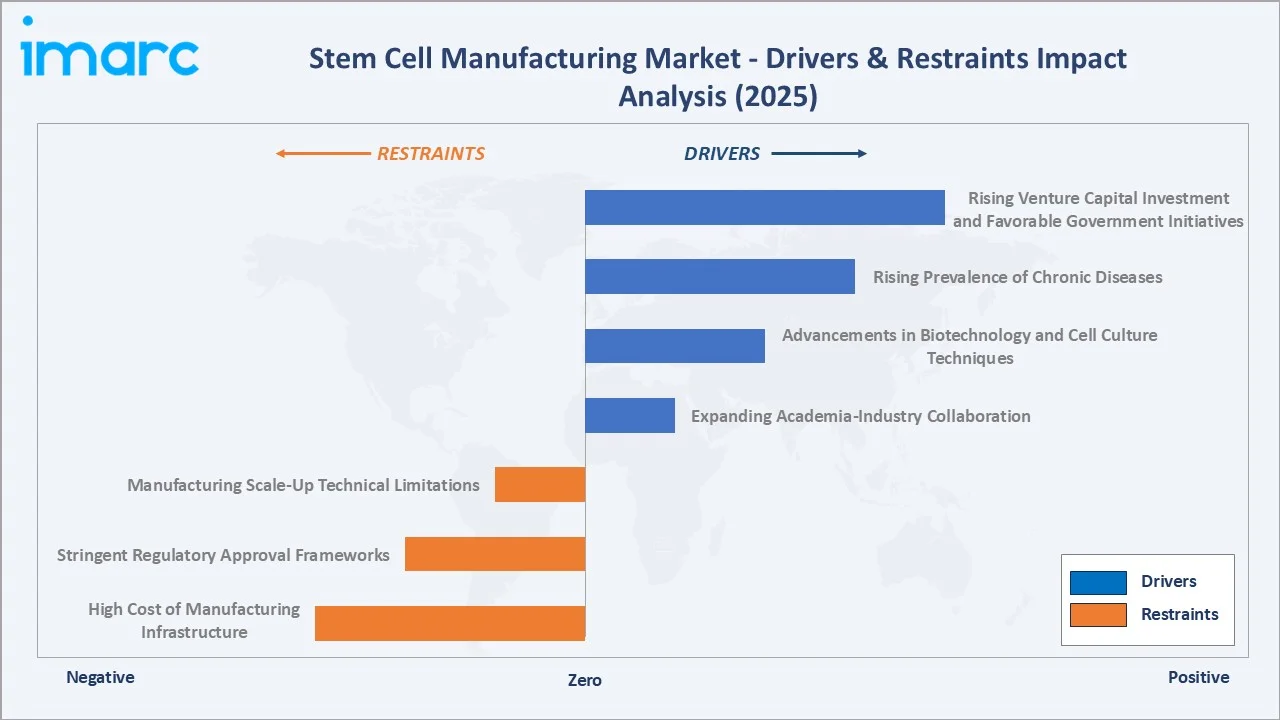
- Rising Venture Capital Investment and Favorable Government Initiatives: Growing venture capital investment in stem cell research, supported by favorable government initiatives, is majorly driving the market. This reflects increasing recognition of stem cells' potential in advancing healthcare and regenerative medicine, encouraging biotechnology companies to scale manufacturing capacity and expand research pipelines. Investors are increasingly funding platform technologies that improve manufacturing yield and reduce production costs, accelerating commercial-stage development. Government grants and tax incentives further lower the capital burden for companies building GMP-compliant production facilities.
- Rising Prevalence of Chronic Diseases: Escalating prevalence of chronic conditions such as diabetes, heart disease, and neurodegenerative disorders is driving demand for stem cell-based treatments capable of regenerating damaged tissues and organs, increasing procurement of manufacturing consumables, instruments, and cell lines. Aging populations worldwide are expanding the patient pool eligible for regenerative therapies, reinforcing long-term manufacturing demand. Growing clinical evidence supporting stem cell efficacy in previously untreatable conditions is further encouraging healthcare systems to adopt these therapies at scale.
- Advancements in Biotechnology and Cell Culture Techniques: Breakthroughs in 3D cell culture systems, bioreactor technology, and genetic editing techniques such as CRISPR-Cas9 are enhancing the efficiency, scalability, and safety of stem cell production, streamlining manufacturing processes across research and clinical settings. Automated, closed-system bioprocessing platforms are reducing contamination risk and labor costs while improving batch-to-batch consistency. These technological gains are shortening development timelines and making commercial-scale stem cell manufacturing increasingly viable for a broader range of therapeutic applications.
- Expanding Academia-Industry Collaboration: Growing partnerships between academic institutions, research laboratories, and biotechnology companies are accelerating knowledge sharing and the development of advanced stem cell manufacturing technologies, broadening the market's commercial and research applications base. Joint research initiatives are helping translate laboratory-scale breakthroughs into scalable manufacturing processes more quickly. Such collaborations also expand access to specialized talent and shared infrastructure, lowering the cost of early-stage technology development for smaller biotechnology firms.
Market Restraints
- Manufacturing Scale-Up Technical Limitations: Technical limitations associated with scaling stem cell manufacturing require specialized equipment and infrastructure, restricting smaller players from expanding production capacity and limiting broader market participation. Maintaining cell viability, potency, and consistency across large production batches remains a persistent engineering challenge. Companies must invest heavily in process development and validation before achieving reliable commercial-scale output.
- Stringent Regulatory Approval Frameworks: Complex and evolving regulatory requirements governing stem cell-based product safety and efficacy can lengthen development timelines and increase compliance costs for manufacturers pursuing clinical and commercial applications. Differing regulatory standards across regions add further complexity for companies seeking global market access. Extended approval timelines can delay revenue generation and discourage smaller companies from pursuing full-scale commercialization.
- High Cost of Manufacturing Infrastructure: Substantial capital investment required for cleanroom facilities, bioreactors, and quality-controlled production environments raises entry barriers and can constrain manufacturing capacity expansion, particularly among emerging market participants. Ongoing operating costs for skilled personnel and quality assurance systems add to the financial burden of maintaining GMP compliance. These cost pressures can limit the pace at which smaller manufacturers scale production to meet growing demand.
Market Opportunities
- Induced Pluripotent Stem Cell (iPSC) Therapy Scale-Up: Advances in iPSC reprogramming and differentiation protocols are opening opportunities for scalable, patient-specific and off-the-shelf cell therapy manufacturing. As more iPSC-derived therapies progress through clinical trials, manufacturers that develop efficient, standardized production platforms stand to capture significant commercial value. Expanding iPSC banking infrastructure is also creating new opportunities for research and therapeutic supply chains.
- Automated and AI-Driven Bioprocessing: Growing adoption of automation, robotics, and artificial intelligence in stem cell manufacturing is creating opportunities to reduce production costs, improve consistency, and accelerate scale-up timelines. Companies that successfully integrate these technologies can differentiate their manufacturing platforms and capture demand from clients seeking faster, more reliable production. Continued investment in digital process monitoring is expected to further expand this opportunity through the forecast period.
Market Challenges
- Cell Line Variability and Quality Control Complexity: Maintaining consistent cell quality and functional characteristics across different donor sources and production batches remains a significant technical challenge for manufacturers. Variability in starting material can affect therapeutic potency and complicate regulatory approval. Addressing this challenge requires substantial investment in characterization technologies and standardized quality control protocols.
- Talent Shortage in Specialized Bioprocessing Roles: The stem cell manufacturing industry faces a shortage of skilled personnel trained in GMP-compliant cell culture, bioprocessing, and quality assurance operations. This talent gap can slow capacity expansion and increase labor costs for manufacturers competing for experienced staff. Companies are increasingly investing in specialized training programs and partnerships with academic institutions to build a sustainable talent pipeline.
Emerging Market Trends
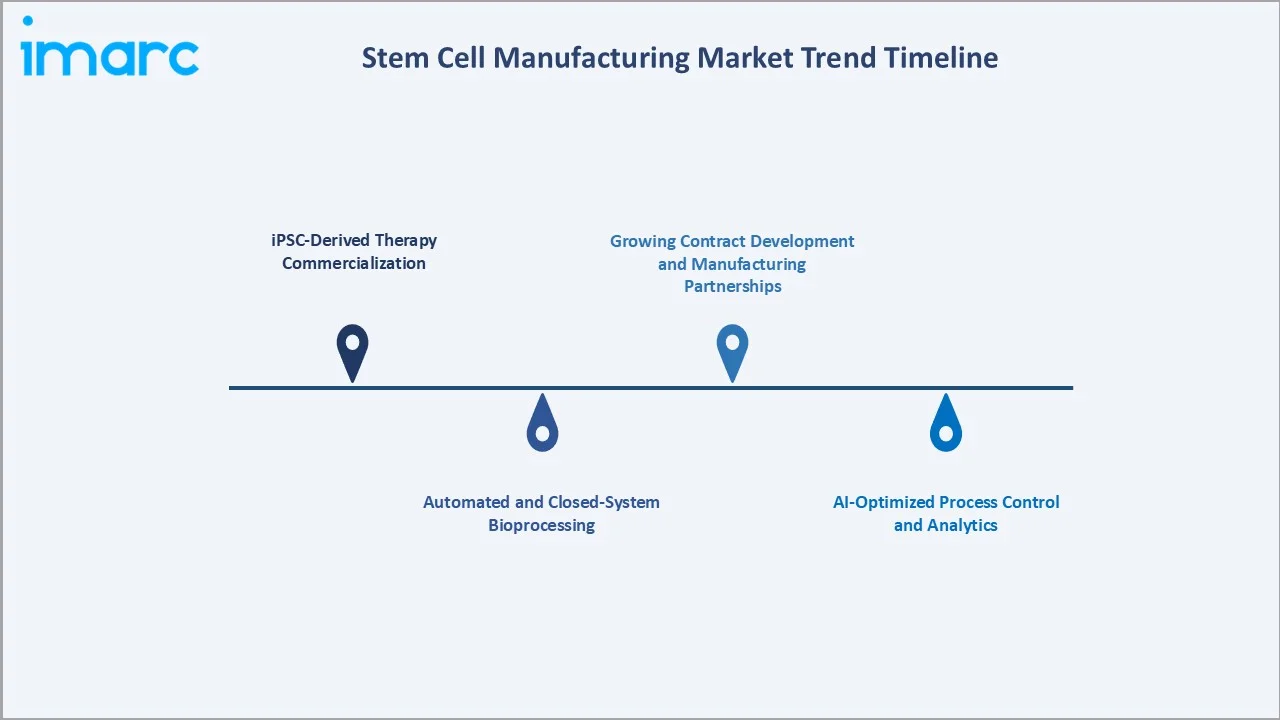
1. iPSC-Derived Therapy Commercialization
Induced pluripotent stem cell (iPSC) technology is progressing from research applications toward commercial-scale clinical therapy manufacturing. As more iPSC-derived treatments advance through clinical trials, demand is rising for standardized differentiation protocols and scalable production platforms capable of supporting both allogeneic and patient-specific therapy models.
2. Automated and Closed-System Bioprocessing
Manufacturers are increasingly adopting closed-system, single-use bioreactors and automated culture platforms to reduce contamination risk and improve production consistency. This shift is streamlining scale-up from research to clinical and commercial manufacturing while lowering labor and operating costs across production facilities.
3. AI-Optimized Process Control and Analytics
Artificial intelligence and machine learning tools are being integrated into stem cell manufacturing workflows to optimize culture conditions, predict batch outcomes, and reduce production variability. These digital tools are helping manufacturers improve yield and accelerate process development timelines.
4. Growing Contract Development and Manufacturing Partnerships
Biotechnology and pharmaceutical companies are increasingly partnering with contract development and manufacturing organizations to access specialized stem cell production capacity without large upfront capital investment. This trend is expanding manufacturing access for smaller therapy developers and supporting faster clinical trial timelines.
Industry Value Chain Analysis
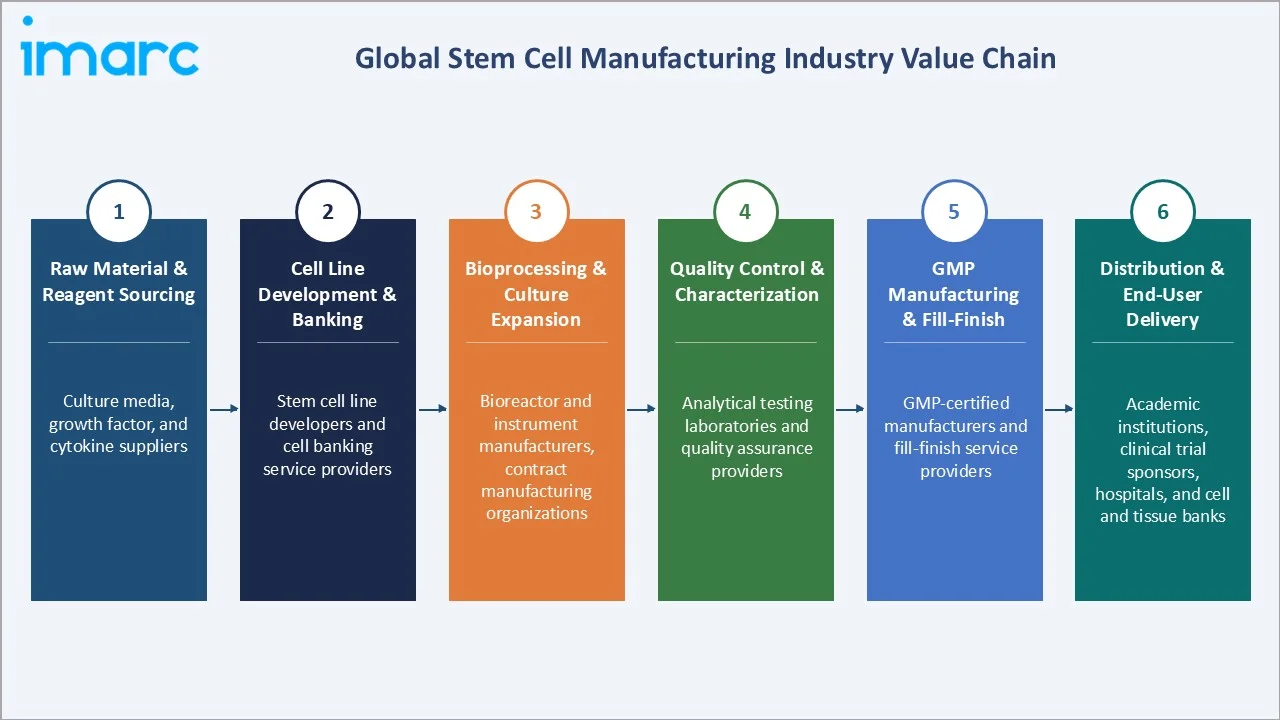
The stem cell manufacturing value chain spans raw material and reagent sourcing, cell line development and banking, bioprocessing and culture expansion, quality control and characterization, GMP manufacturing and fill-finish operations, and distribution to end users. Commercial activity is increasingly consolidating around integrated service providers offering combined process development and manufacturing capabilities across multiple value chain stages.
|
Stage |
Key Participants |
|
Raw Material & Reagent Sourcing |
Culture media, growth factor, and cytokine suppliers |
|
Cell Line Development & Banking |
Stem cell line developers and cell banking service providers |
|
Bioprocessing & Culture Expansion |
Bioreactor and instrument manufacturers, contract manufacturing organizations |
|
Quality Control & Characterization |
Analytical testing laboratories and quality assurance providers |
|
GMP Manufacturing & Fill-Finish |
GMP-certified manufacturers and fill-finish service providers |
|
Distribution & End-User Delivery |
Academic institutions, clinical trial sponsors, hospitals, and cell and tissue banks |
Technology Landscape in the Stem Cell Manufacturing Industry
Induced Pluripotent Stem Cell (iPSC) Technology
Induced pluripotent stem cell technology enables reprogramming of adult somatic cells into pluripotent cells capable of differentiating into multiple cell types, supporting scalable, less ethically constrained cell therapy manufacturing. Its adoption is accelerating across both research and clinical-stage applications.
Bioreactor and Automated Culture Technology
Automated bioreactor systems support scaled, closed-system cell expansion with improved consistency and reduced contamination risk compared to manual culture methods. Their adoption is central to transitioning stem cell manufacturing from small-batch research production to commercial-scale output.
Cell Characterization and Analytics Technology
Advanced flow cytometry, genomic sequencing, and AI-driven analytics tools are improving the speed and accuracy of stem cell characterization, supporting quality control and regulatory compliance across manufacturing operations.
Market Segmentation Analysis
The report covers the following segments:
|
Segment Category |
Leading Segment |
Market Share |
Year |
|
Product |
Consumables |
48.6% |
2025 |
|
Application |
Research Applications |
52.8% |
2025 |
|
End User |
Pharmaceutical & Biotechnology Companies |
🔒 |
2025 |
|
Region |
North America |
37.8% |
2025 |

By Product
To access detailed market analysis, Request Sample
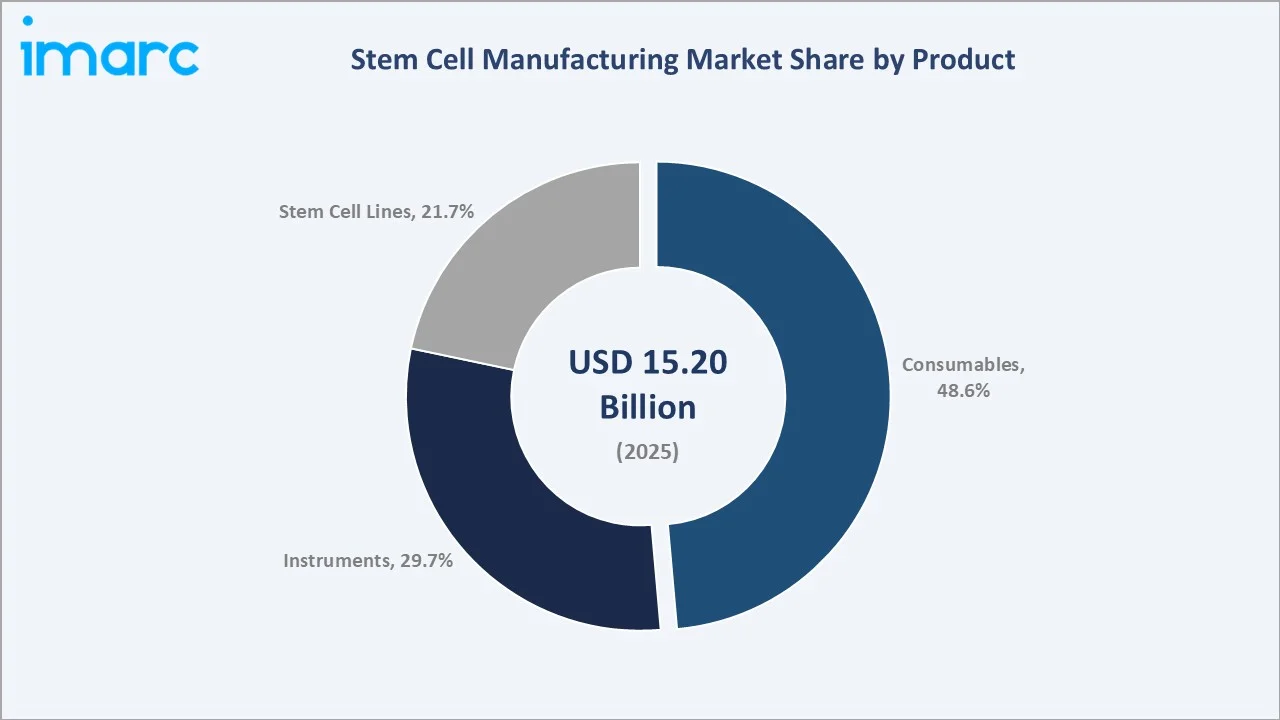
Consumables lead the product segment at 48.6% in 2025, encompassing culture media, reagents, and other recurring supplies essential to stem cell research and production. Instruments, at 29.7%, include bioreactors, incubators, and cell sorters supporting scaled manufacturing operations. Stem Cell Lines, at 21.7%, comprise hematopoietic, mesenchymal, induced pluripotent, embryonic, neural, and multipotent adult progenitor stem cells supplied for research and therapeutic development.
By Application
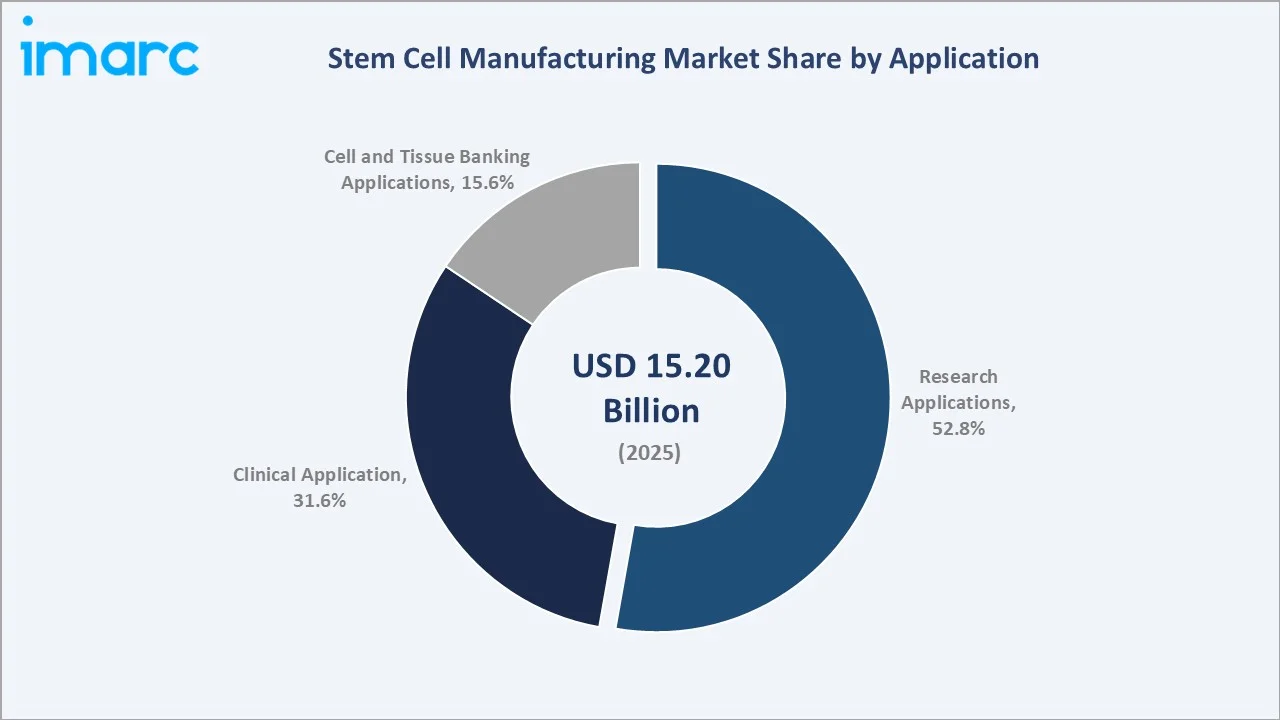
Research Applications lead at 52.8% in 2025, spanning life science research and drug discovery and development activities across academic and industrial laboratories. Clinical Application, at 31.6%, covers allogenic and autologous stem cell therapies advancing toward commercialization. Cell and Tissue Banking Applications, at 15.6%, support the preservation of stem cells for future research and therapeutic use, reflecting growing awareness of long-term regenerative medicine value.
Regional Market Insights
|
Region |
Share (2025) |
Key Characteristics |
|
North America |
37.8% |
Leading biotechnology and pharmaceutical companies, supportive regulatory environment, strong R&D base |
|
Europe |
27.6% |
Established academic research networks and government-backed regenerative medicine funding |
|
Asia-Pacific |
22.4% |
Expanding biotechnology investment and growing research infrastructure across major economies |
|
Latin America |
7.1% |
Gradually expanding biotechnology research capacity and regenerative medicine awareness |
|
Middle East and Africa |
5.1% |
Emerging healthcare investment and early-stage regenerative medicine initiatives |
North America, at 37.8%, leads through its concentration of leading biotechnology and pharmaceutical companies, robust R&D infrastructure, and a regulatory framework conducive to stem cell research and commercialization. Europe, at 27.6%, benefits from strong academic research networks and government funding directed toward regenerative medicine. Asia-Pacific, at 22.4%, is expanding rapidly as major economies scale biotechnology investment and research infrastructure.
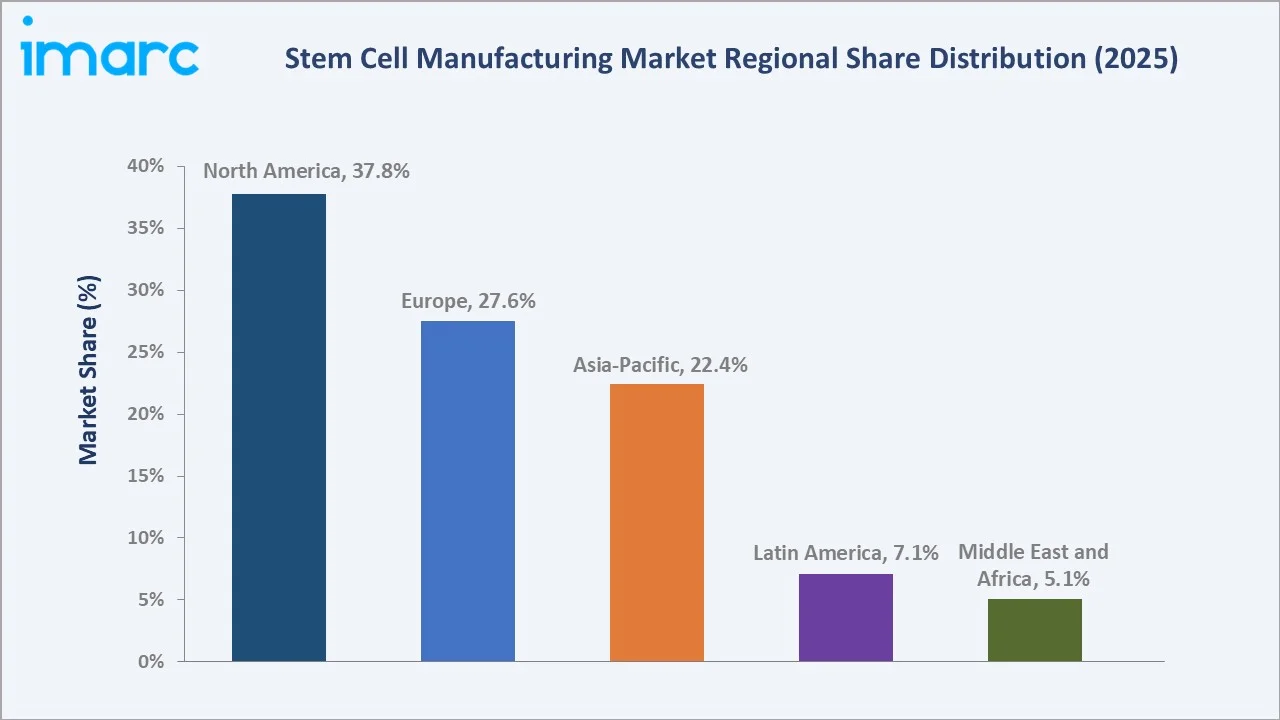
Latin America, at 7.1%, and the Middle East and Africa, at 5.1%, represent earlier-stage markets where expanding healthcare investment and growing regenerative medicine awareness are gradually building demand for stem cell manufacturing consumables, instruments, and cell lines.
Competitive Landscape
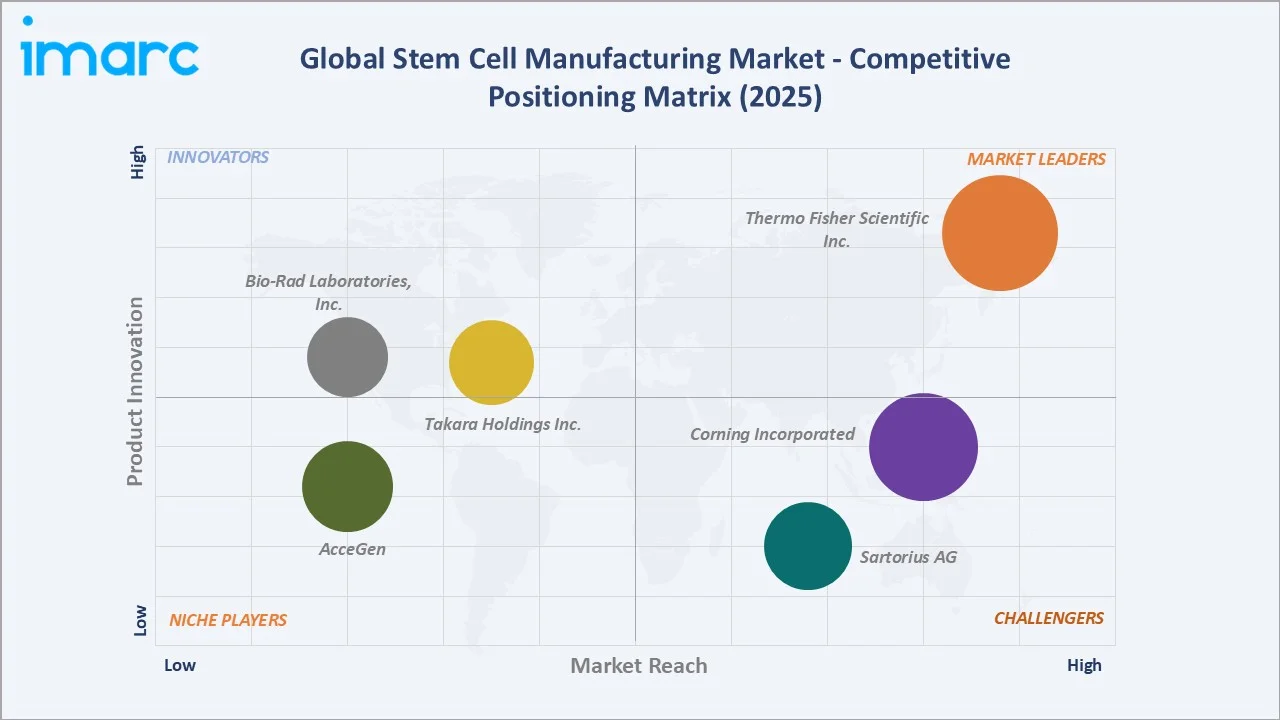
The global stem cell manufacturing market competitive landscape features a diverse mix of specialized biotechnology companies, life sciences instrumentation manufacturers, and diversified laboratory supply conglomerates. Key competitive strategies include research and development investment to enhance manufacturing processes, capacity expansion, and partnerships to advance cutting-edge stem cell technologies. Competitive intensity is increasing as leading players expand GMP-compliant manufacturing capacity and pursue acquisitions to broaden their cell therapy production capabilities.
|
Company Name |
Key Products |
Market Position |
Core Strength |
|
Thermo Fisher Scientific Inc. |
Cell Culture Media, Bioreactors, Stem Cell Reagents |
Market Leader |
Broad life sciences portfolio spanning consumables, instruments, and reagents for stem cell research and manufacturing |
|
Corning Incorporated |
Cell Culture Vessels, Matrigel, Bioreactor Systems |
Strong Challenger |
Specialized laboratory glassware and cell culture surface technologies widely adopted in stem cell research |
|
Sartorius AG |
Bioreactors, Cell Culture Media, Filtration Systems |
Strong Challenger |
Bioprocessing equipment and consumables supporting scalable stem cell and cell therapy manufacturing |
|
Bio-Rad Laboratories, Inc. |
Cell Sorters, Reagents, Life Science Instruments |
Established Player |
Diversified life science instrumentation portfolio with strong presence in cell analysis and sorting |
|
Takara Holdings Inc. |
Stem Cell Lines, Reprogramming Kits, Culture Reagents |
Established Player |
Specialized expertise in iPSC technology and stem cell reprogramming reagent kits |
|
AcceGen |
Stem Cell Lines, Culture Media, Cell Products |
Niche Specialist |
Focused stem cell line and reagent supplier serving academic and biotechnology research customers |
Key players include Thermo Fisher Scientific Inc., Corning Incorporated, Sartorius AG, Bio-Rad Laboratories, Inc., Takara Holdings Inc., AcceGen, and others.
Key Company Profiles
Thermo Fisher Scientific Inc.
Thermo Fisher Scientific Inc. is a US-based life sciences company with a strong presence in the stem cell manufacturing market through its cell culture media, reagents, and bioprocessing instrumentation portfolio.
- Key Products: Cell Culture Media, Stem Cell Reagents, Bioreactors.
- Strategic Focus: Broadening its integrated stem cell workflow portfolio spanning consumables, instruments, and reagents to support research, clinical, and commercial manufacturing customers globally. The company continues to invest in single-use bioprocessing technology to help customers reduce contamination risk and accelerate scale-up timelines. It is also expanding regional distribution and technical support infrastructure to serve growing demand from biotechnology hubs across Asia-Pacific and Europe.
Corning Incorporated
Corning Incorporated is a US-based materials science company with a strong presence in the stem cell manufacturing market through its cell culture vessels, matrices, and bioreactor systems.
- Key Products: Cell Culture Vessels, Matrigel, Bioreactor Systems.
- Strategic Focus: Strengthening its cell culture surface and bioprocessing technology offerings to support expanding academic and industrial stem cell research applications. The company continues to develop advanced extracellular matrix and 3D culture platforms that improve stem cell yield and differentiation efficiency. Corning is also expanding its life sciences manufacturing footprint to support growing global demand for cell culture consumables.
Market Concentration Analysis
The stem cell manufacturing market is moderately fragmented, with diversified life sciences conglomerates competing alongside specialized stem cell line and reagent suppliers. Market concentration is expected to gradually consolidate as leading players expand GMP manufacturing capacity and pursue partnerships supporting cell and gene therapy commercialization through the forecast period. Smaller specialized suppliers are likely to remain competitive in niche cell line and reagent categories where deep technical expertise outweighs the scale advantages of larger diversified competitors.
Investment & Growth Opportunities
Research Applications (~6.9% CAGR), Consumables (~6.6% CAGR), induced pluripotent stem cell (iPSC) technology, automated bioprocessing systems, and GMP-compliant contract manufacturing capacity represent the highest-growth investment vectors through 2034. Emerging markets in Asia-Pacific and Latin America offer opportunities for manufacturing capacity expansion as regenerative medicine infrastructure develops. Government initiatives supporting biotechnology and biopharmaceutical R&D, including grants, tax incentives, and subsidies, create additional opportunities for companies expanding stem cell manufacturing capabilities and pursuing clinical and commercial-scale production partnerships globally. Investors are also directing capital toward companies developing standardized, closed-system manufacturing platforms that reduce the cost and complexity of scaling cell therapy production for clinical and commercial use.
Future Market Outlook (2026-2034)
The global stem cell manufacturing market is projected to grow from USD 15.20 Billion in 2025 to USD 26.81 Billion by 2034, delivering a 6.31% CAGR over the forecast period, anchored at an estimated USD 20.65 Billion in 2030. Continued advancements in cell culture automation, expanding cell and gene therapy clinical pipelines, and growing government support for regenerative medicine infrastructure are expected to sustain demand for consumables, instruments, and stem cell lines. North America is expected to maintain regional leadership, while Asia-Pacific's expanding biotechnology investment base is likely to accelerate its market share through 2034.
Research Methodology
Primary Research
Primary research comprised structured interviews with industry stakeholders, including biotechnology R&D leads, stem cell manufacturing specialists, and regulatory affairs professionals.
Secondary Research
Secondary research encompassed company annual reports, peer-reviewed journal publications, government health agency data, and industry association publications covering stem cell research and manufacturing trends.
Forecasting Models
Market revenue forecasts were developed using a bottom-up model incorporating segment-level historical growth rates, research funding trends, and clinical pipeline expansion across product, application, and regional categories.
Stem Cell Manufacturing Market Report Scope:
| Report Features | Details |
|---|---|
| Base Year of the Analysis | 2025 |
| Historical Period | 2020-2025 |
| Forecast Period | 2026-2034 |
| Units | Billion USD |
| Scope of the Report |
Exploration of Historical Trends and Market Outlook, Industry Catalysts and Challenges, Segment-Wise Historical and Future Market Assessment:
|
| Products Covered |
|
| Applications Covered |
|
| End Users Covered | Pharmaceutical & Biotechnology Companies, Academic Institutes, Research Laboratories and Contract Research Organizations, Hospitals and Surgical Centers, Cell and Tissue banks, Others |
| Regions Covered | Asia Pacific, Europe, North America, Latin America, Middle East and Africa |
| Countries Covered | United States, Canada, Germany, France, United Kingdom, Italy, Spain, Russia, China, Japan, India, South Korea, Australia, Indonesia, Brazil, Mexico |
| Companies Covered | Thermo Fisher Scientific Inc., Corning Incorporated, Sartorius AG, Bio-Rad Laboratories, Inc., Takara Holdings Inc., AcceGen, etc. |
| Customization Scope | 10% Free Customization |
| Post-Sale Analyst Support | 10-12 Weeks |
| Delivery Format | PDF and Excel through Email (We can also provide the editable version of the report in PPT/Word format on special request) |
Key Benefits for Stakeholders:
- IMARC’s industry report offers a comprehensive quantitative analysis of various market segments, historical and current market trends, market forecasts, and dynamics of the stem cell manufacturing market from 2020-2034.
- The research report provides the latest information on the market drivers, challenges, and opportunities in the global stem cell manufacturing market.
- The study maps the leading, as well as the fastest-growing, regional markets. It further enables stakeholders to identify the key country-level markets within each region.
- Porter's five forces analysis assists stakeholders in assessing the impact of new entrants, competitive rivalry, supplier power, buyer power, and the threat of substitution. It helps stakeholders to analyze the level of competition within the stem cell manufacturing industry and its attractiveness.
- The competitive landscape allows stakeholders to understand their competitive environment and provides insight into the current positions of key players in the market.
Frequently Asked Questions About the Stem Cell Manufacturing Market Report
The global stem cell manufacturing market size reached USD 15.20 Billion in 2025, driven by the Consumables segment dominant at 48.6%, Research Applications leading at 52.8%, and North America commanding 37.8% market share through its concentration of leading biotechnology companies and robust R&D infrastructure.
The market grows at 6.31% CAGR during 2026-2034, reaching USD 26.81 Billion by 2034. This growth reflects rising chronic disease prevalence, expanding venture capital investment, and continued advancements in bioprocessing automation and cell culture technology.
Consumables lead at 48.6%, capturing the largest stem cell manufacturing market share through recurring culture media and reagent demand tied to expanding research and production volumes across academic and industrial laboratories.
Research Applications lead at 52.8% through sustained life science research and drug discovery activity, supported by rising government and institutional funding for regenerative medicine research worldwide.
North America leads at 37.8%, supported by its concentration of leading biotechnology and pharmaceutical companies, a supportive regulatory framework, and robust research and development infrastructure.
Leading companies include Thermo Fisher Scientific Inc., Corning Incorporated, Sartorius AG, Bio-Rad Laboratories, Inc., Takara Holdings Inc., AcceGen, and others.
The market is projected to reach approximately USD 20.65 Billion by 2030, supported by expanding cell and gene therapy pipelines and growing government support for regenerative medicine infrastructure.
Key opportunities include induced pluripotent stem cell (iPSC) technology scale-up, automated and AI-driven bioprocessing platforms, and expanding contract development and manufacturing capacity to serve growing global demand.
Need more help?
- Speak to our experienced analysts for insights on the current market scenarios.
- Include additional segments and countries to customize the report as per your requirement.
- Gain an unparalleled competitive advantage in your domain by understanding how to utilize the report and positively impacting your operations and revenue.
- For further assistance, please connect with our analysts.
 Request Customization
 Speak to an Analyst
 Request Brochure
 Inquire Before Buying
Benefits of Customization
- Personalize this research
- Triangulate with your data
- Get data as per your format and definition
- Gain a deeper dive into a specific application, geography, customer, or competitor
- Any level of personalization
Get in Touch With Us
UNITED STATES
Phone: +1-201-971-6302
INDIA
Phone: +91-120-433-0800
UNITED KINGDOM
Phone: +44-753-714-6104
Email: [email protected]
Client Testimonials




.webp)




.webp)













Related Reports

Choose your plan
*Please note that the prices mentioned below are starting prices for each bundle type. Kindly contact our team for further details.*
Single User License
- 1 User License, Access on 2 Devices
- PDF Report + Excel Dataset (Password Protected)
- Lifetime Access
- No Printing Rights
- 10% Free Report Customization
- 10–12 Weeks of Analyst Support
Five User License
- Access for 5 Users, 2 Devices per User
- PDF Report + Excel Dataset (Password Protected)
- Lifetime Access
- Dedicated Account Manager
- 12–14 Weeks of Analyst Support
- No Printing Rights
- 15% Free Report Customization
- 25% Discount on Your Next Purchase
Corporate User License
- Unlimited User Access (Within Your Organization)
- PDF Report + Excel Dataset
- Lifetime Access
- Dedicated Account Manager
- 14–20 Weeks of Analyst Support
- No Printing Rights
- 20% Free Report Customization
- 30% Discount on Your Next Purchase
Essential Insights
What's included:
3 reports
- Lifetime Access
- PDF Reports
- Excel Datasets
- 2 Weeks of Free Analyst Support
- 2 User Licenses
- Access on 2 Devices
- Printing Rights
- Complimentary PowerPoint (PPT) Version
- Complimentary License Upgrade
Professional Access
What's included:
5 reports
- Lifetime Access
- PDF Reports
- Excel Datasets
- 8 Weeks of Free Analyst Support
- 2 User Licenses
- Access on 2 Devices
- Printing Rights
- Complimentary PowerPoint (PPT) Version
- Complimentary License Upgrade
Business Advantage
What's included:
8 reports
- Lifetime Access
- PDF Reports
- Excel Datasets
- 14 Weeks of Free Analyst Support
- 2 User Licenses
- Access on 2 Devices
- Printing Rights
- Complimentary PowerPoint (PPT) Version
- Complimentary License Upgrade
Enterprise Intelligence
What's included:
10 reports
- Lifetime Access
- PDF Reports
- Excel Datasets
- 20 Weeks of Free Analyst Support
- 2 User Licenses
- Access on 2 Devices
- Printing Rights
- Complimentary PowerPoint (PPT) Version
- Complimentary License Upgrade