
Veterinary Software Market Size, Share, Trends and Forecast by Product, Delivery Mode, Practice Type, End Use, and Region, 2026-2034
Veterinary Software Market Size, Share, Trends & Forecast (2026-2034)
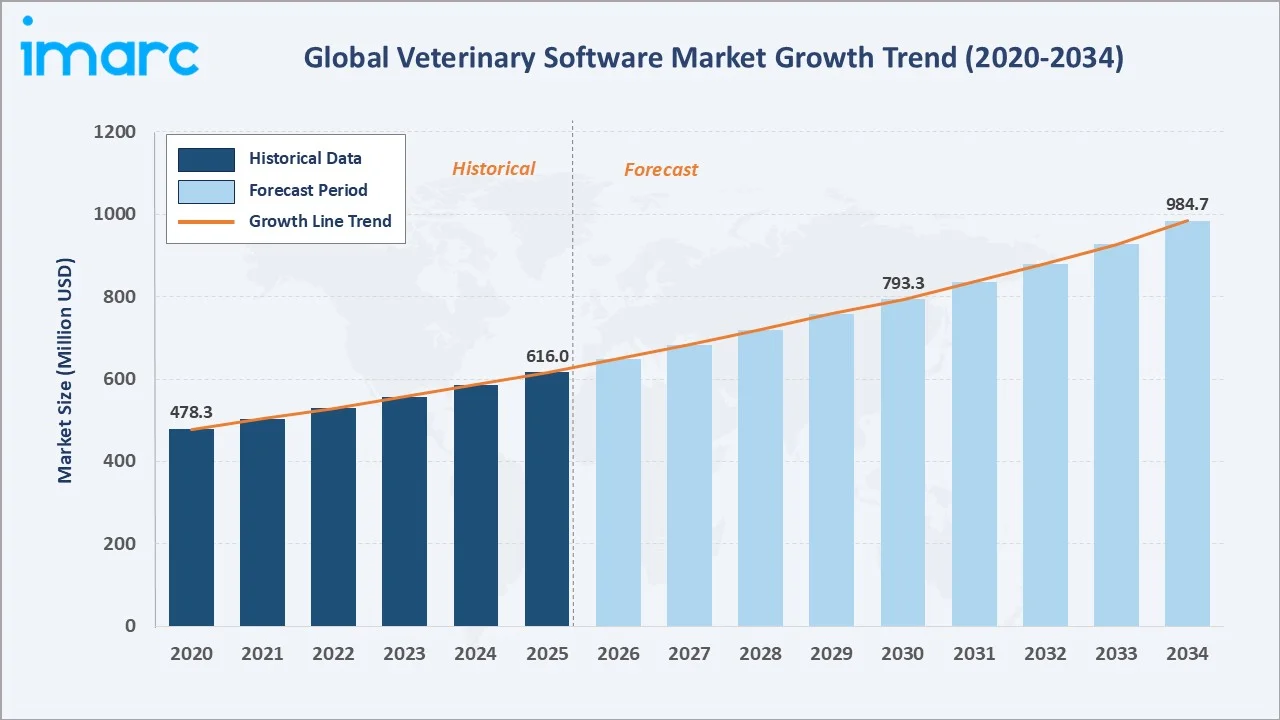
The global veterinary software market reached USD 616.0 Million in 2025 and grew to USD 648.0 Million in 2026, projected to reach USD 984.7 Million by 2034 at a CAGR of 5.19% during 2026-2034. According to the American Pet Products Association (APPA), total US pet industry expenditure exceeded USD 158 Billion in 2025, underscoring robust structural demand for digital practice tools. Practice management software leads product share at 48.6% in 2025, on-premises delivery dominates at 54.3%, and North America commands 38.7% regional share.
Market Snapshot
|
Metric |
Value |
|
Base Year Market Size (2025) |
USD 616.0 Million |
|
Market Size (2026) |
USD 648.0 Million |
|
Forecast Market Size (2034) |
USD 984.7 Million |
|
CAGR (2026-2034) |
5.19% |
|
Base Year |
2025 |
|
Historical Period |
2020-2025 |
|
Forecast Period |
2026-2034 |
|
Dominant Product |
Practice Management Software (48.6%, 2025) |
|
Dominant Delivery Mode |
On-premises (54.3%, 2025) |
|
Leading Region |
North America (38.7%, 2025) |
The veterinary software market expanded from USD 478.3 Million in 2020 to USD 616.0 Million in 2025 and is estimated to reach USD 648.0 Million in 2026. The market is projected to reach USD 793.3 Million by 2030 and USD 984.7 Million by 2034.
To get more information on this market, Request Sample
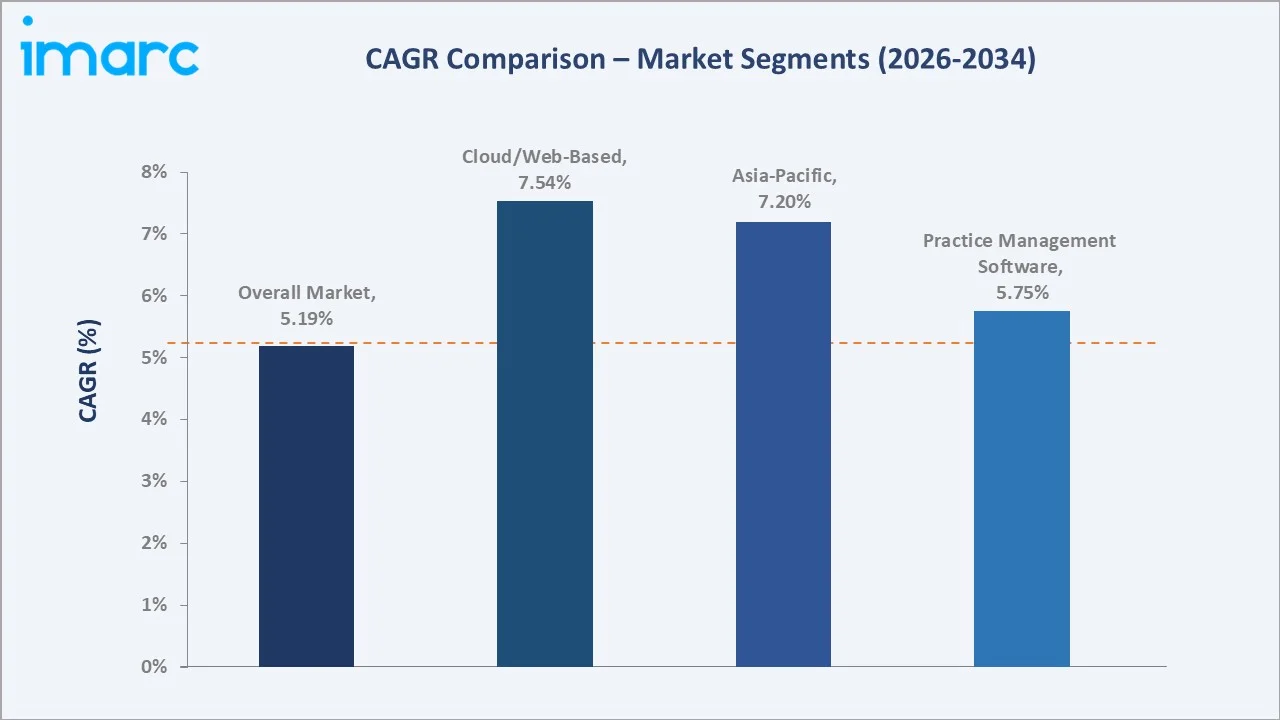
Cloud/web-based delivery grows fastest at ~7.54% CAGR, driven by scalability and lower IT overhead. Asia-Pacific emerges as the fastest-growing region at ~7.20% CAGR. Practice management software advances at ~5.75% CAGR through widespread clinic digitization.
Executive Summary
The global veterinary software market is on a sustained growth trajectory, driven by the convergence of rising companion animal ownership, growing animal health expenditure, and accelerating digitization of veterinary practices worldwide. The market expansion is underpinned by the increasing centrality of software in clinical workflows, diagnostic imaging, patient record management, and billing automation.
Practice management software commands a 48.6% product share in 2025. On-premises delivery retains dominance at 54.3%, though cloud/web-based platforms are gaining rapidly at ~7.54% CAGR, driven by scalability and reduced IT infrastructure costs. North America leads globally at 38.7%, supported by advanced veterinary infrastructure, high pet ownership rates, and strong regulatory frameworks mandating digital health record management.
Key Market Insights
|
Insight |
Data |
|
Dominant Product |
Practice Management Software – 48.6% share (2025) |
|
Dominant Delivery Mode |
On-premises – 54.3% share (2025) |
|
Leading Region |
North America – 38.7% (2025) |
|
Key Market Opportunity |
Rapid cloud adoption in emerging markets, AI-driven diagnostic tools, telemedicine integration, and expanding veterinary infrastructure in Asia-Pacific and Latin America. |
Key Analytical Observations Supporting the Above Data:
- Practice Management Software at 48.6%: Comprehensive EMR, scheduling, billing, and client communication functions make these platforms indispensable across solo practices, group clinics, and veterinary hospital networks.
- On-premises at 54.3%: Established hospitals prefer on-premises for data control and offline reliability. Cloud adoption is accelerating among smaller practices seeking lower upfront costs.
- North America at 38.7%: The US and Canada host the highest per-capita companion animal ownership and are early adopters of veterinary technology, reinforced by strong pet insurance ecosystems.
Global Veterinary Software Market Overview
The global veterinary software market encompasses digital solutions for animal health management, including practice management systems, diagnostic imaging platforms, and laboratory information tools. Practices depend increasingly on software to manage health records, telemedicine, billing, and inventory management.
The market ecosystem spans software developers, cloud infrastructure providers, veterinary clinics, reference laboratories, and regulatory bodies. Macroeconomic influences include rising disposable incomes, expanding pet insurance penetration, and growing government investment in animal health surveillance and zoonotic disease management globally.
Market Dynamics
To evaluate market opportunities, Request Sample
Market Drivers
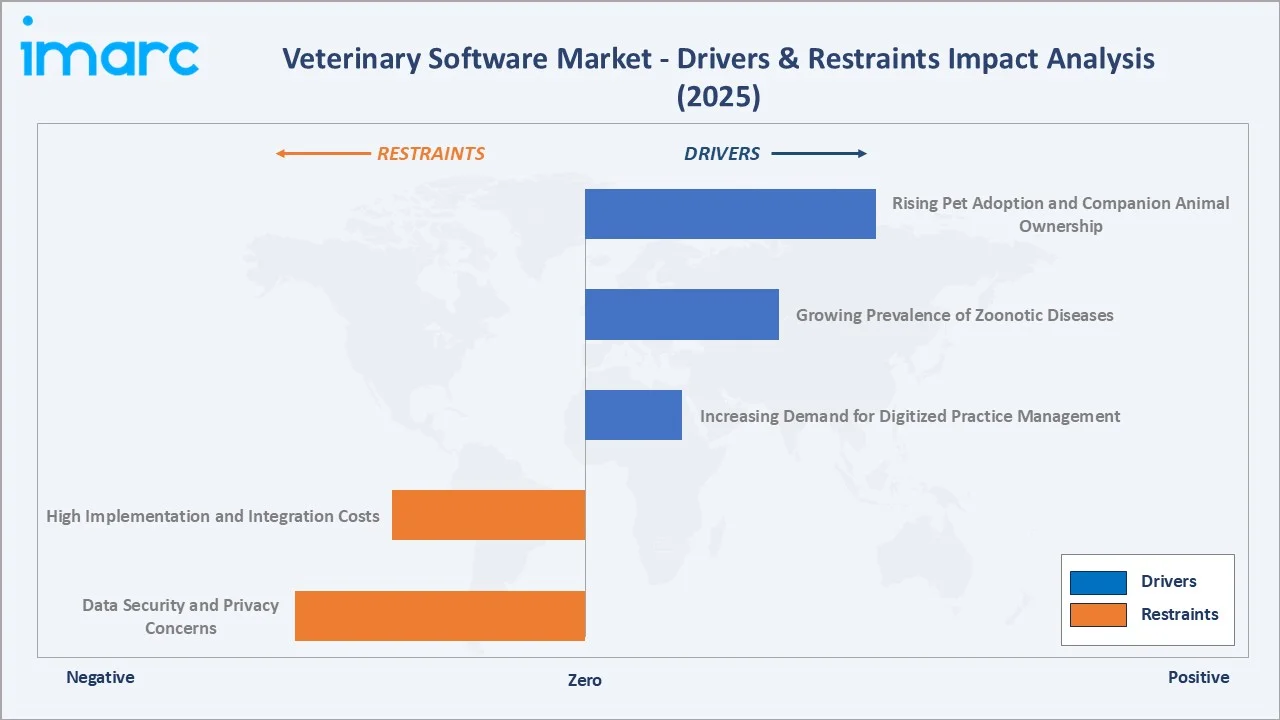
- Rising Pet Adoption and Companion Animal Ownership: In 2025, approximately 95 million US households owned a pet, up from 86.9 million in 2024, according to the American Pet Products Association (APPA). This represents an increase of 8.1 million households, or 9.3%, highlighting the continued growth of pet ownership across the country. Growing companion animal populations are directly expanding demand for veterinary care and associated management software, as more households seek preventive and routine healthcare for their pets.
- Growing Prevalence of Zoonotic Diseases: Globally, zoonotic diseases are estimated to cause around 1 billion illnesses and millions of deaths each year, with approximately 60% of emerging infectious diseases reported worldwide being zoonotic in nature. The increasing burden of zoonotic diseases has heightened the need for veterinary monitoring and reporting tools. Veterinary software is central to disease surveillance and containment, increasing institutional investment in digital veterinary solutions globally.
- Increasing Demand for Digitized Practice Management: Digital practice management reduces administrative workload and improves clinic profitability. Regulatory pressure for electronic health records across developed markets further accelerates adoption of integrated software platforms by veterinary clinics of all sizes.
Market Restraints
- High Implementation and Integration Costs: Advanced veterinary software carries significant upfront licensing and customization costs. Small independent practices, which represent a large share of global clinics, often find these costs prohibitive, limiting initial market penetration across developing regions.
- Data Security and Privacy Concerns: Veterinary platforms store sensitive patient and owner data. Varying data protection regulations across regions create compliance complexity and limit cloud adoption, particularly in markets with stringent data sovereignty requirements.
Market Opportunities
- Cloud-Based Solutions in Emerging Markets: Cloud/web-based platforms are gaining traction in Asia-Pacific and Latin America, where clinic infrastructure investment is limited. SaaS delivery reduces IT overhead while enabling real-time data access and multi-location practice management.
- AI and Machine Learning Integration: AI-assisted diagnostic imaging and automated clinical documentation represent high-growth innovation frontiers, generating significant investor interest across veterinary technology segments and driving premiumization of software offerings globally.
Market Challenges
- Interoperability Issues Across Platforms: Fragmented software ecosystems impede data sharing between clinics, laboratories, and insurance providers. Lack of universal data standards limits seamless integration and reduces the overall effectiveness of deployed software solutions across the veterinary care continuum.
- Limited Digital Infrastructure in Rural Markets: Many emerging economies lack reliable broadband connectivity and digital payment infrastructure, creating significant barriers to veterinary software deployment in rural and remote areas where clinic density is growing rapidly.
Emerging Market Trends
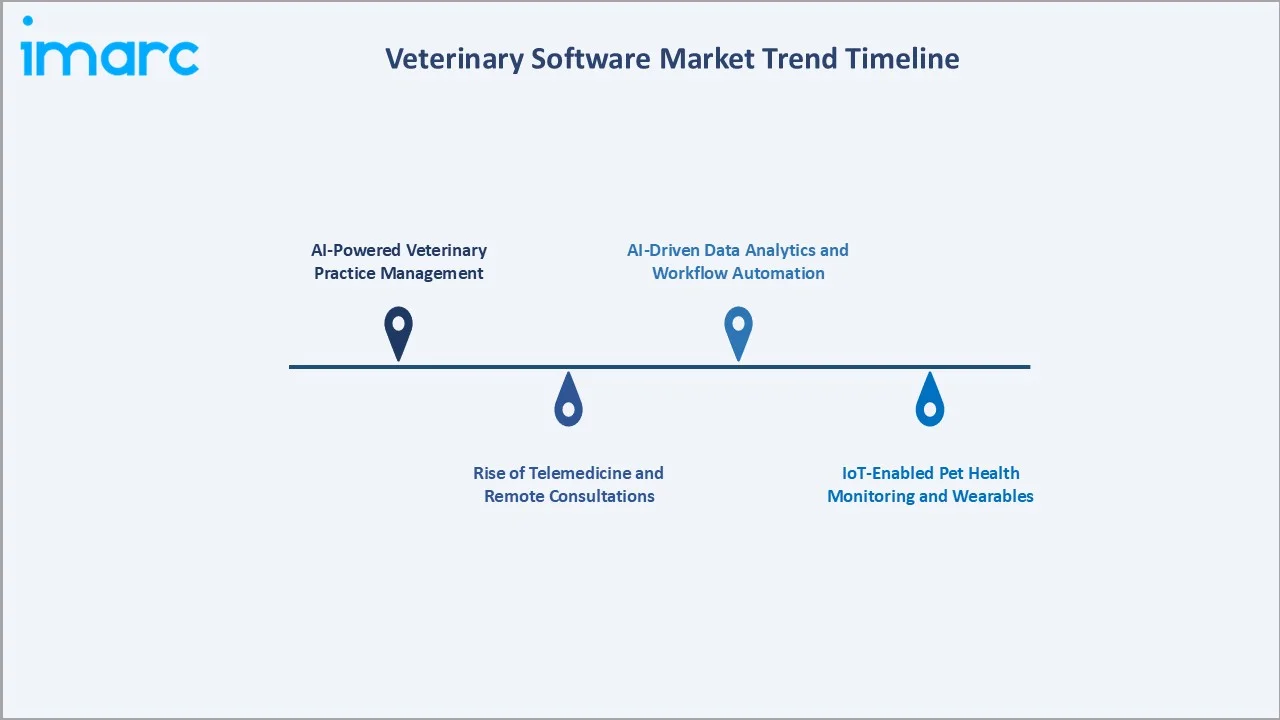
1. AI-Powered Veterinary Practice Management
Veterinary software is increasingly incorporating AI-powered tools to automate appointment scheduling, medical documentation, billing, and administrative tasks. In July 2026, Provet launched an AI-powered, all-in-one veterinary practice management platform that integrates appointment booking, treatment, billing, and clinic administration, helping veterinary practices streamline operations and improve patient care. These integrated solutions help veterinary practices improve operational efficiency while enabling veterinarians to focus more on patient care.
2. Rise of Telemedicine and Remote Consultations
Telemedicine platforms are expanding veterinary service access to underserved geographic areas and enabling established clinics to offer after-hours consultations. Integration of teleconsultation modules within practice management systems is a leading product development priority for software vendors serving diverse global markets.
3. AI-Driven Data Analytics and Workflow Automation
Veterinary software providers are increasingly integrating AI assistants to analyze practice data, generate actionable insights, and automate routine administrative tasks. In September 2026, Patterson Veterinary launched Atlas, an AI-powered veterinary software assistant designed to help practices analyze data, generate actionable insights, and automate routine tasks. Integrated with Patterson’s NaVetor cloud-based software, Atlas is also available as a standalone solution for practices using other practice management systems.
4. IoT-Enabled Pet Health Monitoring and Wearables
Connected pet health monitors, including GPS collars, activity trackers, and continuous glucose monitors, generate real-time health data streams that integrate with veterinary software. This IoT ecosystem is creating demand for analytics modules capable of processing continuous biometric data alongside clinical records.
Industry Value Chain Analysis
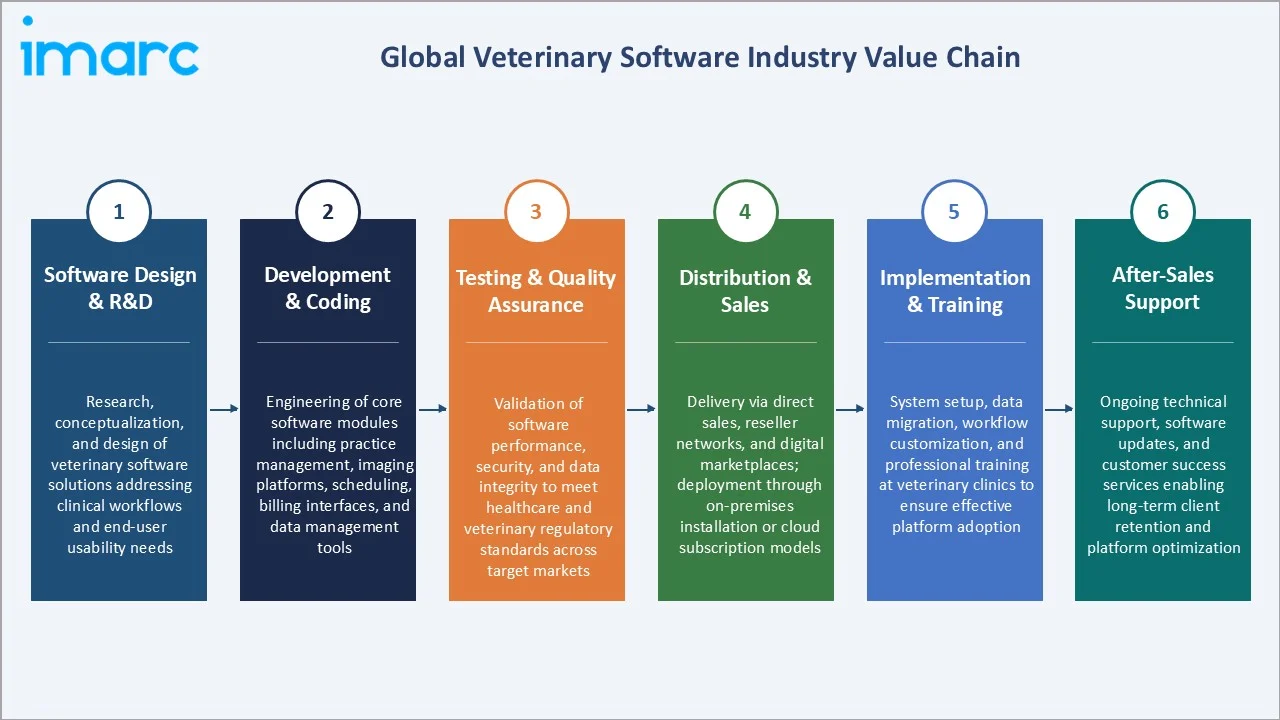
The veterinary software value chain spans six stages, from research and development through ongoing after-sales support, each representing distinct competitive differentiation opportunities for market participants.
|
Stage |
Description |
|
Software Design & R&D |
Research, conceptualization, and design of veterinary software solutions addressing clinical workflows and end-user usability needs. |
|
Development & Coding |
Engineering of core software modules including practice management, imaging platforms, scheduling, billing interfaces, and data management tools. |
|
Testing & Quality Assurance |
Validation of software performance, security, and data integrity to meet healthcare and veterinary regulatory standards across target markets. |
|
Distribution & Sales |
Delivery via direct sales, reseller networks, and digital marketplaces; deployment through on-premises installation or cloud subscription models. |
|
Implementation & Training |
System setup, data migration, workflow customization, and professional training at veterinary clinics to ensure effective platform adoption. |
|
After-Sales Support |
Ongoing technical support, software updates, and customer success services enabling long-term client retention and platform optimization. |
After-sales support represents the highest-value competitive differentiation stage, where service reliability and responsiveness directly determine long-term client retention and platform adoption success across veterinary practice segments.
Technology Landscape in the Veterinary Software Industry
Cloud Computing and SaaS Architecture
Cloud-native and SaaS-based veterinary software architectures are replacing on-premises deployments, enabling automatic updates, multi-device access, and subscription-based pricing. Major platform providers are migrating legacy systems to cloud infrastructure, supporting distributed multi-location practice networks and reducing IT maintenance burdens for independent clinics.
Artificial Intelligence and Machine Learning
AI and ML applications in veterinary software span diagnostic image analysis, predictive health monitoring, and automated clinical documentation. Deep learning models trained on veterinary imaging datasets are enabling automated detection of pathological conditions in radiographs and ultrasound, improving diagnostic accuracy and throughput in high-volume practices.
Telemedicine and Digital Communication Technologies
Telemedicine modules integrated within practice management platforms enable video consultations, secure messaging, remote prescription management, and digital client education. These capabilities are expanding veterinary service reach and creating new revenue streams for clinic operators as digital-first expectations become mainstream among pet owners globally.
Market Segmentation Analysis
The report covers the following segments:
|
Segment Category |
Leading Segment |
Market Share |
Year |
|
Product |
Practice Management Software |
48.6% |
2025 |
|
Delivery Mode |
On-premises |
54.3% |
2025 |
|
Practice Type |
Food-producing Animals |
🔒 |
2025 |
|
End Use |
Hospitals and Clinics |
🔒 |
2025 |
|
Region |
North America |
38.7% |
2025 |

By Product
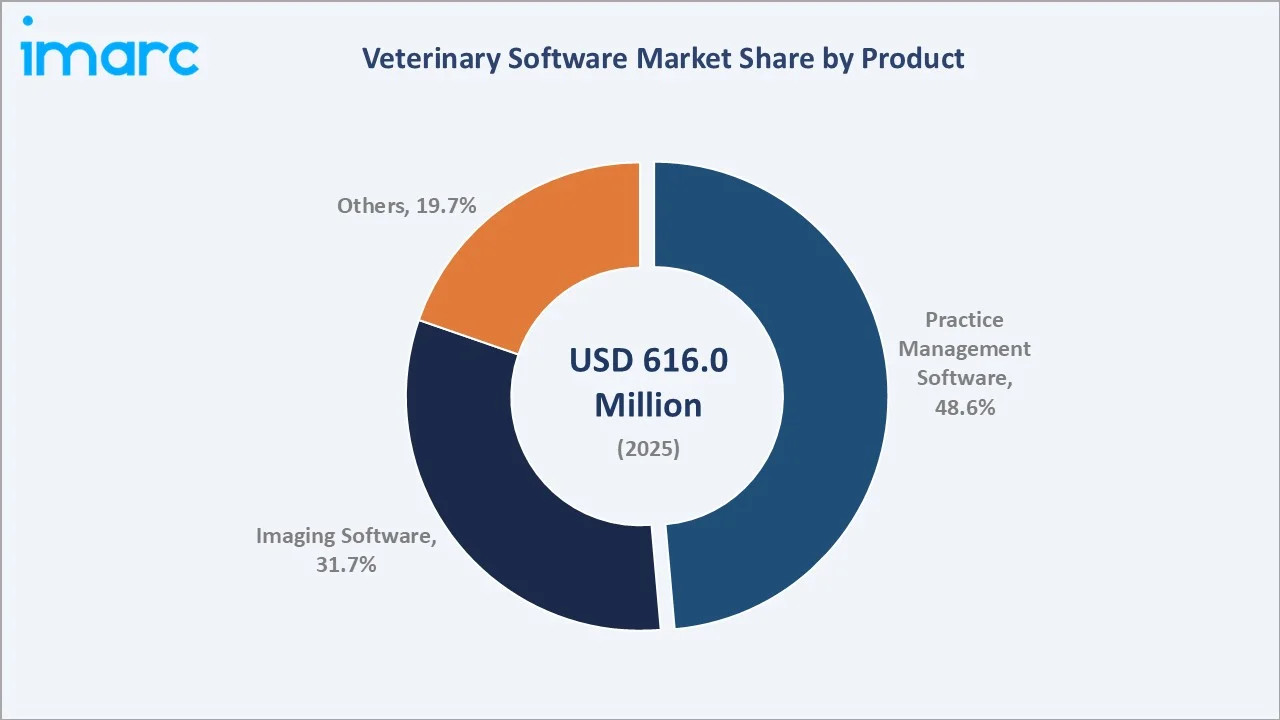
Practice management software commands 48.6% of the global veterinary software market in 2025, underpinned by its comprehensive role in clinic administration, patient records, appointment scheduling, billing, and client communication. Widespread adoption across solo practices, group clinics, and hospital networks drives sustained segment leadership.
To access detailed market analysis, Request Sample
Imaging software holds a 31.7% share, driven by demand for digital radiography, ultrasound, and endoscopy image management systems in specialty and referral hospitals. The Others segment at 19.7% includes laboratory information management systems (LIMS), telemedicine platforms, and inventory management tools gaining traction as complementary solutions to core practice management systems.
By Delivery Mode
On-premises delivery retains a 54.3% share in 2025, preferred by established veterinary hospitals requiring full data control and offline functionality. However, cloud/web-based platforms are advancing, driven by lower total cost of ownership, remote access capability, and seamless multi-device compatibility for distributed practices.
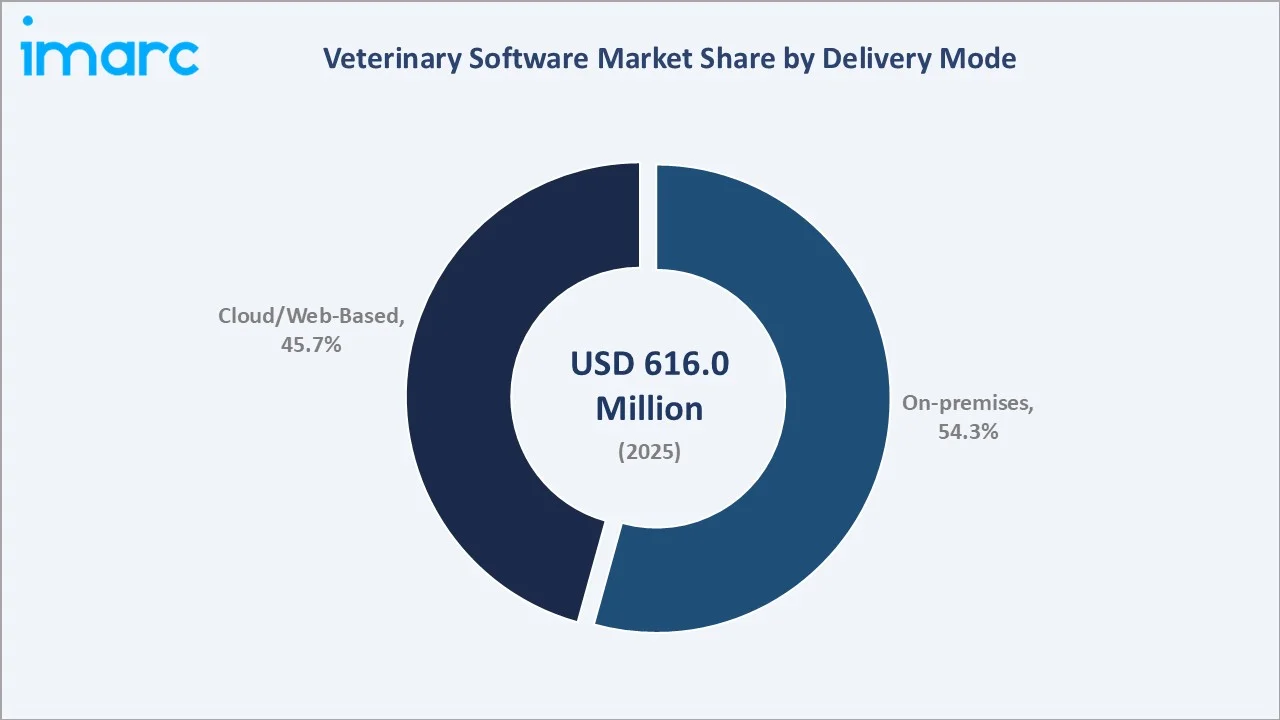
Cloud/web-based solutions at 45.7% are especially favored by newly established clinics and small independent practices seeking affordable, scalable software without significant upfront capital investment. Subscription-based pricing aligns with cash flow management preferences of smaller veterinary operators and reduces the technology adoption barrier.
Regional Market Insights
|
Region |
Share (2025) |
Drivers & Characteristics |
|
North America |
38.7% |
Advanced veterinary infrastructure, high companion animal ownership, strong pet insurance penetration, and regulatory requirements driving EMR adoption. |
|
Europe |
27.4% |
Stringent animal health regulations, high veterinary care standards, and growing companion animal ownership accelerating structured digital record adoption. |
|
Asia-Pacific |
19.6% |
Fastest-growing region driven by rising pet ownership, expanding veterinary school networks, and government animal health modernization. |
|
Latin America |
8.2% |
Growing through pet humanization trends, expanding veterinary clinic networks, and rising middle-class incomes creating first-time demand for digital practice tools. |
|
Middle East & Africa |
6.1% |
Emerging market with growing animal health awareness and gradual digital infrastructure development enabling incremental software adoption. |
North America's 38.7% share reflects the region's position as the global veterinary software epicenter. Europe at 27.4% maintains strong compliance-driven adoption.
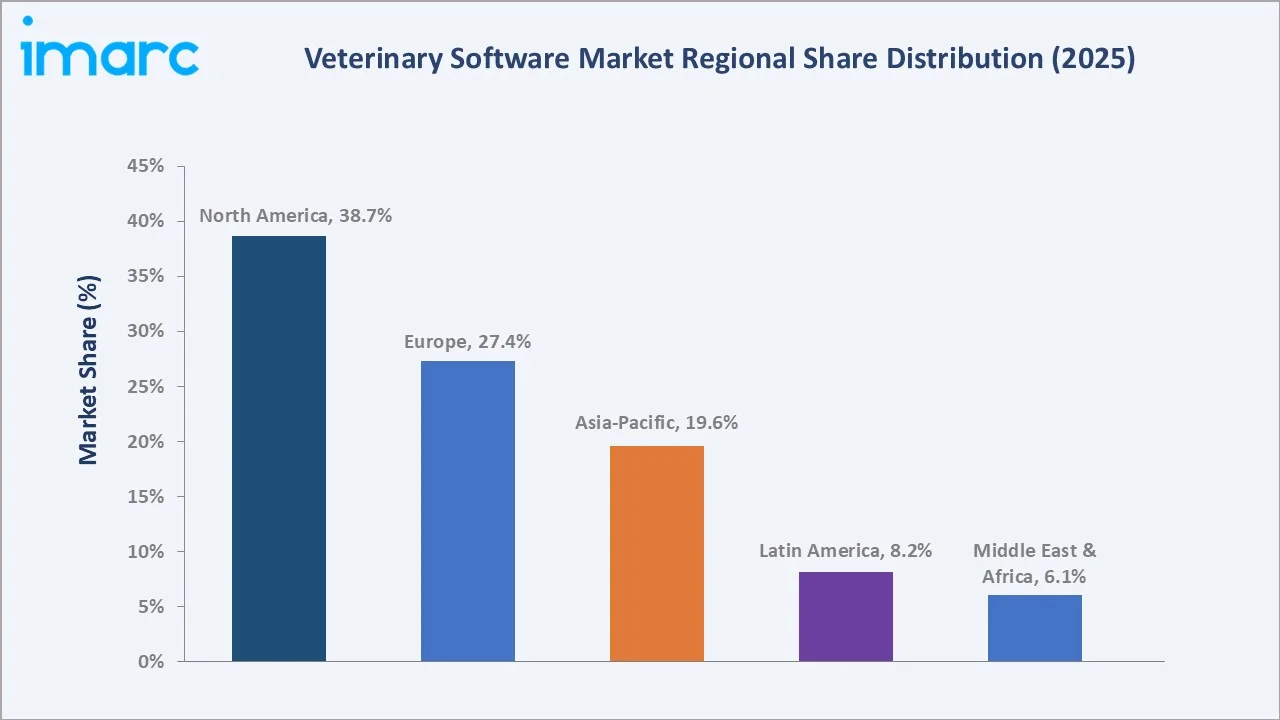
Asia-Pacific at 19.6% represents the highest-growth frontier, while Latin America and Middle East & Africa are rapidly emerging as new demand centers through 2034.
Competitive Landscape
The global veterinary software market exhibits moderate concentration, led by integrated animal health technology companies and specialized software providers. Competition is intensifying as cloud-native platforms challenge established on-premises incumbents.
|
Company |
Key Offerings |
Market Position |
Core Strength |
|
IDEXX Laboratories, Inc. |
ezyVet, Neo, Cornerstone, Vello, rVetLink |
Market Leader |
IDEXX Laboratories, Inc. plays a major role in the veterinary software industry by providing an integrated ecosystem of practice management systems (PIMS), clinical workflow tools, client engagement platforms, and diagnostic software. |
|
Henry Schein, Inc. |
eVetPractice |
Market Leader |
Henry Schein, Inc. plays a major role in the veterinary technology and practice management software market by providing comprehensive digital solutions that streamline clinic operations, client communication, and financial workflows. |
|
Shepherd Veterinary Solutions, LLC |
Shepherd veterinary software |
Established Player |
Shepherd Veterinary Solutions, LLC develops Shepherd Veterinary Software, a cloud-based practice information management system. |
|
ClienTrax |
ClienTrax Veterinary Practice Management Software |
Innovator |
ClienTrax serves as comprehensive veterinary practice management software (VPMS) designed to streamline the administrative, clinical, and financial operations of animal hospitals and clinics. |
|
Animal Intelligence Software |
AIGalaxy Telemedicine Edition, AIGenesis Telemedicine Edition |
Innovator |
Animal Intelligence Software functions as a cloud-based practice management software solution designed to streamline operations for veterinary clinics, research facilities, government groups, and universities. |
IDEXX Laboratories maintains leadership through integrated diagnostic-software ecosystems. Emerging cloud-native players compete on affordability and ease of adoption, targeting the underserved independent clinic segment with subscription-based models.
Key Company Profiles
IDEXX Laboratories, Inc.
IDEXX Laboratories, Inc. is a global leader in veterinary diagnostics and software, providing integrated solutions across practice management, diagnostic imaging, and laboratory information systems. The company serves veterinary clinics, hospitals, and reference laboratories, combining point-of-care diagnostics, cloud-based practice management, and telemedicine platforms.
- Key Offerings: ezyVet, Neo, Cornerstone, Vello, rVetLink.
- Strategic Focus: Deepens integration between diagnostic instruments and practice management software, enabling seamless data flow from in-clinic analyzers to patient records while expanding cloud-based and telemedicine capabilities.
Henry Schein, Inc.
Henry Schein, Inc. is a leading distributor of healthcare and veterinary products, with its Veterinary Software division offering practice management solutions. The company serves a broad installed base across North American and European veterinary practices through its established global distribution network.
- Key Offerings: eVetPractice.
- Strategic Focus: Emphasizes interoperability between practice management software and its broader veterinary product distribution platform, enabling practices to manage clinical and commercial operations through a unified, integrated interface.
Market Concentration Analysis
The global veterinary software market exhibits moderate concentration, with IDEXX Laboratories, Inc., Henry Schein, Inc., and Shepherd Veterinary Solutions, LLC collectively commanding an estimated 55–65% of organized market revenue. This concentration reflects decade-long investment in veterinary-specific software, extensive installed client bases, and distribution network advantages, creating meaningful barriers for new competitors.
The market is gradually fragmenting at mid-tier and lower segments as cloud-native providers compete on affordability and ease of adoption. Progressive digital adoption among smaller independent practices is expanding the addressable market and enabling emerging platforms to gain share through the forecast period.
Investment & Growth Opportunities
Highest Growth Segments
Cloud/web-based delivery (~7.54% CAGR), Asia-Pacific regional expansion (~7.20% CAGR), AI-assisted diagnostic imaging, telemedicine platform integration, IoT pet health monitoring software, and mobile-first practice management for rural and emerging markets represent the highest-return investment opportunities through 2034.
Investment Themes
- Cloud-Native Veterinary SaaS for Emerging Markets: Developing cloud-first practice management optimized for Asia-Pacific and Latin America, where clinic infrastructure investment is limited, and subscription models align with cash flow preferences of smaller practices.
- AI-Powered Veterinary Diagnostic Software: Investment in machine learning-powered diagnostic image analysis, predictive health monitoring, and automated documentation tools that enhance diagnostic accuracy and throughput for specialty and referral hospital segments.
- Integrated Telemedicine and IoT Health Monitoring: Building vertically integrated platforms combining telemedicine consultation, wearable pet health devices, and AI health analytics to serve digitally engaged pet owners seeking proactive and preventive health management.
Future Market Outlook (2026-2034)
The global veterinary software market is projected to grow from USD 616.0 Million in 2025 to USD 648.0 Million in 2026, reaching USD 984.7 Million by 2034 at a CAGR of 5.19%. The market is projected to reach USD 793.3 Million by 2030, the mid-period milestone when cloud-based platforms are expected to expand to high global revenue, and Asia-Pacific will approach Europe in regional market size.
Three transformative forces will shape the market through 2034. First, cloud transformation will restructure market economics from one-time licensing toward recurring subscription revenue, supporting more stable growth trajectories and incentivizing higher R&D investment. Second, AI integration will advance from a supplementary feature to core platform capability, with automated diagnostic assistance becoming standard. Third, geographic diversification will accelerate as Asia-Pacific and Latin American veterinary infrastructure expands, creating large new addressable markets for both global vendors and region-specific providers.
Research Methodology
Primary Research
Primary research comprised structured interviews with veterinary software company executives, product managers, veterinary clinic owners, practice managers, and animal health technology investors. Market demand validation incorporated structured surveys with veterinary professionals across North America, Europe, and Asia-Pacific covering software adoption drivers, barriers, and platform preferences.
Secondary Research
Secondary research incorporated veterinary software industry publications, company annual reports and investor presentations, veterinary association practice surveys, government animal health expenditure data, pet insurance industry reports, technology adoption studies across veterinary practices, and peer-reviewed research on digital health technology in companion and food animal medicine.
Forecasting Models
Market forecasting integrated companion animal population growth projections, veterinary practice digitization adoption modeling, cloud versus on-premises technology transition scenarios, regional veterinary infrastructure investment trajectories, and competitive market share evolution modeling across product and delivery mode segments.
Report Scope:
| Report Features | Details |
|---|---|
| Base Year of the Analysis | 2025 |
| Historical Period | 2020-2025 |
| Forecast Period | 2026-2034 |
| Units | Million USD |
| Scope of the Report | Exploration of Historical Trends and Market Outlook, Industry Catalysts and Challenges, Segment-Wise Historical and Future Market Assessment:
|
| Products Covered | Practice Management Software, Imaging Software, Others |
| Delivery Modes Covered | On-premises, Cloud/Web-Based |
| Practice Types Covered | Small Animals, Mixed Animals, Equine, Food-producing Animals, Others |
| End Uses Covered | Hospitals and Clinics, Reference Laboratories |
| Regions Covered | Asia Pacific, Europe, North America, Latin America, Middle East and Africa |
| Countries Covered | United States, Canada, Germany, France, United Kingdom, Italy, Spain, Russia, China, Japan, India, South Korea, Australia, Indonesia, Brazil, Mexico |
| Companies Covered | IDEXX Laboratories, Inc., Henry Schein, Inc., Shepherd Veterinary Solutions, LLC, ClienTrax, Animal Intelligence Software, etc. |
| Customization Scope | 10% Free Customization |
| Post-Sale Analyst Support | 10-12 Weeks |
| Delivery Format | PDF and Excel through Email (We can also provide the editable version of the report in PPT/Word format on special request) |
Frequently Asked Questions About the Veterinary Software Market Report
The veterinary software market reached USD 648.0 Million in 2026, driven by rising pet adoption, zoonotic disease management needs, and accelerating digitization of veterinary clinical workflows.
The market is projected to grow at a CAGR of 5.19% during 2026-2034, driven by cloud platform adoption, AI diagnostic integration, telemedicine expansion, and rising veterinary care spending in emerging markets.
The market is projected to reach USD 793.3 Million by 2030, when cloud platforms are expected to represent 50–55% of revenue, and Asia-Pacific will approach Europe as the second-largest regional market.
Practice management software leads with a 48.6% share in 2025, driven by its essential role in patient records, appointment scheduling, billing, and client communication across all veterinary practice types.
On-premises delivery leads with a 54.3% share in 2025. Cloud/web-based platforms grow at ~7.54% CAGR, driven by lower costs, scalability, and remote access preferences among smaller and newer practices.
North America leads with a 38.7% share in 2025, through high companion animal ownership, extensive pet insurance penetration, advanced veterinary infrastructure, and regulatory requirements for digital health records.
Asia-Pacific is the fastest-growing region at ~7.20% CAGR, driven by surging pet ownership in China, India, and Australia and expanding government veterinary modernization programs.
Key players include IDEXX Laboratories, Inc., Henry Schein, Inc., Shepherd Veterinary Solutions, LLC, ClienTrax, and Animal Intelligence Software, among others.
The market is projected to reach USD 984.7 Million by 2034, driven by cloud transformation, AI integration in diagnostics, geographic expansion in Asia-Pacific and Latin America, and IoT-enabled pet health monitoring.
Key opportunities include cloud-native SaaS for emerging markets, AI-powered diagnostic tools, integrated telemedicine and IoT health monitoring ecosystems, and mobile-first practice management for rural and independent clinics.
Need more help?
- Speak to our experienced analysts for insights on the current market scenarios.
- Include additional segments and countries to customize the report as per your requirement.
- Gain an unparalleled competitive advantage in your domain by understanding how to utilize the report and positively impacting your operations and revenue.
- For further assistance, please connect with our analysts.
 Request Customization
 Speak to an Analyst
 Request Brochure
 Inquire Before Buying
Benefits of Customization
- Personalize this research
- Triangulate with your data
- Get data as per your format and definition
- Gain a deeper dive into a specific application, geography, customer, or competitor
- Any level of personalization
Get in Touch With Us
UNITED STATES
Phone: +1-201-971-6302
INDIA
Phone: +91-120-433-0800
UNITED KINGDOM
Phone: +44-753-714-6104
Email: [email protected]
Client Testimonials




.webp)




.webp)













Related Reports

Choose your plan
*Please note that the prices mentioned below are starting prices for each bundle type. Kindly contact our team for further details.*
Single User License
- 1 User License, Access on 2 Devices
- PDF Report + Excel Dataset (Password Protected)
- Lifetime Access
- No Printing Rights
- 10% Free Report Customization
- 10–12 Weeks of Analyst Support
Five User License
- Access for 5 Users, 2 Devices per User
- PDF Report + Excel Dataset (Password Protected)
- Lifetime Access
- Dedicated Account Manager
- 12–14 Weeks of Analyst Support
- No Printing Rights
- 15% Free Report Customization
- 25% Discount on Your Next Purchase
Corporate User License
- Unlimited User Access (Within Your Organization)
- PDF Report + Excel Dataset
- Lifetime Access
- Dedicated Account Manager
- 14–20 Weeks of Analyst Support
- No Printing Rights
- 20% Free Report Customization
- 30% Discount on Your Next Purchase
Essential Insights
What's included:
3 reports
- Lifetime Access
- PDF Reports
- Excel Datasets
- 2 Weeks of Free Analyst Support
- 2 User Licenses
- Access on 2 Devices
- Printing Rights
- Complimentary PowerPoint (PPT) Version
- Complimentary License Upgrade
Professional Access
What's included:
5 reports
- Lifetime Access
- PDF Reports
- Excel Datasets
- 8 Weeks of Free Analyst Support
- 2 User Licenses
- Access on 2 Devices
- Printing Rights
- Complimentary PowerPoint (PPT) Version
- Complimentary License Upgrade
Business Advantage
What's included:
8 reports
- Lifetime Access
- PDF Reports
- Excel Datasets
- 14 Weeks of Free Analyst Support
- 2 User Licenses
- Access on 2 Devices
- Printing Rights
- Complimentary PowerPoint (PPT) Version
- Complimentary License Upgrade
Enterprise Intelligence
What's included:
10 reports
- Lifetime Access
- PDF Reports
- Excel Datasets
- 20 Weeks of Free Analyst Support
- 2 User Licenses
- Access on 2 Devices
- Printing Rights
- Complimentary PowerPoint (PPT) Version
- Complimentary License Upgrade