
Reusable Pad Liners Manufacturing Plant Project Report 2026: Industry Trends, Plant Setup, Machinery, Raw Materials, Investment Opportunities, Cost and Revenue
Reusable Pad Liners Manufacturing Plant Project Report (DPR) Summary:
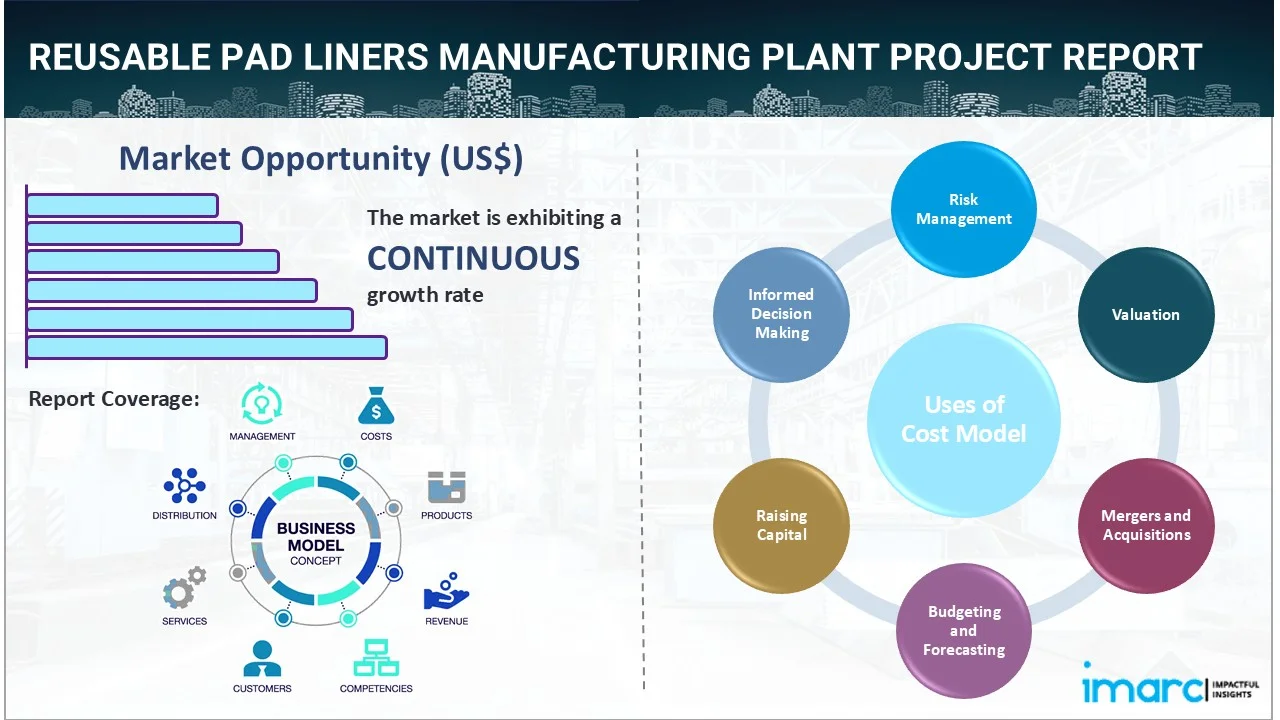
IMARC Group's comprehensive DPR report, titled "Reusable Pad Liners Manufacturing Plant Project Report 2026: Industry Trends, Plant Setup, Machinery, Raw Materials, Investment Opportunities, Cost and Revenue," provides a complete roadmap for setting up a reusable pad liners manufacturing plant. The global reusable pad liners market size was valued at USD 3.94 Billion in 2025. Looking forward, IMARC Group estimates the market to reach USD 11.19 Billion by 2034, exhibiting a CAGR of 12.30% from 2026-2034. The reusable pad liners market is primarily driven by the growing demand for sustainable and zero-waste personal hygiene solutions, the increasing investment in women’s health solutions, and emerging product innovations in reusable pad liners.
The report covers a comprehensive market overview to micro-level information such as unit operations involved, raw material requirements, utility requirements, infrastructure requirements, machinery and technology requirements, manpower requirements, packaging requirements, transportation requirements, etc. The reusable pad linerss manufacturing plant setup cost is provided in detail covering project economics, capital investments (CapEx), project funding, operating expenses (OpEx), income and expenditure projections, fixed costs vs. variable costs, direct and indirect costs, expected ROI and net present value (NPV), profit and loss account, financial analysis, etc.
What are Reusable Pad Liners?
Reusable pad liners are absorbent, washable textile layers that enhance comfort, hygiene, protection while being used as part of a reusable menstrual pad, postpartum pad, incontinence pad or cloth diapering system. Pad liners, generally made from a combination of natural and/or synthetic absorbent textile materials, such as organic cotton, bamboo fleece, microfiber and hemp blends, possess moisture-wicking properties, provide odour control and leak resistance with their multi-layered structure giving added durability, skin-friendliness and longevity. Also, pad liners provide an environmentally friendly alternative to disposable pad liners by reducing the amount of single-use waste produced and reducing the reliance on petrochemical-based products. Nowadays, pad liners are quickly becoming more popular in the personal care market due to their long-term usability and cost effectiveness.
Key Characteristics of Reusable Pad Liners:
- High absorbency and multi-layer protection
- Skin-friendly, hypoallergenic, and breathable fabrics
- Washable, reusable, and cost-effective
- Odor-resistant and antibacterial properties (depending on fabric)
- Moisture-wicking top layers
- Flexible, soft, and comfortable against the skin
- Durable stitching with long service life
- Compatible with reusable menstrual and incontinence pads
Reusable Pad Liners Market Outlook & Investment Overview
The global market for reusable pad liners is gaining traction as the demand for ecologically sound and zero-waste personal hygiene products increases. Also, the growing concern regarding plastic waste and the health risks associated with disposable hygiene products are driving people to switch to items that can be reused. For instance, the global plastic production, as represented in the Our World in Data, increased significantly over the years, approximately by 230 times, and in 2019, it reached nearly 460 million tonnes. Thus, the government-led sustainability movement in North America, the European Union, and some parts of Asia-Pacific is promoting the use of biodegradable or reusable hygiene products, which in turn is stimulating demand for such products. Besides, the rise of e-commerce and direct-to-consumer (D2C) brands is making the reusable liners more accessible and thus allowing wider market coverage globally.
Growing awareness and investment in women’s health solutions are creating strong momentum across India’s wellness sector. For instance, according to IMARC Group, the Indian women’s health and wellness market was valued at USD 4.66 billion in 2024. The sector is projected to nearly double, reaching USD 9.58 billion by 2033, supported by a steady compound annual growth rate (CAGR) of 7.70% from 2025 to 2033. As the market rapidly expands, demand for sustainable menstrual products especially reusable pad liners is expected to grow significantly, supporting long-term industry growth. The women’s health and personal care sector is witnessing increasing investment in environmentally conscious products, creating opportunities for manufacturers to adopt innovative textile technologies such as antibacterial bamboo fibers, leak-proof laminated layers, and high-performance technical fabrics.
Reusable pad liners also benefit from growing demand in postpartum care and adult incontinence management, especially as aging populations grow in North America, Europe, China, and Japan. Moreover, the rising consumer demand for sustainable and eco-friendly feminine hygiene products is driving innovation in reusable pad liners. For example, in 2023, KNH introduced a complete line of eco-sensitive menstrual products items made from both renewable resources and those that can be recycled. This line includes (but is not limited to) sanitary napkins, tampon liners, panty shields, and tampons. Bamboo fiber provides fast absorption and breathability while also possessing natural antibacterial like properties. KNH uses only FSC- certified pulp as well as using biodegradable materials for the final package of the product so that users may feel confident regarding their decision to purchase these types of products and support the environment. Additionally, KNH's innovative design meets the increasing need for chemicals to be safe for women and provides them with a comfortable product. The reusable pad liner market will continue to grow over the next several years as other companies create similar environmental friendly products that perform well.
Reusable Pad Liners Plant: Key Highlights
- End-use Industries: Menstrual hygiene products, maternity and postpartum care, adult incontinence care, baby care and cloth diapering, healthcare and nursing facilities, personal hygiene and wellness stores.
- Applications: Used for reusable menstrual pad liners, postpartum pad liners, cloth diaper liners, incontinence pad liners, leak-proof backup liners, and hygiene protection layers for sensitive skin.
How to Setup a Reusable Pad Liners Manufacturing Plant?
The Following Aspects Have Been Covered in the Reusable Pad Liners Manufacturing Plant Report:
Detailed Process Flow:
- Product Overview
- Unit Operations Involved
- Mass Balance and Raw Material Requirements
- Quality Assurance Criteria
- Technical Tests
The report also provides detailed information related to the reusable pad liners manufacturing process flow and various unit operations involved in a manufacturing plant.
Reusable Pad Liners Manufacturing Process:
- Fabric Selection: High-absorbency fabrics such as bamboo, cotton, hemp, and microfiber are chosen for their moisture-wicking, comfort, and skin-friendly properties.
- Fabric Pre-Washing: Fabrics are pre-washed to remove residues and pre-shrink the material, ensuring uniformity during further processing.
- Cutting: The fabric layers are cut into precise shapes using manual cutters or automated laser cutting systems based on the liner design.
- Layer Stacking: The absorbent core, top wicking layer, and optional waterproof backing are aligned and stacked to form the multi-layered structure.
- Stitching/Serging: Stacked layers are stitched or serged to secure edges, improve durability, and maintain structural integrity.
- Leak-Proof Lamination (optional): A TPU or PUL laminate is applied to the backing layer to provide an additional leak-proof barrier when required.
- Trimming & Finishing: Excess threads and fabric edges are trimmed, and the product is smoothed to enhance comfort and usability.
- Quality Inspection: Each liner undergoes inspection for absorbency, seam strength, dimensional accuracy, and overall fabric performance.
- Packaging: Finished liners are folded, labeled, and packed in hygienic, moisture-protected packaging for distribution.
Key Considerations for Reusable Pad Liners Plant Setup Requirements and Costs
Land, Location and Site Development
Selecting the optimal location for a reusable pad liners manufacturing plant is critical for operational efficiency and cost-effectiveness. The report provides comprehensive analysis covering land location selection criteria, site significance, environmental impact assessment, and associated expenditure. Usually, a medium scale reusable pad liners plant has a capacity of 3–6 Million Liners Per Year*.
Plant Layout
The reusable pad liners plant setup requires careful planning of the facility layout to optimize workflow, material handling, and safety protocols. Factors influencing the layout include production capacity, machinery placement, raw material storage, finished product warehousing, and regulatory compliance requirements.
Key Layout Zones:
- Raw Material Storage: Area designated for organized storage of fabric rolls, trims, and essential accessories under controlled conditions.
- Cutting Area: Equipped with cutting tables and machinery for precise cutting of fabric layers.
- Layering & Assembly Zone: Space for aligning, assembling, and preparing the multiple layers of the liner.
- Stitching/Serging Section: Contains industrial sewing machines for stitching, serging, and reinforcing product edges.
- Lamination/Finishing Area: Used for applying waterproof laminates and performing final surface treatments.
- Quality Control Laboratory: Dedicated area for testing absorbency, GSM, seam durability, and fabric integrity.
- Packaging Zone: Hygienic section for folding, labeling, and packaging finished liners.
- Finished Goods Warehouse: Secure storage space for packed products awaiting dispatch.
- Utility & Maintenance Room: Houses essential utilities and supports machinery maintenance activities.
- Administrative Office: Space for managerial tasks, documentation, planning, and facility coordination.
Reusable Pad Liners Machinery List and Requirements
Establishing a reusable pad liners manufacturing plant requires specialized machinery and equipment to ensure efficient production.
Reusable Pad Liners Raw Material Requirements
The production of reusable pad liners requires specific raw materials in precise quantities to ensure optimal output quality. Primary raw materials include cotton flannel / organic cotton fabric, bamboo terry or bamboo cotton blend, microfiber absorbent fabric, polyurethane laminate (PUL) waterproof fabric, fleece fabric. Raw materials account for 45-60% of total operating expenses (OpEx), making raw materials fluctuations the most significant cost factor in reusable pad liners manufacturing.
Key Raw Materials:
| Raw Material Name | Specifications | Average Price in US$ |
| Cotton Flannel / Organic Cotton Fabric |
XX |
XX |
| XX | XX | XX |
| XX | XX | XX |
| XX | XX | XX |
| XX | XX | XX |
| XX | XX | XX |
To access raw materials list, Request Sample
Utility Requirements and Costs
The reusable pad liners plant setup demands significant utility infrastructure, including electricity for machinery operation, water for cooling and processing, fuel for heating and reduction processes, and compressed air systems. The report provides detailed utility consumption patterns and cost estimates. Utility expenses account for a share of 3-5% of the total OpEx.
Human Resource Requirements and Costs
Skilled manpower is essential for efficient plant operations. The report covers human resource requirements across production, maintenance, quality control, administration, and management functions, along with associated salary and wage structures.
Packaging & Transportation Requirement
Reusable pad liners are typically packaged in sets and sealed in biodegradable pouches, craft paper envelopes, or recyclable polybags to maintain hygiene. For bulk transport, they are boxed in corrugated cartons, labeled with product details and handling instructions. Ideal packaging units include single-piece packs, 3-piece sets, 5-piece sets, or bulk bundles for institutional buyers. During transportation, goods should be kept in moisture-free environments with adequate ventilation to prevent mold or fabric deterioration. Palletized cartons ensure stability during long-distance shipping.
Quality Assurance Systems: A comprehensive quality control system should be established throughout production. Analytical instruments must be used to monitor product concentration, purity, and stability. Documentation for traceability and regulatory compliance must be maintained.
Reusable Pad Liners Plant Cost Analysis & Project Economics
The report provides comprehensive analysis of project economics for establishing a reusable pad liners manufacturing plant. This detailed assessment enables stakeholders to make informed investment decisions by evaluating financial viability and long-term profitability.
Reusable Pad Liners Plant Capital Investment (CapEx)
Capital Investment (CapEx): Machinery costs account for the largest portion of the total capital expenditure. The cost of land and site development, including charges for land registration, boundary development, and other related expenses, forms a substantial part of the overall investment. This allocation ensures a solid foundation for safe and efficient plant operations.
Capital Expenditure Breakdown:
| Particulars | Cost (in US$) |
|---|---|
| Land and Site Development Costs | XX |
| Civil Works Costs | XX |
| Machinery Costs | XX |
| Other Capital Costs | XX |
To access CapEx Details, Request Sample
The reusable pad liners plant capital investment encompasses all upfront expenditures required to establish the manufacturing facility. This includes land acquisition and site development, civil construction works for buildings and infrastructure, procurement and installation of machinery and equipment, utilities and auxiliary systems, initial working capital requirements, pre-operative expenses, and contingency provisions. The report provides detailed breakdowns of each capital cost component to facilitate accurate budget planning and financing arrangements.
Operating Costs (OpEx)
Operating Expenditure (OpEx): In the first year of operations, the operating cost for the reusable pad liners production plant is projected to be significant, covering raw materials, utilities, depreciation, taxes, packing, transportation, and repairs and maintenance. By the fifth year, the total operational cost is expected to increase substantially due to factors such as inflation, market fluctuations, and potential rises in the cost of key materials. Additional factors, including supply chain disruptions, rising consumer demand, and shifts in the global economy, are expected to contribute to this increase.
Operational Expenditure Breakdown:
| Particulars | In % |
|---|---|
| Raw Material Cost | 45-60% |
| Utility Cost | 3-5% |
| Transportation Cost | XX |
| Packaging Cost | XX |
| Salaries and Wages | XX |
| Depreciation | XX |
| Other Expenses | XX |
To access OpEx Details, Request Sample
Expenditure Projections
The report presents detailed projections of operating expenses over the project lifecycle, distinguishing between fixed and variable costs to provide clarity on cost behavior patterns.
Revenue Projections
Revenue forecasts are based on production capacity, market pricing trends, and sales volume assumptions, enabling stakeholders to assess income potential. Usually, the gross profit and net profit for a typical reusable pad liners plant comes at around 55-65% and 15-25%, respectively.
Taxation and Depreciation
The reusable pad liners project cost analysis includes comprehensive treatment of tax obligations, depreciation schedules, and their impact on financial performance.
Profit Projections
Profitability Analysis:
| Particulars | Unit | Year 1 | Year 2 | Year 3 | Year 4 | Year 5 | Average |
|---|---|---|---|---|---|---|---|
| Total Income | US$ | XX | XX | XX | XX | XX | |
| Total Expenditure | US$ | XX | XX | XX | XX | XX | XX |
| Gross Profit | US$ | XX | XX | XX | XX | XX | XX |
| Gross Margin | % | XX | XX | XX | XX | XX | 55-65% |
| Net Profit | US$ | XX | XX | XX | XX | XX | XX |
| Net Margin | % | XX | XX | XX | XX | XX | 15-25% |
To access Financial Analysis, Request Sample
Financial Analysis
The comprehensive financial analysis covers liquidity assessment, profitability ratios, payback period calculation, net present value (NPV) determination, internal rate of return (IRR) analysis, uncertainty and sensitivity analysis, and economic feasibility evaluation. This multi-dimensional approach ensures stakeholders understand the reusable pad liners plant investment analysis from all critical perspectives.
Leading Reusable Pad Liners Manufacturers:
Leading manufacturers in the global reusable pad liners industry include several multinational companies with extensive production capacities and diverse application portfolios. Key players include all of which serve end-use sectors such as menstrual hygiene products, maternity and postpartum care, adult incontinence care, baby care and cloth diapering, healthcare and nursing facilities, personal hygiene and wellness stores.
Latest Industry Developments:
- November 2025: Hygiene company Essity agreed to acquire Edgewell Personal Care’s North American feminine care business, including Carefree, Stayfree, o.b., and global rights to Playtex, for USD 340 million. The deal, which includes a production facility in Dover, Delaware, strengthens Essity’s presence in high-margin personal care categories. The acquisition is expected to close in Q1 2026, enhancing Essity’s portfolio in the world’s largest hygiene market.
- September 2025: Philadelphia-based Pan-African Sisterhood Health Initiative (P.A.S.H.I.) is creating reusable cloth pads to support women worldwide. Meeting weekly at Grace Baptist Church in Germantown, up to 40 volunteers work in assembly-line fashion to produce and package the pads. The initiative revives traditional menstrual care practices while promoting sustainability and accessibility, providing eco-friendly, culturally significant hygiene products to communities in need across the globe.
- May 2025: Australian brand Mimi & Co has launched Mimi®, a reusable menstrual disc offering up to 12 hours of leak-free protection and a five-year lifespan. Made from ultra-soft, medical-grade silicone, the disc is designed for comfort, reliability, and ease of use. Building on the company’s expertise in reusable period products, Mimi® aims to provide a more sustainable, inclusive, and empowering solution for menstrual health.
- April 2022: Hertfordshire Waste Partnership and Sustainable Hertfordshire have launched the Herts Sustainable Periods scheme, offering residents 15% off reusable period products to reduce waste and combat period poverty. Highlighting the environmental and health benefits of reusables over single-use products, the initiative also promotes education in local schools. Officials say the program supports a cleaner, greener county while making sustainable menstrual products more accessible and affordable.
Report Coverage:
| Report Features | Details |
|---|---|
| Product Name | Reusable Pad Liners |
| Report Coverage | Detailed Process Flow: Unit Operations Involved, Quality Assurance Criteria, Technical Tests, Mass Balance, and Raw Material Requirements Land, Location and Site Development: Selection Criteria and Significance, Location Analysis, Project Planning and Phasing of Development, Environmental Impact, Land Requirement and Costs Plant Layout: Importance and Essentials, Layout, Factors Influencing Layout Plant Machinery: Machinery Requirements, Machinery Costs, Machinery Suppliers (Provided on Request) Raw Materials: Raw Material Requirements, Raw Material Details and Procurement, Raw Material Costs, Raw Material Suppliers (Provided on Request) Packaging: Packaging Requirements, Packaging Material Details and Procurement, Packaging Costs, Packaging Material Suppliers (Provided on Request) Other Requirements and Costs: Transportation Requirements and Costs, Utility Requirements and Costs, Energy Requirements and Costs, Water Requirements and Costs, Human Resource Requirements and Costs Project Economics: Capital Costs, Techno-Economic Parameters, Income Projections, Expenditure Projections, Product Pricing and Margins, Taxation, Depreciation Financial Analysis: Liquidity Analysis, Profitability Analysis, Payback Period, Net Present Value, Internal Rate of Return, Profit and Loss Account, Uncertainty Analysis, Sensitivity Analysis, Economic Analysis Other Analysis Covered in The Report: Market Trends and Analysis, Market Segmentation, Market Breakup by Region, Price Trends, Competitive Landscape, Regulatory Landscape, Strategic Recommendations, Case Study of a Successful Venture |
| Currency | US$ (Data can also be provided in the local currency) |
| Customization Scope | The report can also be customized based on the requirement of the customer |
| Post-Sale Analyst Support | 10-12 Weeks |
| Delivery Format | PDF and Excel through email (We can also provide the editable version of the report in PPT/Word format on special request) |
Key Questions Answered in This Report:
- How has the reusable pad liners market performed so far and how will it perform in the coming years?
- What is the market segmentation of the global reusable pad liners market?
- What is the regional breakup of the global reusable pad liners market?
- What are the price trends of various feedstocks in the reusable pad liners industry?
- What is the structure of the reusable pad liners industry and who are the key players?
- What are the various unit operations involved in a reusable pad liners manufacturing plant?
- What is the total size of land required for setting up a reusable pad liners manufacturing plant?
- What is the layout of a reusable pad liners manufacturing plant?
- What are the machinery requirements for setting up a reusable pad liners manufacturing plant?
- What are the raw material requirements for setting up a reusable pad liners manufacturing plant?
- What are the packaging requirements for setting up a reusable pad liners manufacturing plant?
- What are the transportation requirements for setting up a reusable pad liners manufacturing plant?
- What are the utility requirements for setting up a reusable pad liners manufacturing plant?
- What are the human resource requirements for setting up a reusable pad liners manufacturing plant?
- What are the infrastructure costs for setting up a reusable pad liners manufacturing plant?
- What are the capital costs for setting up a reusable pad liners manufacturing plant?
- What are the operating costs for setting up a reusable pad liners manufacturing plant?
- What should be the pricing mechanism of the final product?
- What will be the income and expenditures for a reusable pad liners manufacturing plant?
- What is the time required to break even?
- What are the profit projections for setting up a reusable pad liners manufacturing plant?
- What are the key success and risk factors in the reusable pad liners industry?
- What are the key regulatory procedures and requirements for setting up a reusable pad liners manufacturing plant?
- What are the key certifications required for setting up a reusable pad liners manufacturing plant?
Report Customization
While we have aimed to create an all-encompassing reusable pad liners plant project report, we acknowledge that individual stakeholders may have unique demands. Thus, we offer customized report options that cater to your specific requirements. Our consultants are available to discuss your business requirements, and we can tailor the report's scope accordingly. Some of the common customizations that we are frequently requested to make by our clients include:
- The report can be customized based on the location (country/region) of your plant.
- The plant’s capacity can be customized based on your requirements.
- Plant machinery and costs can be customized based on your requirements.
- Any additions to the current scope can also be provided based on your requirements.
Why Buy IMARC Reports?
- The insights provided in our reports enable stakeholders to make informed business decisions by assessing the feasibility of a business venture.
- Our extensive network of consultants, raw material suppliers, machinery suppliers and subject matter experts spans over 100+ countries across North America, Europe, Asia Pacific, South America, Africa, and the Middle East.
- Our cost modeling team can assist you in understanding the most complex materials. With domain experts across numerous categories, we can assist you in determining how sensitive each component of the cost model is and how it can affect the final cost and prices.
- We keep a constant track of land costs, construction costs, utility costs, and labor costs across 100+ countries and update them regularly.
- Our client base consists of over 3000 organizations, including prominent corporations, governments, and institutions, who rely on us as their trusted business partners. Our clientele varies from small and start-up businesses to Fortune 500 companies.
- Our strong in-house team of engineers, statisticians, modeling experts, chartered accountants, architects, etc. has played a crucial role in constructing, expanding, and optimizing sustainable manufacturing plants worldwide.
Need more help?
- Speak to our experienced analysts for insights on the current market scenarios.
- Include additional segments and countries to customize the report as per your requirement.
- Gain an unparalleled competitive advantage in your domain by understanding how to utilize the report and positively impacting your operations and revenue.
- For further assistance, please connect with our analysts.


Factory Setup Services
IMARC Group's factory setup services streamline the entire establishment process, ensuring efficient planning, seamless execution, and optimal operational readiness for your manufacturing facility.


Site Selection Services
IMARC Group's site selection services optimize location choices for businesses, ensuring strategic, cost-effective, and efficient manufacturing operations.


Factory Audit Services
IMARC Group's plant audit services offer comprehensive evaluations of your industrial facility's health, efficiency, and regulatory compliance.


Regulatory Approvals, and Licensing Services
IMARC Group's regulatory approval and licensing services ensure businesses meet all compliance requirements, facilitating smooth and timely market entry.
 Inquire Before Buying
 Speak to an Analyst
 Request Brochure
 Request Customization
Related Reports

Frequently Asked Questions
Our feasibility studies assess several key factors to provide a detailed evaluation of your project's potential. The study includes a pricing analysis of feedstocks, helping to understand industry profit margins and cost variations. Detailed insights into mass balance, unit operations, raw material requirements, and the manufacturing process flow are also provided to ensure a clear understanding of the production setup.
The study also covers critical elements such as location analysis, environmental impact, plant layout, and costs associated with land, machinery, raw materials, packaging, transportation, utilities, and human resources. The project economics section provides an in-depth analysis of capital expenditure (CapEx), operating expenditure (OpEx), income projections, taxation, depreciation, liquidity, profitability, payback period, net present value (NPV), uncertainty, and sensitivity analysis.
Additionally, IMARC Group's feasibility studies address regulatory procedures, financial assistance, and necessary certifications, ensuring all legal and compliance requirements are met. By covering these aspects, IMARC Group's feasibility studies support informed decision-making, risk reduction, and the overall viability of your business.
Yes, our site identification services include a thorough assessment of potential sites based on proximity to raw materials, ensuring cost-effective and timely supply chain operations. We also consider access to infrastructure, such as transportation networks, utilities, and technology, which are essential for smooth plant operations. Labor availability is another key factor we analyze to ensure that the site has access to a skilled workforce. Additionally, we evaluate the environmental impact to ensure compliance with regulations and sustainable practices. By integrating these factors, we provide a comprehensive site evaluation to identify the optimal location for your new plant, supporting your strategic goals and operational efficiency.
Yes, our regulatory approvals and licensing services are made specifically to support companies in effectively and efficiently navigating the ever-changing regulatory environment. We start by carefully evaluating your company's requirements as well as the unique regulatory framework that applies to your sector. After that, you are assisted by our team of professionals throughout the whole process of securing the necessary industrial permits, business licenses, and environmental clearances.
Additionally, we help with industry-specific regulatory licensing so that your company complies with all sector-specific regulations. To further safeguard your brand and innovations from the outset, we also offer support for intellectual property rights (IPR) registrations and licensing. We manage the required documentation and communicate with pertinent authorities on your behalf by utilizing our deep industry experience and painstaking attention to detail. This allows you to focus on building and growing your business while we take care of the regulatory complexities. Partnering with us ensures that your business is fully compliant and ready to thrive from the start.
Our skilled engineering staff specializes in designing efficient and effective plant layouts that meet your unique needs. We begin with a comprehensive process design to ensure the best possible workflow and use of resources.
Our services include careful equipment selection, ensuring that your plant design incorporates the most suitable and advanced machinery. We also focus on meticulous layout planning, strategically arranging workstations and equipment to optimize output and reduce operational bottlenecks. Furthermore, our facility design takes into account every important factor, such as regulatory compliance, scalability, and safety.
By leveraging our expertise, we ensure that your plant layout not only meets your current operational needs but is also adaptable to future growth and technological advancements. Our goal is to create a well-organized, efficient, and compliant facility that enhances your overall operational efficiency and supports your business objectives.
Yes, our raw material and machinery sourcing services are designed to identify and connect you with reliable and affordable providers. We leverage our extensive network and industry expertise to source high-quality raw materials and advanced machinery that meet your specific requirements.
We also conduct supplier audits and evaluations so that you get the best value for your investment. We evaluate potential suppliers on the basis of cost, quality, reliability, and delivery timelines. We also make sure that all the legal requirements are met, including customs, tax regulations, labor laws, and import/export laws, to ensure you are fully compliant.
When you choose to work with us, you gain access to a list of suppliers pre-screened for affordability and reliability, helping you optimize your procurement process and reduce overall operational costs. It is our goal to assist you in establishing a new plant effectively and economically, ensuring long-term success and sustainability.
IMARC Group can effectively manage the construction of your new facility through our comprehensive construction management services. Our dedicated construction management team oversees the entire construction phase, ensuring that all activities are executed according to plan and within the specified timeline. We manage contractors, coordinating their efforts to ensure smooth and efficient workflow on-site.
Furthermore, our team pays great attention to the progress of the construction work, and we conduct site reviews and quality control to ensure that the construction work is done to the highest standards. We resolve any problems as they arise, thus avoiding any form of delay and keeping the project on schedule. When you work with us, you can be assured that your new facility will be constructed to the highest standards that will enable you to concentrate on your core business activities.
Yes, our distributor identification services are designed to connect companies with trusted distributors who meet high standards of reliability, performance, and ethical practices. We leverage our vast network of vetted distributors across various industries and regions to find the best match for your business needs.
Our process begins with a careful analysis of your particular needs and business goals. We then carry out rigorous research and due diligence to identify the distributors that have market reach and the capability to manage your product lines effectively. Our thorough vetting process involves the distributors' background checks and performance history reviews to ensure that they meet industry standards and have a proven track record.
Also, we ensure compliance with the relevant legislation and regulations to avoid legal issues that may affect the functioning of the company. Once potential distributors are identified, we organize business meetings, as well as handle all logistics to facilitate productive discussions. We provide continuous support throughout the partnership, including performance monitoring and logistics coordination, to ensure the success and optimization of your distribution networks in the long run.
Yes, our factory audit services provide a systematic and thorough evaluation of your plant's performance across various critical parameters. Our experienced auditors utilize industry best practices to conduct detailed inspections, focusing on safety, quality, efficiency, compliance, and sustainability.
Our audits assess safety protocols to ensure a secure working environment, evaluate quality standards to enhance product satisfaction and optimize processes to increase productivity and reduce costs. Compliance checks ensure adherence to relevant regulations, mitigating legal risks, and our sustainability assessments recommend eco-friendly practices to minimize environmental impact.
Our holistic approach delivers actionable insights through detailed audit reports, offering clear recommendations for continuous improvement. By partnering with us, you gain valuable insights into your plant's operations, enabling you to drive enhancements, achieve operational excellence, and maintain a competitive edge.
Yes, our contract manufacturer identification services are designed to assist businesses in navigating the complex landscape of contract manufacturing. We start by defining the ideal contract manufacturer through in-depth discussions with our clients, followed by extensive research to identify potential candidates.
Once potential manufacturers are identified, we conduct a rigorous evaluation and vetting process to ensure they meet high standards of quality, reliability, and compliance with relevant regulations. Our team handles the pre-screening process, arranging meetings between our clients and interested candidates, and managing all logistics to facilitate productive discussions.
We have strict performance monitoring and quality control checks to ensure the manufacturers remain at par with your expectations and contribute positively to your business throughout the partnership lifecycle. Through our expertise and extensive network, we ensure that you partner with capable and credible contract manufacturers, who help you drive efficiency, quality, and growth in your production processes.
IMARC Group offers a comprehensive suite of marketing and sales services dedicated to helping businesses increase revenues and effectively sell products. Our performance marketing services focus on data-driven campaigns that maximize return on investment, utilizing programmatic advertising and retargeting techniques to reach the right audience at the right time. We enhance your online presence through SEO and SMO, driving organic traffic and improving your digital footprint.
The lead generation strategies we use target high-quality quality leads that convert into loyal clients, while our brand promotion strategies including influencer marketing and creative designing enhance the visibility and credibility of your brand. Our social media management services assist you in engaging with your audience, establishing relationships with them, and driving conversions through targeted campaigns.
By partnering with IMARC Group, you benefit from our approach that is tailored to your business needs and unique objectives. Our strategies cover all aspects of digital marketing so that you can reach your target audience consistently, along with our ongoing support and optimization to keep your campaigns effective and relevant. Our cutting edge and performance driven marketing services help you gain the competitive advantage and ensure long-term success.
Choose your plan
*Please note that the prices mentioned below are starting prices for each bundle type. Kindly contact our team for further details.*
Single User License
- 1 User License, Access on 2 Devices
- PDF Report + Excel Dataset (Password Protected)
- Lifetime Access
- No Printing Rights
- 10% Free Report Customization
- 10–12 Weeks of Analyst Support
Five User License
- Access for 5 Users, 2 Devices per User
- PDF Report + Excel Dataset (Password Protected)
- Lifetime Access
- Dedicated Account Manager
- 12–14 Weeks of Analyst Support
- No Printing Rights
- 15% Free Report Customization
- 25% Discount on Your Next Purchase
Corporate User License
- Unlimited User Access (Within Your Organization)
- PDF Report + Excel Dataset
- Lifetime Access
- Dedicated Account Manager
- 14–20 Weeks of Analyst Support
- No Printing Rights
- 20% Free Report Customization
- 30% Discount on Your Next Purchase
Essential Insights
What's included:
3 reports
- Lifetime Access
- PDF Reports
- Excel Datasets
- 2 Weeks of Free Analyst Support
- 2 User Licenses
- Access on 2 Devices
- Printing Rights
- Complimentary PowerPoint (PPT) Version
- Complimentary License Upgrade
Professional Access
What's included:
5 reports
- Lifetime Access
- PDF Reports
- Excel Datasets
- 8 Weeks of Free Analyst Support
- 2 User Licenses
- Access on 2 Devices
- Printing Rights
- Complimentary PowerPoint (PPT) Version
- Complimentary License Upgrade
Business Advantage
What's included:
8 reports
- Lifetime Access
- PDF Reports
- Excel Datasets
- 14 Weeks of Free Analyst Support
- 2 User Licenses
- Access on 2 Devices
- Printing Rights
- Complimentary PowerPoint (PPT) Version
- Complimentary License Upgrade
Enterprise Intelligence
What's included:
10 reports
- Lifetime Access
- PDF Reports
- Excel Datasets
- 20 Weeks of Free Analyst Support
- 2 User Licenses
- Access on 2 Devices
- Printing Rights
- Complimentary PowerPoint (PPT) Version
- Complimentary License Upgrade