
Rhenium Prices, Trend, Chart, Demand, Market Analysis, News, Historical and Forecast Data Report 2026 Edition
Rhenium Price Trend, Index and Forecast
Track the latest insights on rhenium price trend and forecast with detailed analysis of regional fluctuations and market dynamics across North America, Latin America, Central Europe, Western Europe, Eastern Europe, Middle East, North Africa, West Africa, Central and Southern Africa, Central Asia, Southeast Asia, South Asia, East Asia, and Oceania.
Rhenium Prices Outlook Q2 2026
- China: USD 1285/MT
- USA: USD 3331/MT
- Chile: USD 1490/MT
- Poland: USD 1660/MT
- United Kingdom: USD 2515/MT
Rhenium Price Chart
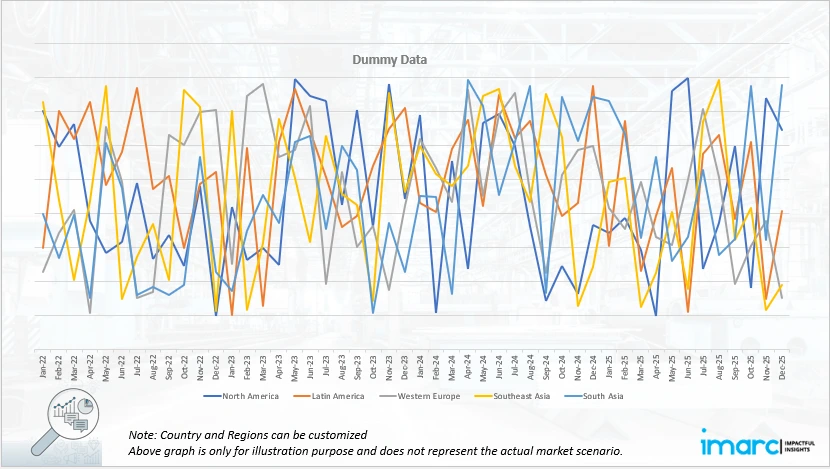
Get real-time access to monthly/quarterly/yearly prices Request Sample
During the second quarter of 2026, the rhenium prices in China reached 1285 USD/MT in June. Prices moved upward as tight availability of ammonium perrhenate continued to raise input pressure for metal processors. Primary supply remained rigid because rhenium recovery depends heavily on copper and molybdenum processing rather than dedicated mining. Producers maintained firm offer levels as raw material availability stayed constrained, limiting opportunities for buyers to secure discounted volumes.
During the second quarter of 2026, the rhenium prices in the USA reached 3331 USD/MT in June. The market strengthened as aerospace manufacturing continued to support consumption of rhenium bearing superalloys used in turbine engine components. Firm aircraft and engine production activity encouraged alloy producers and specialized buyers to maintain procurement, keeping demand resilient. Supply remained relatively inflexible because primary rhenium production is linked to molybdenum concentrate roasting and copper related operations.
During the second quarter of 2026, the rhenium prices in Chile reached 1490 USD/MT in June. Prices increased as the market remained supported by export demand and the limited flexibility of rhenium recovery from copper and molybdenum processing streams. Chilean supply is closely connected to molybdenum roasting, which means rhenium output cannot be expanded quickly in response to stronger buying interest. Demand from overseas superalloy manufacturers remained firm as aerospace production supported consumption of high temperature materials.
During the second quarter of 2026, the rhenium prices in Poland reached 1660 USD/MT in June. The market moved higher as European demand for rhenium bearing superalloys remained firm, particularly from aerospace and turbine related manufacturing. Polish supply is connected to copper processing, with rhenium recovered as a byproduct rather than produced through dedicated mining. This structure limited the ability of suppliers to respond rapidly when purchasing interest strengthened.
During the second quarter of 2026, the rhenium prices in the United Kingdom reached 2515 USD/MT in June. Prices edged upward as strong civil aerospace activity supported demand for rhenium bearing superalloys used in large engine and turbine applications. The United Kingdom relies heavily on imported rhenium and processed rhenium products, leaving domestic buyers exposed to global supply tightness and supplier lead times. Firm demand for widebody aircraft engines encouraged continued purchasing by alloy and component supply chains.
Rhenium Prices Outlook Q1 2026
- China: USD 1267/MT
- USA: USD 3255/MT
- Chile: USD 1459/MT
- Poland: USD 1630/MT
- United Kingdom: USD 2482/MT
During the first quarter of 2026, the rhenium prices in China reached 1267 USD/MT in March. The market experienced moderate upward pressure due to stable domestic production and increased demand from the aerospace and catalyst sectors. Supply chain optimizations and limited stock replenishments contributed to steady pricing. Additionally, the gradual recovery in industrial activities enhanced buying sentiment, supporting price gains during the quarter.
During the first quarter of 2026, the rhenium prices in the USA reached 3255 USD/MT in March. Prices rose as a result of strong demand from aerospace and high-tech manufacturing sectors. Tight inventories and cautious import levels created a favorable environment for rhenium pricing. Market participants actively sought secure supply agreements, while logistical constraints and transportation costs maintained upward momentum throughout the quarter.
During the first quarter of 2026, the rhenium prices in Chile reached 1459 USD/MT in March. The market saw price increases driven by export demand and limited availability from domestic mining operations. Strong interest from the chemical and superalloy industries boosted consumption levels. Strategic stock management and supply chain adjustments reinforced positive price movements, while stable geopolitical conditions supported consistent market performance.
During the first quarter of 2026, the rhenium prices in Poland reached 1630 USD/MT in March. Rising demand from the European aerospace and defense sectors supported prices. Supply limitations from regional producers and transportation bottlenecks contributed to price stability. Market confidence was further enhanced by ongoing technological investments and strategic procurement planning, leading to gradual price growth during the quarter.
During the first quarter of 2026, the rhenium prices in the United Kingdom reached 2482 USD/MT in March. Price growth was encouraged by increasing demand from industrial and specialty alloy applications. Limited domestic production and cautious import activity led to tight supply conditions. The interplay of strong consumption and selective stock replenishment strategies maintained steady upward pricing trends across the quarter.
Rhenium Prices Outlook Q3 2025
- China: USD 1213/Kg
- USA: USD 3050/Kg
- Chile: USD 1395/Kg
- Poland: USD 1550/Kg
- United Kingdom: USD 2337/Kg
During the third quarter of 2025, the rhenium prices in China reached 1213 USD/Kg in September. Prices moved upwards due to stronger procurement from the superalloy and catalyst segments, along with supply tightening from refineries that temporarily reduced output. Additional pressure stemmed from elevated transportation charges and slower import clearance, which restricted overall domestic circulation during this quarter.
During the third quarter of 2025, the rhenium prices in the USA reached 3050 USD/Kg in September. The upward trajectory was supported by improving aerospace alloy demand and controlled refinery feedstock availability. Producers also encountered longer turnaround periods at select processing units, lowering spot availability. Trading sentiment remained firm as buyers accelerated bookings to avoid potential delays in upstream molybdenum by-product deliveries.
During the third quarter of 2025, the rhenium prices in Chile reached 1395 USD/Kg in September. Market firmness resulted from lower output at local processing units, coupled with steady interest from international alloy manufacturers. Exporters faced uneven shipment scheduling and slower port handling, influencing upward price behavior. Producers reported disciplined inventory management, which further limited the supply cushion.
During the third quarter of 2025, the rhenium prices in Poland reached 1550 USD/Kg in September. Prices edged higher amid stable demand from turbine component manufacturers and constrained inflows from external suppliers. Domestic refiners experienced intermittent operational slowdowns, tightening availability. Additionally, increased logistical charges within Central Europe contributed to firmer market sentiment across the quarter.
During the third quarter of 2025, the rhenium prices in the United Kingdom reached 2337 USD/Kg in September. Upward movement was driven by consistent buying from aerospace alloy producers and slightly restricted refinery throughput. Import-reliant buyers faced extended lead times from global suppliers, leading to firmer contracting activity. Market participants also noted higher inland freight expenses that supported the price increase.
Rhenium Prices Outlook Q2 2025
- China: USD 1132/Kg
- USA: USD 2947/Kg
- Chile: USD 1370/Kg
- Poland: USD 1512/Kg
- United Kingdom: USD 2262/Kg
During the second quarter of 2025, the rhenium prices in China reached 1132 USD/Kg in June. Market conditions were guided by stable procurement from catalyst and alloy producers. Refinery operations proceeded without significant disruptions, while transportation inefficiencies in select industrial regions influenced shipment timing. Overall, activity reflected steady commercial engagement without notable shifts in pricing triggers.
During the second quarter of 2025, the rhenium prices in the USA reached 2947 USD/Kg in June. Demand from aerospace applications remained consistent, encouraging routine contracting. Feedstock availability from domestic mining and refining units followed regular patterns, and logistical networks supported predictable material flows. Market participants adopted standard procurement practices in a largely steady operating environment.
During the second quarter of 2025, the rhenium prices in Chile reached 1370 USD/Kg in June. Refinery and processing activities remained aligned with typical output schedules, allowing exporters to fulfill planned commitments. Interest from international alloy manufacturers stayed stable, and shipment coordination across ports was handled within normal parameters. Overall, market conditions reflected a balanced operational landscape.
During the second quarter of 2025, the rhenium prices in Poland reached 1512 USD/Kg in June. The market recorded regular procurement from turbine component manufacturers, while suppliers followed structured production routines. Cross-border transportation progressed as expected, with only minor administrative delays. The quarter remained characterized by predictable supply and demand interactions.
During the second quarter of 2025, the rhenium prices in the United Kingdom reached 2262 USD/Kg in June. Market activity was driven by routine alloy-sector purchasing patterns. Import flows proceeded within anticipated timelines, and domestic processing units maintained planned throughput. Stakeholders reported a broadly stable trading environment with no unusual market influences.
Regional Coverage
The report provides a detailed analysis of the market across different regions, each with unique pricing dynamics influenced by localized market conditions, supply chain intricacies, and geopolitical factors. This includes price trends, price forecast and supply and demand trends for each region, along with spot prices by major ports. The report also provides coverage of FOB and CIF prices, as well as the key factors influencing rhenium prices.
Europe Rhenium Price Trend
Q2 2026:
The rhenium price index in Europe maintained an upward direction as aerospace and turbine manufacturers sustained demand for rhenium bearing superalloys. Supply remained restricted by the byproduct nature of rhenium production, which tied availability to copper and molybdenum processing schedules. European buyers continued to depend on limited primary and secondary suppliers, keeping replacement options constrained. Firm aircraft and engine manufacturing supported regular alloy procurement, while defense related demand added further strength to specialized material consumption. Polish production provided an important regional source, but sellers maintained disciplined offer levels as global availability stayed tight. Recycling from superalloy scrap helped supplement supply, yet it did not fully offset pressure from primary procurement. Import costs and longer supplier lead times also supported replacement values.
Q1 2026:
The rhenium price index showed moderate gains, supported by steady industrial consumption. Aerospace demand remained resilient while alloy production increased slightly, balancing the market. Supply constraints due to limited regional production maintained price support. Currency fluctuations and logistical improvements played a minor role in stabilizing prices. Market participants maintained cautious purchasing strategies, preventing sudden volatility. Strategic stock management by distributors helped sustain consistent regional pricing trends throughout the quarter.
Q3 2025:
As per the rhenium price index, European prices reflected a firm tone as refining throughput in multiple supply hubs remained constrained. Turbine and aerospace alloy plants continued to procure steadily, supporting market sentiment. Inland delivery delays arising from logistics bottlenecks added to supply tightness. Some countries recorded stronger upward momentum due to higher reliance on imported feedstock, while others were cushioned by more stable local refining operations. Overall, the region experienced balanced but upward-leaning pricing conditions shaped by controlled inventories, steady industrial consumption, and elevated handling costs.
Q2 2025:
Market behavior across Europe during the quarter was shaped by refinery operating schedules, procurement planning among alloy producers, and shifting feedstock arrival times from external suppliers. Industrial demand from aerospace and catalyst segments continued, but purchasing volumes varied depending on production timetables rather than price signals. Inland transport networks experienced occasional congestion, influencing delivery coordination. Overall, regional activity reflected operational and logistical considerations rather than any identifiable price-related movement.
Detailed price information for rhenium can also be provided for an extensive list of European countries.
| Region | Countries Covered |
|---|---|
| Europe | Germany, France, United Kingdom, Italy, Spain, Russia, Turkey, Netherlands, Poland, Sweden, Belgium, Austria, Ireland, Switzerland, Norway, Denmark, Romania, Finland, Czech Republic, Portugal, and Greece, among other European countries. |
North America Rhenium Price Trend
Q2 2026:
The rhenium price index in North America moved upward as aerospace manufacturing supported steady consumption of rhenium bearing superalloys. Aircraft and engine production sustained purchasing requirements for high temperature turbine materials, keeping demand firm across alloy supply chains. Primary supply remained constrained because rhenium recovery depends on molybdenum roasting and copper related processing rather than dedicated extraction. Buyers also relied on imports to supplement domestic production, increasing exposure to tight global availability and extended replenishment cycles. Secondary recovery from used superalloys and refining catalysts provided additional material, but strong industrial demand limited the amount available to ease the market.
Q1 2026:
The rhenium price index in North America rose steadily, reflecting strong demand from aerospace and specialty alloy sectors. Tight inventories and cautious import activity maintained upward momentum. Supply limitations from domestic and regional producers encouraged proactive procurement. Transportation cost adjustments and logistical planning influenced market behavior. Distributors emphasized securing long-term supply agreements, adding stability to pricing.
Q3 2025:
As per the rhenium price index, North America experienced upward market momentum supported by persistent aerospace alloy requirements and controlled refinery by-product allocations. Maintenance-related interruptions at select processing units limited availability, generating intermittent supply pressure. Cross-country transportation networks, particularly those serving metal-handling routes, encountered scheduling inefficiencies that extended delivery intervals. Buyers adjusted procurement strategies to safeguard against potential delays. Although underlying demand remained predictable, tighter inventory positions across several markets contributed to a broadly firm pricing atmosphere during the quarter.
Q2 2025:
Across North America, rhenium market conditions were defined by refinery throughput aligned with ongoing maintenance plans, feedstock availability from mining regions, and procurement cycles within the aerospace supply chain. Some distributors reported timing gaps in interstate transport of metal-bearing materials, affecting shipment planning. Chemical and alloy manufacturers adjusted sourcing based on production requirements, without indications of notable price momentum. The regional landscape therefore moved in response to supply logistics and industrial scheduling.
Specific rhenium historical data within the United States and Canada can also be provided.
| Region | Countries Covered |
|---|---|
| North America | United States and Canada |
Middle East and Africa Rhenium Price Trend
Q2 2026:
The study includes the pricing trends and price chart for rhenium in the Middle East and Africa, accounting for factors including regional industrial growth, natural resource availability, and geopolitical issues that specifically impact market prices.
Q1 2026:
The study examines the Middle East and Africa's rhenium pricing patterns and price chart, taking into account variables that specifically affect market prices, such as regional industrial expansion, the availability of natural resources, and geopolitical concerns.
Q3 2025:
As per rhenium price chart, the prices in the Middle East and Africa fluctuated due to a complex interplay of factors, primarily driven by supply chain disruptions, seasonal demand shifts, and geopolitical influences.
Q2 2025:
The report explores the rhenium pricing trends and rhenium price chart in the Middle East and Africa, considering factors like regional industrial growth, the availability of natural resources, and geopolitical tensions that uniquely influence market prices.
Region-wise data and information on specific countries within these regions can also be provided.
| Region | Countries Covered |
|---|---|
| Middle East & Africa | Saudi Arabia, UAE, Israel, Iran, South Africa, Nigeria, Oman, Kuwait, Qatar, Iraq, Egypt, Algeria, and Morocco, among other Middle Eastern and African countries. |
Asia Pacific Rhenium Price Trend
Q2 2026:
The rhenium prices in Asia Pacific followed a firm upward pattern, supported by constrained raw material availability and steady industrial demand. China remained an important market, where tight ammonium perrhenate supply raised input pressure for rhenium processors and encouraged producers to maintain firm offers. Primary availability across the region remained limited because rhenium is recovered mainly as a byproduct of copper and molybdenum processing. Aerospace alloy manufacturers continued to require rhenium for high temperature turbine applications, supporting procurement. Catalyst users added another stable source of demand. Market participants remained cautious about inventories because replacement availability was uncertain and global supply remained concentrated.
Q1 2026:
Rhenium prices experienced moderate upward pressure, influenced by strong industrial demand and tight supply chains. Manufacturing growth and aerospace sector requirements drove consumption. Import planning and logistical constraints contributed to price stability. Market participants actively managed inventory, resulting in consistent pricing trends. Regional demand growth, combined with cautious supply strategies, reinforced a steady increase in rhenium prices.
Q3 2025:
In the Asia Pacific region, rhenium prices were supported by consistent consumption from turbine, catalyst, and advanced alloy manufacturers in major industrial hubs. Import-dependent countries experienced higher procurement costs due to fluctuating freight charges and sporadic currency adjustments. Supply availability was periodically constrained by extended delivery times from global refiners. Domestic logistics faced pockets of congestion around key manufacturing clusters, affecting distribution efficiency. Combined, these factors contributed to sustained firmness in regional pricing sentiment during the quarter.
Q2 2025:
Asia Pacific markets saw rhenium flows shaped by import scheduling from major global refiners, evolving manufacturing programs in turbine and catalyst sectors, and domestic transport conditions across key production hubs. Freight documentation requirements and short-term port congestion in several countries affected cargo coordination. Producers adjusted material intake according to industrial activity levels, while buyers in alloy-intensive industries planned procurement around operational output. The region’s activity was therefore driven by supply chain timing and sector-specific consumption patterns without identifiable price trends.
uations. Additionally, trade policies and import-export tariffs continue to impact the cost structures and availability of rhenium, making the Asia Pacific market a complex environment for price trend analysis.
This rhenium price analysis can be expanded to include a comprehensive list of countries within the region.
| Region | Countries Covered |
|---|---|
| Asia Pacific | China, India, Indonesia, Pakistan, Bangladesh, Japan, Philippines, Vietnam, Thailand, South Korea, Malaysia, Nepal, Taiwan, Sri Lanka, Hongkong, Singapore, Australia, and New Zealand, among other Asian countries. |
Latin America Rhenium Price Trend
Q2 2026:
Rhenium prices in Latin America strengthened as export demand and constrained primary supply supported firmer market conditions. Chile remained central to regional availability because rhenium is recovered through processing streams associated with copper and molybdenum operations. This production structure limited the ability of suppliers to expand output quickly when purchasing increased. Aerospace superalloy manufacturers in overseas markets maintained steady requirements, supporting contracted demand for Chilean rhenium products. Petroleum catalyst applications also contributed to consumption and reinforced competition for specialized material.
Q1 2026:
Prices increased modestly due to growing export demand and constrained domestic production. Key consuming sectors, such as alloys and catalysts, supported higher consumption levels. Inventory adjustments and strategic stock management helped maintain balance. Regional market confidence remained stable, with procurement planning ensuring steady upward momentum. Limited supply and active demand coordination influenced overall positive price trends in Latin America.
Q3 2025:
Latin American rhenium markets reflected firm conditions due to limited domestic processing capabilities and ongoing reliance on imported feedstock. Currency fluctuations in several economies increased cost exposure for buyers, influencing contracting strategies. Steady demand from alloy and chemical producers maintained regular offtake patterns. Inland logistics faced sporadic delays stemming from capacity constraints and weather-related disruptions, raising handling expenses. These combined factors reinforced a generally strong pricing environment across the region during the quarter.
Q2 2025:
Latin American rhenium activity during the quarter was influenced by reliance on imported feedstock, shipment timing from global suppliers, and purchasing needs among alloy and chemical manufacturers. Variability in inland haulage capacity occasionally extended transport times, affecting delivery planning for industrial buyers. Refinery-linked procurement depended on production schedules rather than price expectations, while distributors coordinated inventory intake based on anticipated sectoral usage. Overall, regional conditions were guided by logistical and operational factors rather than directional pricing cues.
This comprehensive review can be extended to include specific countries within Latin America.
| Region | Countries Covered |
|---|---|
| Latin America | Brazil, Mexico, Argentina, Columbia, Chile, Ecuador, and Peru, among other Latin American countries. |
Rhenium Pricing Report, Market Analysis, and News
IMARC's latest publication, “Rhenium Prices, Trend, Chart, Demand, Market Analysis, News, Historical and Forecast Data Report 2026 Edition,” presents a detailed examination of the rhenium market, providing insights into both global and regional trends that are shaping prices. This report delves into the spot price of rhenium at major ports and analyzes the composition of prices, including FOB and CIF terms. It also presents detailed rhenium prices trend analysis by region, covering North America, Europe, Asia Pacific, Latin America, and Middle East and Africa. The factors affecting rhenium pricing, such as the dynamics of supply and demand, geopolitical influences, and sector specific developments, are thoroughly explored. This comprehensive report helps stakeholders stay informed with the latest market news, regulatory updates, and technological progress, facilitating informed strategic decision-making and forecasting.
Rhenium Industry Analysis
The global rhenium industry size reached 60.61 Tons in 2025. By 2034, IMARC Group expects the market to reach 92.39 Tons, at a projected CAGR of 4.80% during 2026-2034. The market expansion is driven by increasing aerospace alloy applications, rising catalyst usage in advanced refining processes, and consistent technological progress in high-performance material manufacturing, all of which continue to support long-term rhenium demand worldwide.
Latest News and Developments:
- October 2025: Solitario Resources Corp. announced that it had added the Cat Creek project (a molybdenum-rhenium porphyry system in Colorado) to its portfolio and secured drilling permits for core drilling in 2026. The project is notable as rhenium is classified as a Critical Metal by the US government and the company highlighted rhenium’s strategic importance in aerospace and defense applications.
- August 2025: Plus Therapeutics, Inc. announced the commercial launch timeline for its CNSide CSF Assay Platform along with the initiation of the dose-optimization trial for REYOBIQ™, its rhenium-186-based radiotherapeutic candidate for leptomeningeal metastases.
Product Description
Rhenium is a rare metallic chemical element represented by the symbol Re. In commercial markets, it is supplied as metallic powder, pellets, ammonium perrhenate, perrhenic acid, and other refined forms. The metal has a silvery appearance, very high temperature resistance, strong mechanical stability, and excellent resistance to wear and deformation under severe thermal conditions. These properties make rhenium valuable in nickel based superalloys used for aircraft turbine blades, jet engine components, gas turbines, and other demanding high temperature equipment. Rhenium is also used with platinum in petroleum reforming catalysts and in specialized hydrogenation processes. Additional uses include tungsten and molybdenum alloys, electrical contacts, filaments, thermocouples, medical applications, and advanced materials research. Most primary rhenium is recovered as a byproduct of copper and molybdenum processing, while recycling of superalloy scrap and spent catalysts provides an important secondary source.
Report Coverage
| Key Attributes | Details |
|---|---|
| Product Name | Rhenium |
| Report Features | Exploration of Historical Trends and Market Outlook, Industry Demand, Industry Supply, Gap Analysis, Challenges, Rhenium Price Analysis, and Segment-Wise Assessment. |
| Currency/Units | US$ (Data can also be provided in local currency) or Metric Tons |
| Region/Countries Covered | The current coverage includes analysis at the global and regional levels only. Based on your requirements, we can also customize the report and provide specific information for the following countries: Asia Pacific: China, India, Indonesia, Pakistan, Bangladesh, Japan, Philippines, Vietnam, Thailand, South Korea, Malaysia, Nepal, Taiwan, Sri Lanka, Hongkong, Singapore, Australia, and New Zealand Europe: Germany, France, United Kingdom, Italy, Spain, Russia, Turkey, Netherlands, Poland, Sweden, Belgium, Austria, Ireland, Switzerland, Norway, Denmark, Romania, Finland, Czech Republic, Portugal and Greece North America: United States and Canada Latin America: Brazil, Mexico, Argentina, Columbia, Chile, Ecuador, and Peru Middle East & Africa: Saudi Arabia, UAE, Israel, Iran, South Africa, Nigeria, Oman, Kuwait, Qatar, Iraq, Egypt, Algeria, and Morocco The list of countries presented is not exhaustive. Information on additional countries can be provided if required by the client. |
| Information Covered for Key Suppliers |
|
| Customization Scope | The report can be customized as per the requirements of the customer |
| Report Price and Purchase Option |
Plan A: Monthly Updates - Annual Subscription
Plan B: Quarterly Updates - Annual Subscription
Plan C: Biannually Updates - Annual Subscription
|
| Post-Sale Analyst Support | 360-degree analyst support after report delivery |
| Delivery Format | PDF and Excel through email (We can also provide the editable version of the report in PPT/Word format on special request) |
Key Benefits for Stakeholders:
- IMARC’s report presents a detailed analysis of rhenium pricing, covering global and regional trends, spot prices at key ports, and a breakdown of ex-works, FOB, and CIF prices.
- The study examines factors affecting rhenium price trend, including supply-demand shifts and geopolitical impacts, offering insights for informed decision-making.
- The competitive landscape review equips stakeholders with crucial insights into the latest market news, regulatory changes, and technological advancements, ensuring a well-rounded, strategic overview for forecasting and planning.
- IMARC offers various subscription options, including monthly, quarterly, and biannual updates, allowing clients to stay informed with the latest market trends, ongoing developments, and comprehensive market insights. The rhenium price charts ensure our clients remain at the forefront of the industry.
Need more help?
- Speak to our experienced analysts for insights on the current market scenarios.
- Include additional segments and countries to customize the report as per your requirement.
- Gain an unparalleled competitive advantage in your domain by understanding how to utilize the report and positively impacting your operations and revenue.
- For further assistance, please connect with our analysts.
 Request Customization
 Inquire Before Buying
 Speak to an Analyst
 Request Brochure
Benefits of Customization
- Personalize this research
- Triangulate with your data
- Get data as per your format and definition
- Gain a deeper dive into a specific application, geography, customer, or competitor
- Any level of personalization
Get in Touch With Us
UNITED STATES
Phone: +1-201-971-6302
INDIA
Phone: +91-120-433-0800
UNITED KINGDOM
Phone: +44-753-714-6104
Email: [email protected]
Client Testimonials




.webp)




.webp)













Related Reports

Why Choose Us
IMARC offers trustworthy, data-centric insights into commodity pricing and evolving market trends, enabling businesses to make well-informed decisions in areas such as procurement, strategic planning, and investments. With in-depth knowledge spanning more than 1000 commodities and a vast global presence in over 150 countries, we provide tailored, actionable intelligence designed to meet the specific needs of diverse industries and markets.
1000
+Commodities
150
+Countries Covered
3000
+Clients
20
+Industry

Robust Methodologies & Extensive Resources
IMARC delivers precise commodity pricing insights using proven methodologies and a wealth of data to support strategic decision-making.

Subscription-Based Databases
Our extensive databases provide detailed commodity pricing, import-export trade statistics, and shipment-level tracking for comprehensive market analysis.

Primary Research-Driven Insights
Through direct supplier surveys and expert interviews, we gather real-time market data to enhance pricing accuracy and trend forecasting.

Extensive Secondary Research
We analyze industry reports, trade publications, and market studies to offer tailored intelligence and actionable commodity market insights.
Trusted by 3000+ industry leaders worldwide to drive data-backed decisions. From global manufacturers to government agencies, our clients rely on us for accurate pricing, deep market intelligence, and forward-looking insights.